



You're holding a bread maker used twice, a tangle of cords for gadgets you no longer own, or a sweater that might fit again someday. That freeze, where every item could theoretically still be useful, is exactly where most decluttering attempts stall.
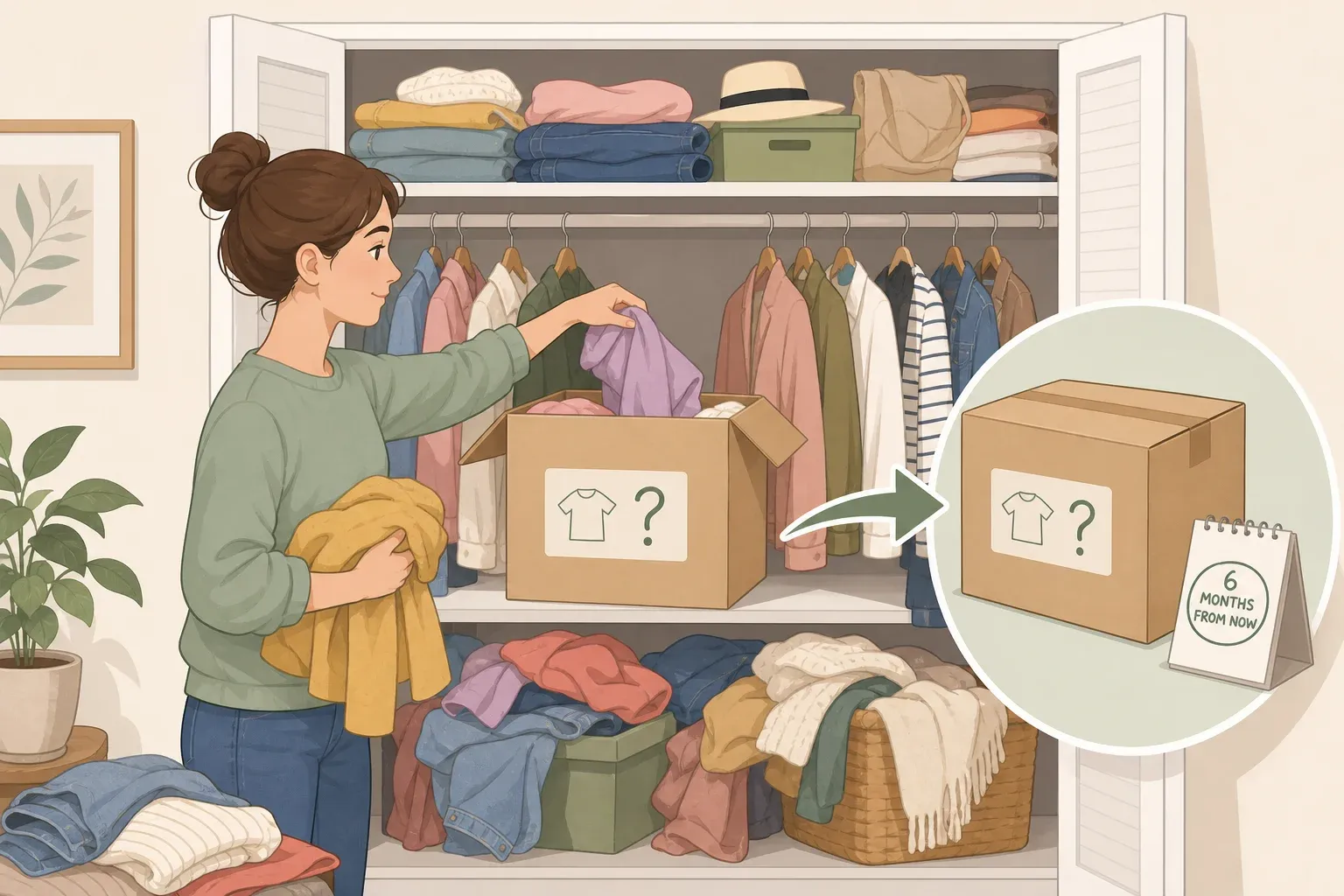
The box rule decluttering method skips the standoff entirely: uncertain items go into a box, the box gets closed and dated, and a few weeks of ordinary life tells you whether you actually need what's inside.
Professional organizer Lynda Reider, founder of Cut the Clutter RVA, says the real obstacle to decluttering usually isn't unfamiliarity with what gets used around the house. It's that almost anything sounds necessary while you're standing there holding it. The box rule works around that by removing the pressure of an on-the-spot verdict: pack the maybe pile away, set a review date, and decide later based on whether you missed anything.
Good Housekeeping describes Reider's version as a 30-day "maybe box," while other organizers run similar versions under different names. Livingetc describes a "box and banish" approach and what professional organizer Di Ter Avest calls the "hide and seek system." This guide covers how to run the 30-day decluttering box rule step by step, how to adjust the timeline by item type, and when the method isn't the right tool for the clutter you're facing.
What is the box rule decluttering method?
The method is simple: instead of deciding on the spot whether to keep or toss something you're unsure about, you set it aside in a closed box for a set period and let actual use, or the lack of it, make the call. Reider describes it as a way to buy time without stalling the whole project. The box gets closed, set aside for about 30 days, and reopened once the waiting period runs out.
There's research behind why separating the item from the decision can help. A 2023 study published in the Journal of Consumer Psychology had participants move an unused kitchen item to a storage location instead of leaving it in place. Those who relocated the item felt more ready to get rid of it afterward because putting it into what the researchers call a "product purgatory" encouraged them to mentally simulate disposing of it.
Putting an item away doesn't guarantee an easier goodbye, but it gives you a lower-pressure way to test the question instead of answering it cold.
Reider calls her version a "maybe box" for a reason: it isn't a farewell, just a temporary break from the object. That framing matters because it swaps guesswork about some hypothetical future need for actual evidence about present use. If you don't reach for something during the waiting period, that's useful information.
What you'll need
A sturdy box, bag, or lidded container for each category of items you're testing.
Painter's tape or a label, plus a marker, to record the pack date and review date.
A calendar reminder or phone alert, set the moment you seal the box, so the review date doesn't slip by unnoticed.
A storage spot that's accessible but a little inconvenient, like a closet, garage shelf, or attic, rather than somewhere you pass every day.
Before you start
This method is beginner-friendly and doesn't require special tools, just boxes, labels, and follow-through.
Save it for items you're genuinely unsure about, not stuff you already know you don't want. Reider points out that if you already dislike something, never use it, or wouldn't buy it again, you don't need 30 more days to figure that out; the box is for real maybes.
Start with a category that doesn't carry much emotional weight. Organizer Caroline Solomon suggests a first attempt with something like kitchen utensils rather than sentimental keepsakes, since low-attachment items make for an easier first round.
Exclude emergency supplies, medical items, essential repair materials, and genuinely seasonal belongings from an ordinary 30-day test. Seasonal items need to be judged during or after the season when you'd reasonably expect to use them.
How to run the 30-day decluttering box rule step by step
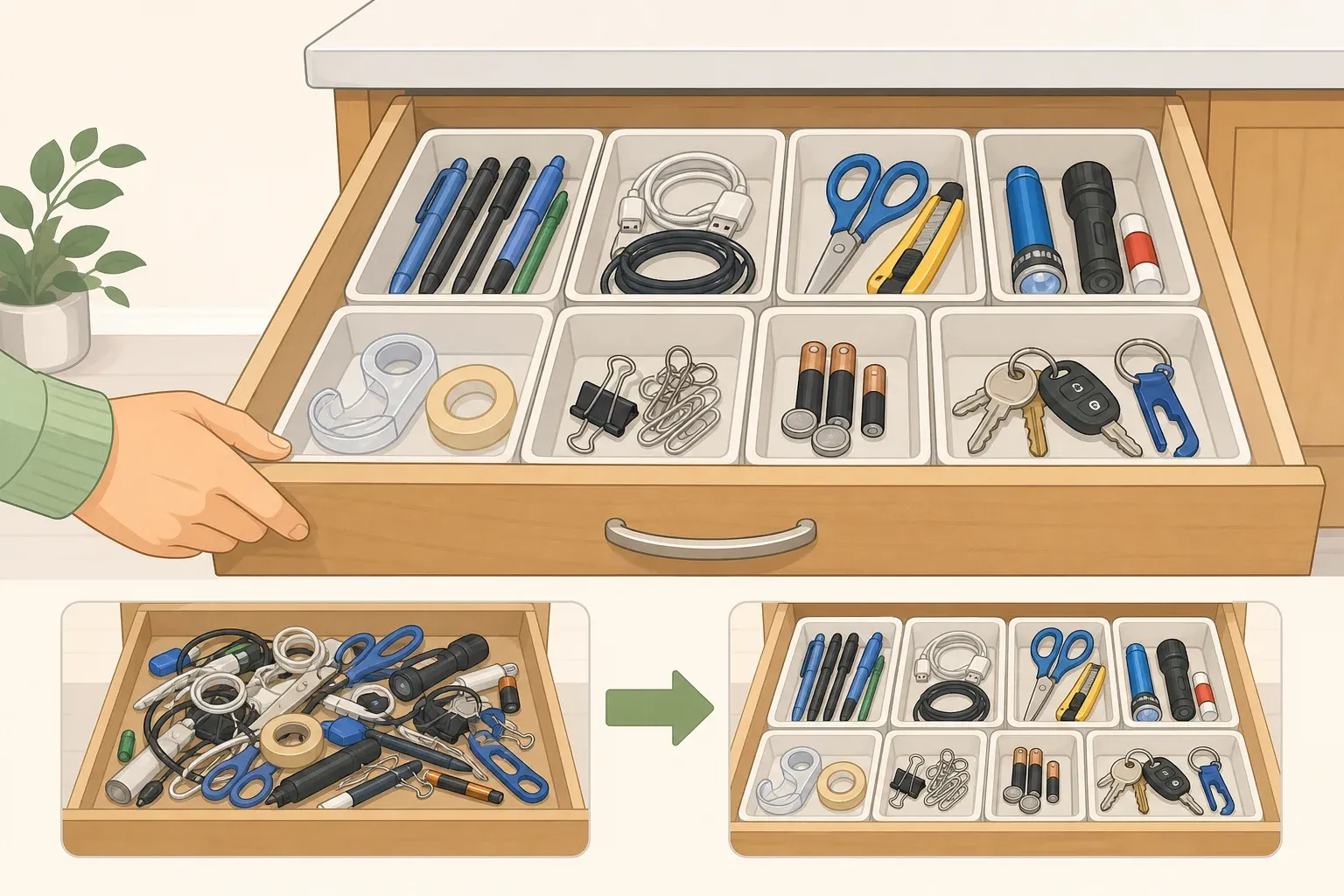
Choose one drawer, shelf, or category to start. Working a single space instead of a whole room keeps the experiment manageable.
Separate obvious keeps and obvious discards first. The box is for genuine maybes. If you already know you use an item regularly, keep it. If you already know you don't like or want it, deal with it now rather than turning the box into a delay tactic.
Pack the genuine maybes and close the box. Organizer Amelia Meena of Appleshine recommends pushing yourself to include more items than feels comfortable, treating the box as an honest experiment rather than a compromise, Good Housekeeping reports. Once it's sealed, resist opening it just to browse. The box isn't there for reassurance checks.
Label the box with the important details: the date you packed it, the date you'll review it, and the room or category it came from. That label is what keeps a maybe box from quietly becoming permanent storage.
Store it out of daily sight and set your reminder before you walk away. Skipping this step is an easy way for the box rule to fail. Without a dated reminder, the box can turn into the kind of long-term storage Reider describes people rediscovering in a garage years later, unsure what's even inside.
If you need something specific during the waiting period, take it out. Retrieving an item you genuinely need is different from digging through the box out of curiosity. One Apartment Therapy writer who ran a one-week version of this test found herself repeatedly thinking about a wool-blend flannel she'd packed away. When she opened the box at the end, she kept the flannel for cold-weather camping trips because she knew she'd miss it, while other items stayed easy to let go. If you pull something out and use it, return it to normal storage once you're done, not back into the box.
On the review date, open the box in one sitting. Keep whatever you actually retrieved and used during the trial. Everything still sitting untouched can be reconsidered for donation, recycling, sale, or disposal depending on its condition. Sometimes you'll open a box of 20 items and find you only needed one of them the whole time. That's a normal result, not a sign you packed the box wrong.
How long to keep a maybe box, and when to skip the method
Timelines vary depending on who you ask and what you're testing. Reider's version runs 30 days, a length that works well for everyday items across a kitchen drawer or closet shelf. Solomon recommends a 90-day version instead, arguing that a longer wait gives homeowners more concrete evidence they no longer need something, which can help separate emotional attachment from practical use.
The Apartment Therapy writer mentioned above ran her own version over just one week as a quick test for a pile of clothing. That worked for her purposes but is better treated as a personal variation than a general rule.
Match the length to what's in the box rather than picking a number at random. Everyday items like kitchen tools or office supplies may be suitable for a 30- or 90-day trial. Genuinely seasonal items such as winter coats, camping equipment, or holiday decorations need a different test: wait until you've passed through the period when you would normally use them before deciding that a lack of use means they're unnecessary.
Watch for one specific warning sign that the method has stopped working for you: multiple boxes sitting untouched well past their review dates. Livingetc quotes Ter Avest warning that the method can enable procrastination in some people, leading to boxes being left untouched for extended periods.
The method also isn't a fit for everyone. Ter Avest says it may not work well for people with severe hoarding tendencies, very limited storage space, a need for immediate results, or a tendency toward procrastination. If that describes your situation, or boxes keep piling up without ever getting opened, it's worth trying a different decluttering approach or getting hands-on help instead.
Reider also stresses this isn't a test you can fail. The goal isn't proving how much you can throw away. It's making your home work for how you actually live.
What success looks like
When the review date arrives, much of what's still in the box may be things you genuinely forgot were there. That's useful evidence when deciding whether to donate, recycle, sell, or dispose of them.
If you pulled several items out and used them throughout the trial, that's useful information too. It usually means those items weren't true maybes to begin with, just things swept into the box along with everything else, closer to a keep than an unknown.
Next time, start with a smaller, less sentimental category, note any items you retrieve and why, and deal with an expired box when the reminder goes off instead of letting it sit. Don't get hung up on picking the exact right number of days. Whether you choose 30, 90, or another suitable interval matters less than labeling the box, setting the reminder, and actually reviewing it when the date arrives.




Comments
Be the first, drop a comment!