



How to File Fold Clothes: The Pro Organizer Method
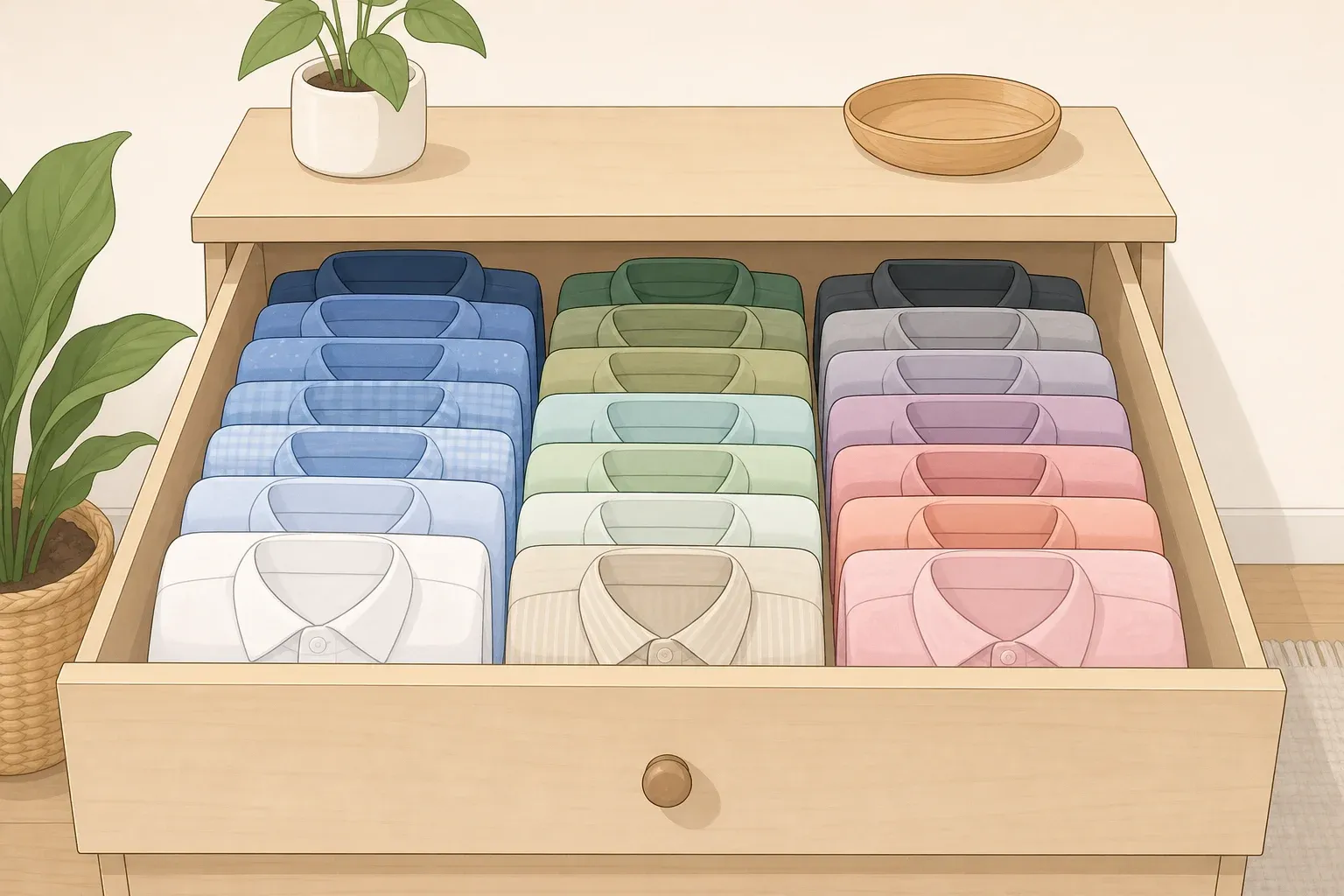
Professional organizers keep coming back to the same fix for a drawer that's turned into a jumbled mess: file folding. Instead of piling clothes into stacks that topple and bury half their contents, file folding "files" each folded piece upright into its own row, the same way folders stand in a cabinet, according to Good Housekeeping.
The method works especially well on T-shirts, sweaters, denim, and athletic wear, Good Housekeeping reports, and organizing studio The Little Details says it works best when one category dominates a drawer, like a stack of cotton tees or jeans. Traditional stacking buries half a drawer under a pile you have to dig through for one shirt, according to Sorted. This guide walks through how to file fold clothes step by step, including adjustments for specific garment types, what to gather before starting, and when a different storage approach works better for a given drawer.
What is file folding, and why it fixes messy drawers
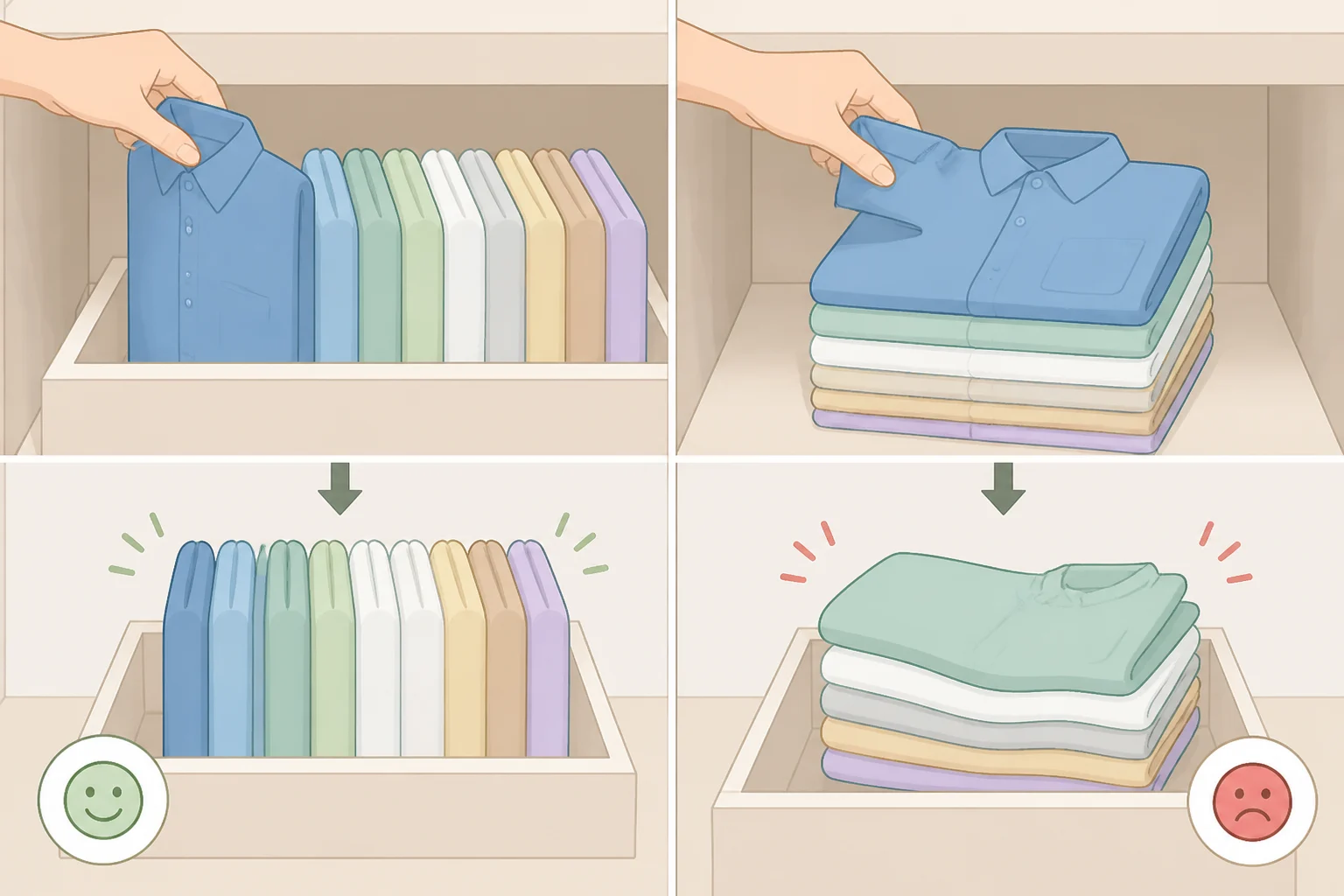
File folding turns each garment into a compact, self-standing rectangle instead of a flat layer in a stack. Rows of these upright folds sit side by side in a drawer, arranged like files in a cabinet, according to The Little Details and Sorted.
Organizer Jamie Hagmeyer told Good Housekeeping that the method lets you grab a single piece of clothing without disturbing anything around it, and it typically saves a noticeable amount of drawer space. Pull a shirt from the middle of a stack and everything on top usually comes down with it. Pull a file-folded shirt out of a row and the pieces next to it stay standing.
Seeing every folded item at once changes how people actually dress, too. When nothing is buried under newer laundry, you're more likely to wear what you own instead of reaching for whatever sits on top, Hagmeyer told Good Housekeeping. File folding isn't just a neater fold; the point is to make the drawer easier to scan and use, and the upright-row structure is what keeps it from sliding back into a pile, per Sorted.
What you'll need before you start
Sort before you fold. The Little Details recommends pulling every item out of the closet and dresser, sorting everything into categories, and assessing each piece before anything goes back folded.
Good Housekeeping backs the same approach: reorganizing is a natural moment to declutter, since clearing out clothes you no longer wear frees up real space and makes a drawer feel more orderly.
Gather these before folding anything:
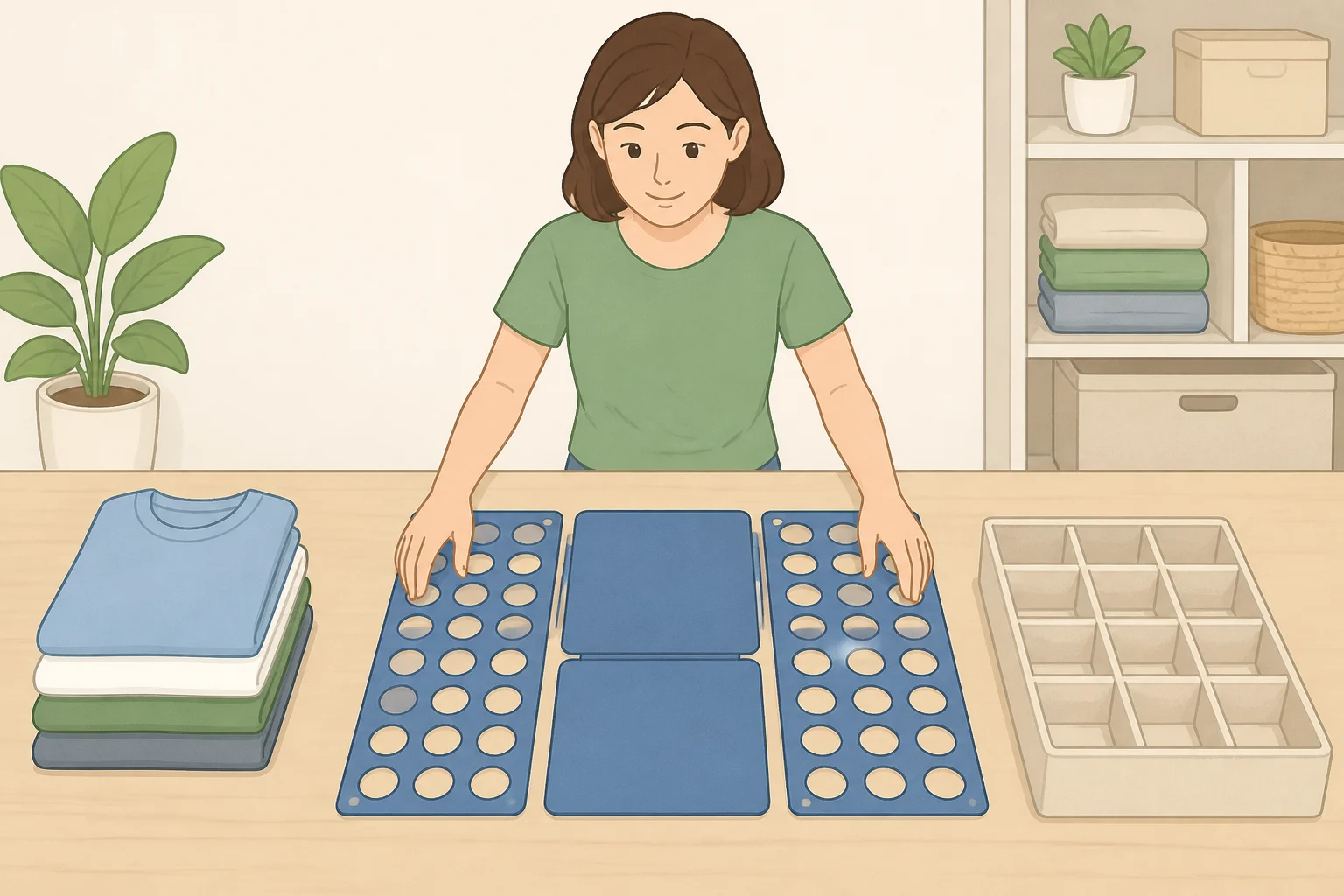
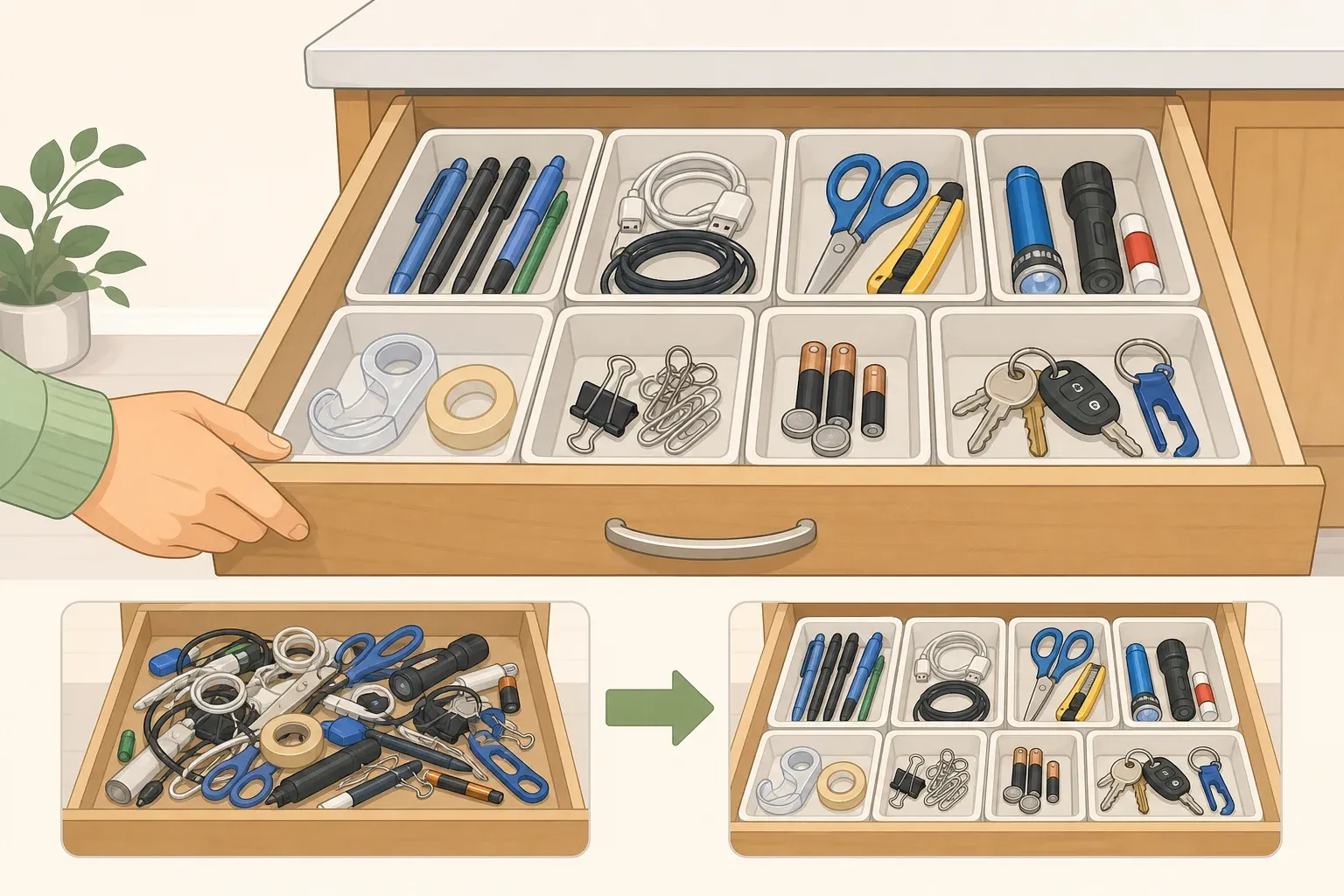
- Drawer dividers or bins to contain rows once they're built, recommended by Sorted
- A folding board if keeping fold widths consistent by hand feels fiddly, also suggested by Sorted
- A clear, flat surface for laying garments out before folding
Not every garment is a good candidate. Thicker, repeat-category pieces like cotton T-shirts and denim hold their folded shape best, according to The Little Details. This is a beginner-friendly project, no special skill required, but the first pass takes longer than a normal laundry fold. Hagmeyer told Good Housekeeping it can take extra time in the beginning before the system pays off.
One caution before spending an afternoon on this: file folding may not be the best fit for slippery fabrics like silk, spandex, or polyester, or for a drawer where there's already plenty of hanging space to use instead, according to The Little Details.
How to file fold clothes step by step
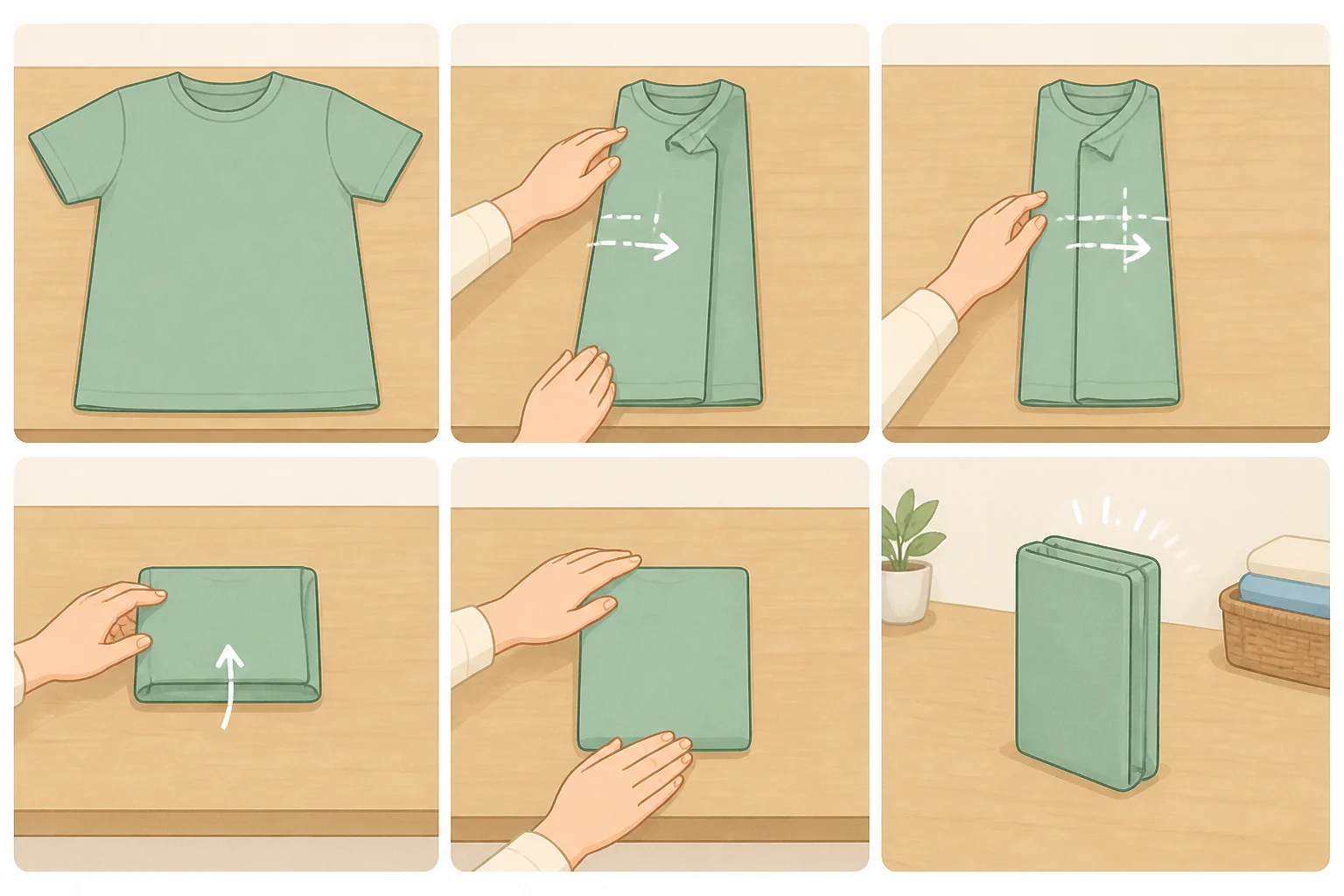
With sorting done and a clear surface ready, the fold comes down to two dimensions: the width of the finished rectangle, and how many times it folds from top to bottom. Get those two right and the piece stands on its own.
- Lay the garment flat and smooth out wrinkles so the finished rectangle lies flat, per Sorted.
- Fold it into a long rectangle. Bring one side toward the center, then fold the other side over on top of it, per Sorted. This fold sets the width of the finished piece, so keep it consistent across a category by folding to the same point each time.
- Fold top to bottom into thirds or quarters, depending on how tall your drawer is. This step sets the height of the fold and decides whether it clears the drawer's top edge, per Sorted.
Test this on one garment before folding the rest of a category. Stand it up in the drawer; it should hold itself upright without anything propping it up, according to Sorted. If it tips over or doesn't fit standing, change the number of top-to-bottom folds, one fewer section or one more, and test again before committing the whole stack to that pattern.
- Stand each piece upright in the drawer, lining up similar items together by category so the row stays easy to scan, per Sorted.
Watch for one common misstep: inconsistent fold widths. A row where every rectangle is a different size looks uneven and tends to slouch. A folding board solves this by giving every fold the same width to wrap around, per Sorted.
How to fold clothes for dresser drawers, by garment type
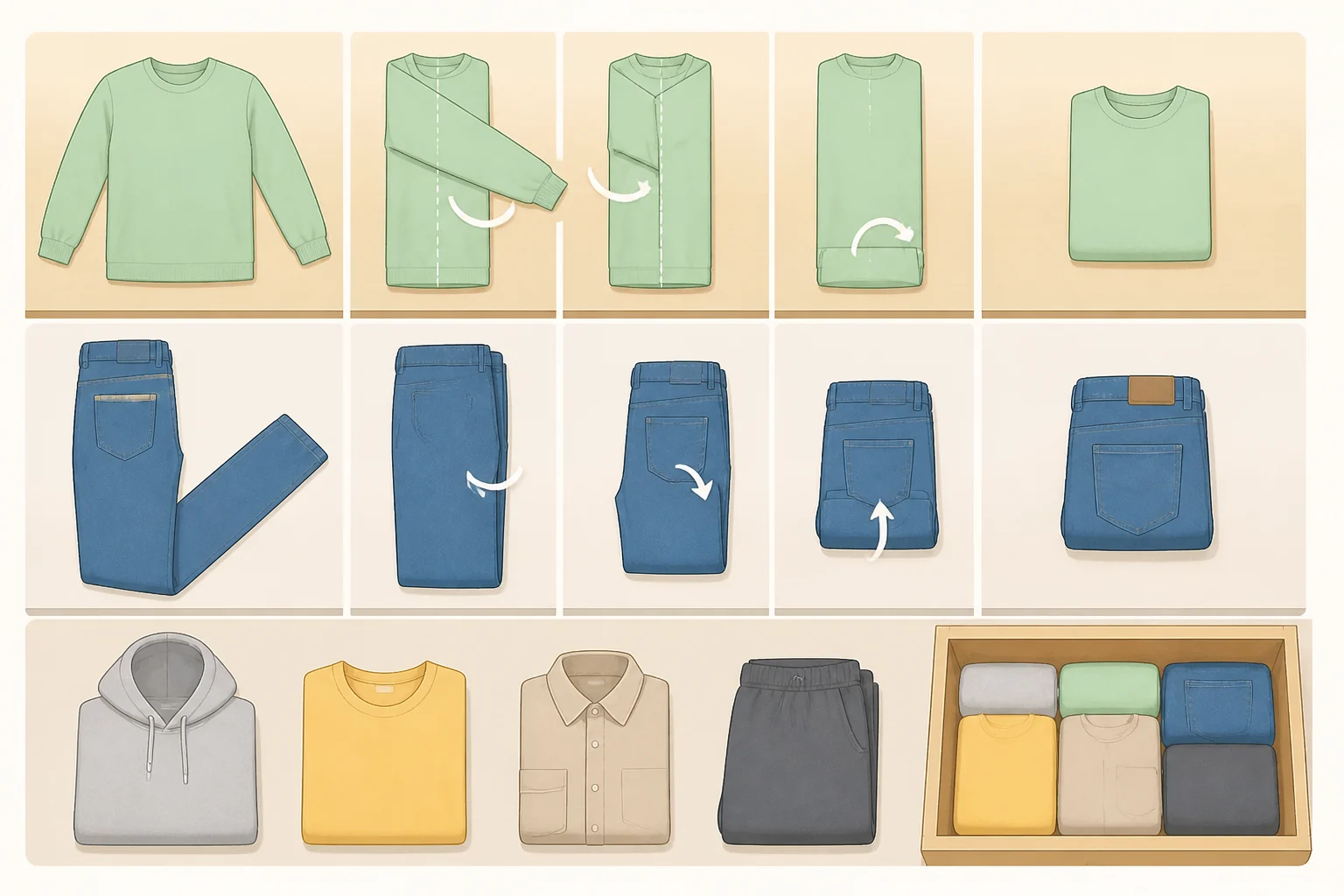
This four-step fold works for many everyday garments. A few categories respond better with a small adjustment, not because any method requires it, but because these shapes tend to hold their form more evenly this way. Treat these as starting points to test on one item, not fixed rules.
- T-shirts: Try tucking the sleeves toward the center before folding the sides in, so no fabric pokes out past the edge of the finished rectangle.
- Pants and denim: Lay one leg over the other before folding the waistband down. The extra thickness of denim often holds its shape with fewer top-to-bottom folds than a T-shirt needs.
- Sweaters and hoodies: Fold the sleeves across the front first. A bulky knit or hoodie may need a shorter finished height than a thin shirt, since a tall, narrow fold in heavy fabric can be unstable, so test before loading the whole stack.
- Athletic wear: Smooth stretchy leggings or shorts flat before folding, since they wrinkle into the crease more than cotton does.
- Socks and underwear: File folding tends to work less reliably on very small items, which don't hold a standing rectangle well on their own. Rolling, or using small bins inside the drawer without a formal fold, often works better for these.
Fitting the method to your drawer
A drawer's dimensions decide how the fold plays out more than the garment does. Before refolding an entire dresser, test the method on one category, just the T-shirts, in one drawer. That trial run shows whether the fold suits your fabrics and drawer depth before an afternoon gets spent on the rest.
In a shallow drawer, folding into more sections, quarters instead of thirds, keeps the standing height well under the top edge. In a deep drawer, fewer sections keep the rectangle tall enough to actually use the extra depth instead of leaving it empty above a short fold.
For a consistent width across a whole row, use the drawer's interior as a rough guide instead of eyeballing each piece: fold the first item to the width that fits the row, then use it as a visual template for the rest of the category. A folding board does this automatically, per Sorted, though a book or box cut to size works as a free stand-in.
If dividers start eating into usable space instead of helping, scale them back. A divider sized for five rows can end up fitting three if it's bulky or the wrong size for the drawer, which cancels out the extra capacity file folding is supposed to create. Thin cardboard or fabric dividers generally take up less room than rigid plastic ones, and skipping dividers altogether works fine in a drawer where the folded rows already stand on their own without leaning.
How to organize clothes in drawers vertically for lasting results
A drawer full of upright folds only stays that way with a little structure behind it. Group items by category first, shirts with shirts, pants with pants, then refine further by color or how often you reach for something if the rows need to be even easier to scan, per Sorted.
On capacity: organizers report drawers hold noticeably more once clothes are folded into uniform rectangles rather than loose stacks, per Sorted and The Little Details. How much more depends on fabric thickness, drawer depth, and how consistent the folds are, so treat it as a reliable trend rather than a guaranteed number.
Not every drawer is a good match for this system. If a drawer holds mostly slippery fabrics, or there's spare hanging space sitting unused, file folding may not be the better option there, according to The Little Details. The real test, per Livingetc, is whether a storage method actually lets you see what you own, whichever system that turns out to be for a given drawer.
Keep the drawer working after laundry day
The real test of file folding comes after the first load of clean laundry, not the first afternoon spent reorganizing. Refold clothes back into the same upright rows every time instead of tossing them back as a stack; the system only holds up if it stays consistent, per Sorted.
Check three things after a drawer has been running on the system for a week or two: it closes without forcing it, every folded item is visible without digging, and pulling one piece out leaves the row next to it standing. If all three hold, the drawer is working.
If a fabric keeps refusing to hold its folded shape, or a drawer slides back into a pile no matter how carefully it gets refolded, that's not a sign of folding wrong. It means that drawer, or that category of clothing, is a better fit for hanging storage instead, according to The Little Details.
Don't chase a magazine-perfect row on the first try. A slightly uneven row that still lets you grab a shirt in a few seconds is doing its job. Tidy the folds up over the next few laundry cycles as the habit sets in, rather than trying to get it right all at once.




Comments
Be the first, drop a comment!