



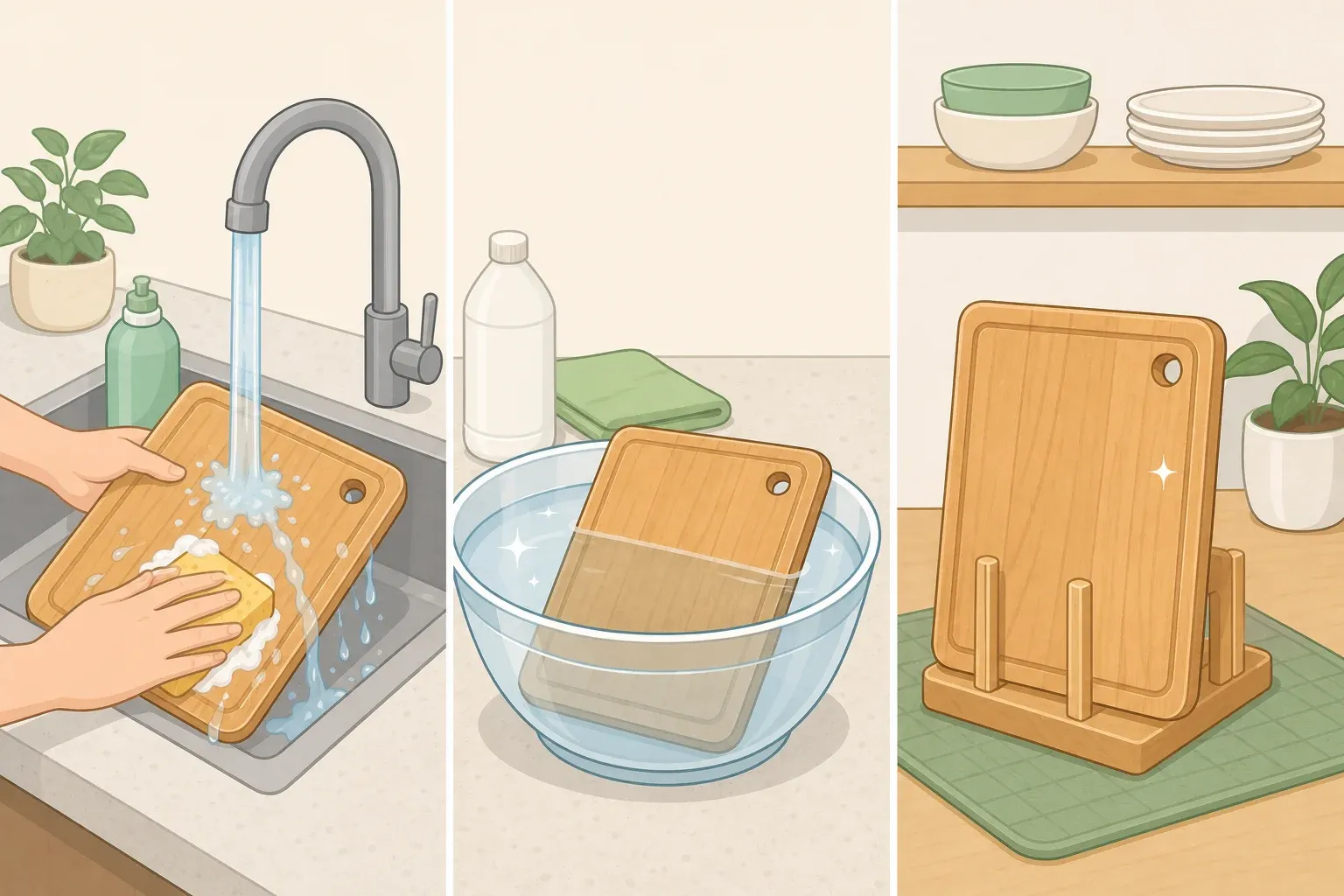
How to Clean Wooden Cutting Boards: Wash, Sanitize, Store
The best way to clean a wood cutting board is also the simplest: wash it with hot, soapy water after every single use, rinse it clean, and let it air-dry completely before it goes back in the cabinet or gets stacked with other boards. That's the baseline routine food-safety researchers recommend for wood and plastic boards alike, and it works because bacteria need moisture and leftover food residue to multiply. Take those away every time you cook, and you've solved most of the problem before it starts, according to N.C. Cooperative Extension and Consumer Reports.
Here's why that habit matters more than which material you bought. A 2025 lab comparison found that sugar maple boards knocked detectable E. coli down to the test's lower limit within two hours, even with no cleaning at all, while HDPE plastic showed higher bacteria detection overall. The same research suggests wood may carry some natural bactericidal properties that reduce microbial loads compared to plastic. But the researchers also flagged a catch: wood's structure can trap microorganisms where normal washing can't reach them, with a risk those bacteria work their way back to the surface later. That's the real argument for washing every time, not just when a board looks dirty.
This guide covers the full routine: the wash-dry habit to build daily, when sanitizing actually matters, the one household habit that does more for food safety than any material swap, and how to tell when a board is too worn to keep using. None of it requires special equipment. If you've got dish soap and a sink, you're set.
What you'll need to clean a wooden cutting board
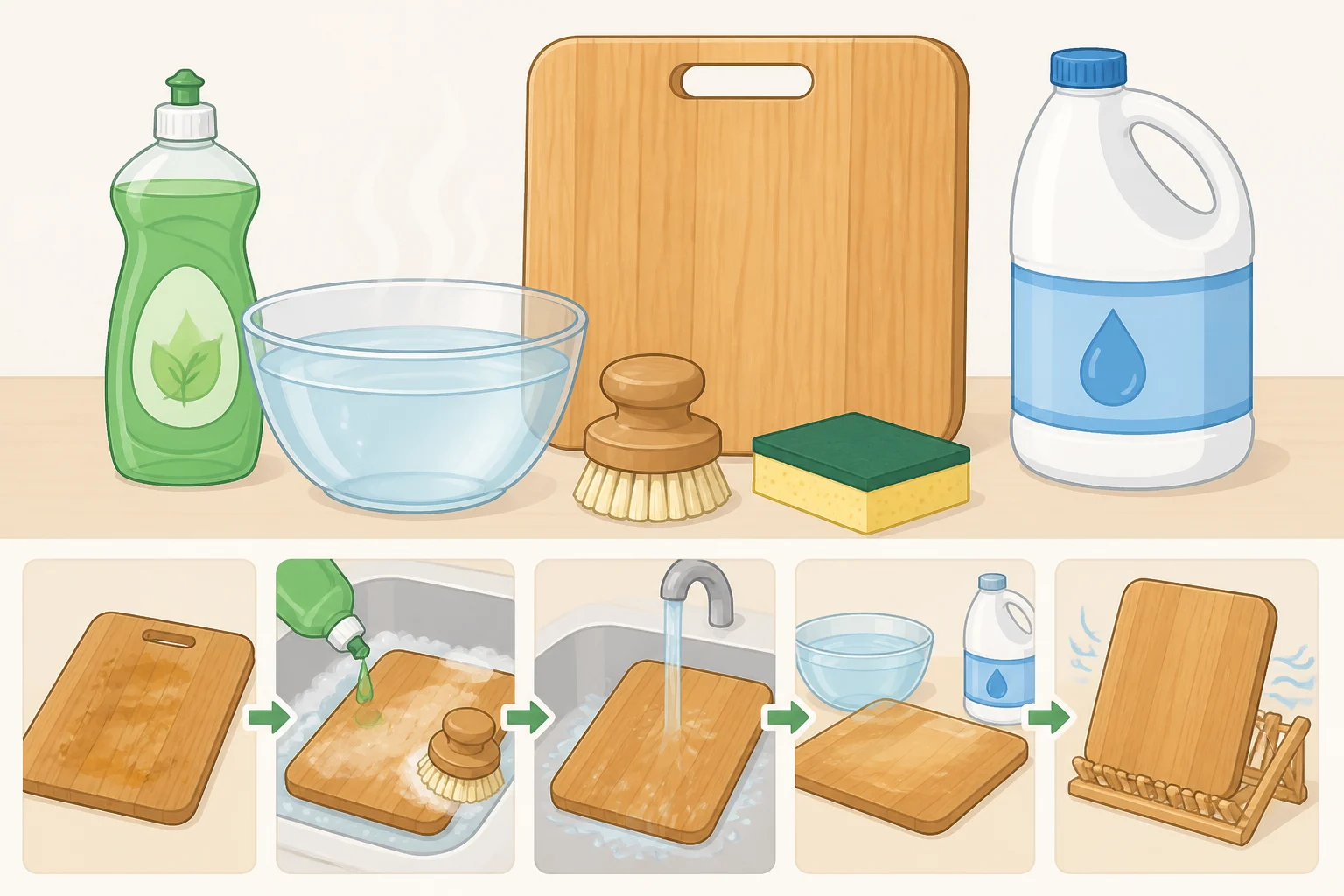
- Dish soap
- Hot water
- A sponge or scrub brush
- A clean towel or a drying rack that lets air reach both sides of the board
- Unscented liquid chlorine bleach, for periodic sanitizing
- A container for mixing the bleach solution
This is routine food-safety maintenance, not a repair job or a deep-clean project, and it's entirely beginner-friendly. If you're working with a bamboo board, note that bamboo is harder and less porous than other wood species, so it absorbs less moisture and resists knife scarring better. It gets washed the same way as any other wooden board, with one small difference covered in the sanitizing section below, according to N.C. Cooperative Extension.
How to clean wooden cutting boards after every use
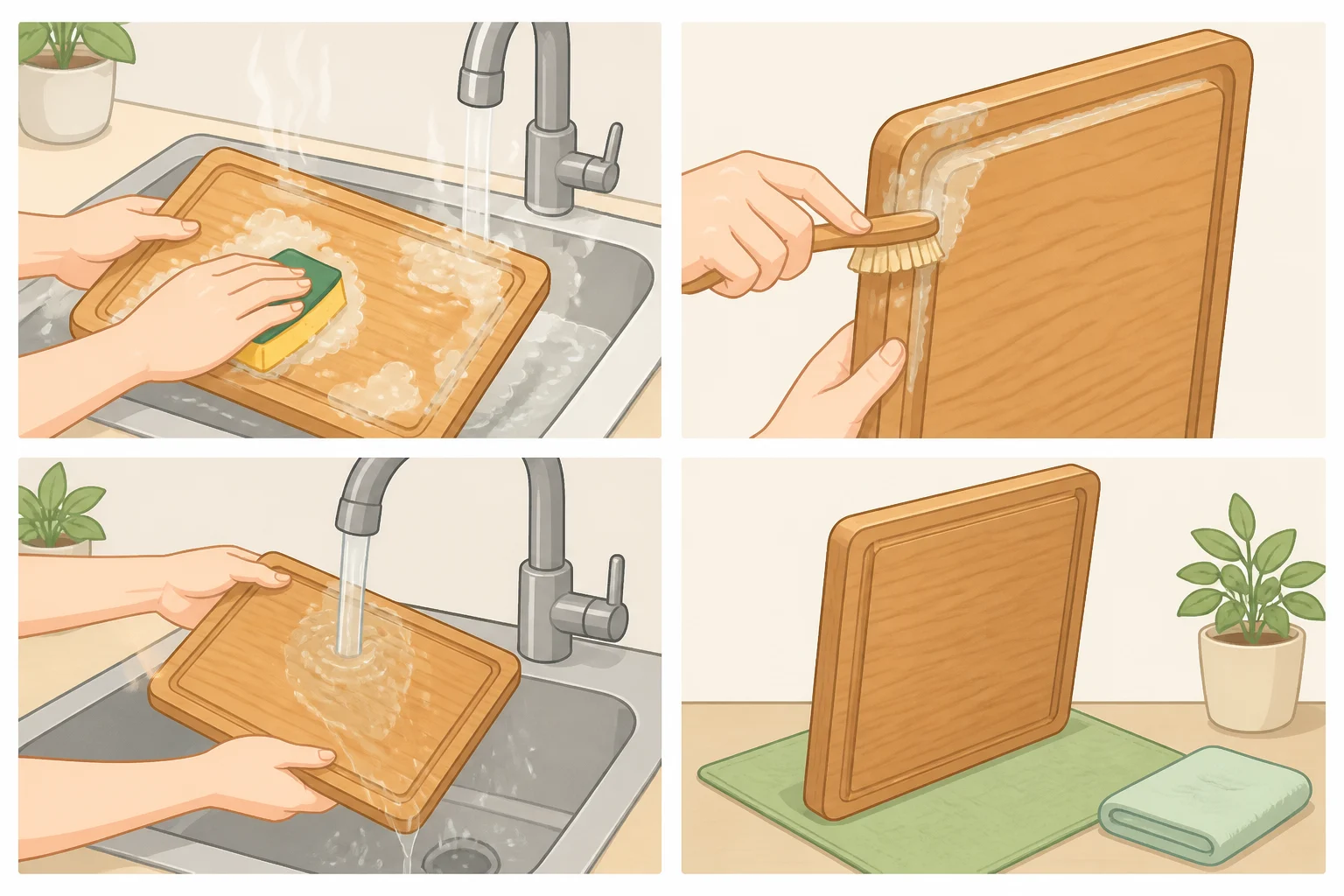
- Wash immediately after cooking. Wet the board, add a squirt of dish soap, and scrub both faces, the edges, and any knife grooves or marks with hot water. Do this even after light jobs like slicing bread, not just after cutting raw meat. Consumer Reports recommends the same habit for wood and plastic boards alike, since it's the washing itself, not the material, that keeps bacteria from building up.
- Rinse with clear water until no soap film remains on either side, per N.C. Cooperative Extension.
- Dry it completely before storing. Stand the board on its edge or set it on a rack so air reaches both faces, and don't put it away until it's dry to the touch. Moisture-loving bacteria need dampness to grow, so skipping this step undoes a lot of the washing you just did.
Skip the dishwasher for wood. Most plastic boards can handle one, but wood boards should be washed by hand, since repeated dishwasher cycles expose them to prolonged water contact they aren't built for, Consumer Reports notes. When you're storing multiple boards, avoid stacking them while they're still damp or in a way that traps moisture between surfaces, per N.C. Cooperative Extension.
You'll know you're done when the board feels clean with no greasy film, no stuck-on residue in the grooves, and no lingering food smell. If it's dry to the touch on both sides, it's ready to go back in the cabinet.
How to sanitize a wooden cutting board
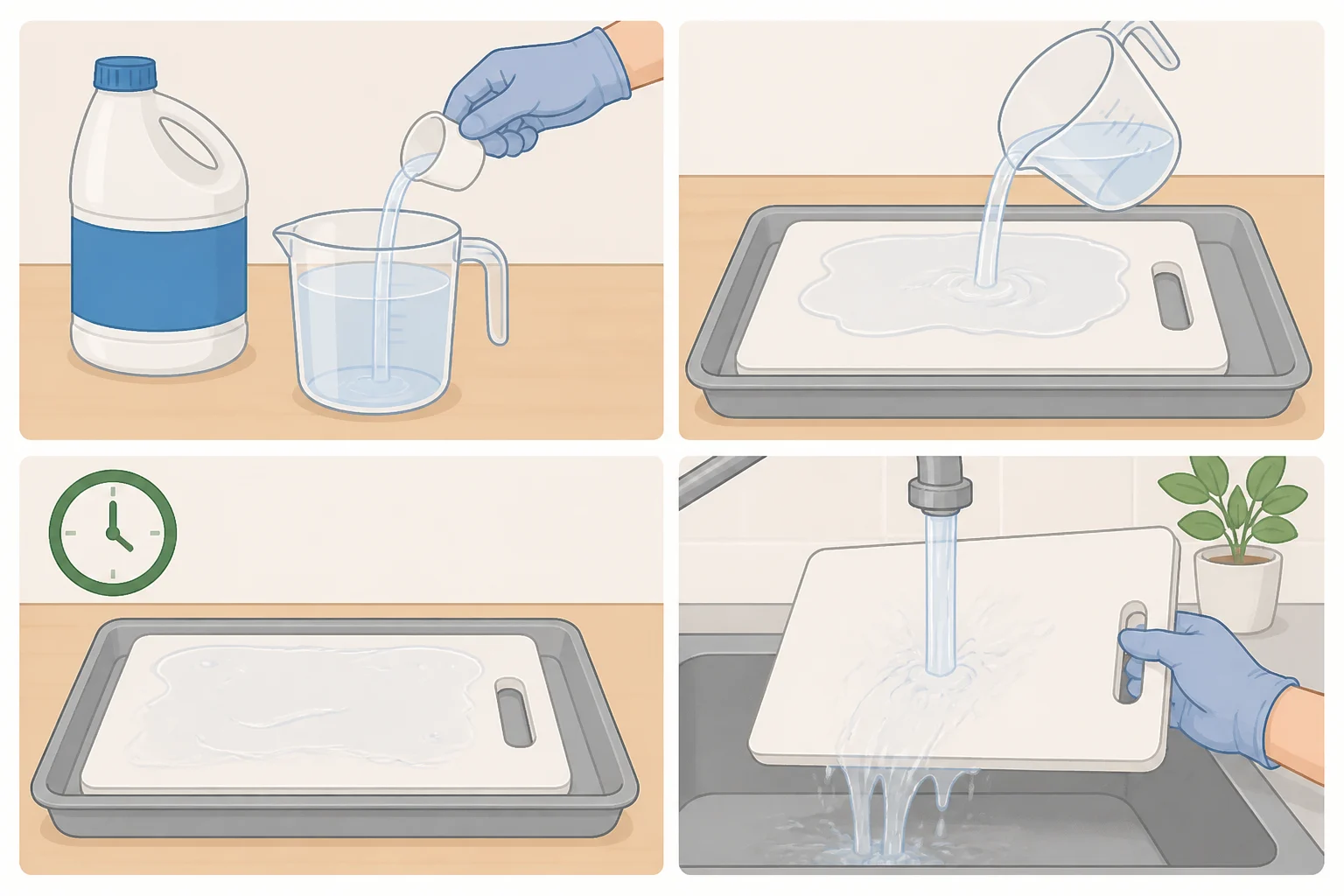
Washing handles day-to-day use, but it's worth adding a periodic sanitizing step on top of it, as an extra layer of protection rather than a replacement for washing after every use, per N.C. Cooperative Extension and Consumer Reports.
- Mix the solution. Combine 1 tablespoon of unscented liquid chlorine bleach with 1 gallon of cool or warm water. This same ratio works on wood and plastic.
- Flood the surface with the solution and let it sit for several minutes.
- Rinse with clear water, then let the board air-dry completely before storing it, using the same drying standard from the daily routine above.
If you're working with a bamboo board, rub it with mineral oil once it's fully dry. This helps prevent the wood from cracking over time, according to N.C. Cooperative Extension.
This step is a periodic deep clean, not a substitute for washing after every use or for keeping raw and ready-to-eat foods on separate boards, which matters more than most people think. That's the subject of the next section.
Why one cutting board for everything is the bigger risk
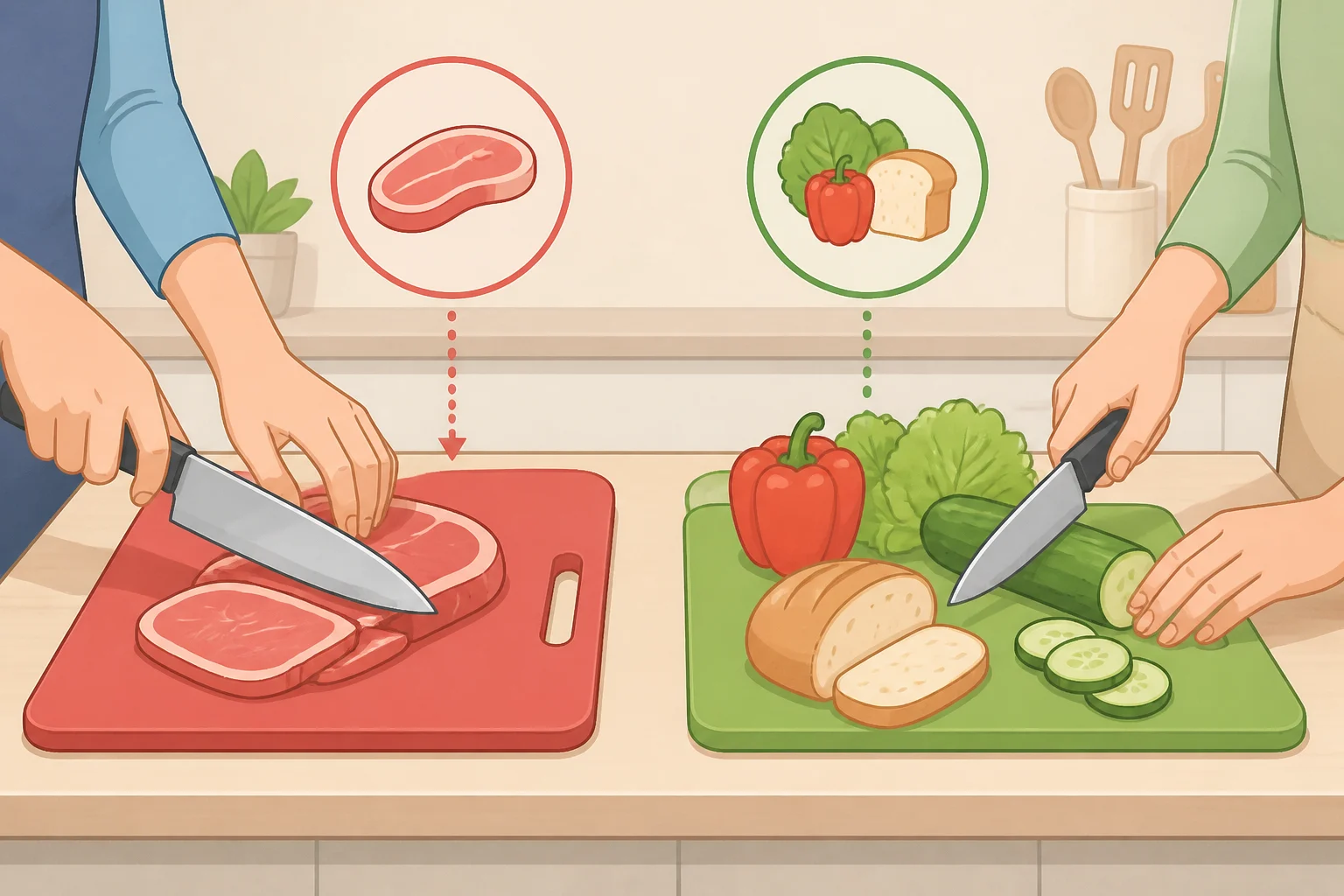
A study of 100 household cutting boards in one Brazilian city found that plastic boards carried higher counts of general bacteria, specifically aerobic mesophilic bacteria and Enterobacteriaceae, than wood. But newer wooden boards also tested high for those same bacteria, and when it came to the pathogens people actually worry about, the material didn't matter much: Listeria monocytogenes turned up on 3% of boards and E. coli on 5%, with no meaningful difference between wood and plastic, according to an LWT study.
The detail that matters more than any of that material comparison: 87% of the households in that study used a single board for every type of food, and three out of four had been using the same board for more than two years without replacing it. Using separate boards addresses a common cross-contamination pathway that shows up regardless of what your board is made of.
The fix is simple and doesn't cost much. Keep one board for raw meat, fish, and poultry, and a separate one for ready-to-eat foods like bread, fruit, and vegetables, says Sana Mujahid, PhD, manager of food safety research and testing at Consumer Reports. If you only own one board right now, this is the upgrade to make before you worry about anything else in this guide.
Wear matters too. Consumer Reports recommends replacing any board once it becomes heavily scarred, and the Brazilian study backs that up at the microscopic level: worn boards examined under scanning electron microscopy showed biofilm-like structural characteristics that newer boards didn't have. That applies to boards with real wear, deep cuts and gouges built up over years, not the occasional light knife mark.
If grooves stay stained or a smell lingers even after a full wash-and-sanitize cycle, treat that as your signal to retire the board rather than keep scrubbing harder. No amount of soap and bleach fixes wood that's worn past the point of cleaning.
Keeping it simple from here
Build the habit, not a checklist you have to think about every time: wash with hot, soapy water after every use, rinse, and dry the board completely before it's put away. Add periodic sanitizing with the bleach solution for extra peace of mind, especially if you only have one board doing double duty.
A clean board looks and feels clean, with no grease film, no odor, and no dampness anywhere on it. If you've been reaching for the same board for raw chicken one minute and sliced tomatoes the next, that's the change worth making this week, not a new cutting board. Save the replacement decision for when scarring runs deep, stains won't rinse out, or odor persists no matter how carefully you wash and sanitize. At that point, cleaning harder won't help. A new board will.




Comments
Be the first, drop a comment!