



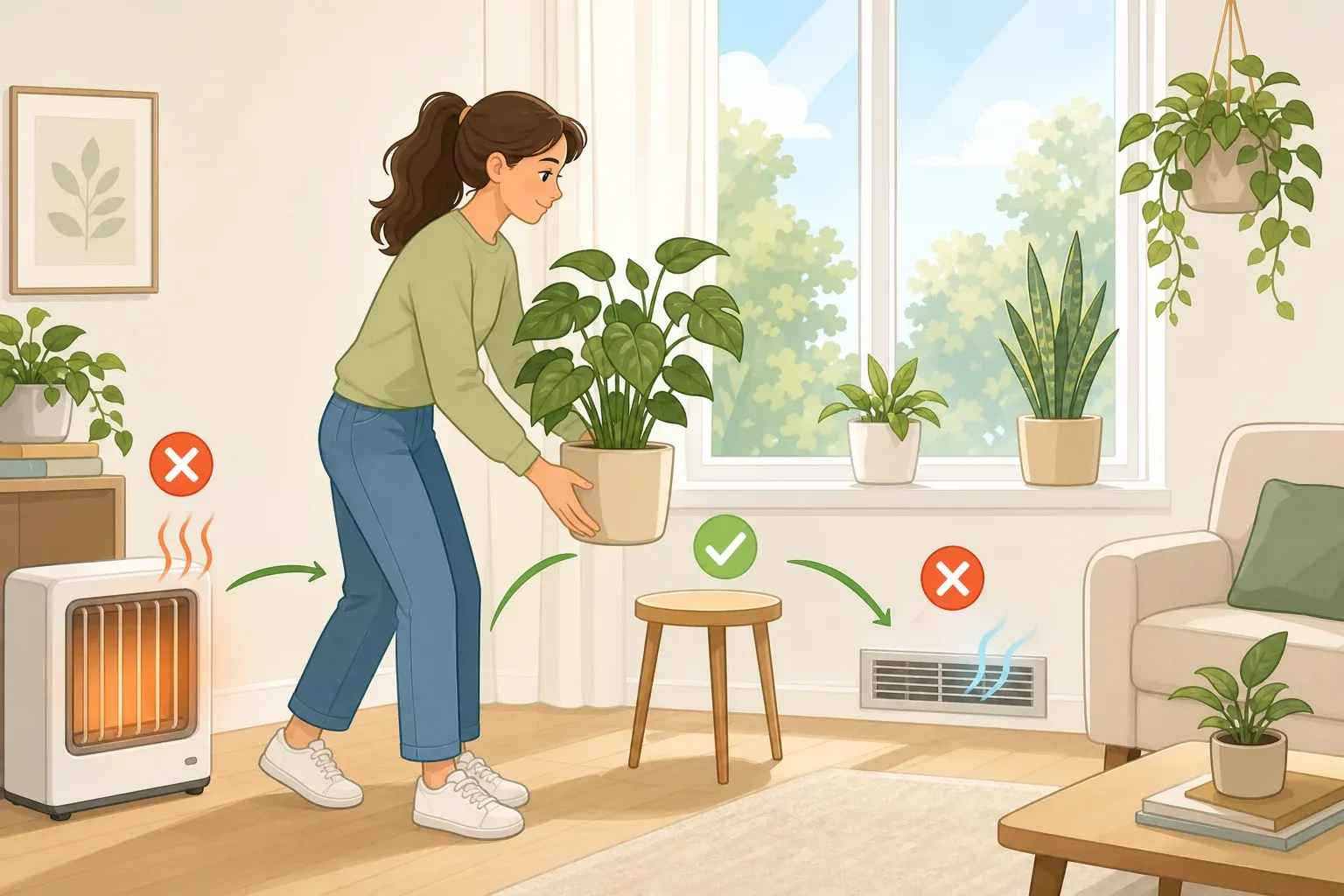
A plant that gets watered on schedule and fed on time can still struggle because of its location. A plant can show stress even when the watering routine hasn't changed, which is why it's worth inspecting the location before adjusting several care variables at once.
Knowing where not to put houseplants matters as much as knowing how to water them. Most foliage houseplants do best with daytime temperatures between 65 and 75°F and nights that run 5 to 10 degrees cooler. It also helps to avoid extreme temperature changes, like hot and cold air blasts near vents and radiators, and direct contact with cold window panes. Add a plant-chewing pet to the mix and placement becomes a safety question too: common houseplants like pothos, philodendron, monstera, and peace lily contain calcium oxalate crystals that irritate a pet's mouth if chewed.
Quick placement audit: what to check before you set a plant down
Before deciding where a plant goes, walk the spot through four checks. These catch most of the common houseplant placement mistakes before a pot ever touches the surface.
Airflow and temperature. Is it near a vent, a radiator, or a window that gets cold at night?
Light. Does direct, unfiltered sun hit that spot for a stretch of the day?
Pet access. Can a dog reach it, or could a cat jump or climb to it?
Pot and moisture. Will water pool in a saucer there, and how dry does the air run in that room?
Pet access is the one worth weighing most heavily. Getting the others wrong costs a plant some leaves; getting this one wrong can mean a trip to the vet. It gets its own section below before the numbered method starts.
What you need for a houseplant placement check
Nothing on this list requires special equipment. A few things make the audit easier to run accurately:
The plant's care tag or botanical name, since light and toxicity advice both depend on the specific species, not just "it's a houseplant."
A clear view of the window, vent, radiator, and floor area around the spot being considered, ideally checked at a few different times of day.
A saucer or cachepot that lets water drain without leaving the pot sitting in it.
An optional hygrometer, useful mainly in a room that feels unusually dry in winter.
Temperature and airflow: three spots that shock foliage plants
1. In the direct path of a heating or AC vent
Hot and cold air blasts from heating and air-conditioning vents are among the extreme temperature changes worth avoiding.
Move the pot out of the vent's direct airflow. It can stay in the same general area of the room as long as the new spot is otherwise suitable for that plant. Over the next week or two, watch for any easing of leaf drop or browning that started before the move; if symptoms keep showing up, the vent probably wasn't the only issue.
2. Right next to a radiator or other heat source
Radiators with vents are also an extreme-temperature-change hazard. Move the plant so it's no longer sitting directly beside the radiator. After relocating it, check the soil according to that plant's own care instructions rather than adding water automatically. Heat sources change how fast soil dries out nearby, so sticking to the plant's normal schedule and checking before watering is safer than guessing.
3. Pressed against a cold windowpane
Cold glass can damage leaf tissue on its own, which is why extra care is needed near cold window panes in winter.
Keep foliage from touching the glass. As a precaution, pull the pot back a short distance on the coldest nights rather than relying on how warm the room itself feels. If leaves that were touching the pane start looking damaged, trim them back and keep the rest of the plant a few inches clear from then on.
Light exposure: one spot that's easy to get wrong
4. In harsh, unfiltered direct sun for shade-tolerant plants
Avoid placing houseplants in direct sun.
Check the plant's own care tag or botanical name before moving anything, since this warning doesn't apply identically to every species. A shade-tolerant foliage plant sitting in hours of unfiltered sun is a different situation than a sun-loving plant in the same window. If a plant that's supposed to prefer shade starts showing stress in a bright spot, check its light exposure before changing the watering routine, since that's the easier variable to get wrong by mistake.
Where to keep houseplants away from pets
5. Anywhere a pet can reach or climb to
A long list of popular houseplants, including pothos, philodendron, monstera, ZZ plant, peace lily, dieffenbachia, Chinese evergreen, elephant ear, anthurium, and calla lily, contain insoluble calcium oxalate crystals. The leaves and stems hold tiny needle-shaped crystals called raphides that release into a pet's mouth when chewed, causing irritation and pain.
After a pet chews one of these plants, watch for drooling, retching, vomiting, loss of appetite, and pawing at the mouth. The severity is generally low, with many exposures manageable at home, but there should be precautions.
If chewing has already happened, remove the plant from the pet's reach right away. A small amount of milk, yogurt, or vanilla ice cream, checked for xylitol, can ease mouth irritation shortly after exposure. Contact a veterinarian or ASPCA Poison Control at (888) 426-4435 if ingestion is suspected. If a pet is having trouble breathing or swallowing, skip home care entirely and get to a veterinary hospital right away.
Floor level isn't the full picture. A shelf or windowsill that looks safely out of paw's reach isn't necessarily out of a cat's jump range, so plan around climbing ability, not just height off the floor. If a pet routinely chews houseplants or climbs furniture and shelving, a higher shelf may not hold up as a long-term fix for a toxic species. Choosing a plant-free room, or a species a veterinarian considers pet-safe, tends to be more dependable than relocation alone.
True lilies versus peace lilies
True lilies carry a separate and far more serious risk than the calcium oxalate plants above. Cats are extremely sensitive to true lily species, and ingesting as little as two leaves or flower parts has been linked to death. Signs typically appear within 12 hours, with kidney failure possible in the following two to three days.
Peace lily, genus Spathiphyllum, is a different plant and not a true lily, but that doesn't make it a safe substitute. Peace lilies' calcium oxalate crystals are capable of causing irritation and swelling of the mouth, tongue, and throat, with breathing difficulty and heart palpitations possible in severe cases. The names are easy to confuse, but peace lilies still shouldn't be treated as safe for pets. Check a plant's tag or botanical name before assuming either one is harmless, and in a home with cats, keeping true lilies out of the house entirely is the safer call rather than relying on placement alone.
Pot and humidity setup: two more mistakes that hide in plain sight
6. Sitting in standing water
Make sure pots are never left sitting directly in water, whether that's a saucer underneath or a decorative outer pot around the nursery container.
Empty the saucer after watering instead of letting it collect. A pot that drains into standing water keeps its roots wet long after the top of the soil looks dry, which is a common path to root rot.
7. A dry corner with no humidity help
Most homes drop below 30% humidity in winter, a level some houseplants tolerate poorly.
Misting isn't a dependable fix on its own. It raises humidity only briefly, needs constant repeating, and can increase disease risk on plants that don't like wet leaves. Better options for a naturally dry spot include running a humidifier nearby, setting the pot on a tray of pebbles with the water level kept below the base of the pot so it never sits directly in it, or grouping several plants together to raise the humidity immediately around them.
Checking that the new spot is actually working
A new placement is only as good as what happens to the plant in the following weeks, not how the spot looks on day one. Check that foliage isn't touching cold glass, that the pot isn't sitting in drainage water, that the plant is getting the kind of light its care tag recommends, and that a pet genuinely can't reach or climb to it.
For homes with cats, treat "out of reach" as a climbing question rather than a floor-height one, and double-check any lily-type plant's botanical name before deciding it's fine where a cat can get to it. If a pet shows trouble breathing or swallowing after chewing a plant, skip home remedies and get to a vet.
Not every room needs to match perfectly. Start by correcting direct airflow, cold-glass contact, unsuitable direct sun, standing water, overly dry air, and pet access, then leave the rest of the house alone.


Comments
Be the first, drop a comment!