



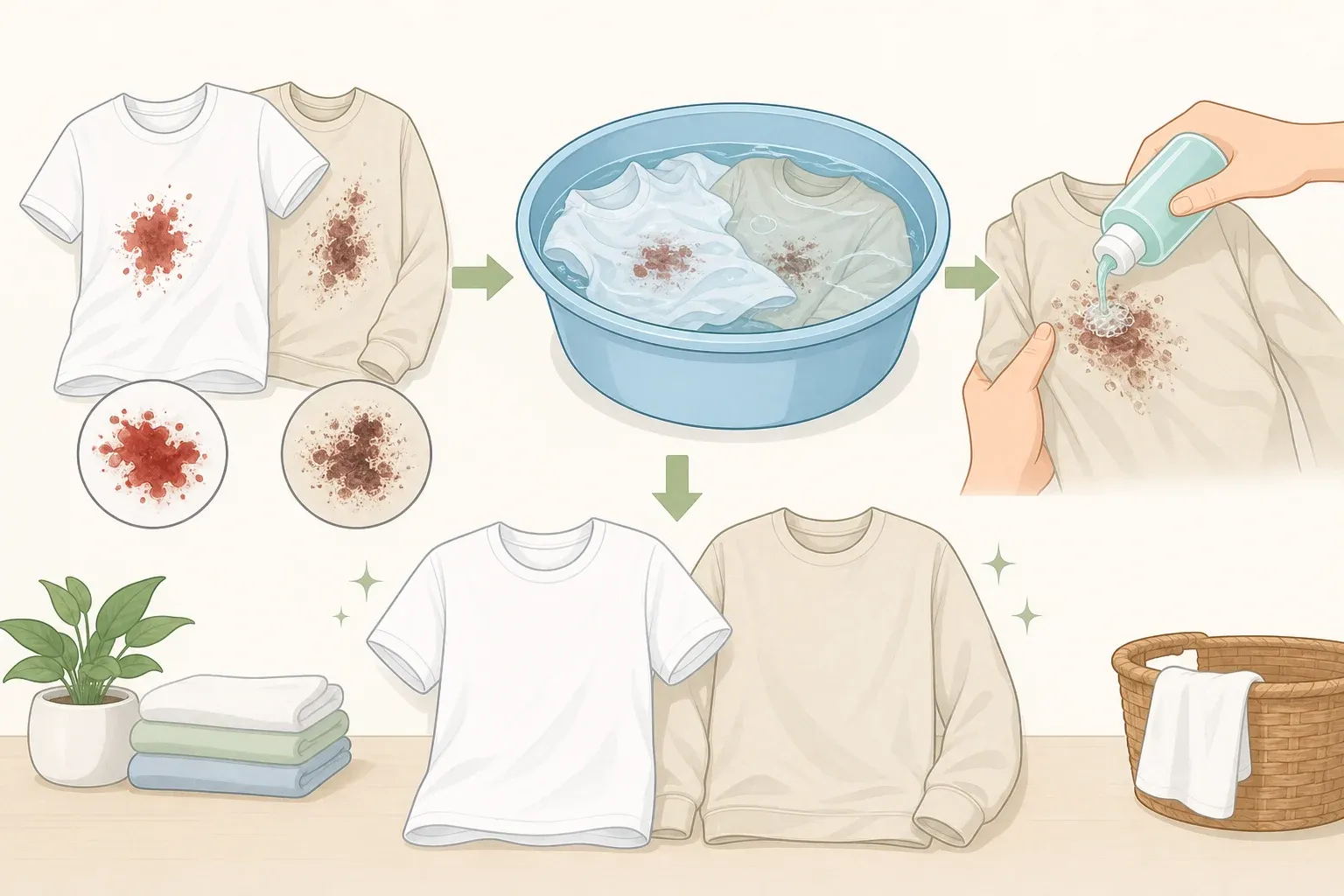
How to Get Blood Stains Out of Clothes: A Complete Guide
If you're wondering how to get blood stains out of clothes, start with cold water, right away, on anything washable. Heat is what turns a treatable stain into a stubborn one: a dryer cycle or hot iron can set blood into the fibers, making it much harder, sometimes impossible, to remove. A cold rinse gives you the best chance of removing it before it sets.
Cold water is the starting point, not the whole plan. Fresh stains are easier to treat with a cold rinse and detergent. Dried stains need a longer soak and an enzyme treatment. A stain that's already been through the dryer is tougher to shift and may take more than one round of treatment. Silk, wool, and anything marked dry-clean-only follow a separate path, since water and standard stain removers can damage those fabrics.
The American Cleaning Institute's stain guide backs the cold-water rule directly, warning that hot water will set a blood stain before there's a chance to treat it. That same ACI stain removal guide treats dried stains differently, calling for a warm-water enzyme presoak once blood has had time to set. That warm-water step applies specifically to the enzyme presoak on dried stains; cold water is still correct for rinsing and regular laundering. The method below splits by stain age and fabric type for that reason.
If the item already went through a hot wash or the dryer, it's still worth treating. Summit Brands notes that most old blood stains aren't permanent, and persistence with an enzyme-based treatment can still lift a stain that's already been washed and dried, even if it takes a few extra rounds.
What you'll need
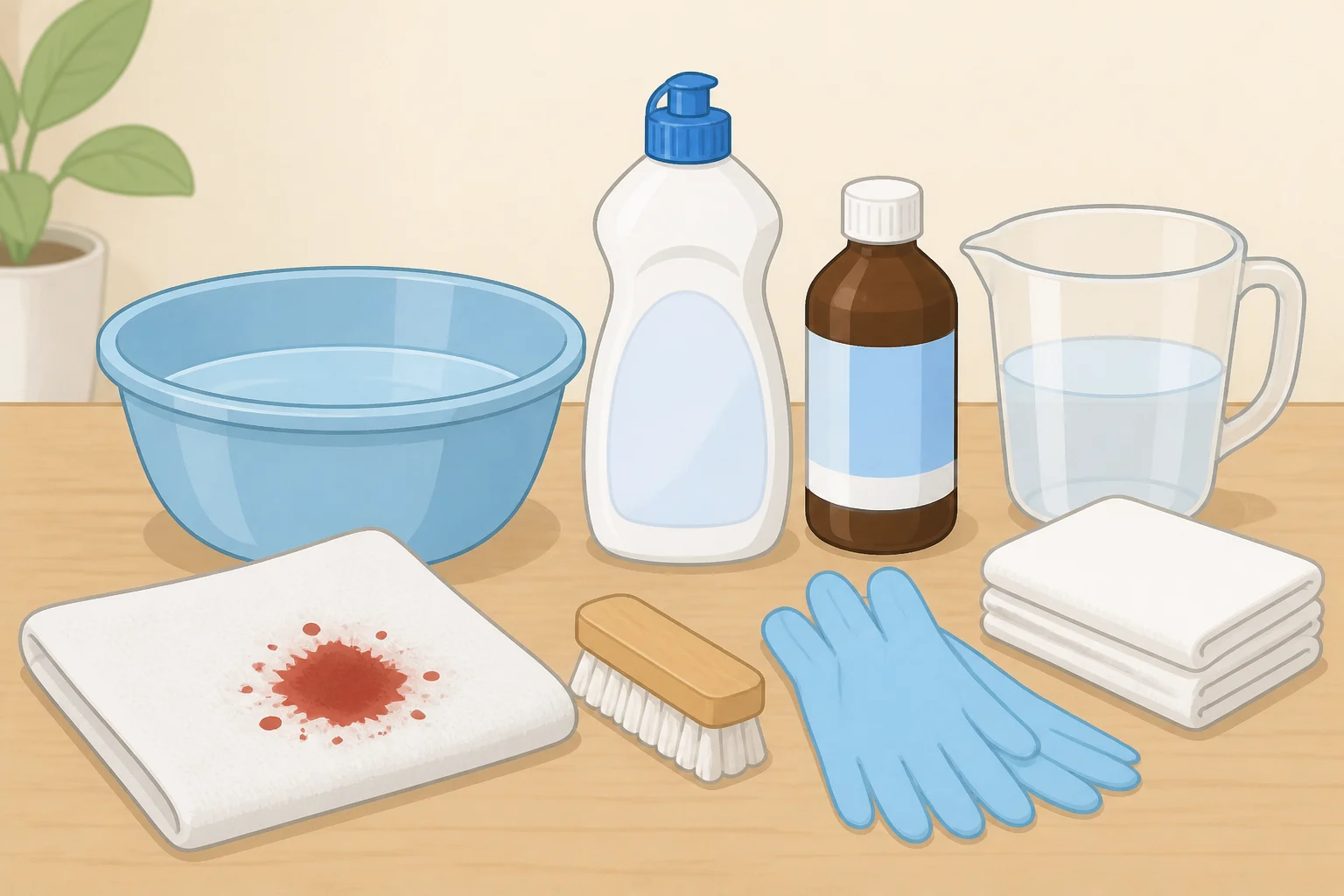
Basic supplies cover most fresh stains:
- Cold running water
- Bar soap or liquid laundry detergent
- A clean towel
Keep these on hand in case the stain doesn't fully lift:
- An enzyme-based laundry presoak or stain remover
- 3% hydrogen peroxide
- Oxygen bleach or sodium hypochlorite bleach, only if the care label allows it
- Clean white cloths or a sponge
- Gloves
Use one compatible treatment at a time. Rinse thoroughly between methods and reassess before adding anything else.
Check the fabric and stain type before you start
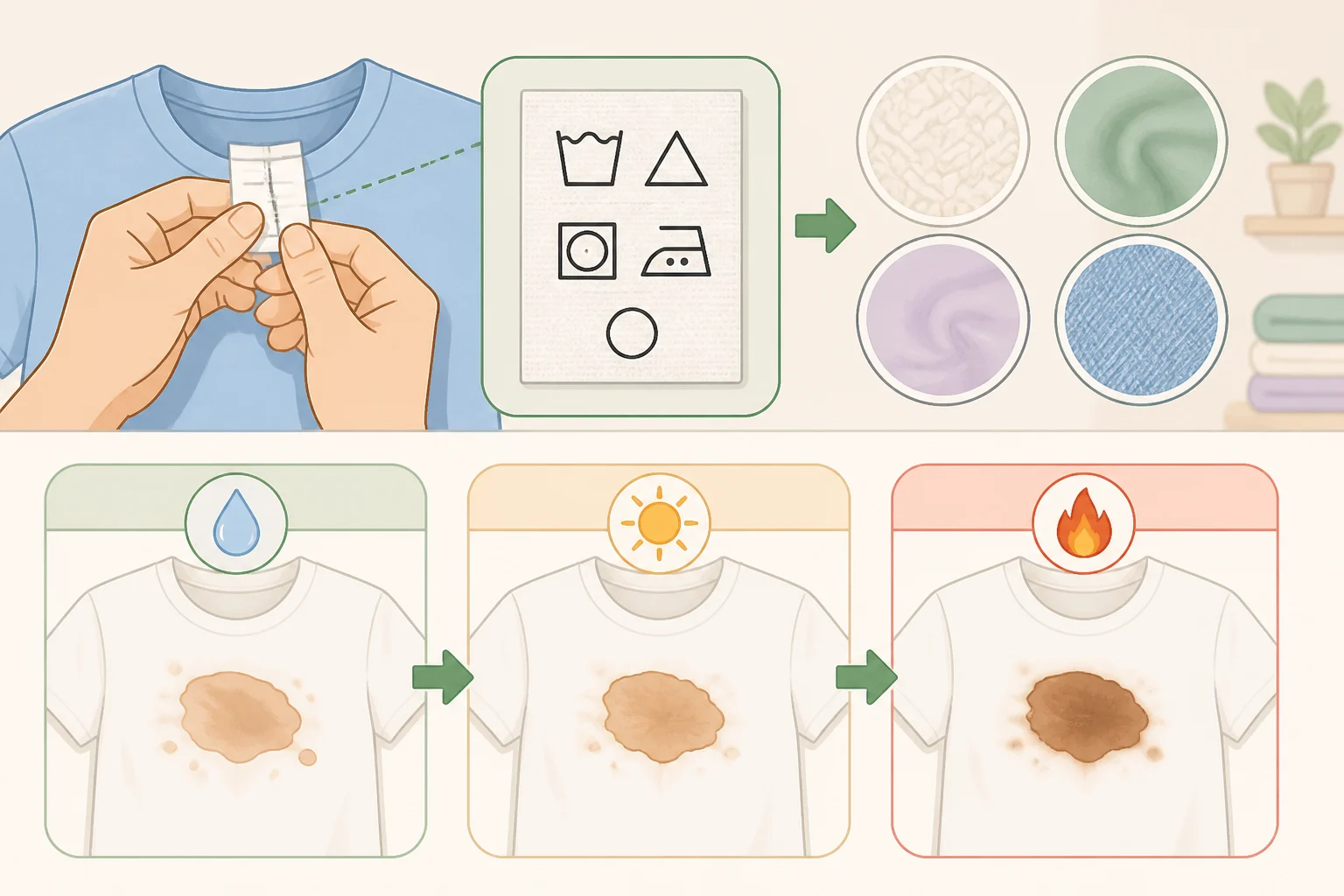
Knowing how to wash blood out of clothing starts with two checks, before any water touches the stain: what the fabric is, and how old the stain is.
Read the care label first. If the fabric is unclear or how it will react is a guess, the safer move, per Texas A&M's guidance as summarized by Launderwise, is to hand the item to a professional dry cleaner instead of experimenting.
Next, figure out which situation applies:
- Fresh – still damp or very recent
- Dried – air-dried, never run through heat
- Heat-set – already been through a dryer cycle or an iron
This determines which section below to follow.
Pay close attention if the garment is silk or wool. These are protein fibers, and the Smithsonian Museum Conservation Institute warns that protein-based enzyme cleaners can damage them, as summarized by Launderwise. Water also weakens these fibers over time, leaving them more prone to stretching and tearing. Skip ahead to the delicates section below if that's the case.
Whatever method ends up being used, test it on a hidden seam first, before treating the visible stain, to rule out discoloration or fiber damage. If the item is vintage, unlabeled, or something not worth the risk, stop here and take it to a dry cleaner.
How to get blood stains out of clothes: the basic method
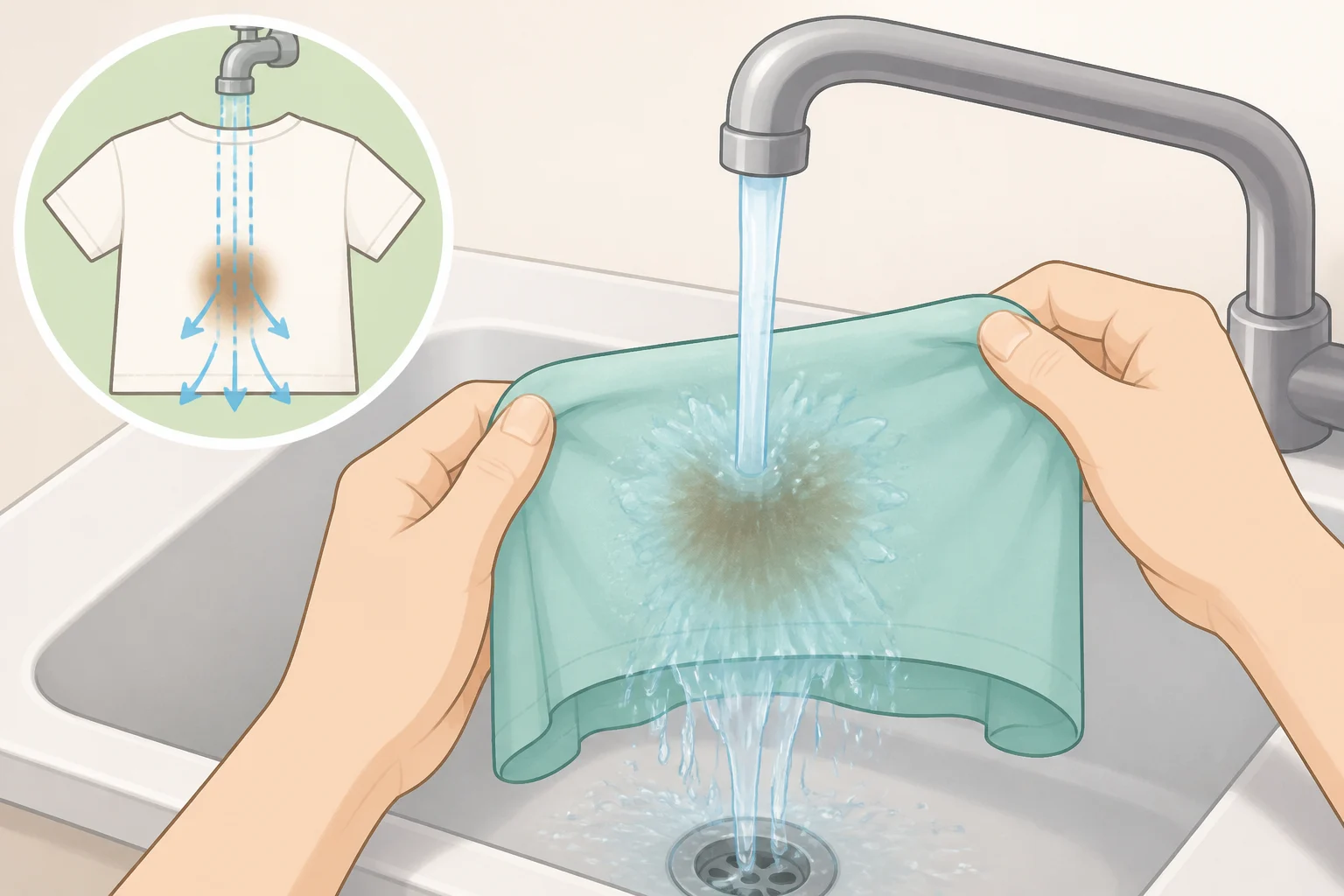
Fresh stains respond well to a basic cold-water routine, and this is the method most blood stains need.
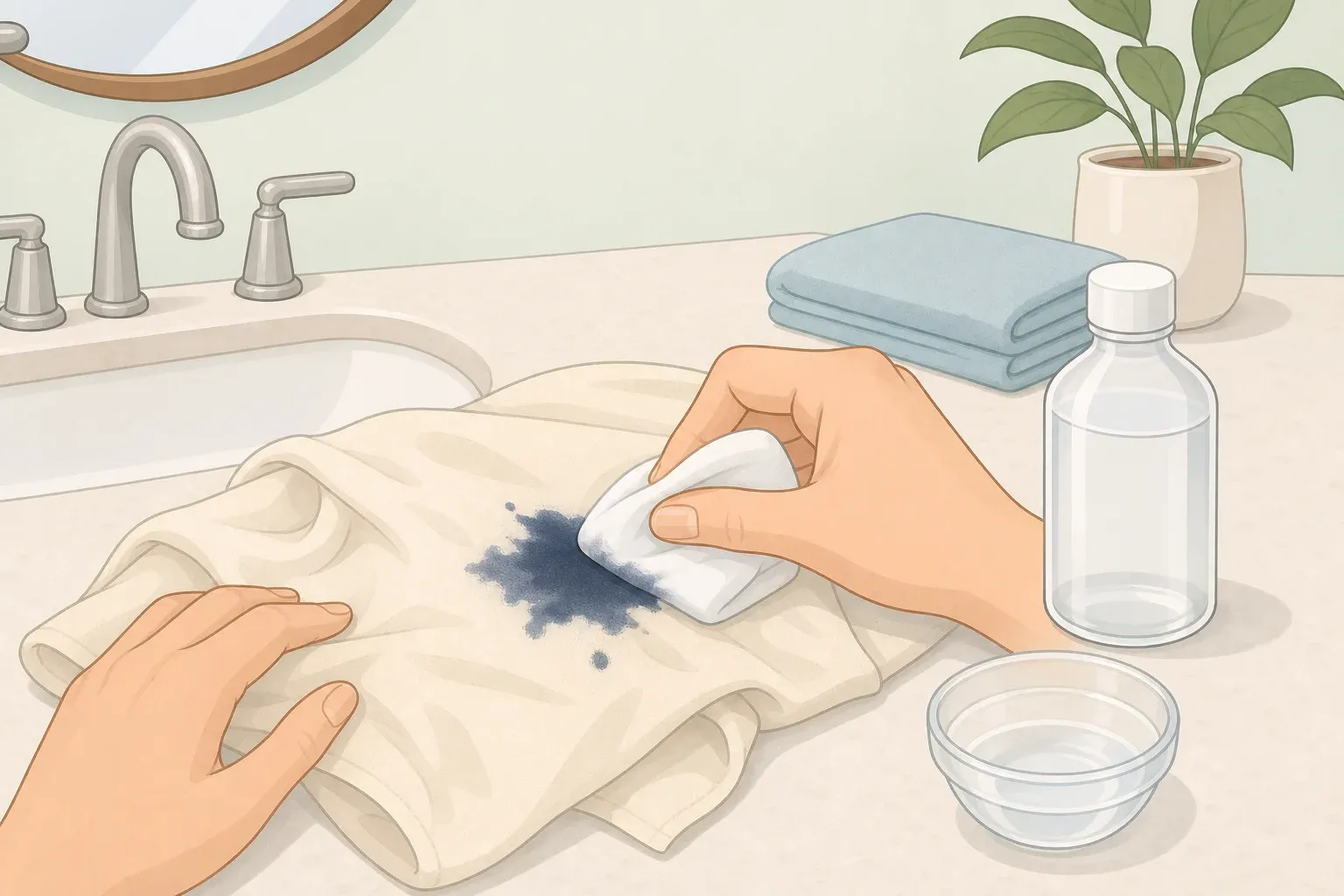
- Flush the back of the stain under cold running water. Texas A&M's method, summarized by Launderwise, runs water through the wrong side of the fabric so the stain gets pushed out rather than driven deeper into the weave.
- Work detergent or bar soap into the wet fabric. Consumer Reports' approach, also summarized by Launderwise, rubs it in gently with fingers or a soft toothbrush and lets it sit about 10 minutes before washing.
- Wash on a cold cycle. Keep the water cold here too; this isn't the step to switch to warm.
Go easy on the scrubbing. Texas A&M's general stain advice warns that aggressive rubbing can roughen fibers or strip color through abrasion, per Launderwise. Work the detergent in with light pressure instead.
Check the stain while the fabric is still wet, before it goes anywhere near a dryer. If any trace remains, don't dry it hoping it'll fade later; heat at this point locks in whatever's left. Move on to the dried-stain steps instead.
How to get dried blood out of clothes
Dried stains take more time and a stronger product than fresh ones. There's an important distinction first.
If the stain air-dried but never saw heat, the sequence below is the next move, usually within a round or two. If it's already been through a dryer or iron, follow the same steps but expect to repeat them more than once, as noted earlier. A faint shadow sticking around after repeat treatment is a realistic outcome on a heat-set stain, not a reason to give up on the garment.
- Soak in cool water for 30 minutes or longer. A Launderwise summary of UGA Extension guidance recommends this as the first move once a stain has had time to set.
- Pretreat with an enzyme product if the stain is still visible. The American Cleaning Institute notes that protease enzymes are built specifically to target protein-based stains like blood. For a dried stain, ACI's stain removal guide calls for a warm-water enzyme presoak at this stage. Use the water temperature and soaking time listed on the product label, and skip this step entirely on silk or wool.
- Apply a second round directly to the stain if it's still there. ACI's laundry basics guide recommends repeating the enzyme treatment on the spot before moving to the wash.
- Launder according to the care label, and hold off on the dryer or iron while any trace of the stain remains.
If the stain is still hanging on after these four steps, move to the peroxide-or-bleach section below next, rather than layering it on top of what's already been done. Never mix stain treatments in the same pass, either. Texas A&M warns against combining stain removers, since mixing bleach with vinegar or ammonia can release harmful chlorine gas, as summarized by Launderwise. Rinse thoroughly between any two products tried.
How to remove blood stains with hydrogen peroxide or bleach
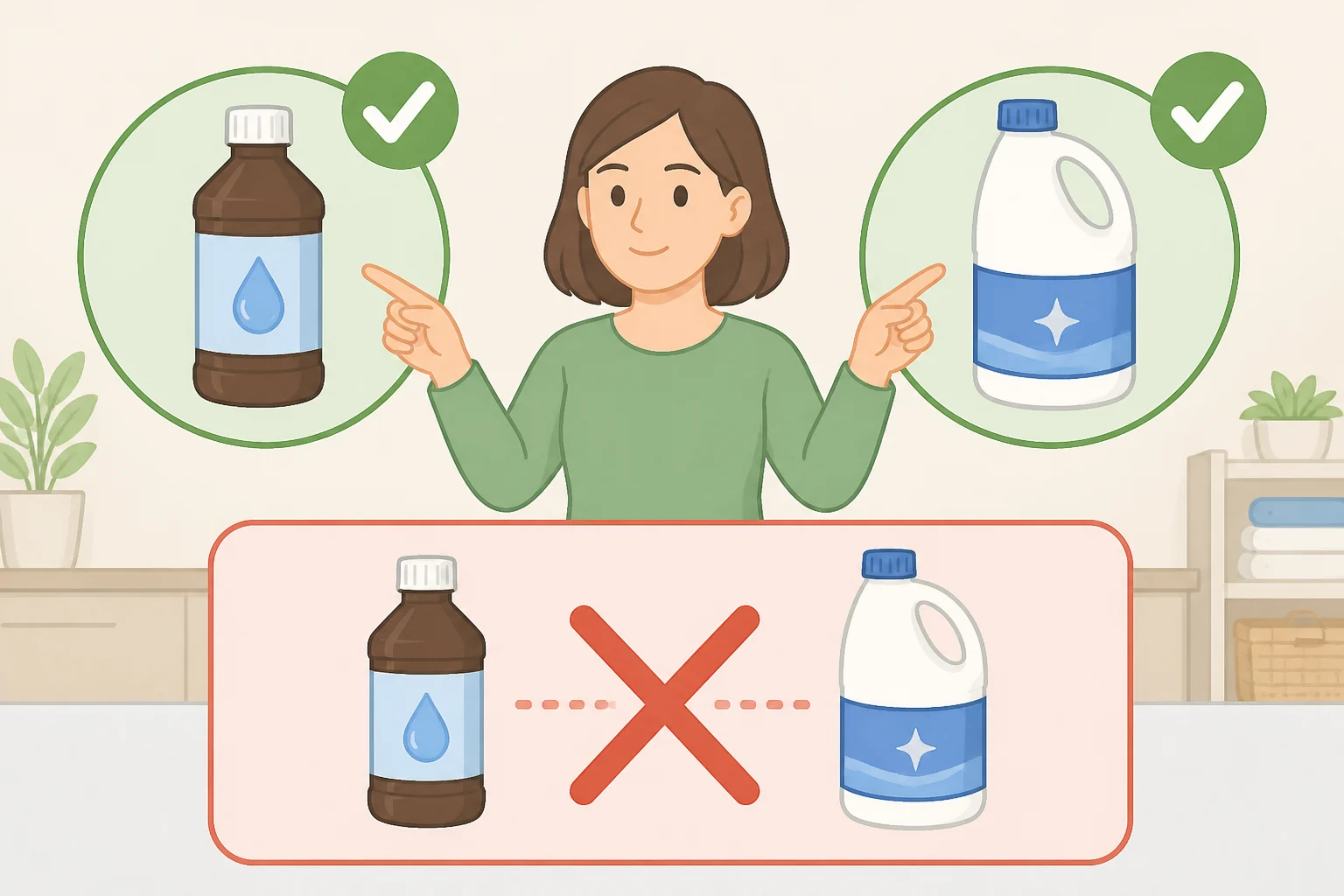
If a stain survives the soak-and-enzyme sequence, hydrogen peroxide and bleach are two separate options, not a combined next step. Pick one based on what the care label allows and what the hidden-seam test showed, then stop there; don't try the other option on the same stain afterward.
Option 1: hydrogen peroxide. UGA Extension lists this as a later treatment for stains that remain after the soak-and-enzyme steps, not a first move. The Smithsonian Museum Conservation Institute warns that peroxide can decolorize some dyes and slightly weaken fibers, so test it on a hidden seam first, as summarized by Launderwise. If the test looks fine, apply a few drops of 3% hydrogen peroxide to the stain, let it sit for 1 to 3 minutes, then rinse thoroughly and launder, following the method Launderwise attributes to UGA Extension. Rinse as soon as that window closes rather than leaving it on longer. Wear gloves while handling it and work somewhere with good airflow; peroxide is a mild bleach, and direct, repeated contact with skin is worth avoiding.
Option 2: bleach. This applies only when the care label permits it and a hidden-area test shows no color change. ACI's laundry basics guide outlines two routes: oxygen bleach, added directly to the wash water before the clothes go in, or diluted sodium hypochlorite bleach, used strictly as labeled. Never pour powdered bleach directly onto wet fabric.
Whichever option you use, don't mix it with another stain treatment. Rinse the garment completely before considering anything else, and follow the product label exactly. Skip both peroxide and bleach altogether if the care label crosses out the bleach triangle, or if the hidden-seam test shows any color change. A professional cleaner is the better call at that point than pushing further at home.
Removing blood from silk, wool, and dry-clean-only fabric
Standard stain removal can damage these fabrics, so this section redirects rather than extends the process above.
Silk or wool: skip enzyme products and hydrogen peroxide entirely. The Smithsonian Museum Conservation Institute's position, as summarized by Launderwise, is that protein enzymes can damage these protein-based fibers, and water weakens both fibers over time, making them more prone to stretching and tearing. If the care label specifically permits hand washing and the item is ordinary, not especially valuable, and not heavily stained, use only cool water and a detergent the label names, sponging or tamping the stain gently rather than rubbing. For anything vintage, valuable, unlabeled, heavily stained, or marked dry-clean-only, stop here and take it to a professional cleaner instead of treating it at home.
A method that worked fine on cotton isn't a reason to assume it will be safe on silk, wool, or anything dry-clean-only. The care label decides that, not past success elsewhere.
Check before it goes anywhere near heat
Before drying or ironing anything you've treated, check it one more time while it's still wet.
If the stain is fully gone, wash and dry as normal, following the care label.
If a shadow remains, repeat the same compatible treatment you already used while the fabric is still wet, rather than switching to something harsher.
If the color changes, the fabric feels weaker, or the item is valuable or delicate, stop treating it and take it to a professional cleaner instead.










Comments
Be the first, drop a comment!