



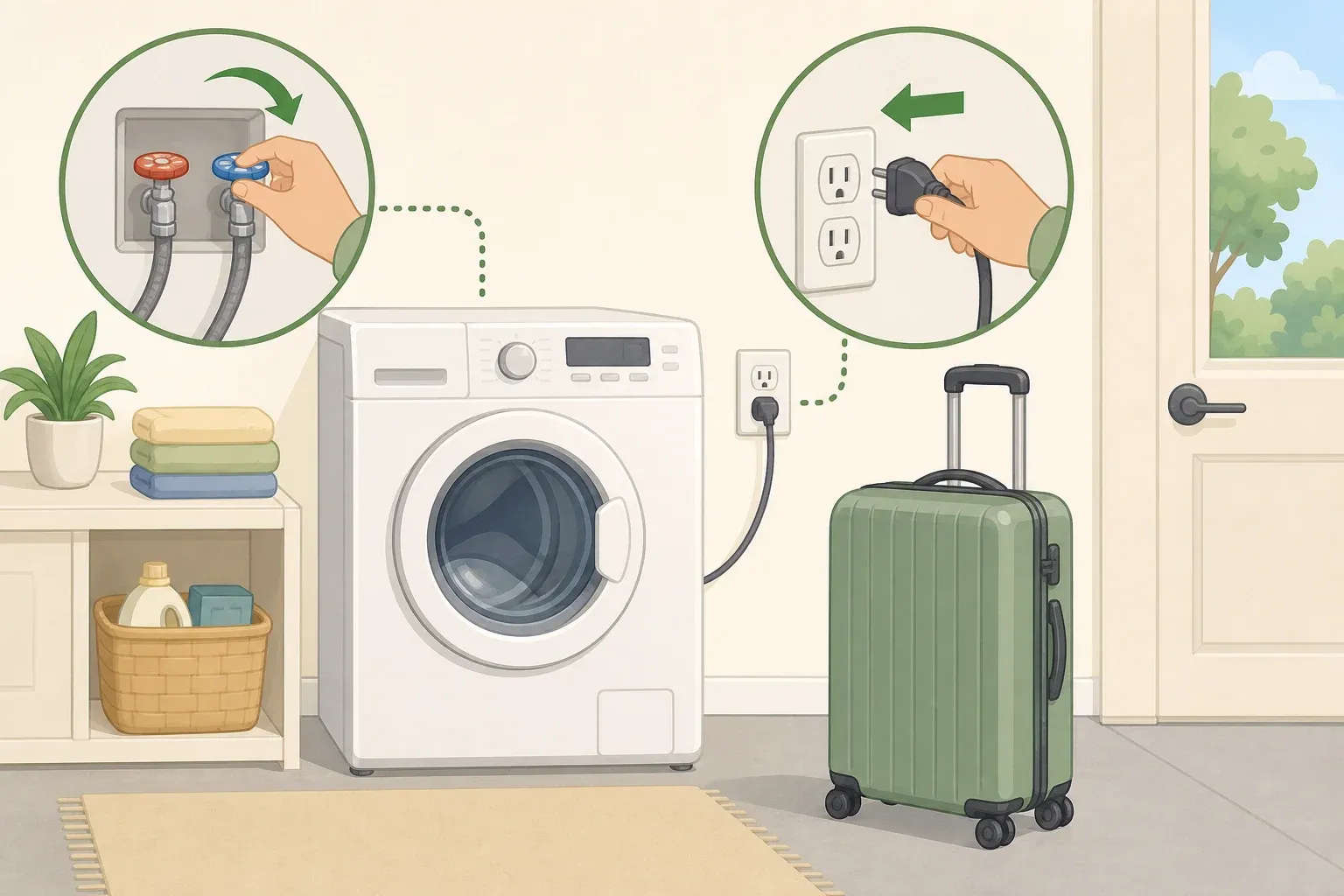
Should you unplug your washing machine before going on vacation? Yes, but unplugging isn't the step that actually keeps your laundry room dry while you're gone. Shutting off the water supply behind the machine is what does that.
Supply hoses can fail without warning and tend to pick the moment no one's home to do it. LG's manual for the WM6998HBA goes a step further, instructing owners to close the water faucets and unplug the washer any time it will sit unused for an extended stretch, like a vacation.
This guide covers the full pre-trip routine: closing the valves, checking hoses and the drain line, unplugging the washer the right way, and what changes if the house might get cold enough to freeze while you're out. None of it takes long. Skipping it is how people come home to a soaked laundry room instead of an easy unpack.
Should you shut off the washer's water supply before a trip?
Close both the hot and cold shutoff valves behind the washer any time it will sit unused for more than a day or two, not just before a vacation. Travelers' home water-damage guidance recommends locating the washer's shutoff valve and turning it off whenever the machine is idle, and having a plumber install one if the laundry hookup doesn't already have it.
Here's why this matters more than the plug does. A supply hose stays under water pressure around the clock, whether the washer is running or sitting idle, and a weak spot can give out without any notice.
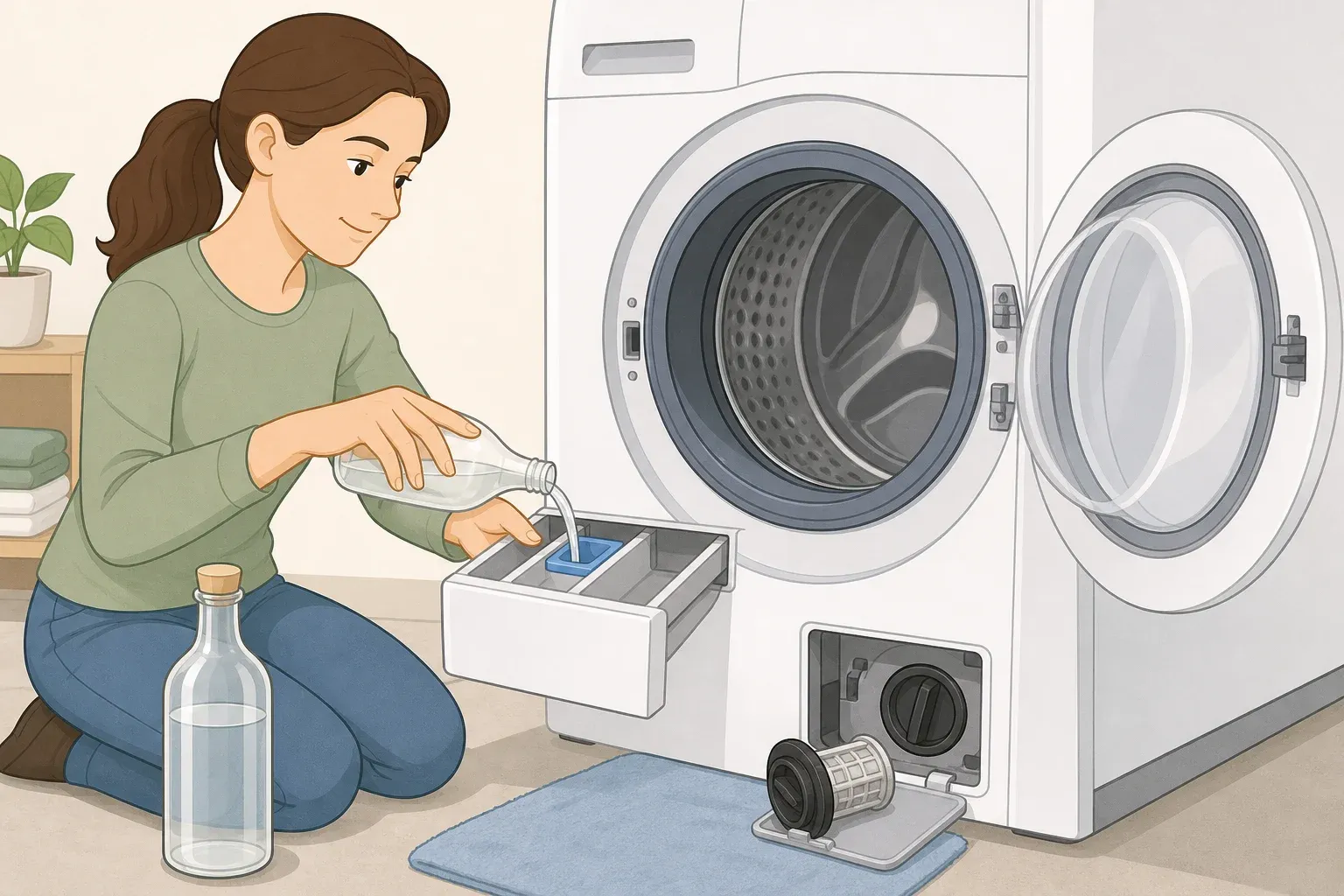
Before closing anything, spend a minute looking at the hoses and connections. Travelers recommends checking for wear, corrosion, or breaks, and replacing supply hoses on whatever interval the manufacturer recommends. Additionally, confirm the drain line is secure at both ends while you're back there, and call a licensed plumber if anything looks questionable. If a hose feels soft, looks swollen, or a fitting is weeping even slightly, that's not a wait-and-see situation. Get it looked at before you leave rather than hoping it holds for the length of the trip.
Should you unplug your washing machine before vacation, too?
Unplugging is worth the extra few seconds. It isn't overkill. The real benefit has less to do with the outlet itself than with what's behind it: a washer doesn't draw much power just sitting there, but a storm or a grid hiccup doesn't check the calendar before it sends a surge down the line.
Surges are what fry control boards, and a washer with a dead control board doesn't get fixed with a reset. It gets a service call. Unplugging before you leave sidesteps that risk entirely, and if it also shaves a little off the electric bill while you're gone, that's a side benefit, not the main reason to do it.
If the washer shares an outlet with the dryer, unplug both for the same reason. When you disconnect, grip the plug itself rather than the cord, and pull it straight out of the outlet.
Before you start: what to gather
This isn't a tool-heavy job. It's mostly a five-minute walk-through of the laundry area before you grab your suitcase.
A few quiet minutes with the washer, with nothing running
A flashlight or your phone's light to check the hoses tucked behind the machine
A towel, in case closing a valve or disconnecting anything releases a few drops
The washer's manual, if you're not sure where the shutoff valves are, or if your home might go unheated during a cold snap while you're away
If a shutoff valve behind the washer feels seized or won't move with normal hand pressure, don't force it. A valve that's stuck can sometimes be left as-is for a short trip if the hoses themselves are in solid shape, but it's worth having a plumber free it up or replace it before your next trip. A working shutoff valve is the main thing standing between a hose failure and a flooded floor.
Washing machine vacation checklist, step by step
Run through this in order before you lock the door.
Finish the load you're running. Don't leave the house mid-cycle, and don't start a new load right before you walk out either. Travelers compares an unattended washer to a stove left on: if something goes wrong, you want to be there to catch it.
Confirm the washer is actually off, not paused. Check the display or dial for anything still mid-cycle before you touch a connection.
Inspect the hoses and drain line. Look for cracking, corrosion, or any connection that feels loose, and replace hoses that are near or past the manufacturer's recommended replacement interval.
Close both water valves, hot and cold. Close each one using its normal shutoff motion: a lever-style ball valve usually needs a quarter turn, while an older compression valve may take several full turns. Don't force a valve that won't move normally; treat that as a reason to call a plumber instead of skipping the step.
Unplug the washer, gripping the plug and pulling it straight out of the outlet. Unplug the dryer too if it shares the outlet.
Move the cord away from the floor drain, utility sink, or anywhere water tends to collect, so it isn't sitting in a puddle if something drips elsewhere in the room while you're gone.
Once you're done, you should be able to look at the laundry area and confirm the washer is powered down, unplugged, both valves closed, and the drain line visibly secure.
When freezing weather changes the plan
Standard vacation prep assumes the house stays heated while you're gone. If there's any real chance it won't, a different set of rules applies.
A washer needs to be installed and stored somewhere it won't freeze, because residual water left in the hoses can damage the machine. Whirlpool's instructions also call for winterizing the washer specifically when it will be stored or moved in freezing conditions.
If the home's heat could realistically fail, or the thermostat will be set low enough that you're already worried about pipes elsewhere in the house, don't treat the washer as a simple unplug-and-close job. Check the washer's owner's manual for model-specific winterizing steps, and if you're not confident doing it yourself, have a qualified appliance technician handle it before you leave.
Winterizing is a separate process from a standard vacation shutdown, and reversing it afterward takes a few steps of its own. Whirlpool's instructions call for reconnecting the power, then running the washer through a Bulky/Sheets or Deep Water Wash cycle to flush out any antifreeze used during winterizing, before running a normal load. Skip that flush and your first load back could end up washing your clothes in leftover antifreeze instead of detergent.
Before you walk out the door
For most trips, in a home that's staying heated, the routine is the same regardless of how long you're gone: finish the load you're running, check the hoses and drain line, close both water valves, unplug the washer and the dryer if they share an outlet, and route the cord away from anything damp.
If time is tight and only one step is realistic, close the water valves first. A hose failure is the flooding risk here, and a closed valve stops that even if the washer stays plugged in.
When you get home, reopen both valves before running a load, and take another look at the hoses and connections before you start the washer for the first time back. If anything feels damp or a valve is harder to open than it should be, stop and check it before doing laundry rather than assuming everything held up while you were gone. For extra peace of mind on future trips, place a water sensor near the machine so you'd get an alert even if a leak starts while you're away.





Comments
Be the first, drop a comment!