



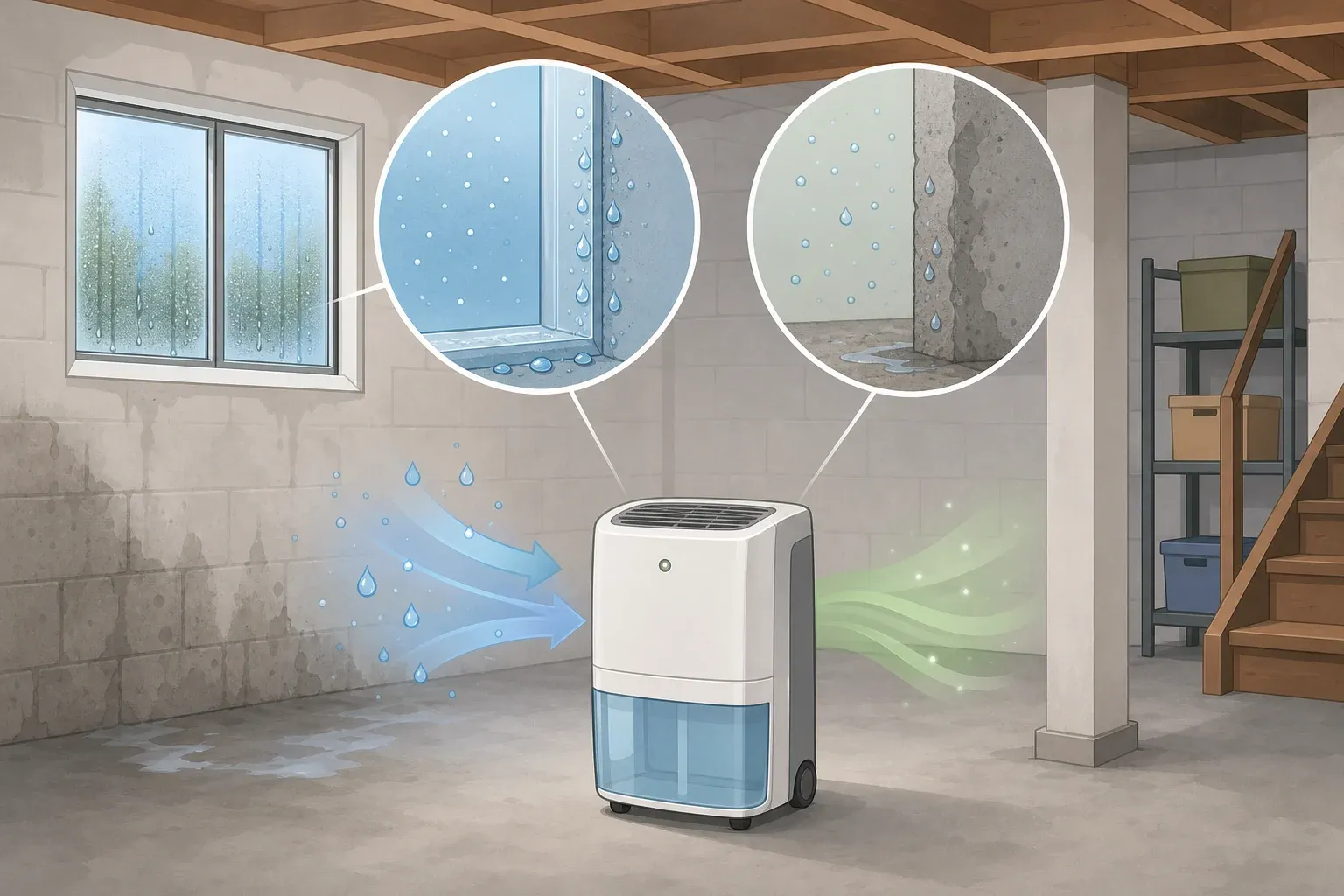
Foggy windows and a musty smell creeping into a closet or basement this fall aren't a cleaning problem. They're a moisture problem, and air freshener won't touch the cause. Learning how to prevent condensation and musty smells in your home starts with tracking the air itself: how humid it is, where it's escaping, and where it's hitting a cold surface and turning into water droplets.
Mold needs four things to grow: a food source, oxygen, the right temperature, and moisture. Homeowners can't scrub every organic food source out of a house, but moisture is the one variable fully within your control. Condensation itself is simple physics: it forms wherever a cold surface meets warm, humid air, which is exactly what happens every fall as outdoor temperatures drop while the air inside a house is still holding onto summer-level humidity. The CDC recommends keeping indoor humidity at 50% or lower all day, every day, to keep mold from getting a foothold.
This guide walks through five sequential steps: measuring humidity, venting moisture at the source, reading the early warning signs, closing off where water gets in, and drying out anything that's already wet. It's a prevention routine built for an ordinary homeowner or renter, not a mold remediation project. If mold is already visible or a flood has soaked part of the house, skip ahead to the "stop and get help" section near the end.
What you'll need
An inexpensive hygrometer (humidity meter), sold at most hardware stores
A portable dehumidifier, if a basement or specific room runs persistently damp
Access to the kitchen and bathroom exhaust fans and the clothes dryer vent
A flashlight, for checking gutters, window frames, and the cabinet under the sink
15 to 30 minutes for the initial humidity check and fan test; the rest becomes a weekly habit
This is a beginner-friendly job. Nothing here requires more than a screwdriver. Anything that involves opening wall cavities, climbing into ductwork, or touching roofing is outside the scope of this guide and belongs with a professional.
Step 1: Check your home's humidity number, not just the smell
Buy a hygrometer and place it in two or three rooms for a full day. Bedroom, bathroom, and basement are good starting points. Write down the highest reading each room hits, since humidity usually peaks after a shower or during cooking rather than staying flat all day.
The target is 30 to 50 percent relative humidity. UGA Extension points to EPA-aligned guidance that caps humidity at 60 percent but calls 30 to 50 percent the ideal range, and UConn Extension ties that same 30-to-50 window to effective mold prevention. The CDC's ceiling is simpler: don't let any room sit above 50 percent for any part of the day.
If a room reads above 50, that's your priority zone for the rest of these steps. Don't chase the lowest number possible, either. Air that's too dry brings its own problems: static shocks, dry skin, irritated sinuses, so the goal is landing in that 30-to-50 band, not stripping all moisture out of the house.
Step 2: Vent steam and moisture outside to reduce indoor humidity in fall
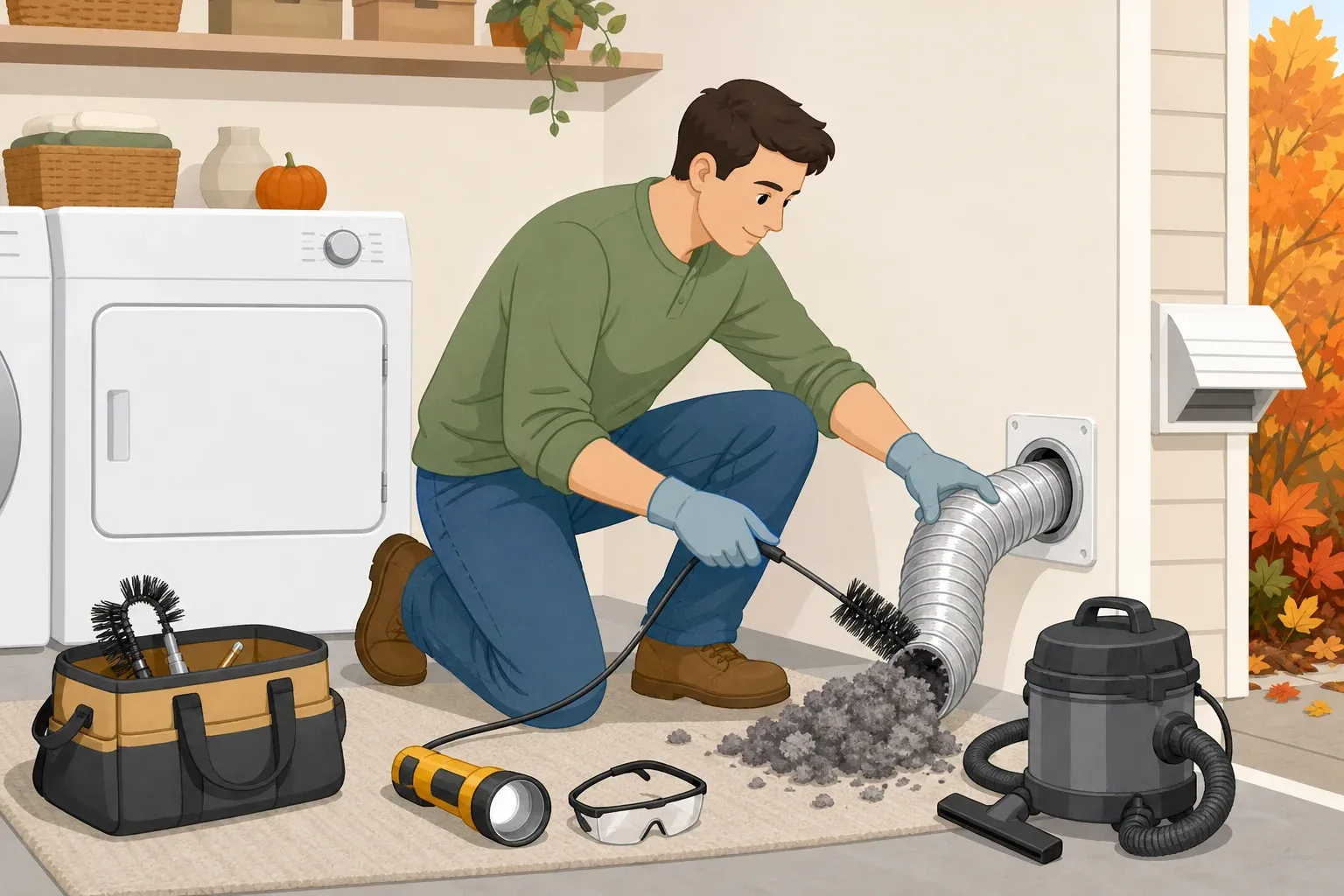
Turn on the bathroom exhaust fan before you turn on the shower, and leave it running 10 to 15 minutes after you're done. Do the same with the kitchen range hood during cooking. Exterior-venting kitchen and bathroom fans are essential for mold prevention, and the CDC gives the same instruction: run exhaust fans that vent outside, and confirm the clothes dryer vents outdoors too, not into an attic or crawlspace.
Bathing, cooking, washing dishes, and running the dryer are named sources of added indoor humidity, so these are the exact moments a fan needs to be on. A fan that only recirculates air within the room, or a bathroom door left open instead of running the fan, doesn't remove moisture. It just moves it down the hall. Check where your fan ductwork actually leads; a duct that dead-ends in the attic instead of exiting through the roof or wall defeats the purpose entirely.
Leave interior doors open where you can, or make sure rooms have return-air grilles. This keeps air moving between spaces instead of trapping humidity in a closed bedroom or bathroom.
Step 3: How to stop condensation on windows and catch musty smells early
Wipe down any window that's collecting condensation each morning instead of letting it sit and soak into the sill. Cold windows and other cold surfaces, think exterior walls or basement pipes, are where warm, humid indoor air is most likely to condense.
Treat a musty smell as information, not an annoyance to mask. A musty odor is a legitimate warning sign on its own, since mold spores are often invisible and a smell can show up before any visible growth does. Excessive humidity, stuffy air, unusual odors, and visible mold or mildew are recognized signs worth acting on.
Skip the scented candle or spray. Fragrance doesn't touch the moisture source behind the smell; it just adds a second scent on top of the first. If the smell persists after a day or two, use it as your cue to move to Step 4.
What to actually look for: discolored patches in black, green, blue, or red, or a slimy or fuzzy texture on anything that's stayed wet. These are the visible confirmations of mold. If you don't see anything but the smell lingers, keep going; leak-checking is still the right next move.
Step 4: Find and fix where water is getting in
Walk the outside of the house and check the usual entry points. Clear anything clogging the gutters so water drains away instead of overflowing against the siding. Check under every sink and around every exposed pipe for drips. The CDC advises fixing leaks in roofs, walls, and plumbing specifically because mold needs that moisture source to establish itself.
Clogged gutters, building leaks, and poor drainage around the foundation are common culprits. Grading the soil so it slopes away from the house at roughly a 5 percent grade for at least 10 feet. The same source lists leaky faucets and pipes, along with air conditioning issues like dirty coils or duct leaks, as additional sources of excess moisture.
Clearing gutters, tightening a faucet connection, and checking a visible window seal are all reasonable homeowner tasks. If you notice signs pointing to the air conditioner itself — condensation pooling near the unit, weak airflow, visible duct leaks — that's a call for HVAC service rather than a DIY diagnosis. Repairing roof flashing, HVAC ductwork, or anything touching the home's structure belongs to a professional, not a weekend project.
Step 5: Dry damp spaces and materials fast
Run a dehumidifier in the basement or any room that keeps testing high on the hygrometer, and clean the unit regularly, since a dirty dehumidifier can become its own moisture and mold source. Experts recommend dehumidifiers for basements and other chronically humid zones.
Watch the clock on anything that gets wet. Discard drywall or carpet that's been wet for more than 24 hours rather than trying to dry it in place, since mold spreads quickly once it has a foothold. That's a different number from the CDC's flood guidance, which calls for fully cleaning and drying out a home within 24 to 48 hours after a flood or major water event. The distinction matters: the 24-hour mark is when a soaked material becomes unsalvageable, while 24 to 48 hours is the broader window for getting the whole house dry after a bigger event.
One caution before you crank up a fan: don't shut off the heat to a damp room to try to "dry it out." Letting a damp area get too cold actually encourages more condensation and feeds further mold growth. Keep the space warm and ventilated while it dries, not cold and sealed off.
Stop and get help
If mold is already visible on a hard surface like tile, glass, or painted wood, the CDC permits cleaning with soap and water or a bleach solution of no more than 1 cup of bleach per gallon of water, never mixed with ammonia or any other cleaner, since that combination produces a poisonous gas. Open a window for fresh air while you clean, and follow the label instructions on whatever product you use.
Wet carpet, drywall, or insulation that's been soaked for more than 24 hours, or that already shows mold damage, should be discarded rather than cleaned. These materials are hard to remediate and easier to replace than to save.
Some people shouldn't take part in mold cleanup at all. The CDC's cleanup guidelines specifically exclude people with allergies, asthma, COPD, immune suppression, or underlying lung disease from doing the work themselves, since they're at higher risk of a severe reaction. If that describes you or anyone in the household, have someone else handle it or bring in a professional.
Anything beyond a surface wipe-down, opening a wall cavity, climbing into an attic or crawlspace, touching roof flashing, or dismantling HVAC equipment is outside ordinary homeowner scope. Call a licensed contractor or a mold remediation professional for that work rather than attempting it yourself.
Home moisture control tips for basements and bathrooms going forward
Success looks like a hygrometer that consistently reads 30 to 50 percent, fans that actually empty steam outdoors, and mornings without fresh condensation pooling on the windows. Make checking the hygrometer a weekly habit through the rest of fall, since outdoor temperatures keep dropping and colder surfaces make condensation more likely even if nothing about your routine has changed.
If a musty smell comes back after running through these five steps, treat it as a sign of a hidden leak, not a sign you need more air freshener. Recheck the gutters, the plumbing under sinks, and any window or wall where condensation has shown up before.
Recurring condensation despite consistent fan use and good humidity numbers can warrant an HVAC inspection, since an oversized unit or leaky ductwork can keep pumping moisture back into the house no matter what else you do right. And a large patch of water damage or visible mold covering more than a small spot calls for a remediation professional rather than a DIY bleach wipe-down.
One foggy window on a cold morning isn't a crisis. Wipe it down, glance at the room's humidity reading, and move on. Save the concern for patterns: persistent condensation, water that pools instead of evaporating, a smell that won't quit, or a hygrometer that won't drop below 50 no matter what you try. Those are the signals that mean it's time to work back through the steps above.






Comments
Be the first, drop a comment!