



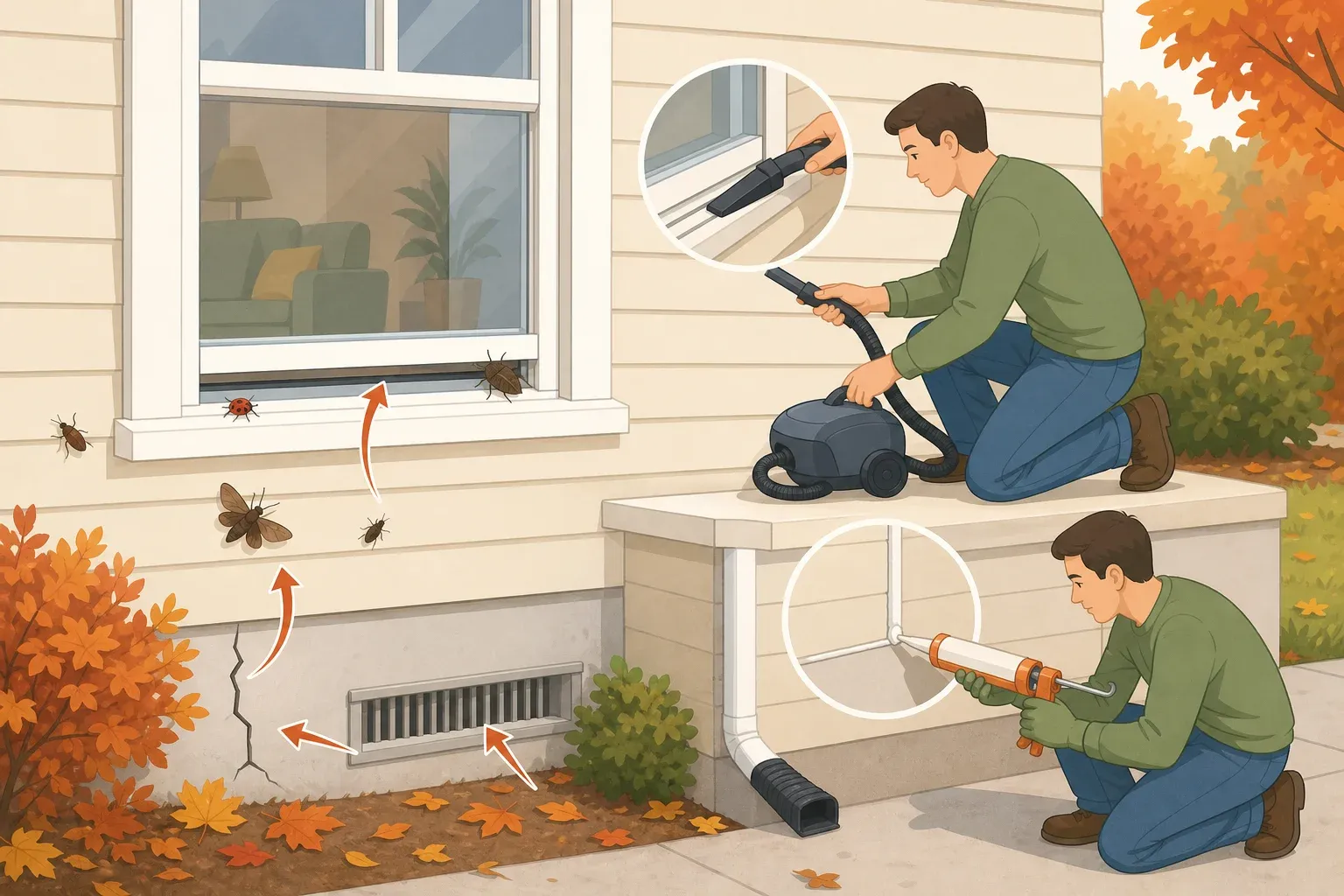
If lady beetles, boxelder bugs, or crickets have started showing up on sunny exterior walls or slipping indoors, resist the urge to swat them. Learning how to get rid of fall bugs in your house starts with that one rule: squashing a lady beetle or boxelder bug releases a stain-causing, foul-smelling fluid, and it's the single biggest mistake people make with these fall invaders. Multicolored Asian lady beetles specifically don't breed indoors. They're hunting for a warm crack to ride out winter, and in soybean-growing states like Minnesota, they commonly move into homes between late September and late October, right around harvest.
These bugs get in through gaps around windows, doors, loose siding, and attic vents rather than chewing their way inside. This guide walks through clearing out the bugs already inside without crushing them, then covers how to keep bugs out of the house in fall by sealing the gaps they used to get in before winter sets in. It's beginner-friendly work that needs a vacuum, caulk, and basic screen repair, no pesticide license or structural know-how required.
Which bug is it? A fast ID check
Identification only matters for two decisions here: whether to turn off porch lights, and whether to avoid crushing the bug. The vacuum-and-seal method below handles fall pests in the home regardless of species, so there's no need to memorize a field guide.
Multicolored Asian lady beetles are one of the most common fall invaders in much of the country. Skip counting spots since they range from none to 19 and vary from orange to black. Instead, look for the black "M"-shaped marking behind the head, which is the most reliable identifier.
Boxelder bugs are black with orange-red markings and show up most often on or near boxelder, maple, ash, and fruit trees.
Crickets are drawn indoors by porch lights rather than by cracks alone, and they're the one fall visitor that can actually chew through fabric, leather, wood, rubber, and plastic.
In parts of the West, western conifer seed bugs and small milkweed bugs show up as look-alikes with the same shelter-seeking habits. None of the three species common in Colorado bite, sting, or carry disease.
Whatever species turns out to be camped on the siding, the bugs that come inside in the fall all respond to the same first move: get them out without triggering the mess they're capable of making.
Get the bugs out without making a mess
A vacuum with a hose attachment and a trash bag handles everything already indoors. No sprays required for this part.
Before starting, know this: stressed Asian lady beetles release a yellow fluid called reflex bleeding that smells sharp, stains walls and fabric, and can actually draw more beetles toward the stain. Boxelder bugs release a similarly foul-smelling liquid when they feel threatened. Swatting or sweeping triggers that exact defense; vacuuming lifts the bug out intact before it has a reason to release anything.
Vacuum visible bugs directly with the hose attachment instead of sweeping, swatting, or squashing them.
Empty the canister or remove the vacuum bag right away. Bugs trapped inside can still produce the same odor and staining problem.
No lingering stain or smell on walls or sills means the bugs cleared out intact. If an Asian lady beetle pinches or "tests" skin, that's food-checking behavior, not aggression, and it's irritating but not dangerous. Larger infestations may cause allergic reactions in some people, which is worth knowing if a cluster is bigger than a few stragglers on a sill.
Vacuuming clears what's indoors right now. The next step handles the reason new bugs keep finding a way in: unsealed entry points.
How to keep bugs out of the house in fall
This is beginner-to-intermediate DIY work, not a job that needs roofline access or opening up siding. Think of it as the yearly tune-up that helps prevent insects from entering your home for winter, not a one-time emergency fix.
What you'll need:
Exterior-grade caulk (silicone or siliconized acrylic) and a caulking gun
Weatherstripping and a door sweep sized to the door
A screen-patch kit or replacement screen material
A flashlight
Work gloves
Before cutting any caulk, do a daylight check. Close the doors and windows, dim the room if needed, and look along the frames from inside for any seam where outside light leaks through. Then step outside and find the same spots from the exterior, since that's where the actual sealing happens.
Check door edges and thresholds for light or drafts. Add or replace weatherstripping and a door sweep anywhere a gap shows. Combined with window caulking, this targets the entry points that are common beetle access routes. Success looks like a door that closes without dragging and shows no light at the jamb or threshold.
Inspect window screens for tears or gaps where the mesh meets the frame. Patch with a screen kit, overlapping the torn edge by at least an inch, or replace the screen if the frame itself is bent. A properly patched screen sits flush in its track with no loose corners.
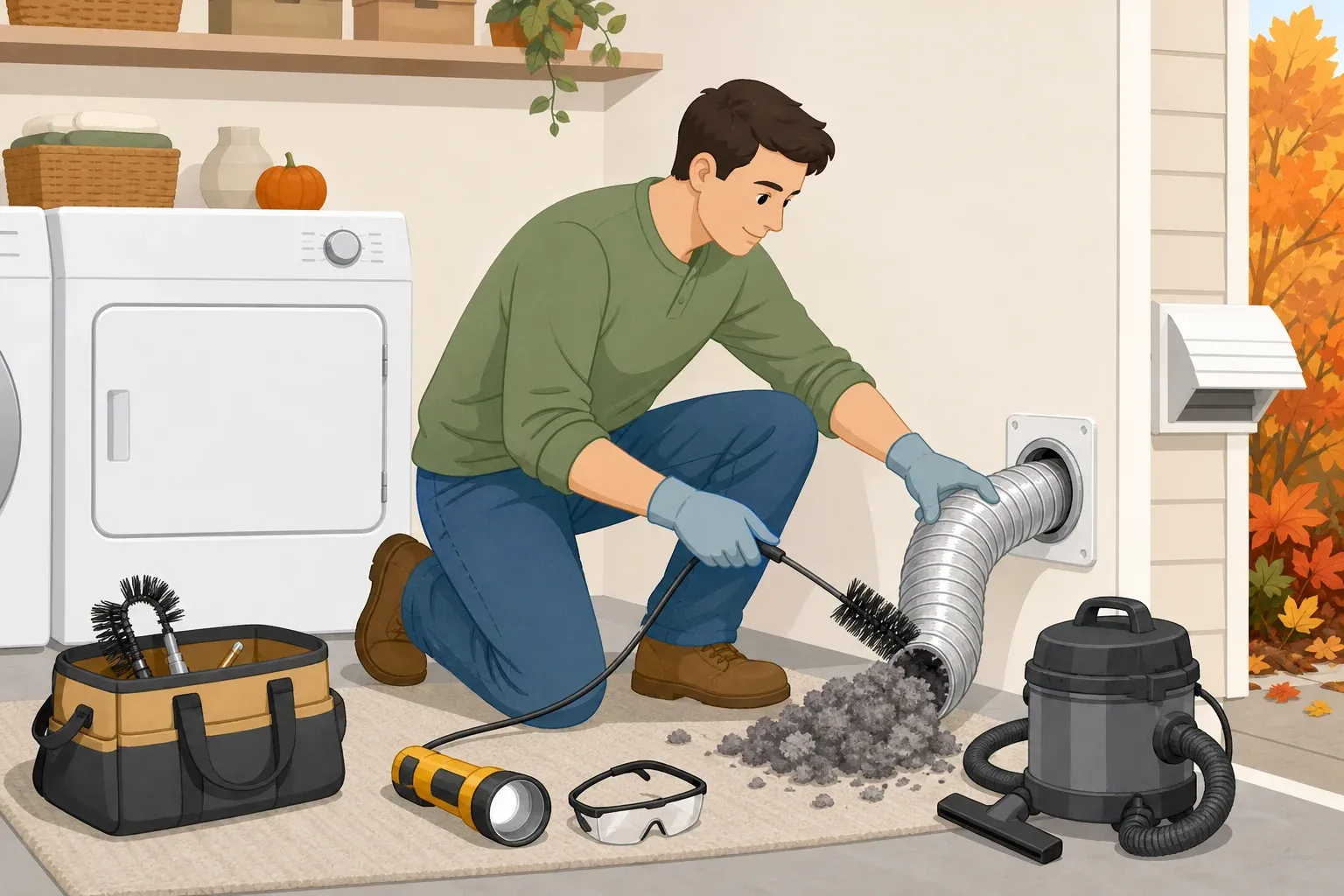
Caulk around utility penetrations, meaning the gap where a pipe, cable, or vent pipe passes through the exterior wall, not the opening itself. Sealing the crack around a dryer vent is fine; caulking over the vent opening isn't. Also seal visible cracks in the foundation or siding. This kind of sealing is the most effective long-term fix. A good bead fills the gap flush without bridging onto the surrounding surface.
Check accessible attic or soffit vent screens for tears. "Accessible" means reachable from the ground or a short stepladder without leaning over a roofline. Patch torn mesh the same way as a window screen. If a vent sits up on the roof or needs a taller ladder than feels comfortable, stop and call a professional instead of improvising a reach.
Clear woodpiles, brick stacks, or debris stacked against the house, and trim weeds and tall grass along the foundation. These create close-range hiding spots right next to the exterior walls.
Timing helps here. Asian lady beetles commonly enter Minnesota homes between late September and late October, around soybean harvest, so getting the sealing done ahead of or during that window beats trying to catch up once beetles are already clustered on the siding.
Sealing cuts down on new bugs getting in, but Asian lady beetles that made it inside before the sealing was finished may still turn up on warm days, since they cluster in attics, wall voids, and window frames and can linger there until spring. That's leftover activity from before the job was done, not proof of a missed gap, unless light is still visible at a spot already checked.
Species-specific adjustments and what to skip
For crickets specifically, turn off or redirect porch and exterior lights at night, since that light is what draws them toward the house in the first place. If stored fabric, leather, or boxes show chew damage, that's a cue to recheck storage areas and nearby entry points rather than relying on light control alone.
Skip broad insecticide sprays on Asian lady beetles in the house or yard. Native and invasive lady beetle species are vulnerable to the same chemicals, so treating Asian lady beetles also kills the beneficial native ladybugs that keep aphids in check outdoors.
Removing host trees like boxelder or golden rain trees near the house is listed as an option for long-term boxelder bug reduction. Treat it as a last resort after sealing and debris cleanup, since it's a bigger commitment than caulk and weatherstripping and not something to start with.
If odor, staining, or visible material damage keeps showing up after repeated vacuuming and a full sealing pass, that's the point to call a pest control professional for targeted indoor treatment instead of repeating the same DIY steps on a loop.
Finish line: what to check next
Success looks like windowsills and door thresholds that stay clear day to day, with no light showing through any of the spots checked during sealing. Check again on the next warm, sunny day, since that's when any stragglers are easiest to spot.
Physical exclusion, vacuuming plus sealing, is the safest first step and handles most fall bug problems on its own. If Asian lady beetle swarms keep coming back every year despite a sealed house, some homeowners apply perimeter insecticide sprays in early fall before swarms begin. Check with a local extension office or a licensed pest control professional before picking a product, since broad sprays also affect the native ladybugs working outdoors.
An occasional bug on a window frame weeks after sealing isn't worth another round of caulk. Save the follow-up calls for recurring indoor clusters, chewed fabric or stored goods, or an odor that won't quit, not a single straggler that wandered in before the job was finished.






Comments
Be the first, drop a comment!