



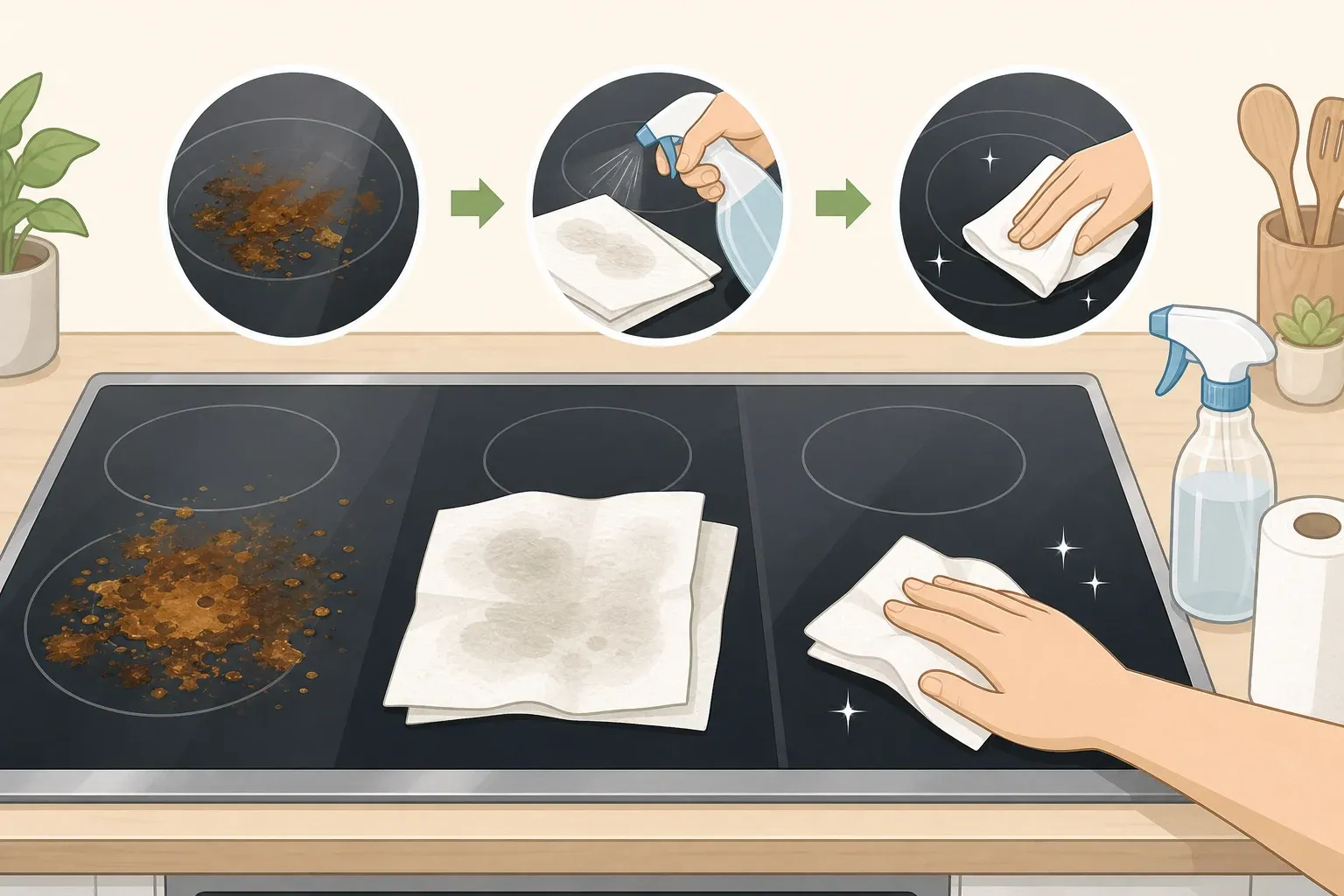
Cleaning a glass cooktop without scratching it comes down to using the cleaning method approved for your particular surface. For a standard ceramic glass cooktop, that may include a cooktop scraper for burned-on residue. KitchenAid's newer WipeClean-coated cooktops are different: water soaking is the first-line method, and the company advises against using a scraper because it can damage the coating.
That distinction matters because cleaning instructions vary across glass cooktops. This guide walks through the gentler process KitchenAid specifies for its WipeClean coating, plus what to keep off the surface and which cookware habits cause avoidable damage. If your cooktop doesn't have WipeClean or you're unsure which surface you have, check the owner's manual before using a scraper, cleaner, or other tool.
What you'll need before you start
For a WipeClean cooktop, gather these before you start:
A spray bottle filled with plain water
Paper or kitchen towels
A moist, non-abrasive soft sponge
A soft, clean cloth or towel for drying
A non-abrasive glass cooktop cleaner, such as affresh Cooktop Cleaner, for extremely stubborn spots that water alone won't lift
Before anything else, make sure every control is switched off and the cooktop has fully cooled. KitchenAid's WipeClean instructions say to let the surface cool completely before cleaning.
If you have a WipeClean-coated cooktop, skip the scraper. KitchenAid warns that a cooktop scraper may damage the coating and potentially diminish its cleaning performance.
That warning isn't universal. KitchenAid's instructions for its standard ceramic glass cooktops specifically recommend a scraper designed for ceramic glass when removing burned-on residue. Check the manual for your exact model rather than assuming one method applies to every glass surface.
How to clean a WipeClean glass cooktop without scratching it: step-by-step
Confirm the cooktop is cool. Make sure the controls are off and allow the surface to cool completely before proceeding.
Spray water over the soiled area and let it soak. KitchenAid recommends soaking everyday residue for at least five minutes and heavier stains for 20 to 25 minutes. Cover the entire soiled area rather than just the center of the spill.
Remove the initial layer of residue with a paper or kitchen towel. Then use a moist, non-abrasive soft sponge on any soil that remains. Avoid coarse or abrasive pads.
Wipe and dry the surface. Repeat the water-soak process as necessary for stubborn residue.
For extremely tough soil, extend the soak. KitchenAid says extremely heavy soil can soak in water for up to 45 minutes before moving to a cleaner.
If residue still remains, apply a small amount of non-abrasive cooktop cleaner. KitchenAid recommends a few dime-sized drops of a product such as affresh Cooktop Cleaner on the affected area. Apply it gently with a paper towel.
Wipe away the cleaner with a warm, damp cloth. KitchenAid says detergents shouldn't remain on the surface for more than 10 minutes.
The mistake that trips people up most often is pressing harder when a stain doesn't immediately lift. KitchenAid warns against excessive pressure and coarse or abrasive sponges when using detergents. If a spot remains, follow the soaking and cleaning sequence again rather than attacking the surface with a harsher tool.
What not to use when cleaning a WipeClean glass top stove
According to KitchenAid, keep these off its WipeClean-coated cooktops:
Steel wool or coarse, abrasive sponges
Abrasive powder cleansers or abrasive detergents
Chlorine bleach
Rust remover
Ammonia
Glass window cleaners
That last one can be counterintuitive. A cooktop may be made from glass, but KitchenAid specifically lists window cleaner among the products to avoid on its WipeClean surface.
For this coating, stick to the manufacturer's water-soak process and use an approved non-abrasive cooktop cleaner only when needed.
Don't automatically extend that list or method to every other glass cooktop. Cleaning guidance differs by manufacturer and surface. Standard ceramic glass models may call for cooktop cleaner, specialized pads, or a scraper that would be inappropriate for KitchenAid's WipeClean coating.
How to prevent scratches on a glass cooktop
Cleaning technique only solves half the problem. The other half is how you treat the surface day to day, especially with cookware.
One of the most important habits is to lift pans instead of sliding them and never use the cooktop as a cutting surface. KitchenAid gives both precautions for its WipeClean cooktops.
Cookware material matters too:
Cast iron requires extra care. KitchenAid says cast iron can scratch coated and uncoated cooktop surfaces. Frigidaire doesn't recommend cast iron for its ceramic or glass cooktops. If your manufacturer permits it, lift the pan rather than sliding it and make sure its base is clean and smooth.
Glass cookware isn't recommended by Frigidaire for its ceramic or glass cooktops because it may scratch the surface.
Porcelain-enamel cookware should have a smooth bottom. Frigidaire says a rough coating can scratch the cooktop.
Aluminum cookware conducts heat well, but sliding it across ceramic glass can leave metal marks that resemble scratches. Frigidaire recommends removing those marks promptly.
Keep the bottoms of cookware clean and dry, too. Residue trapped beneath a pan can leave deposits or marks when heated.
Be especially careful with sugary spills
Sugary spills deserve separate attention because the correct response depends heavily on the cooktop surface.
KitchenAid says its WipeClean coating was developed partly to improve resistance to chipping caused by difficult food residue. According to the company's testing, the coating is five times more resistant to chipping than standard glass.
But that doesn't mean the same cleanup procedure applies to every cooktop.
On many standard ceramic glass surfaces, manufacturers advise treating sugary spills while the surface is still warm. Whirlpool, for example, instructs users to let a standard ceramic glass cooktop cool slightly and then, while wearing oven mitts, remove sugary residue with an approved cooktop scraper before it fully cools. Sugary spills allowed to harden can cause pitting or permanent marks.
That is very different from KitchenAid's instructions for WipeClean, which tell users to let the cooktop cool completely and warn that scrapers can damage the coating.
The safest rule is simple: if melted sugar, syrup, candy, or another sugary food gets onto the cooktop, check the cleaning instructions for your exact model rather than applying a generic glass-cooktop method.
Finish-line guidance
When the job is done, the surface should be free of loose residue, cleaner, and gritty material. Dry it with a clean paper or kitchen towel.
Don't panic over every faint mark that appears over time. KitchenAid acknowledges that small scratches can develop through normal use without affecting WipeClean cooktop performance. Light discoloration from infrequent cleaning or cooking over a soiled surface may also occur without compromising the coating's cleaning properties.
Where it's worth stopping and checking the manual is when a mark appears deeper than cosmetic wear, when the surface appears chipped or cracked, or when you're dealing with hardened sugary residue and aren't certain what type of cooktop surface you own.
Metal marks from aluminum cookware may only resemble scratches. Frigidaire recommends trying to remove them promptly rather than assuming they're permanent damage to the glass.
Going forward, the habit that matters most is preventing residue from building up and keeping cookware from sliding across the surface. For KitchenAid's WipeClean coating, start with water and soaking, then move to a non-abrasive cooktop cleaner only when necessary.
For any other glass cooktop, follow the manual for that exact model. A scraper can be the wrong tool for one surface and the manufacturer-recommended tool for another.







Comments
Be the first, drop a comment!