



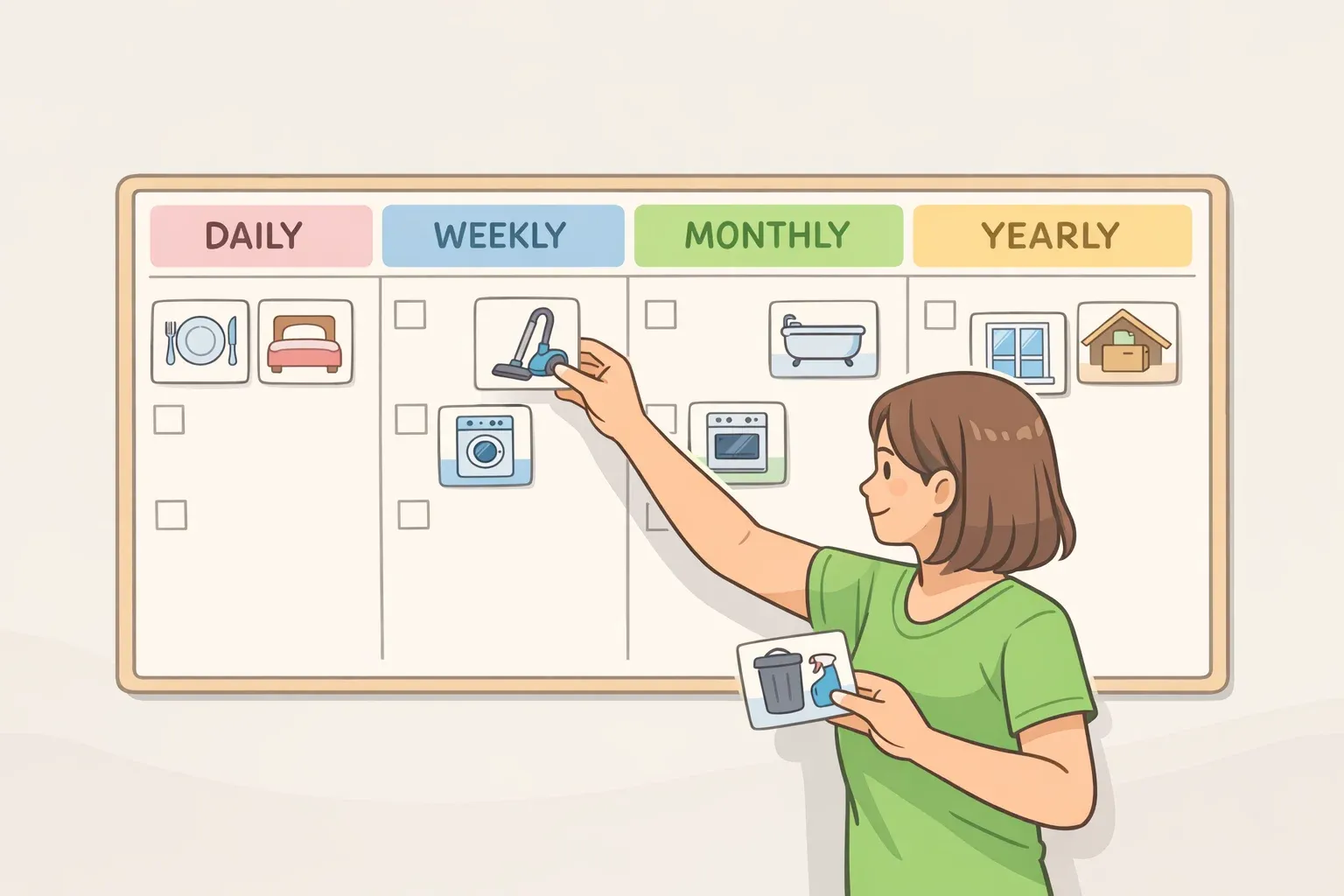
Complete Daily Weekly Monthly Yearly Cleaning Schedule
A home doesn't get messy all at once. It gets messy because small tasks pile up, quietly, until they demand an entire weekend to undo. A daily weekly monthly yearly cleaning schedule solves this by assigning each job to the interval it actually needs, not the interval guilt suggests.
The American Cleaning Institute breaks home upkeep into five tiers, daily, weekly, monthly, seasonal, and yearly, ranging from wiping counters after dinner to cleaning rugs and mattresses once a year. A steady home cleaning routine, ACI notes, makes upkeep easier than starting over from scratch every weekend. Not every surface needs constant disinfecting either. CDC guidance relayed by Utah State University Extension explains that daily sanitizing or disinfecting is unnecessary unless someone in the household is sick.
This guide breaks a complete house cleaning routine down by frequency, with a checklist under each heading you can copy, print, or adapt: daily resets, a weekly room-by-room rotation, monthly deep-cleaning tasks, and an annual reset. It closes with where cleaning ends and disinfecting begins, and which product mistakes turn a good intention into a damaged countertop.
Daily cleaning checklist for a tidy home
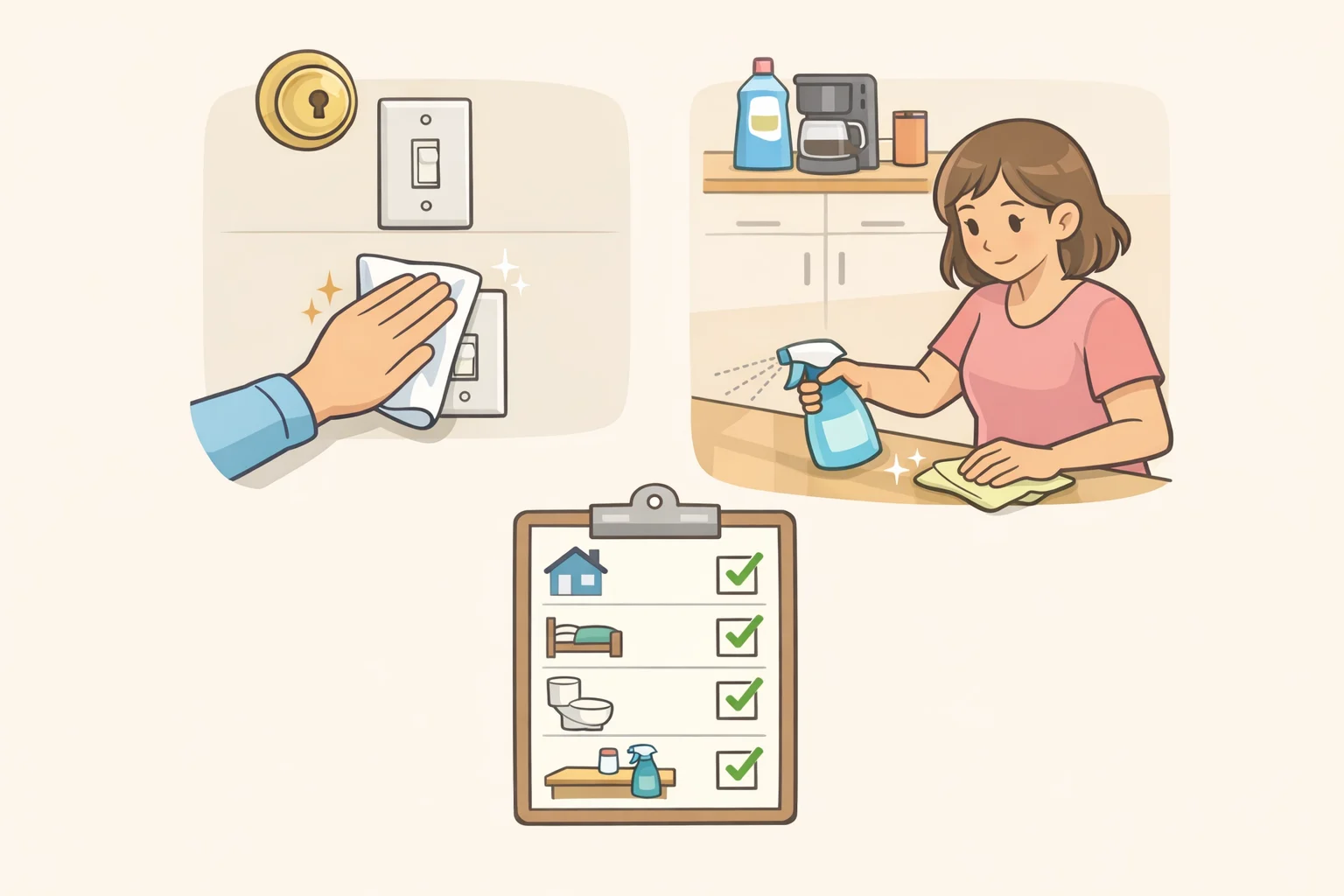
Daily cleaning isn't about scrubbing. It's about stopping mess before it compounds, which is the whole logic behind a functioning daily weekly monthly cleaning checklist. ACI's daily list is short by design:
- Clean high-touch surfaces and do a quick sweep of high-traffic areas
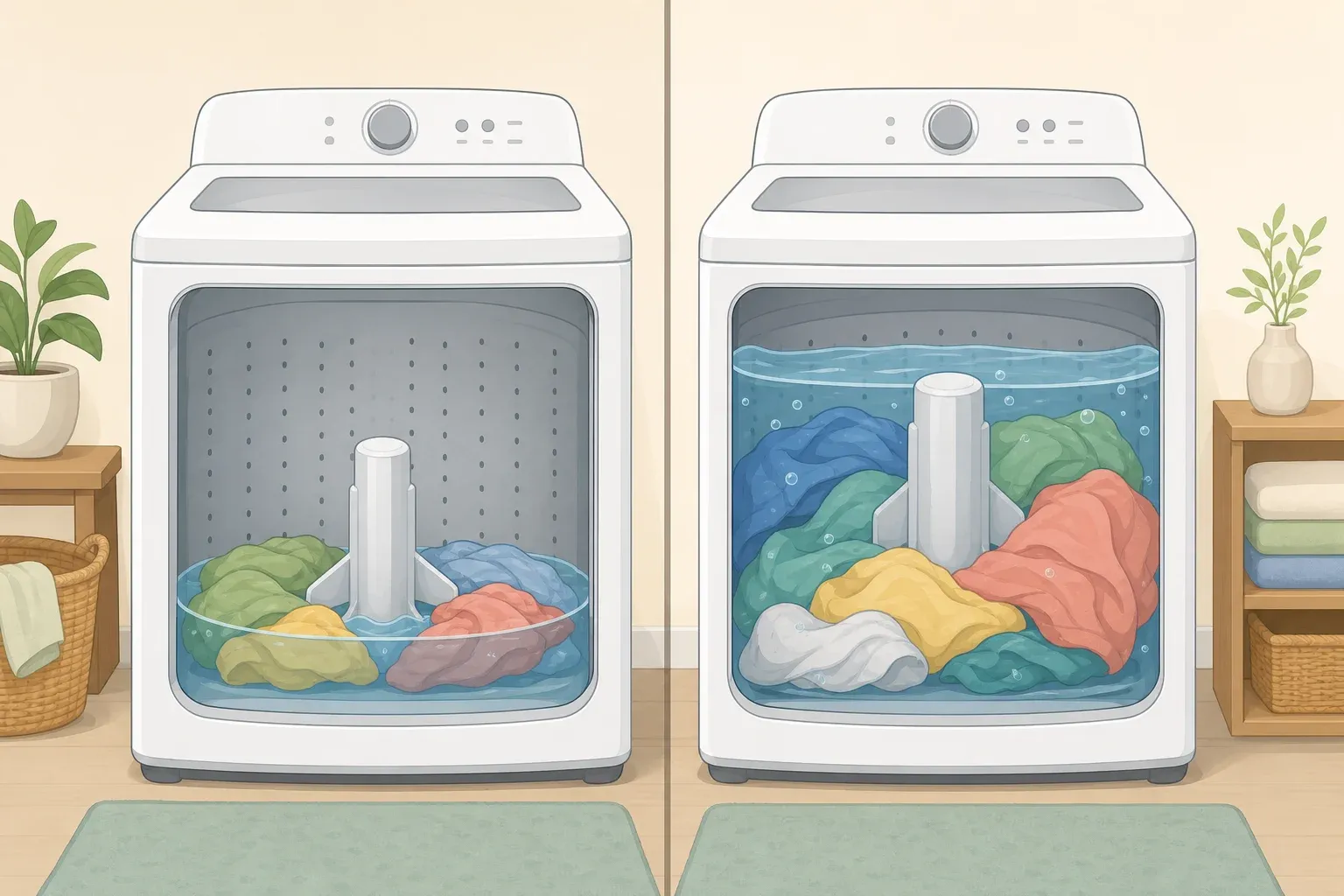
- Do laundry, if needed
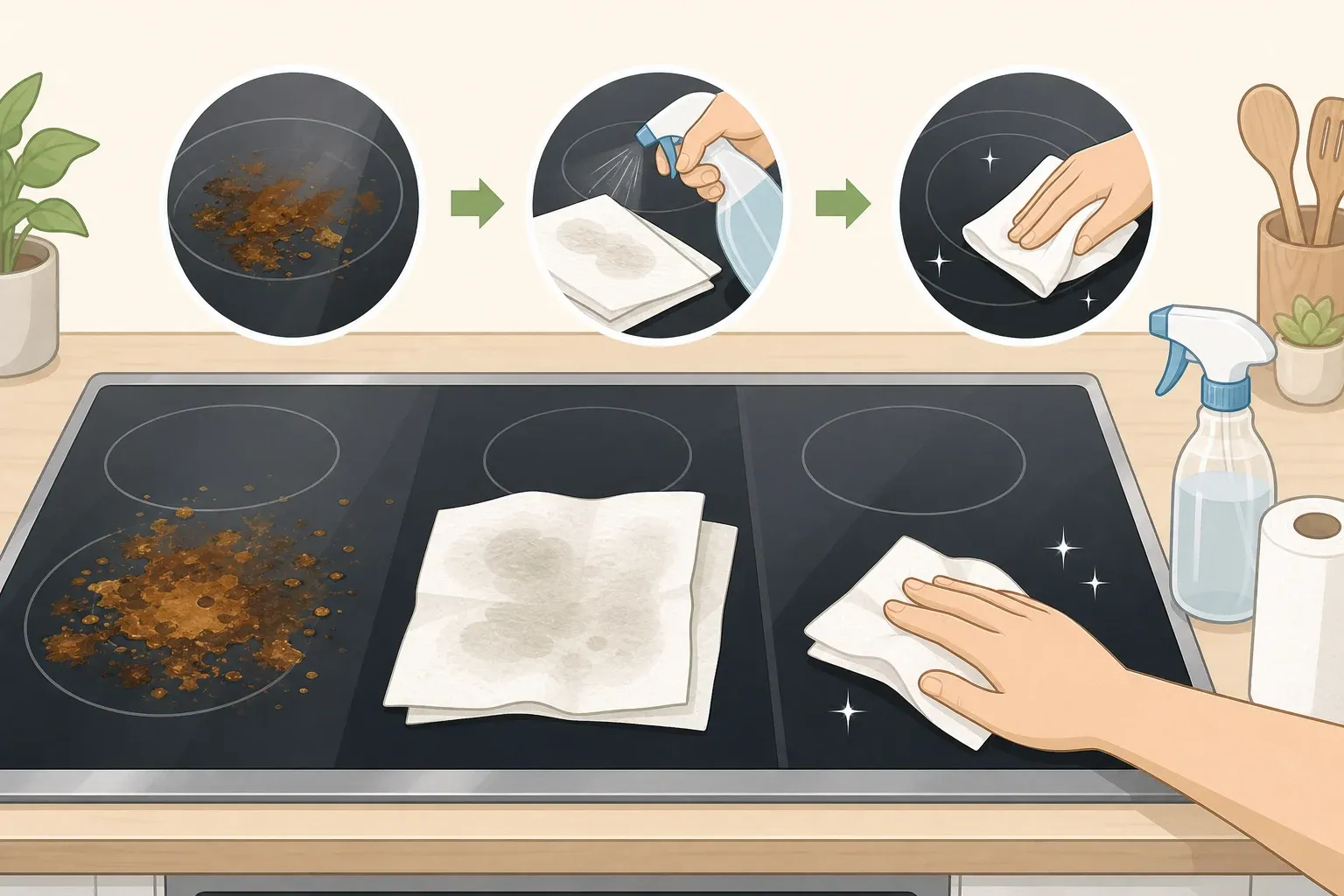
- Wipe kitchen counters and tables after meals and run the dishwasher
- Put away clutter and spot clean
The list stays manageable when it becomes routine rather than something that only happens when the house already looks bad.
A few habits do double duty, preventing future work instead of just cleaning up current mess. Leaving shower doors and curtains open lets them air-dry and keeps mildew from taking hold. A daily shower spray limits soap scum and hard water deposits before they set. Wiping up spills the moment they happen, rather than after they've dried onto a countertop, is the difference between a wipe and a scrub.
Kitchen hygiene deserves its own daily attention, separate from tidiness. Utah State University Extension, in guidance published last year, recommends cleaning counters before and after food prep and washing hands for 20 seconds with warm soapy water after handling raw meat. The refrigerator should stay at or below 40°F, since bacteria grow quickly between 40°F and 140°F, a range food safety experts call the temperature danger zone.
ACI's efficiency advice is simple: keep supplies in a portable caddy, set a timer for each task, and get the rest of the household involved with age-appropriate chores. None of that requires a special system, just a habit that runs on autopilot most days.
Weekly cleaning schedule by room
The weekly baseline covers what daily wiping can't reach: a full pass through every room, not just the ones that get used constantly. According to ACI, the weekly list includes:
- Vacuum or mop floors in all rooms
- Dust surfaces, including shelves and furniture
- Clean bathrooms: wipe sinks, counters, mirrors, and toilets
- Clean out the fridge
- Change bed linens and towels
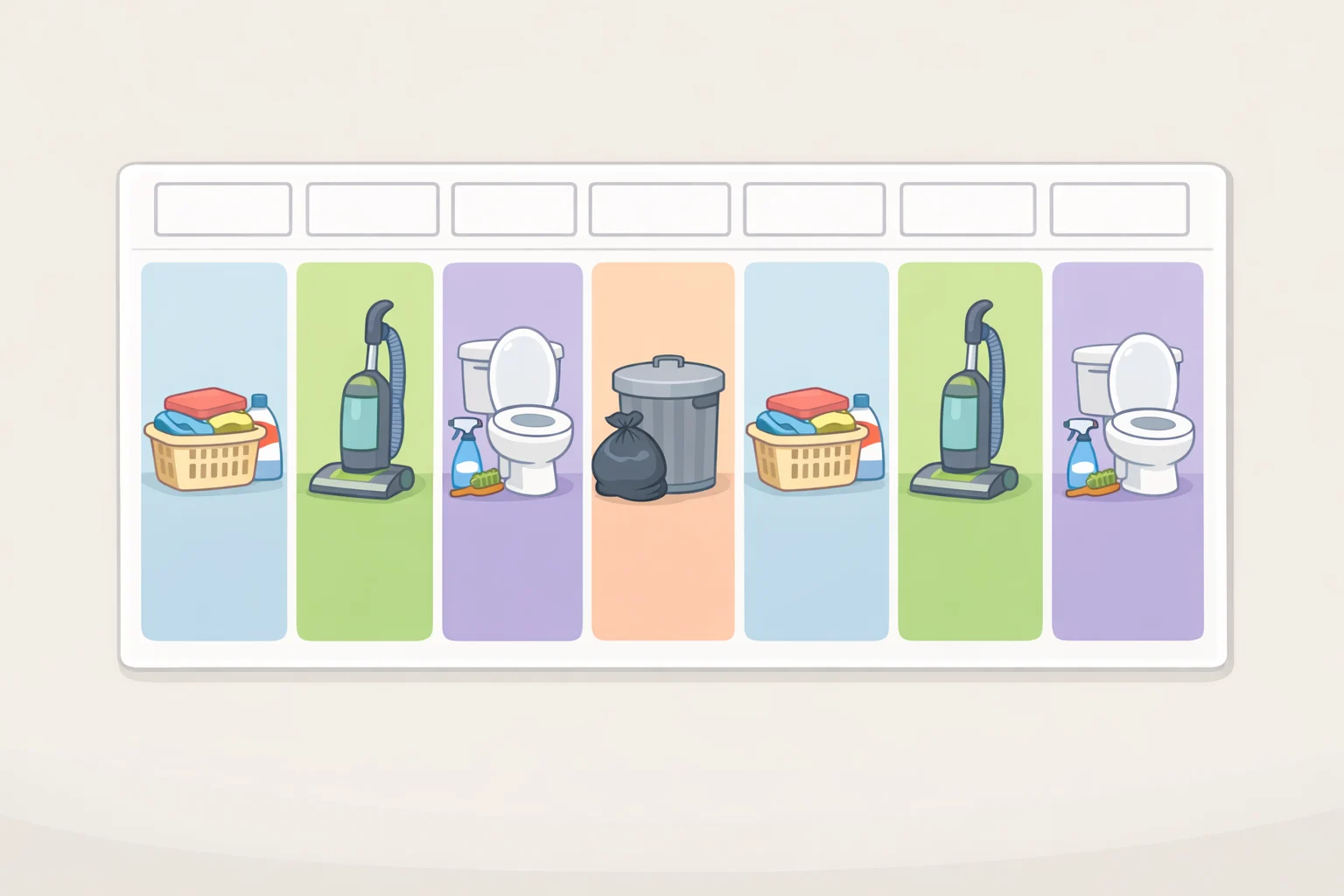
Doing all of this in a single session is exhausting, which is why ACI assigns one chore per day instead:
| Day | Task |
|---|---|
| Monday | Laundry (change sheets, wash and dry) |
| Tuesday | Laundry (fold and put away) |
| Wednesday | Kitchen (floors, microwave, refrigerator) |
| Thursday | Vacuum and dust |
| Friday | Trash, bathrooms |
| Saturday | Meal planning, yard work |
| Sunday | Rest |
Bedding follows its own rhythm. ACI's room-by-room guide suggests washing sheets weekly, or every other week for lower-use bedrooms like guest rooms, and washing blankets and bedspreads monthly. That's a flexible baseline, not a rigid rule.
"Clean out the fridge" is vaguer than it sounds, but food-safety data gives it some shape. Per USU Extension, opened deli meat and hot dogs are good for 3 to 5 days, ground meat for just 1 to 2 days, and general leftovers should be tossed after 3 to 4 days. A weekly fridge pass is really a chance to clear out whatever's aged past those windows before it becomes a smell instead of a task.
One technique note worth adopting from ACI: sweep, mop, or vacuum from the far corner of a room toward the exit. It sounds trivial, but it stops dirt from getting re-tracked over sections already cleaned.
Monthly deep cleaning checklist
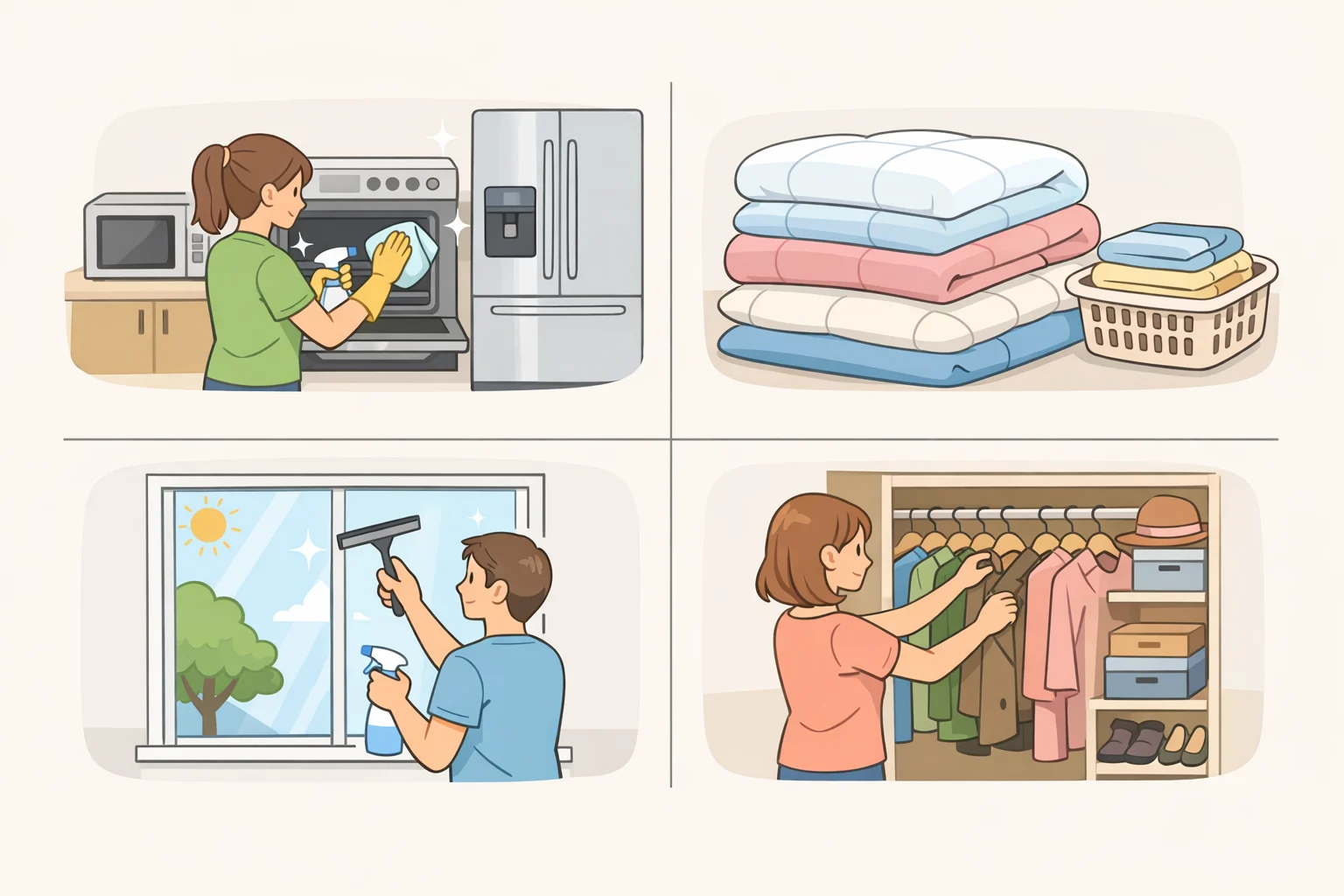
Monthly cleaning targets grime that builds gradually and stays invisible day to day. ACI's monthly tier includes:
- Clean kitchen appliances and cabinet fronts
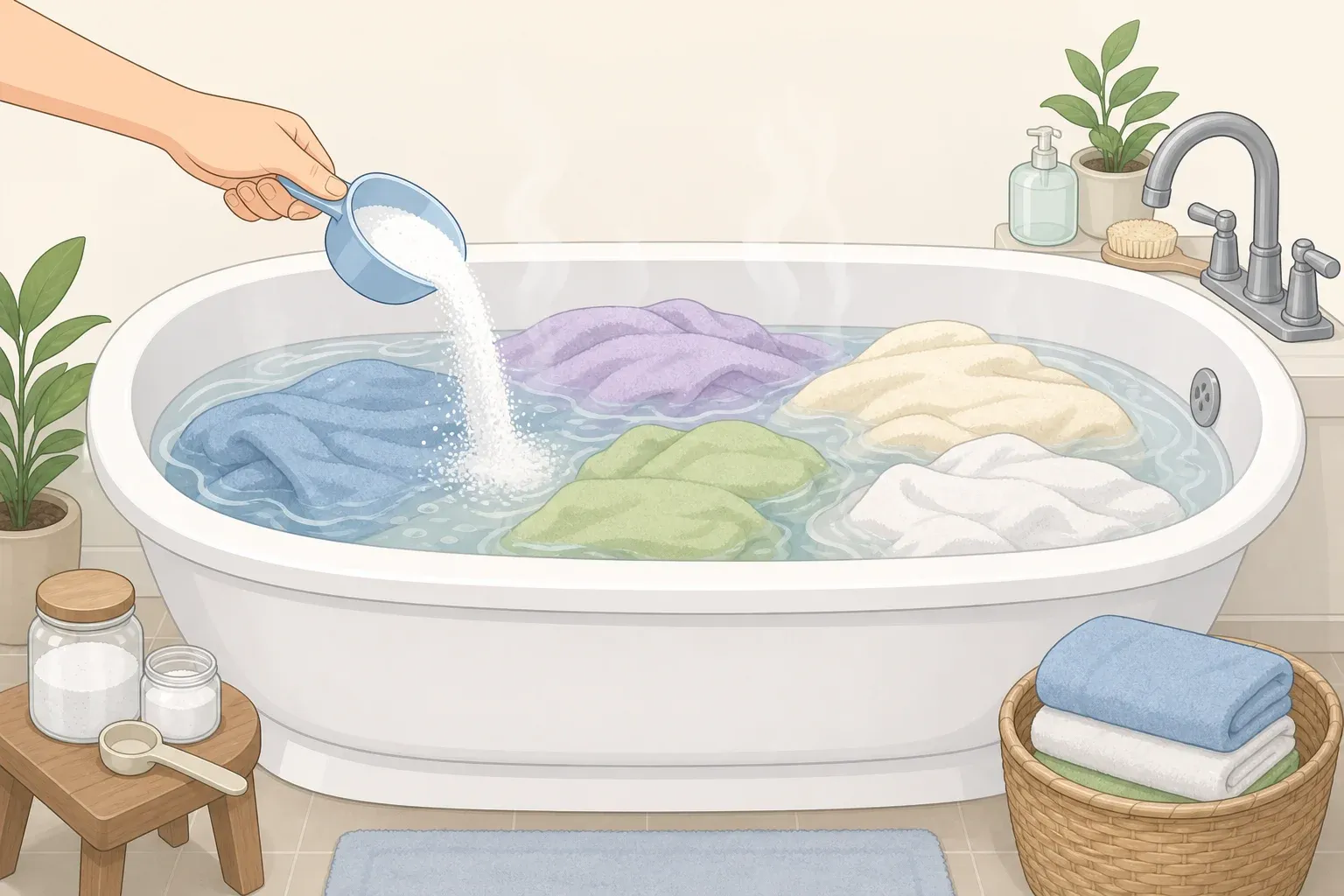
- Wash blankets and comforters
- Dust light fixtures and blinds
- Wash windows and mirrors thoroughly
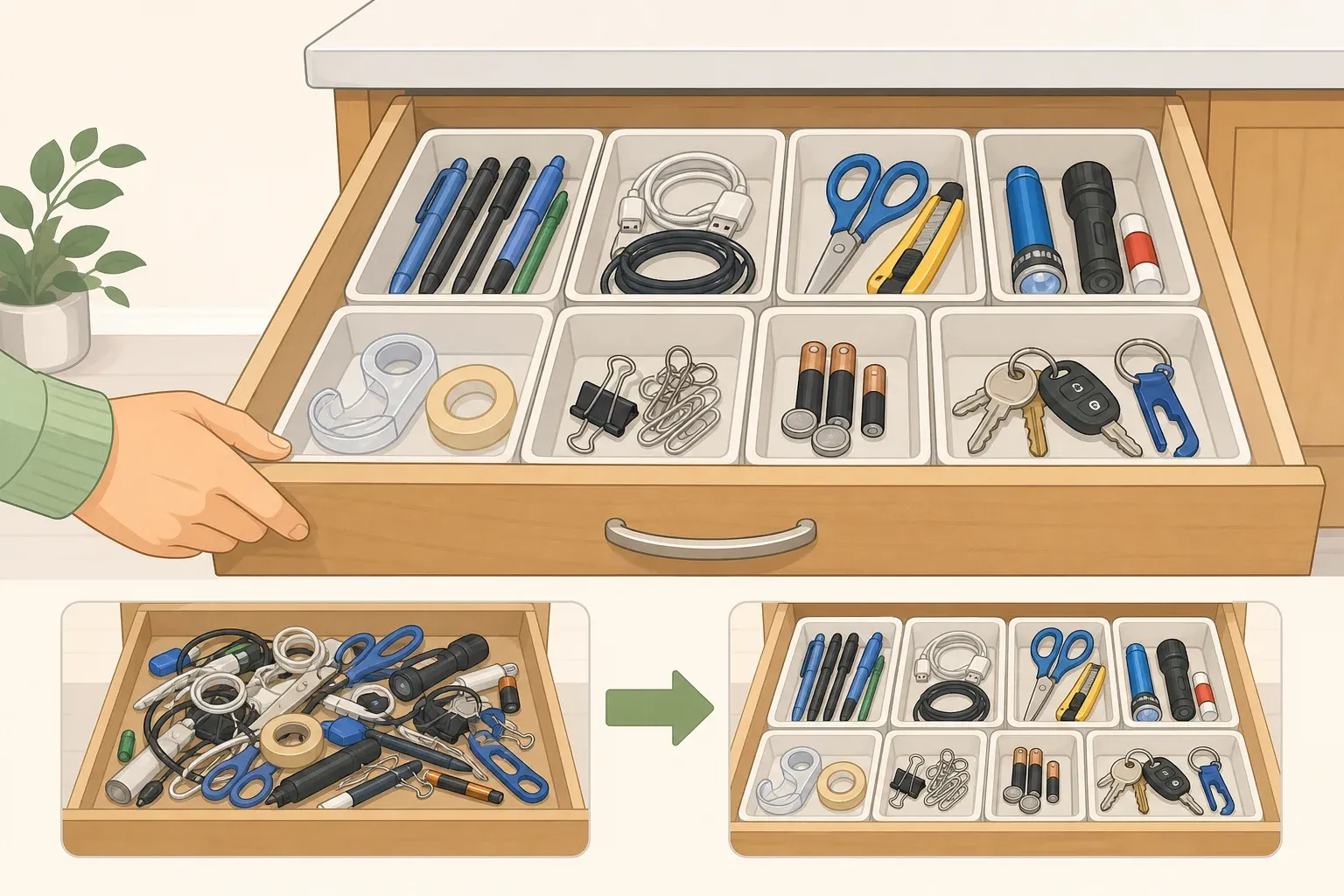
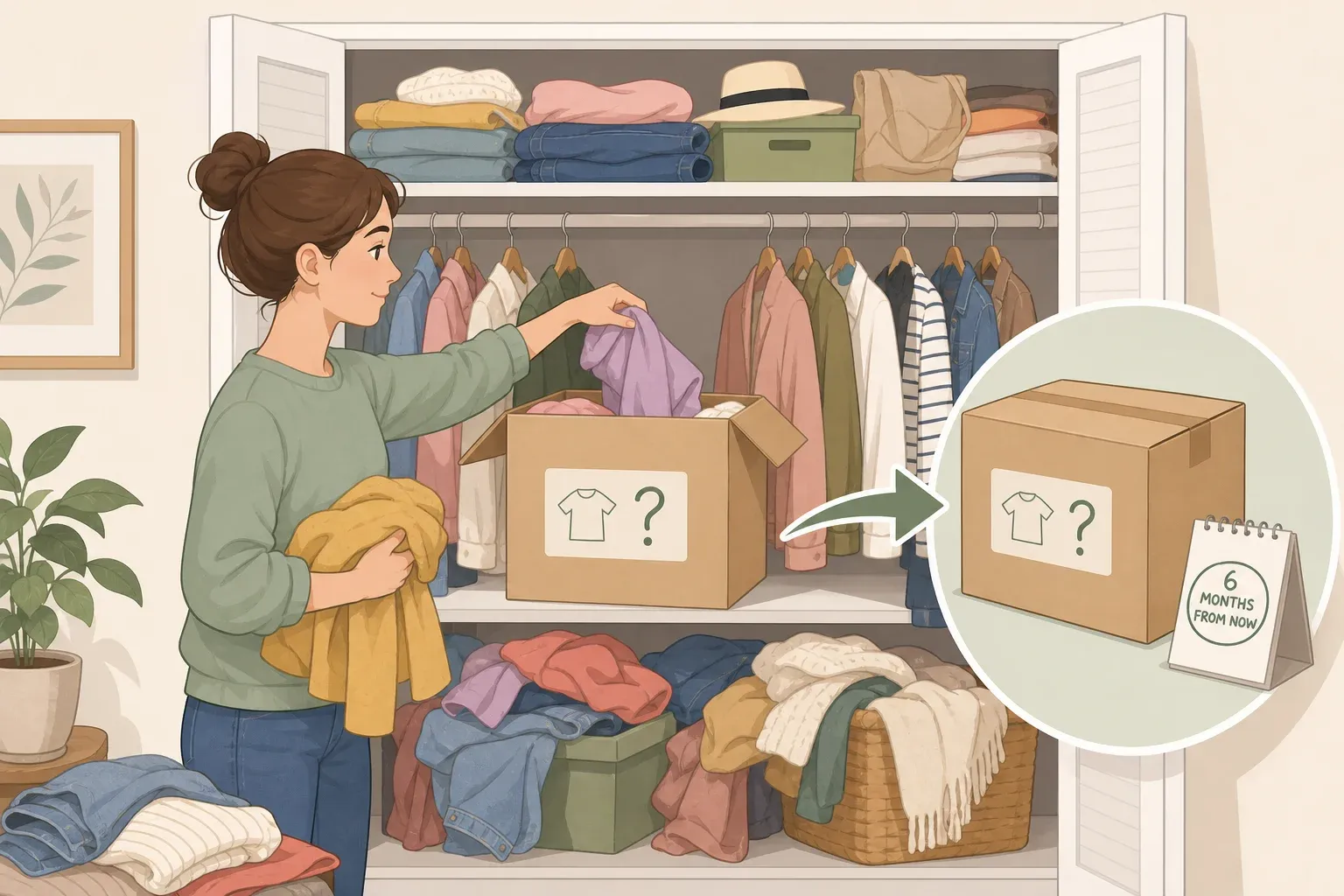
- Declutter closets and storage areas
None of these show up on a weekly wipe-down, but skip them long enough and they become obvious. The list splits naturally across four weekends: appliances and cabinets one week, blankets and light fixtures the next, windows and mirrors after that, closets last.
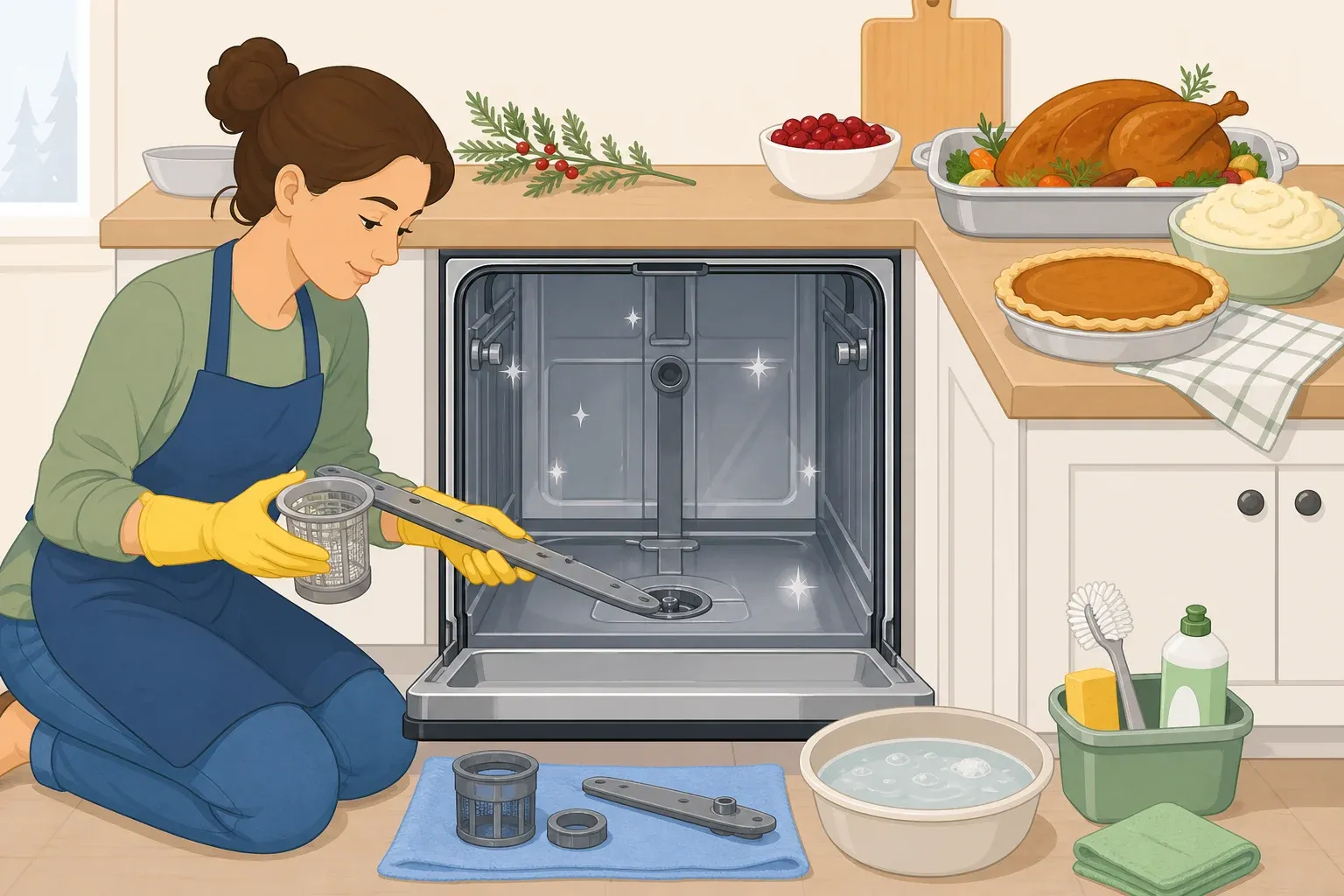
The kitchen needs more than a daily counter wipe. ACI's room-by-room guide calls for cleaning cabinet interiors, degreasing the backsplash, cleaning the range hood filter, and emptying the dishwasher filter, tasks that accumulate residue slowly enough that they're easy to ignore.
Bathrooms have a similar hidden layer. Grout needs scrubbing, showerheads and faucets need descaling, and medicine cabinets and ventilation fans need attention. These are moisture-prone spots that can need attention beyond daily wiping, since dampness lingers in places a quick wipe never reaches.
Some tasks sit at a seasonal cadence but fit naturally into a quarterly pass alongside the monthly list, per ACI: washing curtains, windows, and screens, laundering the shower curtain, and washing pillows. Folding these into a recurring quarterly session keeps them from getting forgotten entirely, which is what tends to happen to tasks with no fixed home on the calendar.
Yearly home cleaning tasks (the annual deep cleaning checklist)
Some jobs are easy to forget entirely because nothing about them looks urgent on any given day. ACI's yearly tier includes:
- Clean rugs and upholstery
- Clean mattresses
- Deep-clean rooms, including ceiling fans, walls, and baseboards
- Organize storage spaces
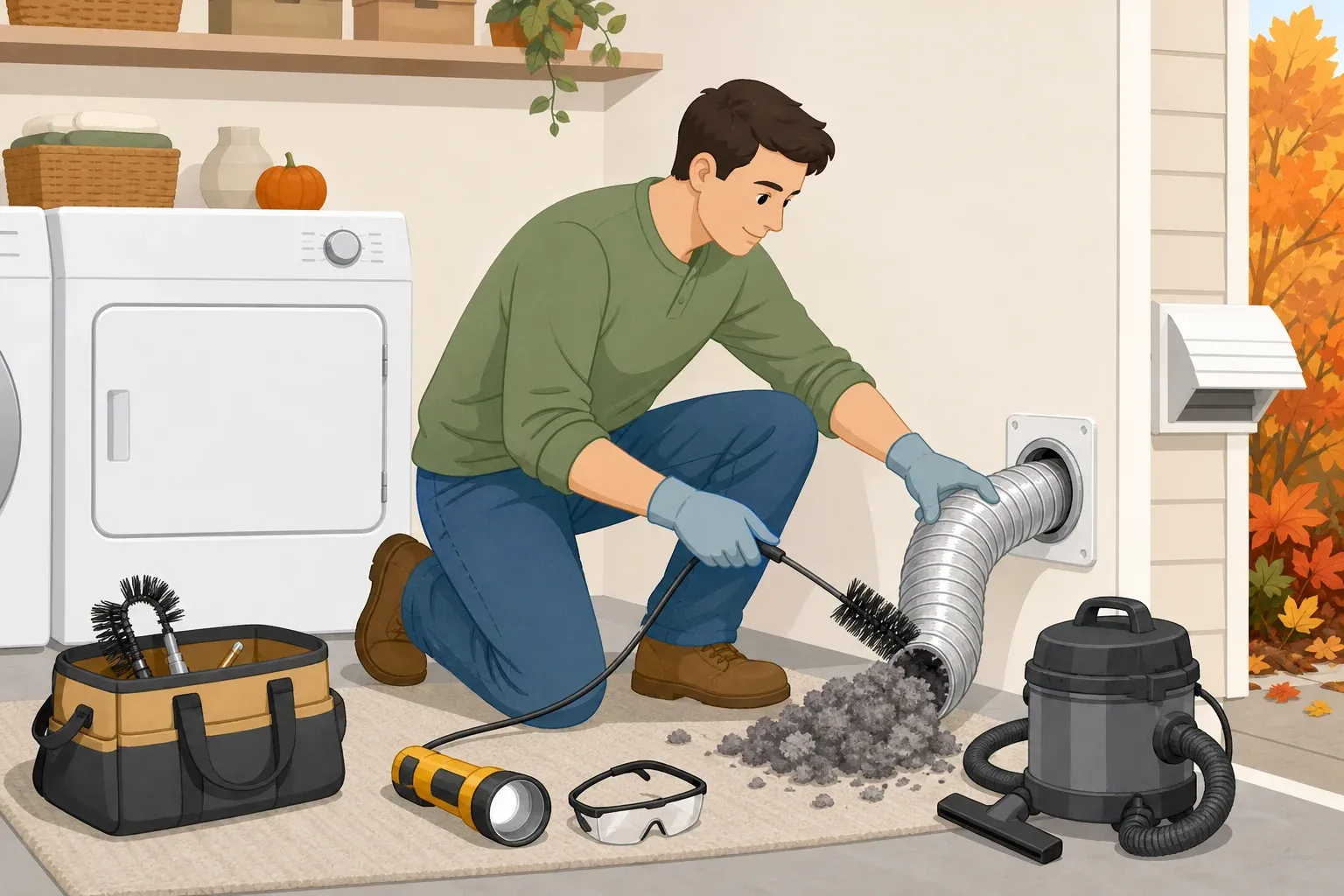
A handful of tasks are flagged "if applicable": chimney and fireplace cleaning, air filter replacement, and gutter clearing. Whether those apply to a given home depends on what's actually installed there, not a fixed annual rule.
Bedrooms and living areas hide some of the easiest tasks to skip. ACI's room-by-room guide lists vacuuming mattresses, cleaning under beds and furniture, and washing blinds, none of which look dirty on the surface.
An annual deep cleaning checklist doesn't need to be identical for every household. A home with pets, young kids, allergy sufferers, or heavy cooking might reasonably move some of these tasks up to twice a year. A guest room or a rarely used storage closet can probably wait the full twelve months. Both are judgment calls based on how a space actually gets used, not fixed rules.
Clean, sanitize, or disinfect: product safety rules to follow
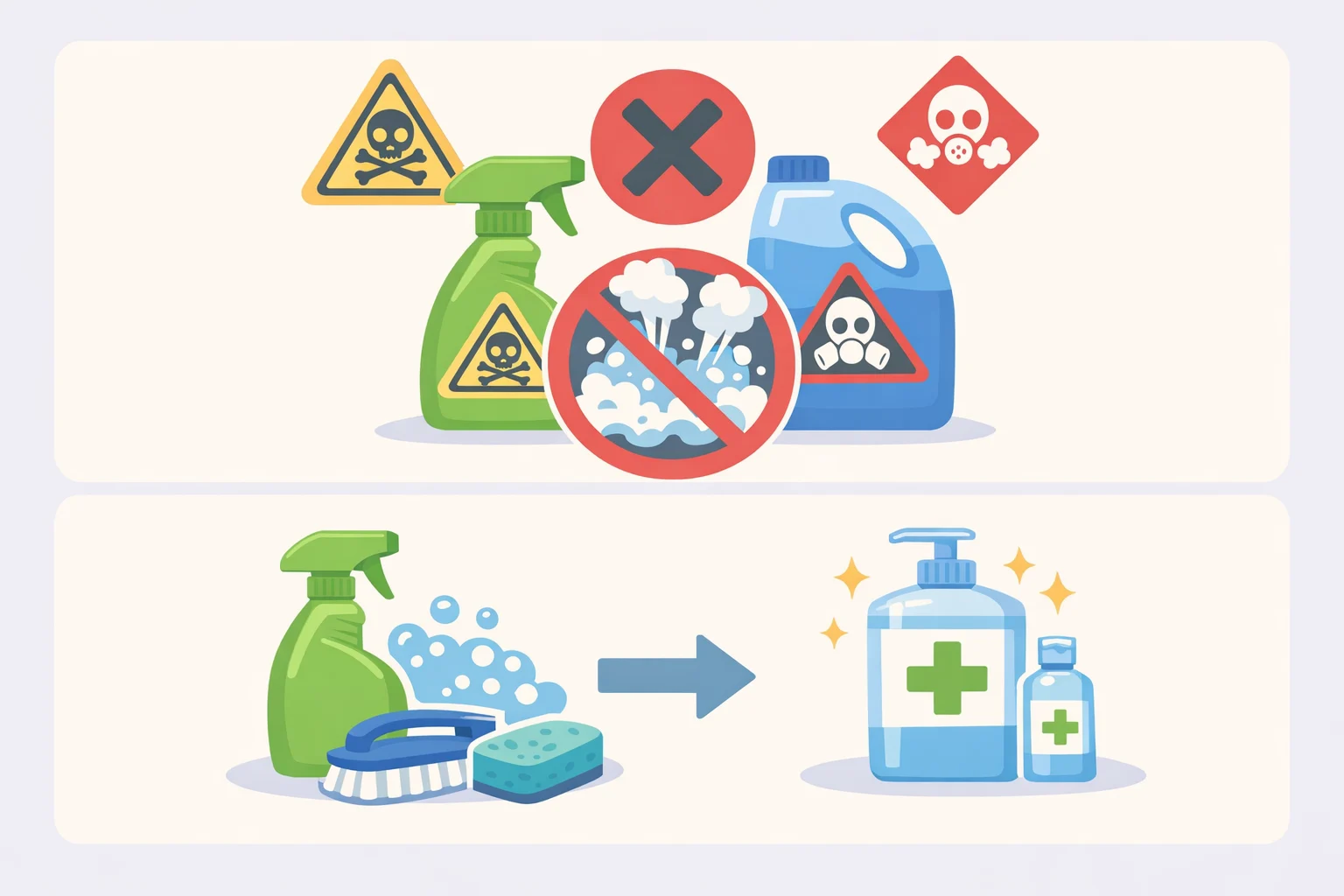
Not every surface needs the same chemical treatment, and using the wrong one is its own kind of mistake worth avoiding.
USU Extension, in guidance from 2023, draws a clear line between the three: cleaning with soap and water removes most dirt and germs, sanitizing reduces what's left behind, and disinfecting kills most remaining bacteria and viruses. Cleaning should always happen first, since dirt and soil make it harder for any sanitizer or disinfectant to work.
Daily disinfecting isn't necessary for most households. USU Extension notes it's worth reserving for high-touch surfaces when someone in the home is sick, or when someone who was recently ill has visited.
Product mixing is where a reasonable routine goes wrong. ACI's room-by-room guide is direct on this point: never mix cleaning products, since combinations that are safe individually can produce dangerous fumes together. Always read and follow label directions for storage and disposal, and never keep buckets of cleaning solution within reach of children or pets.
Surfaces have their own vulnerabilities. Strong acidic or alkaline cleaners, toilet bowl cleaner, drain opener, rust remover, oven cleaner, can permanently discolor a countertop if used or spilled on the wrong one. Oven cleaner should never touch a self-cleaning or continuous-cleaning oven, since it can damage that surface. Matte countertop finishes tolerate nonabrasive or abrasive all-purpose cleaners; satin or high-gloss finishes need the nonabrasive kind only, per ACI's guide, and either way, spills should be wiped up immediately to avoid discoloration or water damage.
Conclusion
A full daily weekly monthly yearly cleaning schedule works because it matches task frequency to actual need: daily prevention, one weekly chore per day, monthly detail work split across four weekends, and an annual reset for the jobs that hide in plain sight. Cleaning, not disinfecting, should be the default for most households, reserved for illness or the routine business of cleaning food-prep surfaces before and after cooking.
Treat this as a working document rather than a fixed rulebook. Copy the checklists, adjust the frequencies for pets, kids, or allergy-prone household members, and stretch the intervals out for guest rooms and low-traffic corners. The goal isn't a perfect schedule. It's one that survives an actual week.



Comments
Be the first, drop a comment!