



The real decluttering secrets for an organized home have nothing to do with a marathon weekend purge or color-coded bins. They come down to a sequence you repeat: clear out what doesn't belong, control what comes back in, make everyday put-away nearly automatic, and adjust the system as life changes around it.
This guide breaks that sequence into eight habits, grouped into four stages: clearing the clutter already sitting there, keeping new clutter from taking root, making daily put-away close to effortless, and revisiting the whole system as your household changes. Most of these are pulled straight from professional organizers describing what actually works for clients; one is a single organizer's personal practice, offered as a model rather than a proven rule, and it's flagged where it appears. Think of these as home organization habits you build one at a time, not a checklist to finish in a weekend.
What you'll need before you start
Keep the setup small on purpose:
One problem zone to start (a drawer, a shelf, or one counter, not the whole kitchen)
One bin or basket for outgoing items
5 to 10 minutes set aside each night for a reset
This isn't about matching containers or a showroom look. If you're wondering how to keep your home organized without redecorating, the real test is simpler than that: does the system reset easily, night after night?
Decluttering secrets for an organized home start with one small zone
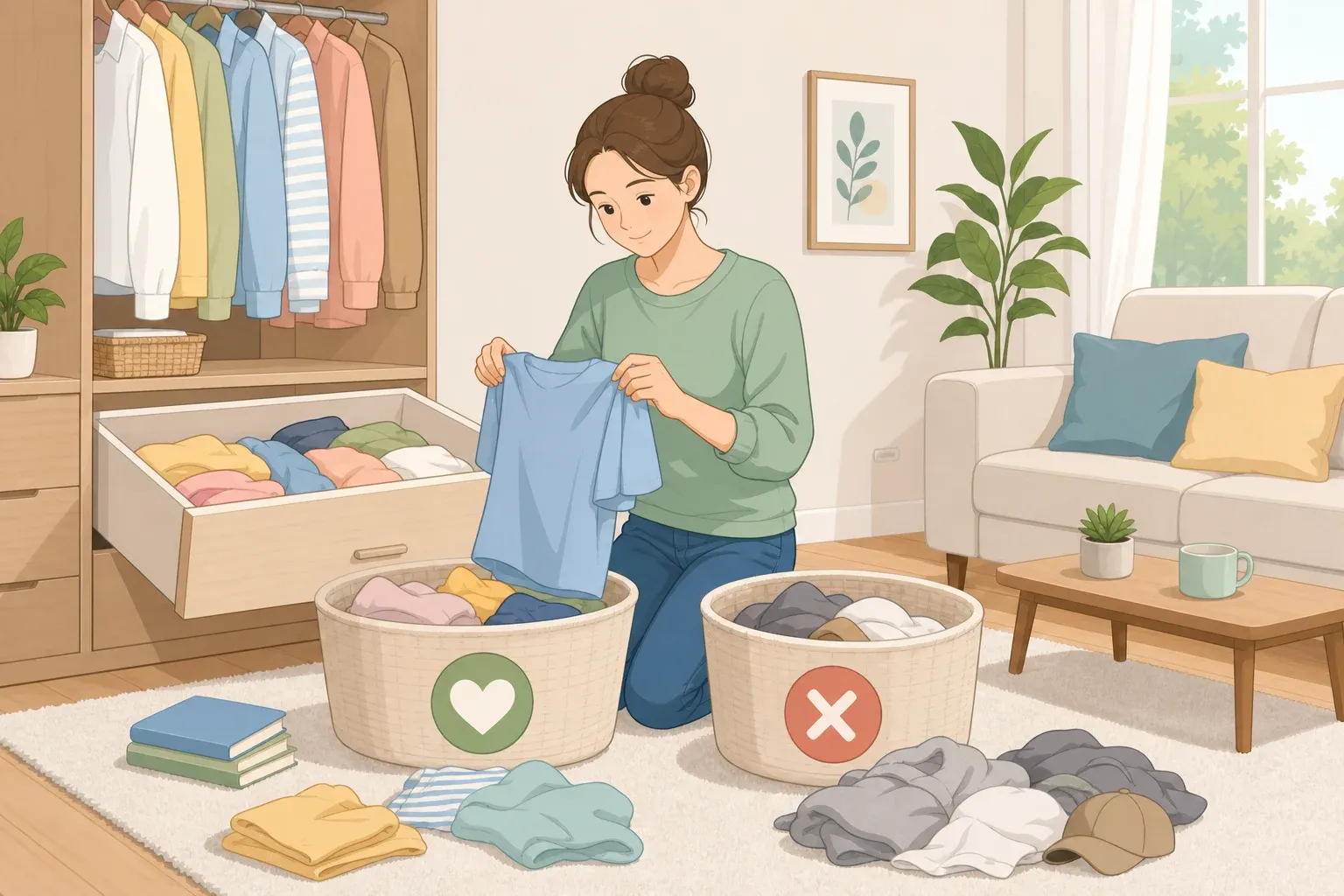
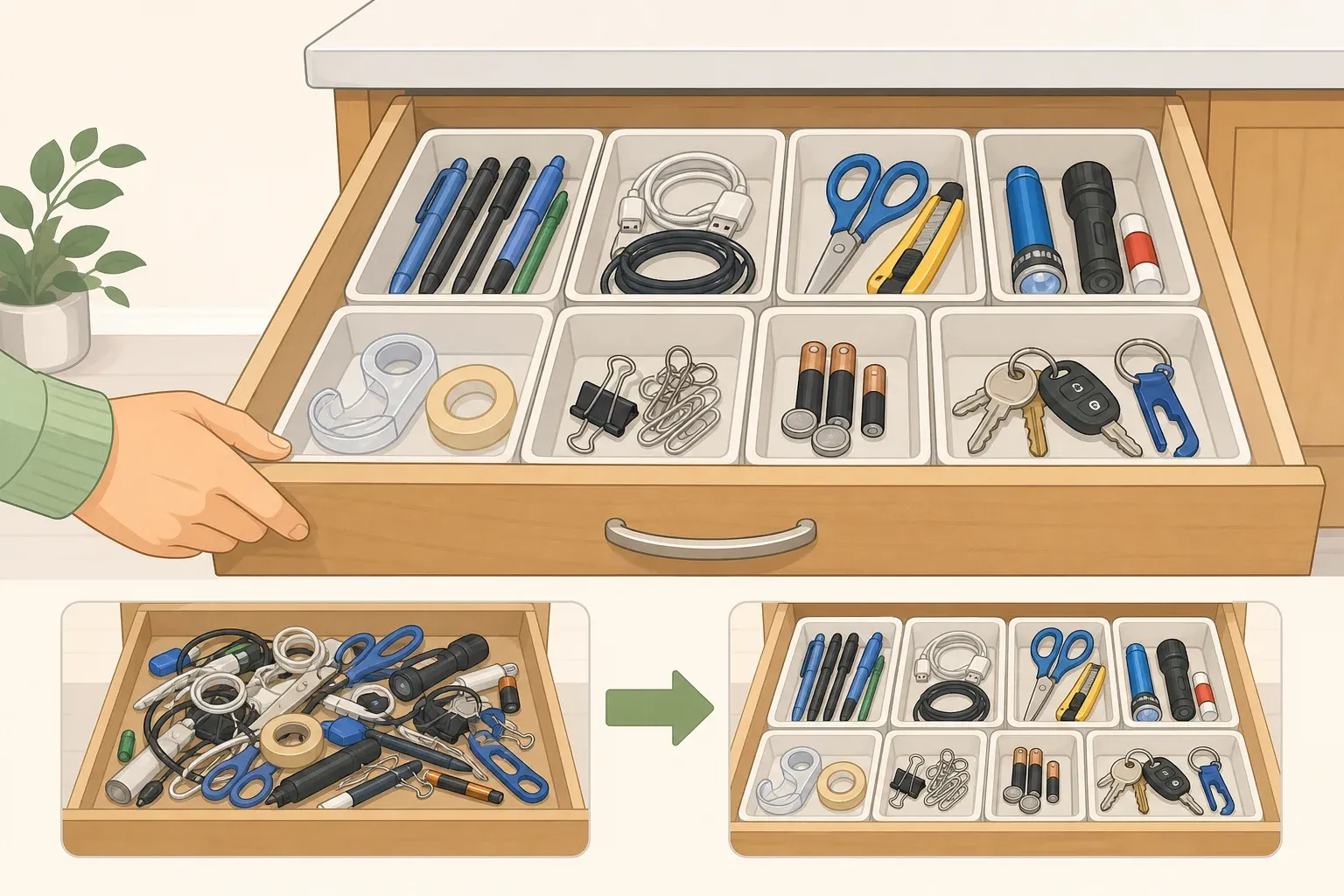
Clearing out items that no longer fit your current lifestyle is always the first step, before any maintenance routine gets built on top of it. Give the edit a fixed scope: one drawer, one shelf, or one surface per session, sorted into keep, relocate, donate, or discard. Tackle one space a week, which turns this into a realistic pace instead of a weekend marathon.
The one-in, one-out rule works best after a space has already been thoroughly decluttered. It maintains progress. It doesn't create
The zone is done when every remaining item has an actual spot, and you can see real gaps on the shelf, not just neater piles of the same volume. If a zone takes longer than one sitting, split it across two sessions rather than pushing through. Skip this step entirely, and every habit that follows has nothing solid to attach to.
Set a hard capacity limit for whatever keeps overflowing
Applying that same logic to your own overflow category, whether it's toiletries, pantry goods, kids' toys, or office supplies, is a practical extension of her method rather than a research-backed standard. Pick the container. Treat "full" as the actual limit, not a suggestion. When something new doesn't fit, something else leaves that same day, not eventually.
Build a one-in, one-out habit at the register
Before checkout, organizer Ebony Deloatch recommends pausing to ask three questions:
What will this replace?
Will it require adjusting the home to fit it?
Will it add to the cleaning routine?
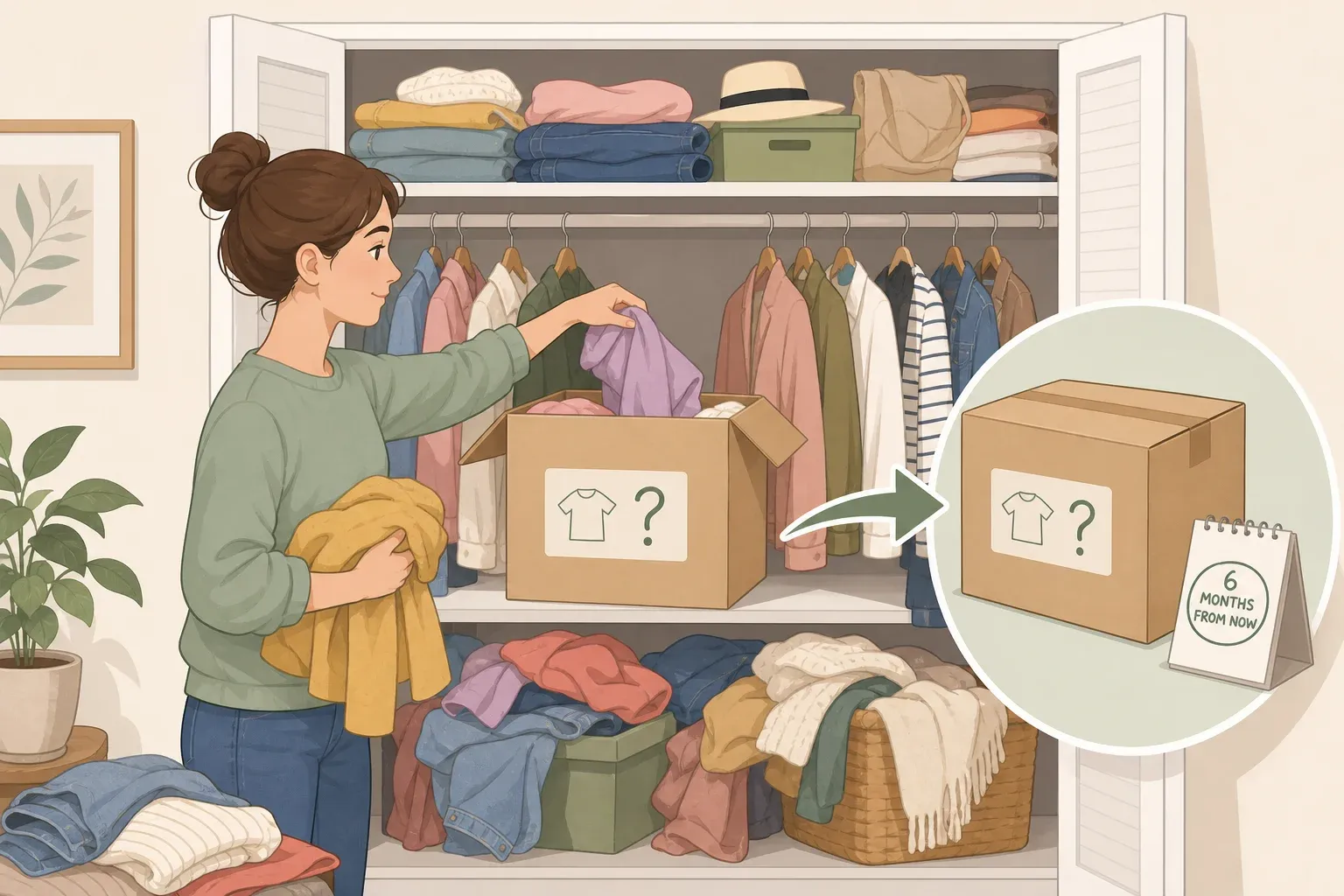
Buying new shoes means identifying the pair to release before leaving the store, not after arriving home. Once home, drop that item straight into a standing bin. Keeping a basket in the closet for anything that no longer fits or works can help keep the decision from stalling out.
This habit activates at your next relevant purchase, not something to force today. Try emptying the bin on a set schedule, roughly every couple of weeks, then adjust the interval once you see how fast it actually fills. If the bin is already full before your chosen day, empty it early and shorten the schedule going forward instead of waiting for it to overflow.
Check whichever category is currently busting its limit
This is different from the one-in, one-out habit above: it's a recurring check on a category, mugs, socks, kids' art, sample cosmetics, that isn't tied to a purchase at all. Regularly editing what enters and leaves the home is necessary to avoid slipping back into clutter, and it's often the small habits, taking only seconds, that make the biggest difference over time.
Try building in a short check once a week, then adjust the frequency once you see how quickly a given category refills. Don't rotate categories arbitrarily. Pick whichever one is currently exceeding its container from the habit above, or causing the most daily friction, like the drawer that won't close, and edit that one first. If the category doesn't fit its container again by the end of the check, adjust the container to match how you actually live rather than letting it drift. These are the decluttering tips for a clutter-free home that do the quiet, unglamorous work most systems skip.
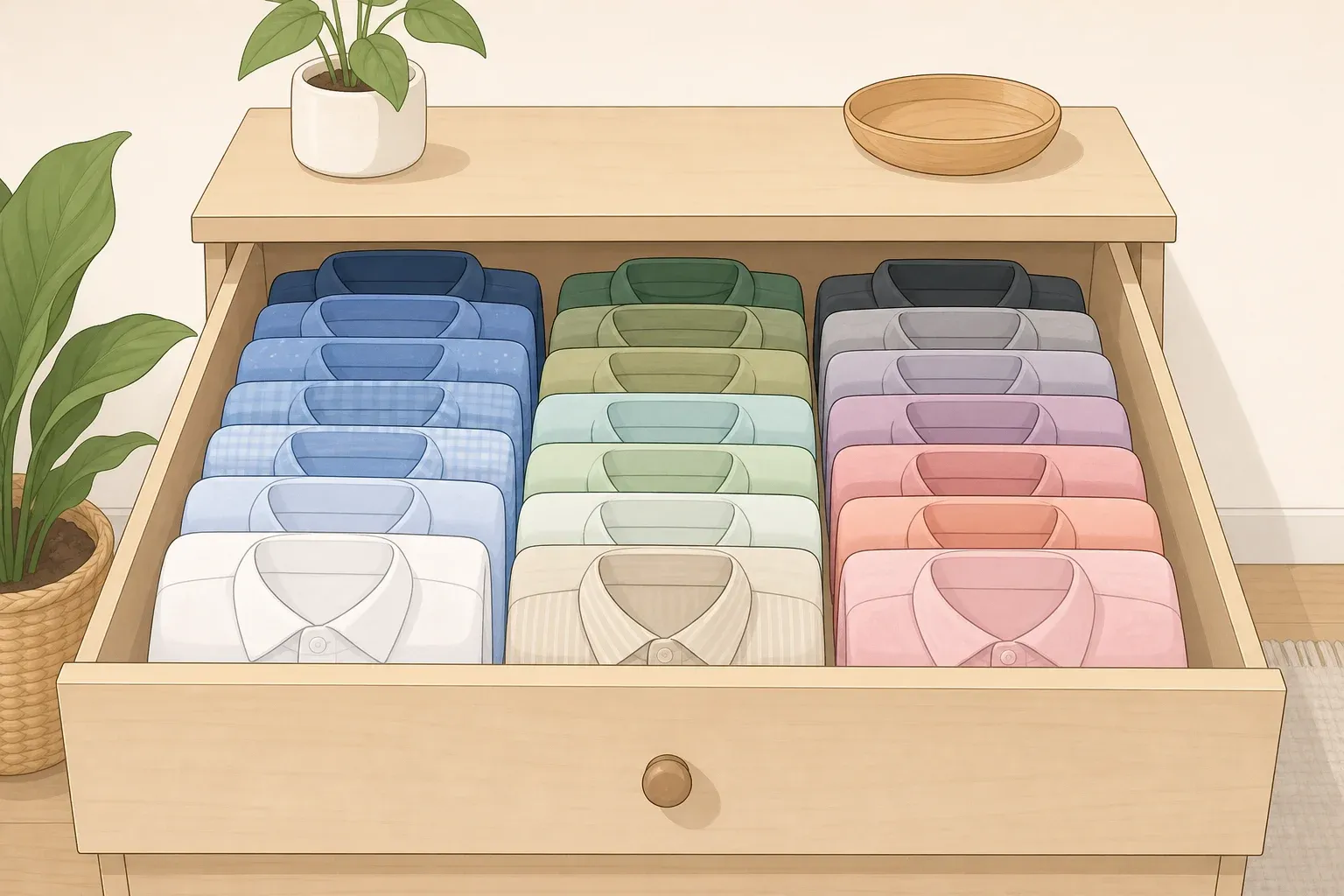
Give everyday items a one-step home
Systems should be simple enough to access and put away in a couple of steps; a system that feels cumbersome is a sign to clear more space, not add more bins. Her client example makes the point well: once excess was cleared and baking trays had a designated spot, the homeowner could put pans away immediately after use, and clear counters made cooking, instead of ordering out, more likely.
If returning an item means moving several other things first, that's a signal to edit that zone further, not to buy another organizer. This is one of the quieter habits of organized people: fewer steps between using something and putting it back.
Reset one or two high-traffic zones every night
A 5- to 10-minute nightly reset of counters, entryways, or tables prevents small messes from becoming projects. The "ten-second tidy" is built to keep everyday mess from turning into overwhelm, and it recommends shifting focus from a perfect outcome to simply completing the action.
Tie the reset to an existing routine, after dinner or before bed, so it doesn't need to be remembered separately. If the nightly reset consistently runs past 10 minutes, that's a cue to go back and clear more from that zone rather than adding a longer routine to compensate. Low-effort repetition, not extra willpower, is what makes this stick past the first few weeks.
Reassess the whole system on a fixed schedule
Organization systems naturally shift as family needs evolve, and regularly reassessing and adjusting supports long-term success more than any one perfect setup. Try tying the check-in to something that already happens on your calendar, a change of season or the start of a new school year, rather than waiting until the system visibly fails.
At each check-in, confirm your capacity limits from earlier still match how the household actually uses the space. If a category keeps outgrowing its limit check after check, that's a cue to change the limit itself, not just clear it out again.
Build habits the whole household can actually keep up
Shared habits create shared responsibility instead of one person maintaining everything alone. For kids: the one-in, one-out rule helps them stay mindful of what they keep once they have enough room to store what they own.
Assign each household member one zone they're responsible for resetting: an entry shelf, a toy bin, a desk surface. If it fits your household, keep kids' systems down to a single container with an obvious limit rather than a multi-step routine they're unlikely to follow. If you share a home and cooperation is inconsistent, don't redesign everything around someone else's perfect compliance.
Simplify shared spaces down to one catch-all bin, and keep the more detailed systems confined to areas you personally manage. If you're the only person who can find things in a shared space, that's a cue to simplify it, not to add more instructions.
A values-based trick for the one item you can't let go of
This finding comes from a 2024 study of older adults with hoarding disorder, so it may not apply to typical households. Over six weekly home visits, clinicians found that focusing on participants' personal values, rather than debating why they kept certain items, was linked to less clutter and better mood.
Adapted for an ordinary reader, the procedure looks like this:
Write down two or three things you value in how you want to live: calm mornings, room to cook, space for a hobby.
Write down what you want a specific space to help you do.
Use that written goal as the standard for what stays in that space.
For a single stuck item, skip the internal debate over its history. Ask instead whether keeping it supports the goal you just wrote down.
If clutter feels emotionally overwhelming or tied to ongoing distress, that's a different situation than a messy drawer. For adults with clinically severe hoarding disorder, clutter can impair daily functioning and even create a fire hazard. That's a signal to talk to a mental health provider experienced with hoarding disorder, not to push through with a single question.
How to stay organized at home after a rough week
Start today, without waiting for a purchase or a special occasion. Choose one zone, sort it into keep, relocate, donate, or discard, and set a bin nearby for what's leaving. Reset that zone before bed and see if it takes less than 10 minutes. If it does, move on to the next zone tomorrow. If it doesn't, there's still clearing to do there before expanding anywhere else.
If the system falls apart after a busy stretch, don't try to fix the whole house at once. Go back to the single zone causing the most friction, clear it until what's left actually fits its container, and restart the nightly reset there before touching anything else. There's no single right way to declutter, so consistency matters more than a perfect method. Skip the matching bins and the picture-perfect look. The only real test is whether the system resets easily, night after night.



Comments
Be the first, drop a comment!