



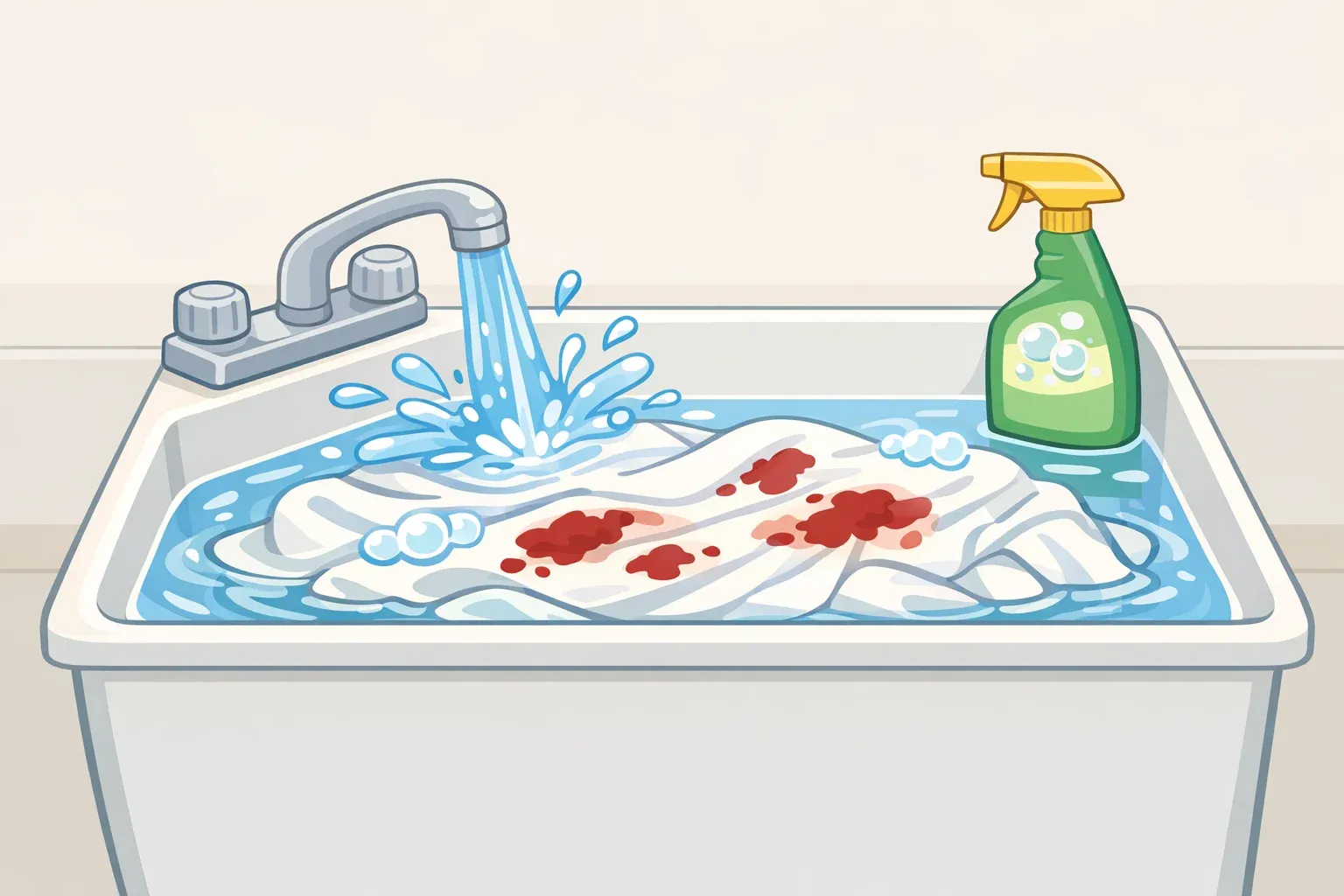
How to Get Blood Out of Sheets: Cold Water & Enzyme Guide
Getting blood out of sheets depends on keeping heat away from the stain until you've confirmed it's gone. Fresh blood needs a cold water rinse right away. Dried blood needs a longer soak in an enzyme-based product, kept cool. Neither should go anywhere near a hot wash, an iron, or a dryer until you've checked, in good light, that no trace remains (American Cleaning Institute; Iowa State University Extension and Outreach). That's true whether it's a small spot or you're trying to remove blood stains from bedding after a bigger mess.
Blood is a protein stain, and heat is what makes protein stains stubborn. Iowa State University Extension explains that hot water, an iron, or a dryer cooks the protein and causes it to coagulate between the fibers, making the stain harder to remove afterward (Iowa State University Extension and Outreach). Dryer heat on a still-visible stain can set what's left of it (Nature's Freedom). That's why every step below holds off on heat until the stain has been checked and cleared.
This is a beginner-friendly laundry task for washable cotton, cotton-blend, and synthetic sheets, the fabrics most bedding is made from. Check the care label before you start, since it's not the right approach for silk, wool, or genuine leather trim; those materials need different treatment than what's covered here. Remove the sheet so you can treat the stain directly rather than working around it on the bed.
Match the sheet's condition to one of these before you start:
- Fresh and still wet or damp: cold soak, enzyme detergent, cold wash.
- Dried, but never heated: cool-to-lukewarm enzyme presoak, then a normal wash on the care label's setting.
- Still visible after a wash: check the care label, then move to a fabric-safe bleach.
- Already dried in a hot dryer, or on silk, wool, or leather trim: expect a harder job, and treat a professional cleaner as an option worth considering.
What you'll need
- Cold running water
- A clean cloth for blotting
- An enzyme-based laundry detergent or presoak (look for "bio" or "enzyme action" on the label)
- A bleach that's labeled safe for the fabric, for later if the stain persists
- A basin or tub, if the stain covers a large area and the care label permits soaking
- Optional: 3% hydrogen peroxide, either ready-to-use from a drugstore or diluted from a concentrate
Enzyme products are the main treatment here. The American Cleaning Institute notes that enzyme presoaks are especially effective on protein stains like blood, body fluids, and grass, and they also boost the cleaning power of whatever detergent you're already using (American Cleaning Institute). Whatever product you pick, the label controls how long to let it sit; some enzyme presoaks work in minutes, others want an hour or more, so don't guess at contact time when the box tells you.
Read the stain before you treat it
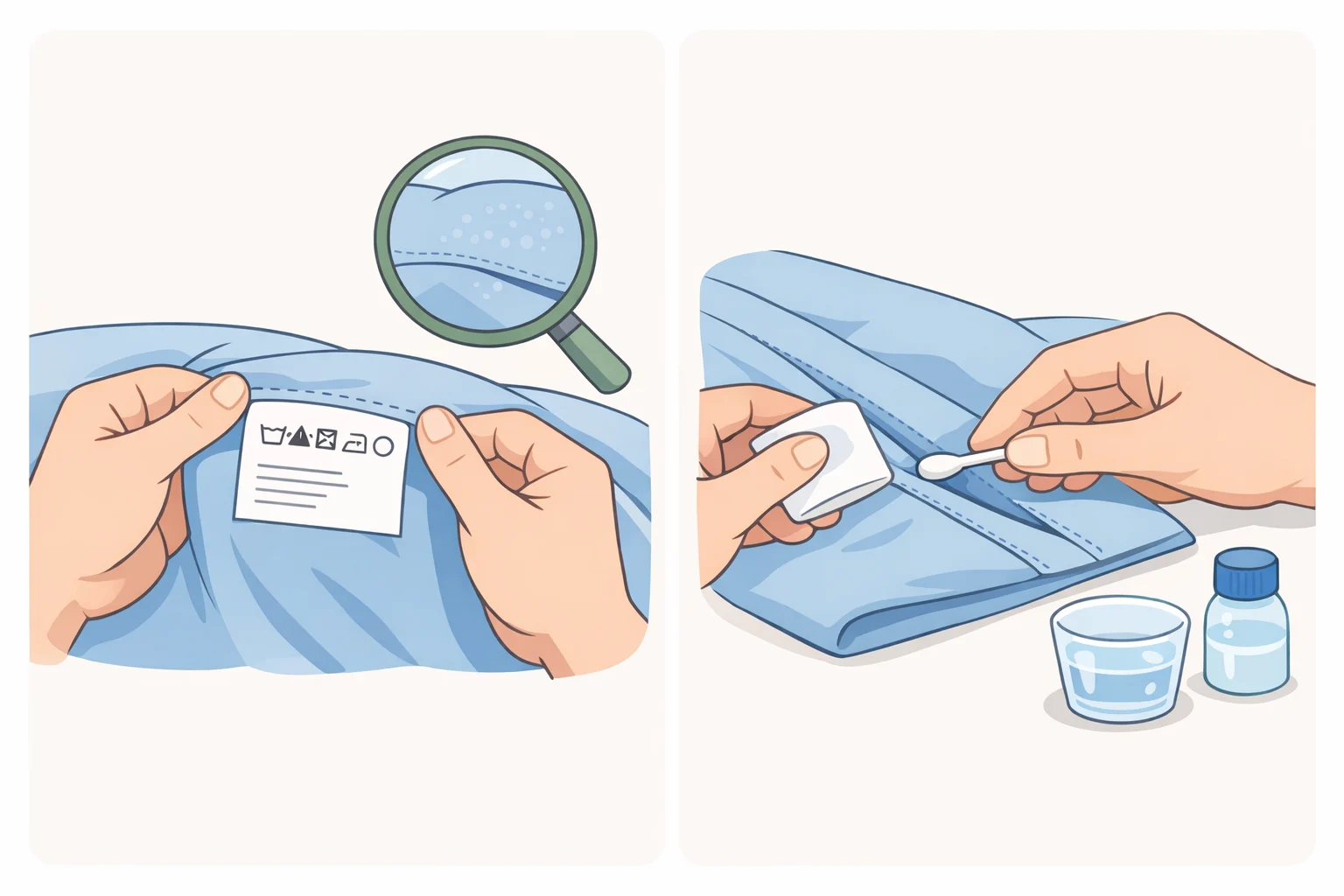
Skip guessing how old a stain is. Instead, look at what's in front of you: is it still wet or damp, fully dry but never heated, or has it already been through a hot dryer or iron? For this guide, that distinction determines which method to use, not a time estimate (Iowa State University Extension and Outreach).
Before reaching for bleach or peroxide later, check the sheet's care label and test a hidden spot, like an inside hem, for colorfastness. Don't guess whether a fabric can handle bleach; a failed guess can ruin the sheet (American Cleaning Institute). If the fabric changes color or bleeds dye during that patch test, stop and don't apply that product to the stain. Use one treatment at a time, rinse the fabric thoroughly between products, and follow the label on whatever bleach or peroxide product you're using.
How to get blood out of sheets when it's still fresh
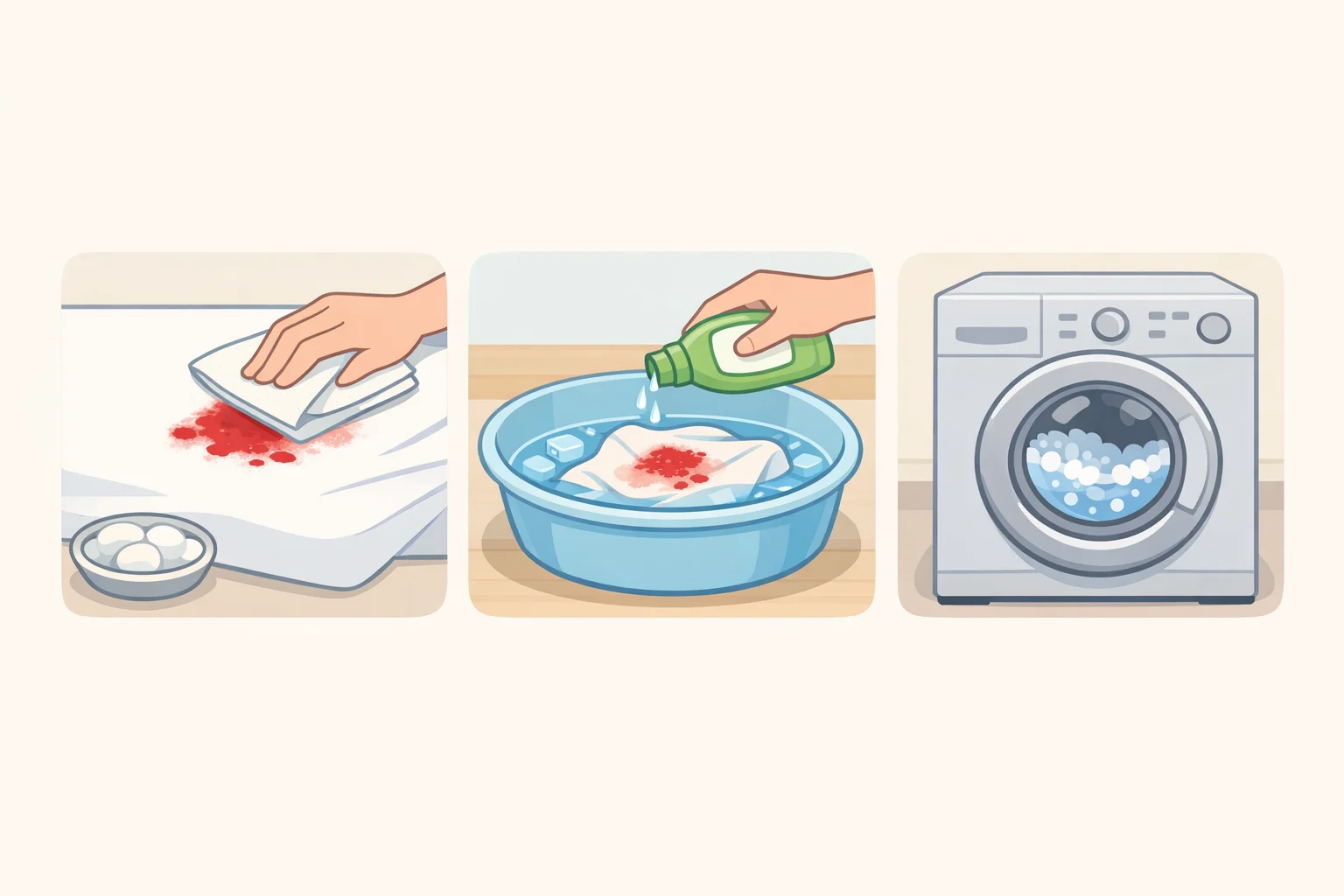
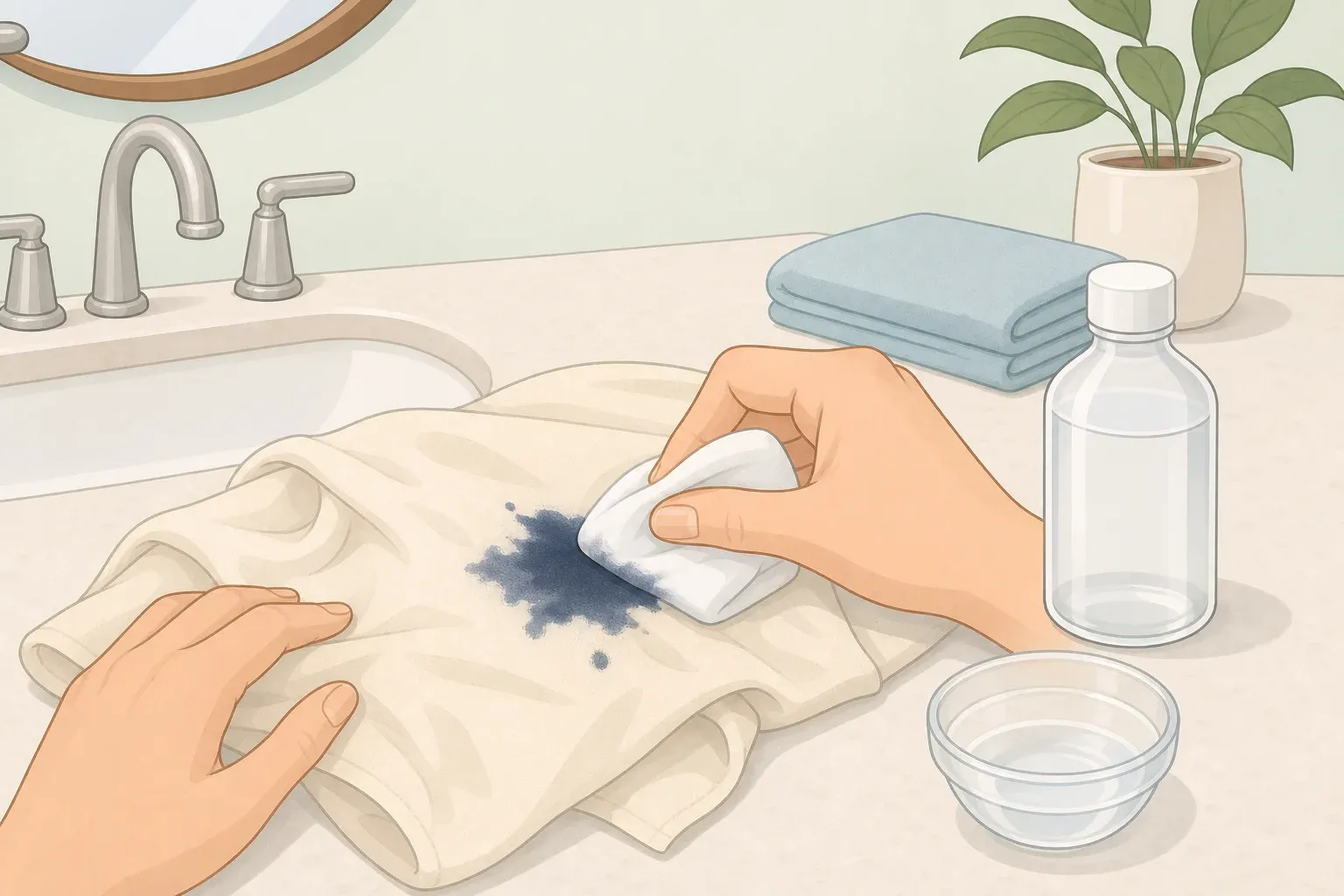
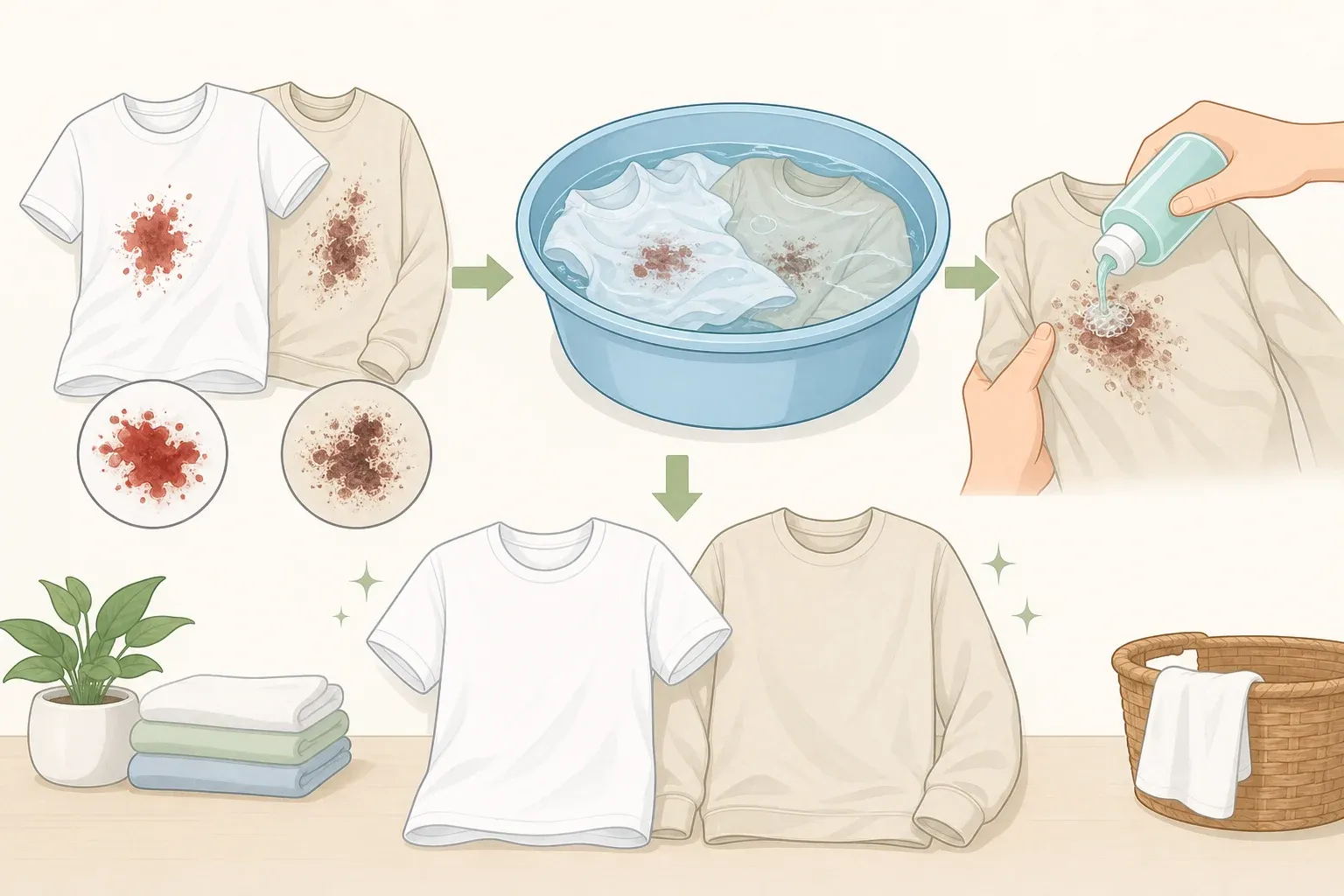
- Blot the stain with a clean cloth. Blot gently rather than scrubbing; the goal is to lift what's sitting on the surface before you add water (Nature's Freedom).
- Soak the area in cold water right away. Don't use hot water, since it will set the stain (American Cleaning Institute). Use cold water for this initial treatment.
- Work a small amount of enzyme detergent into the damp stain, following the product's label for how long to let it sit before washing.
- Launder on a cold cycle, following the sheet's care label for everything else. Before the sheet goes anywhere near the dryer, check the wet fabric in good light. Success looks like the stain fading out completely, with no shadow left when you hold the fabric up to the light. This is the point to check every time you treat a stain in this guide; if a trace remains, don't run the dryer.
The mistake most people make here is drying a "mostly clean" sheet to save time. If any trace remains, repeat the cold soak and enzyme step instead of running the dryer just to see, since heat on a stain that's still there can set whatever remains.
How to get dried blood out of sheets
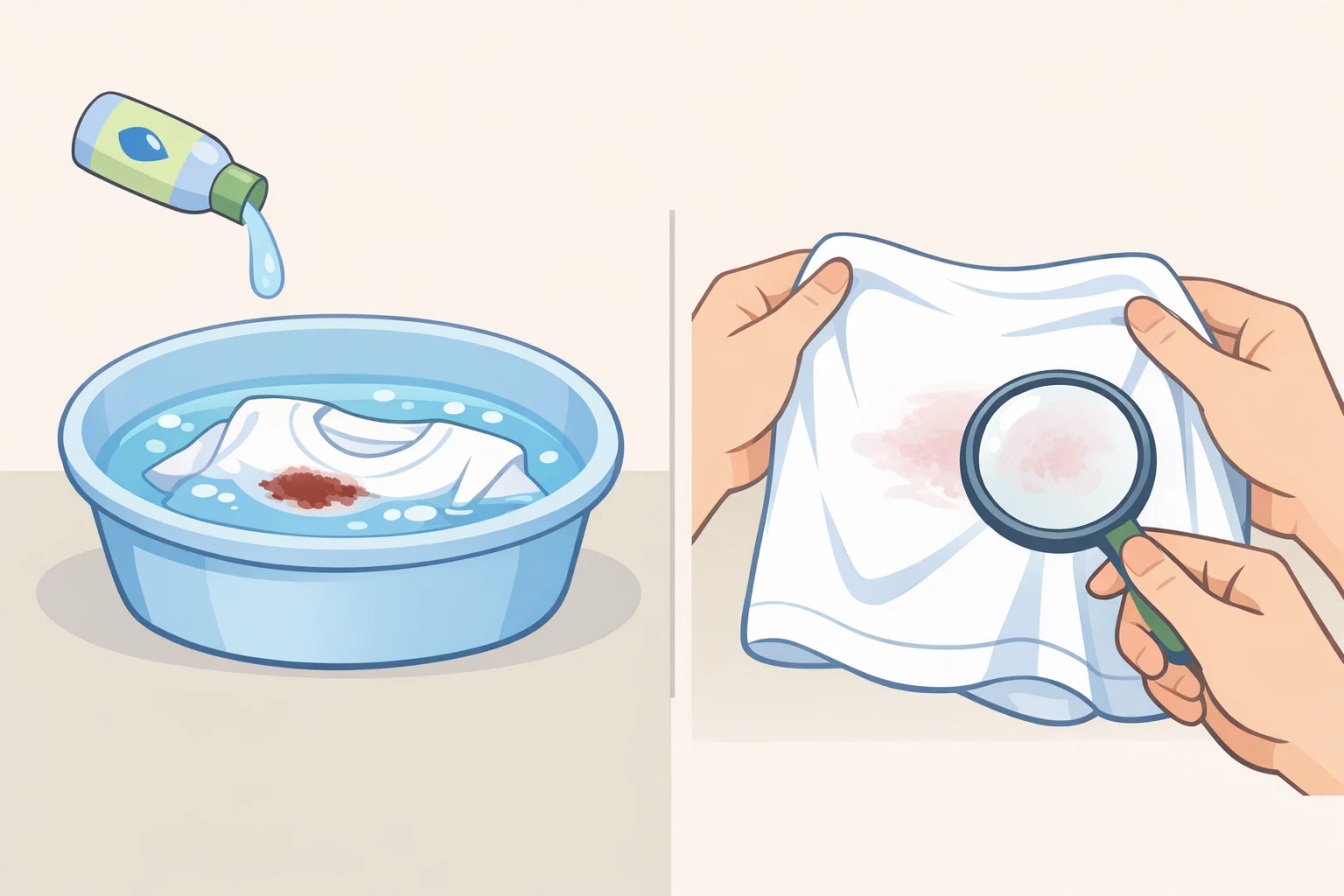
Dried, unheated blood needs a longer soak, and the sources here don't fully agree on temperature. Iowa State Extension recommends cold-to-lukewarm water below 100°F with an enzyme-based product (Iowa State University Extension and Outreach), while the American Cleaning Institute calls for pretreating or soaking dried stains in warm water with an enzyme product (American Cleaning Institute). To stay on the safer side for blood, use water that feels cool to lukewarm rather than genuinely warm, and follow the enzyme product's label for soak time.
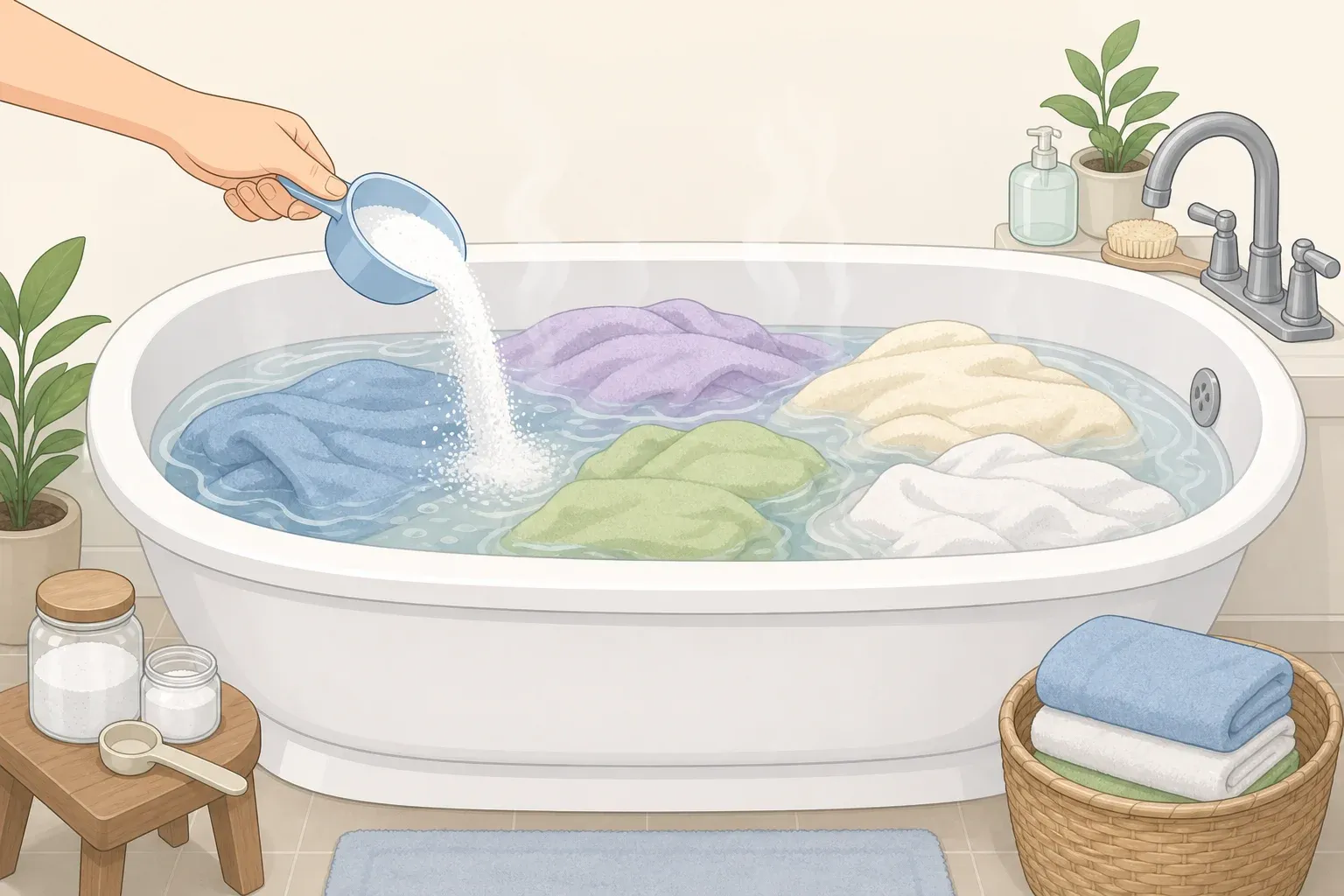
- Presoak the stain in cool-to-lukewarm water with an enzyme-based product, following the time listed on the label. If the stain covers a large area, do this soak in a basin or tub rather than trying to treat it under a running faucet, as long as the care label allows soaking.
- Launder the sheet according to its care label. The "cool-to-lukewarm" instruction above applies only to the presoak water; the machine cycle itself should still match whatever the care label specifies. Resist the urge to bump the wash temperature up to "help" the stain along.
- Inspect the spot while the sheet is still damp. If it's gone, dry as usual per the care label. If a mark remains, hold off on the dryer and move to the troubleshooting section below.
Using hydrogen peroxide as an extra step
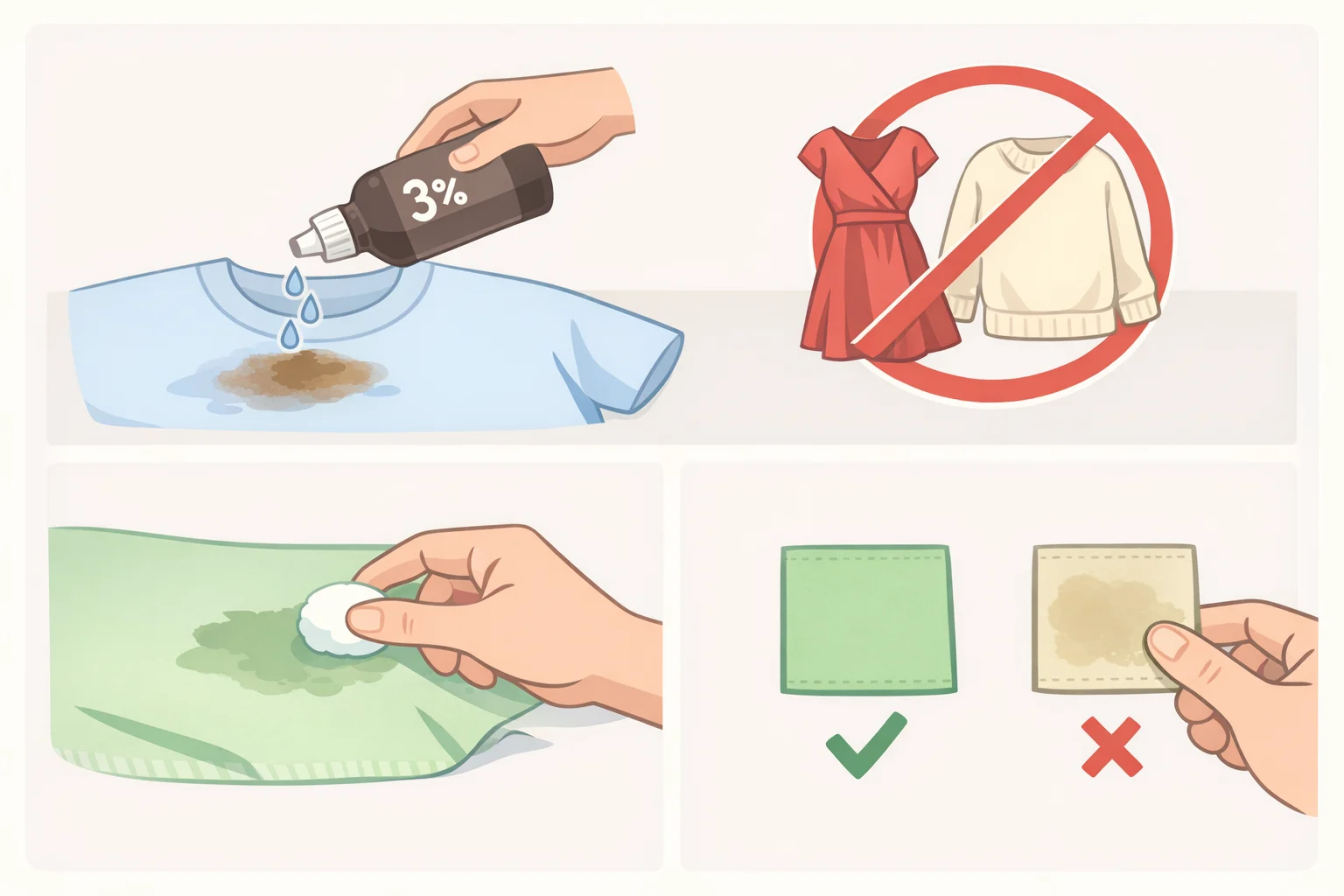
Hydrogen peroxide isn't the core method here, but Nature's Freedom describes it as a reasonable add-on for washable, colorfast sheets whose care labels permit it. It works through oxidation: it breaks apart the molecular bonds that give a blood stain its color, loosening or decolorizing it enough for the wash to carry it away (Nature's Freedom).
To use it, apply ready-to-use 3% hydrogen peroxide directly to the cold, damp stain. Nature's Freedom recommends about 10 minutes for a fresh residual mark, or up to 30 minutes for a dried blood stain. Then rinse thoroughly with cold water and wash right away (Nature's Freedom).
Two things matter before trying this:
- Patch-test any colored sheet on a hidden seam first, letting it sit 10 minutes before rinsing and checking for color change (Nature's Freedom). Stop if the fabric bleeds or shifts color.
- Do not use hydrogen peroxide on silk, wool, or genuine leather. Nature's Freedom identifies silk and wool specifically as protein-based fibers vulnerable to oxidizing agents at any concentration (Nature's Freedom).
Whatever step you just tried, cold soak, enzyme presoak, or peroxide, check the sheet while it's wet. If the stain is gone, wash and dry it normally per the care label. If it's not, air-dry the sheet instead and move to the next section.
What to do if the stain won't come out
If a stain remains after washing, the American Cleaning Institute's guidance is straightforward: rewash using a bleach that's safe for the fabric (American Cleaning Institute). Which bleach depends on the sheet's care label, not on color alone. If the product and washer directions call for it, chlorine bleach gets diluted as directed, then added about five minutes after the wash cycle starts so it doesn't destroy the enzymes and brighteners in the detergent (American Cleaning Institute). This is often the fastest way to get blood out of white sheets, but only when the label clears the fabric for it. If chlorine bleach isn't allowed, check whether the care label and the oxygen-bleach product itself both permit oxygen bleach for that fabric; it goes directly into the wash water before the sheets go in (American Cleaning Institute).
Before bleaching anything, test a hidden spot for colorfastness following the bleach package's instructions. Skip this step at your own risk.
If the stain has already been through a hot dryer, expect a tougher job; heat-set stains are significantly harder to treat than fresh or unheated ones (Nature's Freedom). You can follow the care label and product directions for another round of enzyme presoak and bleach. If the sheet is silk, wool, or leather trim, where hydrogen peroxide is off the table and bleach compatibility depends entirely on the item's label, follow the care instructions and consider a professional cleaner rather than testing more products at home.
Sort whites and light-colored sheets separately from darks throughout this process. White and lightly colored synthetics in particular can pick up dye from darker fabrics during washing, making it harder to judge whether a stain is actually gone or just camouflaged by a dye transfer (American Cleaning Institute).
For colored sheets, oxygen bleach and 3% hydrogen peroxide are the options once you've confirmed colorfastness on a hidden seam. Avoid hydrogen peroxide on silk, wool, and genuine leather; for bleach on any fabric, follow the item's care label rather than assuming it's safe.
Finish, dry, and store the sheet
Check the sheet one more time while it's still wet, in good light, before it goes into the dryer. If the stain is fully gone, wash and dry it according to the care label like normal.
If any trace remains, air-dry the sheet instead and repeat whichever treatment matched the stain type: cold soak for fresh blood, cool enzyme presoak for dried blood, or a fabric-safe bleach wash if it's already been through both. A sheet that won't clear after that, or one that's already heat-set or made of a delicate fabric, is a fair candidate for a professional cleaner. For valuable or specialty bedding, that's a reasonable call rather than continuing to experiment at home. Otherwise, once the stain is confirmed gone in daylight, wash it, dry it, and put it back on the bed.





Comments
Be the first, drop a comment!