



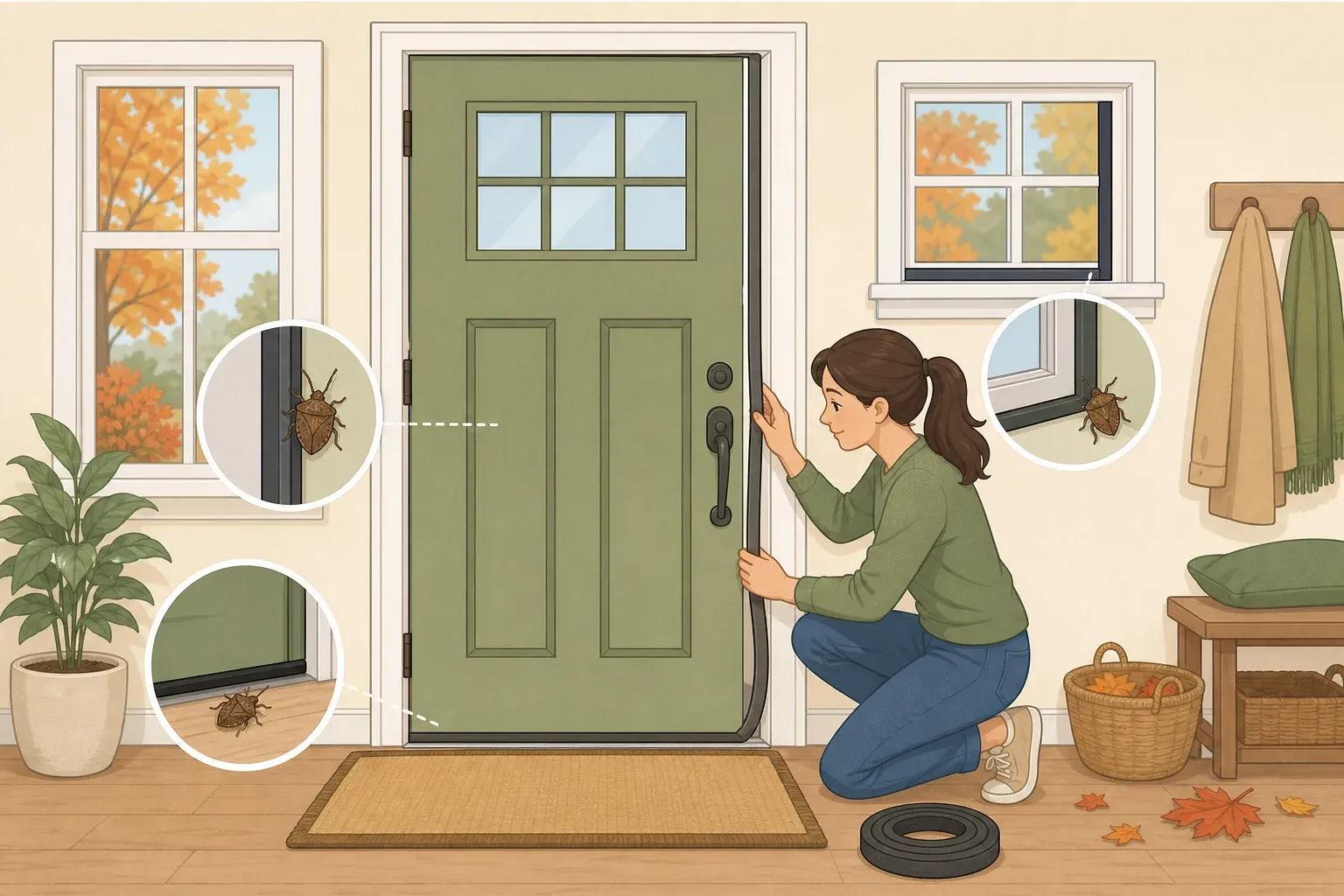
How to Keep Stink Bugs Out of Your House in Fall: Seal Gaps
Stink bugs piling up on a windowsill or clustering near a ceiling light every fall isn't a sign of a dirty house. It usually means they're hunting for somewhere warm and dry to spend the winter, and your walls look better to them than the yard does. This guide covers how to keep stink bugs out of your house in fall by sealing the specific gaps they use to get in, plus a no-mess way to remove the ones that already made it past the door.
A common species behind this pattern is the brown marmorated stink bug, usually shortened to BMSB. Unlike most other stink bugs, it seeks out warm, dry indoor space to overwinter, which is why homes tend to see more of them indoors once the weather cools (UC ANR).
Spraying isn't the fix. Extension researchers identify sealing gaps around doors, windows, screens, and window air conditioners as the critical first move against BMSB, and call it far more effective than insecticide (UC ANR). Sealing is straightforward weekend work with basic tools; the pesticide question is separate, and it's covered further down.
Why do stink bugs come into houses in the fall?
BMSB isn't hunting for crumbs or moisture the way a lot of household pests are. It's an accidental import from East Asia, native to China, Korea, Japan, and Taiwan, first found established in Pennsylvania in 2001. It has since spread to 47 U.S. states and four Canadian provinces as of 2021, largely by hitchhiking in vehicles and moved furniture (UC ANR).
Not every shield-shaped bug on the porch is this invader. California alone hosts more than 50 stink bug species, and one, the rough stink bug, preys on caterpillars and other insect larvae instead and is considered beneficial (UC ANR). There's no need to identify or eliminate every bug spotted outdoors, only the ones trying to get inside.
Because the documented behavior is shelter-seeking, cleaning alone won't close off the entry points. That's why the fix below focuses on the house envelope, not the housekeeping routine.
Where do stink bugs get into your house?
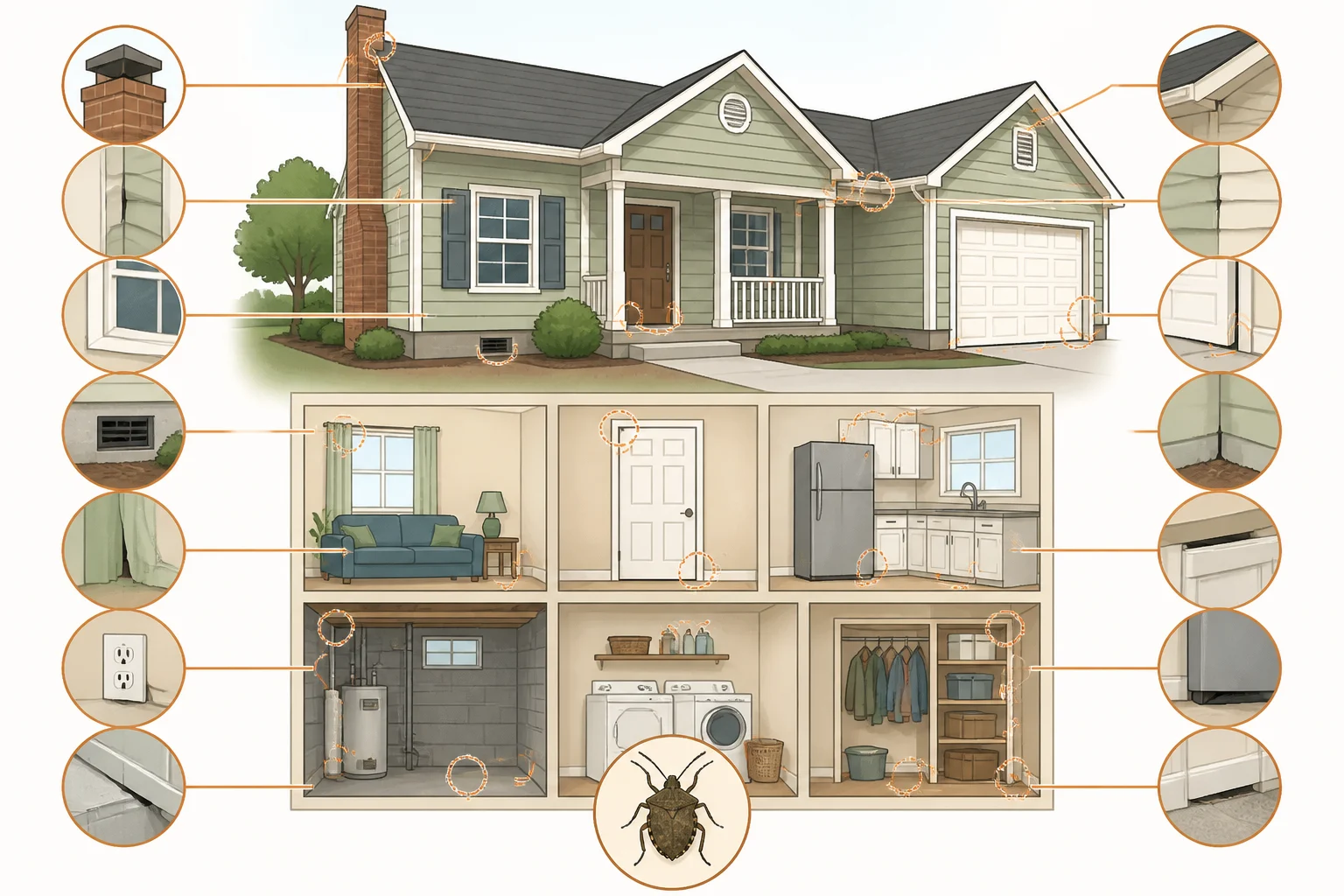
Before sealing anything, walk the house and find out where bugs are actually getting in. Extension research points to a short list: cracks around doors, windows, screens, and window air conditioning units (UC ANR). Start there instead of scanning the whole exterior at random.
Once a stink bug gets past the exterior, it doesn't wander the house at random. It hides in gaps under or behind baseboards, around window and door trim, and near ceiling exhaust fans or light fixtures (UC ANR). It also favors high, cool spots, so upper corners and ceiling fixtures deserve more attention than floor-level baseboards (UC ANR).
Run through this checklist before starting repairs:
- Exterior doors: check for gaps under sweeps and around the frame
- Window screens: look for tears, holes, or gaps where the screen meets the frame
- Window AC units: check the side panels and the seal around the unit's perimeter
- Utility penetrations: note where pipes, cables, or vents pass through exterior walls, but don't touch the vent opening itself yet
How to seal cracks to keep stink bugs out, step by step
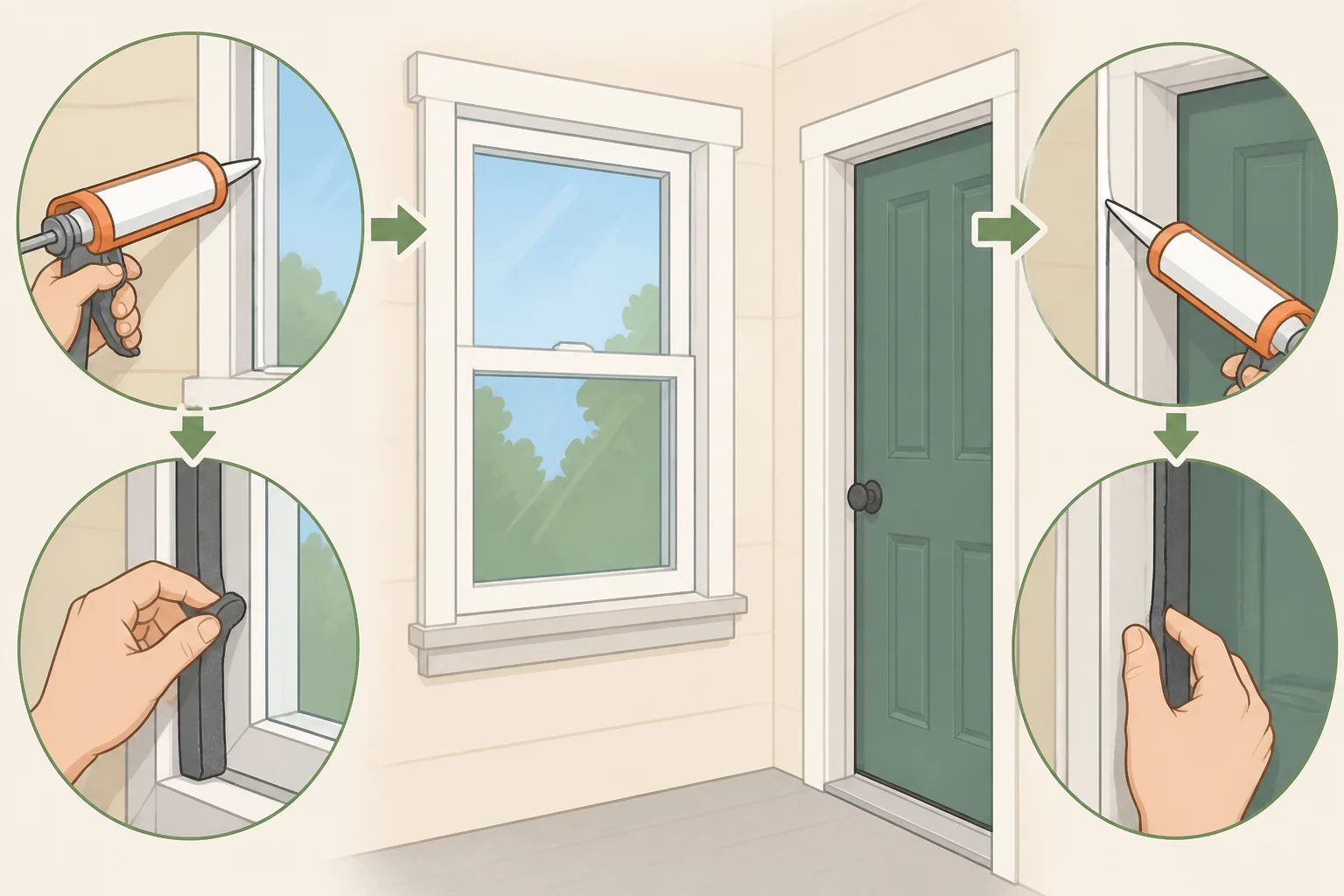
What you'll need: caulk and a caulking gun, weatherstripping, a door sweep, screen repair patches or replacement screen material, a flashlight, and foam sealant rated for the surface you're using it on. This is beginner-friendly work with basic hand tools that most homeowners can finish in a weekend.
Sealing access points is the critical first action against BMSB, and extension researchers call it much more effective than spraying, since outdoor insecticide at entry points breaks down and loses effectiveness fast (UC ANR).
- Inspect with a flashlight. Walk the exterior along every window and door frame, looking for daylight coming through or feeling for a draft near the frame.
- Caulk gaps where trim meets siding. Run a bead of exterior-grade, paintable caulk along any seam around window and door frames where you spotted light or felt air movement.
- Add weatherstripping to windows and door jambs. Press adhesive-backed weatherstripping into the gap where the window sash meets the frame, and along the sides of the door where it meets the jamb, not just the bottom. Open and close the window or door a few times afterward; if it sticks or won't close fully, the strip is likely too thick for that gap.
- Install or replace door sweeps. Attach a new sweep to the bottom of exterior doors if the current one is worn, gapped, or missing. Close the door and check along the bottom edge for visible light or a gap where a sweep should be sealing.
- Repair or replace torn screens, and check the side panels and perimeter seal on window AC units, since those units are a documented entry point (UC ANR). When patching a screen, overlap the tear completely on every side and press the patch flat so no gap remains at the edges.
- Leave functional vents and utility lines alone, and seal only the gap around them. For an ordinary gap around a plain pipe or cable sleeve, caulk or a foam sealant rated for that surface works fine. Do not seal, cover, modify, or foam any functional vent, flue, drain, electrical component, HVAC opening, or gas line connection. If it isn't obvious which part is the working opening and which is just the surrounding gap, stop and call a qualified professional instead of guessing.
UC ANR also advises avoiding lights near doors, inside or out, right before opening them (UC ANR).
After finishing, recheck every treated spot. There should be no draft at the frame and no daylight visible through any gap. If a gap sits somewhere unsafe to reach, high in a gable, above a second-story window, or behind fixed trim, don't push a ladder past what's comfortable. That's a job for a handyman or pest control professional, not a reason to skip the spot.
How to get rid of stink bugs in the house without crushing them
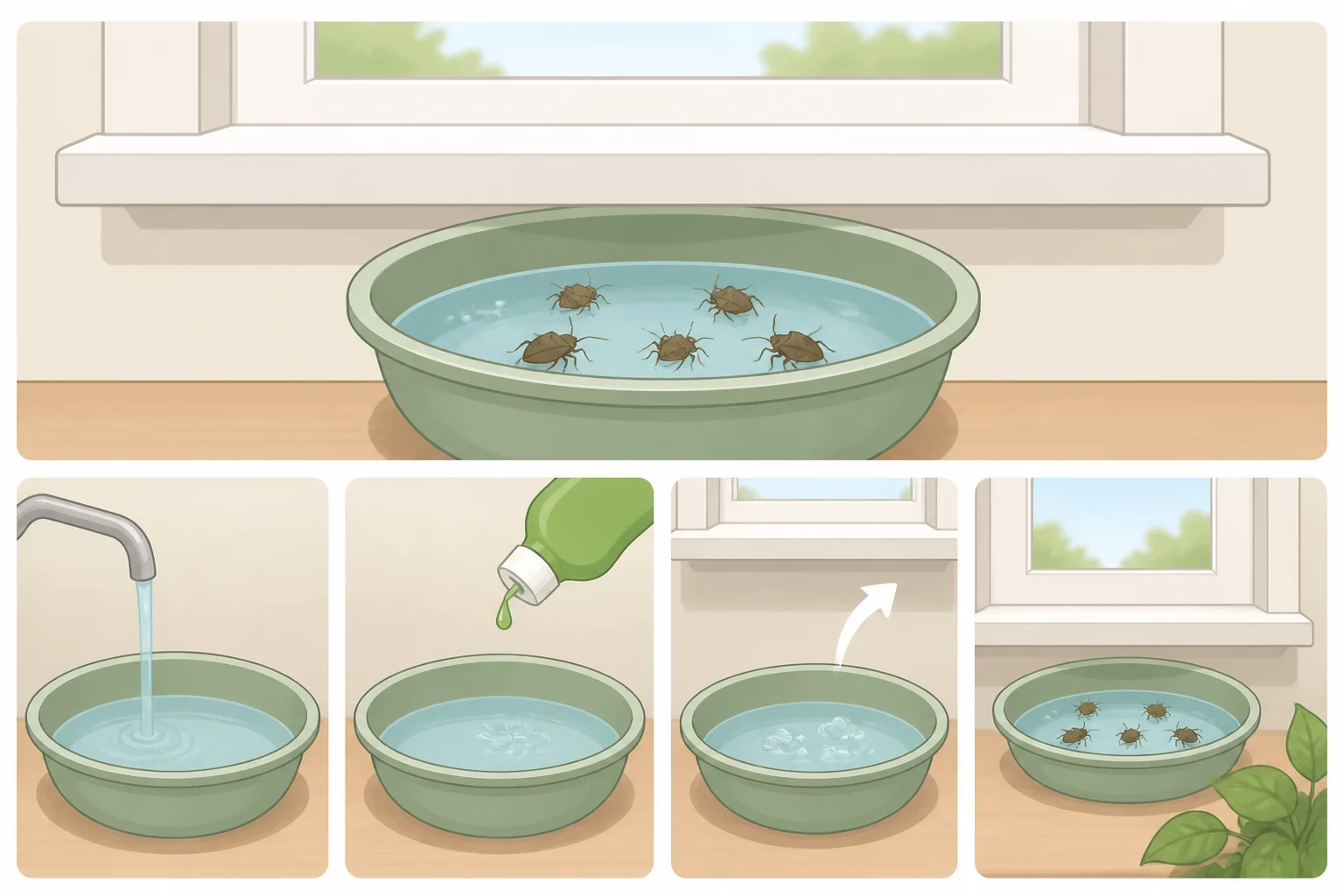
Before touching a stink bug found indoors, know this: crushing or disturbing it releases its odor, and that holds true across stink bug species, not just BMSB (UC ANR). Reaching for a shoe or a paper towel is the instinct, but it just guarantees the smell.
Set up a low-mess trap instead. Fill a basin with water and a small amount of dish soap. A foil roasting pan works well (UC ANR). Set it below a spot where bugs tend to gather, like a windowsill or under a ceiling fixture. Empty the basin when it's caught a few bugs, following your local waste guidance, without crushing anything inside it.
Skip the insecticide spray entirely. Indoor insecticides aren't recommended for this pest (UC ANR).
Troubleshooting: when sealing doesn't go as planned
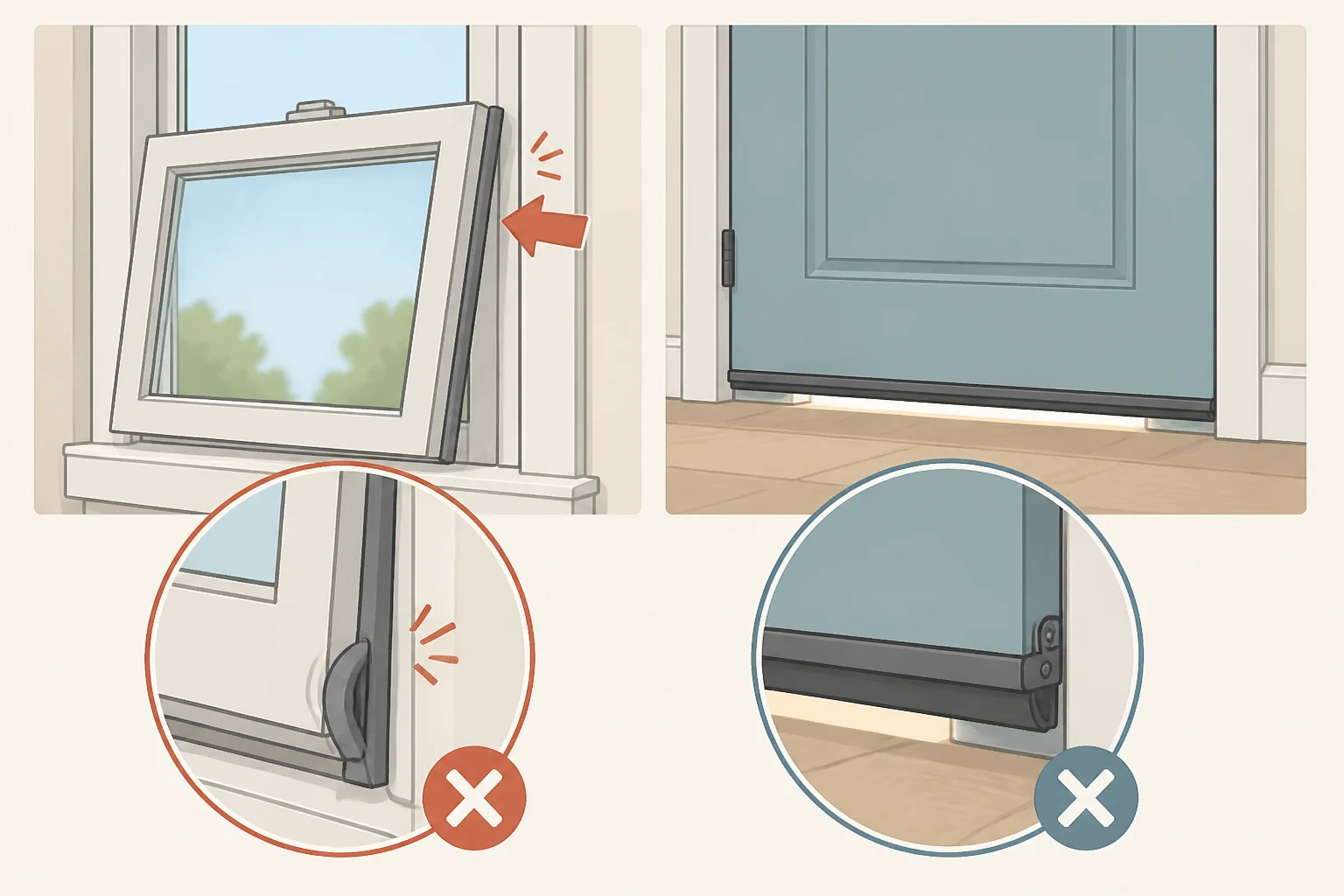
If a door sweep still leaves a visible gap after installing it, the door may have settled unevenly or the threshold may be worn down. Try a taller or adjustable sweep before assuming the door itself needs work.
If a window won't close smoothly after adding weatherstripping, the strip is probably too thick for that gap. Swap it for a thinner foam or vinyl profile rather than forcing the window shut, which can crack the frame over time.
A screen with one or two small tears is worth patching, but one that's brittle, warped, or torn in multiple spots is faster and more reliable to replace outright. The same logic applies to a window AC unit: if the side panels won't sit flush against the frame no matter how much you seal around them, the unit needs replacing or a professional resealing job, not more caulk.
There's no supplied evidence that removing leaf litter prevents BMSB from getting indoors, so put the effort into the house envelope rather than stripping the yard bare.
Finish-line guidance
After sealing, test each door, window, screen, and AC unit panel again for drafts or light. If bugs keep showing up indoors in large numbers despite that, don't reach for an indoor insecticide spray; extension research doesn't recommend it for this pest.
Recheck for missed gaps around trim and utility lines first. If an entry point is inaccessible, or it involves a vent, wiring, a gas line, or a structural repair, call a pest control professional rather than working around it yourself.
There's no need to identify every stink bug species in the yard, and no need to rake the property bare to solve this. The sealing work at the doors and windows is what's connected to fewer bugs indoors, and that's where the weekend is best spent.







Comments
Be the first, drop a comment!