



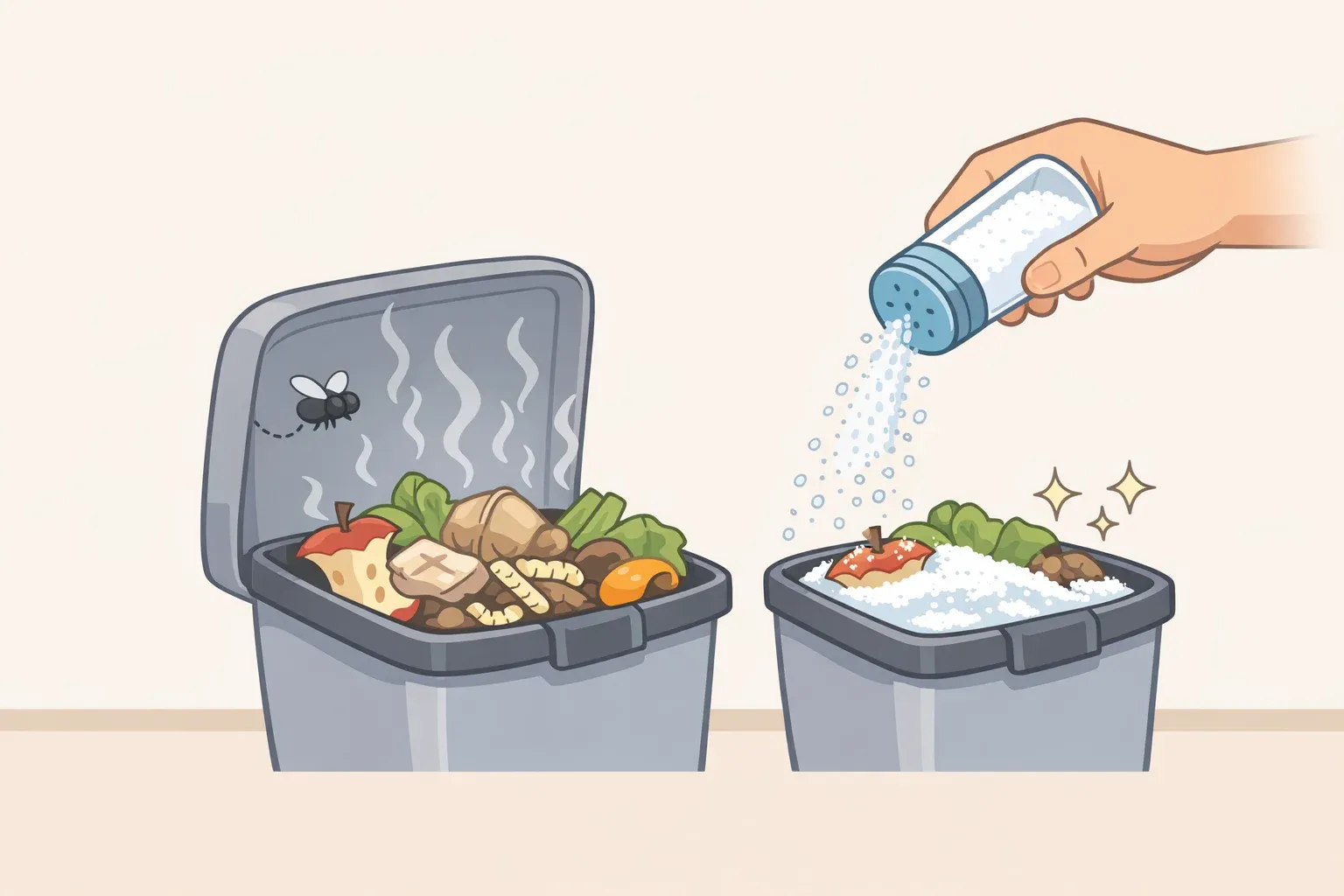
Does Pouring Salt in Trash Can Stop Odors and Maggots?
A cup of table salt at the bottom of a trash can costs almost nothing and takes ten seconds. The hack has been circulating long enough that it deserves a straight answer not a dismissal, not a miracle claim. Pouring salt in your trash can does work, within a specific set of conditions, for a specific reason: it absorbs moisture. That drier environment discourages flies and reduces one of the main preconditions for odor. What it does not do is chemically neutralize the compounds that make trash smell. Those are two different things, and conflating them is where the hack gets oversold.
Before going further: most of the practical guidance here comes from consumer publications and municipal waste guidance, not controlled lab studies. Tom's Guide and Good Housekeeping both recommend the practice based on mechanism and personal use. No controlled comparison between salt and baking soda, charcoal, or other household additives in trash cans turned up in the sources reviewed for this piece. That gap matters, and it shapes what can honestly be claimed.
The insight tying everything together: odor and maggots often look like separate problems but share the same enabling condition pooled moisture at the bottom of the bin. Salt's job is to remove that moisture. Everything else follows from that.
Does pouring salt in your trash can work for odors and maggots?
Yes, but with different mechanisms for each problem, and different levels of evidence behind each claim.
For maggots, the case is cleaner. Flies deposit eggs in warm, moist trash, and those eggs can hatch into larvae within 24 hours, according to Tom's Guide. Salt addresses this at multiple points. It absorbs the liquid that seeps from garbage bags sometimes called "garbage juice" which eliminates the wet environment flies need to breed. Any stray eggs or larvae that survive a cleaning get dehydrated, and flies that land in the bin and consume salt can die from dehydration as well, per the same source. Good Housekeeping corroborates the dehydration effect on larvae directly.
For odors, the picture is more complicated. Reducing moisture at the bin's bottom removes one condition that makes odor worse wet organic matter sitting and decomposing. But trash odors are driven by volatile organic compounds (VOCs), including sulfur- and amine-containing gases, according to University of Texas at Arlington research. The UTA study did not test salt, but it identifies which agents actually neutralize those compounds: amino acid mixtures, higher terpene concentrations, and polyethyleneimine performed well against the VOC classes found in waste emissions. Salt does not appear among the evaluated neutralizers.
The honest framing: available sources support salt as a moisture-control step. Whether it does anything directly to the odor compounds themselves is not established. What is clear is that drier conditions produce less decomposition activity, which in turn produces less of the smell. That's an indirect benefit, not chemical neutralization.
Why moisture is the root problem
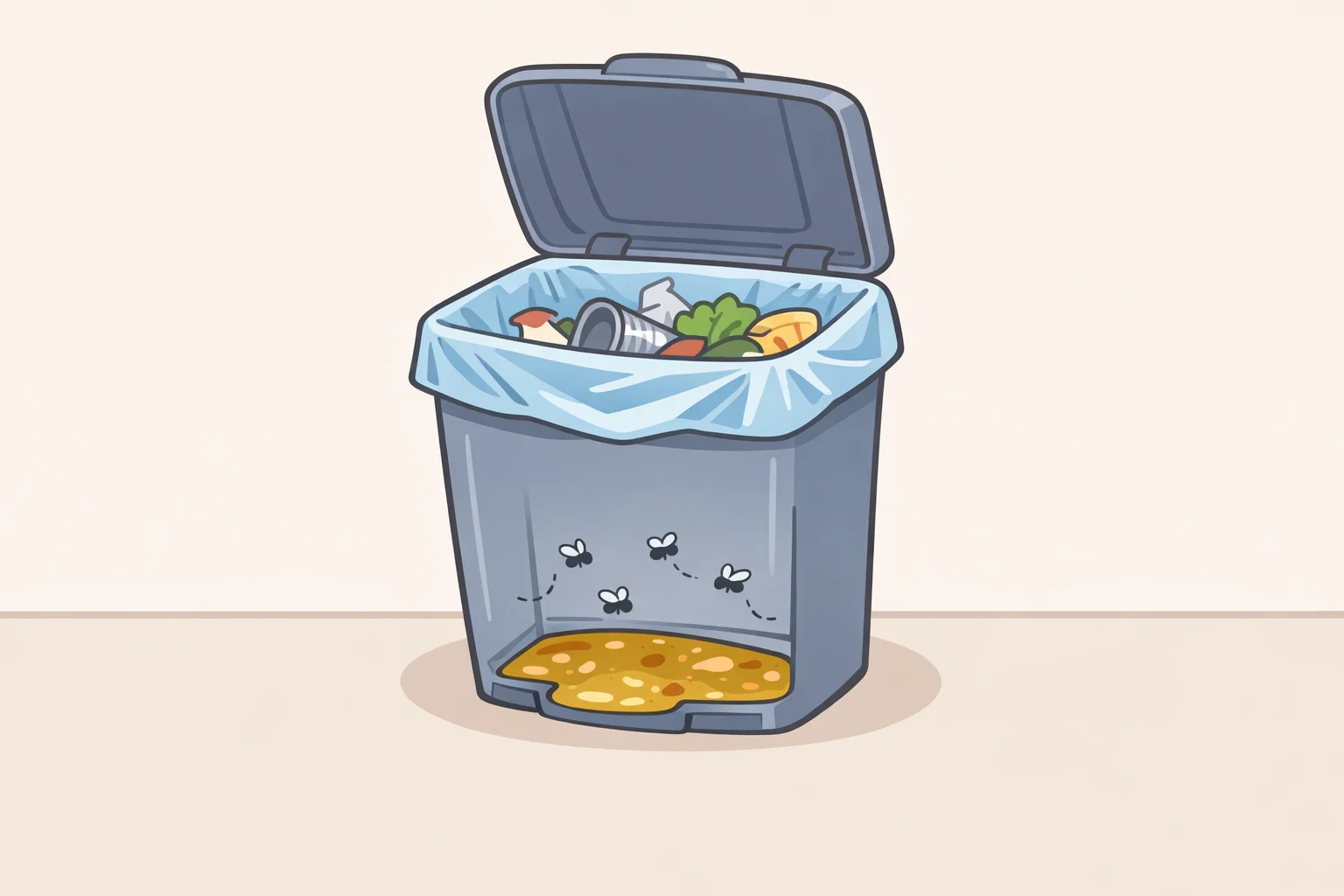
Garbage juice is the real culprit. Liquid seeps from trash bags and pools at the bottom of the bin. Even small amounts of standing liquid attract flies, Tom's Guide notes, and those flies move fast once they find a suitable environment. The bin's interior stays warm, especially in summer. That combination warmth plus moisture plus food residue is exactly what makes a trash can a productive breeding ground.
Salt's role is straightforward: it draws liquid toward itself, absorbing the pooled moisture before it can create that environment. Think of it as making the bin floor inhospitable rather than comfortable. No puddle at the bottom means flies that land have less reason to stay and lay eggs. Any that do deposit eggs encounter a surface that works against larval survival.
The limitation is scope. Salt sits at the bottom of the bin. It can only act on what reaches it, and it has no effect on the residue coating the bin's walls and lid, or on the odor compounds already embedded in the plastic itself.
What salt won't fix and what to do instead
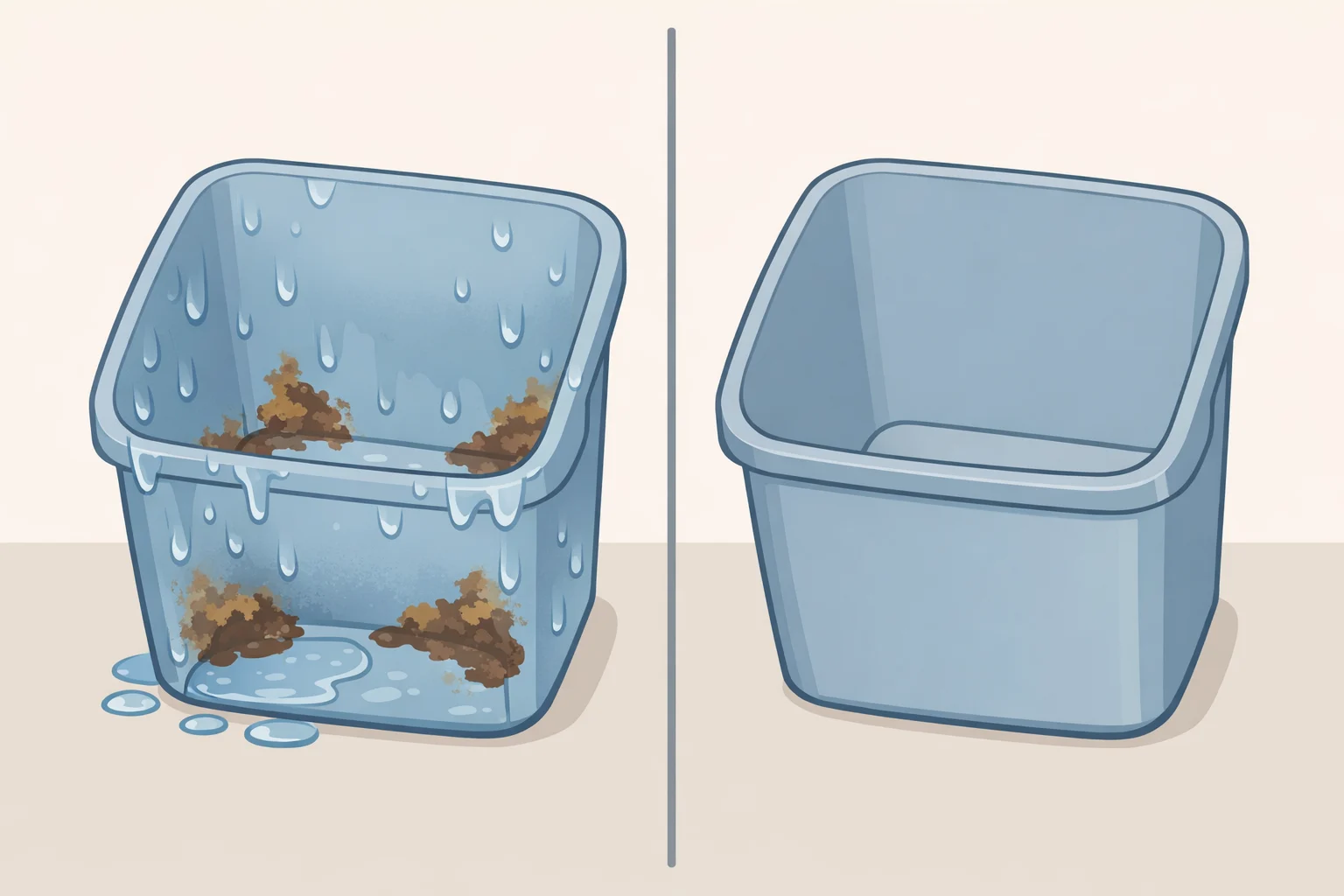
Salt applied to an already-dirty bin is managing around the problem, not solving it. Hosing down a bin loosens surface dirt but leaves behind the sticky residue and bacteria coating the plastic interior, per Tom's Guide. That residue contributes to persistent odor. Salt does nothing to break it down.
There's a related trap worth flagging: washing a bin without fully drying it recreates the same moisture problem salt is supposed to prevent. A damp bin after cleaning is ready-made for flies to return, the same source observes. The bin needs to dry completely before salt or a new bag goes in. Skipping that step turns a cleaning effort into a reset, not an improvement.
For odor that lingers after a proper cleaning, baking soda, activated charcoal, or scented liners are worth trying. These won't necessarily outperform salt on moisture absorption, but they may act differently against odor compounds that have soaked into plastic over time, according to The Spruce. For bacterial residue, a diluted bleach solution used as a disinfecting spray wiped clean rather than left to pool addresses the bin's interior more directly than any dry additive, per the same source.
None of these options are a substitute for scrubbing. If the bin has a visible film or a smell that survives an empty-bin day, the fix is cleaning first, then prevention.
How to use salt in a trash can
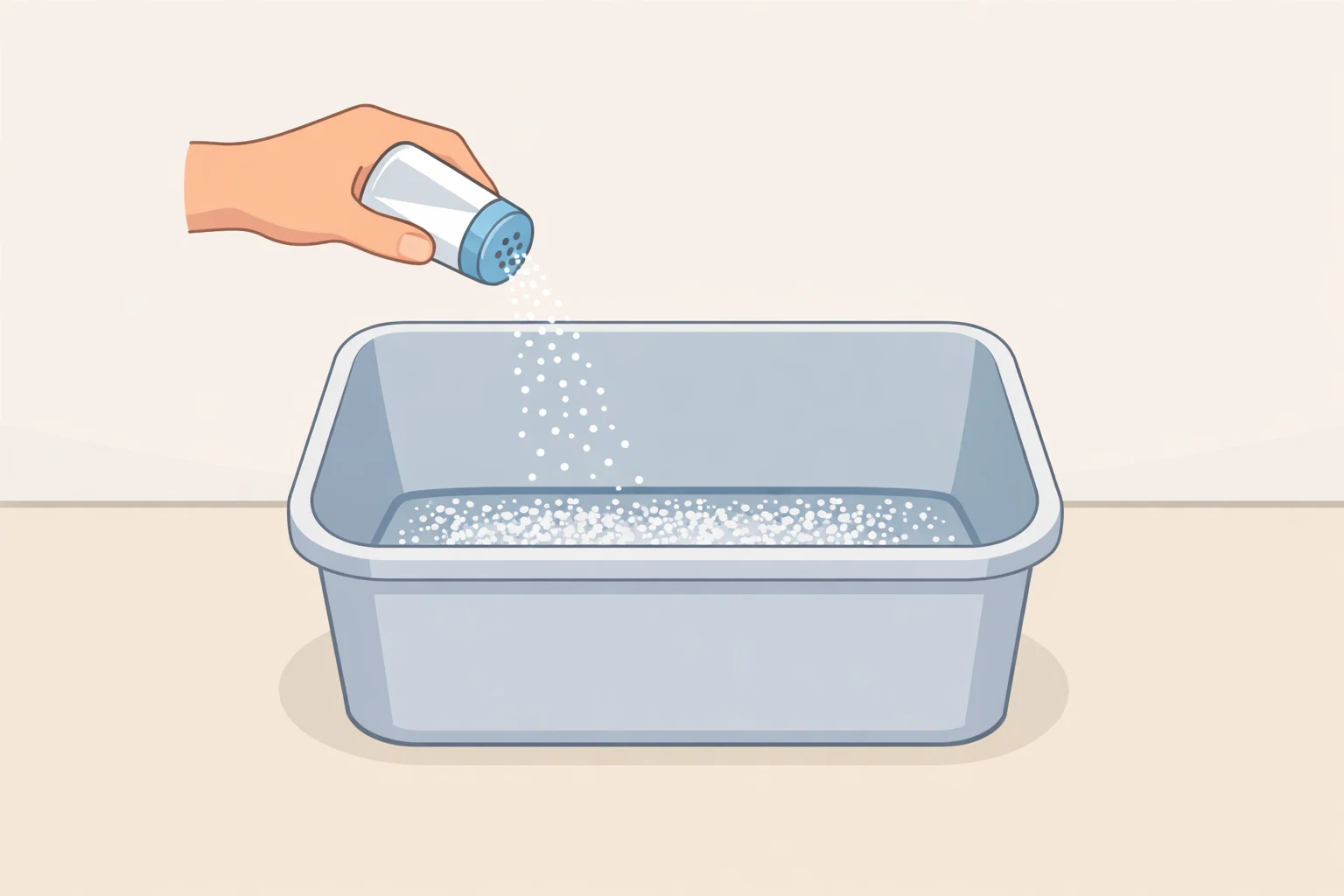
The method is simple enough that getting it wrong takes effort. After emptying the bin and letting it dry, sprinkle a generous layer of table salt across the bottom before putting in a new bag. Tom's Guide recommends doing this after every pickup. Good Housekeeping uses about a cup once a week. The two don't agree on quantity or timing, which reflects a real absence of standardized guidance. Consistency matters more than precision the goal is a light layer covering the bin floor, applied to a dry surface.
For extra protection, lining the bottom of the bin with several sheets of newspaper before the bag goes in adds a second moisture buffer, per Tom's Guide. Newspaper absorbs moisture from bags before it can pool; salt under or over that lining catches what gets through.
Brookline's food-waste program guidance takes a similar approach at the kitchen level: drain liquids from food scraps before they go into the bin, and use paper towels to absorb excess moisture. The logic is the same whether applied to a countertop compost bin or a curbside trash can reduce the liquid entering the system and there's less moisture for anything else to work against.
When to skip salt in the trash can and fix the source instead
Salt belongs in a maintenance routine, not a remediation effort. If a bin has an established odor after cleaning, visible residue on the walls, or a recurring maggot problem despite regular washing, the underlying issue is more than a hygroscopic powder can address.
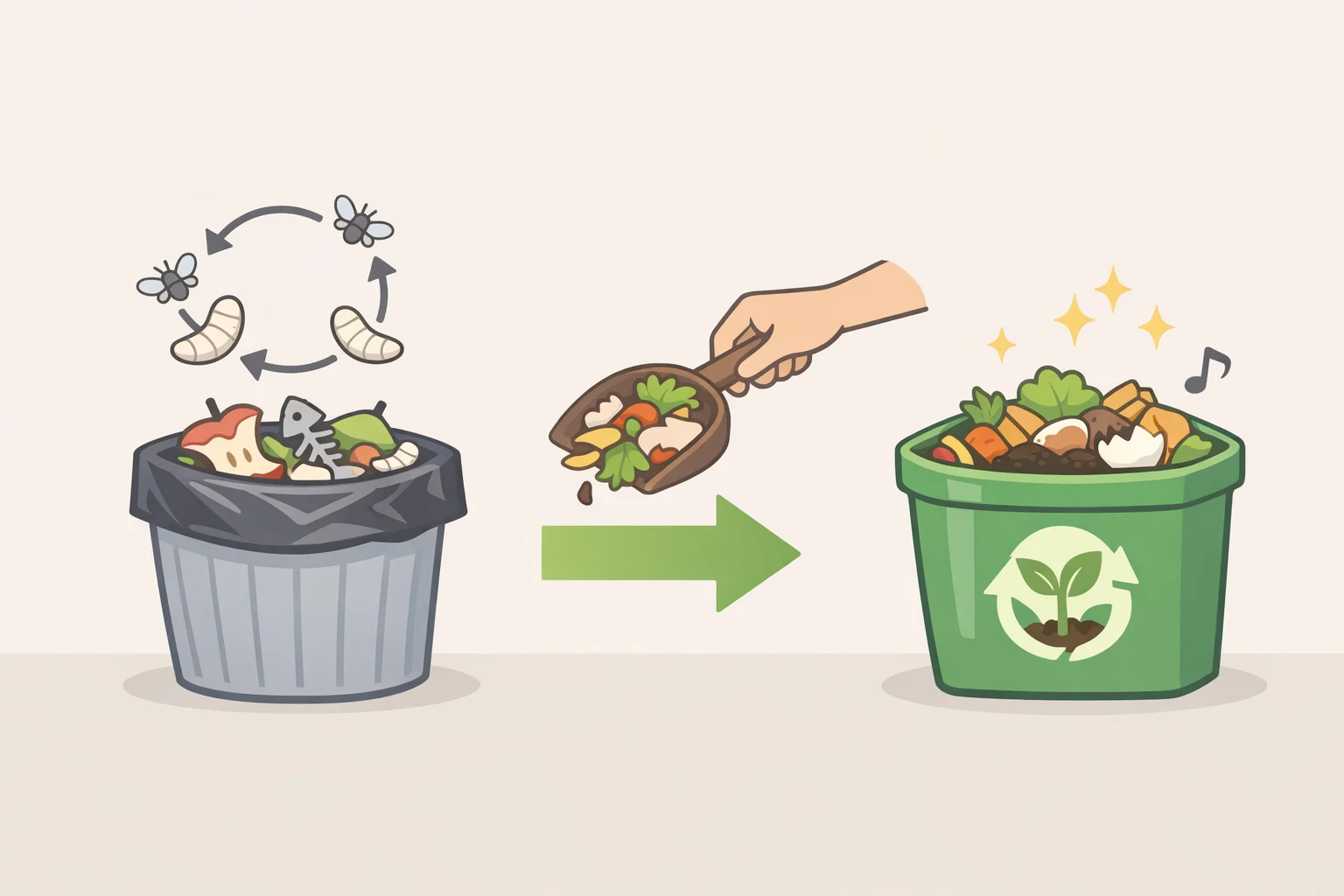
The most reliable long-term fix is removing food waste from regular trash entirely. Good Housekeeping notes that composting eliminated a persistent maggot problem completely. That tracks: no food scraps in the bin means no organic matter for flies to breed in and less of the wet material that produces garbage juice to begin with. Brookline's guidance makes the same point from a waste-management angle keeping organic material out of regular trash totes eliminates a food source for rodents as well. When heavy food waste is routinely going into a bin, any additive applied afterward is unlikely to fully compensate.
The decision rule is straightforward: if the bin is cleaned and dried regularly and the main issue is occasional bag leaks or fly prevention between pickups, salt earns its place. If the problem is an already-smelly bin, deep residue buildup, or a household that puts large volumes of food scraps into regular trash, salt addresses the symptom and not very far upstream.
Putting it together
Salt in the trash can is a legitimate preventive tool for moisture control. It discourages flies by removing the pooled liquid they need to breed, can dehydrate eggs or larvae that survived cleaning, and may reduce the wet conditions that contribute to odor. It does not neutralize odor compounds chemically, and it does nothing for a bin that needs to be scrubbed.
Used correctly applied to a clean, dry bin before a new bag goes in it's a cheap, low-effort addition to an existing routine. That's the full extent of what the evidence supports. Every effective trash-can strategy comes back to moisture: salt handles it from the bottom up, proper drying handles it after washing, and composting eliminates the main source before the bin is ever involved. Salt fits neatly into that framework. It just isn't the whole thing.






Comments
Be the first, drop a comment!