



Why Don't European Kitchens Have Garbage Disposals?
An American home cook scrapes half a plate into a whirring disposal without a second thought. In many European kitchens, that same scrap goes into a small caddy sitting next to the sink instead. Why don’t European kitchens have garbage disposals the way American ones do? Mostly because each place grew up around a different plumbing setup, waste policy, and collection service, not because of one law or one national preference.
Building age, sewer design, organics-collection policy, and household habit all point in different directions depending on where a kitchen happened to get built. The appliance itself was invented in the United States in 1927, according to Green Building Law Update, which gave it nearly a century to become a standard fixture in American kitchens.
Whether a disposal actually fits a given home comes down to five checkable things: local organics-collection rules, whether the house is on sewer or septic, rental or building restrictions, the existing sink and electrical setup, and manufacturer limits on what can go through the grinder. What follows covers how the U.S. and Europe ended up with different defaults, why there’s no clean environmental winner between the two approaches, and how to check those five things before installing one, replacing one, or deciding to skip it.
What European food waste disposal systems look like instead
Skipping the disposal doesn’t mean skipping the problem. It means routing food scraps through a different system instead, one described in a piece Gamin Traveler published earlier this year, though it's worth flagging up front that these are common patterns, not one continent-wide standard, since collection setups vary by city and country.
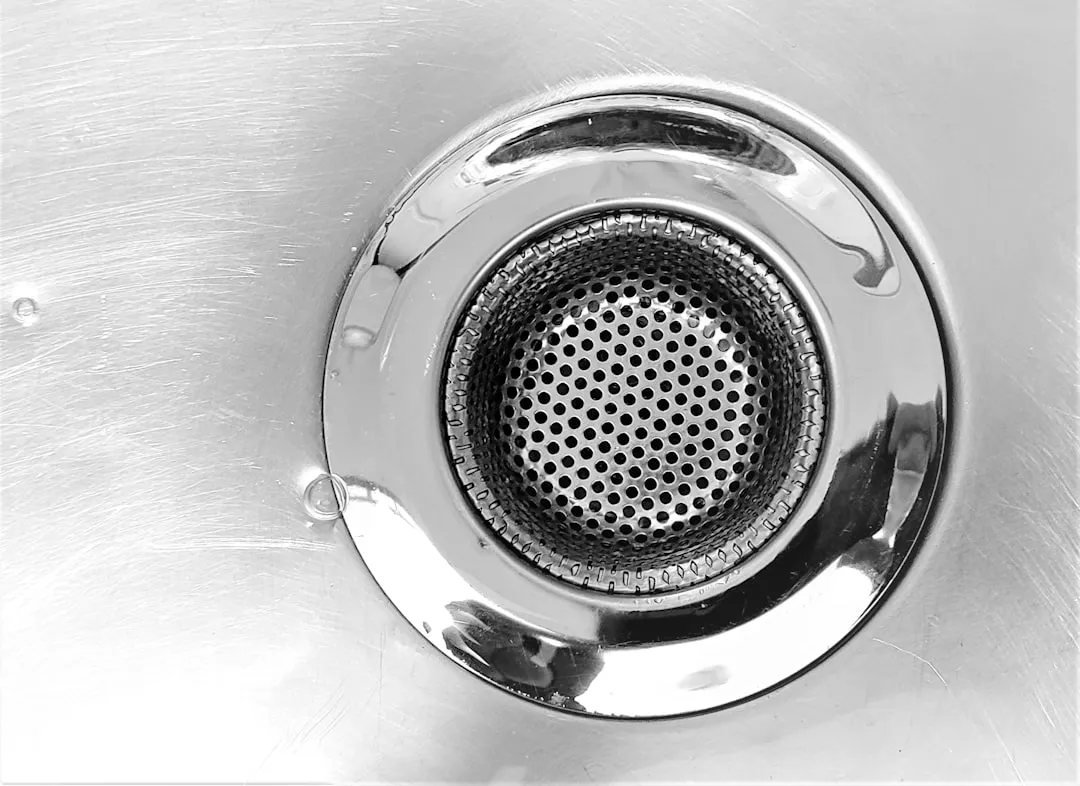
That reporting describes a household habit that pairs a small caddy or bowl for prep scraps with a mesh strainer in the sink, plus a firm rule against pouring cooking oil or grease down the drain. It points to Norwich, England, as an example of how the habit scales up citywide: local council guidance calls for lining a small kitchen caddy, tying off the bag once it's full, moving it to a larger outdoor food bin, and setting that bin out for weekly collection.
Paris runs a more patchwork version, per that same account, with brown-lidded food-waste bins active in some arrondissements and voluntary drop-off points at outdoor markets filling the gaps elsewhere. Milan takes a different route again, with its municipal waste operator running a source-separated organics collection system rather than offering any sink-based option.
Why are garbage disposals rare in Europe?
Housing age is one real factor, though not the whole story. Roughly 35% of buildings across the EU are more than 50 years old, and more than 85% of buildings standing today are expected to still be in use by 2050, according to European Commission figures cited in Gamin Traveler's reporting. That same reporting frames older housing stock, smaller kitchens, and shared plumbing stacks as conditions that make a technology like the disposal harder to retrofit into buildings plumbed long before it existed, though the age statistic alone doesn't prove every older kitchen is incompatible.
Wastewater treatment design leans the same way. The European Investment Bank's wastewater guidance, as described in that reporting, notes that fats, oils, and grease are typically screened out as early as possible in treatment to prevent blockages downstream. That reflects a general design priority to keep solids and grease out of pipes, not proof that treatment plants were engineered specifically to exclude disposals.
Policy formalized a habit rather than inventing one. Since the end of 2023, EU member states have been required to arrange separate collection of biodegradable waste, a rule Gamin Traveler's reporting describes as codifying the caddy-and-bin routine many cities already ran. An Irish EPA study, as summarized in that same reporting, reportedly concluded that disposal use shifts organic material out of the solid-waste stream and into the wastewater system, and recommended household-level restriction as inconsistent with the country's broader waste and water-services policy. That's one national case study, not a Europe-wide regulation.
The U.S. picture looks different. A 2024 report from Green Building Law Update put disposal ownership at about half of U.S. homes and said more than 83% of U.S. households connect to public sewerage. Those two facts sit side by side, and widespread sewer access likely made the appliance easier to build codes and kitchen layouts around, but the data don't prove sewer access alone drove adoption; plumbing codes, marketing, and decades of habit almost certainly played a part too.
A frequently cited look at garbage disposals in Europe vs. America put adoption at 50% in the U.S. versus 6% in the U.K. and 3% in Canada as of 2009, according to Wikipedia. That figure is now well over a decade old and too dated to treat as a current snapshot; it's useful only as historical context for how far apart the two markets already were.
So do Europeans have garbage disposals at all? Some do. Sweden has pockets of adoption, and disposals have sold for years in parts of the U.K. and Ireland, per Gamin Traveler's reporting. Adoption tracks local infrastructure and rules more than it tracks any single national attitude toward the appliance.
Why there's no single environmental verdict
One recent feasibility study shows why the answer depends on the system sitting behind the sink, not on the appliance itself.
A peer-reviewed South Korean feasibility study, published earlier this year in Clean Technologies and Environmental Policy, modeled food-waste scenarios for one city and found that discharging ground waste into a separate sewer system scored best economically, with a benefit-cost ratio of about 0.74. That result only held where a separate sewer system already existed, and even then the scenario only cleared the 1.0 break-even point once the model increased the value assigned to convenience by 50%. It's a single-city model built around South Korean infrastructure; it doesn't say anything about how a disposal would perform against a European or American system.
Even in that same country, regulators still restrict disposer use nationally, certifying only units that recover at least 80% of waste as animal feed or compost, or divert less than 20% of it to public sewers, per the same study. Compatible pipes alone haven't settled the policy question there, a useful reminder that infrastructure and policy approval are two separate hurdles.
It helps to keep four things separate: preventing food waste before it happens, source-separated composting, industrial digestion, and sink disposal. A disposal only handles the last one, moving scraps into the wastewater stream for a treatment plant to deal with. A curbside organics program collects accepted scraps separately, but the environmental result still depends on collection frequency, contamination rates, transport distance, and how the receiving facility processes the material. Neither approach changes how much food a household buys and never gets around to eating.
Checking whether a disposal fits your home
This is a safe homeowner pre-check, not a full compatibility test. It tells you whether a disposal is worth pursuing at all; it doesn't replace a licensed electrician, plumber, or septic professional. Do not open electrical boxes, alter wiring, disconnect plumbing, or assume a visible outlet is correctly rated based on this check alone.
- Check local organics-collection service first. If a city or county offers curbside food-waste pickup or drop-off points, confirm exactly what it accepts and how often it runs through the municipal waste department's own program page. A caddy paired with that service can handle scraps without touching the plumbing at all.
- Identify sewer or septic before anything else. Septic tanks and municipal sewer systems aren't interchangeable, and that's exactly why this detail changes everything that follows. Check a water or sewer bill, property records, or ask the utility or septic provider directly to confirm which system serves the home. If it's septic, stop here and get written confirmation from the septic provider on whether the tank and drain field can take a disposal's added solid load before buying anything.
- Check rental or building restrictions. Renters should confirm with a lease or building management, in writing, whether a disposal is even allowed, and whether the sink already has a dedicated electrical outlet.
- Inspect what's already there. Look under the sink for what appears to be a dedicated outlet and a drain opening sized for a disposal. Neither check confirms the wiring can safely carry the added load or that the fitting matches a specific model's requirements; a licensed electrician and the manufacturer's installation instructions settle that. If nothing resembling either is present, stop at this inspection stage rather than guessing.
- Call the right professional if changes are needed. An electrician handles wiring questions, a plumber evaluates shared-stack compatibility in multi-unit buildings, and a septic professional weighs the specific tank, drain field, local rules, and proposed unit together, not just whether septic is present at all.
Before you decide
Gather these before making any calls, and the checks above go faster:
- A recent water or sewer bill, or the utility's online service lookup, to confirm sewer versus septic.
- The lease, HOA rules, or written approval from building management.
- The local organics program's accepted-materials list, pulled from the municipal website.
- The disposal's model number and installation manual, if one is already installed or being considered.
- A photo of the under-sink area, ready to send to a plumber or electrician before a visit.
Stop and get professional sign-off first if any of the following apply: the home is on septic and the provider hasn't confirmed capacity in writing, a lease or HOA prohibits the appliance, there's no electrical supply that looks disposal-rated, or the sink's drain and the unit's specifications don't obviously match.
For anyone without organics pickup available, a sink strainer, a countertop or under-sink scrap container, and routine trash disposal remain a reasonable fallback. Anyone with a disposal already installed should check that unit's own manual for its specific list of restricted materials; grease and fibrous produce are common flags across brands, but exact limits vary by manufacturer and model.
What this means for your kitchen
Do the first two checks yourself: confirm the local organics program, if any, and confirm sewer or septic. Both take a phone call or a look at a bill.
If the home is septic, shared, rented, or not already disposal-ready, stop before buying the unit and get the relevant approval first, whether that's a septic provider's sign-off, a landlord's written permission, or an electrician's confirmation. Once that approval is in hand, either route works: a caddy paired with curbside pickup, or a properly matched disposal, both handle the scraps just fine.







Comments
Be the first, drop a comment!