



Clutter isn't just a housekeeping problem. Princeton research cited by USU found that the environment shapes both the ability to complete tasks and overall mental health, which means that the pile on the counter is doing more than just sitting there. A 2-week decluttering plan works because it turns that pile into a series of small, finite jobs instead of one dreaded weekend project.
The mental health case has some research behind it. University of Connecticut research found that reducing clutter can lower mess-related stress and support feeling happier, less anxious, and more confident. It isn't purely a solo problem either: Consumer Reports quotes psychologist Joseph Ferrari, PhD, on clutter's ability to strain relationships with the people who share the space.
This guide covers visible clutter, plus a handful of tightly bounded storage zones, not a whole-home overhaul and not a substitute for treatment. This is how to declutter your home in 2 weeks without turning it into a moving-day purge: readers finish day 14 with a decision rule for what stays, three exit routes for what goes, a designated home for frequently used items, and a daily ten-second tidy to keep it that way. Being specific about scope now avoids the trap that turns many two-week decluttering challenges into vague promises to fix everything.
Your 2-week decluttering plan: rules before day 1
Decide the rules before touching a single object. USU recommends listing every cluttered area in the home before starting and tackling one space at a time. That list becomes the day-by-day schedule below, so write it now: entryway, kitchen counters, one cabinet, bathroom, one clothing category, paper pile, living room, a catch-all drawer, books, utility cabinet, sentimental box.
Two decision prompts will save hours of standing around holding an object, trying to decide. The first is the $20/20 rule: if an item costs $20 or less and takes 20 minutes or less to replace, it can probably go. The second is the five-to-ten-year question: if it's not in use now, will it still matter in five to ten years?
Skip the storage bins for now. It is best to declutter before buying containers, because most people end up needing far fewer than they expect. Buying bins early risks organizing things that were about to leave the house instead of actually letting them go.
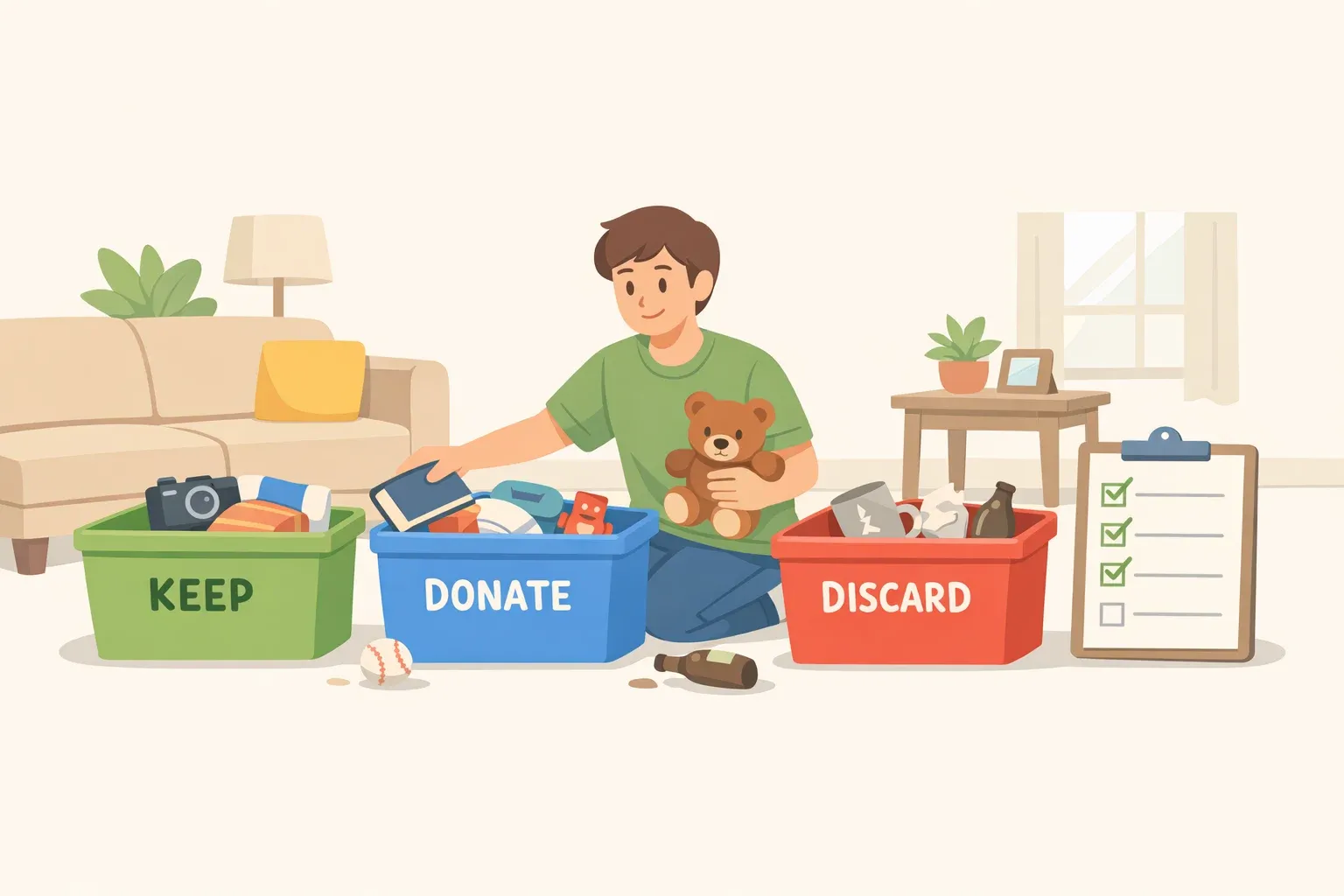
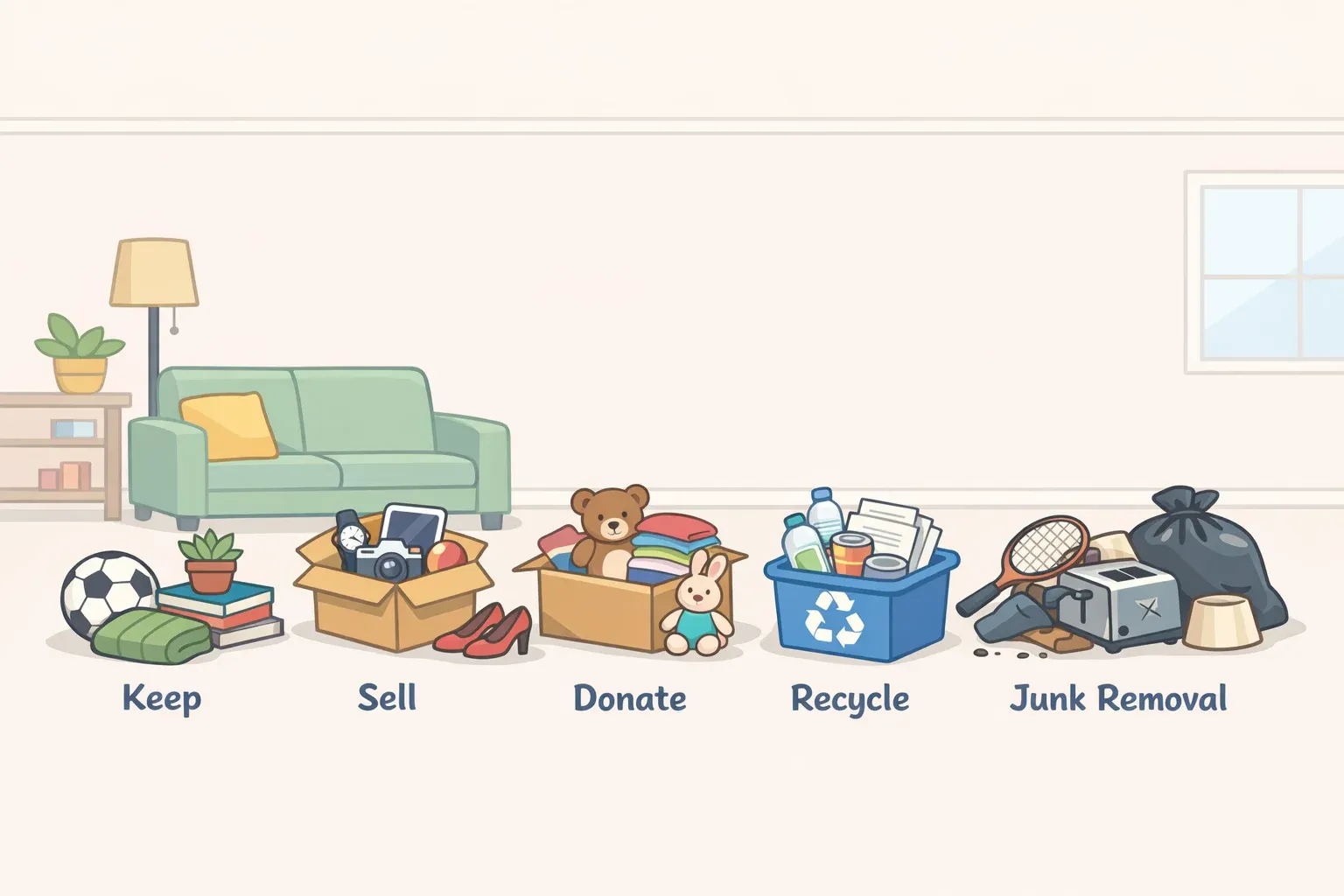
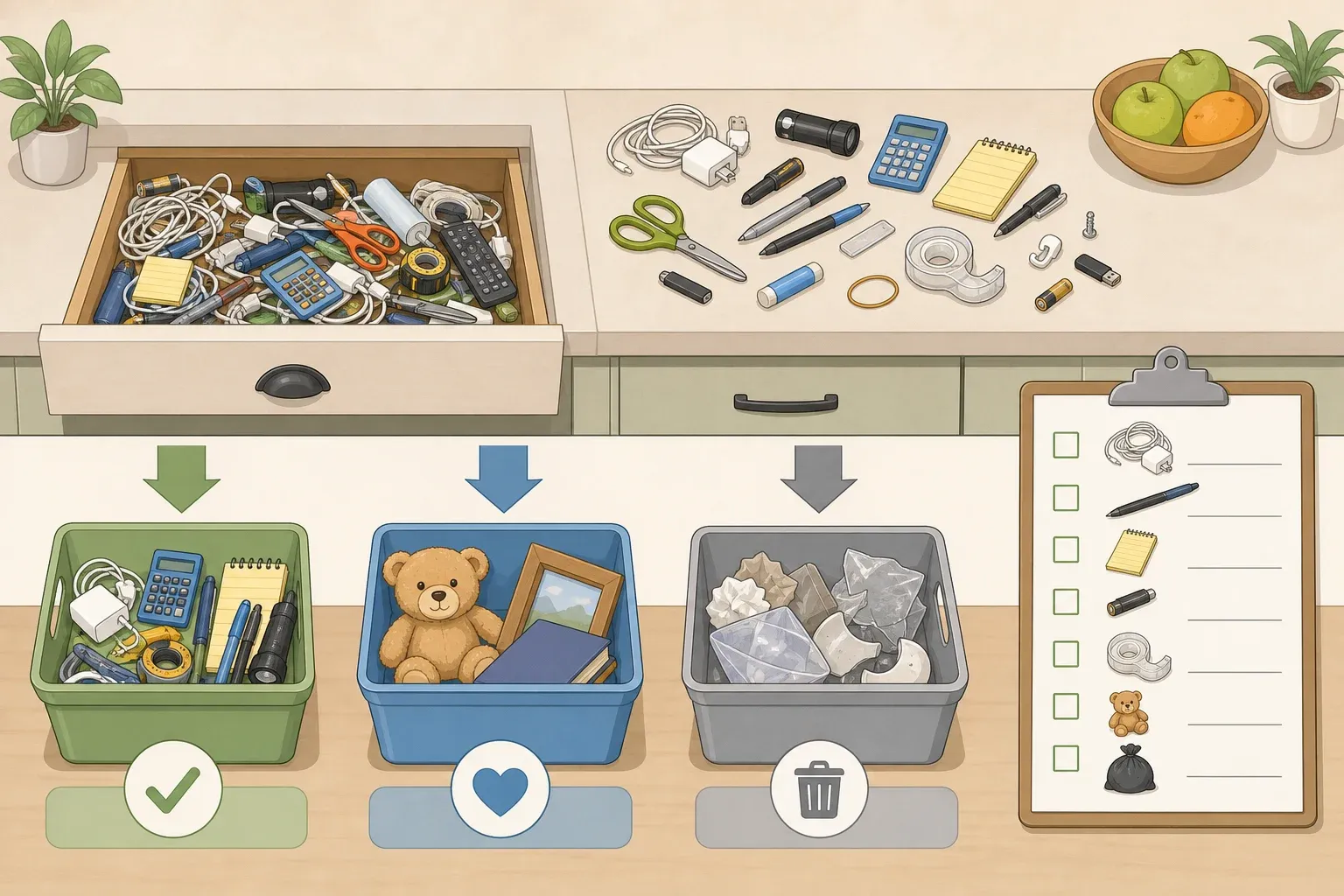
Set up three physical zones now: sell, donate, dispose. This is the three-route framework Consumer Reports uses, and it matters because a vague pile by the door is not a decision; it's a delay. Keep each item in one of these three routes rather than creating a fourth holding pile that never gets sorted.
Days 1–7: clear the everyday surfaces
Each day gets a fixed time cap, a single defined zone, and a clear finish line. No day should be bigger in scope than the one before it.
Day 1, trash and recycling, 20-minute timer. Consumer Reports recommends starting with trash for an easy, fast win. Done means every visible piece of trash and recycling is bagged. This is a sweep, not a deep clean.
Day 2, entryway or drop zone, one 20-minute pass. Pick "the smallest step you can take where you are guaranteed to be successful." Done means the surface is visible and there's one designated home for keys, mail, and shoes.
Day 3, kitchen counters, 20 minutes. Done means counters are clear except for appliances used several times a week, no more than two or three: a coffee maker and a toaster, say, not everything that plugs in.
Day 4, one kitchen cabinet or the dreaded pantry shelf, 30 minutes. This is the first storage-heavy category. Cap it at one cabinet, not the whole kitchen.
Day 5, bathroom cabinet and counter, 20 minutes. Set expired medications aside separately, since they don't belong with the household hazardous waste addressed on Day 11. Many pharmacies and local health departments run take-back programs, though options vary by location, so it's worth checking what's actually available nearby.
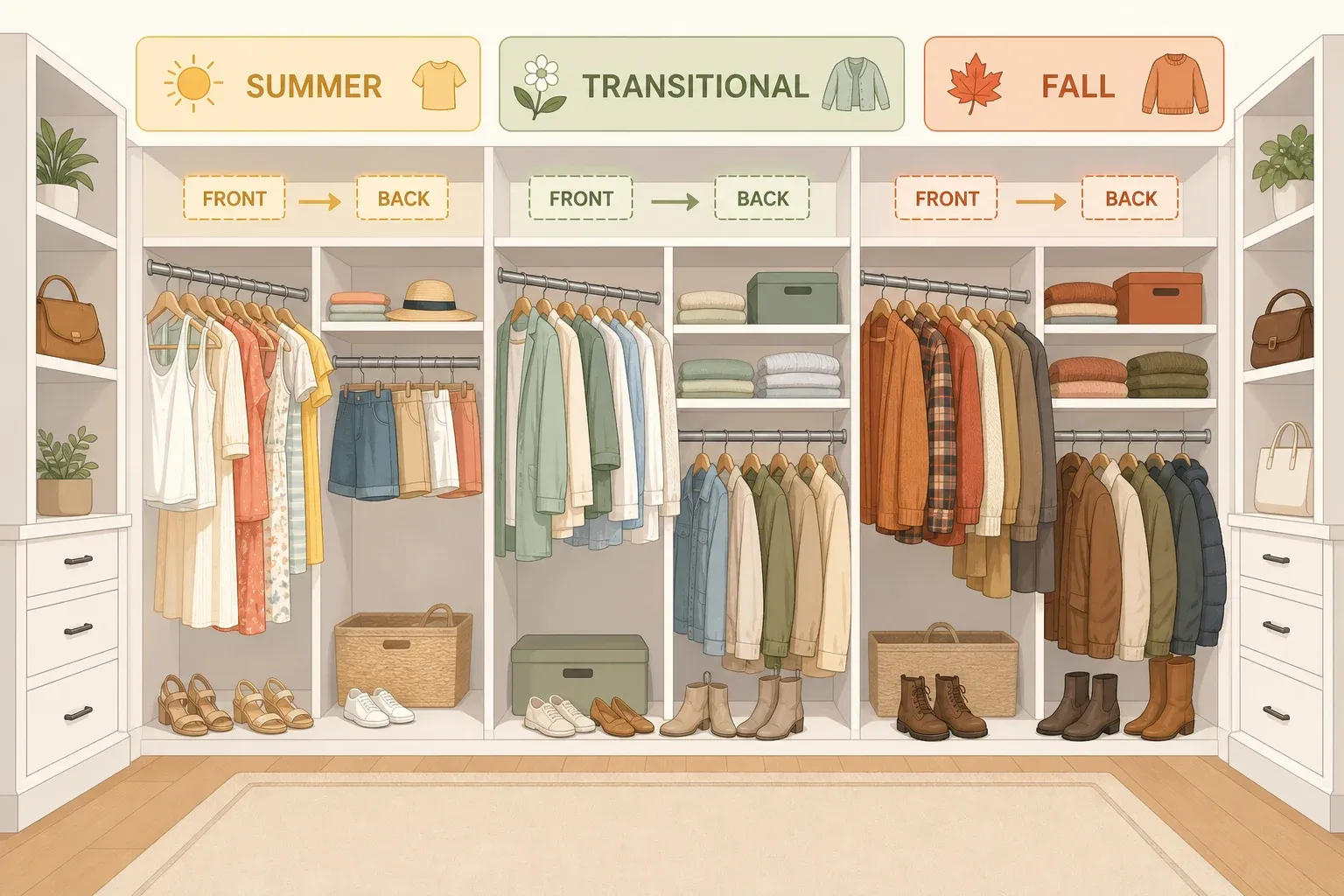
Day 6, one clothing category only, 30 minutes. Pick shoes, off-season coats, or a single drawer, and apply the $20/20 rule to anything borderline. "The closet" is not a single-day task; pick one slice and stop there.
Day 7, paper and mail, with a system, not just a purge. Sort into four piles: act (bills or forms needing a response, handled today or scheduled), file (put away immediately in one existing folder, not a new filing project), shred (anything with personal data), recycle (everything else). Done means the inbox is empty and every pile has actually moved, not just been restacked more neatly.
The point of keeping each day small is momentum, not just tidiness. USU recommends starting small, and separately notes that people often see a real organizational difference within weeks, which is roughly the logic behind spreading this plan over 14 days instead of two exhausting Saturdays.
Days 8–14: storage, sentiment, and the exit plan
The second week shifts from surfaces to storage, then to disposal and habit. This is also where a 14-day decluttering challenge tends to get harder, because the easy visible wins are gone and what's left takes more thought.
Day 8, living room surfaces, 20 minutes. Done means tabletops and shelves hold only what gets used weekly.
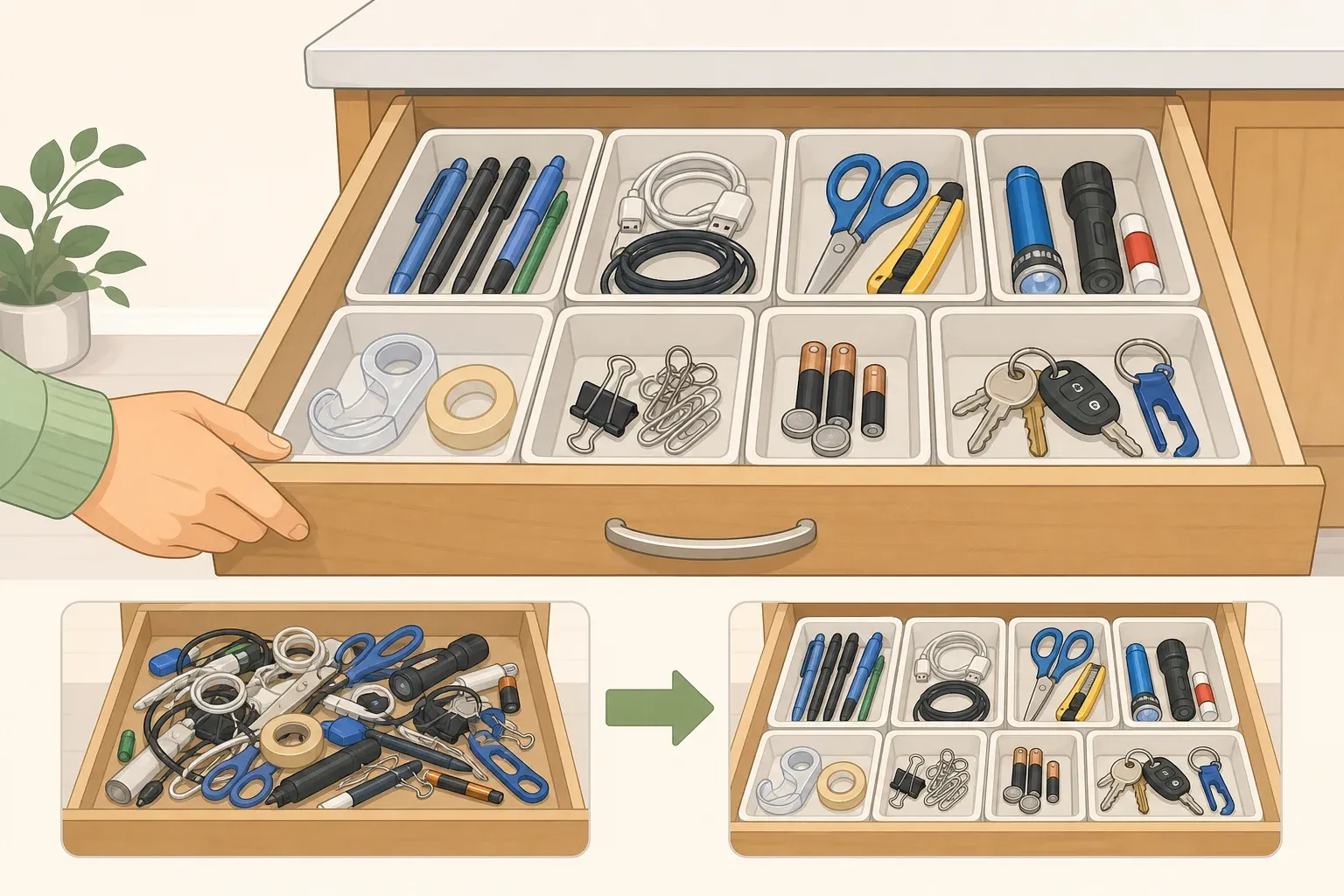
Day 9, one catch-all storage spot, 30 minutes, one container only. Junk drawer, hall closet shelf, or garage bin. Just one.
Day 10, books and media, 30 minutes. The "sell" route has a concrete model here: Consumer Reports describes hauling more than 20 books on a 50-minute subway ride to a bookstore and getting $12 for the lot, a modest but real example of how that route pays off.
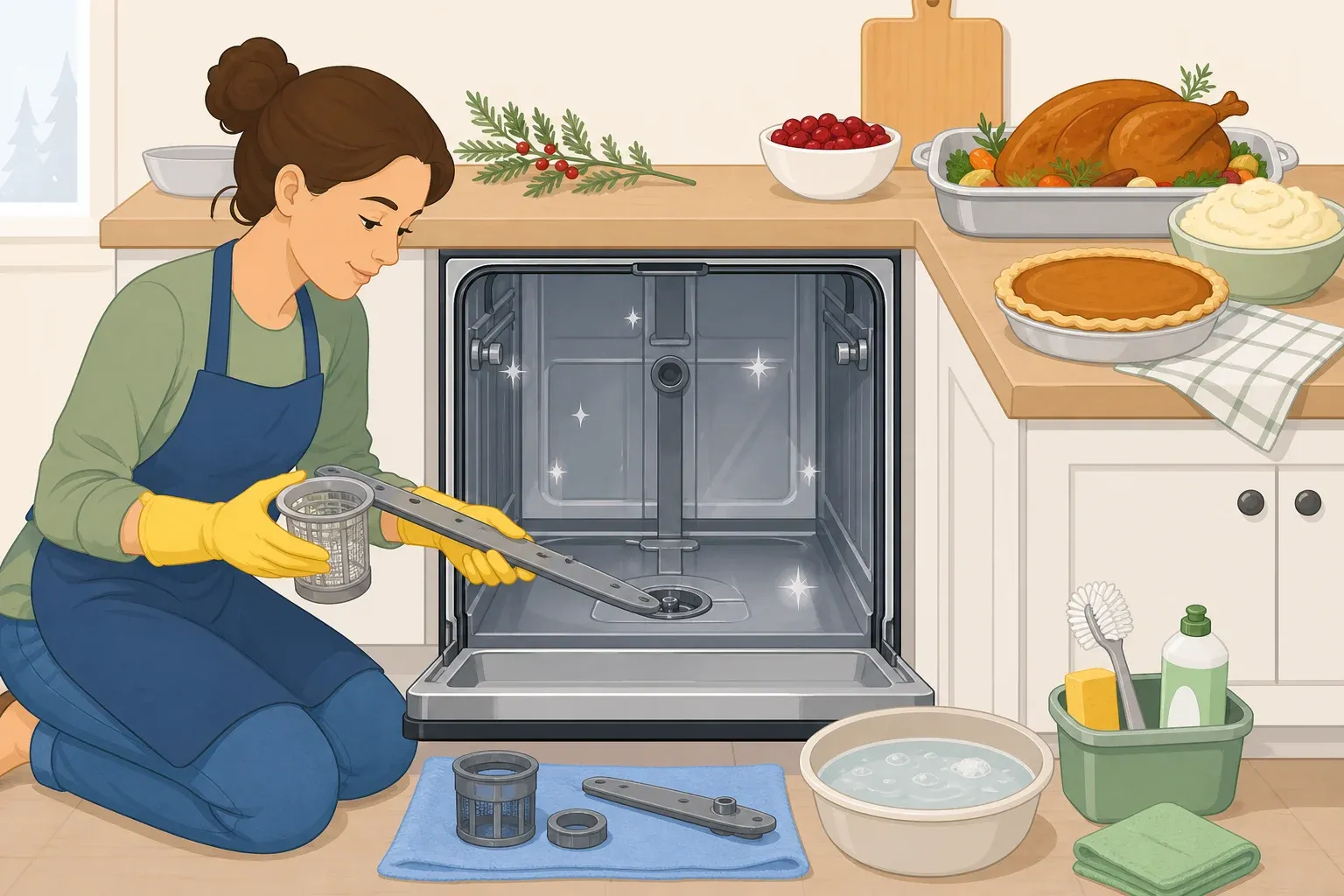
Day 11, utility or cleaning-supply cabinet, 20 minutes. Set aside hazardous materials like antifreeze or solvents, which are items requiring proper disposal, not a trash bag.
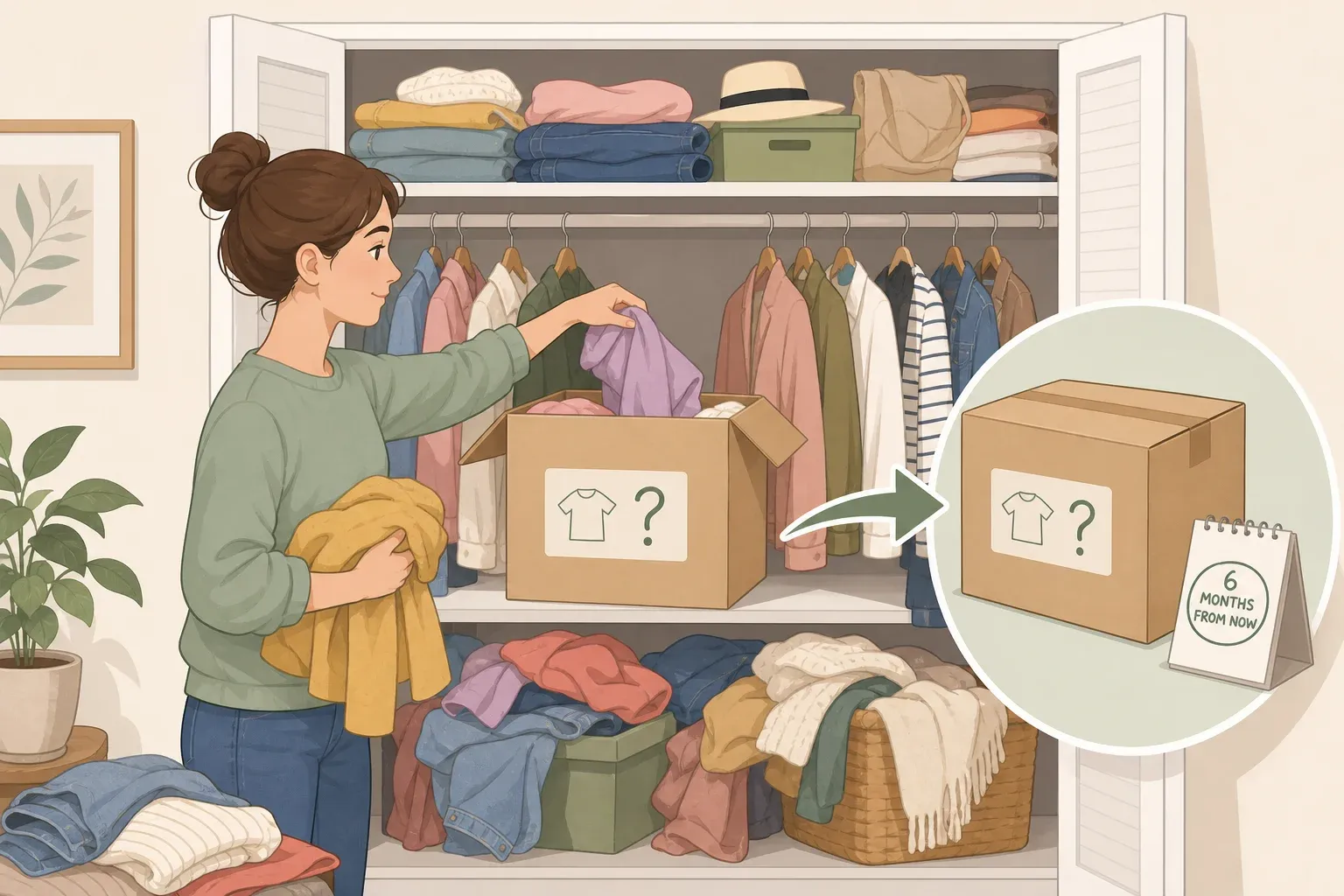
Day 12, sentimental items, with a strict protocol. Cap the session at one box or 45 minutes, whichever comes first. Use a "keep the best representative item" rule, one shirt, not the whole box, and give explicit permission to set aside a small "decide later" pile with a dated follow-up. Sentimental categories are where plans like this tend to bog down, and a firm limit prevents one difficult category from consuming the rest of the two weeks.
Day 13, the donation, sale, and disposal run. Consumer Reports points to two concrete options: Earth911's database of local programs for household hazardous waste, and the EPA's Responsible Appliance Disposal program for appliances like fridges, freezers, and window AC units. Expired medications still go through a local take-back program, kept separate from hazardous waste.
Day 14, reset systems and install the ten-second tidy. USU describes this daily micro-habit as the maintenance mechanism that keeps clutter from creeping back. Before calling the two weeks done, confirm the daily zones, entryway, kitchen counters, bathroom counter, and living-room surfaces each have a designated home for what lands there day to day. The storage zones from earlier in the week don't need revisiting; they just need to stay closed.
Items only count as gone once they physically leave the house. Bags sitting by the door are not progress; they're just clutter that we agreed to move. That's why the three holding zones from before Day 1 matter through the whole plan, not just at the start.
If Day 12 or 13 feels slow, it helps to remember why people so often confront the true scale of their belongings only when they move. Consumer Reports cites U.S. Census Bureau estimates that the average American moves 11.7 times in a lifetime, and each move forces exactly the kind of reckoning this plan is trying to compress into 14 days without a moving truck.
When this reset isn't enough
The benefits here are real but modest, and worth stating that way. USU lists sharper focus, improved mood, and reduced anxiety as outcomes decluttering can support, not outcomes it guarantees.
There's also a line worth drawing. This plan is built for everyday clutter, not hoarding disorder, and the difference isn't about how much someone owns. As general safety guidance rather than a diagnostic checklist: if clutter blocks exits, creates a fire or sanitation hazard, or the thought of discarding items triggers real distress, that's a signal to look past a two-week routine and toward more specialized support.
In those cases, specialized support may help. A 2024 systematic review found that psychosocial treatments improved hoarding symptoms across five studies. However, the evidence remains limited and should not be used for self-diagnosis.
There are lower-stakes off-ramps too, for anyone who gets stuck without meeting that bar. Consumer Reports cited a 2023 HomeAdvisor estimate putting professional organizer costs between $251 and $812, a figure worth treating as a historical benchmark rather than current pricing. USU also points to a free ACT-based decluttering guide developed by its own psychologists, a no-cost option for anyone not ready to hire help.
Conclusion
The 14-day structure works because it breaks a home into small, capped, finite assignments instead of one overwhelming project, the same "smallest guaranteed step" logic Consumer Reports recommends for any task that's stalled out. USU suggests noticeable organizational change is realistic within weeks, which is roughly the timeline this daily decluttering checklist is built around.
The real test isn't Day 14. It's Day 15, when the timer stops and nobody's holding a checklist, and the only thing keeping the counters clear is whether the ten-second tidy has actually become a habit. This plan hands over a system to lean on. It doesn't promise the clutter won't try to come back, because it usually does, quietly, one unopened package at a time.







Comments
Be the first, drop a comment!