



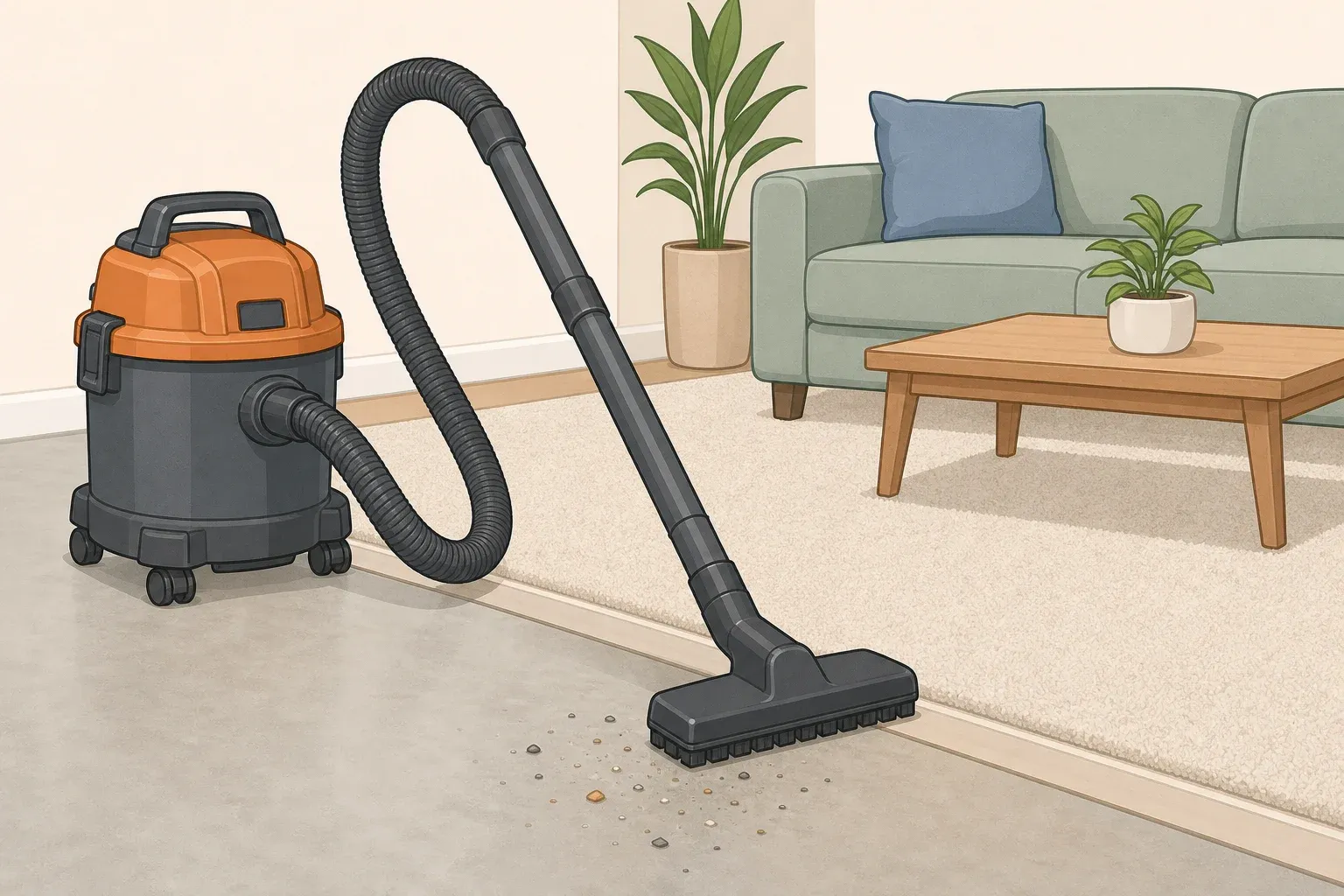
Can you use a shop vac as a regular vacuum cleaner?
A shop vac already doing duty in the garage can handle a surprising share of indoor cleaning too. The real question is whether you can use a shop vac as a regular vacuum cleaner well enough to retire the one in the hall closet, or whether swapping machines just shifts the mess around.
Short answer: yes, for many hard-floor and cleanup jobs, but not as your only carpet vacuum. A wet/dry shop vac can cover bare floors, garages, vehicle interiors, renovation dust, and small liquid spills, depending on the model and attachments on hand. Carpet is where it runs into trouble, specifically the weekly deep cleaning that keeps dirt from working itself into carpet fiber.
Before the details, here's the verdict:
- Use it confidently on: bare floors, garages, vehicle interiors, renovation dust, small wet spills.
- Don't rely on it alone for: wall-to-wall carpet or area rugs that need regular deep cleaning.
A 16-gallon RIDGID NXT wet/dry shop vac ships with a bare-floor tool, a crevice tool, a car nozzle, and a wet shoe attachment built specifically for liquid pickup, which shows at least some manufacturers design these machines for more than garage duty. Consumer Reports recommends keeping "a solid upright or canister as your primary vacuum," with lighter devices filling in for quick jobs, according to its vacuum buying guide from nearly three years ago. The Carpet and Rug Institute, meanwhile, puts a number on routine carpet care: a weekly vacuum pass with a quality vacuum cleaner, according to guidance published more than three years ago, a baseline that matters once the carpet question comes up later in this guide.
Shop vac vs. regular vacuum cleaner: what each is built for
A wet/dry vacuum pairs a motor with a drum built to pull in liquids and heavy debris. A household vacuum is built mostly to lift dry dirt and dust out of carpet fiber and bare flooring, without the drain and drum setup a shop vac needs for liquids.
RIDGID markets its 16-gallon NXT model, used as the working example throughout this guide, as built for jobsite use and for handling "the toughest cleanups." That's one manufacturer's framing for one unit, not a universal spec for every shop vac on a shelf. According to RIDGID's product listing, published last year, that model runs a 7-foot hose, 20-foot cord, 2.5-inch accessories, and 32.8 pounds of net weight, figures that land heavier and bulkier than most household uprights or canisters. A bigger drum and longer hose add capacity and reach, but they also make the unit less convenient to pick up and carry room to room.
RIDGID also notes that the drum's gallon rating reflects volume, not guaranteed collection capacity, since actual capacity depends on the type of debris and the filter's condition. A spec sheet alone won't tell you how a machine performs on an actual floor.
Before you start
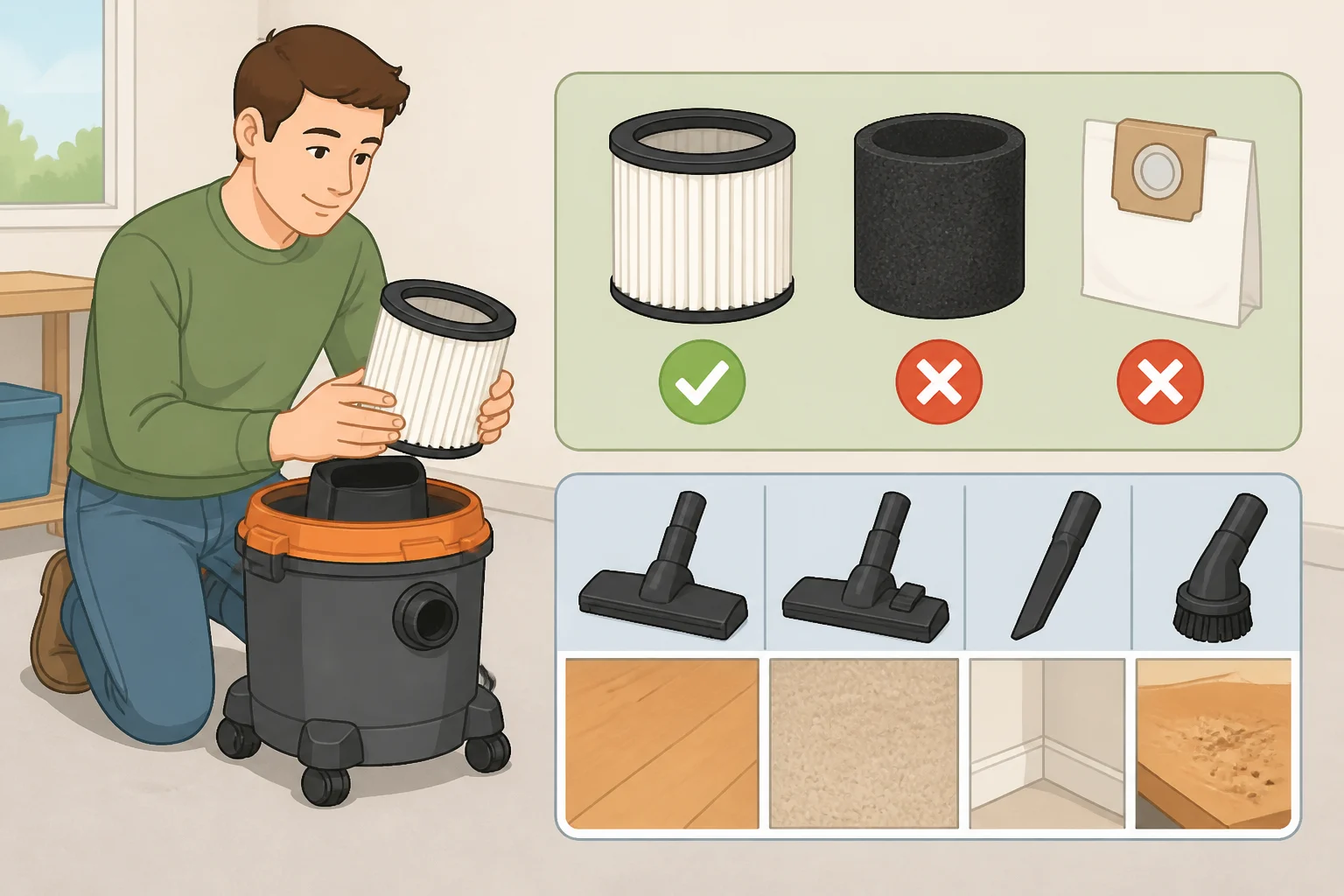
A shop vac can be ready to use the moment it's unpacked, but a few checks up front save a wasted trip back to the garage.
- Find the owner's manual for the exact model in hand, not a general shop vac guide. Filter setup, wet-mode procedures, and safe liquids to collect vary by brand and model.
- Confirm the installed filter matches the job, and check the manual before switching to wet pickup rather than mid-spill.
- Match the attachment to the surface: floor tool for bare flooring and spills, crevice tool for gaps and corners, car nozzle for vehicle interiors and tight spaces.
- Think through how the machine will actually move through the home. A unit built with a 7-foot hose and 20-foot cord and weighing close to 33 pounds, like the RIDGID NXT above, is harder to haul up stairs or wedge under furniture than a lightweight household upright.
Setting up for dry pickup
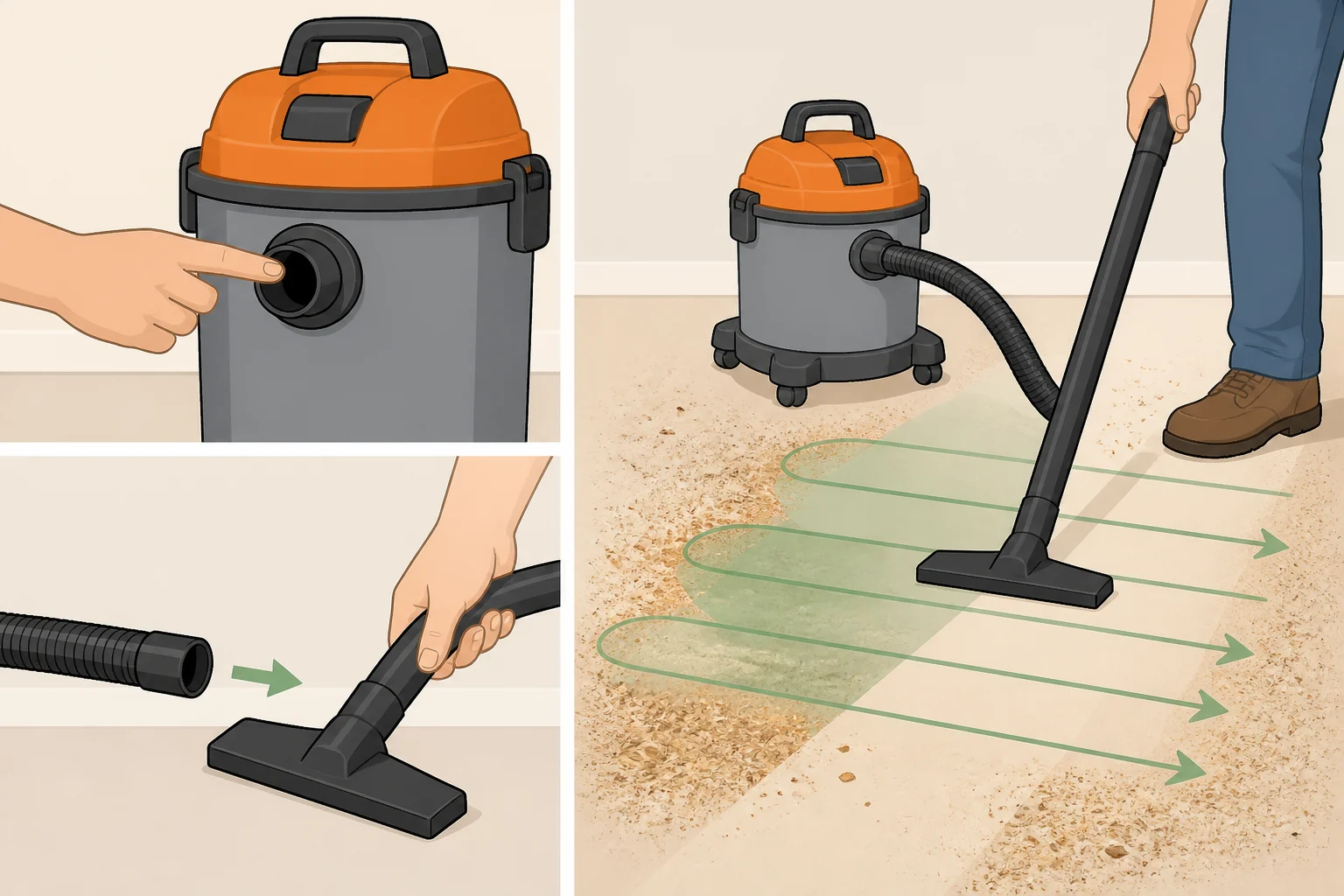
Dry debris is the simpler of the two modes, and getting the setup right the first time saves backtracking mid-job.
- Confirm the installed filter is rated for dry debris. RIDGID's NXT model ships with a VF5000 cartridge filter for exactly this purpose.
- Attach the floor tool, crevice tool, or car nozzle based on the surface being cleaned.
- Check the hose and inlet for obstructions before switching the machine on.
- Work in overlapping passes, then check the surface. If debris remains, switch attachments or go over the area again.
- Empty the drum once it's full, or once suction noticeably weakens, following whatever schedule the manual recommends.
Shop vac for carpet and floors: a surface-by-surface guide
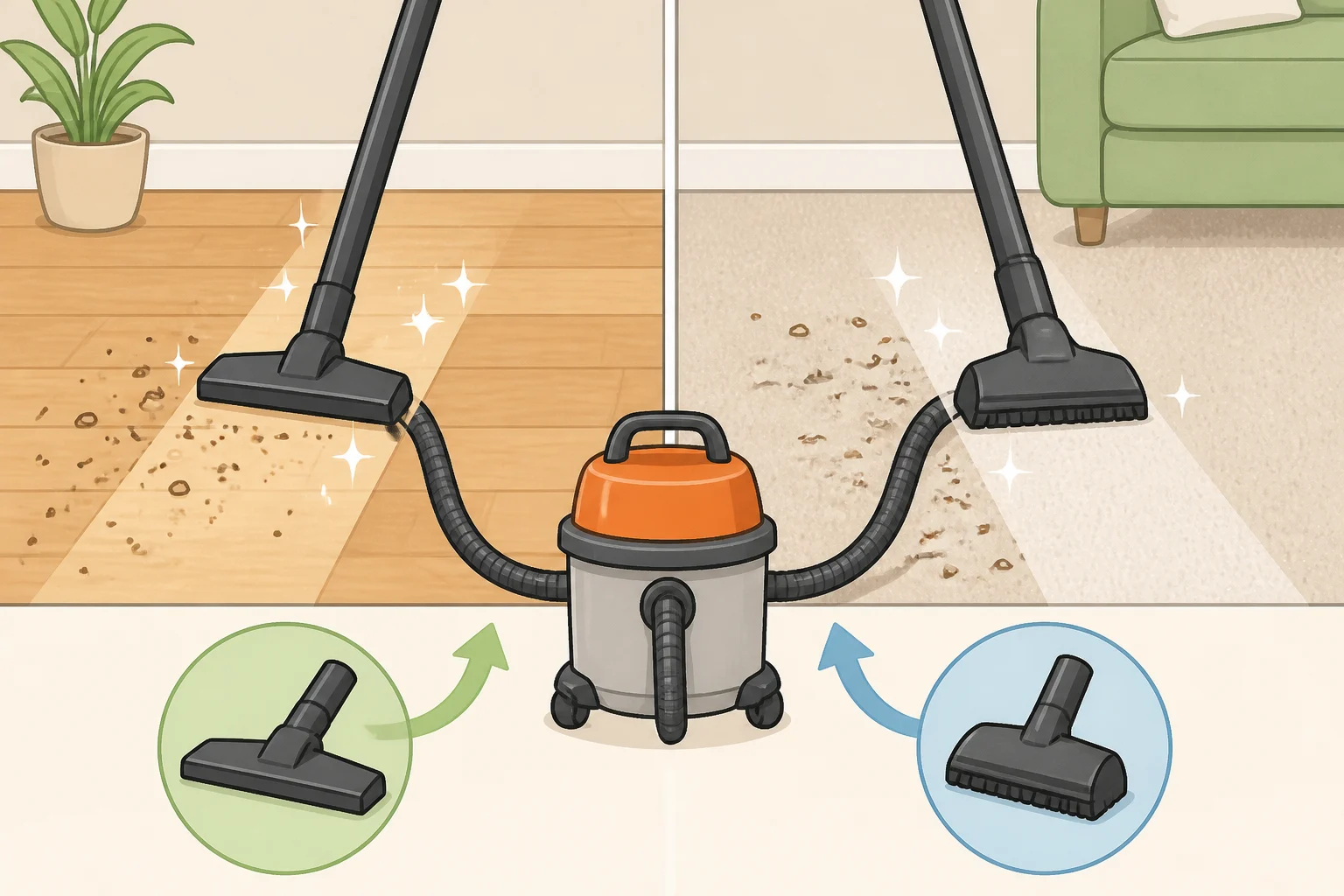
The surfaces a shop vac handles well aren't the same ones a household vacuum handles well. Breaking the comparison down by task beats asking which machine has more suction on paper. The table below reflects the attachments and specs documented for the RIDGID NXT example; other models may ship with different tools.
| Surface or mess | Attachment to use | What to check |
|---|---|---|
| Bare floors (tile, laminate, sealed wood, concrete) | Floor tool | Check the surface after one pass and switch attachments if debris remains |
| Garage and workshop floors | Floor tool, crevice tool | Confirm hose and inlet are clear before starting |
| Vehicle floors and tight interior spaces | Car nozzle, crevice tool | Narrow attachments take longer on large debris |
| Renovation dust and construction debris | 2.5-inch hose and extension wands | Fine dust may call for the filter the manual specifies; don't assume every material suits the installed filter |
| Small wet spills | Floor tool with wet shoe | Use only the filter and setup the manual lists for wet pickup |
| Carpet and area rugs | None included with this example unit's attachment set | Fine for occasional surface debris; listed attachments aren't described as carpet-maintenance tools |
RIDGID's NXT example covers nearly every non-carpet indoor mess in that table with its included floor tool, wet shoe, car nozzle, and crevice tool. Its 2.5-inch locking accessories are built to resist clogging on larger debris, which explains why that sizing shows up on a jobsite-oriented machine rather than a lighter household one.
Weight is the real tradeoff. A machine near 33 pounds with a 7-foot hose and a 20-foot cord sits easily next to a garage workbench, but hauling it out of a closet to chase a dust bunny is a different story. Baseboards, corners, and tight spaces work fine with a crevice tool attached. Daily, low-effort cleaning in a living space still favors whichever machine is easiest to grab and put away.
Switching a shop vac between dry and wet pickup safely
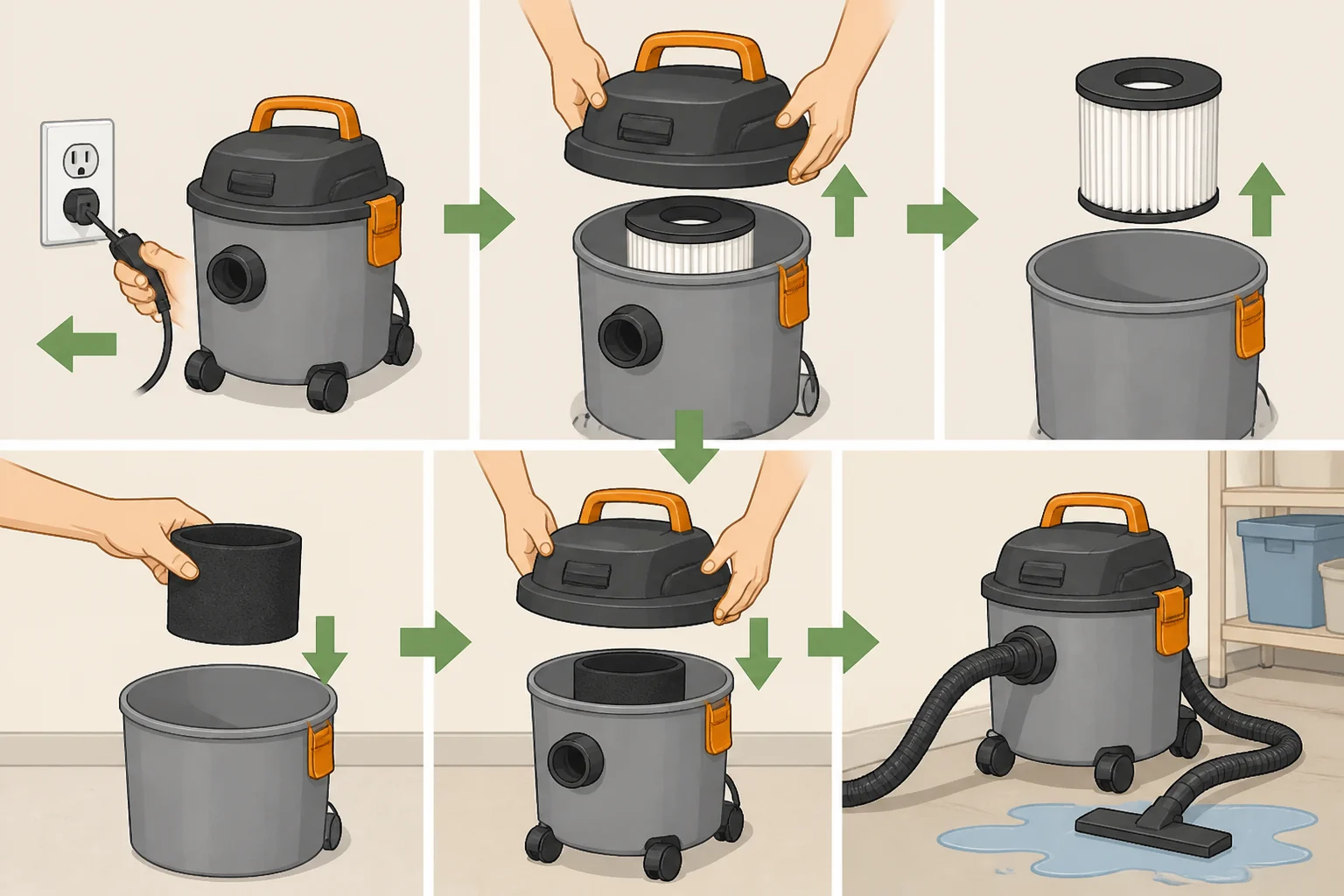
Before collecting any liquid, follow the wet-pickup and filter instructions for the exact model in hand. Don't borrow the procedure from another brand or a general shop vac guide; filter needs and safe liquids vary by machine.
RIDGID's 16-gallon NXT model uses a cartridge filter, the VF5000, installed through a Qwik Lock system built to make removing it quick. The company lists VF4000, VF6000, VF7000, and VF8000 cartridge filters as compatible replacements sold separately, and recommends keeping a filter in good condition to maintain suction and extend the vacuum's life. That same unit includes a built-in drain, a feature that isn't standard on every shop vac, which is one more reason to treat wet-pickup as something to check per model rather than assume.
A few conservative boundaries apply regardless of model, as ordinary caution rather than a documented step from any single manufacturer:
- Unplug the vacuum before switching between dry and wet setups, and check the manual for which filter or mode a wet job calls for.
- Vacuum only the liquids the manual lists as safe to collect.
- Keep the cord, plug, and outlet away from standing liquid while the vacuum runs.
- Stop immediately if the cord, plug, or housing looks damaged, or if the vacuum smokes, sparks, or smells hot. Unplug it and don't use it again until a manufacturer or qualified repair service has checked it.
Can a wet/dry vac replace a regular vacuum on carpet?
Carpet is where the limits show up most clearly, and it helps to separate what a shop vac can do from what it's built to do.
On a small area rug, a shop vac handles surface debris fine: spilled cereal, tracked-in dirt, a quick fix before guests arrive. That's a different job from the regular cleaning carpet fiber needs to stay in shape week after week.
The Carpet and Rug Institute's baseline for carpet maintenance is a weekly pass with a quality vacuum, and its cleaning guidance specifically points to Seal of Approval-certified vacuums for routine care. RIDGID's NXT example lists a bare-floor tool, wet shoe, car nozzle, and crevice tool among its attachments, and none of them is described as a carpet-maintenance tool. That doesn't rule out every shop vac attachment on the market, but for this documented example, the tools included point toward bare floors and spills rather than routine carpet upkeep. Consumer Reports' broader advice, to keep a dedicated upright or canister as a home's primary vacuum and treat lighter devices as supplements, points the same direction.
After every job: cleanup that keeps the machine ready
A shop vac earns its keep by being ready for whatever comes next, wet or dry. A few habits after each use keep it that way.
Unplug the vacuum and empty the drum. If the job involved wet pickup, follow the manual's cleaning and drying instructions for the drum and hose before putting the machine away.
Check the filter. RIDGID recommends keeping a compatible filter in good condition to maintain suction and extend the vacuum's life. That's a separate routine from the household vacuum kept on hand for carpet: the Carpet and Rug Institute recommends emptying or replacing that machine's bag once it's half to two-thirds full, since doing so improves how well the vacuum works.
Store the hose, wands, and attachments together rather than scattered across a shelf. Keeping a shop vac around for both dry debris and wet spills only pays off if it's ready to grab, not half-disassembled when the next mess shows up.
If suction drops off, the motor cuts out, or anything smells like it's burning, stop using the vacuum and check the manual's troubleshooting section before doing anything else. Opening the motor housing isn't a routine fix.
For a home that's mostly hard flooring, garage space, and the occasional vehicle or renovation mess, a shop vac can reasonably serve as the main machine, provided its weight and storage needs fit the household. For a home with substantial carpet, stairs, or rugs that need regular upkeep, keep a dedicated vacuum for that work and let the shop vac cover everything else.




Comments
Be the first, drop a comment!