



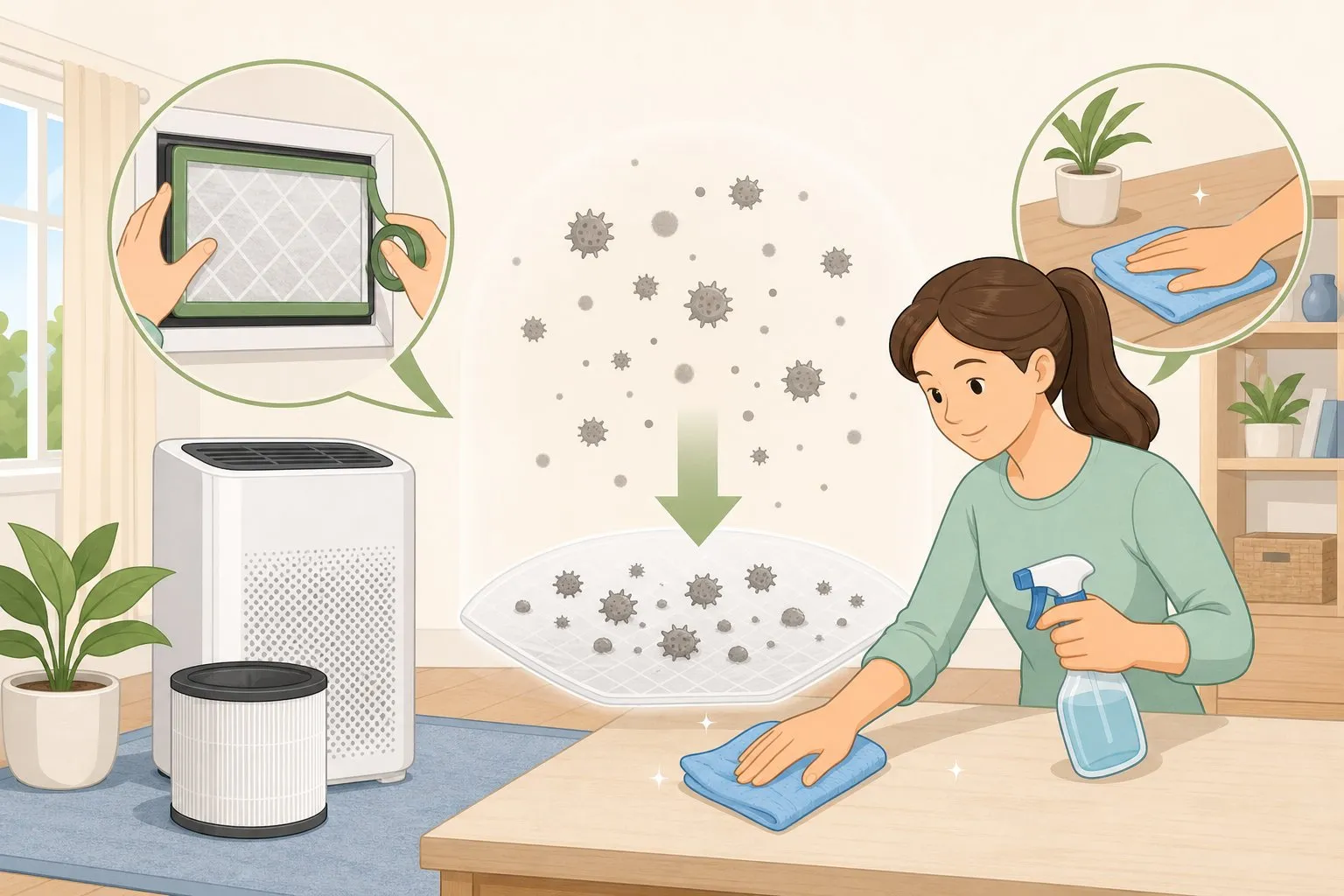
How to Reduce Dust and Allergens in Your Home: A Routine Based on What's Actually Triggering It
Even homes without a pet usually carry pet allergen. A review of allergen-reduction research that looked at 831 US homes found dog allergen in 100% of them and cat allergen in 99.9%, even though a dog or cat actually lived in only 49.1% of those households, according to the review. So "I don't have a pet" doesn't rule out pet dander as a source of the sneezing, wheezing, or stuffy nose tied to allergic rhinitis and asthma.
This guide covers how to reduce dust and allergens in your home with one core cleaning routine, plus an add-on module for whichever trigger actually fits your place: moisture and mold, pets, or pests. Dust mites, pet dander, mold, and rodent and cockroach droppings are all linked to allergy and asthma flare-ups, and asthma attacks alone sent close to a million people to US emergency rooms in 2020, the review found.
Don't expect one fix to solve everything. The review, published two years ago, summarizes the 2024 Global Initiative for Asthma update as finding little evidence that avoiding a single allergen controls symptoms, and only limited evidence that stacking several habits together helps. That update also flags allergen avoidance as complicated, burdensome, and expensive. None of this guarantees relief for every reader. Anyone with a diagnosed allergy or asthma should treat this routine as a complement to medical guidance, not a substitute for it.
Before you start
This is a beginner-friendly routine. Nothing here requires special tools beyond a vacuum and some basic cleaning supplies. Pick the one add-on module that matches what's actually happening in your home instead of trying every product on this list at once.
What you'll need
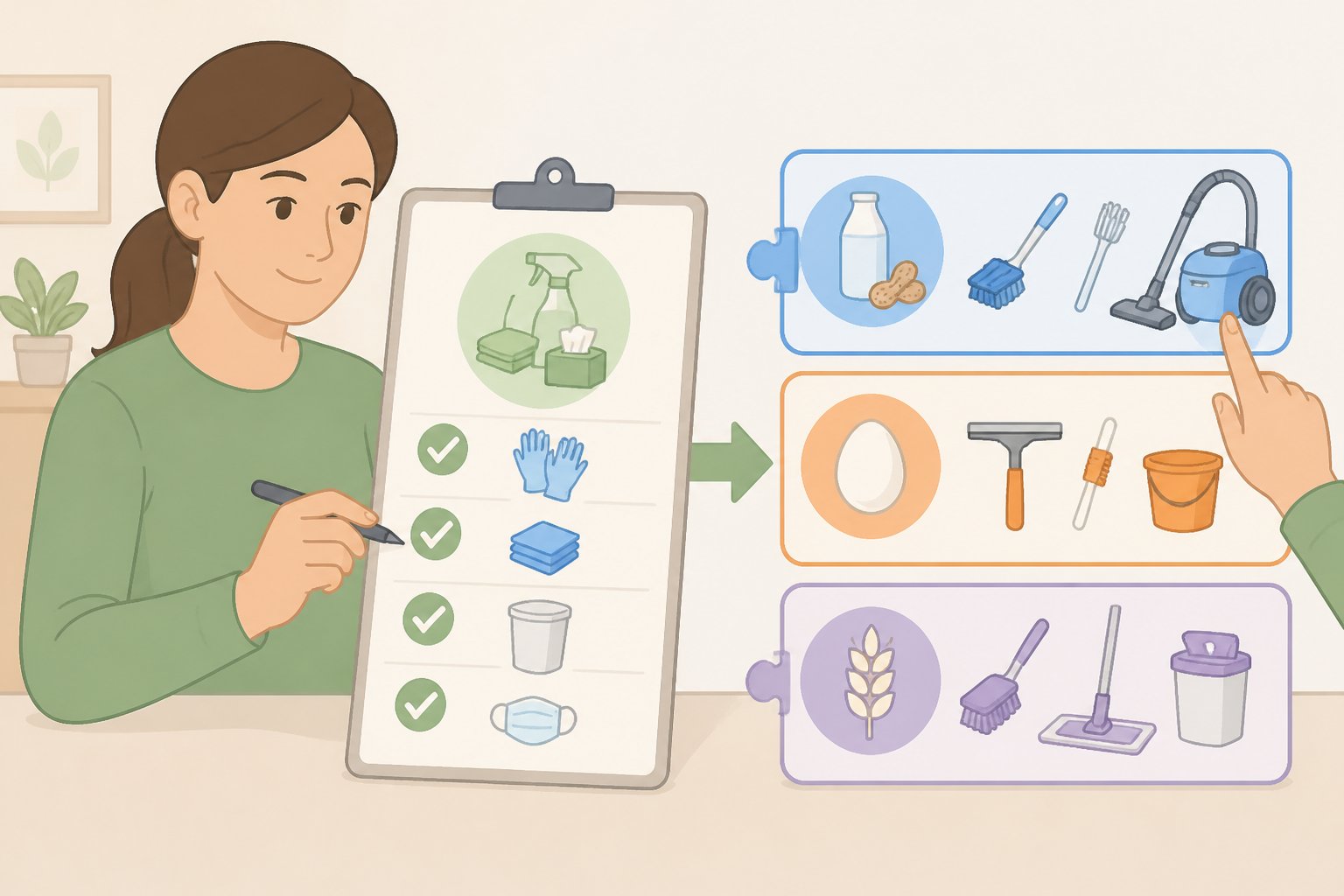
Core, for everyone:
- Zippered, allergen-proof mattress and pillow encasings
- A vacuum with a HEPA filter for carpet and upholstery, plus a mop for hard floors
- Microfiber cloths and laundry access
Then add whichever module matches your home:
- Moisture and mold: a hygrometer, exhaust fans that vent outside, detergent, and household bleach (only needed for small hard-surface mold spots)
- Pets: a portable HEPA air cleaner, or an HVAC filter rated MERV 10 or higher
- Pests: sealed food containers, caulk or steel wool, and a trash can with a tight lid
Find your starting point before you clean
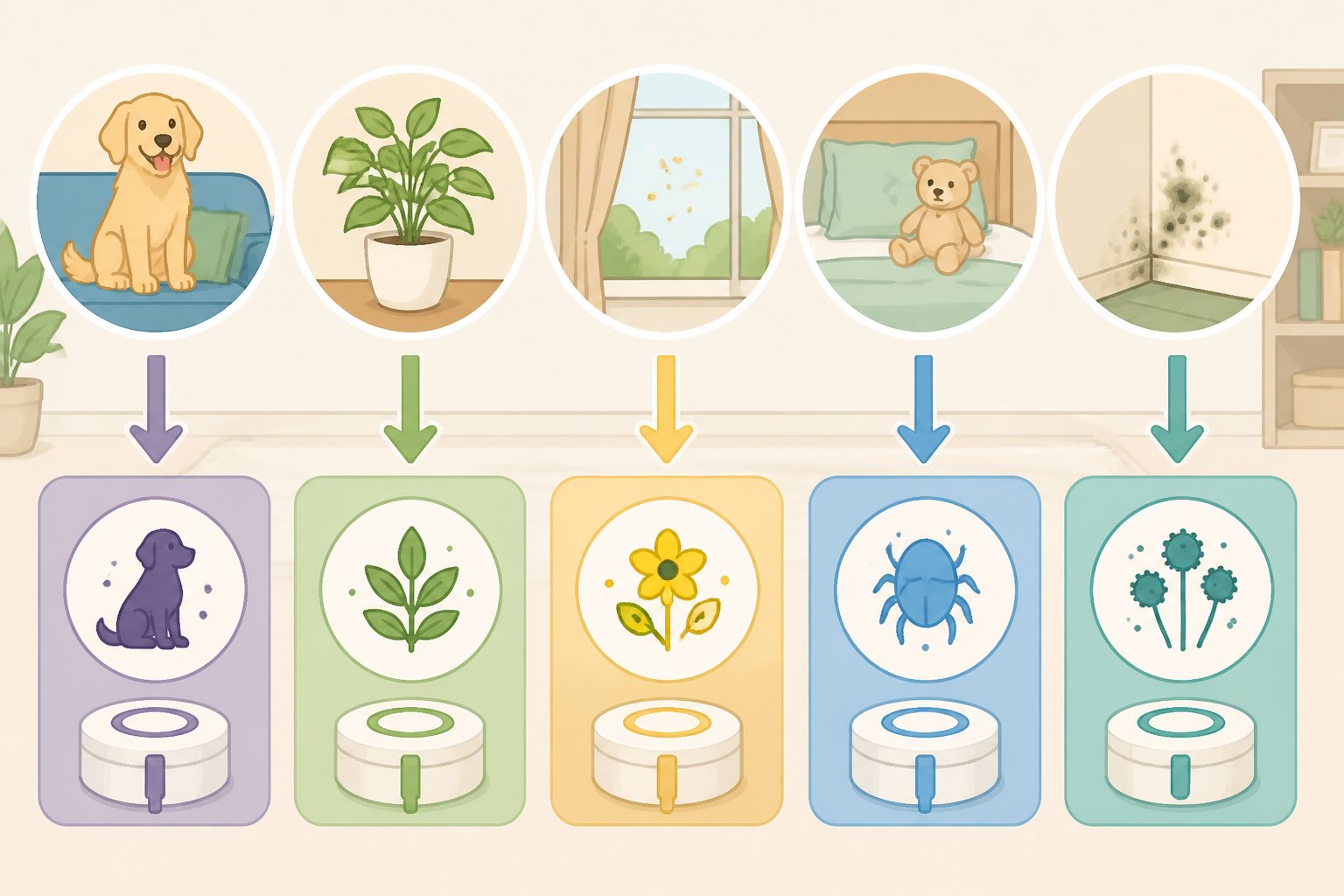
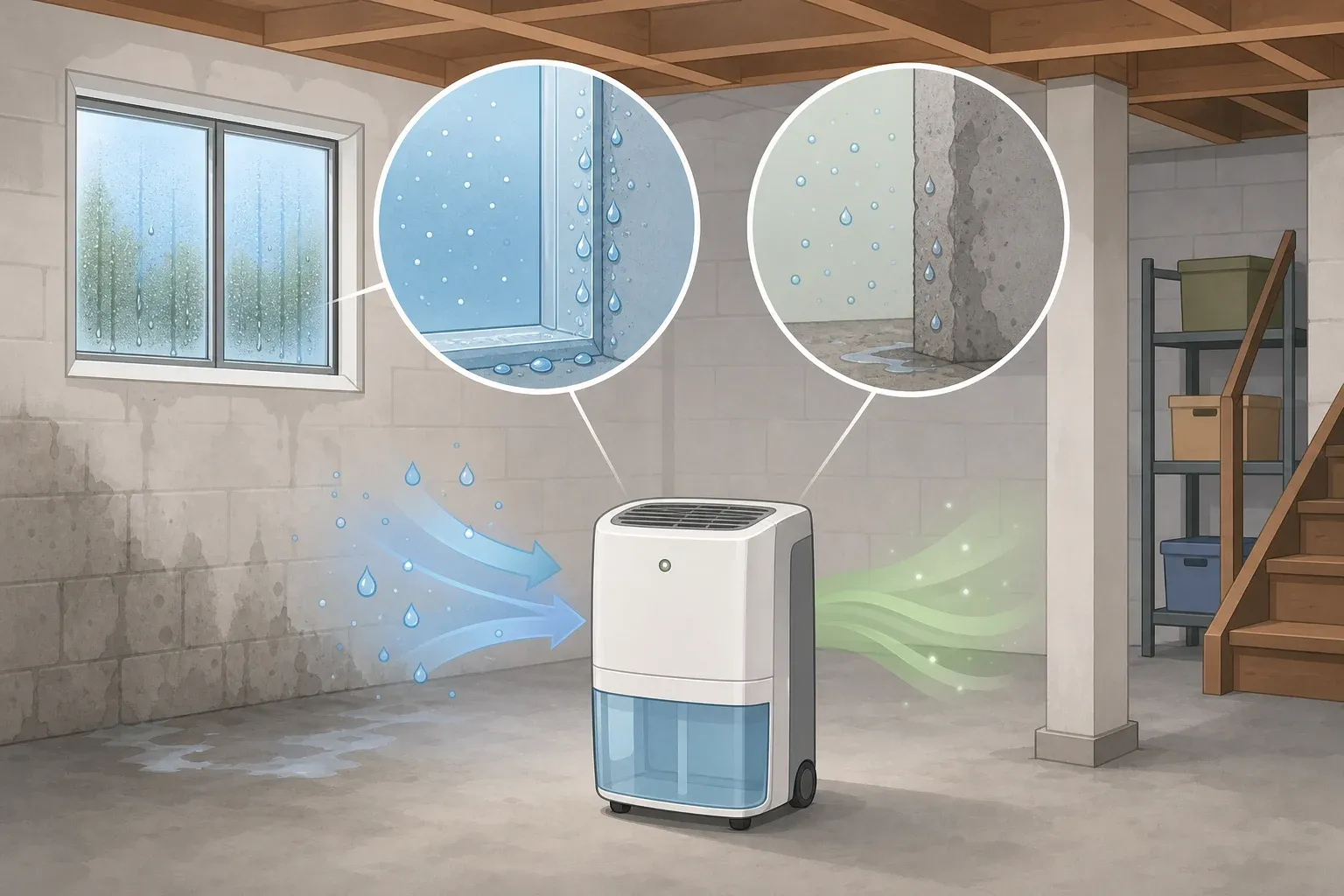
Match the add-on module to whatever you're actually seeing. A musty smell, condensation on windows, or a past leak points to moisture and mold. Having a pet in the house, even one kept off the furniture, is reason enough to try the pet-dander habits, since dander itself usually isn't visible. Droppings, live bugs, or gaps around pipes and baseboards point to pest-proofing.
The core bedroom and floor routine below applies almost no matter what, since it's the most direct way to reduce dust in the home regardless of which trigger is yours: carpet and upholstered furniture are the main dust-mite allergen reservoirs in any home, according to the review. If no allergy or asthma diagnosis is involved, that routine plus drying any wet spot within 24 to 48 hours is a sensible baseline. CDC's asthma control guidance and CDC's mold guidance, both published two years ago, point in the same direction.
If a doctor or allergy test has confirmed asthma symptoms tied to a specific indoor allergen, the review notes that national asthma guidance conditionally recommends prioritizing the module tied to that confirmed trigger rather than layering on everything at once.
How to reduce dust and allergens in your home: the weekly routine
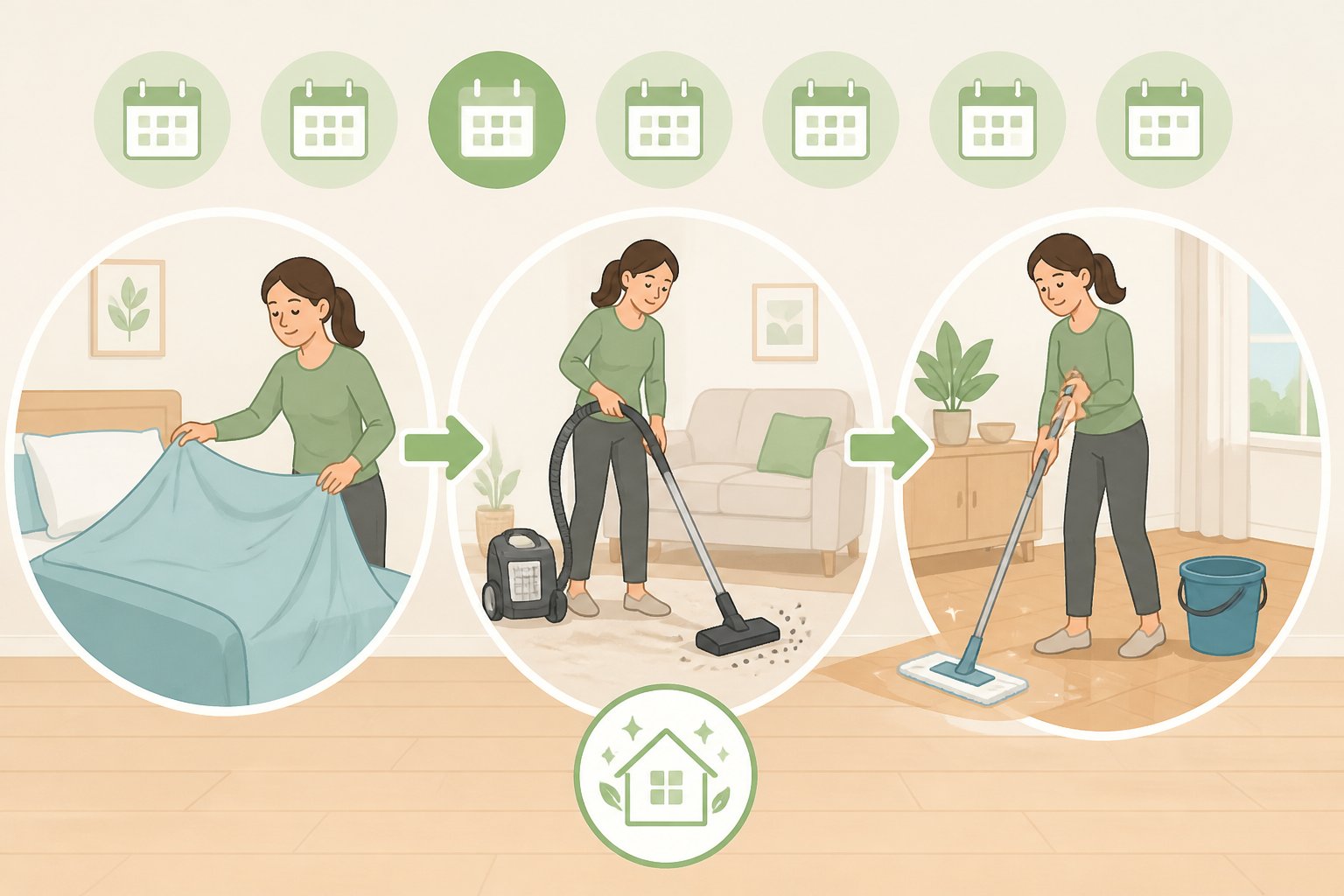
Set up the mattress and pillow encasings once, then repeat the weekly steps below in order. Cleaning floors before laundering bedding just means dust from the sheets settles right back onto the floor you already cleaned.
One-time setup: zip allergen-proof covers over the mattress and both pillows. CDC's asthma guidance lists this as a standard step, and a more recent study cited in the review found impermeable mattress covers cut dust-mite allergen by more than 70% and lowered the risk of ER visits and asthma flare-ups. That result doesn't guarantee every cover performs the same way. Covers work best alongside the steps below, not as a stand-alone fix.
- Launder bedding weekly and dry it completely. CDC calls out weekly washing with full drying specifically, and recommends skipping down-filled pillows, quilts, and comforters since they're harder to keep allergen-free.
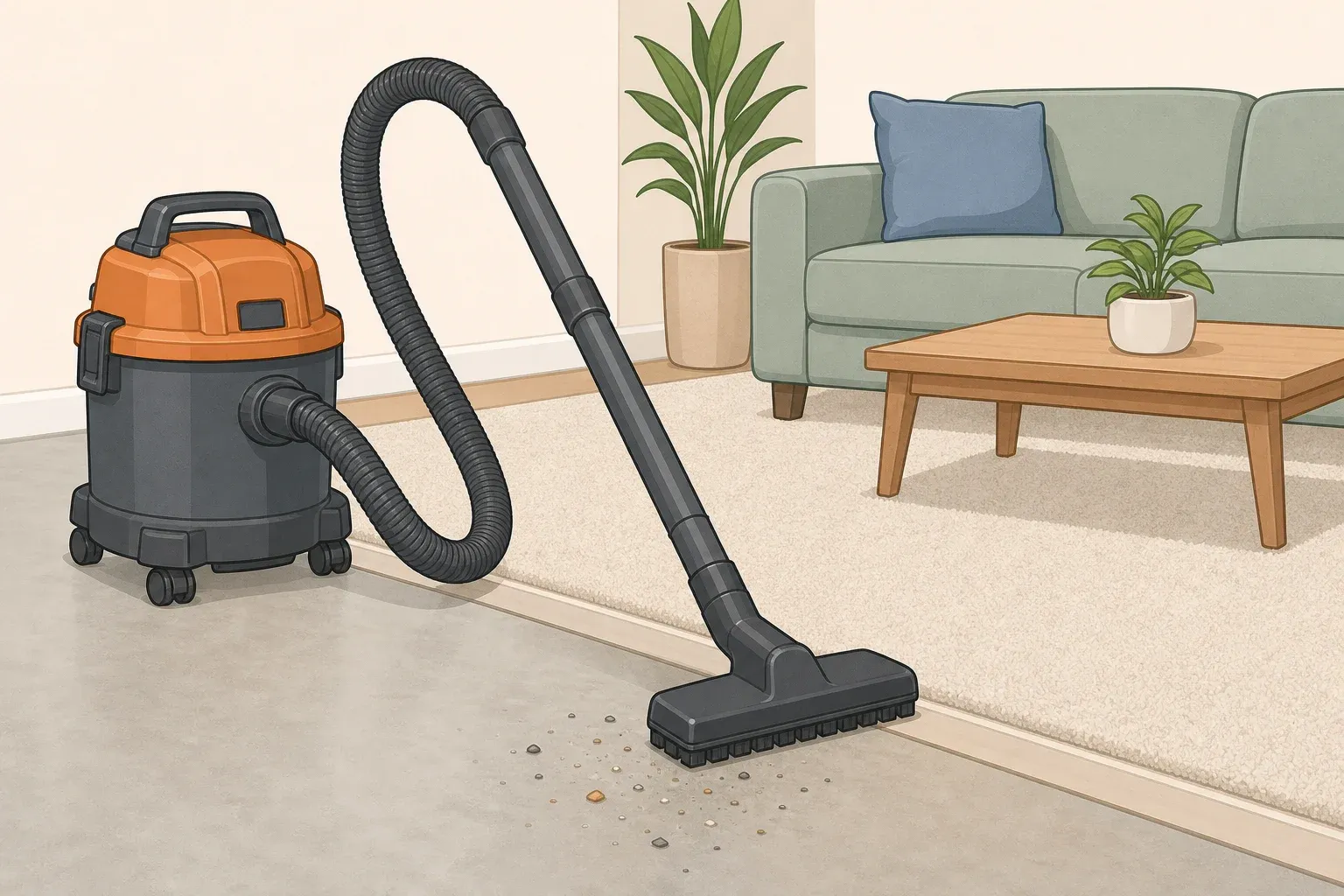
- Vacuum carpet and upholstered furniture with a HEPA-filter vacuum. Carpet and upholstery hold more dust-mite allergen than bare floors, so give them the bulk of your attention, the review notes.
- Wet-mop hard floors instead of dry sweeping. Dry sweeping stirs settled dust back into the air; wet-mopping or HEPA vacuuming avoids that, per CDC cleanup guidance for dusty indoor environments.
- Check that the encasing zippers are fully closed and free of tears. Make this a quick glance during the weekly session, then do a closer inspection every few months.
Don't expect a dramatic, instant payoff from vacuuming alone. A small pediatric trial cited in the review found daily vacuuming cut dust weight and eased rhinitis symptoms even in cases where measured mite allergen didn't budge. Success here looks like a routine kept up every week, not a dramatic before-and-after allergen reading.
Add-on: moisture and mold control
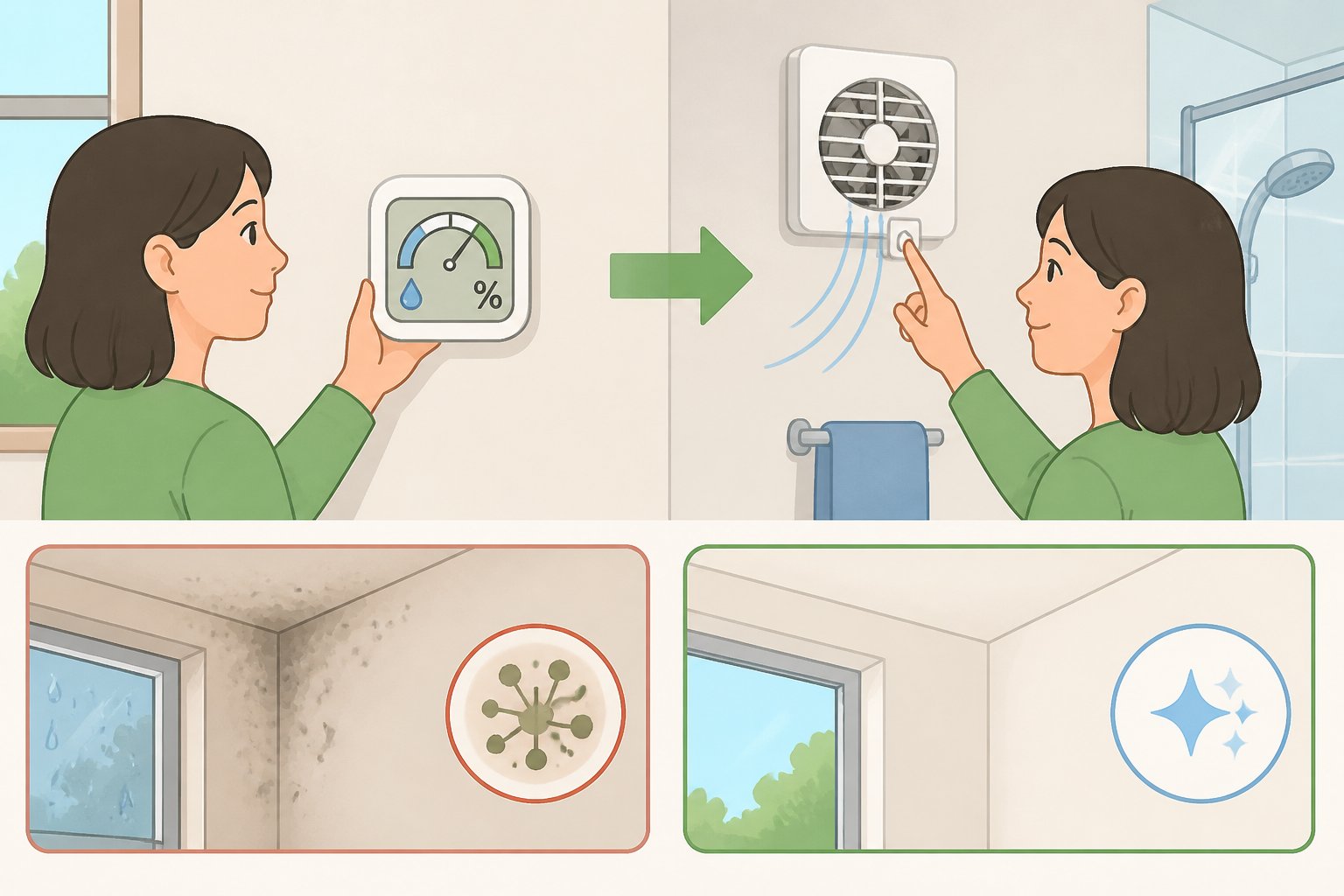
Use this module if there's condensation, a past leak, or a musty smell anywhere in the house.
Before any cleanup: anyone with asthma, COPD, or a weakened immune system should stay out of the home during mold cleanup, and ideally shouldn't be living in a moldy home at all, per CDC's mold cleanup guidelines. Check that before starting, not after the dust is already stirred up.
- Check humidity and keep it under 50%. CDC recommends a 30 to 50% relative humidity range, checked more than once a day since levels shift with weather and cooking.
- Run exhaust fans vented outdoors during and after showers and cooking, and confirm the clothes dryer also vents outside.
- Dry any wet material within 24 to 48 hours and fix leaks promptly. Damp materials left longer than that window are likely to grow mold, per CDC's mold guidance.
- Clean mold on hard surfaces only, using detergent and water, or a solution of no more than 1 cup of household bleach per gallon of water. CDC lists both as acceptable, so pick one rather than combining them. If you use bleach, open windows for airflow, wear gloves and eye protection, follow the product label, and never mix bleach with ammonia or other cleaners, since that produces a poisonous gas. Dry the surface completely once you're done.
That hard-surface method only works on hard surfaces, not carpet, ceiling tile, drywall, upholstered furniture, or anything that stayed wet during a flood. Don't scrub or bleach those; CDC's guidance recommends replacing moldy ceiling tiles and carpet instead. If flooding left other materials wet beyond 24 to 48 hours, or the moisture source can't be fixed, mold is likely already present, per CDC's cleanup guidance for flooded homes. Treat that as a signal to call in a landlord or a qualified remediation professional rather than routine cleaning. CDC doesn't recommend home mold testing for these decisions; the focus stays on removing visible mold and fixing the moisture behind it.
Keep checking humidity with the hygrometer and keep it under 50%. That's an ongoing target for mold prevention, not a one-time check.
Add-on: reduce indoor allergens from pets
Use this module if a pet lives in the house, even one kept off the furniture.
- Add a portable HEPA air cleaner, or check whether the HVAC system can run a higher-rated filter. Updated ASHRAE guidance cited in the review points to filters rated MERV 10 or higher for capturing pet dander; going past roughly MERV 12 or 13 up to MERV 16 adds only marginal benefit. Check the system manual before changing the filter.
- Pair filtration with frequent vacuuming instead of relying on either alone. One study of cat-sensitized adults found that combining a free-standing HEPA cleaner with frequent vacuuming improved a combined asthma outcome compared with vacuuming alone, though it didn't change objective lung function or measured allergen levels on its own.
- If a cat is the likely trigger, keep it out of the bedroom. One trial that combined a HEPA cleaner, mattress and pillow covers, and cat exclusion from the bedroom reduced airborne cat allergen, though it didn't improve disease activity in that study. Dog owners saw a narrower result in a small separate study: HEPA cleaners lowered airborne dog allergen in homes with dogs, without measuring whether that eased symptoms.
- Removing the pet from the home entirely is the step research identifies as most effective, though cat allergen specifically can take up to 20 weeks to drop to pet-free-home levels after the cat is gone. That lag is a big part of why most households end up managing exposure rather than eliminating the source.
Don't expect airborne allergen levels to track neatly with how clean the furniture looks. Several of the studies above found reduced allergen counts with no accompanying change in symptoms.
Add-on: pest-proofing for cockroach and rodent allergens
Droppings, live bugs, or gaps around pipes and baseboards call for this module.
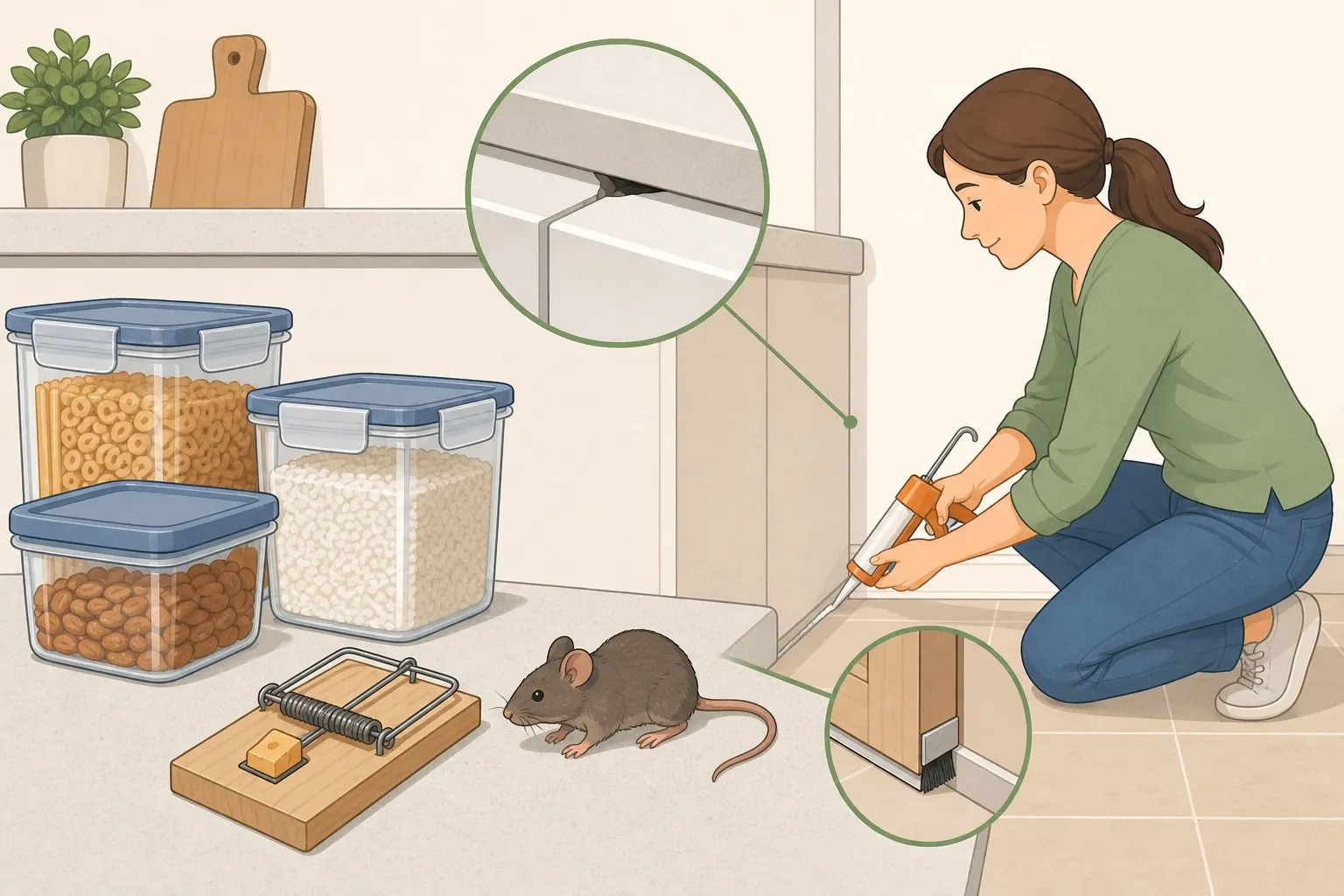
- Store food in sealed containers and take out trash promptly. Timely waste disposal is a core part of integrated pest management, which has reduced cockroach allergen levels across multiple studies.
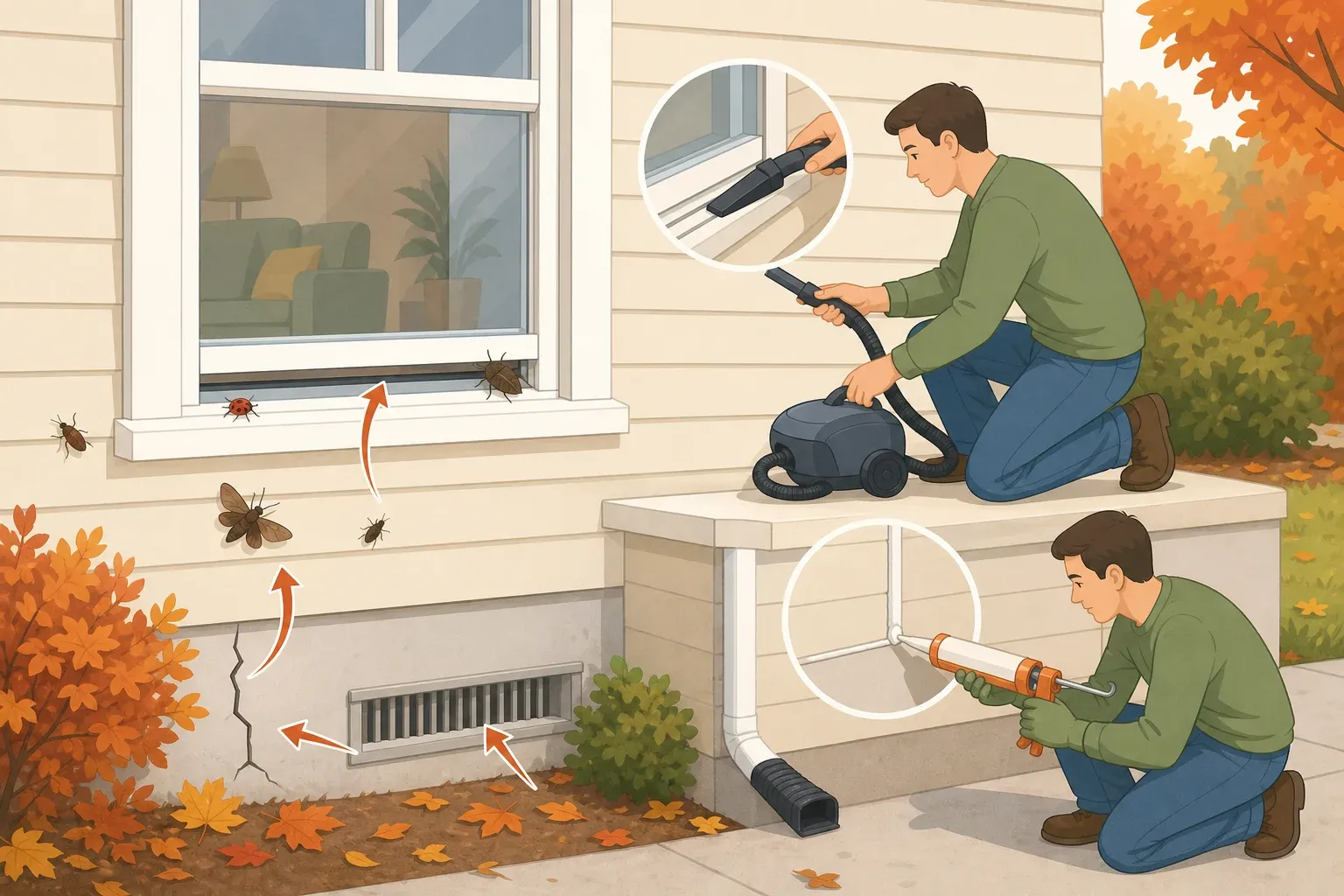
- Seal visible entry points and gaps with caulk or steel wool. A secondary analysis of a large pediatric asthma trial linked identifiable, repairable issues like rodent holes to better allergen outcomes.
- Keep floors clear, especially in bedrooms. The same analysis tied clearer bedroom floors to lower allergen levels.
These steps reflect the integrated pest management package tested in the research above, not independently proven fixes on their own. In a large mouse-allergen trial, the group that got pest-management help didn't log significantly fewer symptom days than an education-only group. Researchers only saw fewer acute-care visits and hospitalizations when they looked at the roughly 45% of homes that hit at least a 90% allergen reduction, an association tied to deep reduction, not a guarantee from any single action.
Watch for droppings and sightings decreasing over time rather than expecting them to disappear overnight. If an infestation persists despite sealed food storage and closed gaps, call a pest control service for a broader plan.
Weekly, monthly, and when-to-call-a-professional checklist
This is the short version of everything above, useful once the routine matching your trigger is already running.
Weekly, in this order: launder and fully dry bedding first, then HEPA-vacuum carpet and upholstery, then wet-mop hard floors, then take out the trash.
Monthly: check humidity with a hygrometer and keep it under 50%, inspect mattress and pillow encasings for tears, glance around for new leaks, condensation, or droppings.
Call a professional or landlord when: mold followed flooding that wasn't fully dried within 24 to 48 hours, when asthma, COPD, or a weakened immune system is in the picture and mold is present, or when a pest problem keeps going despite sealed entry points and tight food storage.
Judge the routine by practical home conditions, humidity staying down, fewer droppings, cleaner floors, rather than by how fast symptoms change. Staying consistent with the module that matches your actual trigger matters more than adding every possible tool at once.



Comments
Be the first, drop a comment!