



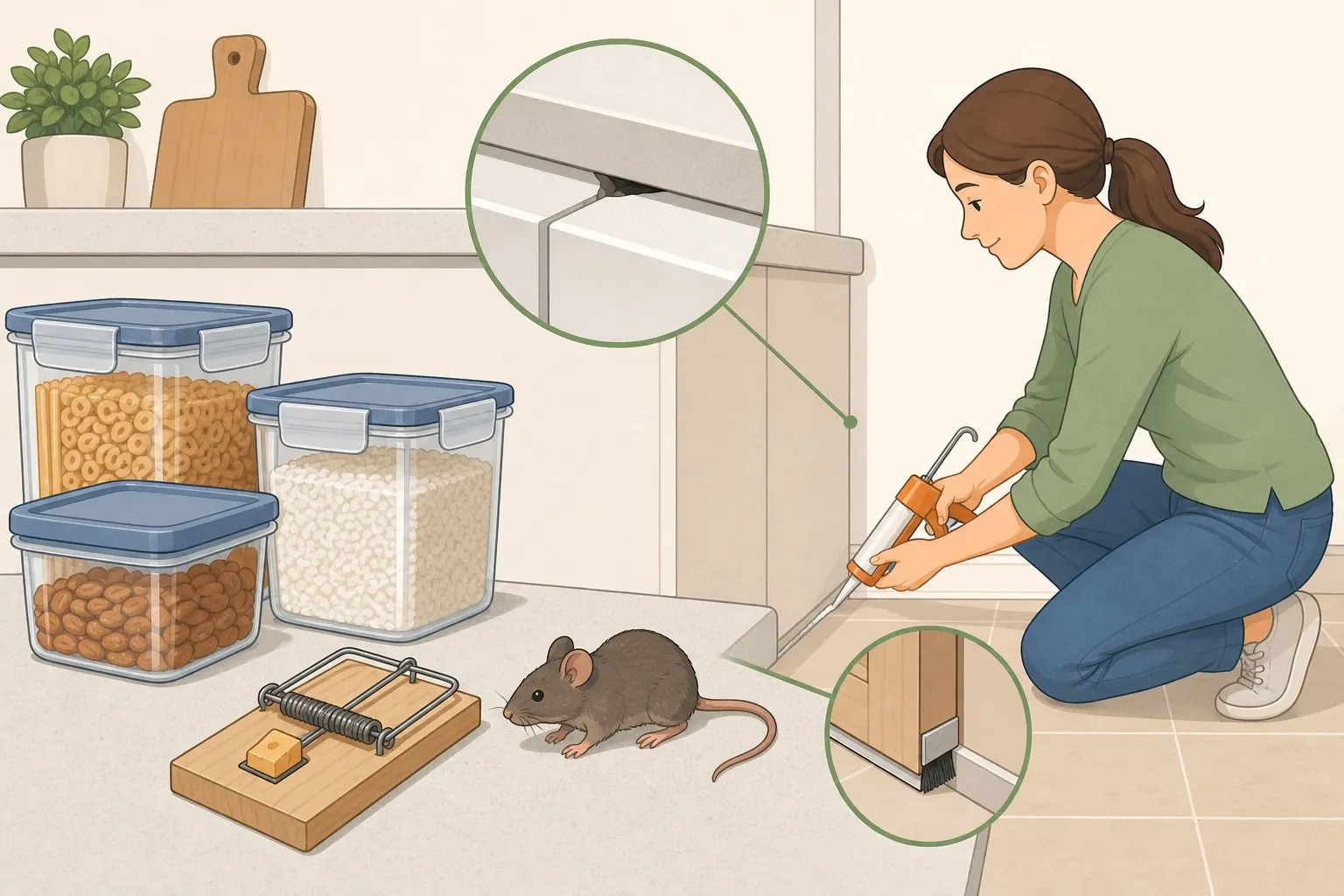
How to Keep Mice Out of Your Kitchen: Food, Gaps, Traps
A kitchen can look spotless and still have a mouse problem. Visible mess isn't really the deciding factor, accessible food is one of the clearest attractants, whether the counters are wiped down or not. The quickest step toward keeping mice out of your kitchen tonight is securing food, pet food, and garbage in containers a mouse can't easily get into. From there, the job isn't finished: entry gaps, standing water, and any mice already inside all need attention too.
Texas A&M AgriLife describes effective rodent control as an integrated program, rodent-proof food storage paired with sealed entry points, removed water sources, and traps or carefully placed rodenticide, not food storage on its own. The CDC recommends storing food and water in thick plastic, glass, or metal containers with tight-fitting lids, advice written for disaster conditions but just as useful on an ordinary night. This guide starts with the fastest fix, securing food tonight, then covers closing the gaps mice use to reach the kitchen, and what to do if mice are already inside.
What you'll need
- Glass, metal, or thick hard-sided plastic containers with tight lids, enough for your dry pantry goods
- A kitchen trash can with a secure, tight-fitting lid
- Steel wool, hardware cloth, putty, caulk, or expandable foam for sealing gaps
- A flashlight for checking under appliances and behind cabinets
- Snap traps, with peanut butter, cheese, or fruit for bait, if mice are already active
- Rubber gloves, paper towels, and a household disinfectant, in case cleanup is needed
This is beginner-friendly work. Sealing small gaps only takes basic tools and a free evening. Don't open electrical panels, gas lines, or structural elements chasing a gap, that's a job for a professional. And if an infestation doesn't ease up after consistent food storage, exclusion work, and trapping, or a wall void turns up packed with nesting material, hand it off to a landlord or licensed pest control instead of escalating the DIY effort further.
What attracts mice to your kitchen (and why a clean counter isn't enough)
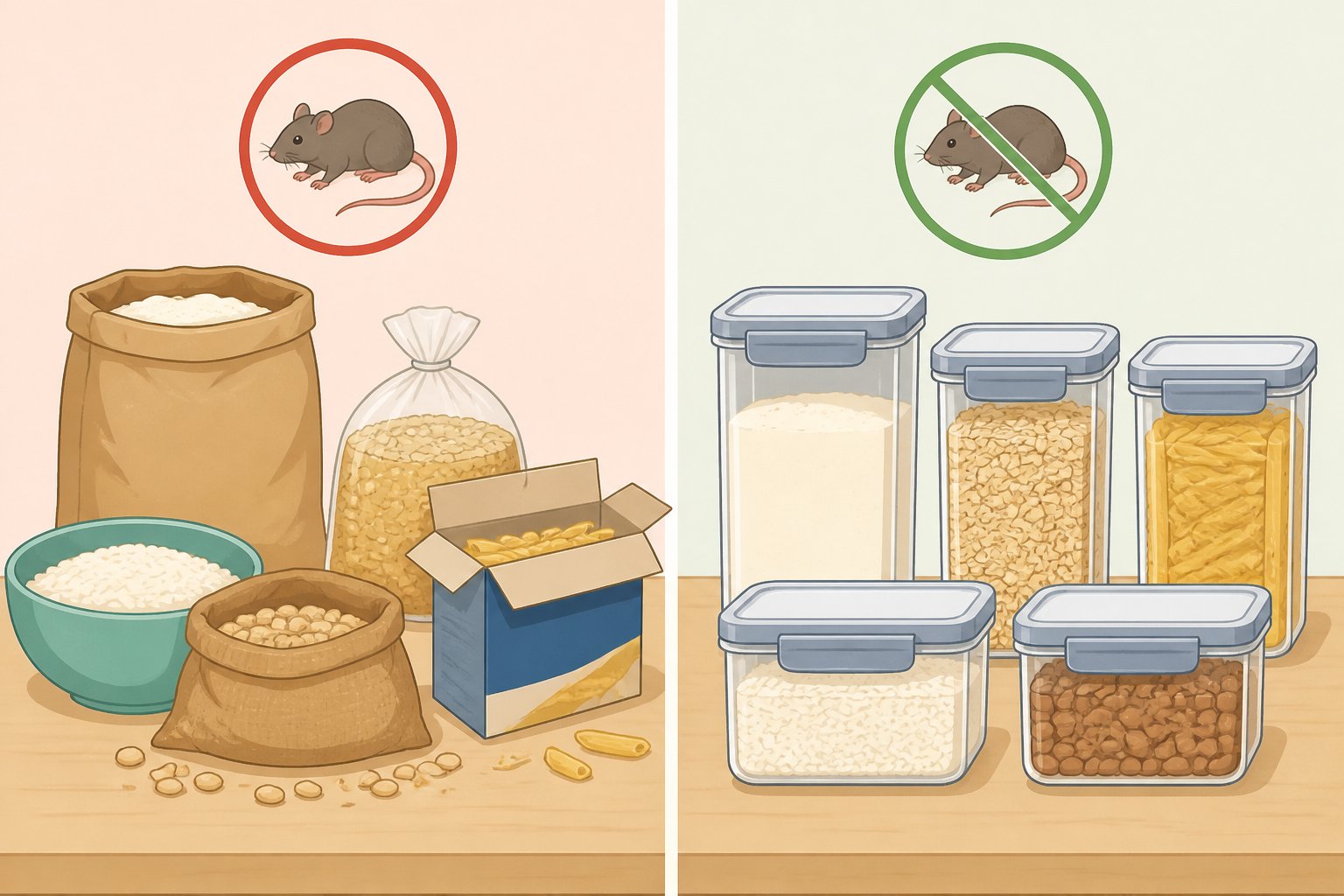
Accessible food is one of the clearest attractants in a kitchen, whether or not the room looks tidy: an open bag, a cardboard box, a container that isn't actually rodent-resistant. University of Missouri Extension names unsealed garbage cans, birdseed, livestock feed, and pet food as attractants right alongside dropped crumbs, so a bag of dog kibble stored loosely in the laundry room can contribute to the problem just as much as anything left on a counter.
Mice also tend to stick to routes they already know. Texas A&M AgriLife notes that rodents often follow established travel paths and don't typically go out of their way for food placed somewhere unfamiliar. A cereal box with a loosely folded top sitting on a normal kitchen route is easier for a mouse to reach than food locked in a sealed container, and a folded bag or a propped-shut lid simply isn't a rodent-resistant seal.
Robert Pierce, a wildlife and fisheries specialist with University of Missouri Extension, points out that mice and rats have sharp senses of taste, smell, hearing, and touch, part of why they're so good at tracking down whatever food is available. Missouri Extension also warns that rodent populations can build up quickly, since mice can produce up to eight to ten litters a year with up to five to six young per litter. That's reason enough to deal with the food situation tonight rather than after a second or third sighting.
How to keep mice out of your kitchen tonight: remove food access
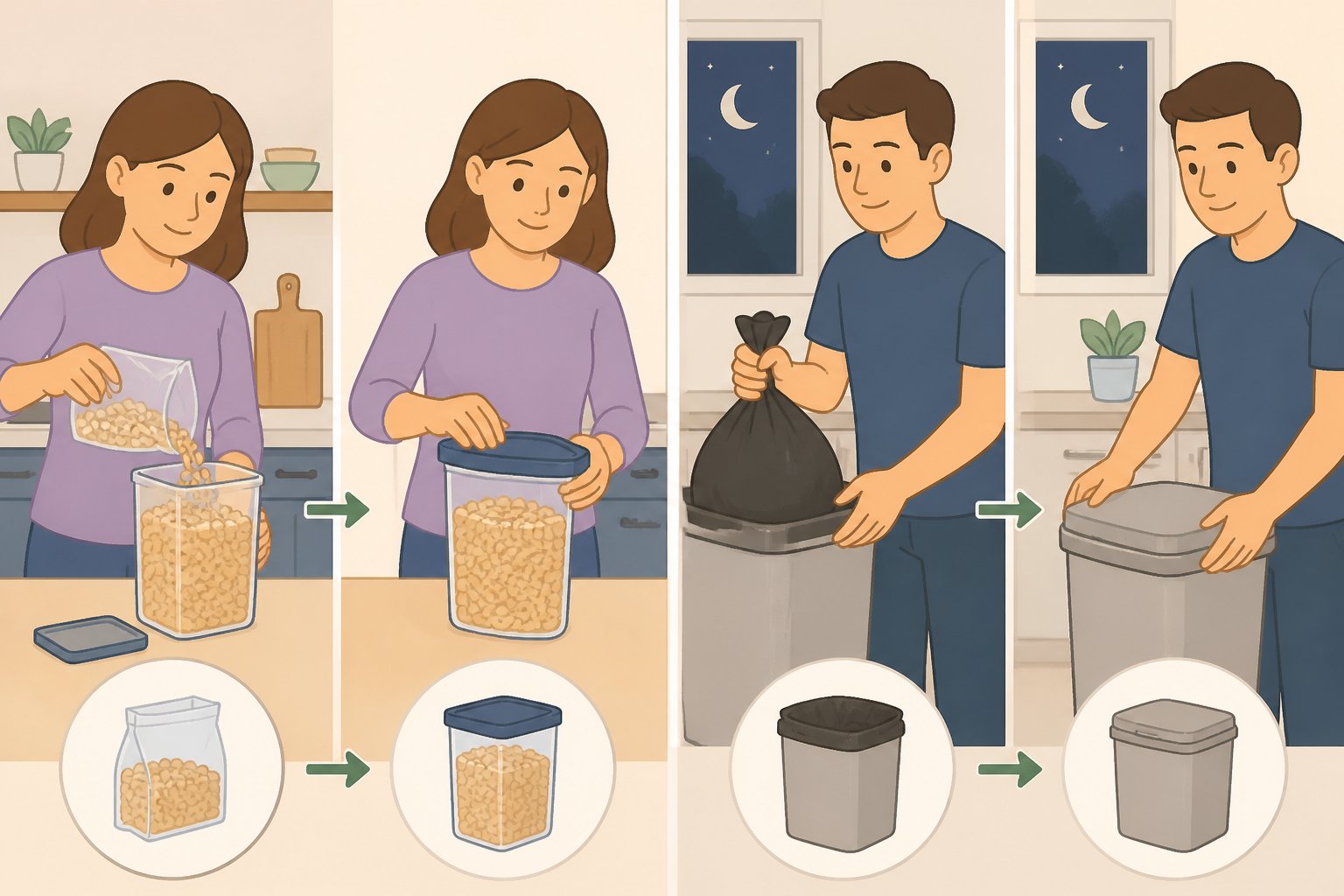
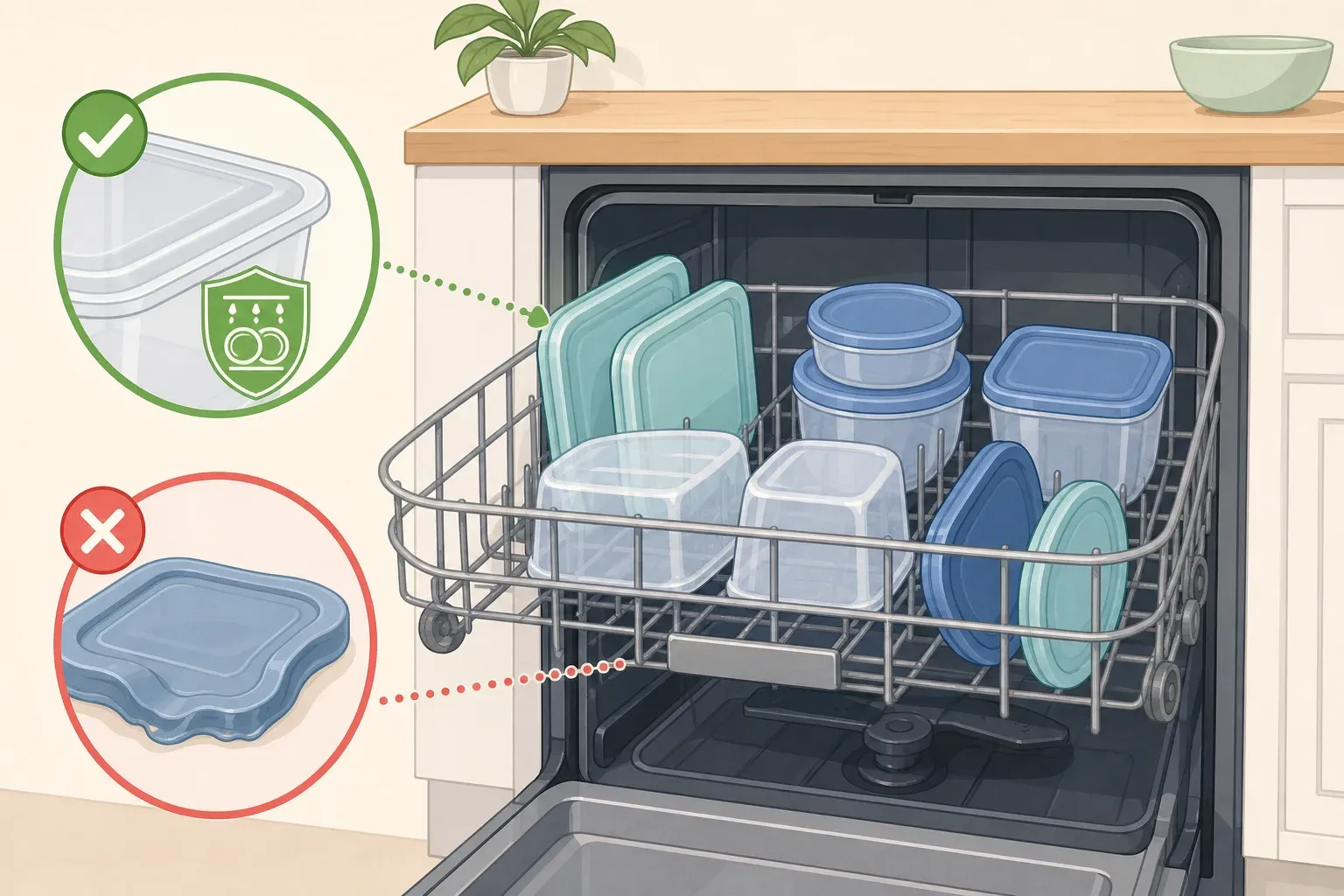
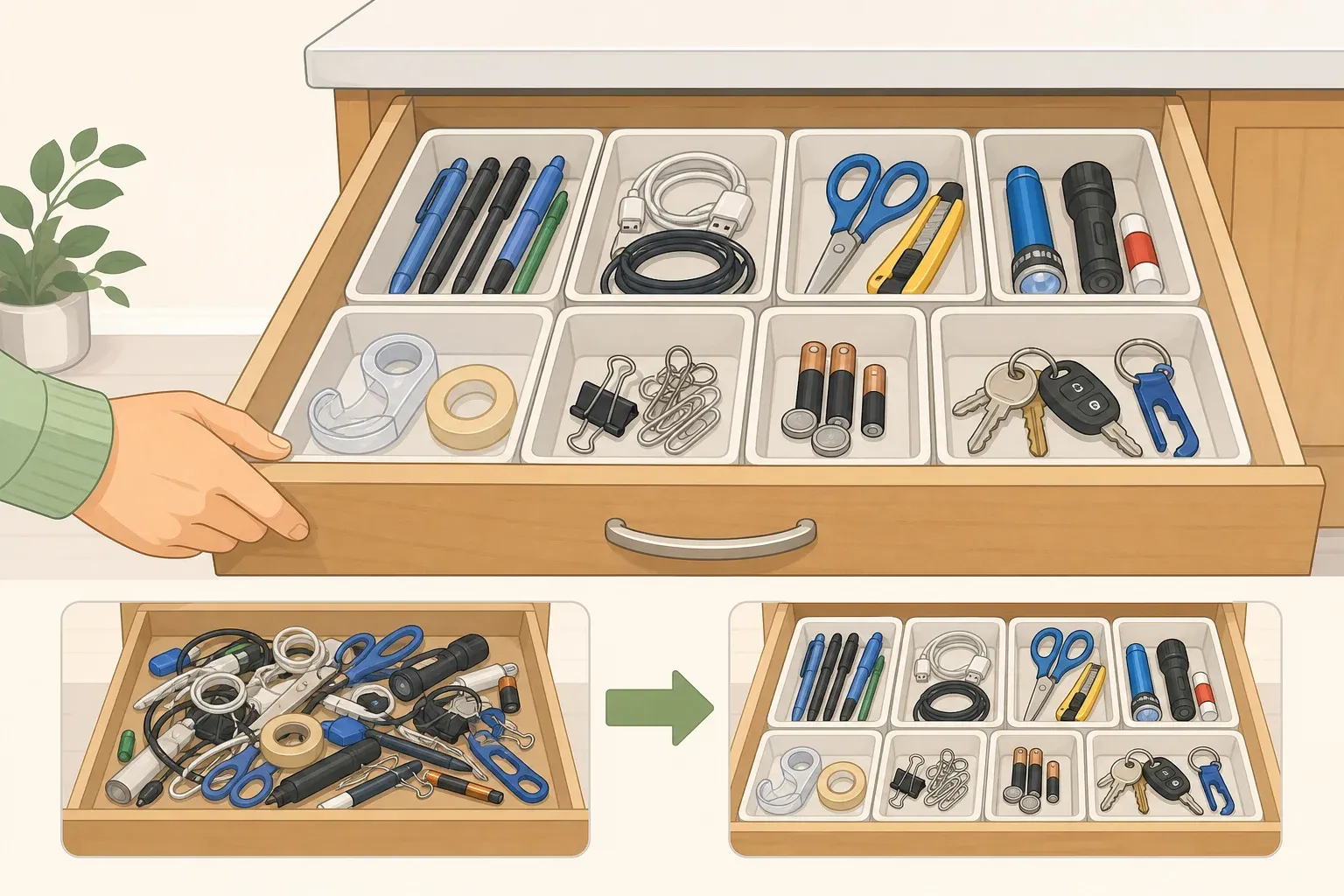
- Move dry goods out of their original packaging. Cereal, flour, rice, pet kibble, and birdseed kept in paper bags, cardboard boxes, or thin plastic aren't rodent-resistant even when closed. Transfer them into glass, metal, or thick hard-sided plastic containers with tight lids, the storage method both Texas A&M AgriLife and the CDC point to as the core fix.
- Switch to a trash can with a tight-fitting lid. Texas A&M AgriLife lists uncovered garbage as a direct food source for rodents, so a loose-fitting lid defeats the purpose. Empty it regularly instead of letting it sit full overnight.
- Seal pet food between feedings. Missouri Extension specifically flags pet food as an attractant. Store the bag in a sealed container and avoid leaving food out around the clock.
- Wipe counters and sweep up crumbs before bed. It's a quick nightly habit, not a deep clean, but it clears away the last easy snack.
By morning, every dry good, the pet food, and the garbage can should be sealed shut. If every container in the kitchen has its lid on, that part of the job is done.
Mouse-proof your kitchen cabinets and pantry: seal the entry points
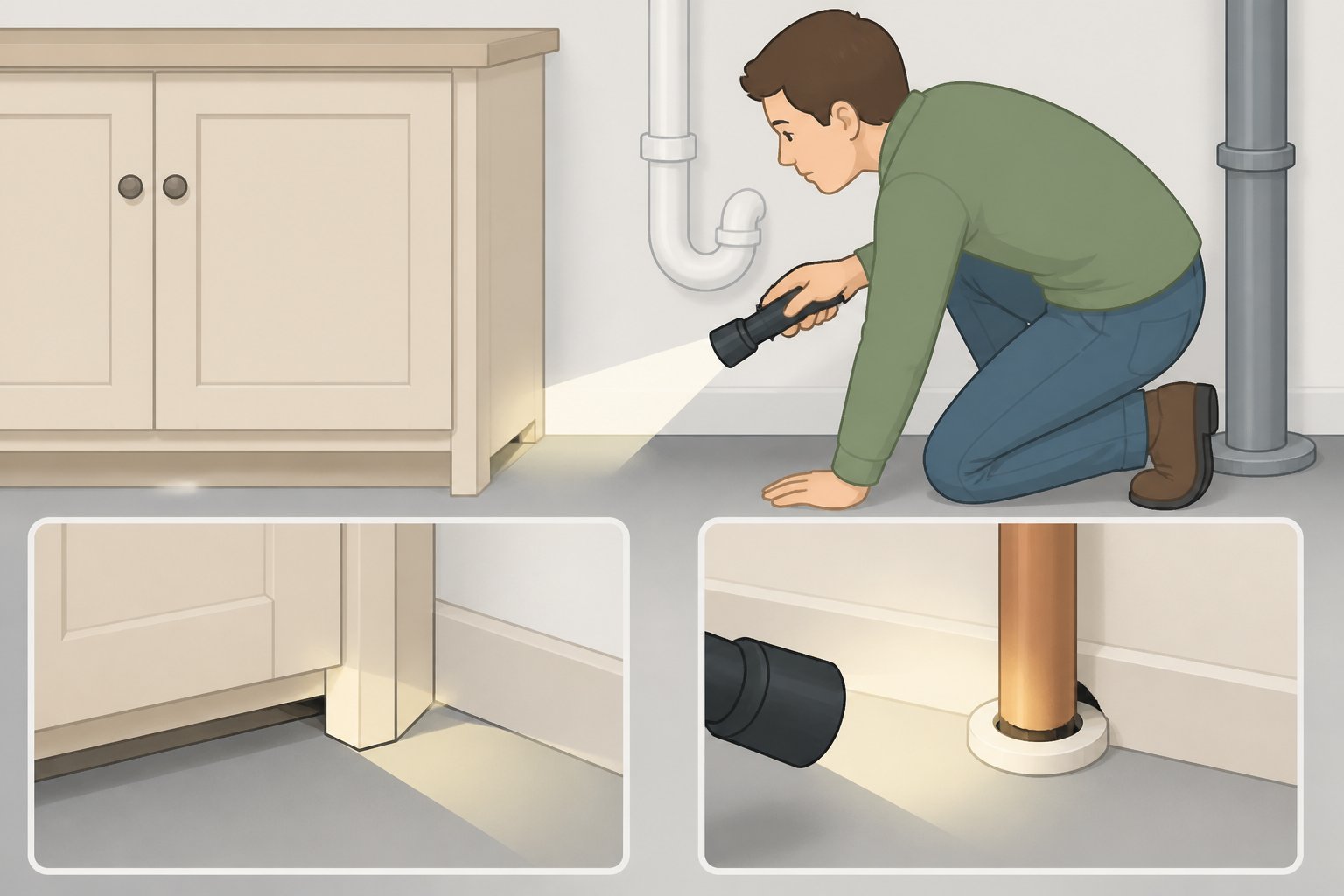
Securing food only helps if mice can't still wander into the kitchen from somewhere else in the house. Sealing entry points is what actually keeps them from getting that far in the first place.
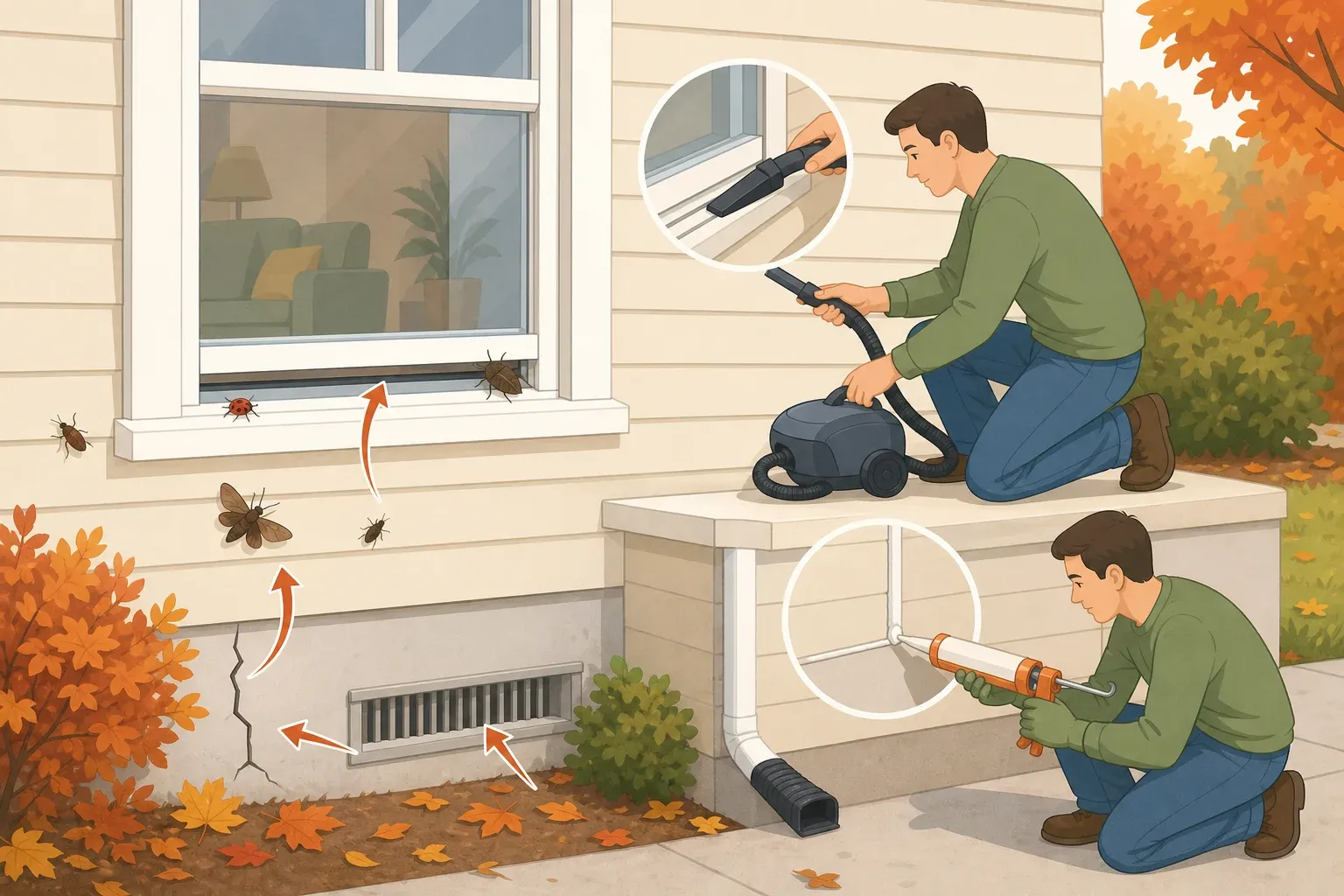
- Walk the kitchen's edges with a flashlight. Missouri Extension points to gaps around windows, doors, dryer vents, and electrical or gas lines as common entry spots; Illinois Extension adds gaps around pipes under sinks. It's also worth glancing behind the stove and refrigerator and inside cabinet voids along exterior walls during the same pass, since those spots are easy to miss.
- Size up what you find. Missouri Extension says mice can squeeze through openings as small as a quarter inch across, while the CDC uses a dime as its comparison for rodents in general. The two aren't really in conflict, they're just different ways of describing a very small gap. Illinois Extension recommends sealing anything about half an inch or larger; because mice can use openings as small as a quarter inch, don't ignore smaller gaps either if they show signs of activity.
- Seal with the right material. Illinois Extension recommends metal, steel wool, hardware cloth, putty, or expandable foam for cracks and holes, including around pipes; Missouri Extension adds caulk and copper wool to that list. Skip plastic, wood, or cloth, Missouri Extension notes those materials won't actually keep mice out.
- Cut off water access and clear clutter. Fix leaky faucets and remove standing water mice can reach, a step Texas A&M AgriLife lists as essential alongside food control. The same source notes that piled lumber, boxes, and other stored clutter give rodents a place to shelter, so clearing clutter near the kitchen removes another reason for them to stick around.
- If you rent, report gaps instead of patching walls yourself. Illinois Extension notes that local laws may require a landlord to address pest entry points, and stuffing steel wool into a gap can work as a renter-friendly interim measure while a repair is pending.
Once the sealant or foam has fully cured, per the product label, check it visually for gaps, looseness, or any sign of gnawing. Skip touching it before then, fresh foam and caulk need time to set properly.
How to get rid of mice in the kitchen if you already see signs
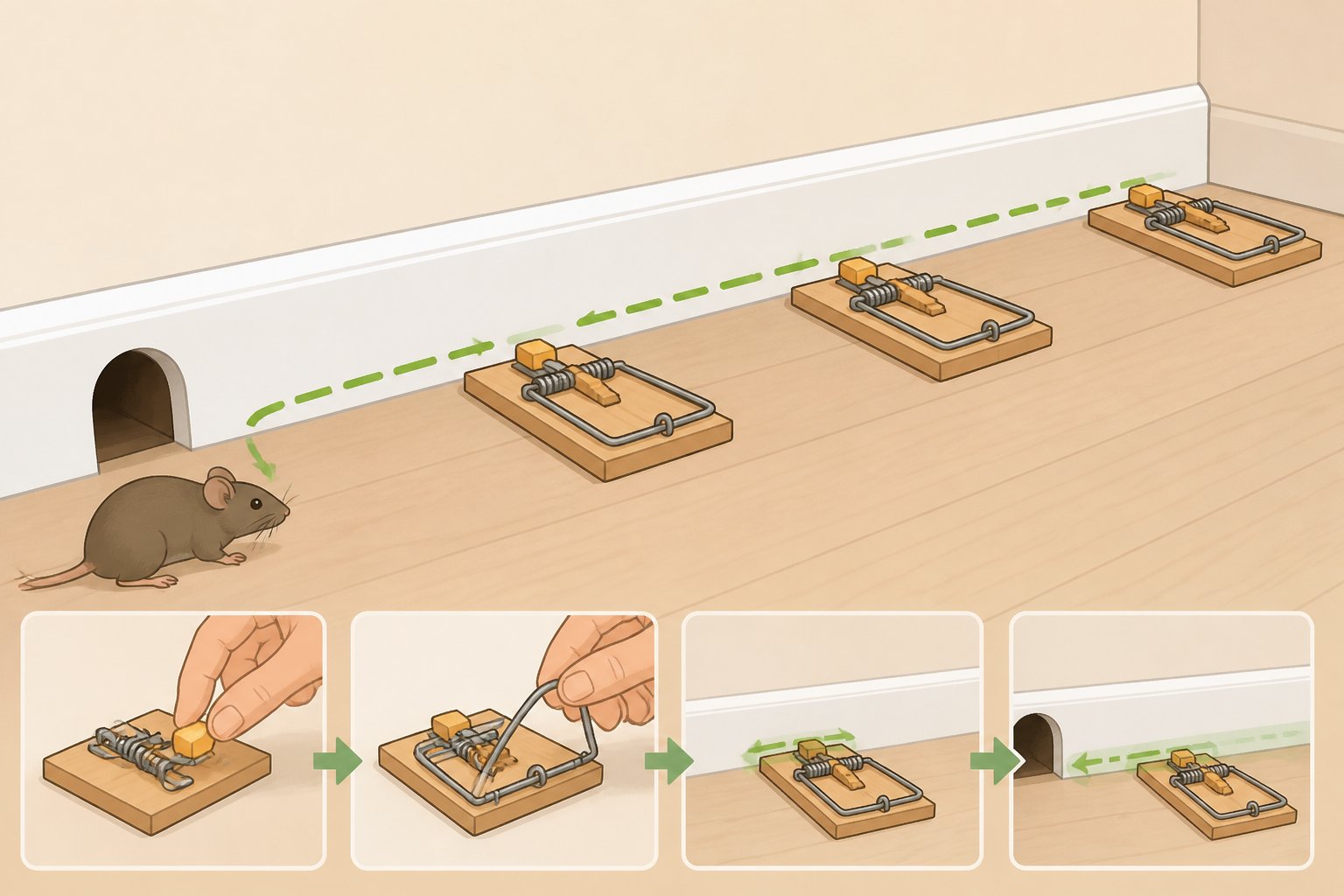
Look for droppings about the size of a grain of rice, described as dark and rice-shaped by both Illinois Extension and Missouri Extension. Other signs include small gnaw marks, shredded nesting material, a musky odor, or scratching sounds behind walls. Missouri Extension notes mice are active throughout the day and night, though Illinois Extension points out that scratching is often noticed shortly after dark or early in the morning.
- Set enough traps in the mouse's path. Missouri Extension recommends using enough traps in an area with observed activity so the effort pays off quickly. Set each one perpendicular to the base of the wall, following the product's instructions, so the trigger sits across the mouse's natural route rather than facing out into open floor, a placement Texas A&M AgriLife also recommends.
- Bait lightly and adjust if it sits untouched. A light slather of peanut butter works as bait, per Missouri Extension, with cheese or fruit as backup options. If a trap goes untouched for a few days, the same source suggests leaving it unbaited for a few days so the mice get used to it, then adding bait back on.
- Check traps at least once daily, and keep them out of reach of children and pets. Illinois Extension recommends daily checks for exactly this reason.
- Skip poison baits and sticky traps for this job. Illinois Extension advises against both for household use: poisoned rodents are often eaten by predators like owls and hawks before the bait fully takes effect, and sticky traps can catch other small animals along with mice. Texas A&M AgriLife treats rodenticide as a legitimate option within a larger pest-control program, but stresses keeping it away from people and domestic animals. For an ordinary kitchen, a snap trap sidesteps both the predator risk Illinois describes and the indoor decomposition odor Missouri Extension warns about, which is why it's the simpler default here.
- Clean up with care once the mice are gone. Droppings and nesting material can carry viruses, bacteria, and allergens, Illinois Extension notes, so skip handling them bare-handed. Put on rubber gloves, wipe the area down with a household disinfectant until it's thoroughly wet, then clean nearby counters, cabinets, and drawers with the same disinfectant since those are food-contact surfaces. Throw used paper towels in a covered trash can and wash your hands well once the gloves come off. If there's a heavy buildup of droppings or a lingering odor, treat that as a cue to bring in a professional for the cleanup rather than tackling it solo.
If traps keep catching new mice, droppings reappear after a thorough cleanup, or scratching continues despite sealed food and closed gaps, it's time to call a licensed pest control service rather than adding more traps on top of what's already set.
Keeping the kitchen clear going forward
Success looks like no fresh droppings, no live mice spotted, no new gnaw marks, and traps, if any are set, sitting with their bait untouched. Keep dry goods in sealed containers as a standing habit rather than reverting to original packaging once things calm down, and check sealed gaps now and then, since caulk and foam can wear down over time.
If mice show up again despite tight food storage and sealed entry points, don't just keep adding traps indefinitely. For a rental, loop in the landlord, since local law may assign responsibility to the landlord anyway. For an owned home, bring in a licensed pest control professional. Recurring activity after consistent exclusion work can indicate an overlooked entry point, nest, food source, or water source somewhere outside the kitchen that a DIY pass isn't reaching.






Comments
Be the first, drop a comment!