



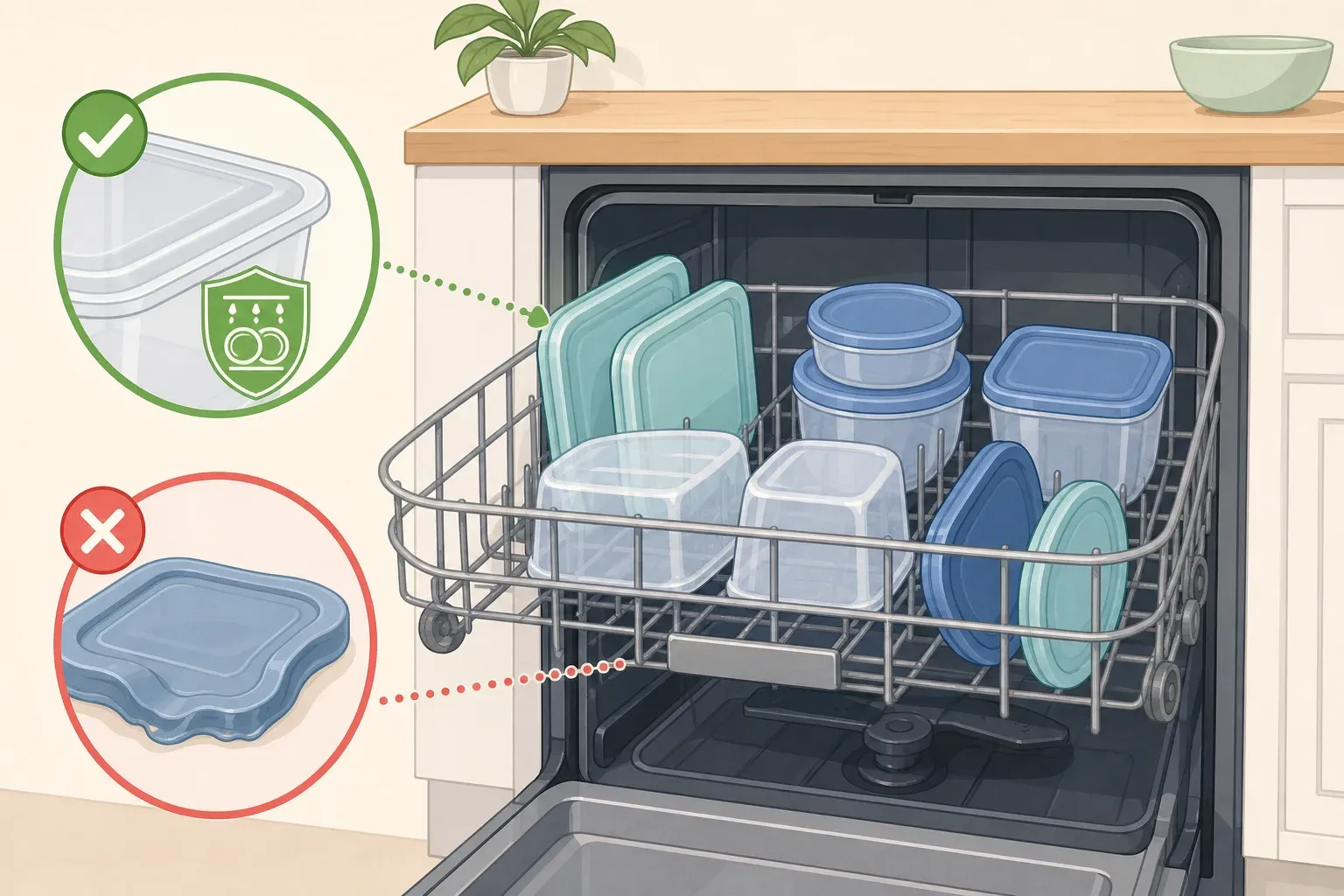
Can you put Tupperware in the dishwasher? Here's how to tell (and where to put it)
Usually, but not always. Most modern plastic food-storage containers are dishwasher-safe, though not every one is, and the only way to know for sure on a specific piece is to check for a label or the manufacturer's instructions, not guess from the recycling number stamped into the bottom. That's the short answer to whether you can put Tupperware in the dishwasher, according to Noah Pinsonnault, a reviews analyst at the Good Housekeeping Institute's Home Care & Cleaning Lab, writing in Good Housekeeping this week.
Pull a warped lid out of a dishwasher load often enough and you start wondering whether plastic ever comes out the way it went in. Most containers survive just fine; you just need to confirm which ones qualify and load them correctly. Check for a dishwasher-safe label, place approved pieces on the top rack only, and skip heated dry for lightweight items if warping turns into a pattern.
Morgan Eberhard, a senior scientist at P&G, backs up that top-rack advice: plastic and silicone are generally dishwasher-safe if loaded on the top rack, as long as the manufacturer's directions don't say otherwise, Better Homes & Gardens reported last year. Checking for a label isn't as simple as spotting a plate icon, either. No dishwasher-safe symbol is standardized across brands, so one container's label can look nothing like another's, Whirlpool noted in 2022.
This guide covers three things: how to check whether a specific container is actually dishwasher-safe, where to load it once it passes, and the habits that keep plastic from warping over repeated cycles.
How to tell if Tupperware is dishwasher safe
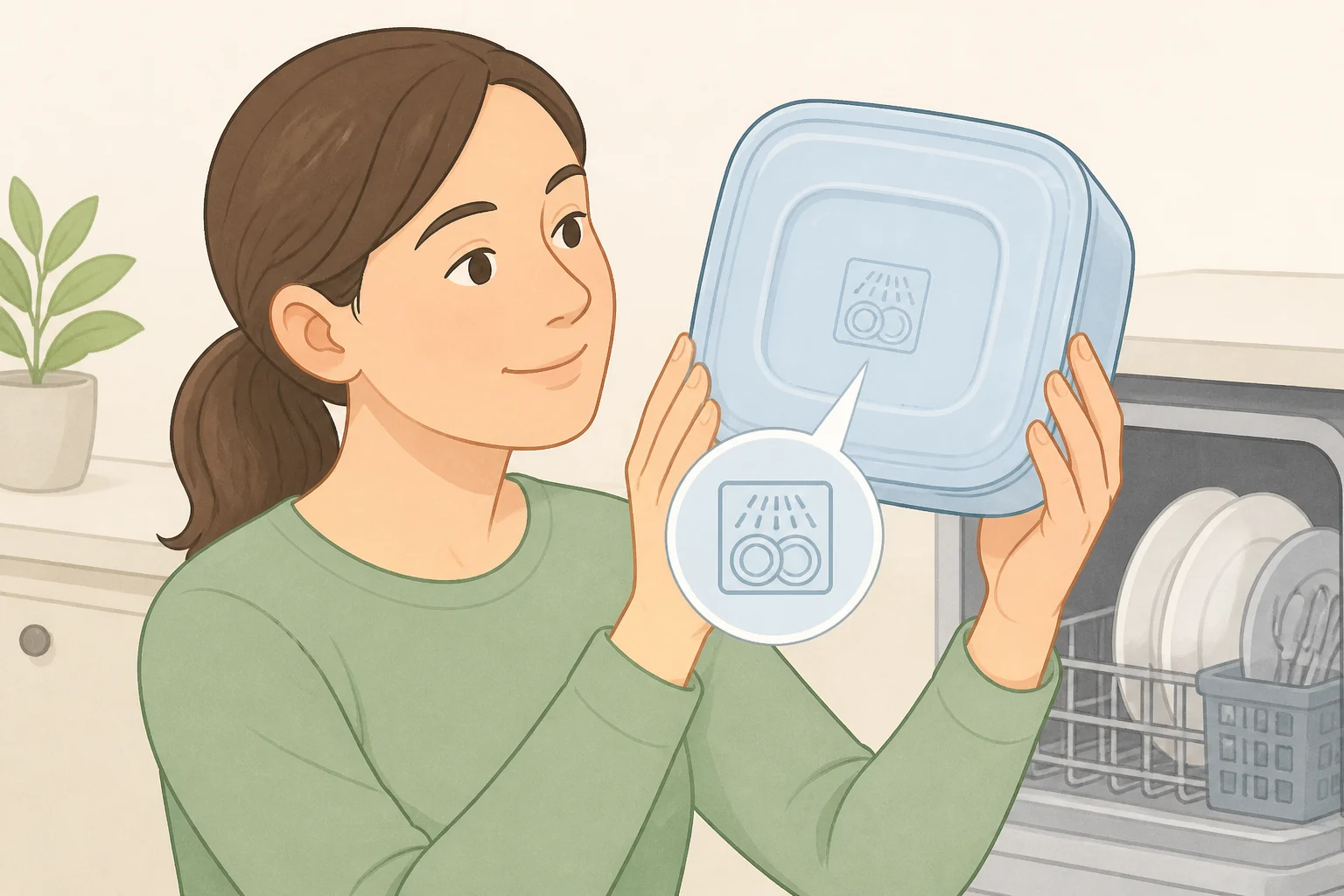
Check the lid and the container separately when possible, along with any removable gasket or seal. Each piece can carry its own marking, so a label on the base doesn't necessarily cover the lid.
-
Flip the container over and look at the bottom. Check for a dishwasher-safe symbol or a printed label. If you don't find one, check the manufacturer's website or care card before guessing.
-
Ignore the recycling number. That small number inside the triangle, usually 1 through 7, identifies the resin the plastic is made from, not whether it can survive a dishwasher cycle. "The recycling number on the bottom of a container doesn't tell you whether it's dishwasher-safe," Pinsonnault says.
-
Don't assume microwave-safe means dishwasher-safe. Manufacturers label these separately, Pinsonnault confirms, so one doesn't imply the other.
-
Read the whole symbol, not just the plate shape. Some icons pair a dish graphic with written instructions specifying rack placement, so a plate-shaped icon alone doesn't tell you everything, per Whirlpool. If the icon includes extra text or a rack diagram, follow that instruction specifically.
-
No label and no manufacturer confirmation? Hand-wash it. A missing label doesn't mean the piece is unsafe to use, just that there's no basis for guessing about the dishwasher. Older or unmarked plastic can grow brittle or break down in unpredictable ways without the manufacturer's guidance, Pinsonnault explains.
Treat this as a per-container question rather than a whole-set assumption. A set bought together can still have pieces with different ratings, especially if lids got swapped out or mixed in from another brand over the years.
Where to put Tupperware in the dishwasher
-
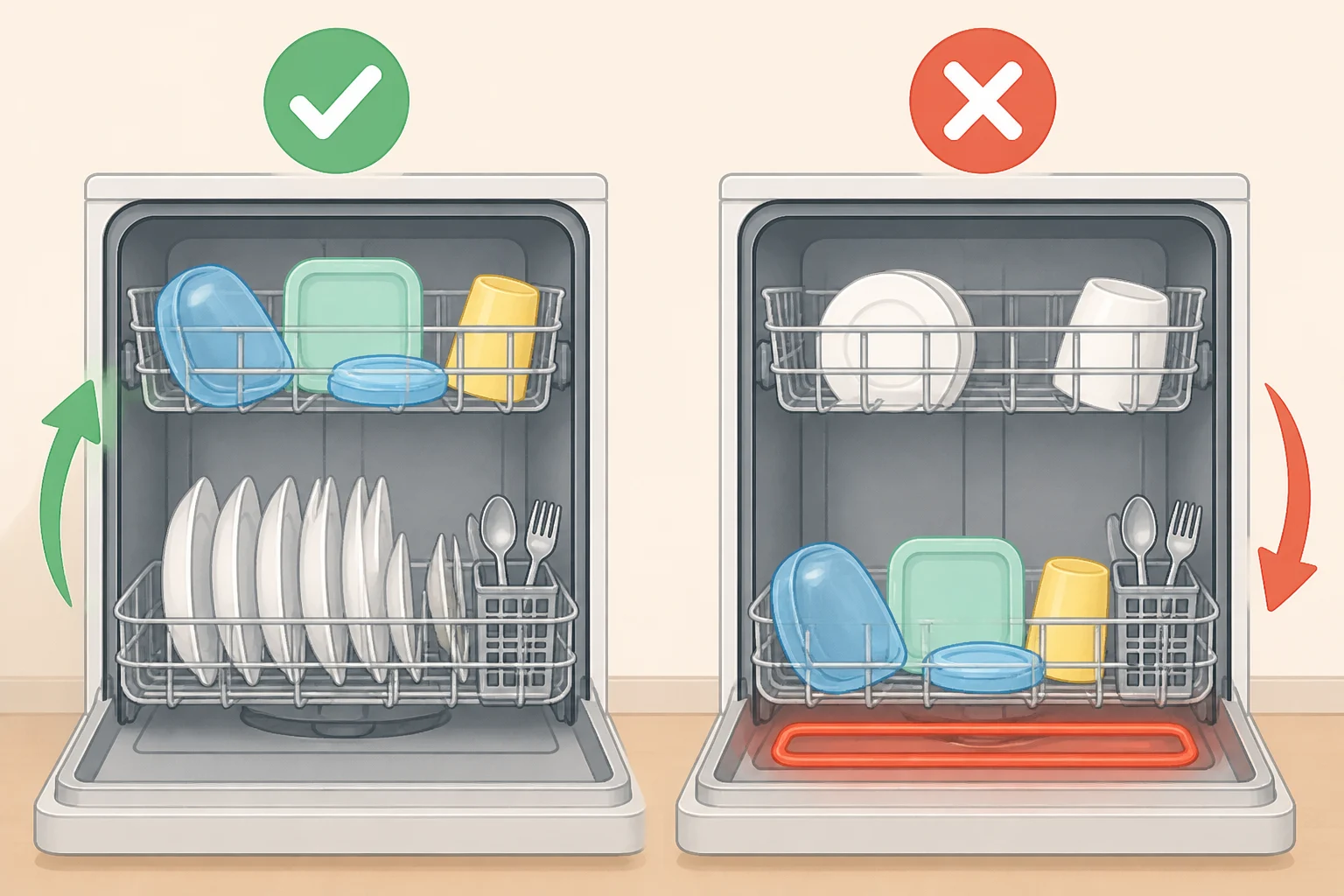
Load every approved plastic piece on the top rack. Treat the bottom rack as off-limits for plastic by default, even for containers labeled dishwasher-safe, unless the manufacturer's instructions specifically say otherwise.
-
Know why the bottom rack is the risk zone. Many dishwashers have an exposed heating element at the bottom of the tub. A lid that sits too low can make contact with it, and according to Lee Gilbert, a dishwasher repair and consultation expert, that contact could melt the plastic or, worse, start a fire, Better Homes & Gardens reported last year.
-
The top rack sits farther from that heat. Eberhard says loading an approved piece on the top rack keeps it farther from the heating element, where temperatures run a little cooler, which helps with warping or melting concerns. She still recommends checking the specific product's manufacturer directions first.
-
Angle pieces so water drains instead of pooling. Bowls, cups, and deep containers should tilt downward or sideways rather than sit mouth-up. Whirlpool's product guidance recommends this specifically for plastic items on the top rack.
-
Check the load before starting the cycle. Nothing should press against the bottom element, and small lids or gaskets shouldn't sit loosely enough to slip through the rack slats and fall during the wash.
If your dishwasher has one, a third rack can give small, dishwasher-safe lids another spot up top. Select Whirlpool models include a dedicated third rack built for extra "top rack only" items, Whirlpool notes, so check your owner's manual before assuming yours is meant for plastic specifically.
How to keep Tupperware from warping in the dishwasher
-
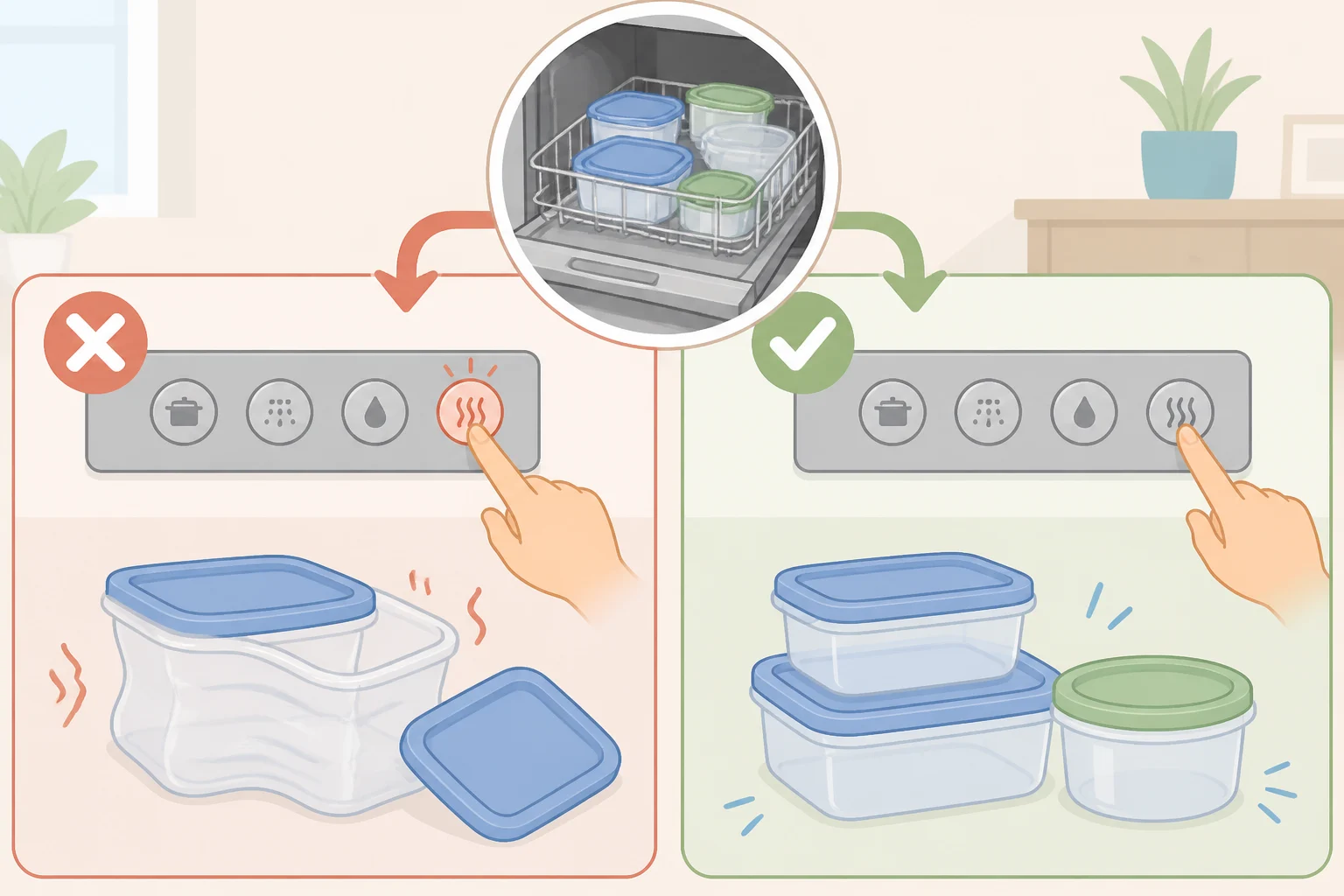
Skip heated dry for lightweight containers and lids if warping keeps happening. High heat can contribute to warping over time, even in plastic labeled dishwasher-safe, Pinsonnault says.
-
Weigh that against drying performance. These two pieces of guidance serve different goals. Whirlpool's own troubleshooting advice recommends rinse aid and heated dry for loads with a lot of plastic, since plastic tends to retain water and air-dry poorly on its own, per Whirlpool's product help. If plastic keeps coming out dripping wet, turn on rinse aid and heated dry as directed. If warping is the bigger concern, turn off heated dry and accept slightly damper plastic.
-
Air-dry on a rack as a middle ground. Skipping both heated dry and a towel lets pieces air-dry instead, a method cleaning expert Piper, quoted by Better Homes & Gardens, calls more sanitary than toweling off, and faster too. It keeps plastic away from repeated heat exposure without adding an extra drying step.
-
Replace pre-2010 or unmarked older containers rather than trying to keep washing them. Tupperware sold in the US and Canada has been BPA-free only since March 2010, and Iowa State University Extension recommends disposing of pre-2010 containers rather than continuing to use them, dishwasher or not. Piper adds that dishwasher heat could cause BPA to leach from older plastic, though that outcome isn't confirmed for every container. A BPA-free label and a dishwasher-safe label answer two different questions, so confirm both before reusing anything old enough to be uncertain about.
-
Pay extra attention to the grooves around lid seals. Food residue collects there whether the lid is hand-washed or run through a cycle, and left unchecked it can contribute to lingering odors later.
Finish-line check
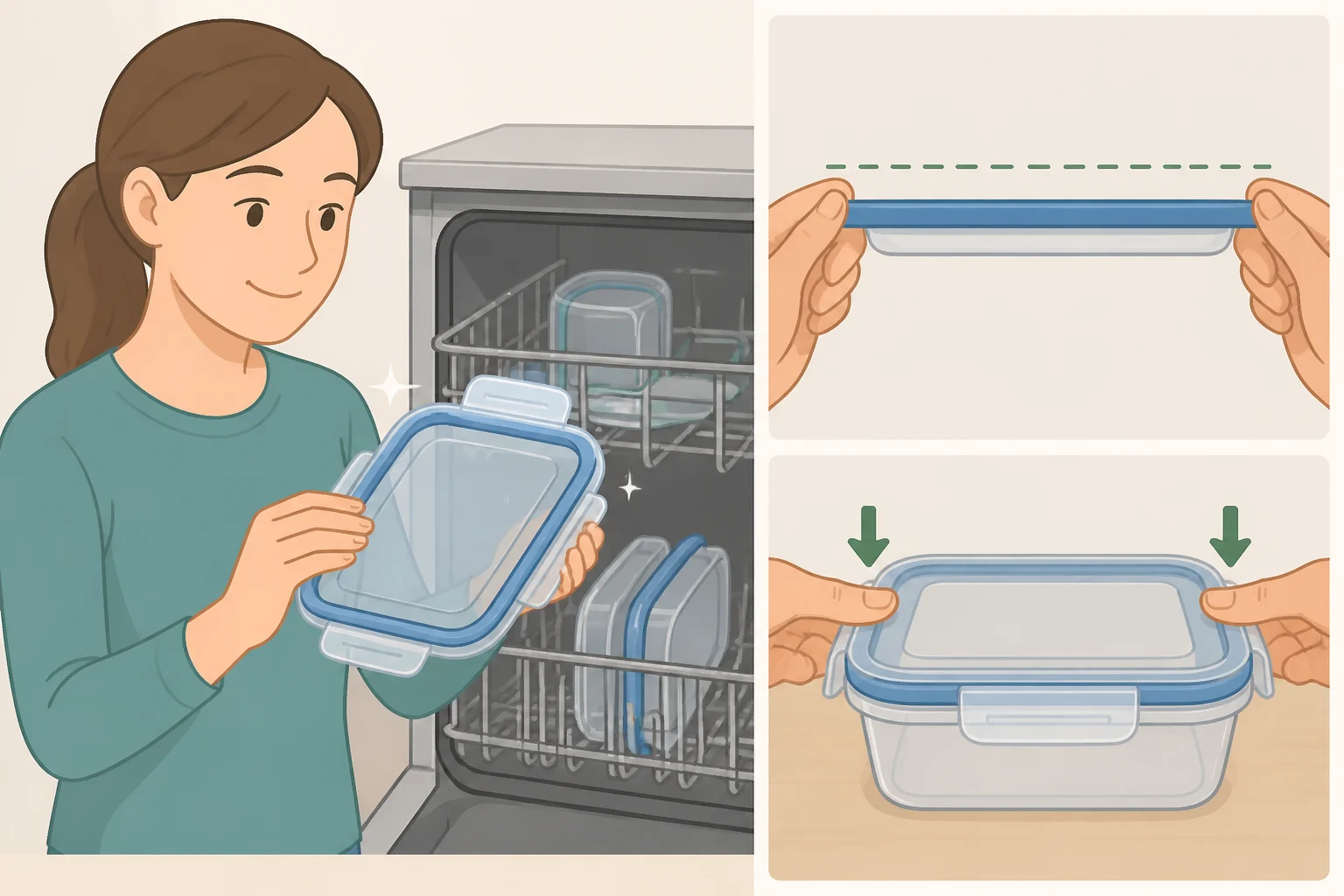
Once the cycle ends, pull the plastic pieces out and check whether each one is still flat, holds its shape, and seals the way it did before. That's not a guarantee against all future wear, just confirmation that this piece handled this particular cycle fine.
If something comes out warped despite following all of this, stop running that piece through heated dry, and hand-wash it going forward if the warping continues anyway.
For a lingering smell, wash the container well and let it air out with the lid off. If the odor persists, a baking soda and water solution may help, per Good Housekeeping. For stains that survive a normal wash, soak overnight in equal parts water and vinegar, then rinse thoroughly before using the container again, a tip Piper shared with Better Homes & Gardens.
When in doubt, hand-wash: no label, no manufacturer confirmation, or a visible crack are all reasonable grounds to skip the dishwasher for a given piece, as a conservative household habit rather than a strict manufacturer rule. If a container is already warped, no longer sealing properly, or old enough that you suspect it predates 2010, don't try to rescue it by switching to hand-washing. Replace it instead.



Comments
Be the first, drop a comment!