




Toss the measuring cap into the drum with your laundry and let the wash cycle clean it for you. It sounds clever. It saves a step. And if you've been doing it for years without obvious disaster, it's easy to assume it's fine.
This guide explains exactly why you shouldn't put the detergent cap in the washing machine, why the shortcut made more sense a generation ago, how to clean the cap properly in about ten seconds, and what to check if you've already built this into your routine. One closely related mistake gets covered at the end: using too much detergent, which follows the same faulty logic that more product or more shortcuts will mean cleaner laundry.
Why the shortcut is riskier in newer washing machines
The detergent cap trick didn't become bad advice overnight. It became bad advice when washing machine design changed. Newer washers use less water, which makes a rigid plastic cap more likely to get trapped in fabric instead of rinsing clean.
Newer washers use less water
The cap trick's internal logic depends on water volume. In a traditional deep-fill top-loader, high water levels meant the cap floated freely, sloshed around, and rinsed out with minimal contact against clothing. High-efficiency and front-load machines use significantly less water. Less water means less buoyancy, less free movement in the drum, and far more direct contact between a hard plastic cap and whatever clothes are tumbling alongside it.
According to Good Housekeeping, Carolyn Forté, former executive director of the Good Housekeeping Institute's Home Care and Cleaning Lab, says the shortcut made more sense with older high-water machines because the cap was more likely to rinse clean. In newer lower-water machines, the risk changes: the cap can get trapped in clothing, snag fabric, crack during the cycle, or leave plastic pieces behind.
One confusing detail: some detergent labels may still say the cap can be added to the wash. Treat that as product-specific packaging advice, not a blanket rule for every machine. For HE and front-load washers, the safer expert-backed move is to rinse the cap separately and follow the washer manual.
Modern washers are not passive buckets of water. Many use auto-sensing features to adjust water levels based on load size like Whirlpool, and some models can also automate detergent dispensing. A loose plastic cap is not part of that system.
Morgan LaLonde, a Whirlpool Laundry brand manager, told Better Homes & Gardens that detergent caps are rigid, non-permeable objects that do not belong in Whirlpool washers. If a cap cracks during the cycle, the broken plastic can tear fabric.
Overloading makes the risk worse
Repeated contact is the issue. Overstuffed drums create exactly those conditions: clothing packed too tightly to circulate, pressed hard against everything else in the drum including anything rigid that doesn't belong there.
Consumer Reports says a normal load typically needs about 1½ ounces of detergent, roughly the amount in a shot glass, though larger or heavily soiled loads may need more. Using too much detergent can leave residue on clothes and inside the machine, which can make laundry look dingy and contribute to odor problems.
A hard plastic cap in a properly loaded drum is already a risk. In a packed drum, it makes damage considerably more likely.
Why the washer manual matters
When a Whirlpool laundry expert says not to put a rigid, non-permeable object in the drum, the practical takeaway is simple: the detergent cap is not something the washer is designed to handle. It's not legal boilerplate. LaLonde's guidance is unambiguous: always add detergent to the designated location specified in the owner's manual, and failing to follow those instructions could result in harm to the fabrics or the machine.
Consumer Reports makes the same broader point about laundry shortcuts: before adding anything unusual to a washer, check the owner's manual and fabric-care labels because the wrong routine can damage clothes or the machine.
How to clean the cap safely
Step 1: Rinse the cap at the sink immediately after measuring
Hold the cap under warm running water and swirl it out right after you pour your detergent. Ten seconds. Set it aside to dry.
Detergent residue dissolves completely. The cap is clean. Nothing rigid goes anywhere near the drum. Forté's recommendation is simple: rinse the cap in the sink instead.
One thing to avoid: pouring detergent straight onto clothes to bypass the cap entirely. Concentrated detergent applied directly to fabric before dilution can leave residue the same problem as using too much, and not a sound workaround. The safer workaround is to measure normally, put detergent where the washer manual says it belongs, and rinse the cap separately.
Step 2: Give the cap a designated landing spot
Set a small sink caddy, a folded cloth, or a shallow dish next to the detergent bottle. Rinsed cap goes there between loads. Rinsing the cap in the sink and using a caddy to hold it are the practical fixes experts recommend.
Step 3: Check the washer for damage
Before the next load, run your hand around the inside of the drum. Look for anything hard or sharp lodged against the drum wall. On front-loaders, check the rubber door gasket as well; it is a common place for debris to collect.
If you find cracked plastic, wipe down the drum interior before washing again. Replace the cap if it's fractured; sharp edges are the actual hazard.
Step 4: Check your recent laundry
Look through the last several loads for small snags, pulls, or thin tears in fabric. Lighter knit items show this kind of damage most readily. If you find it, check whether the cap has already cracked.
Step 5: Confirm where detergent actually goes in your machine
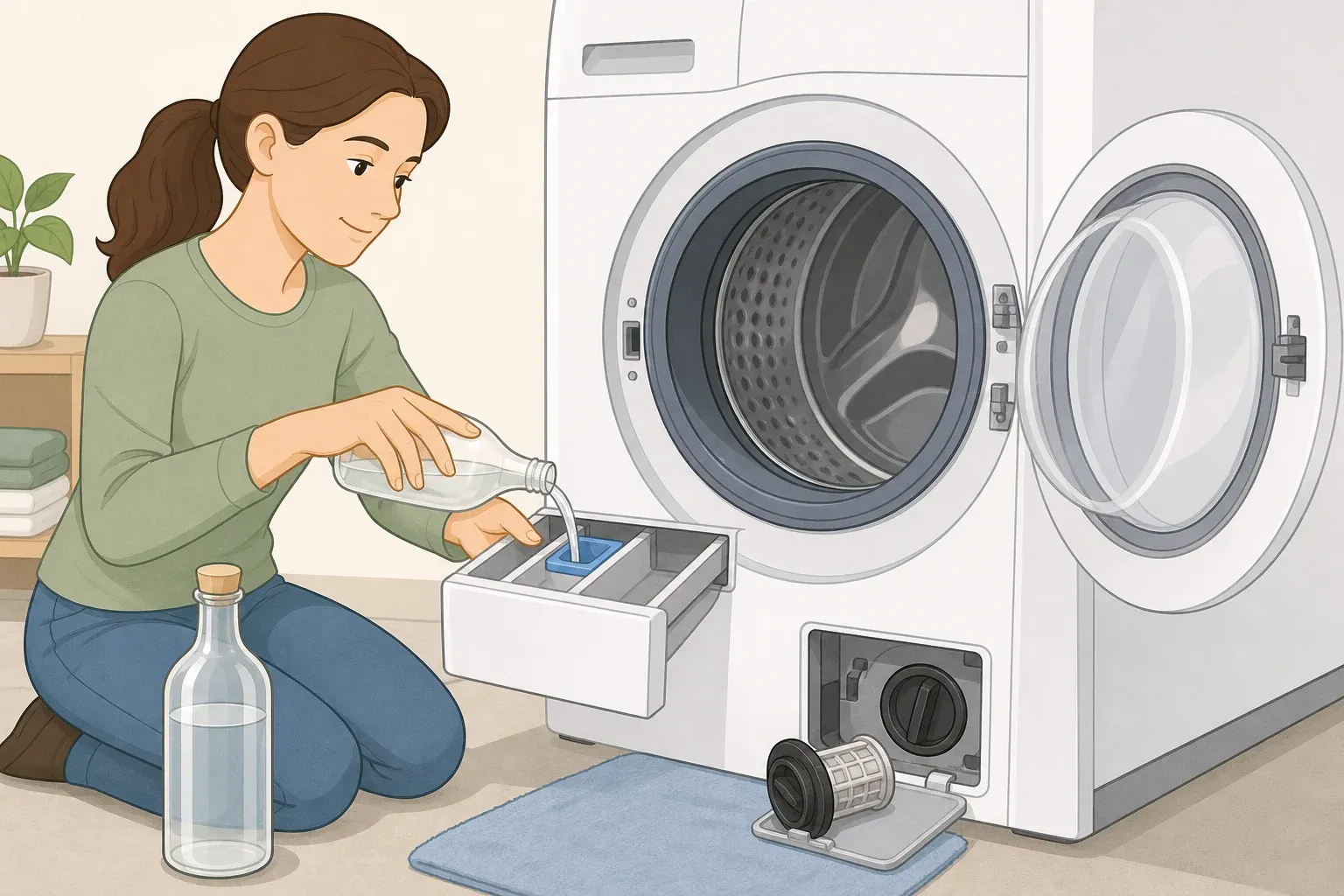
Check the owner's manual for the correct dispenser. Whether that's a drawer, the drum directly, or a different location varies by machine type and detergent form. LaLonde's instruction is clear: always add detergent to the designated location listed in the washer manual.
The related mistake: using too much detergent
The cap shortcut is partly motivated by the desire to recover every last drop of detergent from the measuring cup. That impulse assumes more product in the drum means cleaner clothes.
It doesn't.
As a practical benchmark, Consumer Reports says a normal load typically needs about 1½ ounces of detergent, roughly a shot glass, though the exact amount still depends on the detergent label, load size, soil level, and washer instructions. Using more than needed can leave residue on fabric and inside the machine, which can make clothes look dingy and contribute to odor problems.
The logic behind both mistakes is the same: doing a little more feels safer or more thorough. A modern washer is built to clean effectively with the minimum recommended amount of detergent, at specific water volumes, with specific load conditions. Pushing outside those parameters whether by dumping in extra detergent or adding an unsanctioned rigid object produces predictable results, and none of them are cleaner laundry.
What to do instead
The fix is trivial: rinse the cap at the sink, give it a spot to dry, and inspect the drum if this has been a long-standing habit.
The takeaway is straightforward: for cleaner laundry, skip DIY shortcuts and follow the washer's own guidelines.
Viral laundry advice travels fast and ages poorly. Your washer manual and detergent label should outrank TikTok.














Comments
Be the first, drop a comment!