



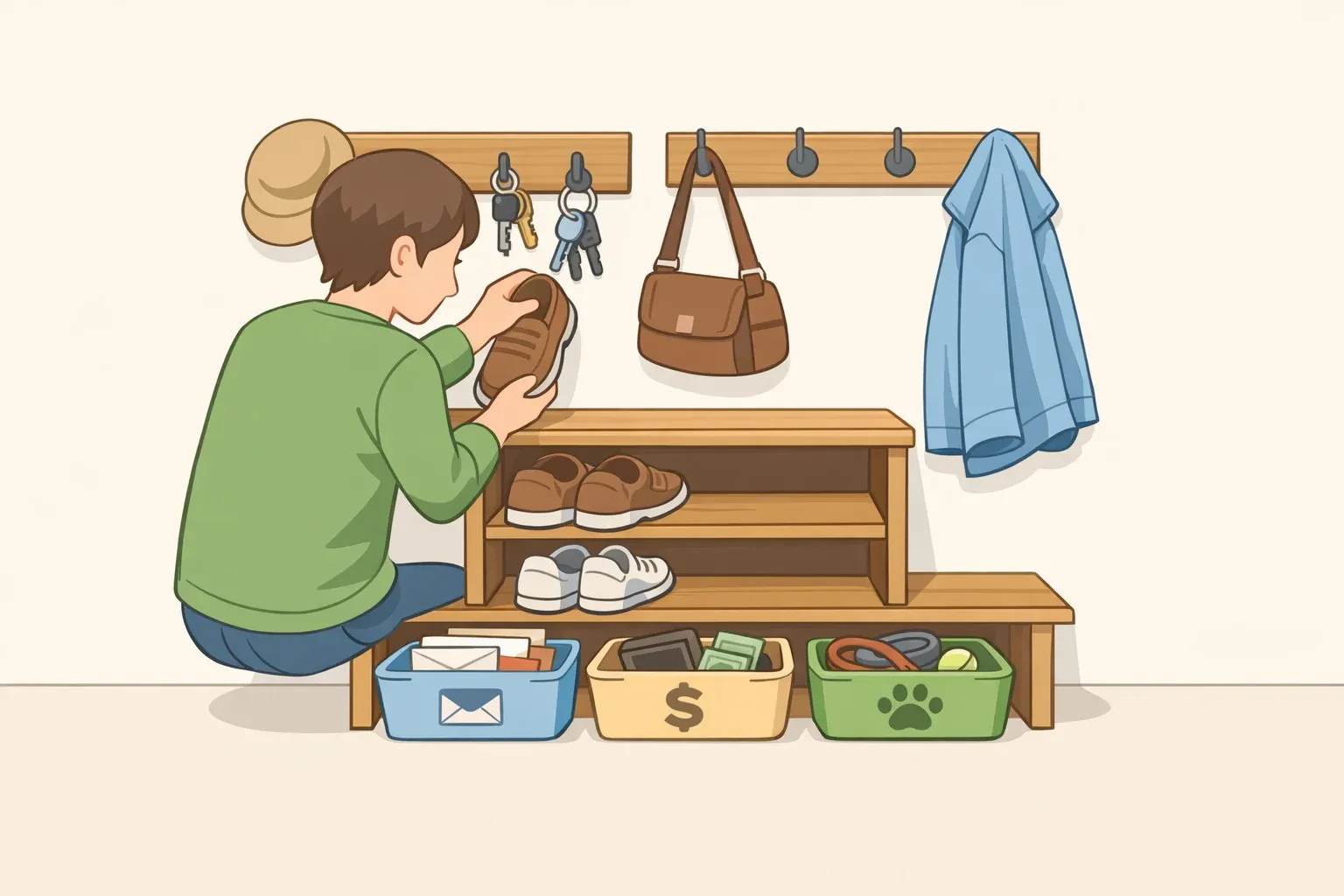
Entryway clutter usually reveals what the space is missing. Shoes pile up because they have no convenient home. Keys disappear after being dropped wherever there is room. Coats and bags land on chairs or the floor because putting them away takes one step too many.
That is why professional organizers often start with household habits rather than storage products. Palm Beach Organized recommends observing clutter hot spots, traffic patterns, and everyday routines before deciding what needs to change.
For many homes, four zones solve the biggest recurring problems: hooks for coats and bags, dedicated shoe storage, a small landing spot for daily essentials, and a place for incoming items that need attention.
Start with your everyday routine
Before buying organizers, spend a few days noticing what happens when people come home.
Where do shoes collect? Where do keys and wallets land? Do backpacks end up on the floor? Would everyone reliably open cabinets and drawers, or would hooks and open bins work better?
Professional organizer Lucy Milligan Wahl, founder of LMW Edits, similarly advises putting function ahead of appearance and being realistic about how much daily upkeep a household will maintain, according to Consumer Reports.
Once you know what needs fixing, measure the space. Check usable wall width, floor depth, door swing, and the main walking path before adding furniture or storage.
1. Install accessible hooks for coats and bags
Hooks give coats, backpacks, handbags, and other grab-and-go items an obvious destination without using much floor space.
Place them where those items naturally come off. In homes with children, add some hooks at a height they can comfortably reach so they can put away their own belongings.
Wall-mounted storage is especially useful in narrow entries. Before installation, check the manufacturer's load rating and use hardware suited to the wall and the weight the hook will carry. A decorative hook designed for a scarf may not be suitable for a heavily loaded backpack.
2. Give everyday shoes a defined space
Shoes can overwhelm an entry quickly, so decide which pairs genuinely need to stay near the door.
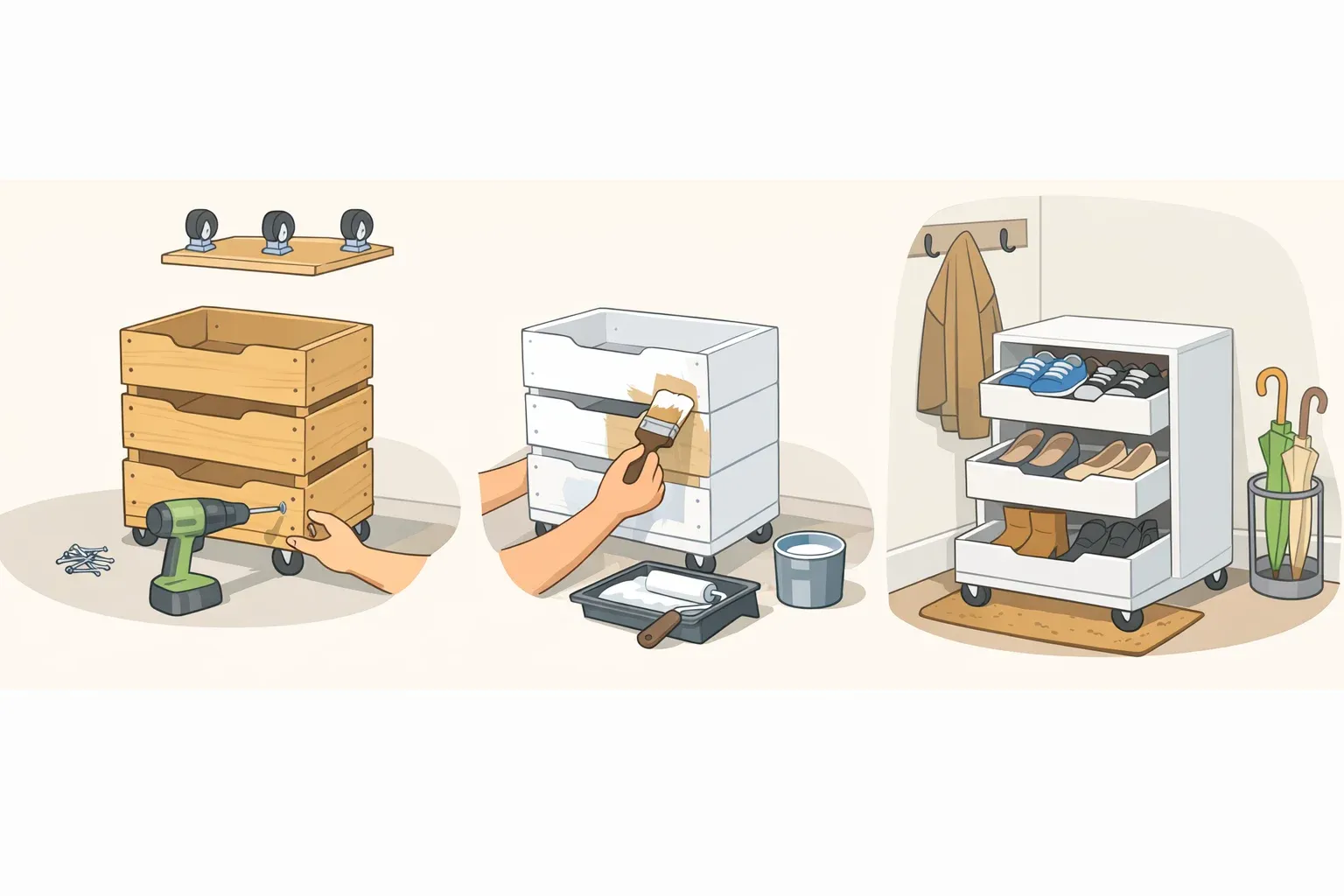
A slim rack or shallow cabinet works well in tight spaces. Where there is enough clearance, a bench with storage underneath can provide both seating and shoe storage. Open cubbies or baskets may be easier for children to use because there is nothing to open first.
Keep the capacity limited. Better Homes & Gardens recommends storing only frequently worn shoes near the entry and rotating the rest elsewhere.
In wet weather, add a boot tray or another washable surface to contain water, mud, and debris.
3. Set up one landing spot for daily essentials
Keys, wallets, sunglasses, and other small items need one predictable destination.
A shallow tray, small bowl, drawer, or narrow shelf is usually enough. Keep it only large enough for what belongs there; oversized catchalls tend to collect unrelated clutter.
Location matters, too. Keys should be convenient without sitting in easy reach or plain sight from outside. The Metropolitan Police advises keeping keys and valuables away from exterior doors, particularly where someone could reach through a letterbox or pet flap.
The easier the landing spot is to use, the more likely it will become part of the routine.
4. Create a zone for incoming items
The fourth zone should match what actually enters your home.
For some households, that means mail. Others may need space for school papers, reusable shopping bags, outgoing packages, or pet gear.
If mail is the problem, use a small tray or sorter for items that still require action. Recycle unwanted paper promptly and regularly clear anything that has already been handled.
If important mail rarely comes through your door, skip the mail station. Give that space to the category that actually creates clutter in your household.
Add only what your routine requires
Once the four main areas are working, see what problems remain before buying more.
A rainy climate may justify an umbrella stand or wet-weather storage. Families carrying sports gear, school supplies, or musical instruments may need another basket or cubby. Pet owners might benefit from one spot for leashes and walking supplies.
A freestanding hall tree or cabinet can combine several functions when built-in storage is limited. For tall furniture, follow the manufacturer's anchoring instructions. The US Consumer Product Safety Commission recommends securing top-heavy furniture to reduce tip-over hazards, especially around children.
Test the setup before adding more
Use the arrangement for about a week and watch what still goes wrong.
If a backpack keeps landing on the floor, the hook may be too high. If nobody uses a lidded basket, try an open bin. If shoes spread beyond the rack, reduce how many pairs stay by the door. If a bench crowds the walkway, replace it with something shallower.
Small adjustments often work better than another organizer.
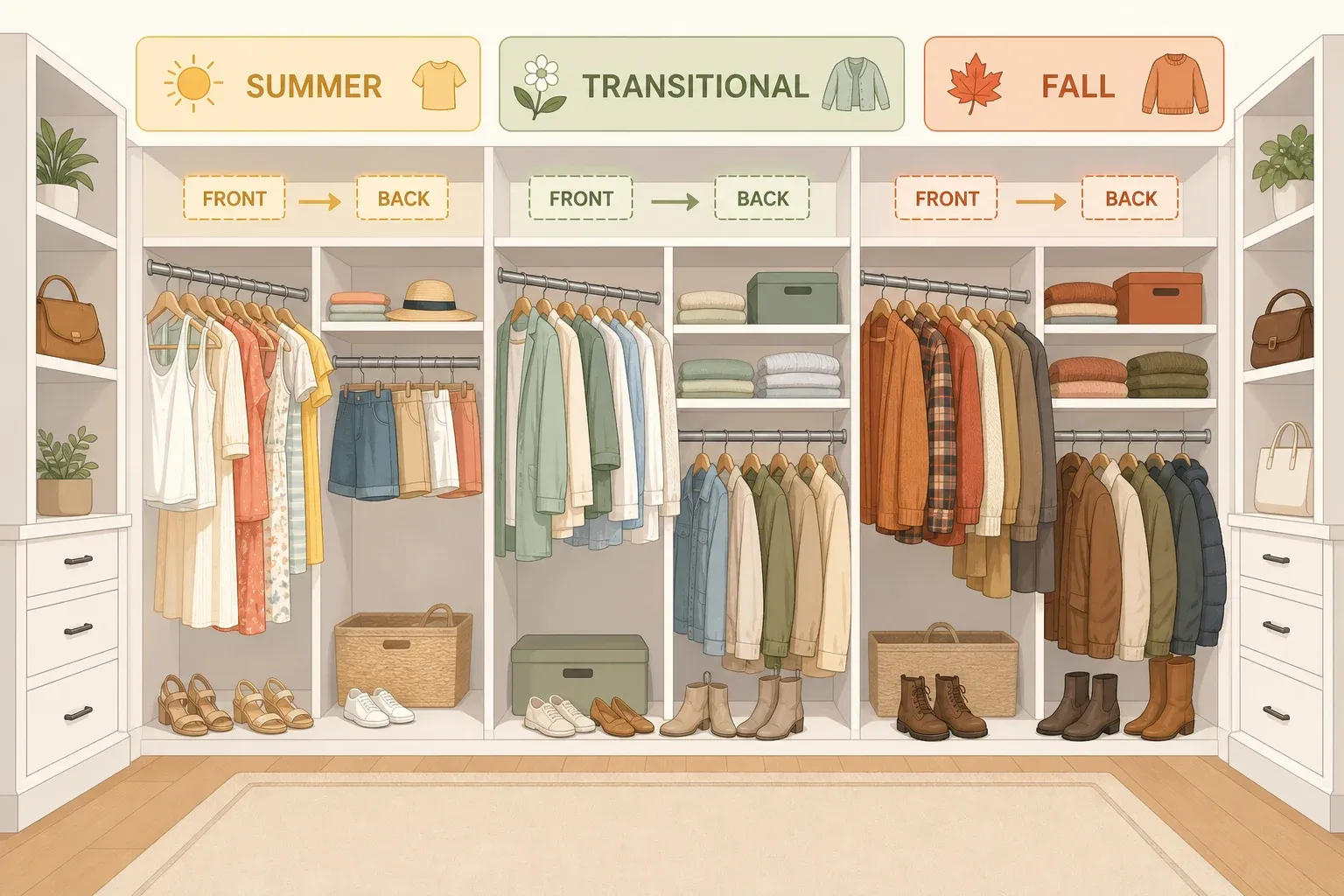
Revisit the entryway as seasons and routines change, rotating footwear, outerwear, and gear as needed.
An organized entryway does not need to look perfectly staged. It only needs to make coming and going easier. When the things you use every day have an obvious place to land, clutter has far fewer chances to spread through the rest of the home.

Comments
Be the first, drop a comment!