



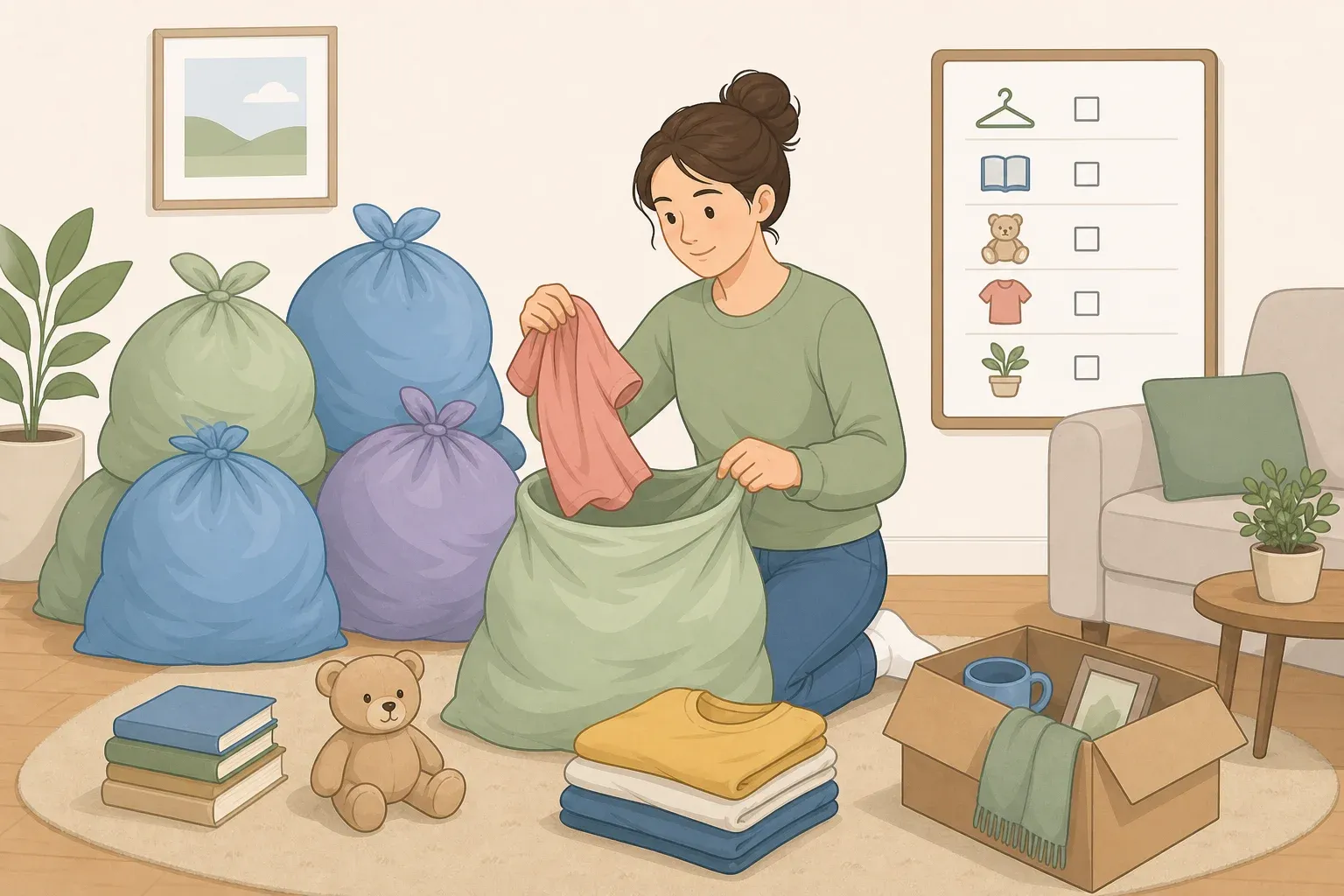
The 30 Bags in 30 Days decluttering challenge works on one simple rule: pull one full bag of unwanted stuff out of the house every day, or close to it, until 30 bags are gone. No app, no color-coded bin system, no special skill. You need a bag, a small area to sort, and a decision rule for what stays.
Mary Montague of The Home Sale Concierge calls the challenge viral, and her firm counts itself among the fans. This guide focuses on running it well rather than tracing where it started, and breaks the 30 bags into a day-by-day plan, so the challenge doesn't turn into 30 days of standing in a closet with no idea where to begin.
Filling 30 bags is the doable part. A self-directed challenge like this is easier to abandon, which is exactly why the plan below builds in catch-up days instead of demanding a perfect streak. What tends to unravel afterward is the shopping habits and emotional attachment to belongings that quietly refill the shelves once the bags are gone.
A 2024 pilot trial published in Current Psychology tested a separate three-month program built around exactly those habits and found it outperformed a waitlist group on impulsive buying, hoarding tendencies, and clutter-related impairment. That trial didn't test this bag challenge, but its findings are useful for the maintenance phase covered later in this guide.
This challenge is beginner-friendly and needs no special tools. It suits ordinary household clutter, not hoarding disorder, major grief-related attachment to belongings, or a household where someone strongly objects to what's leaving. Those situations call for a slower conversation or professional support, not a 30-day countdown.
What you'll need before day one
Gather this short list before starting so day one doesn't stall on logistics:
Bags or boxes. Standard kitchen-size trash bags work, or comparable boxes. Count a bag as filled once it's at least half full. Bulky items like a lamp or a stack of towels can count as one bag equivalent once boxed and sealed, so a technicality never becomes an excuse to skip a day.
Four exit labels. Sticky notes, masking tape, or a marker to mark bags as donate, recycle, sell, or trash as they get sealed.
A tracking sheet. A notebook page or spreadsheet with five columns: date, category, number of bags, destination, drop-off date. A written log confirming a bag actually left the house matters more here than before-and-after photos.
A disposal check, done in advance. Look up your donation center's accepted categories and your area's rules for battery, electronics, and chemical drop-off before you start bagging. Confirming this upfront means a full bag doesn't get rejected at the counter three weeks in.
A household agreement. Only declutter personal belongings, or items a housemate, partner, or family member has explicitly agreed can go. Settling this before day one keeps the challenge from turning into a fight over someone else's stuff.
The traditional version of this challenge runs 30 consecutive days, one bag per day. This guide uses a flexible version instead: 30 bags spread across up to 45 calendar days, so a missed day doesn't force a restart.
How to do the 30 Bags in 30 Days challenge: a day-by-day plan
Instead of picking a random room each morning, work through categories that move from easy decisions to harder ones. Starting with low-stakes items builds momentum before anything sentimental shows up.
Days 1–2 — 2 bags: Junk mail and duplicate paperwork
Days 3–4 — 2 bags: Old manuals, receipts, and office supplies
Days 5–7 — 3 bags: Unused kitchen tools and duplicates
Days 8–15 — 8 bags: Pantry, dishes, food-storage containers, and small appliances
Days 16–23 — 8 bags: Clothing, linens, and shoes
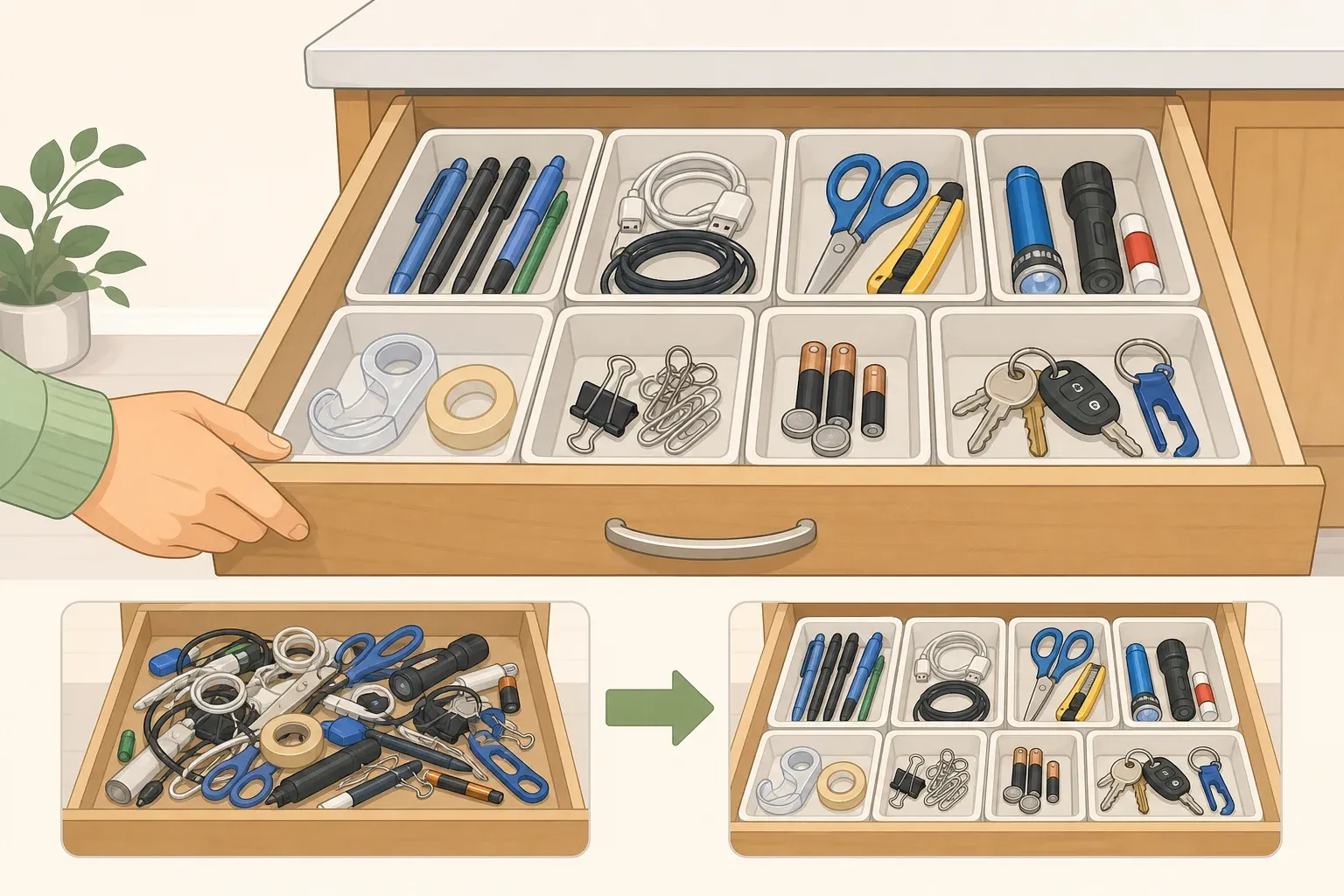
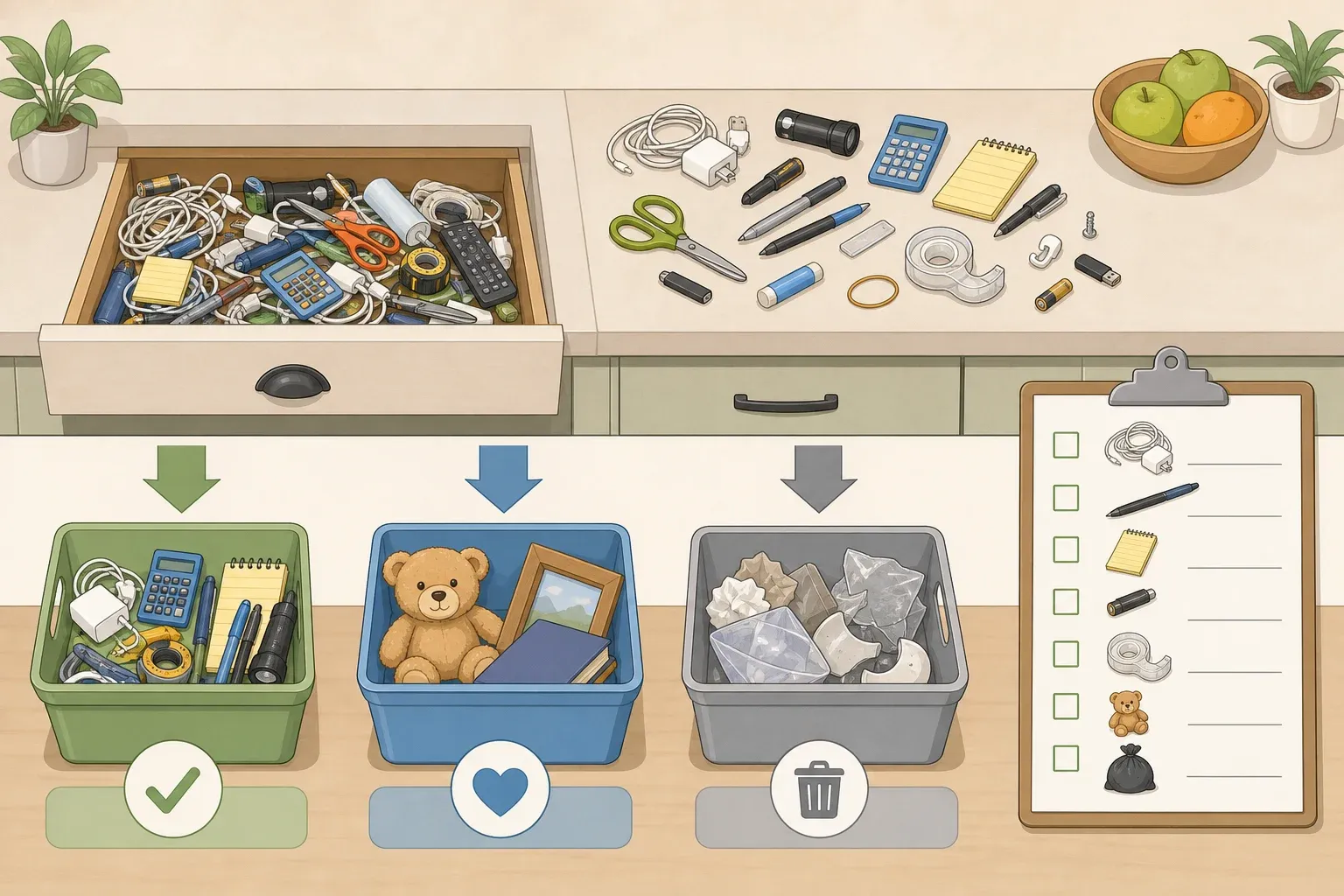
Days 24–27 — 4 bags: Bathroom and junk drawers
Days 28–30 — 3 bags: Garage, entryway, catch-up, and drop-offs
For paperwork days, shred anything with account numbers, medical details, or other personal information before it leaves the house. Skip records you might still need, tax documents, deeds, and ID paperwork, and check your own retention timeline before deciding something's safe to let go.
Once a day's zone is set, repeat this process:
Pick the zone for that day and set a timer for 20 to 30 minutes. A timer keeps a single drawer from turning into a three-hour project.
Sort everything in the zone into keep or gone, using the test in the next section. Don't stop to deep-clean or reorganize what stays; that's a separate project for another day.
Bag or box the gone pile immediately and seal it shut. Tag it with one of the four exit labels before moving on.
Log the bag on the tracking sheet: today's date, the category, the bag count, and where it's headed.
Move the sealed bag out of the living space, into the garage, trunk, or porch. Getting it out of the room reduces the temptation to reopen it and rescue items one at a time.
For pantry days, don't taste anything to judge whether it's still safe. A passed best-by date is a quality issue, not automatically a safety one, but anything with an off smell, visible mold, or a bulging package should be discarded without a second look.
By the end of each week, the tracking sheet should show several bags logged with a destination noted, even if none have actually been dropped off yet. Sorted and out of daily living space counts as progress; the drop-off can catch up over the weekend.
Sorting decisions: what stays, what goes, and where each bag ends up
Apply one keep-or-go test to every item: has it gone unused for the last 12 months, is it a duplicate of something already in regular use, is it broken beyond a realistic repair, or is it a "someday" purchase still sitting in its original packaging? A single yes is reason enough to bag it.
Hesitation over ordinary items, an unworn shirt, a gadget still in the box, is normal, not a sign the challenge is being done wrong. This kind of hesitation around belongings is common enough to study directly, a point covered in more detail below.
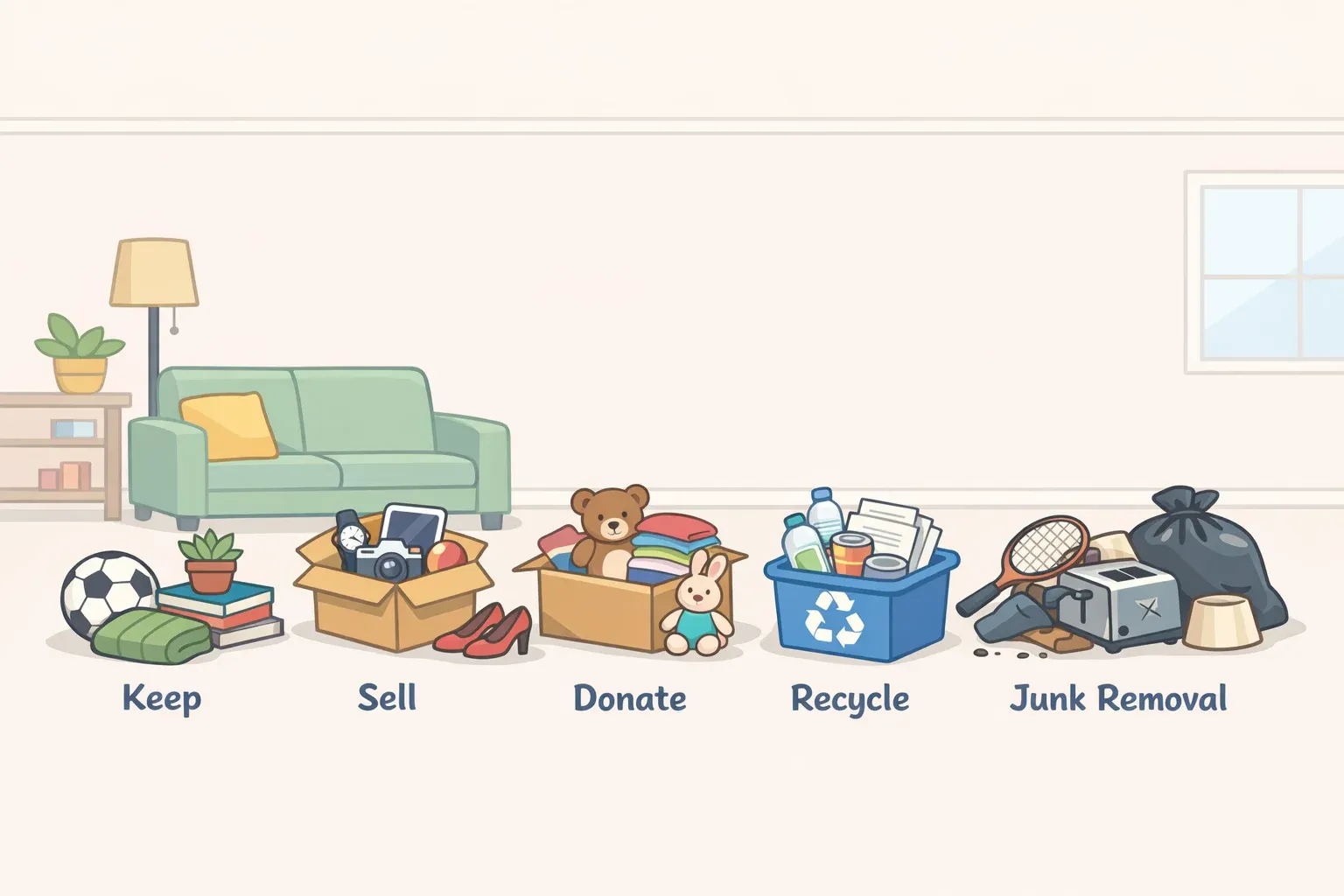
Sort into four exits, not just a trash pile:
Donate items in usable condition. Montague frames donating, recycling, and rehoming as a way to keep decluttering from shifting usable goods straight into a landfill.
Recycle paper and any materials your local center accepts. Rules on textiles and electronics vary by location, so check before you assume a bag qualifies.
Sell only items with genuine resale value. Cap this pile with a two-week listing window; anything unsold after that gets donated instead. Otherwise, the "sell" pile just relocates clutter to the porch or the trunk of a car.
Trash anything broken, stained, or otherwise unusable. Batteries, chemicals, and most electronics don't belong in regular household trash; route those through the hazardous-waste or e-waste drop-off you checked before day one.
Montague also points to old paperwork, unused kitchenware, and worn linens as categories that fill space without adding much to daily life, which lines up with the early days on the table above.
Making the habit stick after day 30
Researchers randomized 96 participants recruited through social media ads, giving one group access to the 24-video program and the other a waitlist.
At the three-month mark, the program group reported significantly less impulsive buying, lower spending, less secure and insecure attachment to belongings, and less emotion dysregulation than the waitlist group. Treat what follows as habits informed by that research, not results this bag challenge itself has been shown to produce:
A 24-hour pause before non-essential purchases. Waiting a day interrupts the same impulsive-buying pattern the trial targeted.
A one-in, one-out rule. For every new item that comes into the house, one comparable item leaves.
Of the 45 participants assigned to the program, 34 actually logged in and started it. At the three-month follow-up, 66 of the 89 participants still in the study, about 74%, completed the assessment, and on average, people finished roughly 2 of the 5 modules despite starting nearly 3. Overall program satisfaction was still rated moderately high. Falling short of a perfect plan is typical, not a sign the effort failed.
One more habit, not tested in that trial but a practical follow-up to this specific challenge: after finishing all 30 bags, fill one "mini bag" every month. Catching new clutter early keeps it from building back into a 30-bag backlog.
Know the stop point. If sorting decisions repeatedly cause real distress, or a household member pushes back hard on items everyone previously agreed could go, pause the challenge and treat it as a conversation instead of a countdown. If attachment to belongings feels unmanageable rather than occasionally hard, that's a reason to bring in a professional organizer or therapist rather than push through the remaining bags alone.
Finish line: what a completed 30-day decluttering challenge looks like
A finished challenge looks like a tracking sheet with 30 bags logged, each marked with a destination and an actual drop-off date, not 30 bags stacked in the garage waiting on a decision. For this guide, use a one-week deadline: clear sold or donated bags within a week of sealing them so the garage doesn't become its own storage problem.
In the final days, schedule the actual drop-offs rather than letting them sit. Shred any sensitive paperwork that's been waiting in a bag, pull sale items by their two-week deadline and donate whatever didn't sell, and write down anything still unresolved — an item nobody's decided on, a load that needs a special e-waste run — so it doesn't quietly disappear from the list.
If a day or a week gets missed, don't restart the count. Continue from wherever the table left off and finish when 30 bags have left the house. Keep the tracking sheet even after the challenge ends; it's the easiest way to confirm the mini-bag habit is actually catching new clutter each month instead of just feeling like it is.
Don't overthink bag size, the exact order of days, or hitting precisely 30 on the nose. What matters is a lighter home, items that went to donation or recycling instead of a landfill, and a maintenance habit in place so the space that just got cleared doesn't quietly fill back up.





Comments
Be the first, drop a comment!