



A machine that runs hot water and detergent through itself every day doesn't clean itself. The filter collects food particles. The rubber door gasket stays warm and damp after every cycle. Soap scum builds up on the interior walls and gives debris something to cling to. Left unattended, the result is a machine that smells, cleans poorly, and in neglected cases can harbor mold and bacteria inside the tub.
This guide walks through a complete dishwasher cleaning routine: filter, spray arm, gasket, drain area, and interior walls in the order that makes practical sense. By the end, you'll know exactly what to clean, how often to clean a dishwasher, and what to check if the smells persist after doing everything right.
What you'll need: A soft toothbrush, a sponge or microfiber cloth, dish soap, and a citric-acid-based dishwasher cleaner such as Affresh or Finish. White vinegar is a backup option if your machine lacks a self-cleaning cycle.
A few things worth knowing before you start:
The five main sources of dishwasher odors are the filter, drain, interior walls, door frame, and gasket seal, all reachable with basic tools
Manual-clean filters are common on newer machines; they run quieter than self-cleaning models but trap food rather than grinding it away, which means they need regular hand-cleaning
Clogged spray arms reduce cleaning performance; in the worst cases, neglect can allow mold and bacteria to take hold inside the tub
The parts that need cleaning and why
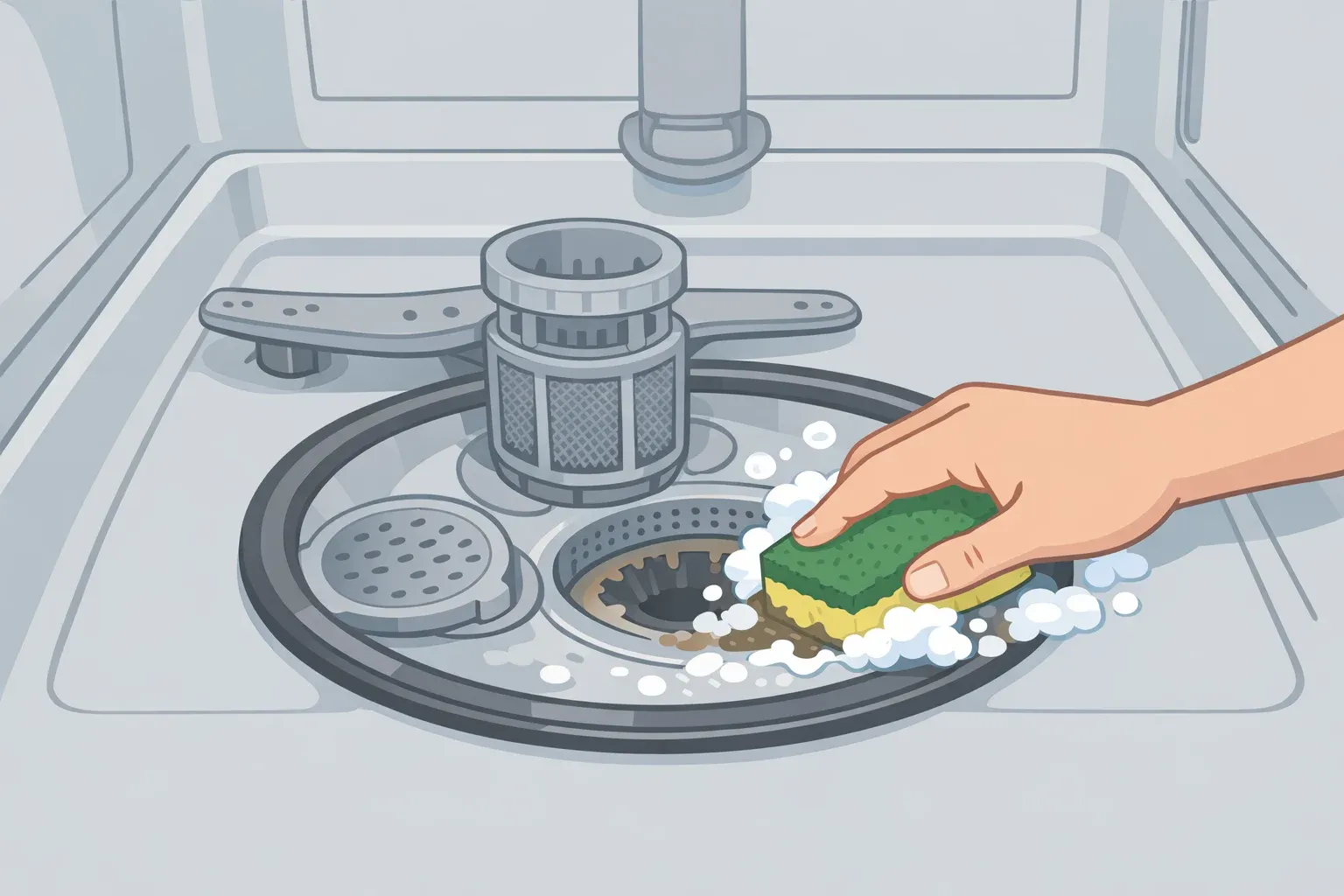
The filter sits below the bottom spray arm, usually a center cylinder that unscrews to release a mesh screen. This is the most commonly overlooked part and, according to Larry Ciufo, who oversees dishwasher testing at Consumer Reports, the most common cause of persistent foul smells. Food that lands here doesn't rinse away; it sits and decomposes.
The door gasket and drain seal: The rubber seal around the door stays warm and moist after every cycle ideal conditions for mold and mildew. Lindsay Jones, integrated brand manager at Maytag, notes that food bits collect along the door edge and frame in spots most people miss, and that buildup can prevent the door from sealing correctly.
The spray arm and interior walls: Clogged spray arm holes reduce cleaning effectiveness directly. Soap scum on the interior walls acts as a trap for food particles that would otherwise rinse out; over time, that accumulation produces its own odor.
How to clean a dishwasher: the full routine
Work through these steps in order.
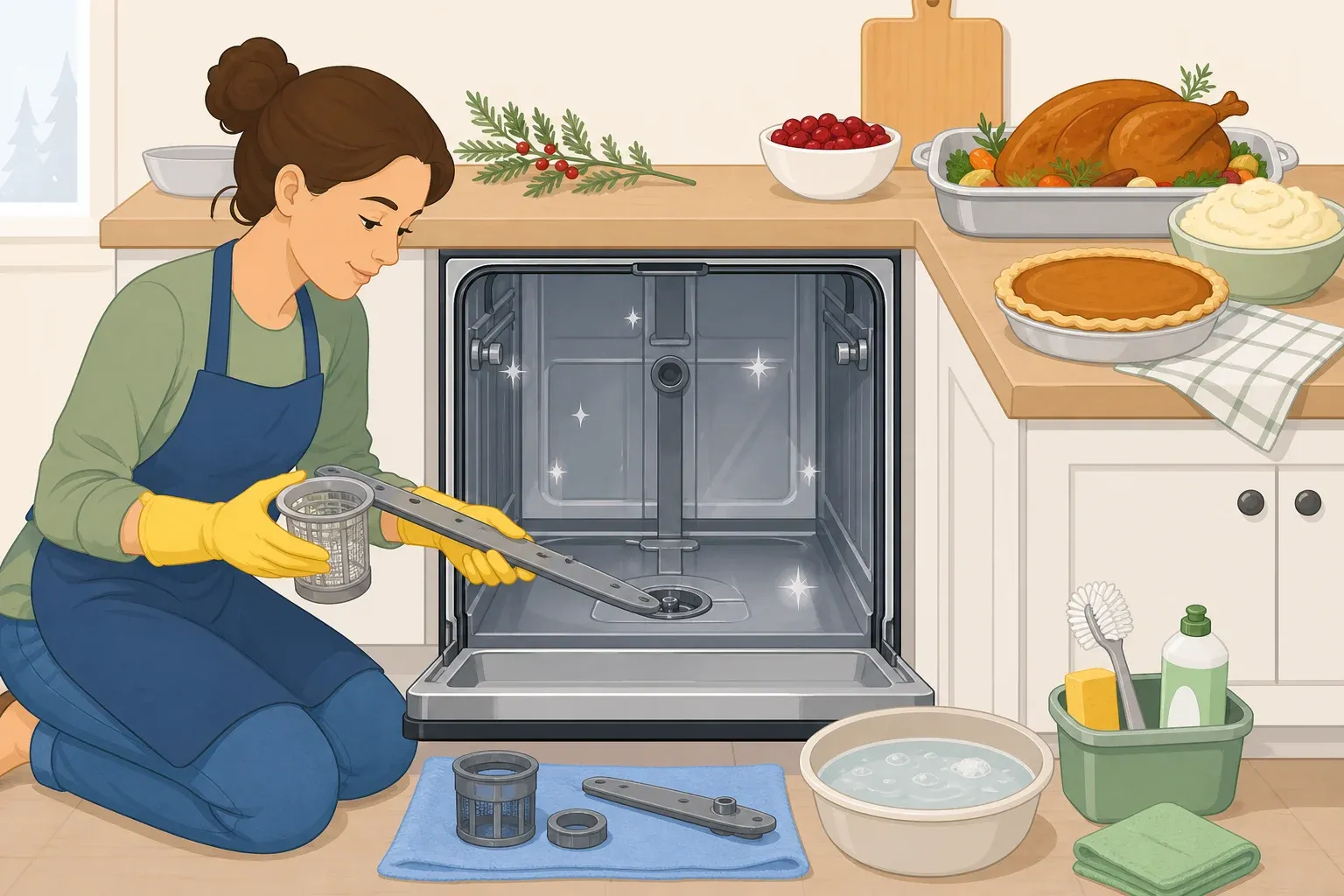
Step 1: Pull out the bottom rack and remove the filter.
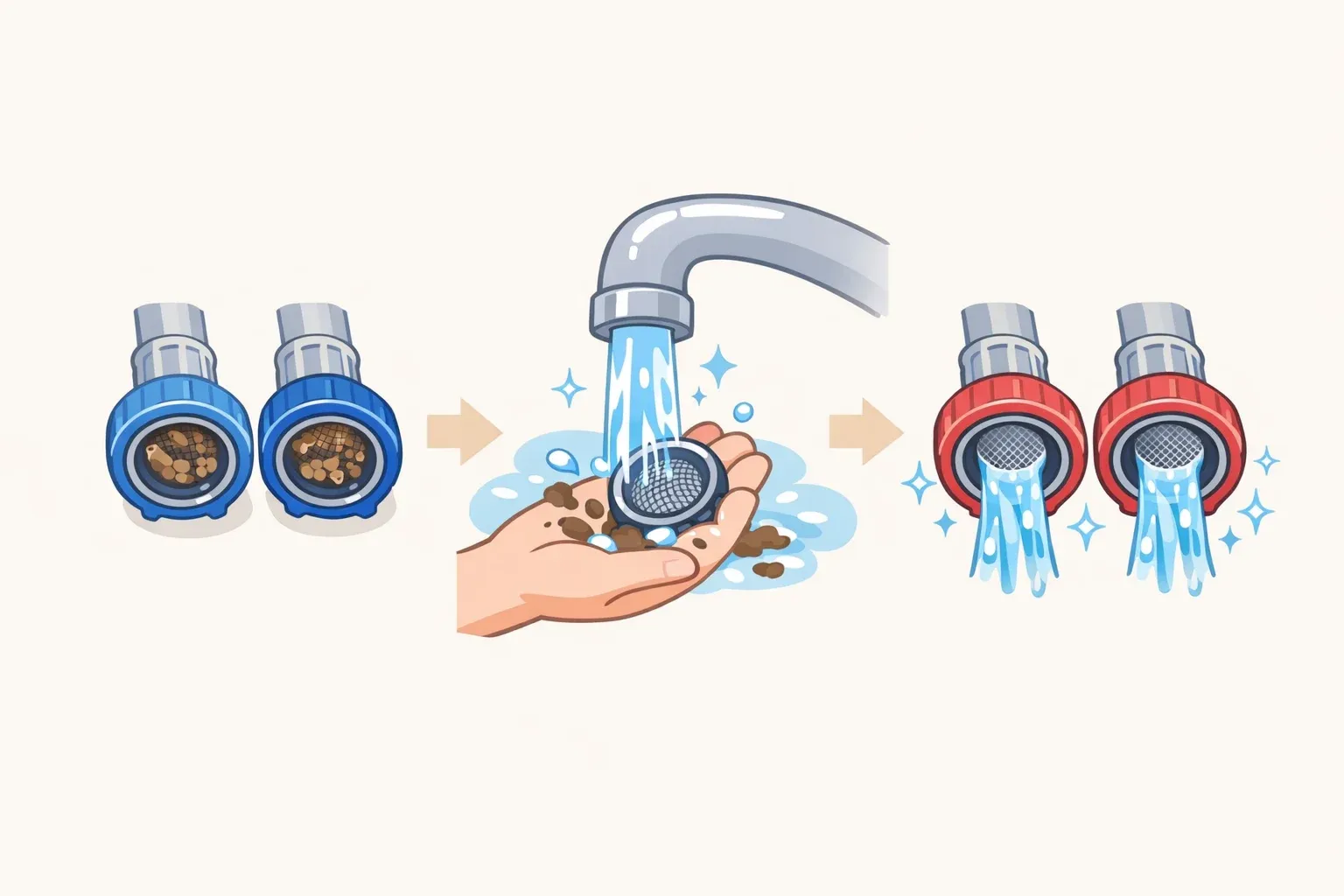
Twist the center cylinder counterclockwise and lift out the mesh filter assembly. It typically separates into two or three interlocking pieces. Rinse each part under hot running water. If residue is stuck, soak in warm soapy water for a few minutes, then scrub the mesh screen with a soft toothbrush to clear grease or trapped particles from the crevices. Rinse clean. Check where the filter sits in the tub and wipe out any debris from that cavity with a damp cloth before reinstalling.
⚠️ Reassemble and lock the filter before running any cycle. Operating without a properly secured filter can cause damage and may void your warranty.
Step 2: How to clean a dishwasher filter that's heavily soiled.
If a quick rinse doesn't shift the buildup, submerge the filter pieces in warm soapy water and let them soak for five to ten minutes before scrubbing. The toothbrush does the real work here; run it along the mesh in short strokes, paying attention to the frame edges where grease collects. Once water runs evenly through the mesh, it's clean. Reinstall and move on.
Step 3: Remove and rinse the spray arm.
The bottom spray arm usually lifts straight off its base with a gentle upward pull. Rinse it under the faucet and inspect each water hole. Use a toothpick or wooden skewer to clear any blockages. Some arms have an extra hole on the underside designed to direct water into the filter; check that one too. Reinstall once clear.
Step 4: Wipe the door gasket and frame.
Use a soft toothbrush dipped in warm soapy water to work along the rubber gasket, getting into the folds where mold and mildew settle. Then wipe the flat door frame and lower door edge with a damp cloth; food bits collect there and are easy to miss. Finish by drying the gasket with a clean, dry cloth. Leaving it wet allows the same mildew problem to return within days, per Consumer Reports.
Step 5: Wipe down the interior walls.
Run a damp sponge or microfiber cloth along the interior walls, including the sides and the area around the filter well at the bottom. This removes the soap scum layer that traps food particles against the surface. Marty Olson, an engineer at LG Home Solutions Quality, recommends this as part of regular upkeep, cited in Consumer Reports.
Step 6: Run a cleaning cycle.
With the machine empty, run a self-cleaning or sanitize cycle if your machine has one. Add a citric-acid-based dishwasher cleaner to the detergent dispenser and follow the product's label instructions; dosing varies by brand and formulation. Consumer Reports recommends citric-acid cleaners as the primary tool for removing mineral deposits, discoloration, and residual odor.
If your machine has no self-cleaning cycle, place a dishwasher-safe bowl with one cup of white vinegar on the top rack and run the hottest available cycle. Vinegar works here as a backup freshener, not a replacement for the full routine.
Step 7: Crack the door when the cycle is done.
Leave the door slightly ajar after any cycle finishes cleaning or regular wash. This lets moisture escape and slows bacterial growth inside the tub. The EPA's guidance on mold prevention holds that wet surfaces should dry within 24 to 48 hours. Cracking the door is the simplest way to stay inside that window.
How often to clean a dishwasher: a practical schedule
This routine doesn't need to happen all at once every time. The breakdown below is calibrated for a household running the machine daily; use it less often, and the deeper tasks can scale back accordingly.
After every load: Remove any visible food debris from the bottom of the tub and the filter well. Don't let dirty dishes sit in a closed machine longer than necessary; warm, undrained food residue is one of the most reliable causes of odors, and the problem compounds quickly in a sealed space. If a full cycle won't run soon, use a rinse-only cycle or quickly rinse dishes at the sink. Scraping large food pieces off plates before loading also reduces how much reaches the filter and drain.
Weekly: Wipe the door gasket, door edges, and frame. Rinse the filter under hot water and inspect it.
Monthly: Full filter cleaning with the toothbrush, spray arm check, interior wall wipe-down, and an empty cleaning cycle with a citric-acid-based cleaner. Monthly maintenance is the right baseline for most machines.
Hard-water note: Mineral deposits accelerate buildup throughout the machine. If your home has hard water, run citric-acid cleaning cycles more frequently. Machines with built-in water-softening systems require dishwasher-specific salt, not table salt, to function correctly.
How to get rid of dishwasher smells that persist after a full clean
Completed the full routine and the machine still smells? The type of smell usually points directly to the cause.
Musty or sour smell: mold or moisture issue. Inspect the gasket carefully; mold often hides in the folds. If mold is visible, wipe it with a solution of 1/8 cup bleach to 1 gallon of water, then run an empty cycle without detergent.
Do not use this on a stainless steel interior — bleach can damage the finish. For stainless machines, run a sanitize cycle with a citric-acid cleaner instead. If mold keeps returning despite regular cleaning, the machine may not be reaching a high enough operating temperature. That's a service call, not a cleaning problem.
⚠️ Never mix bleach and vinegar. The combination can produce chlorine gas. If vinegar has been used recently, run a plain rinse cycle before attempting any bleach treatment.
Sewer-like smell: plumbing backflow. A blocked drain hose or air gap can send odors from the plumbing back into the machine, even one that's been thoroughly cleaned. This is a plumbing issue, not a cleaning one. Inspecting and clearing the drain hose connection or air gap usually resolves it; if not, a plumber is the next step.
Persistent odor after a full clean: temperature or service issue. When the filter is clean, the gasket is dry, and the drain hose is clear, but the smell remains, the machine itself may be the problem. A unit that isn't reaching adequate operating temperatures can't fully eliminate bacterial growth. Schedule a service call to have the heating element checked.
Three habits that do most of the work
Most dishwasher smell problems trace back to three neglected habits: the filter goes uncleaned, the gasket stays wet, and dirty dishes sit too long before a cycle runs. Fix those three consistently, and the monthly deep clean becomes routine maintenance rather than remediation.
One practical next step: look up your model in the owner's manual or on the manufacturer's website to confirm whether it has a manual or self-cleaning filter. The cleaning steps are the same either way, but knowing which type you have tells you exactly how urgently the monthly clean matters and whether that filter has been quietly collecting debris since the day the machine was installed.








Comments
Be the first, drop a comment!