



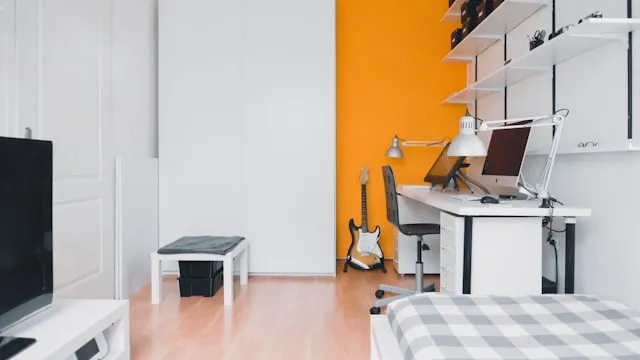
Learning how to clean an off-campus apartment before moving in starts before you touch a single surface: with a documented walkthrough of the unit exactly as you found it. That paperwork can help you separate damage that already existed from anything that happens during your lease, which matters if a deposit dispute comes up at move-out.
If your landlord doesn't hand you a move-in checklist, build your own. Inspect every room and the property's exterior, including pipes and any visible wiring. La Salle's tenant-rights guidance lists a habitable unit as one with working heat, hot and cold running water, secure locks and windows, and no roach or rodent infestation, though these standards vary by state and lease, so check your own local housing rules too.
This guide covers four things to handle in your first days in a new off-campus apartment, whether you're moving in solo or figuring out how to clean a student apartment with a couple of roommates: document and test the unit before cleaning, work through an off-campus apartment cleaning checklist in the right order, know when a problem stops being a cleaning job and becomes something to put in writing to your landlord, and set up a system for keeping the place clean after move-in weekend.
It's beginner-friendly with basic supplies. How long it takes depends on the size of the unit and how much cleaning it actually needs, and a dirty oven, water stains, or pest droppings are a sign to pause and document rather than push through with more scrubbing.
What you'll need
A landlord-provided or self-made apartment condition sheet, plus a phone camera
All-purpose cleaner or dish soap and water
A bathroom-specific cleaner
A nonabrasive sponge and microfiber cloths (skip abrasive pads on stainless steel, glass stovetops, or painted cabinets; they can scratch surfaces that later get mistaken for tenant damage)
A broom or vacuum, plus a mop
Rubber gloves and trash bags
Optional: renters insurance, which the University of Colorado Boulder notes can run as low as $10 a month and typically covers belongings a landlord's policy won't
Document and test before you clean
Walk through every room before you unpack anything, using a landlord-provided checklist if you have one or building your own. The University of Colorado Boulder's move-in guidance recommends completing a written apartment condition sheet and photographing the unit before moving in. A simple way to organize that sheet: use five columns: room, item, condition, photo number, and repair requested. Each issue gets one line and a photo saved under the same number.
For each item, it helps to take one wide shot of the room and one close-up of the specific damage. That's a practical habit rather than something the source specifies, but do it before anything gets touched. Once a stain or scuff gets wiped away, it's a lot harder to prove it was there when you moved in.
If you're getting renters insurance, record a walkthrough video of the same space, opening every closet, drawer, and cabinet, since a landlord's insurance typically doesn't cover a tenant's personal belongings.
In the same pass, check the fixtures and appliances the household will rely on daily. Ball State's off-campus housing guidance recommends testing the refrigerator, range, water heater, dishwasher, washer and dryer, and microwave, along with the lights, faucets, shower, toilet, and windows and screens.
Do this without assuming more than a quick check can actually tell you:
Turn on each appliance with its normal controls, and note any unusual noise, smell, or visible damage. A refrigerator takes hours to cool down, so confirm it powers on and the compressor runs rather than judging it by touch.
Check faucets for steady flow, look under sinks for leaks, flush the toilet, and run the water long enough to tell whether it turns hot.
Test lights and ordinary appliance dials only. Don't open an electrical panel or touch gas lines or the water heater itself; that's a landlord or licensed technician's job.
If a utility is shut off or something can't be safely tested, write "not tested" on your condition sheet instead of guessing.
Confirm smoke detectors, locks, and any security system are working before you unpack a single box.
Anything broken or damaged gets photographed and logged on your condition sheet before cleaning starts. Ask your landlord about the maintenance-request process and typical response time while you're at it, so there's a record if repairs stall.
Put one person in charge of saving every photo, video, and the condition sheet into a single shared folder the whole household can reach, not four separate camera rolls.
Off-campus apartment cleaning checklist: clean in this order
Once everything is documented, clean top to bottom and dry to wet in every room: shelves and cabinet interiors before counters, counters before floors, dusting before wiping, sweeping or vacuuming before mopping. Open windows for airflow if your unit allows it, and stick to one cleaning product at a time. Mixing products, especially bleach with ammonia or other chemicals, produces toxic vapors.
Kitchen. Wipe fridge shelves and drawers dry before storing food, degrease the stovetop with a soft cloth, and check inside every cabinet and drawer before lining shelves. Photograph any residue, stains, or pest droppings before you clean them up.
Bathroom. Clean the toilet bowl, seat, and base, scrub the shower or tub, and wipe the mirror and fixtures until no soap scum or grime is left behind.
Bedrooms and living areas. Dust surfaces and windowsills, wipe down closet interiors, and vacuum or sweep floors. This covers hard surfaces only. For heavily soiled carpet or upholstery, check the lease and ask the landlord before renting equipment or paying for cleaning yourself.
Entryway and windows. Wipe doorknobs and light switches, sweep the entry floor, and confirm windows still open, close, and lock the way they did during your first walkthrough.
Overlooked spots. Check inside the oven, the range hood filter, under sinks, baseboards, closet floors, window tracks, and behind any appliance you can move safely. These areas often carry old grease or dust from a previous tenant, and they're much easier to reach before boxes and furniture go in front of them.
Final pass. Check for peeling paint or damaged windowsills. La Salle's tenant-rights guidance lists walls and woodwork without peeling paint as part of a habitable unit, so peeling paint is generally something to report to your landlord rather than paint over yourself. Standards like this vary by state and lease, so confirm what your own lease and local housing agency require.
If the unit was left heavily dirty, cluttered, or with belongings the previous tenant abandoned, photograph the condition before you touch anything and check your lease for move-in cleanliness terms. Some landlords cover a cleaning between tenants, so don't assume a deep clean is automatically your expense. If you decide a professional cleaning is worth paying for yourself, confirm with your landlord first.
When you're done, you should see no visible grime or dust in storage areas, appliances wiped dry inside, and floors swept and mopped. Recheck every fixture from your first walkthrough: lights, faucets, locks, windows, to confirm nothing changed during cleaning.
When to stop cleaning and call your landlord
Some things are normal cleaning: dust, food residue, soap scum, a greasy stovetop, cluttered cabinets, light dust in bedrooms and closets. Handle those yourself with the checklist above.
Some things get reported in writing while you keep living there. La Salle's tenant-rights guidance lists working drains and paint free of peeling as part of a habitable unit, so a slow drain or minor cosmetic damage may be a landlord-maintenance issue rather than a tenant's cleaning task, depending on your state and lease. Check this against your own lease or a local housing agency. Stop using a slow drain yourself if it backs up, leaks, or starts smelling like sewage; that's no longer a minor issue.
Some things mean stopping and calling someone before you continue, not cleaning your way through them. A water stain or musty smell is worth documenting and reporting, not diagnosing yourself. The EPA notes mold can begin growing on wood, drywall, carpet, and furniture that's stayed wet more than 24 hours, but that guidance is written for flood cleanup specifically, so a water stain alone doesn't confirm mold.
Treat it as a reason to call your landlord and ask for an inspection. If the unit shows real water damage, such as a flooded room or soaked carpet, the EPA advises that people with asthma, weakened immune systems, children, and pregnant people should stay out of that cleanup entirely; that level of job belongs to your landlord or a remediation professional, not a move-in checklist.
Older buildings can also contain asbestos or lead in their building materials. As a precaution, avoid scraping, sanding, cutting into a wall, or pulling up flooring to investigate a stain or damaged paint yourself, since disturbing those materials can release particles before anyone knows what's actually in them. Photograph the area, leave it alone, and ask your landlord or a qualified professional how to proceed.
Pest droppings, nesting material, or signs of an active infestation should be photographed and reported too. La Salle's tenant-rights guidance lists a unit free of roaches and rodents as a baseline habitability standard, and cleanup here isn't a basic-supplies task.
A non-working smoke detector or broken lock also belongs on this list. Verify these against the safety check from your first walkthrough, and report immediately if anything has changed since move-in day.
Treat these as do-not-use until your landlord responds: a leaking pipe or fixture, any sewage smell, exposed or frayed wiring, broken glass, or a lock that won't latch. Avoid the fixture or room, photograph it, and send your report the same day.
When you do report something, use the same details you logged on your condition sheet: location, issue, date found, a photo or video, whether it affects daily use or safety, and a request for written confirmation the landlord received it. A short message covers it: "Hi [landlord name], I noticed [issue] in the [room] on [date]. Photo attached. Can you confirm you got this and let me know the next step?"
If a landlord doesn't respond, follow up in writing again, and check your lease or a campus legal resource before doing anything further. The University of Colorado Boulder, for example, offers a free lease review through its off-campus student office.
Rules about withholding rent or paying for repairs yourself vary by state. In Indiana, state law does not necessarily allow tenants to withhold rent or deduct repair costs without following specific legal steps, so check your own state's rules before trying either one.
After the first clean: divide upkeep
Once move-in cleaning and reporting are done, decide with roommates how the apartment gets maintained going forward. La Salle recommends settling chores, groceries, utilities, and sleep schedules early, before they become a source of friction. If a housemate isn't on the lease, put that arrangement in writing too.
Build a recurring system instead of relying on memory:
Assign shared spaces, kitchen, shared bathroom, common areas, on a rotating weekly basis.
Keep one shared cleaning caddy stocked with communal supplies instead of everyone buying their own.
Pick a recurring day each week for a quick shared-space reset.
Save the agreement in the same shared folder as your condition sheet and photos.
That's what keeps the apartment livable past move-in weekend, not the one deep clean everyone did on day one.
Finish move-in day right
Before you keep unpacking, submit your condition sheet and any repair requests, and confirm your shared folder actually holds every photo, video, and written request where the whole household can find it for the rest of the lease.
In Indiana, the cited Ball State guidance says a security deposit may only be used for actual damage beyond normal wear and tear, unpaid rent, or unpaid utility or sewer charges. Other states set their own rules, so check what your lease and local housing law actually allow before assuming the same categories apply.
If anything from your walkthrough landed on the stop-and-report list, leave it alone and wait for your landlord's response. Submit the paperwork, save the evidence, and let that be the finish line for move-in day.
Comments
Be the first, drop a comment!