



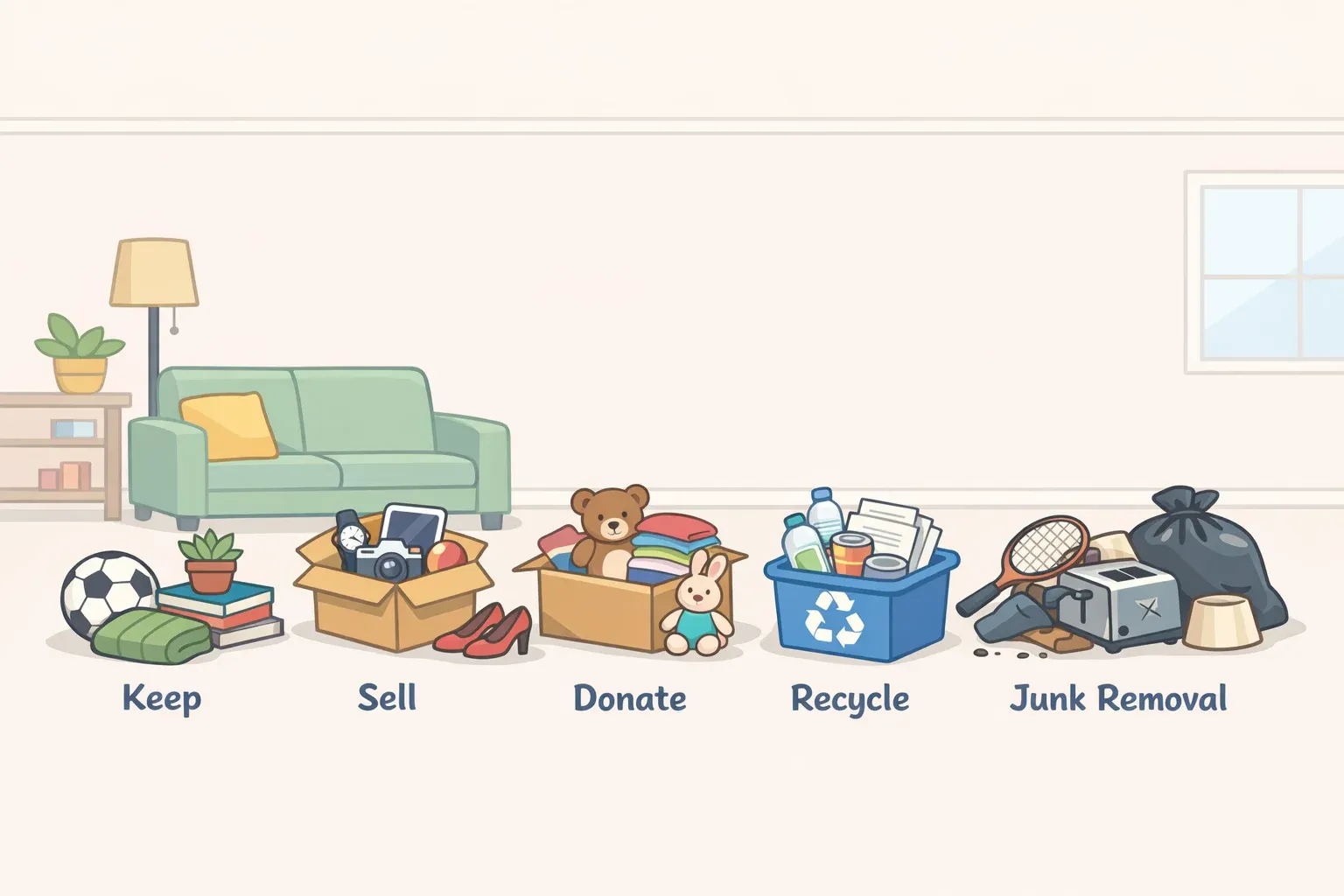
Every move eventually comes down to the same pile of stuff in the middle of the living room floor: things worth keeping, things worth selling, things worth giving away, and things that just need to disappear.
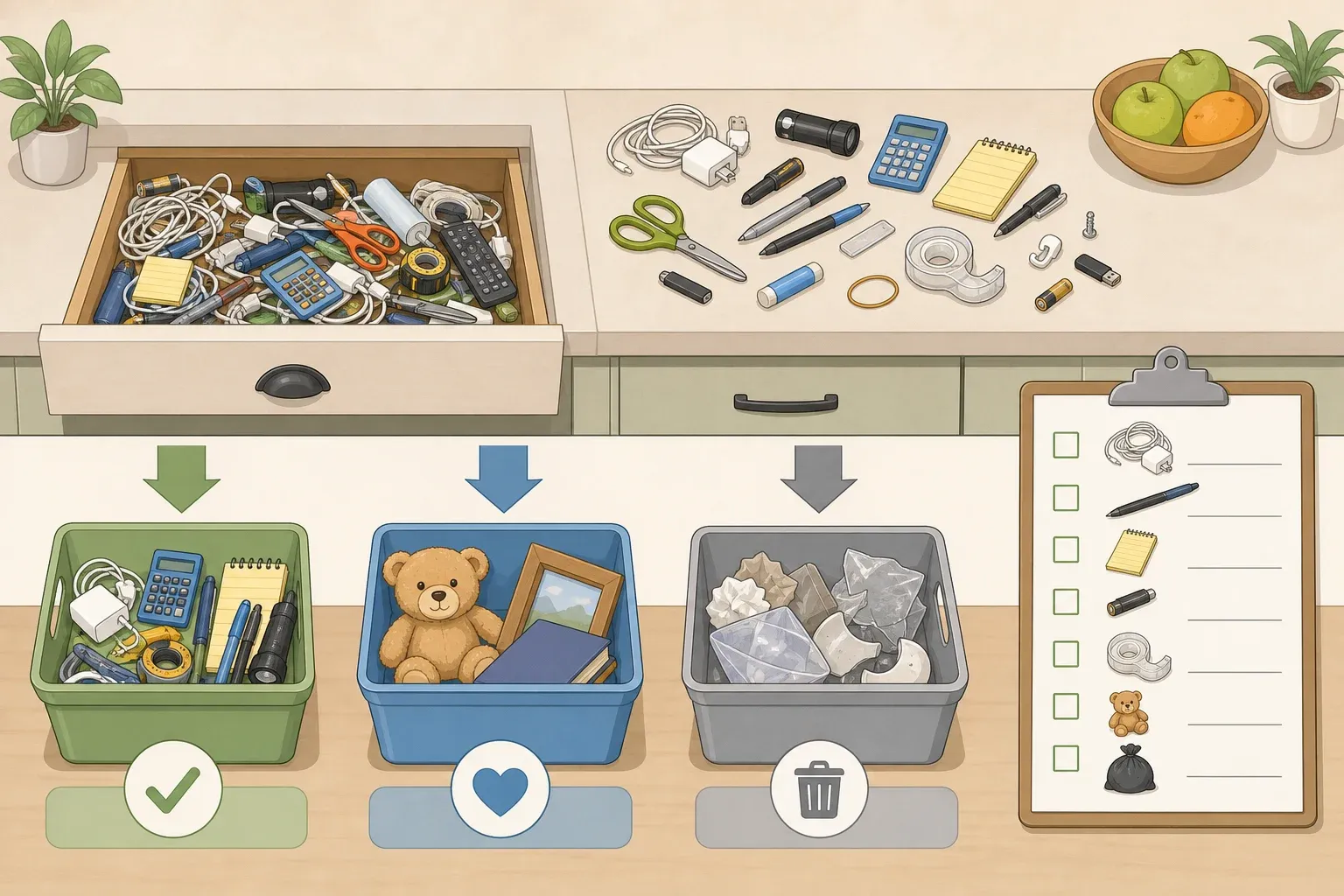
Learning how to declutter before moving really comes down to running each item through one test with four parts: condition, value, timing, and effort, instead of making a fresh emotional decision about every single object. That test sorts everything into one of five piles: keep, sell, donate, recycle, or junk removal.
Most of this work doesn't require hiring anyone. Professional organizer Titchenal says people should expect to donate far more than they sell, especially non-name-brand clothing, so the bulk of the sorting is straightforward giveaway decisions rather than running a resale shop out of the garage.
The exception is a small category, chemicals, batteries, and medicines, that needs separate handling because these items can catch fire, react, or poison people or pets if they're mishandled. What follows is a setup list, a decision rule for every item type, a room-by-room checklist, and a clear line for what should never land in a regular trash bag or donation box.
What to gather before you start
Sorting goes faster with a few things on hand before the first box gets touched:
Masking tape or sticky labels to mark keep, sell, donate, recycle, and junk zones in each room
Empty boxes, bins, or trash bags for physical sorting
A phone with a working camera for resale listings and consignment photos
Basic cleaning supplies, so anything headed to donation goes out reasonably clean
A separate sealed box or bag just for chemicals, batteries, and medicines pulled aside from the general sort
Work room by room rather than trying to sort an entire house in one sitting. Selling anything takes longer than most people expect, for reasons the next section covers, so it helps to start that clock early.
The four-question test for decluttering before a move
Before anything gets boxed, sold, or hauled to the curb, run it through four questions: is it usable right now, does it have real resale value, is there enough time left to sell it, and is there enough energy and transportation to actually follow through?
An item someone couldn't use today without repairs, missing parts, or deep cleaning isn't a donation candidate, no matter how good the original intentions were. That single checkpoint eliminates a lot of the guesswork that turns decluttering into an all-day debate over each object.
The most common misjudgment runs in two directions at once. People routinely overestimate what their used furniture and household goods are worth, and they underestimate how much time it actually takes to sell them. That combination is exactly why so many moves get delayed by boxes of "maybe I'll sell this" items that never actually sell.
Once this framework is set, deciding what to get rid of before moving stops being a fresh negotiation with every lamp, chair, and box of cords. It becomes a repeatable check: condition, value, timing, effort, next item.
What to keep, donate, sell, or throw away before moving
Keep whatever gets used regularly and whatever actually fits the layout or storage of the next home. This distinction matters most when downsizing before a move into a smaller space: an item can be perfectly good and still not make sense if there's nowhere to put it. If something hasn't been touched in the current home and has no clear use in the next one, it belongs in one of the other four piles, not a box.
Sell only items with genuine demand: newer furniture, working electronics, or recognizable brand-name pieces, since low-value items rarely justify the time spent listing them, answering messages, and coordinating pickup. Titchenal's example is a useful gut check: a Pottery Barn couch in solid condition might sell well because there's real demand for the brand, but visible wear knocks the resale value down fast. She recommends giving any listing five to seven days; if it hasn't sold by then, move it to the donate pile instead of relisting it or holding out longer.
Donate anything that passes a simple gut check: would this be handed to a family member without hesitation? If not, it isn't donation-ready. Titchenal is blunt about this standard too: if something is broken or missing pieces, it isn't worth donating no matter how good the intentions.
Throw away or schedule junk removal for items that are damaged, moldy, unsafe, incomplete, or simply too bulky to move any other way; worn sofas, water-soaked materials, and broken particleboard furniture all fall into this category. Holding onto something unusable out of guilt over what it cost only adds stress and slows the move down.
How to dispose of household hazardous waste before moving
Chemicals, batteries, and medicines don't belong in the keep, sell, donate, or trash flow above. They need a different process, since routing them through the general sort can send fire hazards or toxic materials somewhere they shouldn't go.
Chemicals and household products like paint, cleaners, oils, and pesticides can be corrosive, toxic, or reactive. Keep them in their original, labeled containers and never mix different products together. Don't put them in the trash, down a drain, or on the ground unless the product label or a local disposal program specifically says that's allowed; improper disposal can injure sanitation workers and contaminate septic systems or wastewater treatment plants.
One clarification worth making here: household hazardous waste is technically excluded from the federal hazardous-waste rules under RCRA, but that exclusion doesn't mean these products are automatically safe for ordinary trash or drains. They're still regulated at the state and local level, so check local rules before deciding how to get rid of anything in this category. A container that's corroding needs different handling entirely; call a local hazardous materials official or fire department for instructions rather than guessing.
Batteries need their own handling, especially lithium batteries, which create a real fire hazard in household trash and curbside recycling bins. Isolate the terminals with nonmetallic tape or bag each battery individually, protect them from damage in transit, and drop them at a battery collection site or household hazardous-waste facility instead of tossing them in with regular trash.
Medicines should go through a drug take-back program whenever one is available: DEA Take-Back Days, a pharmacy or law-enforcement kiosk, or a mail-back envelope. Only fall back to household disposal, mixing pills with cat litter or used coffee grounds, sealing the mixture in a container, and scratching personal information off the empty bottle, when no take-back option exists, and the label doesn't say otherwise. This specific fallback applies to medicines, not to the paints, cleaners, or pesticides covered above; those still need a label check or local program before they go anywhere near the trash. Never flush medicine unless the label specifically instructs it.
Moving declutter checklist: room by room
Once the hazardous items are pulled out and set aside, work through the rest of the house room by room, sorting into keep, sell, donate, recycle, or junk removal as each item comes up.
Kitchen
Keep: dishes, cookware, and appliances used weekly
Sell: valuable appliances or cookware in good condition that duplicate what's already being kept
Donate: extra mugs, utensils, or small appliances that still work but sit unused
Toss/recycle: chipped dishes, expired pantry items, broken small appliances
Bedrooms and closets
Keep: clothing worn regularly and pieces that fit the new space
Sell: barely worn, brand-name clothing or shoes with real resale demand
Donate: clean, wearable clothing without noticeable damage, especially anything without a recognizable label, since that's the category most people end up giving away rather than selling
Toss: stained or torn clothing, mismatched or worn-out linens
Bathroom
Keep: daily-use toiletries and current medications
Toss: expired or unused toiletries in regular trash
Dispose separately: any expired or unwanted medicine, following the drug take-back guidance above rather than tossing it in with regular bathroom trash
Living areas
Keep: furniture and décor that fit the new layout
Sell: newer furniture, working electronics, and brand-name pieces with real market demand
Donate: extra lamps, décor, books, and small furniture still in usable shape
Junk removal: worn sofas or damaged rugs that aren't worth selling or donating
Home office
Keep: equipment and files needed at the new address
Sell: working electronics with resale value
Donate: office furniture still in solid condition
Junk removal: old office furniture that's damaged or falling apart
Storage, garage, and utility areas
Keep: tools and equipment used regularly
Sell: valuable tools or sporting goods in working condition
Donate: storage-room contents and unused furniture that are still usable, a natural starting point for the whole project since these are usually the easiest calls to make
Junk removal: broken particleboard furniture, water-damaged materials, and other bulky items that are difficult to move safely alone
If a junk removal service ends up handling the damaged or bulky pile, ask about extra charges before booking:
Fees for stairs or a long carry distance to the truck
Disassembly charges for furniture
Appliance or electronics handling fees
Higher pricing for urgent same-day or weekend service
These details can move the final price more than expected, so it's worth asking upfront rather than after the truck shows up.
For higher-value pieces headed to consignment, contact reputable shops and send photos before driving anything over, since most stores want pictures before an in-person visit. If a shop agrees to take something too large for a car, plan on hiring movers to get it there.
When a category stalls, don't let it hold up the whole move. If selling is taking too long, donate the item. If donation is too complicated to arrange before moving day, use junk removal instead.
With every room sorted, three things keep this from dragging into moving week: schedule the donation pickup or drop-off, hold to the selling deadline set earlier instead of relisting indefinitely, and confirm hazardous-waste, battery, and medicine drop-off hours. Handle all three before the boxes are already on the truck, not after.




Comments
Be the first, drop a comment!