



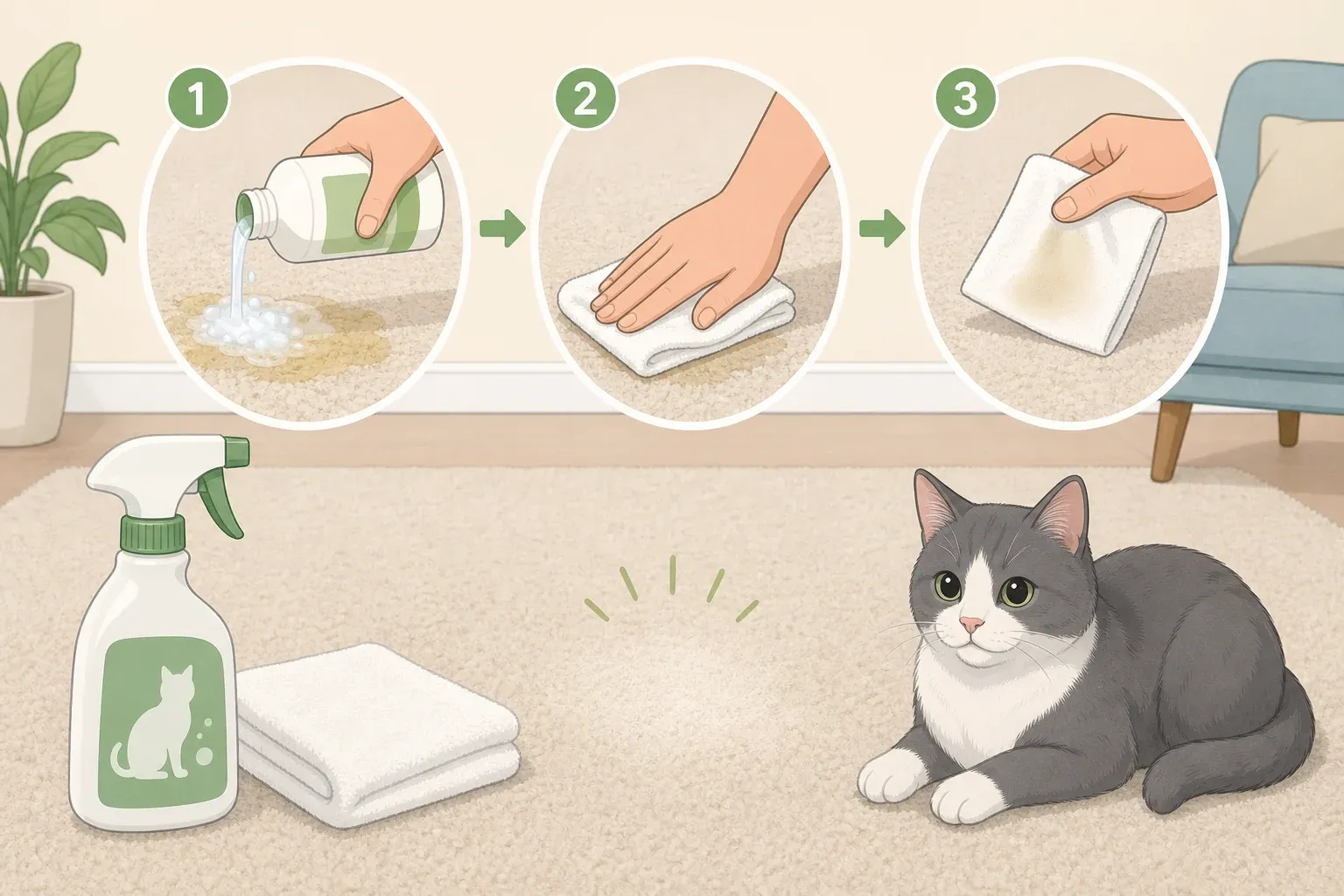
Here's how to get rid of cat urine smell for good: blot the wet spot, saturate the full stained area with a cat-urine-specific enzymatic cleaner, let it dwell as long as the label recommends, then let it dry completely before touching it again. That sequence works because it targets uric acid crystals directly, the part of cat urine that isn't water-soluble and can keep producing odor for years if it's never broken down. Skipping any one of those steps, especially the dwell time, is usually why a "cleaned" spot still smells a week later.
This guide walks through removing cat pee odor start to finish: how to tell what surface is involved before grabbing a bottle, why the smell keeps returning after a normal cleaning, and when a spot has gone past what a bottle of cleaner can fix. It's a beginner-friendly task for a fresh accident or one caught within a few days. If urine has already soaked into carpet padding or a subfloor, that's a job that can exceed what any store-bought product handles on its own, and the sections below explain how to spot that difference.
Check the surface before you start
The enzymatic method works differently depending on what's underneath the stain, so it's worth a quick check before applying anything.
Carpet and rugs: This is the surface the saturation-and-dwell method below is built for. Enzymatic cleaners are generally safe here, but leather is a notable exception.
Hard, sealed floors like tile or sealed vinyl: Check the product label for surface compatibility, and avoid pooling liquid into grout lines or seams, since those spots hold moisture longer than the surrounding floor.
Hardwood, laminate, leather, and unsealed stone: Don't saturate the way carpet gets saturated. Test on a hidden spot first and check flooring or furniture manufacturer guidance, since heavy moisture can warp wood or laminate and stain unsealed stone.
Once the surface is confirmed, the rest of this guide applies most directly to carpet and rugs, with notes where hard-surface handling differs.
How to neutralize cat urine odor: why the smell keeps coming back
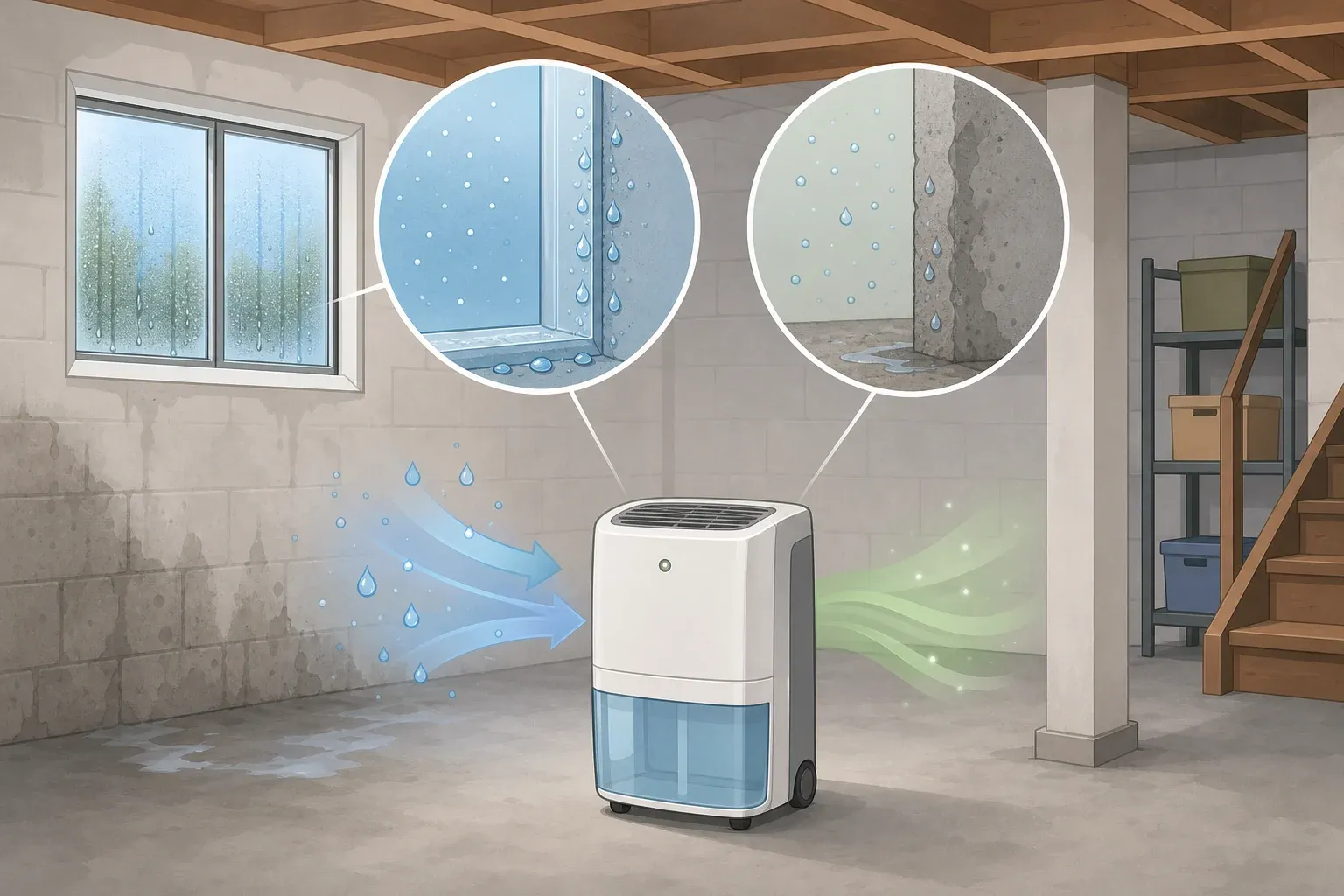
Uric acid crystallizes as urine dries, and those crystals have low water solubility, so humidity or added moisture can reactivate them long after a spot looked clean. That's why a carpet that seemed fine all winter can start smelling again the first humid week of summer.
Cat urine also carries felinine, a compound that breaks down into volatile thiols, which is part of why it smells sharper and more persistent than dog urine. It spreads farther than it looks, too: urine can soak into carpet padding and reach the subfloor within seconds of contact, well past the visible stain, according to the same source.
Urine composition also isn't identical from cat to cat. Urine chemistry shifts with a cat's diet, age, health, and sex, and unless the urine itself is fully removed, complete odor removal is unlikely. That's why spraying a scented product over a urine spot may mask the odor for a while without removing its source: the crystals are still sitting in the fibers, waiting for the next humid day.
Best cleaner for cat urine smell: An enzymatic cleaner for cat urine
An enzymatic cleaner made for cat urine is the answer, since it breaks down uric acid and organic residue into odorless compounds instead of covering the smell up, according to Hunker. Setting it up right matters as much as the product itself.
What you'll need:
A cat-urine-specific enzymatic cleaner. Check the label for named enzymes like protease, amylase, or lipase, and skip anything that just says "natural enzymes" without specifying which ones, since that vague labeling doesn't confirm what's actually in the bottle.
Clean absorbent towels or paper towels
A UV blacklight, optional, for locating hidden or old stains
Plastic wrap, for slowing evaporation during dwell time on deep-set stains
Skip anything containing bleach even if the label says "enzymatic." Bleach deactivates the enzymes that are supposed to do the work. These cleaners also need real time on the spot: most take 24 to 72 hours to fully digest organic matter, not the five or ten minutes many people assume based on other cleaning products.
Keep pets and people off the treated area while it's wet. Enzymatic cleaners are safe to use around both, as long as the spot is allowed to dry fully before anyone walks on it again, Hunker notes.
Follow these steps in order:
Blot fresh urine immediately. Press down with towels instead of rubbing; scrubbing grinds urine deeper into the fibers and padding. This step alone removes a large share of the urine before it sets.
Locate the full extent of the stain. If the spot is old or its edges aren't obvious, run a UV blacklight over the area in a darkened room. Dried urine fluoresces because of its phosphorus content.
Saturate generously, covering an area noticeably larger than the visible stain, since urine wicks outward under the surface. A light spritz won't reach where the urine actually spread.
Let it dwell. Follow the label, but expect a minimum of 12 to 24 hours for many products. Cover the spot with plastic wrap if it's drying out too fast, which keeps the enzymes active longer.
Blot up excess moisture with clean towels once the dwell time is done.
Let the area air-dry fully, with good ventilation, before walking on it or putting anything back over it. Full drying can take a few days.
Two mistakes deserve a flag before reaching for the wrong tool. Skip the steam cleaner or hairdryer, both before and after enzymatic treatment. Heat can bond urine proteins directly to the fibers, setting the odor in rather than removing it. That's different from what a restoration crew might do: professional jobs sometimes follow an enzymatic pre-treatment with controlled sub-surface hot-water extraction as one step in a larger sequence. That's not the same as running a rental carpet shampooer or a hairdryer over a fresh spot at home, and it isn't something to attempt with consumer equipment. Also, skip ammonia-based cleaners on a urine stain. Cat urine already contains ammonia compounds as it breaks down, so adding more just reinforces the smell.
Does vinegar remove cat urine smell? Common mistakes to avoid
Vinegar can cut the ammonia-like smell for a short while, but it can't break down uric acid crystals, since acetic acid and uric acid are different chemical problems. It's a common first instinct because vinegar handles so many other household odors well; cat urine just isn't one of them.
Vinegar's active ingredient, acetic acid, dissolves mineral deposits and knocks back some surface bacteria. Enzyme cleaners work through an entirely different mechanism, using biological proteins that specifically digest organic material like urine. Mixing the two doesn't split the difference either: vinegar's acidity denatures the enzymes in an enzymatic cleaner, so any leftover vinegar should be rinsed off with plain water before an enzymatic product goes down.
Cleaning vinegar specifically is more acidic than the distilled vinegar most people keep in the kitchen, and it can damage stone, hardwood, wood cabinets, and stainless steel. It's also not safe to ingest.
There's one narrow exception. On surfaces where mineral deposits and organic urine residue sit together, like grout lines on tile, vinegar can dissolve the mineral salts first. Rinse with water afterward, then follow with an enzyme cleaner for the organic component. Outside that specific case, an enzymatic cleaner is the better first move, and vinegar or baking soda should be treated as a short-term smell cover, not a fix.
How to remove old cat urine smell from carpet
If odor returns days or weeks after a thorough enzymatic cleaning, it usually means urine reached the carpet pad or subfloor, where surface treatment can't reach it. That's the point where repeating the same cleaning stops making sense.
Two signs point to deeper contamination specifically. A blacklight revealing dozens of scattered spots across a room, rather than one contained area, suggests a bigger problem than what's visible. So does a smell that intensifies specifically during humid weather, since that pattern matches how uric acid crystals reactivate with moisture. Either sign is a reasonable point to stop treating the surface and start asking whether the subfloor is involved.
If the pad or subfloor is contaminated, surface cleaning is unlikely to reach the source. A restoration professional can assess whether the pad needs removal, the bare subfloor needs treatment and drying, and a shellac-based primer needs to go down before new flooring. That scope depends on the material and how deep the contamination runs, so it's worth getting an assessment rather than assuming the worst case applies.
Persistent dampness in old, urine-contaminated padding is also worth taking seriously if it's paired with ongoing odor or symptoms. If that's the case, it's a reasonable point to stop repeated DIY treatments and call a restoration professional, and to check in with a doctor about any symptoms, rather than keep re-treating the same spot.
One more thing worth stating plainly: don't install new carpet or flooring over a subfloor that's still contaminated and unsealed. The odor will wick back up through the new material, which wastes the cost of new flooring if the subfloor issue was never actually addressed.
Finishing up
Once the spot is fully dry, smell it at floor level, close to the fibers, not standing up. No odor at that point means the treatment worked and furniture can go back. If odor returns, retreat the same spot with a longer dwell time before assuming the subfloor is involved; some deep-set stains need a second application to fully break down.
Prevention matters as much as cleanup. Keep one litter box per cat plus one extra, and scoop daily, since litter box conditions are a common trigger behind repeat accidents. If accidents keep happening despite a clean, well-stocked litter setup, that's a cue to call a vet rather than reach for another bottle of cleaner. Sudden or repeated urination outside the box can point to a urinary tract infection, bladder stones, or kidney disease, and it should get checked out before it's chalked up to behavior.
One correctly saturated, fully-dwelled enzymatic treatment handles most fresh accidents on carpet and rugs. Save the call to a restoration professional for odor that keeps coming back after that treatment has had its full chance to work, and for anything that's already reached the pad or subfloor.
Comments
Be the first, drop a comment!