



A trap that fills with a few hundred dead wasps by the end of a weekend looks like real progress. It usually isn't. A single yellowjacket colony can produce up to 5,000 workers at its peak, and casual trapping typically doesn't shrink a population enough to matter. Learning how to keep wasps away from your house and yard starts with accepting that math before reaching for a lure.
Wasp activity builds hard as summer turns into fall, exactly when colonies are swelling toward their annual peak. This guide lays out a step-by-step approach, grounded in Extension entomology research, for keeping wasps away from a house and yard: why traps alone won't fix the problem, and when a nest crosses the line from nuisance to job for a professional. This isn't a promise of permanent eradication. It's a realistic plan for reducing wasp pressure through the season.
Step 1: Identify what you're dealing with before you act
Most wasps are solitary and never form the large colonies behind backyard conflicts. Only a handful of social species, namely yellowjackets, hornets, and paper wasps, build the colonies that actually cause problems, and Maryland alone hosts over 1,000 wasp species, the overwhelming majority solitary and low-drama.
Species matter for a practical reason: nesting habits and range differ sharply. Paper wasps often build under roof eaves and overhangs and can even overwinter in an attic, but they're not normally aggressive unless the nest itself is disturbed. Yellowjackets, by contrast, typically forage within roughly 1,100 feet of the nest, which means a wasp on the porch doesn't necessarily mean a nest under the porch.
Wasps aren't hunting people. Social wasps don't seek people out to sting them, and they use their jaws, not their stingers, to capture prey. They sting mainly to defend a nest, or when an individual worker is swatted, trapped, or otherwise threatened, and unlike honeybees, they can sting more than once.
None of this matters much until you know what's actually nesting near the house. A lone paper-wasp nest tucked under the eaves calls for a different response than a sprawling underground yellowjacket colony. Confuse the two, and you either overreact to a minor nuisance or underreact to a genuine hazard.
Step 2: How to keep wasps away from outdoor food and nesting shelter
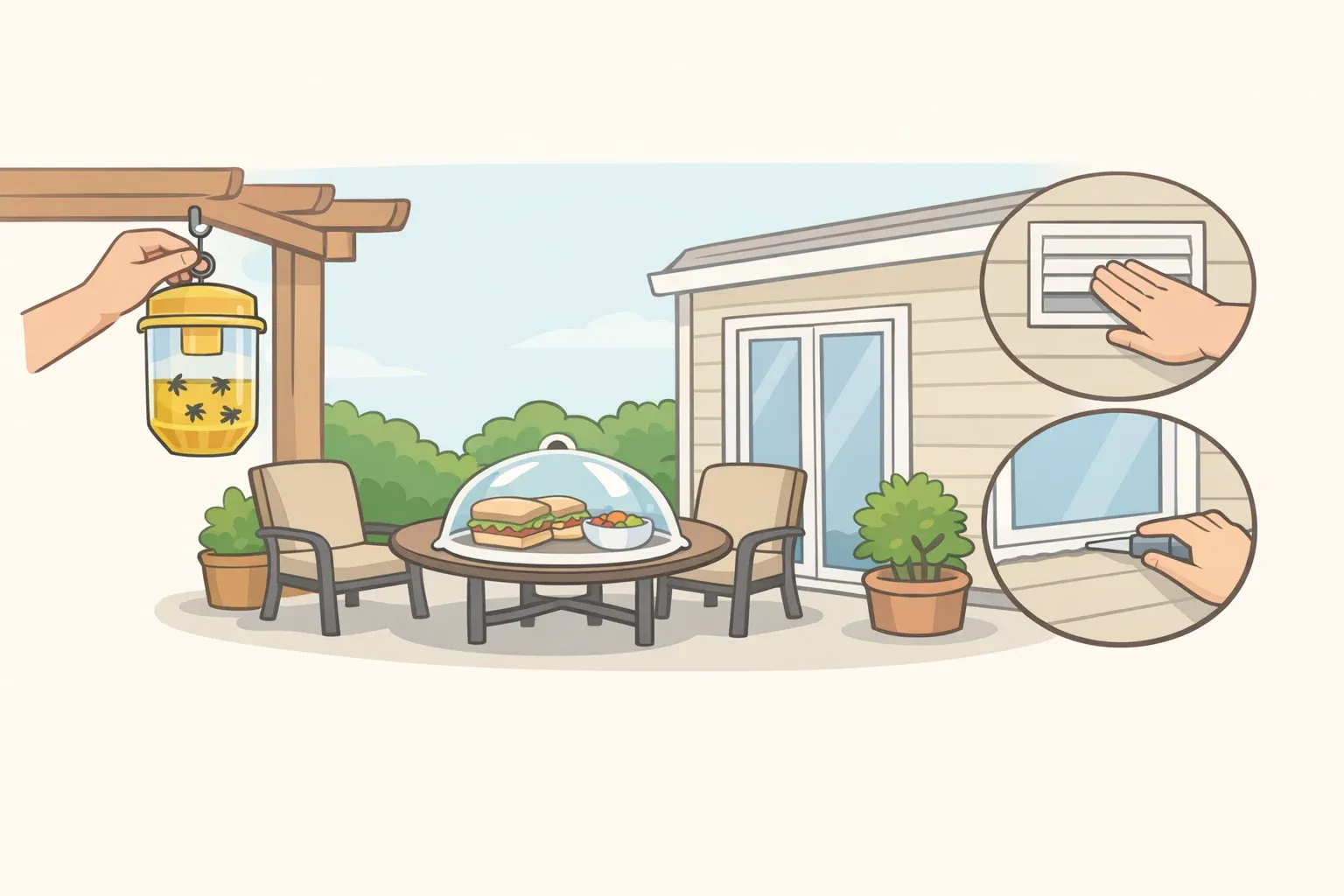
If the goal is how to repel wasps naturally, without sprays, gadgets, or expensive traps, this is the step that actually delivers. Seal garbage bins tightly, get rid of soft drink cans and food containers promptly, keep pet food covered or indoors, and pick up fallen fruit before it rots.
Rotting fruit from backyard trees or berry bushes draws yellowjackets just as reliably as picnic and barbecue leftovers do, so both need attention during a cookout, not just the trash can afterward.
Wasps hunt on two fronts: protein and carbohydrates. Yellowjackets get protein by scavenging and preying on other insects rather than gathering it from flowers, while their sugar comes from nectar, fruit, or sugary spills. A complete strategy has to cover meat scraps and sweet drinks alike, not just the obvious one.
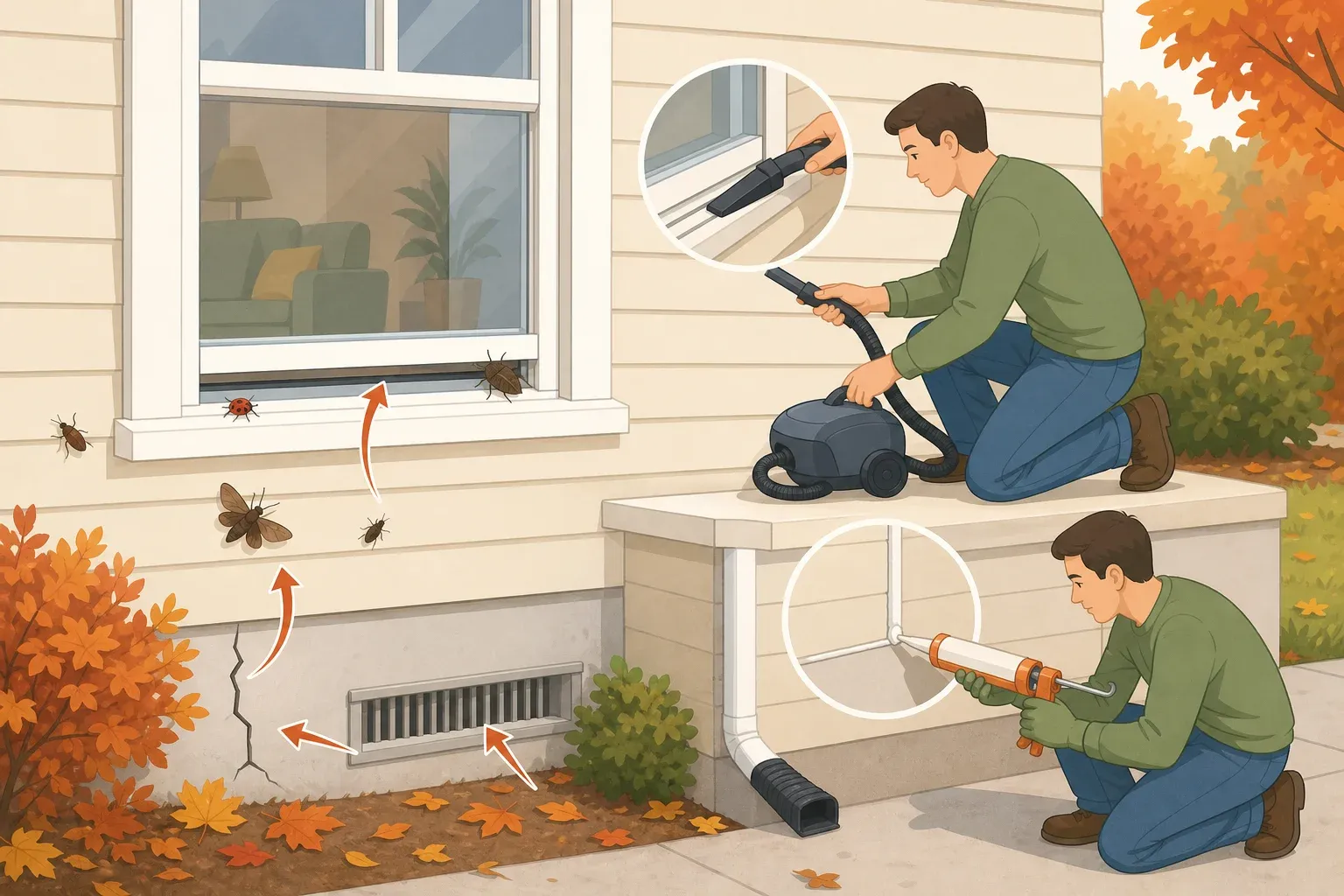
Food isn't the whole picture. Seal cracks in the foundation, vents, and wall openings, and clear debris from the yard, since both create shelter wasps will happily nest in. Skip planting flowers right next to entrances, too; blossoms can pull foragers straight toward the door.
Extension guidance keeps returning to the same two moves: limit food sources and seal entry points. It isn't glamorous advice, but it's the best-supported step in the entire process, the difference between a yard that reads as a wasp buffet and one that doesn't register on their radar at all.
Step 3: Understand what wasp traps actually do (and don't)
Anyone asking if wasp traps work deserves a direct answer: yes, and no. Traps do intercept foraging workers and queens drawn in by an attractant, whether that's a commercial lure or something homemade like meat, fish, or rotting fruit.
Timing changes the odds considerably. Traps set out in spring target queens before they've founded a colony, and since a single queen can eventually produce up to 5,000 workers, catching her early carries outsized potential.
In practice, that potential doesn't always show up. A California field study found traps baited with heptyl butyrate reliably caught both queens and workers, yet the number of queens trapped in spring had no measurable effect on how many workers showed up later that summer.
That gap between catching wasps and controlling a population runs through the research on trapping in general. Filling a trap with hundreds of yellowjackets can feel like meaningful progress, but casual trapping usually doesn't reduce a population enough to relieve real pressure.
Traps aren't worthless. They're just narrow tools, useful for how to get rid of wasps in the yard around one specific area rather than solving the problem at the source. One study reduced yellowjacket activity at a popular picnic pavilion by surrounding it with 50 traps set 200 feet out, but the approach worked only because operators kept refreshing the attractant throughout the season. If a trap goes up at all, keep it well away from patios, porches, and doorways. A trap placed too close pulls foragers toward the people it's meant to protect.
That's the realistic use case: thinning out the wasps hitting one specific spot, for as long as someone keeps the traps maintained, not eliminating a colony. Treat a trap as pressure management, not a cure.
Step 4: Handle nests safely and know when to call a professional
Early-season monitoring matters. Check eaves, soffits, tree branches, wall openings, and ground-level holes, and knock down small, newly started nests before colonies have a chance to build strength.
When dealing with an active nest, or with any chemical treatment at all, working with a professional pest control service is the recommended path, not just a fallback for people with sting allergies. NPIC guidance points the same direction: consult a professional for nest removal, and if anyone nearby is allergic or sensitive to stings, have a plan for medical help before doing anything else.
Skip home remedies entirely. University of Maryland Extension specifically warns against flooding a burrow or setting a nest on fire, and notes that even proper pesticide treatments can take several days to fully work, since the residue has to contact workers coming and going from the nest.
If treatment does go ahead, spray an approved insecticide into the nest entrance at night, when wasps are inside and calm, following the label exactly and wearing protective equipment. For yellowjackets specifically, baiting with anything other than an approved product isn't just less effective; it's a violation of state and federal pesticide law.
Social wasps are beneficial insects, not just a hazard to clear on sight. They prey on garden pests, scavenge carrion and decaying material, and help with pollination while foraging for nectar, so the actual goal is managing nests that pose a real hazard, not wiping out every wasp in the yard.
This step draws the line the earlier ones set up. Sanitation prevents most problems, a well-placed trap handles minor forager pressure around one event, and only genuinely hazardous nests call for direct intervention, ideally from someone who does it for a living.
The bigger picture: why this resets every year
Social wasp colonies live only one season. They die off each winter and are never reused; a few fertilized queens overwinter individually and start entirely new nests from scratch each spring. Whatever prevention work goes into a yard resets annually rather than solving anything for good.
Weather adds a wildcard nobody controls. Rainy or cold spring conditions can keep queens from establishing a nest or foraging successfully, while warm, dry springs let them succeed and multiply into much larger populations by late summer.
Even aggressive, professional-grade treatment shows the limits of full eradication. A 2024 bait trial on wasp colonies in New Zealand cut nest activity by a median of 96.5% after 19 days, yet only around 30% of treated nests had actually died off in that window. A treatment proven to nearly silence a colony still left most of them alive, just badly weakened.
Treat wasp control as a seasonal cycle, not a one-time fix. Check eaves, soffits, and ground holes in spring, when a new nest is still small and easiest to knock down. Keep the sanitation checklist running through summer as colonies build strength, then tighten up around outdoor meals in late summer and early fall, when foraging peaks. A nest that can safely be left alone will die out on its own at the first hard frost, ending the problem without a spray can or a phone call.
There's no realistic path to keeping every wasp away forever. But sanitation, early monitoring, and targeted nest management, repeated each season, will keep a house and yard the least attractive option on the block. Start with the food and shelter checklist above. It has the best evidence behind it, and it's the piece that can get done this weekend.


Comments
Be the first, drop a comment!