



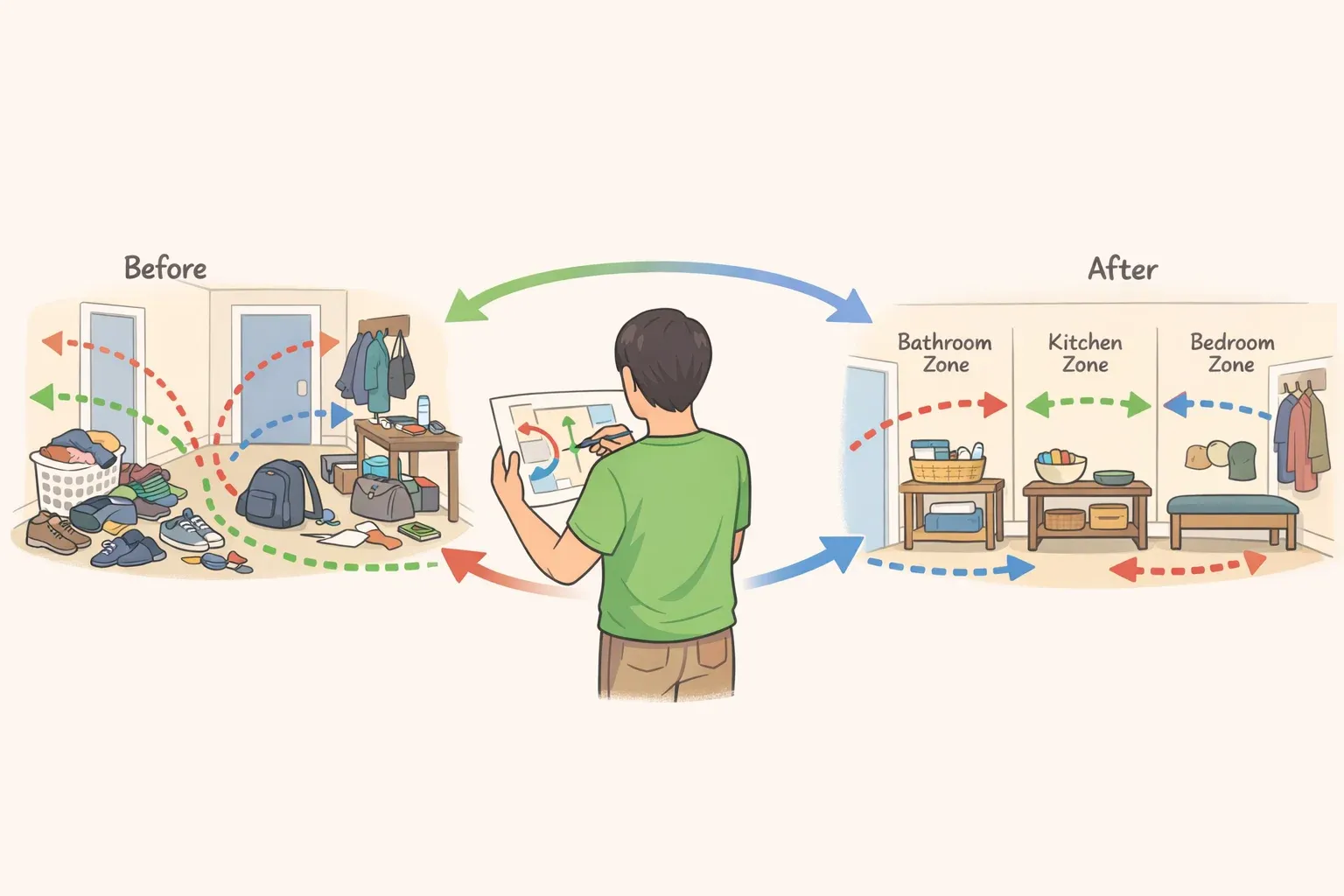
A pile that keeps reappearing in the same spot isn't a discipline problem. It's information.
Corinne Berry, PhD, a behavioral scientist and professional organizer, calls this "clutter is data": a signal about how someone actually moves through a space, not proof of laziness. Her goal when designing a system isn't perfection; it's to organize for real life. That reframing changes where the whole project should start. Learning how to organize your home around your habits means starting with a diagnosis, not a bin.
Some professional organizers begin with an assessment of how a space is actually used and where the friction points sit, rather than leading with storage products. One design firm frames the goal even more directly: build around how a person already moves through a home, not around someone else's idea of where things ought to live.
This piece lays out a method for building organizing systems that work with your habits: diagnose why a spot collects clutter, then test five environmental tweaks covering proximity, visibility, prompts, reward, and household norms. The behavioral-science research behind these tweaks studies habits in general, not home organization specifically, so treat the household applications as informed extrapolation rather than proven fact about laundry baskets.
Why clutter keeps piling up in the same place
A pile that shows up in the same corner every week isn't random. It reflects behavior and environment colliding in a predictable way, and the location itself points toward what needs to change.
People default to whatever takes the least effort. If a laundry basket sits a few steps away and has a lid to lift, while the floor is right there and requires nothing, the floor is likely to win when it's the easier option. That's less a character flaw than a fairly reliable feature of how people allocate effort.
There's a deeper reason relocating things rarely fixes anything on its own. Habits are memory-based responses to cues tied to past behavior, which is why moving an item's long-standing spot without good reason tends to backfire. Move the lightbulbs from the utility room to the pantry, and the body keeps walking to the utility room anyway, because that's where the brain still expects them.
Before buying a single container, then, the task is figuring out what the current, messy behavior is already optimized for. That's the foundation of habit-based home organization, and it's the difference between a system that lasts and one that reverts within a week.
How to organize your home around your habits: a three-step diagnostic
Diagnosis comes before design. Three steps get most households from "why does this keep happening" to a testable hypothesis worth acting on.
Identify one recurring drop zone. Resist the urge to overhaul the whole house in one weekend. Pick a single hotspot: the entryway chair buried in coats, the mail pile on the kitchen counter, the clothes on the floor next to the hamper.
Observe the exact moment and route that create it. This mirrors what a home organization assessment does professionally: study how a space actually gets used and pinpoint exactly where the current setup breaks down before designing anything new. Watch the thirty seconds before the item lands on the floor or the counter, not just the end result. That's the beginning of learning to organize your home based on daily routines instead of an abstract ideal of where things belong.
Ask what makes the current behavior easier than putting the item away. Behavior is shaped strongly by environment, and the easiest option nearly always beats the theoretically correct one. If the honest answer is "because the basket has a lid," that's the design flaw worth fixing.
A habit problem and an inventory problem look similar at first glance, but they need opposite fixes. A habit problem means the item has a realistic home and just isn't making it back there. An inventory problem means there's no viable home because there's simply too much stuff crowding the space. The fourth section below covers how to tell the two apart.
With a working diagnosis in hand, the next move is to test small changes rather than redesign the whole house at once.
How to create organizing systems that stick: five environmental levers
Change one variable, watch what happens, then adjust. Five levers, drawn from Berry's behavioral-science-informed organizing practice, cover most household situations.
Make it easy. Reduce friction by removing lids, shortening the distance between the action and the destination, and putting things where they're actually used instead of where convention says they belong. Moving the hamper to the exact spot where clothes come off, rather than the corner where a hamper is supposed to go, is the clearest example.
Make it obvious. Use the environment itself to cue the behavior. Swapping a lidded, opaque bin for an open, visible basket keeps the action in view, since storage that's out of sight is easy to forget entirely. A temporary sticky note near a drop zone works the same way, interrupting the habitual routine long enough to redirect it: the logic tracks with a well-known workplace finding that a 16-second delay on an elevator door got more employees taking the stairs, and cut electricity use by roughly a third, compared with a persuasive sign.
Make it satisfying. Small rewards reinforce behavior, so building in a moment of payoff, even a trivial one, helps a new habit take hold. One organizer's example: taping a small basketball hoop over the hamper turns tossing in clothes into a quick game instead of a chore. The reward doesn't need to be elaborate. It just needs to make the correct action feel slightly better than the shortcut.
Keep the context stable. A six-week study tracking 95 university students building new study habits, plus a separate analysis of real habit-tracking app data, found that a stable context, meaning the same place and same time, predicted more automatic behavior and better follow-through than a constantly shifting one. Translated to a household: pick one spot for the mail, every day, and don't relocate it seasonally.
Reinforce shared norms. In multi-person households, stating the rule out loud does real work. "In this house, clothes go straight in the basket" helps a new system become the default rather than one person's unpaid project.
One drop zone, start to finish
Take the entryway chair that ends up buried under coats every evening. The diagnosis: coats land there because the closet is four steps further away, has a door that must be opened, and hangers that need both hands. The chair takes zero seconds. The closet takes ten.
Applying the levers looks like this. Hang a row of hooks directly inside the front door, at the height coats already get dropped, which handles friction and proximity. Leave the hooks exposed rather than tucking them behind a closet door, which handles visibility.
A household with kids might tape a small chart by the door and let each child mark it once their coat is hung; that satisfaction is the same lever at work, just kid-sized. Then say the rule out loud: coats go on the hooks, not the chair. That's the norm doing the work the hooks can't do on their own.
None of this required buying furniture. It required watching where the coats actually landed and building around that reality instead of around where a coat closet is supposed to be used.
When habits aren't the problem: recognizing inventory overload
Sometimes a redesign gets applied, and the mess still comes back. That doesn't automatically mean the problem was never about habits: the storage might genuinely be too small, the new setup might clash with a competing routine, or it simply hasn't been used long enough yet. But one common cause deserves naming directly: too much stuff.
Researchers studying household clutter distinguish between two related problems: disorder-as-untidiness and disorder-as-clutteredness. In practical terms, the first is about items being out of place; the second is about owning more than any storage system could reasonably absorb, no matter how well it's designed. Many households find themselves fighting a losing battle against material disorder no matter how much tidying effort goes in, and treating these as one problem, when they call for different fixes, is part of why the effort keeps failing.
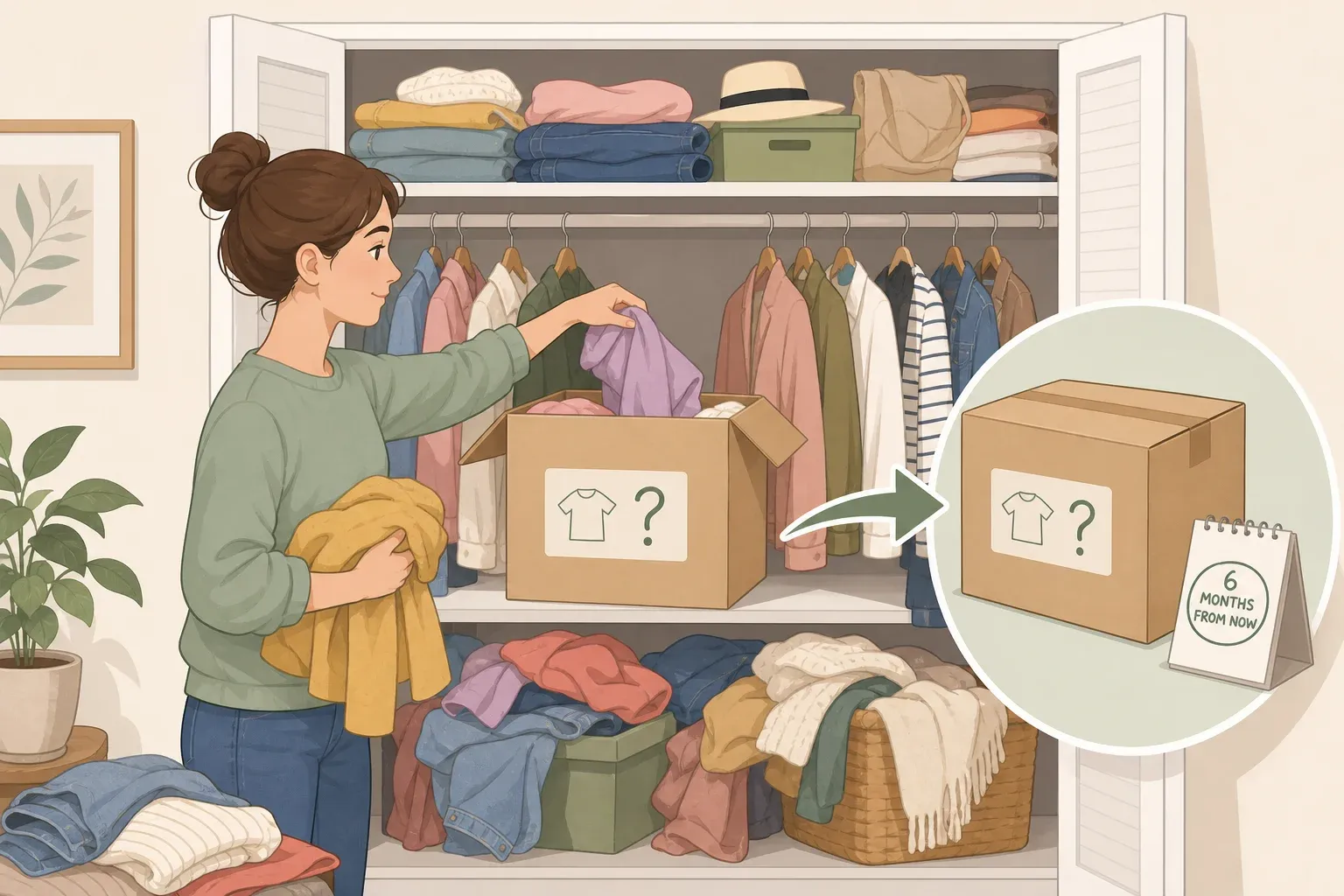
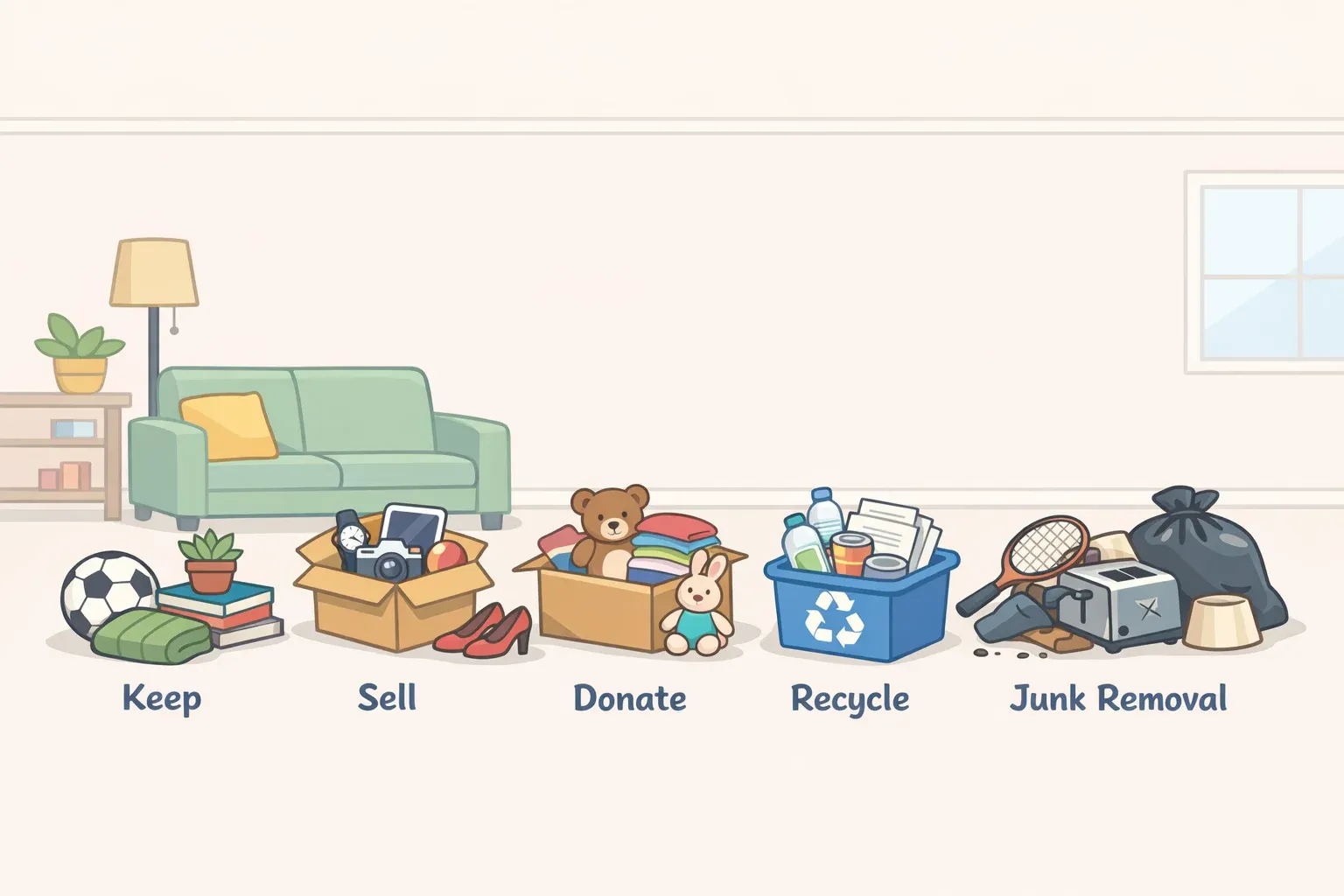
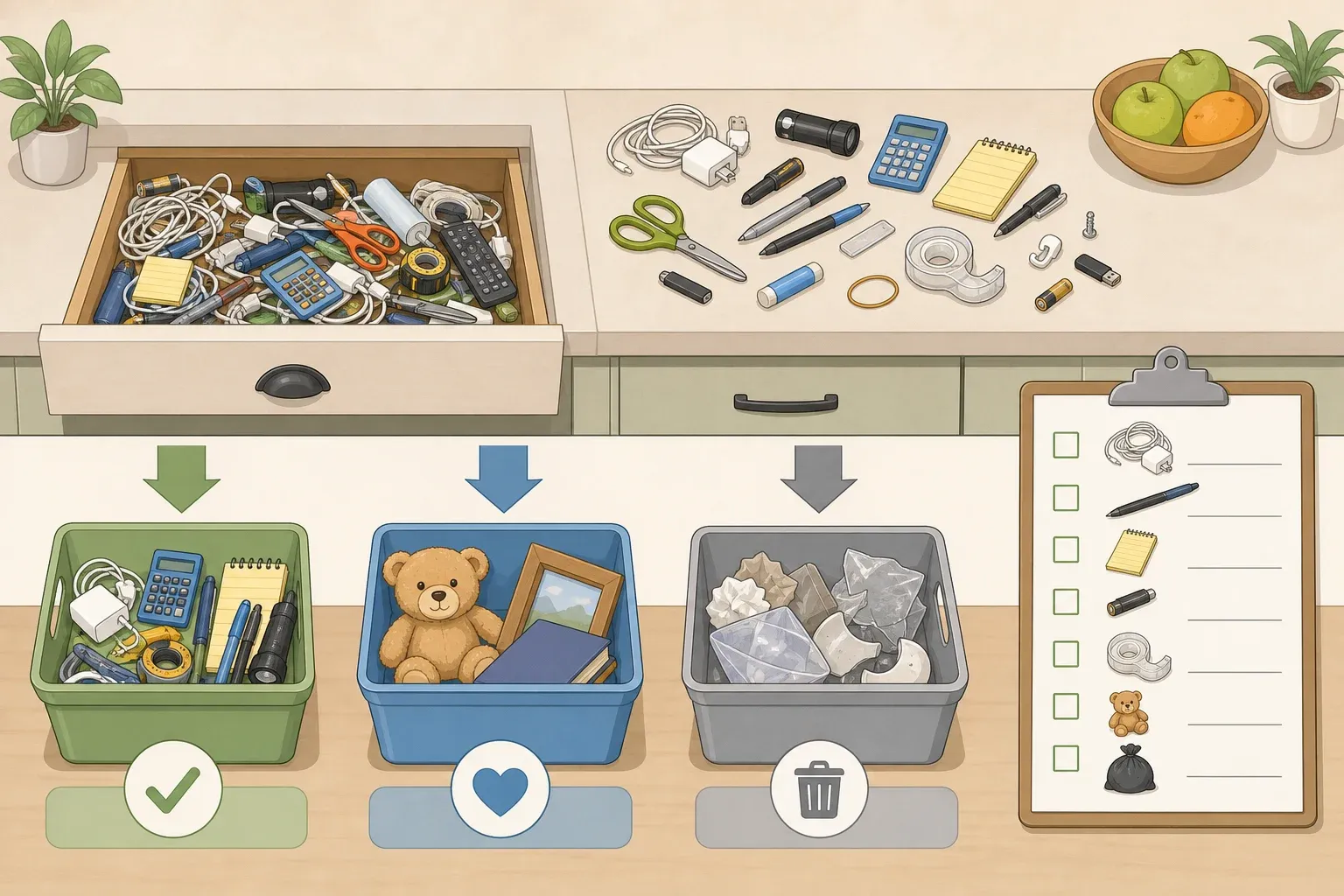
A thorough home assessment looks specifically for unused items, duplicates, broken or outdated belongings, and things kept purely out of habit, none of which a better hamper location will solve. Even the coat hooks from the earlier example have a limit. If a household owns five more coats than the hooks can hold, no amount of friction reduction fixes that. The fix is fewer coats, not more hooks.
Old and new habits can also coexist for weeks after a new routine takes hold. A workplace commuting study found the old habit weakening but still present even as a new one gained strength. A lingering old habit isn't proof the new system failed. Sometimes it just means a full inventory purge, not another tweak, is the real next step.
Habit-based organizing can help address everyday untidiness. It isn't a substitute for decluttering when the real issue is volume.
Conclusion
Pick one drop zone this week, not the whole house, just the chair, the counter, or the floor by the hamper. Run the three-step diagnosis, then test a single lever: move the destination closer, make it visible, add a prompt, build in a small reward, or say the household rule out loud.
Give it more than a few days before judging it. General habit research found the time to build automatic behavior ranging from about three weeks to more than eight months, so a setup that still feels clumsy after day two may just need more repetitions in a stable context, not a redesign.
If the mess still shows up after a fair trial, check whether it's actually an inventory problem before scrapping the setup entirely. And if it works but needs adjusting next month, that's not evidence the first version was wrong. Sustainable organization comes from a system that fits how a household actually lives, not from finding the one correct method that happened to work in someone else's home.



Comments
Be the first, drop a comment!