



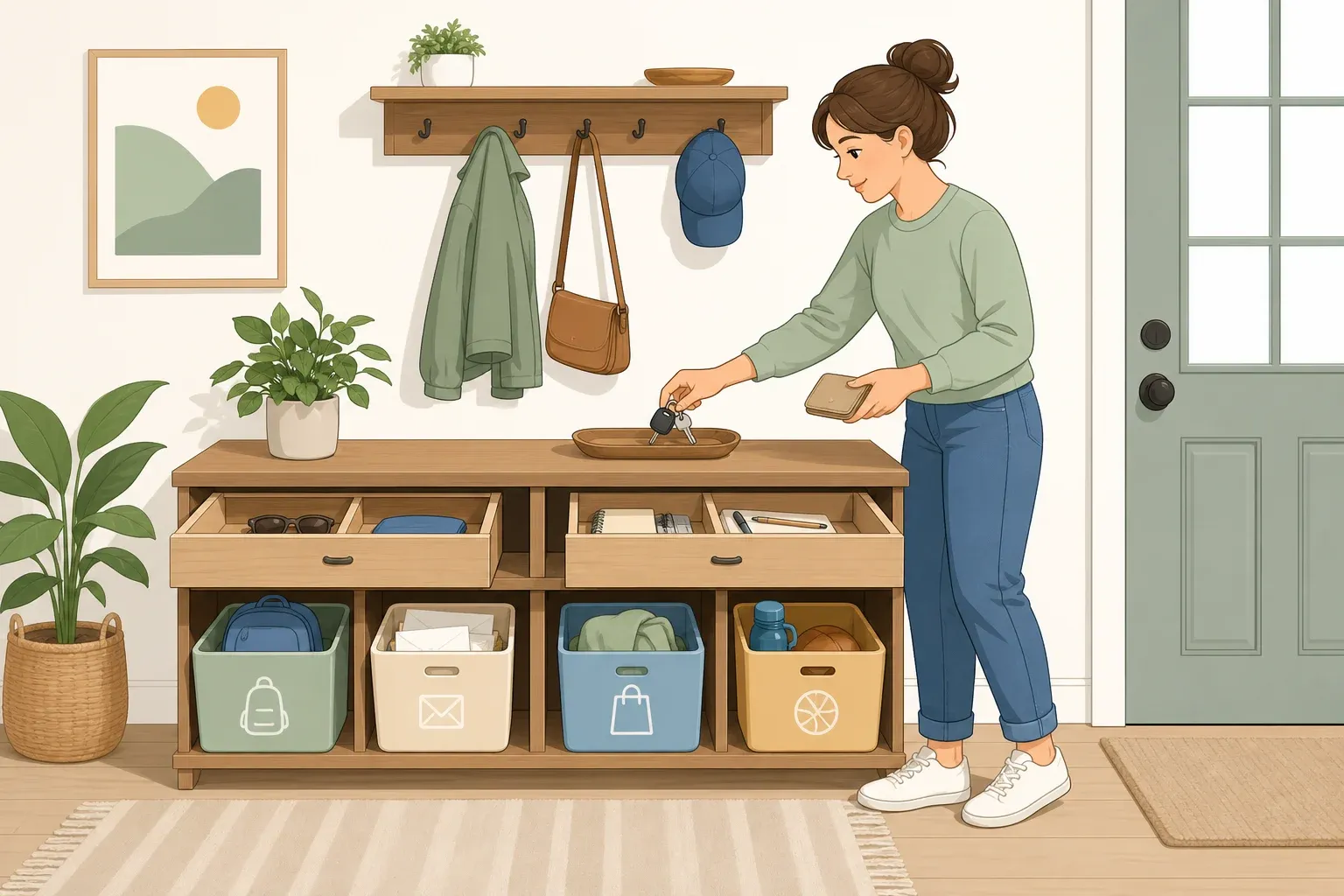
Clutter doesn't come back because a house lacks storage. It comes back because five habits quietly break down: too much stuff, no fixed home for what you keep, no control over what comes in, no daily reset, and donated or trashed items that sit around instead of leaving. This guide walks through fixing all five, using one zone in your house as a test run, so you learn how to prevent clutter from taking over your home instead of just rearranging it.
One of the most common organizing mistakes is buying bins before deciding what to keep. Containers hold volume. They don't reduce it, according to Practically Organized. A cross-sectional survey of 501 adults found a link between cluttered homes and lower psychological well-being, though the study can't prove that decluttering alone improves mood. Still, it's a reasonable nudge to start with the zone that bothers you most.
Before you start: pick one zone to keep clutter under control
Don't try to fix the whole house at once. Choose one high-traffic spot where clutter shows up daily: the entryway, the kitchen counter, or a toy corner. These zones make good test cases because you'll notice right away whether the system holds.
Before touching anything, gather what you'll need:
A rough sense of the storage already available in that zone (one shelf, one basket, one drawer)
A donation drop-off route, or at least a bag and a spot in your car
A place for recycling and trash so those items don't just move to a different pile
On-hand containers for sorting, like a shoebox or a reusable bag, since most sorting projects don't need anything new to start
Real homes still have mail on the counter and shoes by the door. Life isn't staged for Instagram; mail, backpacks, and shoes are just normal signs of living, not a system failure. The goal here is control, not a magazine photo.
Habit 1: Reduce what you own before you assign it a home
Professional organizers follow a set order: edit first, then categorize, measure, design a system, and only then buy products. Skipping the edit step compromises everything that follows. Buying containers before decluttering is a bit like buying furniture before measuring the room. The bins end up the wrong size, the wrong quantity, or full of things that never should have stayed.
Here's how to apply that to your test zone:
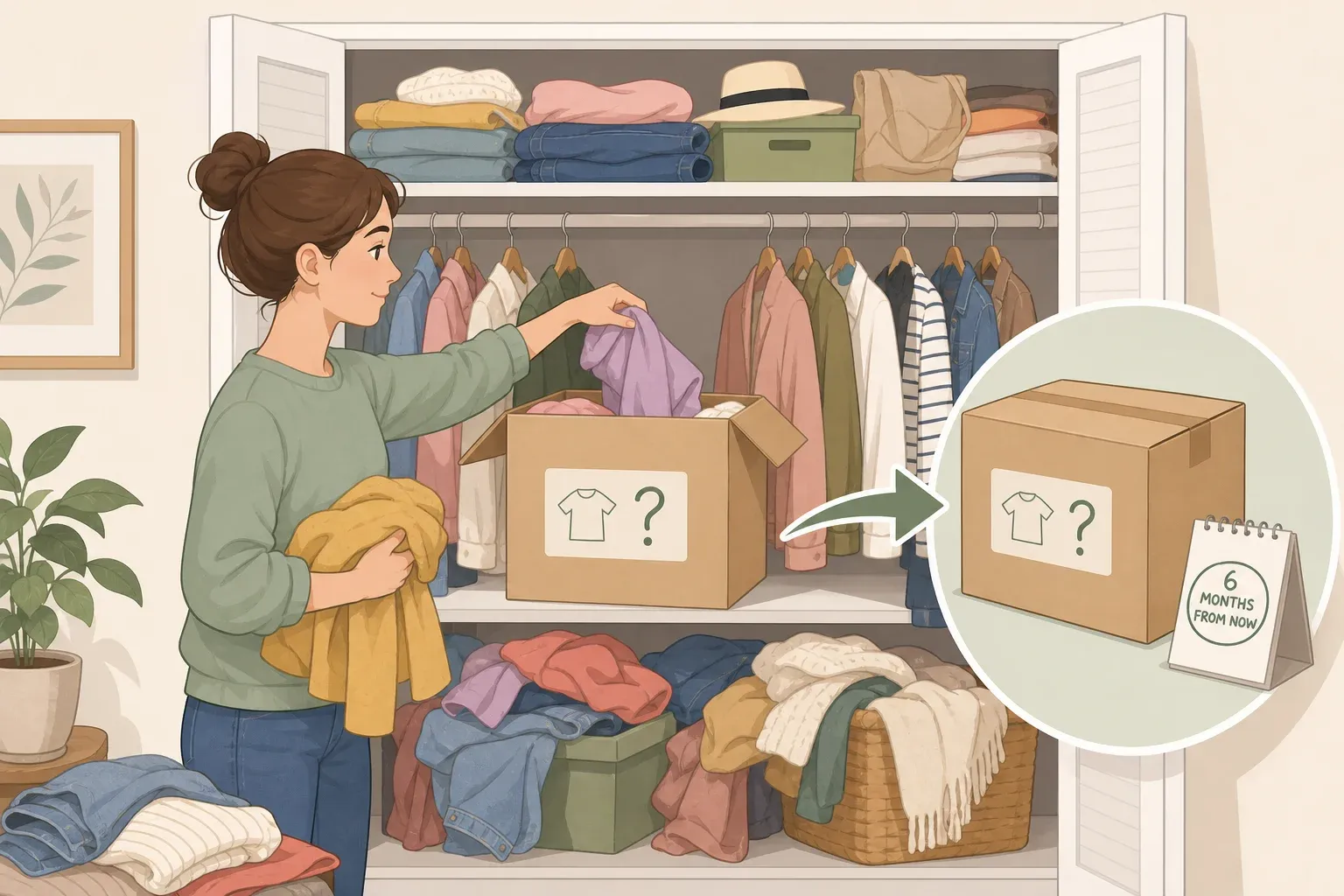
Pull everything out of the zone. Dump the entryway basket, clear the counter, or empty the toy corner completely.
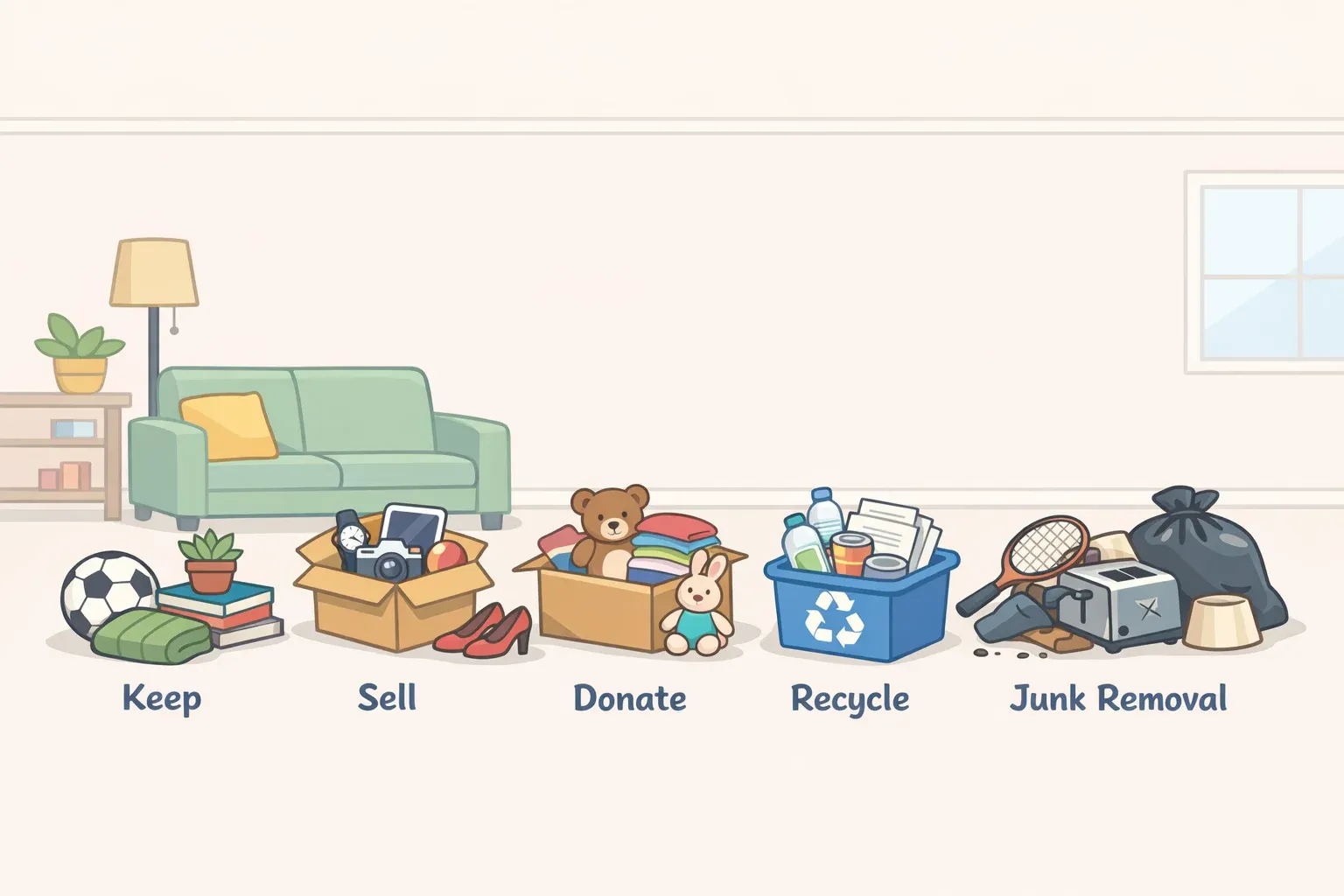
Sort into three piles: keep, donate, trash. Use whatever's already in the house, a shoebox for small items or a shopping bag for donations. Practically Organized notes that fancy containers are rarely the right first step; the real work is deciding what stays, what goes, and what actually supports your life right now.
Only put back what you'll actually use in that spot. If a coat hasn't been worn in a season or three pairs of scissors live in one drawer, that's your cue to let the extras go.
You'll know this step worked when the "keep" pile for that zone is noticeably smaller than what was there originally. Everything after this habit is just managing that smaller volume, so don't skip it to get to the fun part of buying organizers.
Habit 2: Give every category a fixed home and a hard capacity limit
A container's job isn't to hold as much as possible. Its job is to create a boundary. If a basket is overflowing, the fix usually isn't a bigger basket; it's fewer items. This works especially well for categories that tend to multiply on their own: craft supplies, water bottles, coffee mugs, toys, office supplies, and pantry goods.
Apply the limit to your test zone:
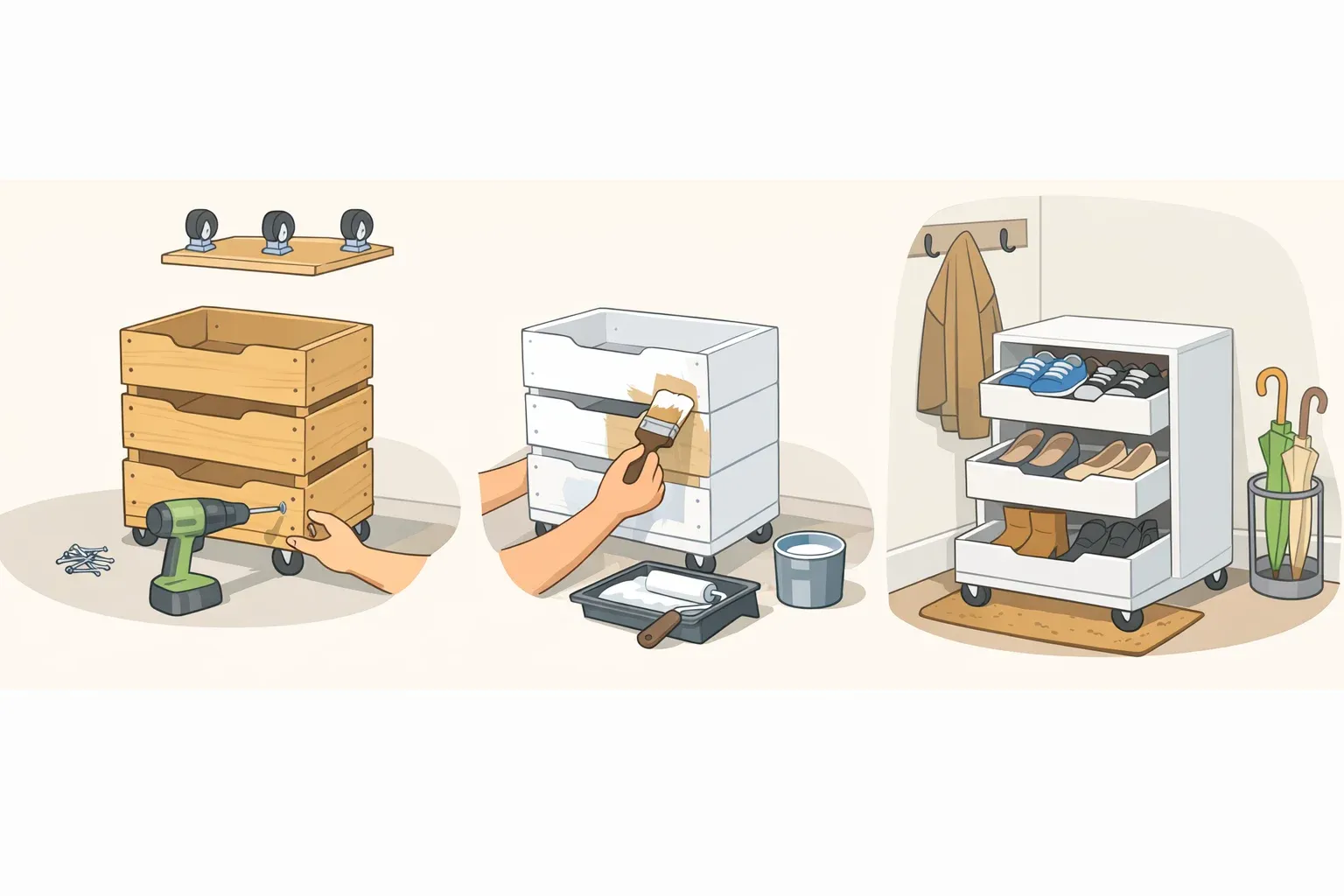
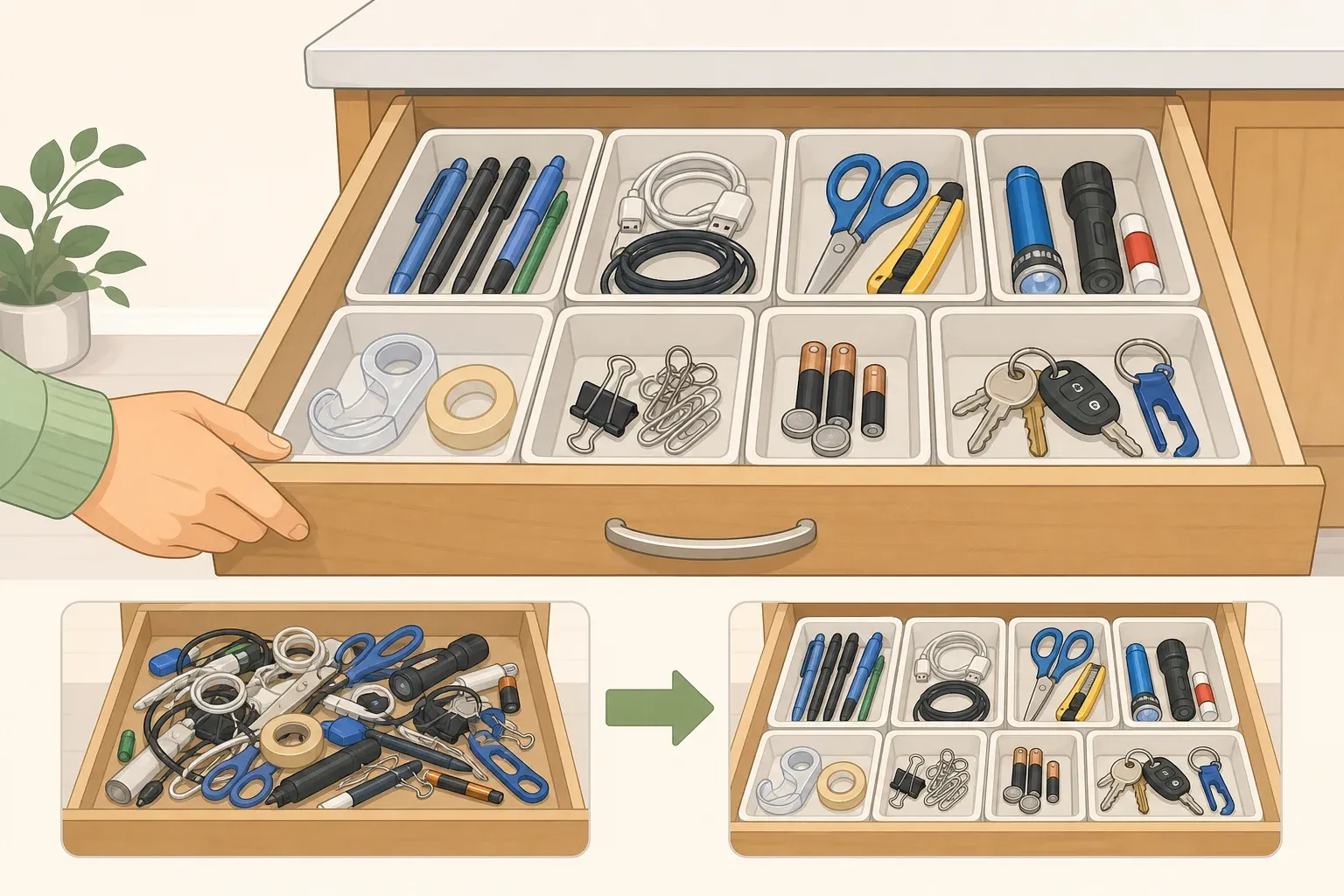
Assign one container per category, sized to what actually fits without stacking or cramming. For an entryway, that might be one shoe tray and one small mail tray.
Treat "full" as a decision point, not a storage problem. When the tray fills up, stop and ask whether everything in it is still needed before grabbing a bigger tray or letting things pile on top.
Resist upsizing. If you keep swapping in larger bins every time a category grows, the boundary stops meaning anything.
You'll know this habit is working if you can point to the one shelf, tray, or drawer that holds each clutter-prone category in your home, and that category doesn't spill past it. If it does, that's information, not failure. It means it's time to edit again, not organize harder.
Habit 3: Set rules for what enters the home
Paper is one of the easiest things to let pile up because deciding what to do with each piece feels small in the moment. The FTC recommends keeping certain documents secure long-term: birth certificates, Social Security cards, marriage or divorce decrees, and citizenship papers. Auto titles and home deeds should stay filed for as long as you own the property, and tax returns are worth keeping indefinitely, with other tax-related records held for seven years.
For everything else, the FTC lays out a simple rhythm:
Shred credit card and utility bills right after paying them
Shred pay stubs once you've checked them against your W-2
Shred sales receipts unless they're tied to a warranty, taxes, or insurance
Hold on to home-improvement receipts until you sell the house, since they can affect capital gains tax
If you're not sure where something falls, the FTC suggests checking with an accountant or calling the IRS directly rather than guessing. Shredding documents with personal information also lowers your risk of identity theft, so this habit does double duty as a security measure, not just a tidiness one.
The same "decide on entry" logic applies to digital clutter. Unsubscribe from mailing lists you never read, clear out the downloads folder once a week, and delete duplicate photos or screenshots instead of saving everything just in case. None of this needs a special app or system. It just needs to happen on a schedule instead of never.
Habit 4: Run a short daily reset so items go back to their homes
Keep categories wide and simple rather than color-coded or overly specific. Labels like "shoes," "mail," or "toys" hold up far better day-to-day than an elaborate, aesthetic-driven system does. A system only works if it's easy enough to maintain when you're tired.
Try this routine before bed:
Set a timer for five to ten minutes. That's usually enough for a small zone.
Return items to their assigned home, not a nearby catch-all spot. Shoes go in the tray, mail gets sorted into "action" or "shred," and anything from the living room goes back to its drawer or shelf.
Skip the temptation to toss things into a basket "for now." Throwing shoes, blankets, or toys into a catch-all basket instead of their real spot just delays the job. A task isn't done until the item is where it belongs.
This is the step where Habit 2's fixed homes actually get used instead of just set up once and abandoned. An imperfect system that gets used every night beats a beautiful one that only lasted a week.
Habit 5: Remove outgoing items the same day you decide to let them go
A "later" pile almost never gets addressed. It just becomes more to declutter down the road. This is the step most decluttering advice skips, and it's often the reason bags of donations sit in a closet for months.
Close the loop right away:
Bag donations and put them in the car, so they leave on your next errand instead of waiting for a dedicated trip.
Put recycling out the same day rather than letting it stage in a corner.
Send trash straight to the bin.
Use an opaque bag for donations. A dark, non-see-through bag removes the temptation to dig through and take things back once you've decided to let them go.
Skip stockpiling empty boxes "just in case." Keep one only if you genuinely need it for a warranty return or resale; otherwise it's just clutter waiting to happen.
Once shoes or coats get sorted out during Habit 1, this is the step that actually gets them out of the house instead of leaving the cycle half-finished.
Putting the five habits together
Run through the cycle in your test zone: reduce what's there, give what's left a fixed home with a hard limit, control what's allowed to enter, reset it every night, and remove outgoing items right away instead of letting them wait. Once that zone holds steady for a week or two, move to the next one: the kitchen counter, the toy area, a home office, rather than trying to overhaul the entire house at once.
Success looks like fewer "later" piles, containers that stay within their limit instead of getting swapped for bigger ones, and a home that still functions with mail on the counter and shoes by the door. Those aren't failures, but normal parts of a lived-in house. An imperfect system that's actually used beats a picture-perfect one that gets abandoned after a month, so don't chase aesthetics over function.
Difficulty parting with possessions, physical or digital, is a recognized feature of hoarding disorder when it causes real distress or interferes with daily life. That's a signal to talk to a licensed mental-health professional rather than try another organizing hack. For most people, though, these five habits just feel inconvenient at first, and that's normal too. Stick with the cycle, adjust the capacity limits as your household changes, and give it a few weeks before deciding whether it's working.



Comments
Be the first, drop a comment!