



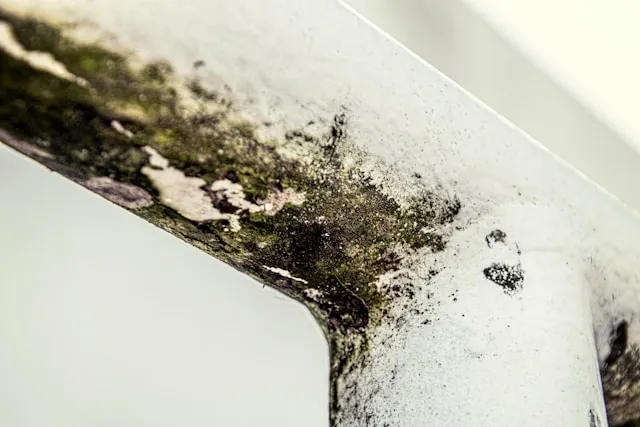
The instinct when spotting mold is to grab bleach and start scrubbing. That instinct is backwards. The EPA's core guidance is that moisture control, not disinfectant, is what actually keeps mold from coming back once it's been cleaned. Learning how to prevent mold from moisture in your home means treating the water problem as the job, and the mold itself as the symptom that shows up after that job gets skipped.
That job looks different depending on what caused the moisture. This guide splits into four scenarios: routine humidity or condensation, a small clean-water leak, a small patch of visible mold, and floodwater. The first three are manageable for an ordinary homeowner once the moisture source is stopped and the affected area stays small and visible. Concealed moisture behind walls or under flooring, mold that keeps coming back, or floodwater all carry different risks and often call for professional help rather than a weekend of cleaning.
Two numbers matter before starting anything. Indoor relative humidity should stay under 60%, ideally between 30% and 50%. Any water source, from a dripping supply line to a fogged window, should get fixed promptly instead of left to dry on its own.
What follows is a practical sequence: assess, prevent, dry, clean, ventilate, and know when to escalate. The routine prevention checklist is the main focus, since that's what most readers need most often. Flood cleanup and larger mold problems get treated as a separate branch, not a bigger version of the same weekend project.
For anyone in a hurry, here's the shape of it:
Measure humidity in the affected room.
Stop or fix the water source if it's safe to do so.
Remove standing water.
Dry the area within 24 to 48 hours when possible.
Clean only after the area is fully dry.
Consider a qualified professional for floodwater or mold covering more than roughly 10 square feet.
Assess the situation before you start
This is a triage step, not a repair. It takes 10 to 15 minutes and doesn't require any special skill.
Start by identifying the water source. A routine leak from a sink, a sweating window, or a washing machine hose is a fundamentally different job than floodwater, which can carry biological and chemical pollutants indoors and turn standing water into a breeding ground for bacteria and mold.
Condensation and an active leak can look similar at first glance, but they need different fixes. Condensation shows up as beaded moisture on cold surfaces, windows, pipes, a toilet tank, and usually points to humidity that's too high for the room. An active leak leaves a wet spot that keeps reappearing or growing even after it's wiped up, which means it needs to be traced back to a supply line, seal, roof, or foundation problem rather than just dried.
If it's safe to do so, stop the water first: shut off a supply valve, move a hose, close a window. The EPA lists finding and fixing the water source as step one in mold prevention, ahead of any drying or cleaning.
If mold is already visible, estimate the area. The EPA treats mold covering more than roughly 10 square feet, about a 3-by-3-foot patch, as a major mold event that may require professional remediation.
If the water came from a flood, the drying principle below still applies, just on a much longer timeline. The EPA's flood guidance still calls for drying the home completely, but with more caution around contamination, protective gear, and documentation, and it's worth bringing in a qualified remediation professional if the cleanup is more than can be managed alone. Either way, floodwater is a different job with different risks, not simply an oversized spill.
Reduce humidity to prevent mold with a monthly check
Set aside 15 to 20 minutes a month for this. It's a beginner-friendly, ordinary homeowner check that needs a hygrometer or a humidity-reading thermostat, a flashlight, and a short mental list of known leak points.
The reason this check matters more than any cleaning product sitting under the sink is simple: moisture control is the actual mechanism of mold control. A monthly walkthrough is moisture control for mold prevention in its simplest form, and it catches small problems before they turn into mold problems.
Run through this each time:
Check humidity in bathrooms, kitchens, and basements. Target below 60%, ideally 30% to 50%.
Look under sinks, around window frames, at the water heater, and at washing machine hoses for active drips or staining.
Note any musty smell, even without a visible leak.
If a room reads above 60%, or hovers there consistently, that's the signal to run a dehumidifier, not just crack a window and hope. A window helps when outdoor air is genuinely drier than indoor air; in a humid climate or a damp basement, a dehumidifier set to hold the room in the 30% to 50% range does more consistent work. Don't write off a musty smell or a damp spot as cosmetic. A smell without a visible source often points to condensation or a slow drip hiding inside a wall or under a fixture, which is exactly what a monthly check is designed to catch before it grows.
Success looks like humidity readings holding steady in the 30% to 50% range across the rooms checked, with no drips, stains, or fogged windows and pipes turning up during the walkthrough.
How to dry a wet area to prevent mold
This section applies most directly to contained, clean-water leaks identified during the assessment step. Floodwater follows the same basic principle: dry it out completely, but on a longer timeline covered below. Gather fans, a dehumidifier, and towels or a wet-vac for bulk water before starting.
Remove bulk water immediately. Run fans and a dehumidifier, and open doors and windows if outdoor conditions allow.
Aim for fully dry within 24 to 48 hours. That window is the practical target for keeping mold from taking hold in the first place.
Check anything that stayed wet longer than 48 hours and can't be completely cleaned and dried. The EPA's advice here is blunt: remove those items rather than trying to save them.
A surface feeling dry to the touch doesn't mean the material behind it is dry. Carpet padding, the inside of wallboard, and other absorbent materials can hold moisture long after the visible surface feels fine. Once the visible area looks dry, check the spots that hide moisture longest: baseboards, the bottom edge of drywall, and flooring seams, before calling the job finished. If there's any doubt, use a moisture meter or plan on a longer drying window. Don't reinstall flooring, repaint, or close up an opened wall until those readings come back dry; sealing in moisture just moves the problem out of sight instead of solving it.
Flood-related drying is the exception to the 24-to-48-hour target. It often takes several days to weeks, even with fans, dehumidifiers, and heaters running around the clock. That longer timeline is normal for a flood, not a sign the drying is going wrong.
The area passes the test when there's no musty odor, dry readings on a moisture meter if one was used, and no dampness returning after 24 hours.
Clean mold on hard surfaces: if you already see it
Put on gloves, an N95 respirator, and goggles before disturbing any mold. The EPA lists this protective gear as important safety equipment whenever mold is being cleaned, not something to grab after the scrubbing has already started.
Clean hard, nonporous surfaces with mild detergent and water, then dry completely. On flood-contaminated surfaces that don't absorb water, an EPA-registered disinfectant can follow as a second step, applied exactly per its label instructions.
A few things to avoid here matter more than the cleaning itself:
Skip the bleach. It isn't recommended as a mold remover, and mixing bleach with ammonia or other cleaners produces poisonous gas. Never combine cleaning products.
Don't scrub aggressively or stir up dust. Wipe gently with a damp cloth so spores don't scatter further into the room.
Don't paint or caulk over a moldy surface. Sealing it in hides the problem instead of removing it.
Porous materials like carpet and ceiling tiles often can't be salvaged. If they can't be fully cleaned and dried, throw them out rather than trying to nurse them back.
Success here means the surface looks visibly clean, dries fully, and stays odor-free with no discoloration returning within a few days.
Use ventilation to prevent recurrence
Healthy indoor air depends on regularly exchanging air with the outdoors, and that job typically falls to exhaust fans or whole-house mechanical ventilation (DOE, 2024).
A DOE-backed study of 51 recently built homes across Florida, Georgia, and South Carolina found the biggest issue wasn't missing equipment. It was that installed systems often weren't being run correctly, and a related review found most residents didn't know how to operate their home's ventilation, with half the systems left unlabeled (DOE, 2024; DOE, 2024). When those systems were actually operated properly, pollutant levels measured lower, and whole-house systems working as intended can reduce carbon dioxide by 30% and cut radon and nitrogen dioxide by 42% in the homes studied (DOE, 2024). That's data from a small regional sample, not a nationwide measurement, but the takeaway travels well beyond those three states: a fan that's installed but never run isn't doing its job.
The practical version of that lesson: locate the bathroom and kitchen exhaust fans, and actually run them during and after showering or cooking rather than assuming they're handling it on their own. Check whether the fan vents outside or just dumps air into the attic, and check the manual or the switch panel for a timer or humidity-sensor setting; that's the fastest way to know if the system on hand is doing more than sitting there.
When DIY stops and a professional or doctor is needed
Mold covering more than 10 square feet, or any event the EPA would classify as a major mold event, may require a qualified remediation professional instead of continued home cleaning.
Floodwater cleanup carries its own separate set of risks. It may stir up dust-laden contaminants like lead or asbestos, so children, pregnant people, and anyone with asthma or a weakened immune system should stay away from moldy sites and sit out flood cleanup work.
Documentation matters here too. Photograph flood damage before making any repairs, since FEMA assistance can require photos and receipts to process a claim.
If anyone in the household develops coughing, wheezing, or other breathing problems after mold exposure, that's a call to a healthcare provider, not a reason to keep cleaning.
What success looks like going forward
Put the monthly humidity and leak-point check on a recurring reminder, and write down what a normal reading looks like in each room so a real change actually stands out. If a room drifts above 60% for more than a few days, or a musty smell shows up without an obvious cause, that's the trigger to run the sequence again: find the source, dry it fast, clean once it's dry. The skill worth building isn't cleaning mold well once. It's catching the next leak early enough that cleaning barely factors in, and recognizing the moment a problem, whether it's square footage, standing floodwater, or someone's breathing, has moved past what a homeowner should handle alone.







Comments
Be the first, drop a comment!