



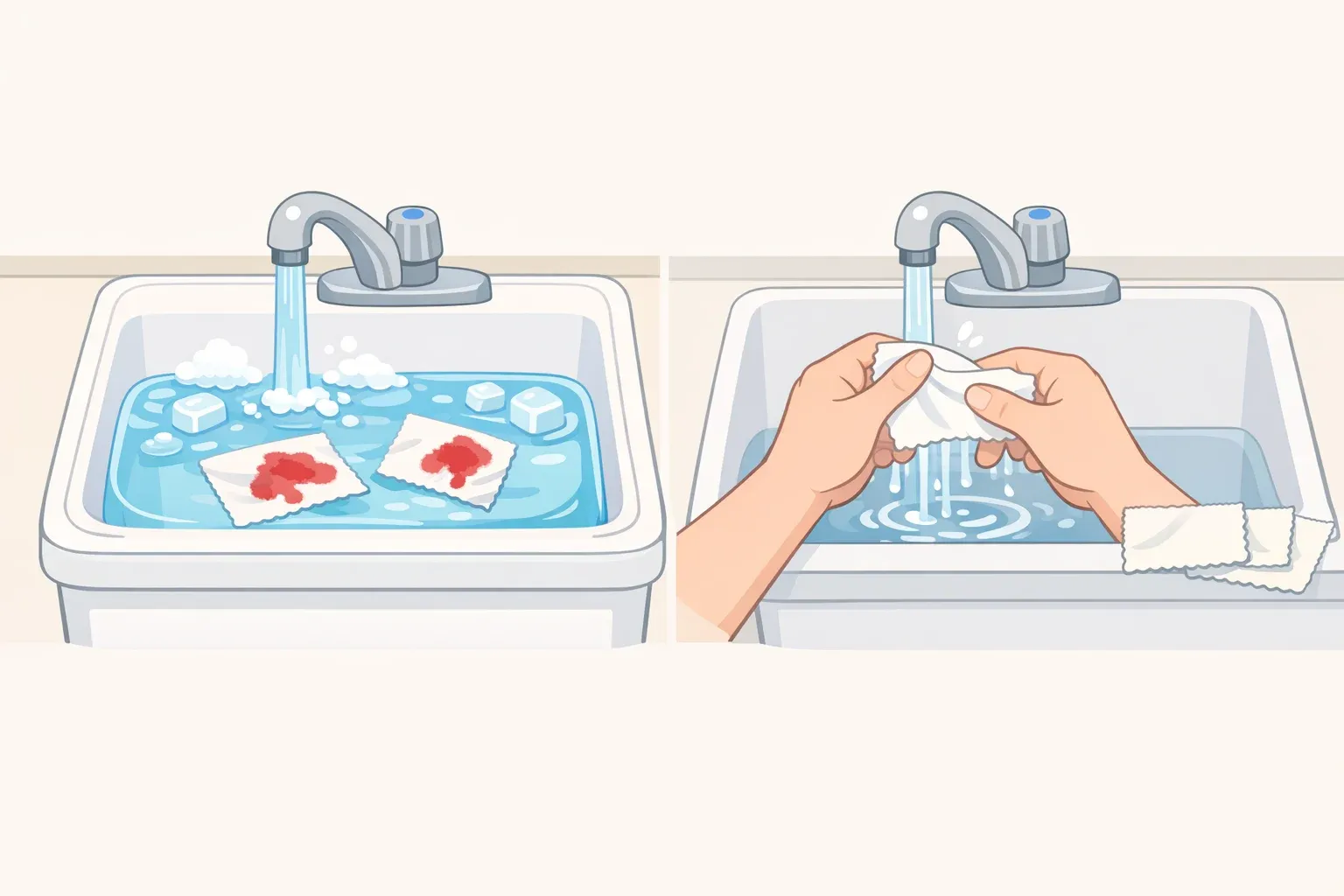
Blood is a protein stain, and that single fact explains why the usual instinct, reaching for hot water, works against you. Heat can make a blood stain harder to remove than it was to begin with, while cold water and a mild cleanser tend to lift it right out. That's the whole logic behind how to remove blood stains from clothes: treat it cold, treat it fast, and save the heat for after the stain is gone.
Wirecutter staff tested that logic directly in 2023. They applied pig blood, chosen for its similarity to human blood in coagulation and cell size, to swatches of common clothing and bedding fabrics. Most fresh stains came out with nothing more than cold water and inexpensive household cleaners, provided someone treated them quickly. It was hands-on staff testing rather than a controlled study, but the pattern held up well enough to build a method around it.
Real Simple's estimate puts the basic treatment at about $10 in supplies, 15 minutes of hands-on work, and an hour total from start to soak. What follows walks through that treatment step by step: the first-minute response, how to escalate if the stain survives round one, and when to stop and hand the garment to a professional instead.
The short version
Before the detail, here's the decision path that governs everything below:
Fresh stain: rinse with cold water, work in a mild detergent or enzyme product, then rinse again and inspect.
Dried or persistent stain: move to a label-approved enzyme soak, then reassess before trying anything stronger.
Heat-set stain or delicate garment: manage expectations, and lean toward a professional cleaner rather than improvising.
Learning how to get blood out of clothes usually comes down to picking one of those three paths and sticking with it, rather than throwing several products at the stain at once.
Before you touch the stain, check two things
Check the care tag first. Treat fiber identification as step one of any stain removal because the right process differs by fabric. Note whether the tag says dry-clean-only, and whether the garment is silk, wool, or heavily embellished. If it is, skip down to the garment-specific section below before applying anything.
Then test whatever product you're about to use, whether that's dish soap, an enzyme concentrate, or hydrogen peroxide, on an inside seam before it touches the visible stain. Real Simple recommends this spot-test specifically because it can reveal discoloration before treatment reaches the part of the fabric anyone will actually see.
One shortcut worth knowing: laundry products labeled "bio" or "enzyme action" usually contain enzymes formulated to break down protein stains like blood. Check the product's own fiber restrictions anyway, since formulas vary from brand to brand.
How to remove fresh blood stains from clothes
You'll need cold running water, a clean cloth or soft toothbrush, mild dish soap or an enzyme-based detergent, and gloves if the blood is still fresh.
Start now, and glove up if the stain is fresh. Speed decides whether the stain comes out at all, according to Real Simple.
Rinse the stained area with cold water, then inspect the stain.
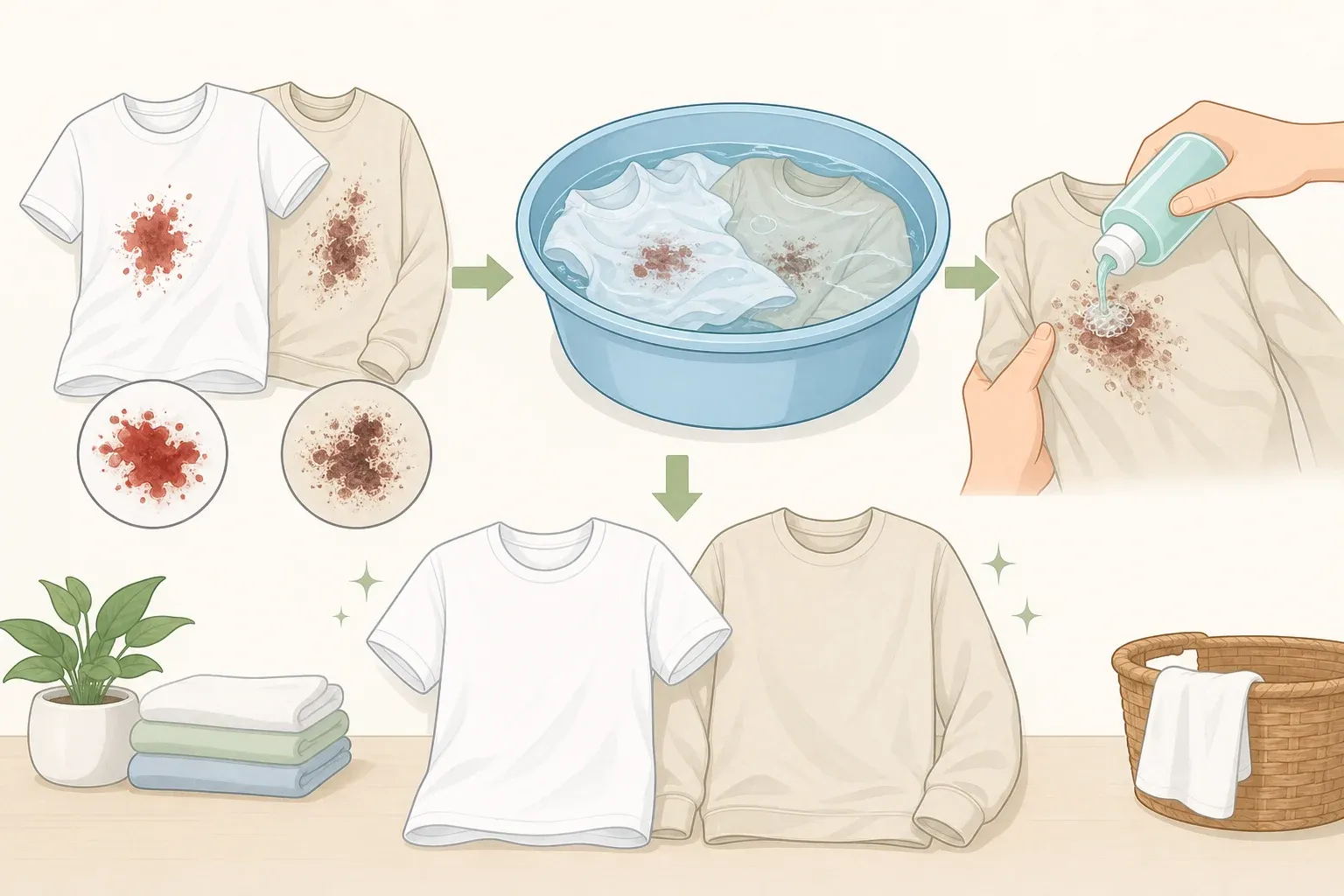
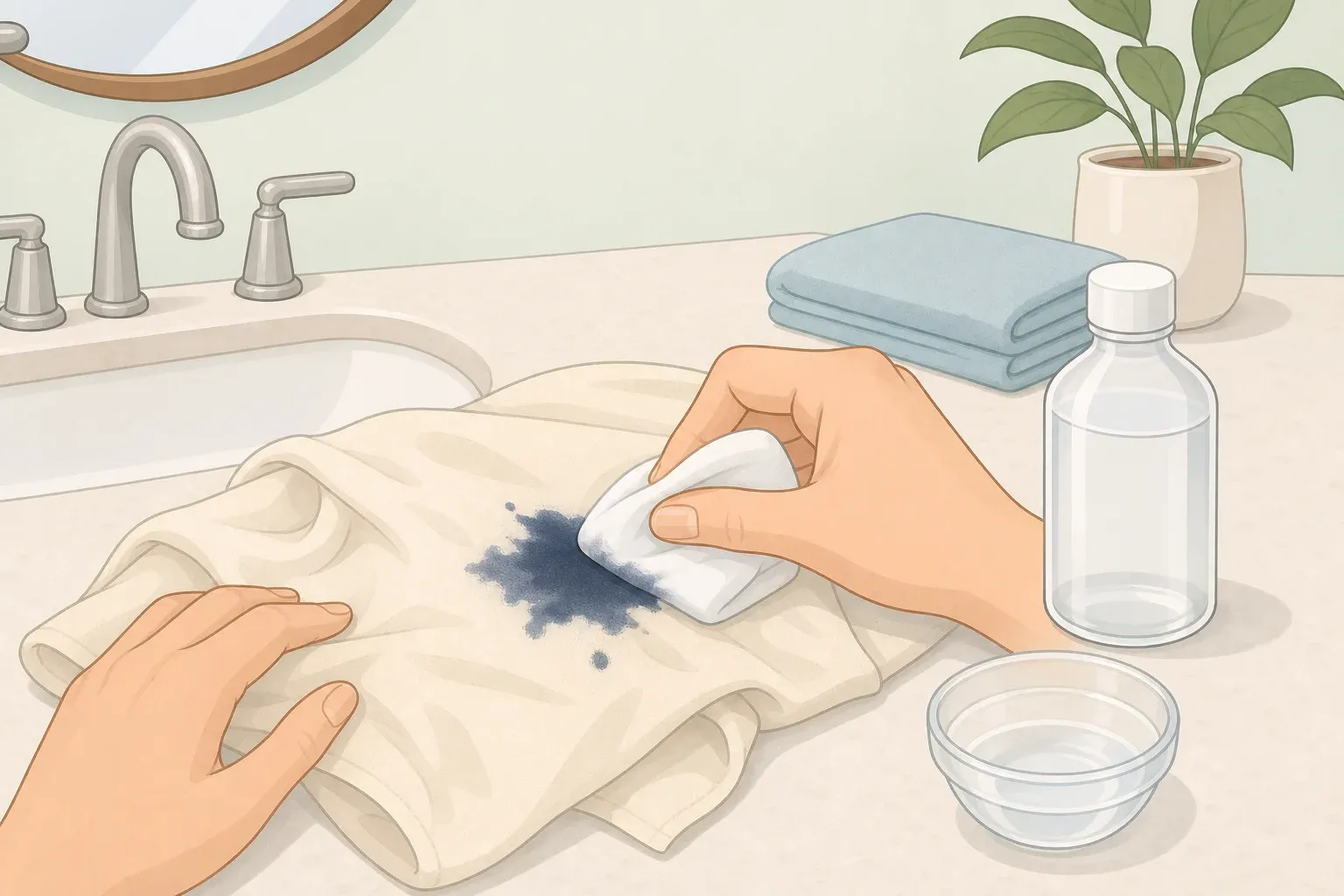
Work a small amount of dish soap or enzyme detergent into the stain, rubbing gently with a clean cloth or soft toothbrush. Enzyme-based cleaners are the go-to recommendation because their enzymes help break down protein-based residue.
Rinse again with cold water and check the spot in good light. If it's gone, launder the item per the care label, inspect the spot once more before drying, and air-dry if any trace remains. If the stain is lighter, repeat this same treatment. If it's unchanged, stop escalating on your own and move to the dried-stain steps below.
Why cold water works (and where it bends)
Hot water feels like it should work harder, but with blood it backfires. Heat cooks the protein, causing it to coagulate between fabric fibers, the same way heat firms up an egg white, and once that happens, the stain bonds to the cloth instead of sitting on top of it. Real Simple's advice lines up exactly: hot water can set a blood stain rather than lift it out.
"Heat" isn't limited to the tap, either. An iron or a dryer sets a protein stain just as effectively as hot water does, which is why the rule holds well past the initial rinse.
The rule does bend once the stain is actually gone. Iowa State's guidance for pre-soaking calls for cold-to-lukewarm water, under 100°F, specifically during treatment and soaking. Once you've confirmed in good light that the stain is gone, a warm wash with a fabric-safe detergent is fine, per Real Simple's own process for laundering previously stained garments. The practical limit is simple: no dryer, no iron, until the spot has passed that visual check.
How to remove dried blood stains from clothing
If the stain is already dry, or it survived the fresh-stain steps above, expect a longer soak and a second inspection rather than a quick fix.
Start with an enzyme pre-treater. Mix it with cold water according to the product's own label, and soak the garment for several hours or overnight; Real Simple recommends this longer window specifically for stubborn stains like this one. Check the spot in good light afterward. If it's lighter, repeat the label-approved soak. If nothing has changed, don't keep repeating it on your own; move to the next step instead.
For a trace that won't budge, test standard 3% hydrogen peroxide on an inside seam first: apply a drop, wait five minutes, then blot with a white cloth. If color transfers, skip this fabric entirely. If it passes, apply peroxide directly to the stain and blot from the outside in.
Cleaning Science's laundry guide notes that the clearest evidence for this technique concerns fresh blood rather than dried stains, so treat it as a reasonable option worth trying, not a guaranteed fix. Stick to the standard 3% concentration; stronger versions can burn skin and damage fabric. And never combine peroxide with vinegar or with chlorine bleach; the reaction can produce corrosive acids or release dangerous gas. If you'd rather try vinegar, salt, or baking soda instead, use one of those in place of peroxide, not alongside it, per Real Simple's alternate methods.
If the stain is still there after that, and the fabric is washable and colorfast, the American Cleaning Institute recommends laundering with oxygen bleach, or with chlorine bleach only if the care label specifically allows it. Iowa State Extension cites that recommendation rather than issuing it directly. One caveat worth remembering: that advice is specific to blood. Chlorine bleach can worsen a rust or red-clay stain even when it's approved for blood on that same fabric, so don't assume it's safe for every stain type on the same garment.
Some stains won't come all the way out, and it's worth knowing that going in. A blood stain that's already been through a hot wash, an iron, or a dryer may have been set and could be permanent, per Real Simple. Further treatment may lighten it, but full removal is less likely at that point. If the garment is valuable enough to warrant more than one attempt, this is the point to hand it to a professional cleaner instead of reaching for stronger chemicals at home.
Matching the treatment to the garment
The steps above cover everyday clothing, but a few categories need adjustments.
Everyday washable clothing (cotton and standard polyester blends): Follow the steps above as written; no adjustments are needed.
Activewear and sports uniforms: Treat the stain with cold water first, then follow the garment's care instructions for washing. Skip fabric softener because it can reduce moisture-wicking performance. Wash the garment inside out to protect printed numbers, and air-dry it when possible.
Silk, wool, dry-clean-only, or embellished garments: Follow the care label and consider using a professional cleaner. Some low-temperature enzyme products are designed for silk, but they may have strict temperature and chemical restrictions. A detergent that is safe for cotton is not necessarily safe for wool or silk.
Once any treatment above appears to have worked, wash the item according to its care label, check the spot again in good light, and air-dry instead of machine-drying if there's any doubt left.
For a small fresh stain, the first rinse and a little dish soap may be enough. The escalation ladder above exists for the stains that don't cooperate that easily.
That cold-water habit carries over to other protein-based marks like sweat, since Iowa State classifies sweat, blood, grass, and mud all as protein stains. It doesn't carry over blindly, though. Grass stains are partly a dye problem from chlorophyll rather than a pure protein stain, so a uniform with both blood and grass on it may need two different approaches on the same fabric. The care label and the specific stain in front of you still make the final call.
The real judgment call is knowing when to stop treating something yourself. If the fabric is delicate, the label says dry-clean-only, or the garment matters enough that a failed attempt would be worse than the stain itself, protect it rather than keep experimenting. A professional cleaner is worth the cost at that point, and far cheaper than replacing the garment.








Comments
Be the first, drop a comment!