



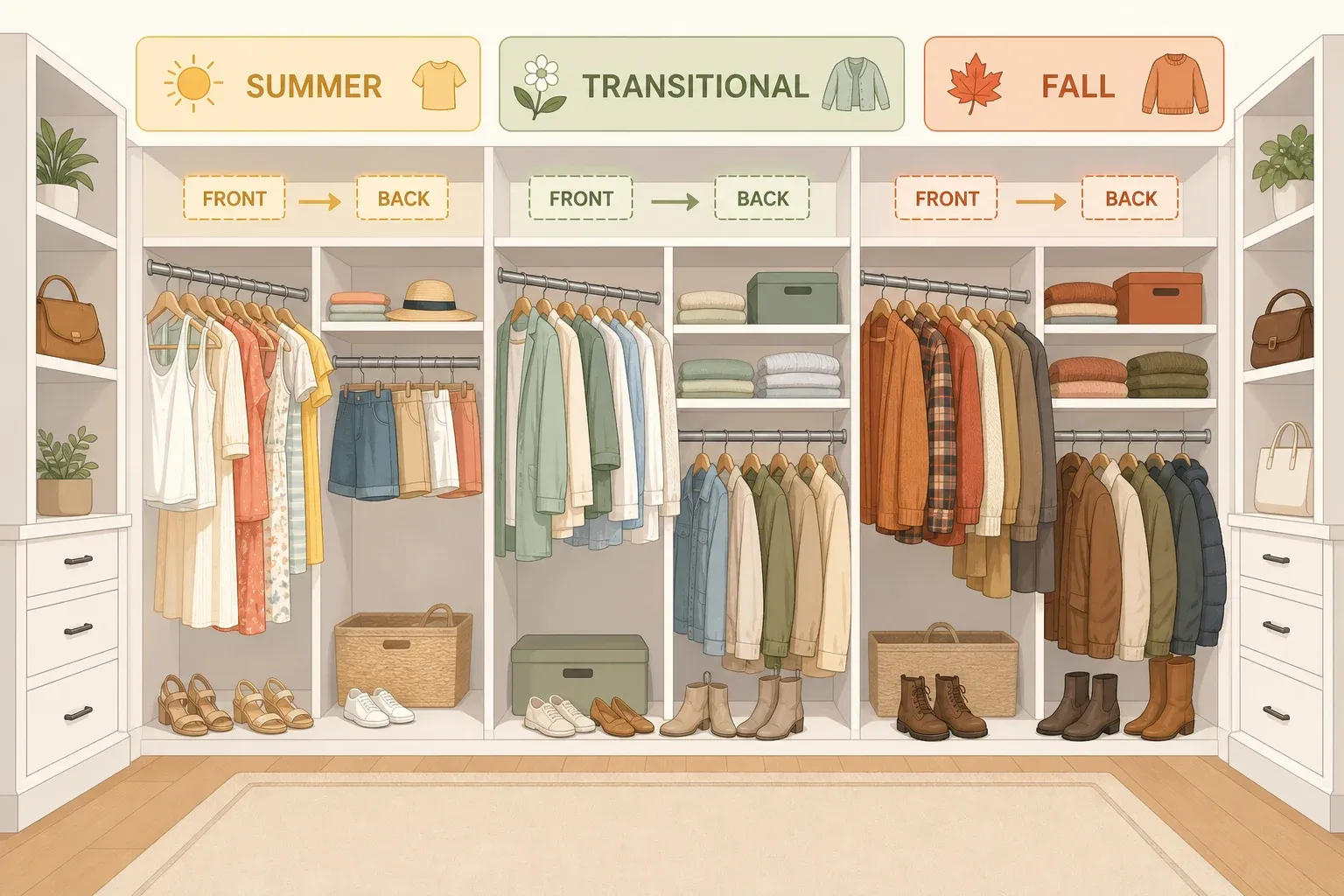
Before you move a hanger, decide which clothes need to be easiest to reach. Map where things live before you touch a single sweater, so the clothes you grab on a rushed morning are already sitting front and center.
A seasonal wardrobe swap simply means rotating in-season and off-season clothing twice a year, once in spring and once in fall, so your closet only holds what actually fits the weather. Rose City Professional Organizing points to a simpler cue than a date on the calendar: cooling weather is the real signal to start, and getting it right changes more than storage space. It shapes how the whole day starts, since a closet is usually the first decision anyone makes each morning.
September doesn't mean summer is fully over, though. Light layers, sneakers, or a rain jacket may still earn a spot in the rotation this month. This guide splits clothing into three groups: summer-only pieces done for the year, fall pieces moving to the front, and transitional pieces staying within reach until the weather actually turns.
Good Housekeeping describes setting a one- to two-hour timer for a first pass at the closet. Treat that window as a start. Sorting, cleaning, and storing everything else can stretch across a few shorter sessions instead.
What you'll need
Storage bins or bags: breathable canvas boxes, garment bags, or airtight plastic totes, depending on the fabric going inside
Laundry detergent or dry-cleaning access for anything headed into storage
Acid-free tissue paper for delicate or embellished pieces (optional)
A marker or printed labels for every container
A donation box, plus a separate, clearly marked bag for anything that needs mending
Matching hangers, if you want a more simplified hanging section (optional)
Before you start
Clear a bed or section of floor to sort onto. You'll need somewhere to spread out keep, donate, sell, repair, and recycle-or-discard piles rather than working straight out of the closet. Decide right now where the donation box and repair bag will physically sit. Keep them outside the closet until each has actually left the house; otherwise they tend to migrate back onto a hanger.
Check whatever storage location you're planning to use, whether that's a closet shelf, under-bed space, or a guest room, for humidity and temperature swings before you commit anything to it. This is a beginner-friendly project for everyday clothing, but expensive, vintage, or delicate pieces deserve a bit more care. Pad them with acid-free tissue paper before boxing, since regular tissue can break down fibers over time. Coats or fancy dresses are also worth a trip to the dry cleaner rather than a home wash.
How to organize a closet for fall in three zones
Faster mornings don't come from owning fewer clothes. They come from zoning what stays, based on how often you actually reach for it. Before you move anything, decide where bulky coats and knits will live, where scarves and gloves go, and keep everyday core pieces in the most accessible spot while formal or rarely worn items move somewhere harder to reach.
Set up three physical zones before you touch a single garment.
Active zone, eye level, front and center: fall pieces you'll actually wear most weeks, like go-to sweaters, daily bottoms, and your regular jacket.
Secondary zone, still easy to grab but not prime real estate: transitional pieces such as light layers, sneakers, or a rain jacket you'll still need some mornings this month.
Low-access zone, top shelf, back rod, or a bin: occasion wear and anything worn only a few times a season.
The goal of fall closet organization isn't about building a picture-perfect capsule wardrobe, it's about making it easy to see what you own and grab what you actually want to wear.
Skip the urge to pull every warm-weather item just because the calendar changed. If it's still mild where you live, leave breathable layers and closed-toe flats in the secondary zone instead of boxing them up with the true summer-only pieces.
Bring fall and transitional pieces into their zones first
Retrieve your stored fall and winter pieces before you deal with summer clothing at all. Doing this first tells you exactly how much closet space fall actually needs, so you're not storing a summer bin only to discover there's nowhere to hang a winter coat.
Edit before you rehang. Only return what you genuinely want and expect to wear this season. A simple check: if you wouldn't choose the item for an ordinary fall day, it goes into the donate, repair, or sell pile instead of back on the rod. Take mended or damaged pieces to the tailor before they return to rotation rather than shelving them as-is.
Place items by zone, not by habit. Everyday sweaters, go-to bottoms, and your regular jacket go in the active zone; transitional layers and shoes go in the secondary zone; occasion pieces move to low access.
Watch for pieces that work in both seasons, like a lightweight cardigan or a long-sleeve tee you'll still wear into October. Those belong in the secondary zone rather than either extreme, since you'll reach for them on cool mornings and milder afternoons alike.
Sort shoes and accessories in their own session instead of mixing them into the clothing pile. Work a closet swap category by category, shoes first, then clothes and accessories, since each group calls for different keep-or-store decisions.
Switch to matching hangers as you go, if you're using them. It creates a more simplified look and frees up hanging space.
Stand in front of the closet when you're done and try pulling together three everyday outfits from the active zone without shifting a stack or moving occasion wear out of the way. If you're still digging, the zone map needs another pass, not more clothes removed.
Clear, edit, and store the summer-only pieces
Now that fall pieces have claimed their space, deal with what's leaving.
Pull only true summer-only items, things you won't wear again until next year, like linen dresses, swimwear, or sandals. Leave transitional pieces where you already placed them in the secondary zone.
Sort what's left into keep, donate, sell, repair, and recycle-or-discard piles instead of dumping everything into one box. Move the donate and repair piles to the spot you designated before you started, so they don't get folded back into the keep pile by accident.
Run a quick wear test on anything you're unsure about. If it's been sitting there for the past six months, available and ignored every time you got dressed, that's a strong sign it's ready to go.
Wash or dry-clean everything according to the care label, check every pocket, and let it fully dry before it goes into storage. Stains left to sit for months can become impossible to remove and checking pockets before laundering helps keep moths and other pests away too.
Once everything's clean and dry, don't reach for the nearest bin yet. Container choice depends on fabric type, covered next. If storage space is tight, hold off sealing the summer bin completely until you're sure the fall pieces fit where they need to; a half-full bin is easier to adjust than a taped-up one you have to reopen.
Choosing containers to store summer clothes for fall
Match the container to the fabric, not to whatever's easiest to grab. Vacuum-sealed and airtight plastic bins compress well and block out pests, which suits sturdy, non-lofted pieces like cotton tees and shorts. Use vacuum bags only for items that can tolerate compression: keep down, feather-filled garments, heavy wool, and delicate sweaters out of vacuum bags, and don't overpack a tote. Breathable canvas boxes or zippered hanging bags are Good Housekeeping's pick for avoiding mold.
Sorting by fabric behavior gets easier with a short list to check against:
Fold flat: stretchy knits and anything likely to lose its shape on a hanger.
Hang: wrinkle-prone pieces, when the storage space allows.
Store loosely: down or feather-filled items and heavy wool, hung in a garment bag or placed in a bin without packing tightly.
Check the care label or use a cleaner: garments marked dry-clean-only, vintage pieces, and anything valuable or unusually delicate.
Location matters as much as the container itself. Store bins somewhere cool, dry, and temperature-stable; a closet shelf or under-bed space both work. Skip anywhere prone to humidity, since spaces like garages invite mold and mildew. Clear bins are fine for visibility, but only if they're kept somewhere dark or enclosed; direct sunlight fades stored garments over time.
Label every container. It saves time hunting for something mid-season and makes next year's swap faster.
Route what you're not keeping. Donate or consign anything still wearable. For fabric too damaged to donate, look into textile recycling; some shelters and pet-rescue charities also accept usable fabric for bedding or cleaning rags, so it's worth a quick search before anything goes in the trash.
Adjustments for common situations
No extra storage space: under-bed bins, a guest closet, or a coat closet all work as secondary storage. A well-ventilated attic works too, but only if it stays dry and doesn't swing wildly in temperature.
Short on time: set a timer for one to two hours and use that window just to get the active zone functional, then tackle other categories on later days. Jones has said there's no way to finish a closet swap in a short window, and breaking it into sessions is how she gets through it without burning out.
Still warm where you live: keep more pieces in the secondary transitional zone and hold off boxing up true summer-only items until the temperature actually drops.
Finish, maintain, and repeat
Put the summer-only bin away now: labeled, clean, and stored by fabric type. Leave the secondary zone stocked with whatever transitional pieces still make sense for your climate, whether that's one light layer or several, and don't box those up until the weather where you live has genuinely settled into fall. Take the donation box out of the house this week rather than letting it sit by the closet door, and drop repair items at the tailor before they quietly migrate back onto a hanger.
Check back in on the closet as the weather shifts again instead of waiting a full year for the next big swap. When a new sweater or jacket comes in, something similar should leave, which is what keeps the edit from sliding back into clutter.
For a final check, open the closet tomorrow morning and pull together an outfit. If you can reach it without moving occasion wear or digging through summer clothes, stop there. If not, move only the least-used pieces down to low access rather than pulling more clothes out just to make the closet look sparse. A working closet doesn't need to look like a catalog spread; it just needs to put the right things in front of you.










Comments
Be the first, drop a comment!