



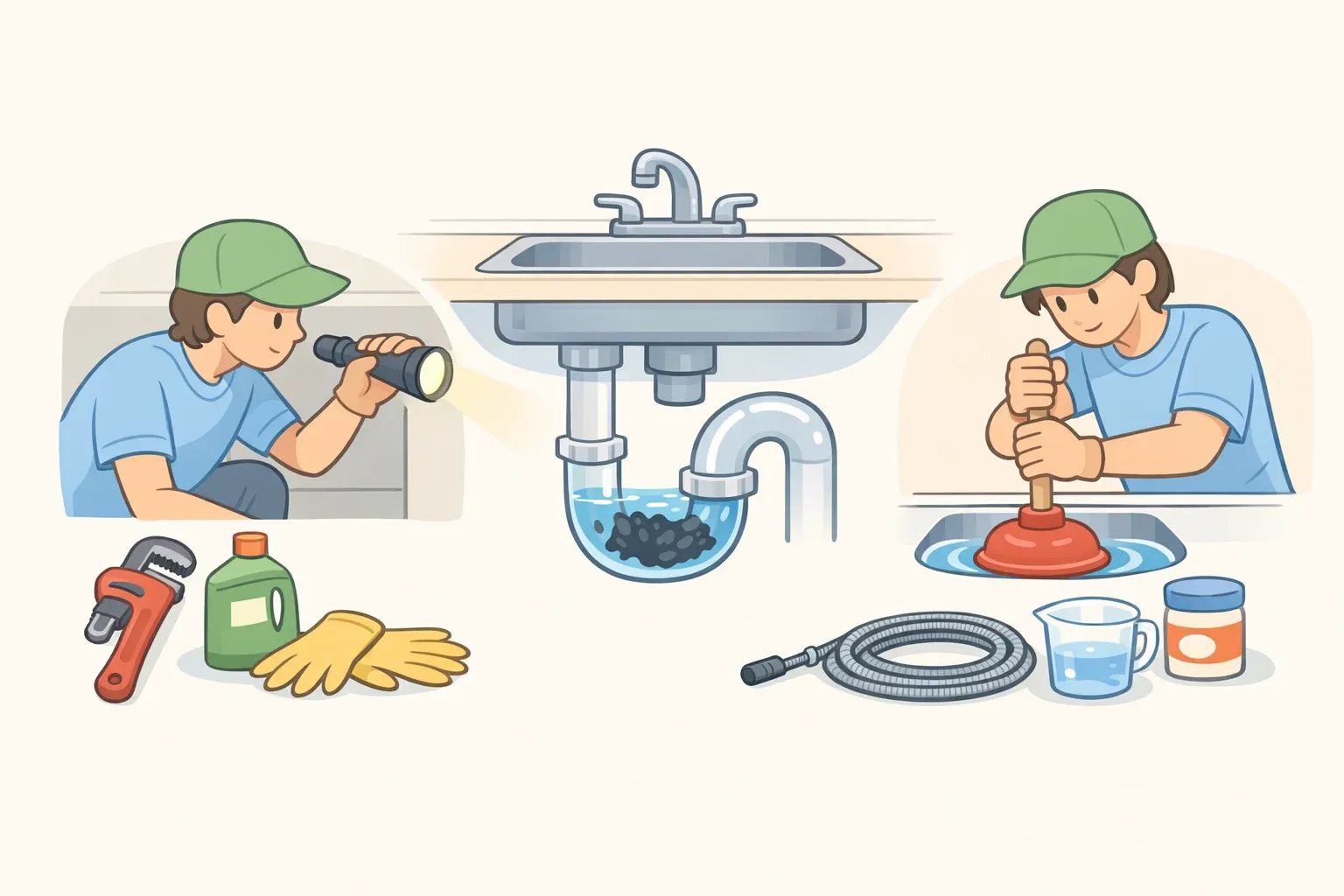
How to unclog a drain: diagnosis, tools, and safe fixes
Most guides on how to unclog a drain open with a recommendation to pour chemicals down it. That's backwards. Around 90% of household drain clogs clear with physical methods, often in under ten minutes, according to HandymanCan. The chemical-first approach persists because it's what the product aisle suggests, not because it's what works best.
This guide walks you through keeping drains clear year-round, and when something does block, clearing it safely using the right method for the right situation. By the end, you'll have a simple monthly maintenance routine, a practical diagnostic framework, and a clear set of escalation rules. No chemistry degree required.
What you'll need before you start: A mesh drain screen for each fixture, a plunger, and optionally a 25-foot hand auger ($20-$30 at any hardware store). That toolkit handles the vast majority of what your drains will ever throw at you.
The cost of getting this wrong is real. A plumber charges $150-$400 to clear a standard fixture clog, $300-$800 if the main sewer line is involved, and emergency weekend calls add another 40-70% on top of that, HandymanCan notes. Prevention and early action are cheaper by a wide margin.
There's also a less obvious reason to stay on top of drain maintenance. Research published last year in AWWA Water Science found that faster flow velocities through household pipes were associated with higher residual disinfectant, lower turbidity, and reduced microbial activity. Pipes that sit stagnant and accumulation-prone aren't just slow-draining; they're a different kind of problem.
The logic here follows a single path: prevent first, diagnose accurately, fix with the least invasive method that works, and know when to stop.
Part 1: Drain maintenance tips to prevent clogs before they form
A clog that never forms costs nothing. The habits below take minutes a month and eliminate many fixture-level blockages before they develop.
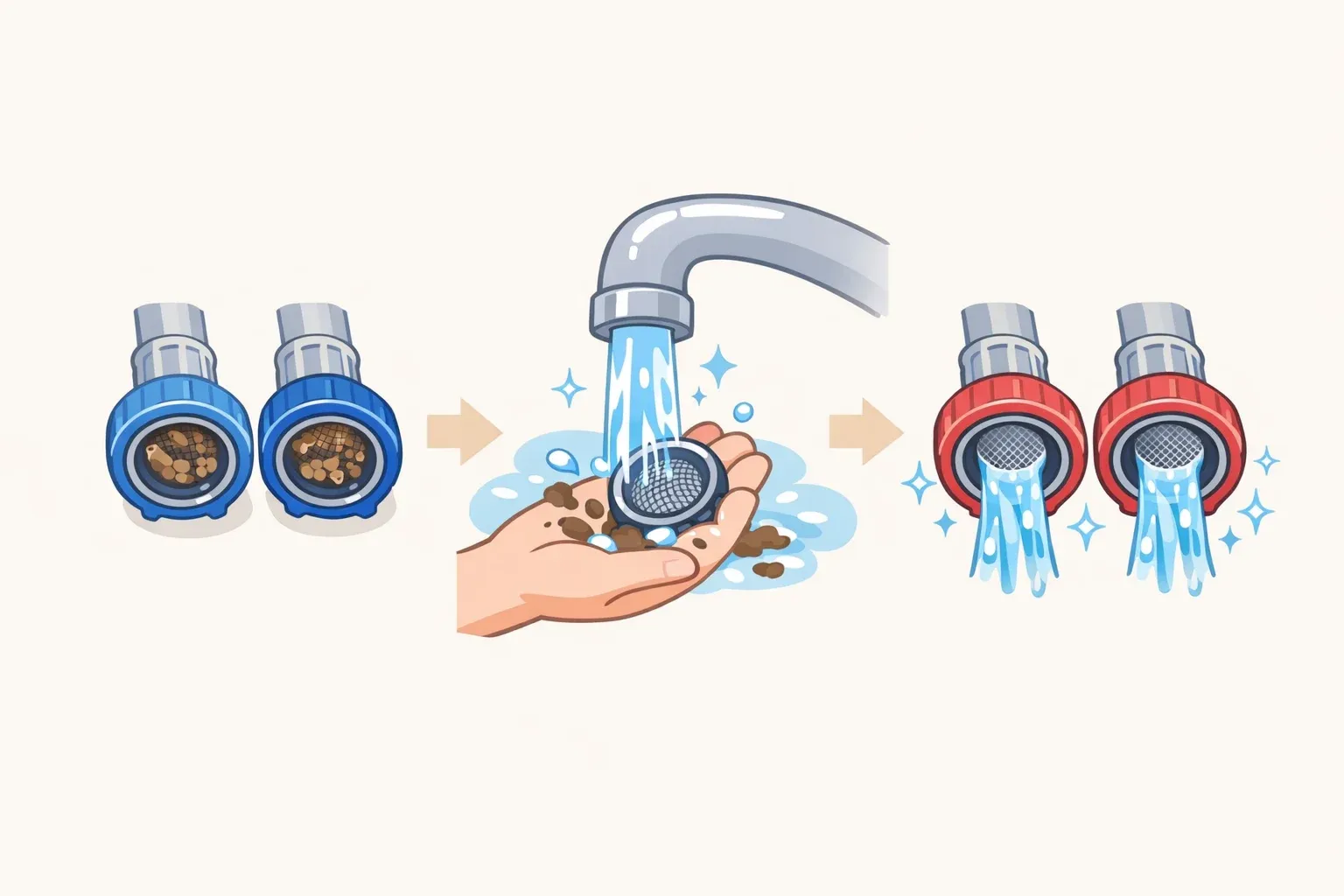
Install a mesh screen over every shower, tub, and sink drain. Hair and debris, the root cause of most bathroom clogs, get caught before they enter the pipe. Screens cost a few dollars each at any hardware store and are one of the cheapest, most effective prevention tools available, per Drain Service and Onsite Pro.
Never pour cooking grease, oil, or fat down the kitchen drain. It flows freely when warm and solidifies into a hard blockage as it cools in the pipe. Collect it in a container and throw it in the trash. Coffee grounds, fibrous vegetables like celery, starchy foods like pasta and rice, and eggshells belong there too, according to Onsite Pro and Drain Service.
Empty drain screens weekly and wipe the rim of shower and tub drains to keep soap scum from bonding with caught hair.
The monthly routine: five minutes, all drains
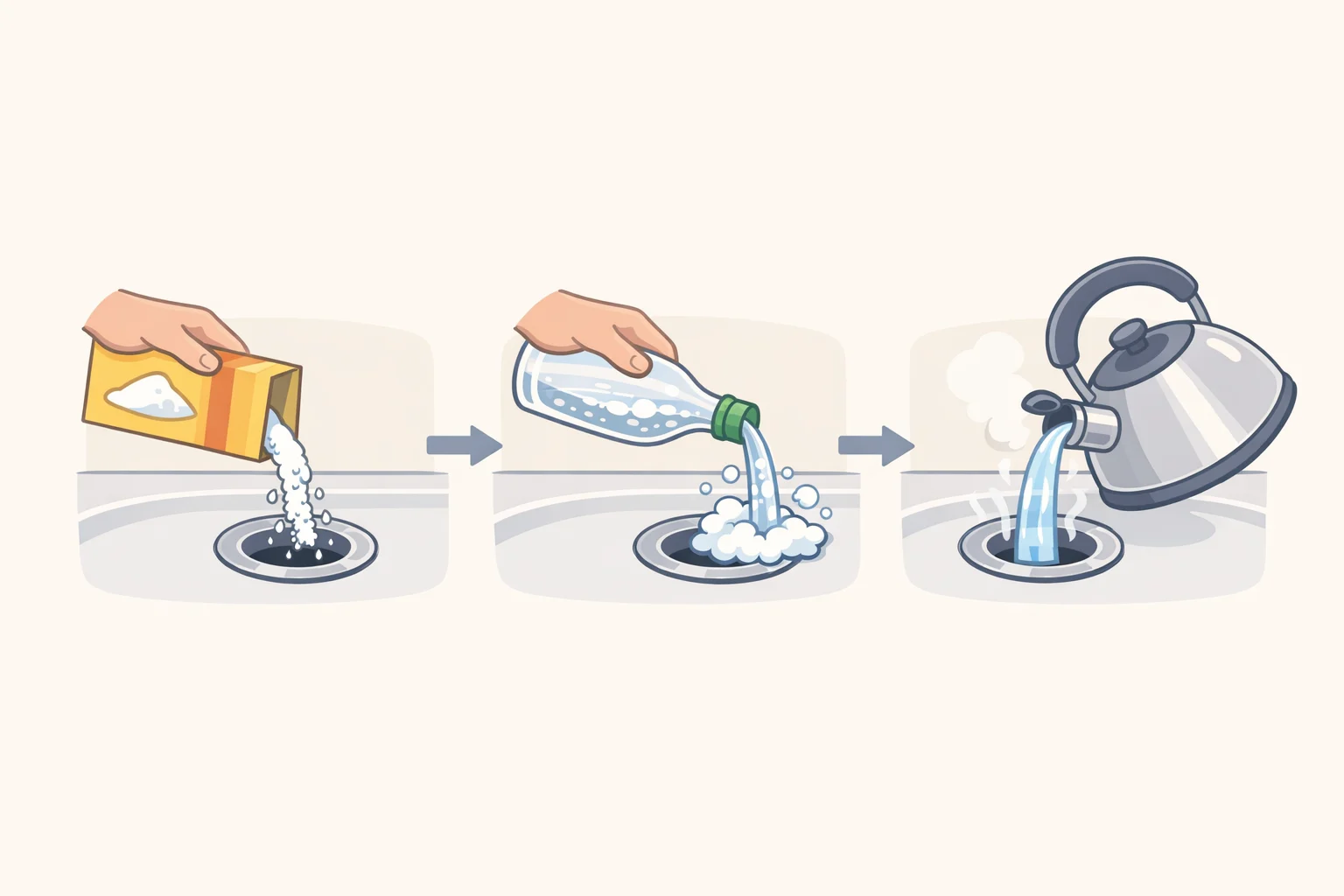
- Run the hottest water from your tap down each kitchen and bathroom sink drain for two minutes. This keeps light grease and soap film from accumulating into a partial blockage, Drain Service advises.
- For any drain with a history of slow flow, follow with 1 cup of baking soda, then 1 cup of white vinegar; wait 15 minutes; flush with hot water. This works on early-stage organic buildup, not established clogs.
- Alternatively: A monthly enzymatic drain treatment digests organic matter using natural bacteria, requires no mixing, and is generally a better fit for septic systems than chemical alternatives, per Onsite Pro and Drain Service.
Choose one approach, the hot-water flush or the enzymatic treatment, and do it consistently. Doing both isn't necessary.
One distinction worth making explicit: baking soda and vinegar are useful for light organic buildup, but not powerful enough to clear an established clog, despite what internet videos suggest. Use them for maintenance, not rescue, as HandymanCan makes clear.
Part 2: How to unclog a sink drain, starting with diagnosis
Treating every slow drain the same way wastes time and risks making things worse. Two minutes of observation usually tells you what you're dealing with, and whether it's safe to handle yourself.
| Symptom | Likely cause | First action |
|---|---|---|
| One slow bathroom sink or shower drain | Hair near drain opening; soap scum | Pull hair by hand or hook; plunger |
| One slow kitchen sink drain | Grease or food debris | Hot water flush; plunger |
| Water standing in sink or tub | Partial soft clog within reach | Plunger; then auger |
| Gurgling when a different fixture runs | Trapped air; can point to a broader drain or vent issue | Check all drains; if multiple affected, call a plumber |
| Foul odor from one drain | Organic buildup in the P-trap | Hot-water flush; P-trap cleaning |
| Multiple slow drains at once | Possible system-wide problem | Stop all DIY; call a plumber |
| Toilet flush causes water to bubble in shower or tub drain | Main sewer line backup | Stop all water use; call a plumber immediately |
Bathroom clogs are 90% hair, and the blockage almost always sits within six inches of the drain opening, often retrievable by hand, HandymanCan reports. Kitchen drain clogs come primarily from grease and food scraps. Grease doesn't announce itself immediately; it accumulates gradually until the drain slows noticeably, Drain Service notes.
The P-trap, the U-shaped section of pipe under every sink, is a common collection point for debris, dropped small objects, and grease accumulation. If a single sink drain won't clear after plunging, the P-trap is the next logical place to check, HandymanCan advises.
Stop-and-call rule: If more than one drain is slow simultaneously, if you hear gurgling from a drain while using a different fixture, or if any flush pushes water up through another fixture's drain, stop all DIY immediately. These symptoms can point to something beyond a simple fixture clog. A plumber is the right call; handymen typically handle simple fixture clogs ($75-$200) but won't touch main-line work, HandymanCan confirms.
Part 3: Safe ways to unclog a drain without chemicals
Start with the least invasive method appropriate to the drain type. Move to the next step only if the previous one fails. Stop before chemicals; call a plumber before forcing anything.
Step 1: Pull the clog out (bathroom hair clogs)
- Remove the drain cover or pop-up stopper. Most bathroom sinks have a pivot rod underneath; pull it free to release the stopper.
- Use your fingers, needle-nose pliers, or a straightened wire hanger with a small hook bent at the tip to pull out hair. Most of it will be within arm's reach. Wear gloves.
- Flush with hot tap water for two minutes.
Expected result: Water drains freely. If not, move to the plunger.
Step 2: Plunge it (kitchen and bathroom drains, soft clogs)
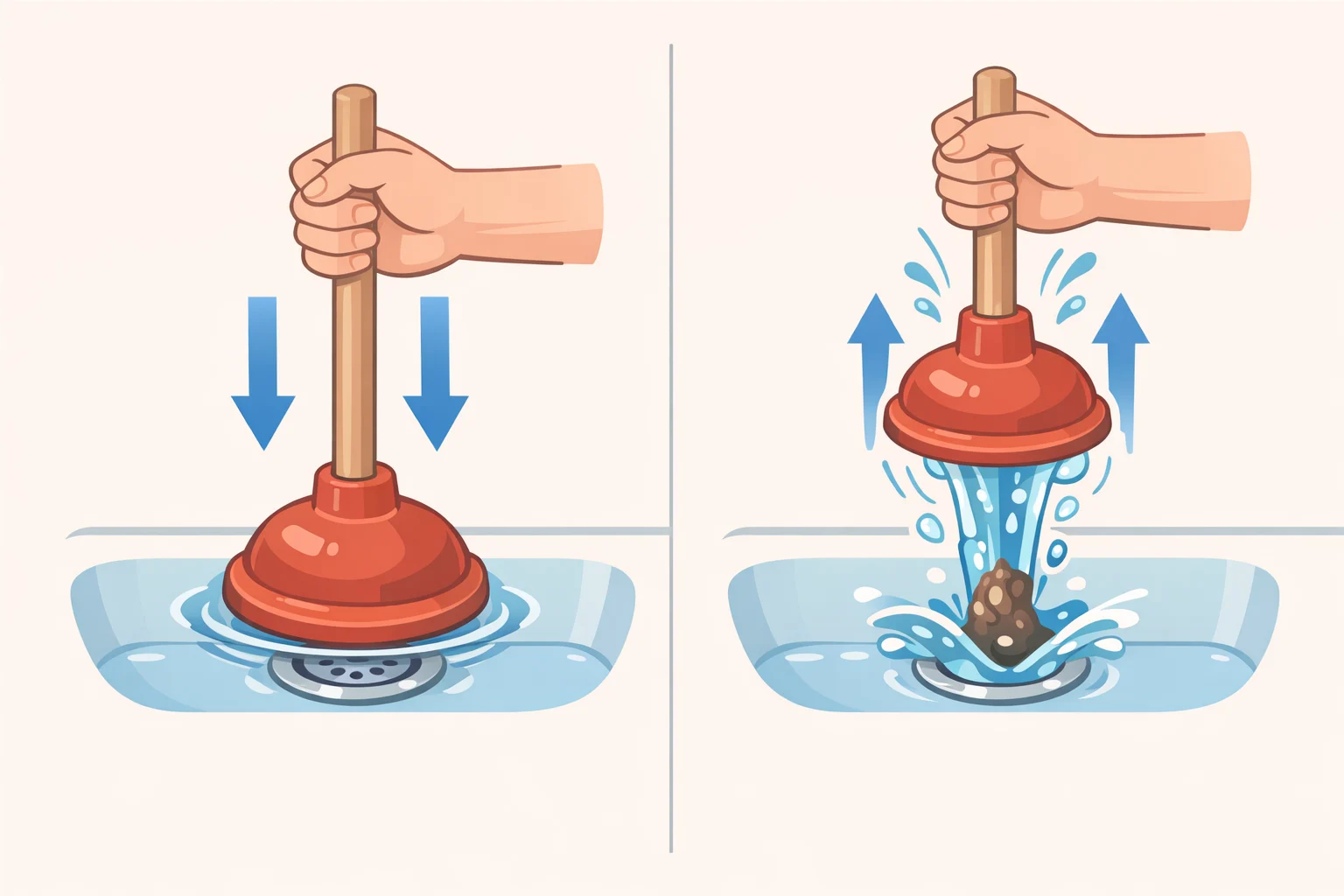
- Match the plunger to the fixture. For sinks: use a cup plunger (flat-bottomed rubber). For toilets: use a flange plunger (with the extended rubber skirt that seals the toilet bowl opening). The wrong type significantly reduces effectiveness, per Drain Service.
- Fill the basin with enough water to cover the bottom of the plunger cup. Seal any overflow drain with a wet cloth to preserve suction.
- Press the cup firmly over the drain opening, push down slowly, then pull up sharply. The pressure swing, not brute force, is what breaks the clog loose.
- Repeat 15-20 times; check drainage.
Expected result: Water level drops noticeably; flush with hot water for two minutes to clear residual debris. If not resolved, move to the auger.
Step 3: Snake it (clogs the plunger couldn't reach)
A basic 25-foot hand auger handles the vast majority of fixture-level clogs and costs $20-$30 at any hardware store, HandymanCan confirms.
- Feed the cable into the drain opening, rotating the handle clockwise as you push.
- When you feel resistance, continue rotating. You're either breaking up the clog or hooking it to pull back.
- Pull the cable out slowly, wiping it clean with a rag as it comes.
- Flush with hot water for two minutes.
Gotcha: If the snake meets resistance that feels hard and immovable rather than soft and compressible, stop rather than forcing the cable. That's the point to call a plumber.
Step 4: Clean the P-trap directly (under-sink clogs, dropped objects)
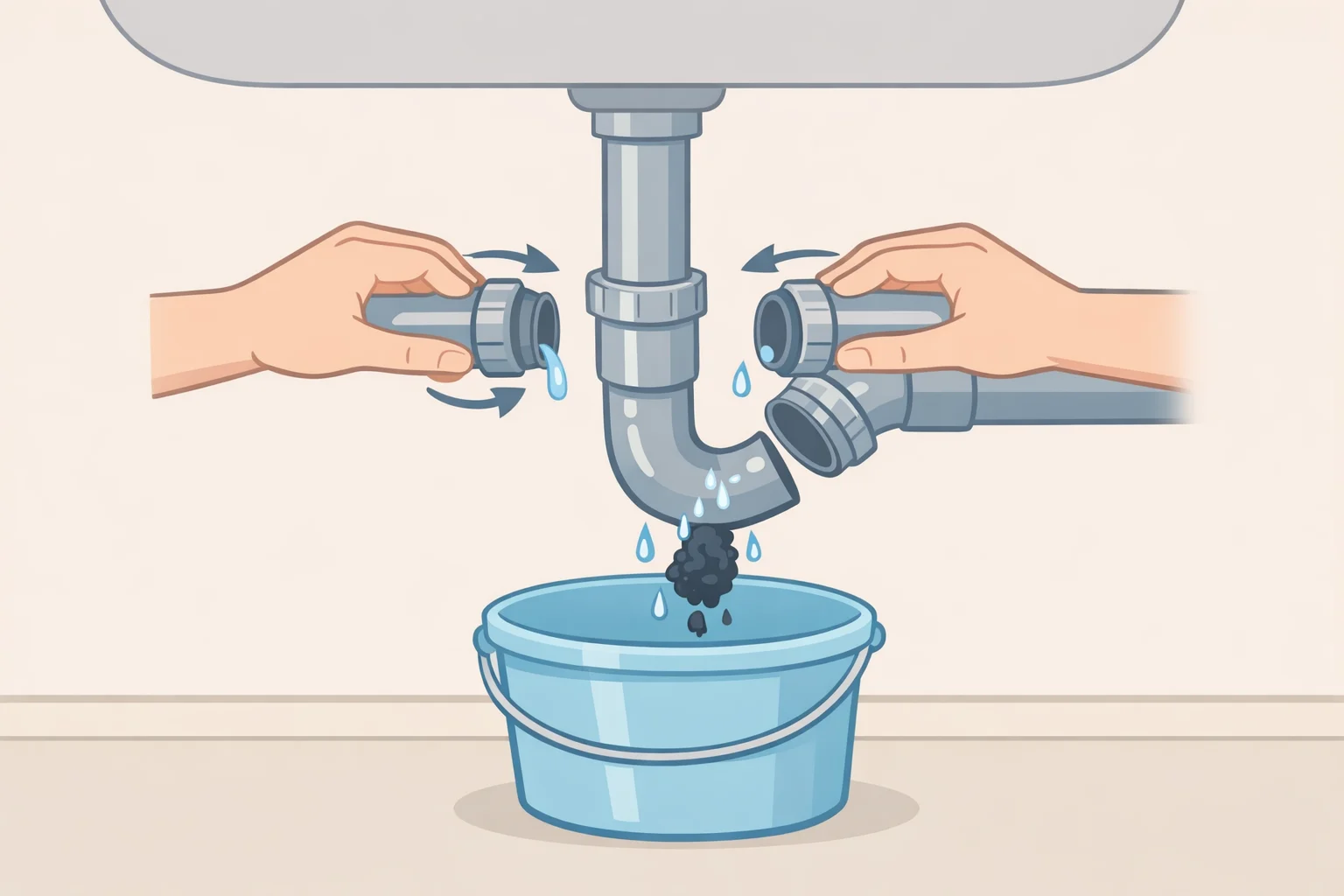
- Place a bucket directly under the U-shaped section of pipe beneath the sink.
- Unscrew the slip-joint nuts holding the P-trap. Plastic traps by hand; metal traps with channel-lock pliers. Plastic nuts strip easily; hand-tight is sufficient. If there's a leak after reassembly, add only a quarter turn with pliers, HandymanCan advises.
- Remove the trap, clear the blockage manually, and check the trap interior for damage.
- Reinstall and run water to confirm no leaks.
Expected result: Should clear debris-based clogs, grease accumulation in the bend, and any small object lodged in the trap.
What not to do
- Don't keep pouring chemicals if the first application didn't work. Adding a second product on top of the first is where toxic gas exposure becomes a real risk.
- Don't use boiling water if your pipes or P-trap are plastic. At 212°F it can soften PVC fittings and cause joint failures; use the hottest water from your tap instead, HandymanCan warns.
- Don't force a drain snake against solid resistance. You risk damaging the pipe.
- Don't work on one fixture while ignoring a backup appearing in others.
Part 4: Chemical drain cleaners: the rules if you use them at all
Chemical cleaners have one legitimate use case: stubborn organic clogs, grease or soap buildup, that resisted physical methods, in pipes that can tolerate the chemistry. Even then, use them once. If it doesn't work, stop.
Pipe compatibility is the first question. Acid-based liquid drain cleaners are particularly dangerous in older homes with original cast iron or galvanized steel pipes, where the corrosive chemistry can eat through already-degraded pipe walls and turn a clog into a leak, Onsite Pro warns. Repeated use can cause cumulative corrosion in any system over time, Drain Service notes. If your home is more than 30 years old and you're uncertain about your pipe material, skip liquid chemical cleaners entirely.
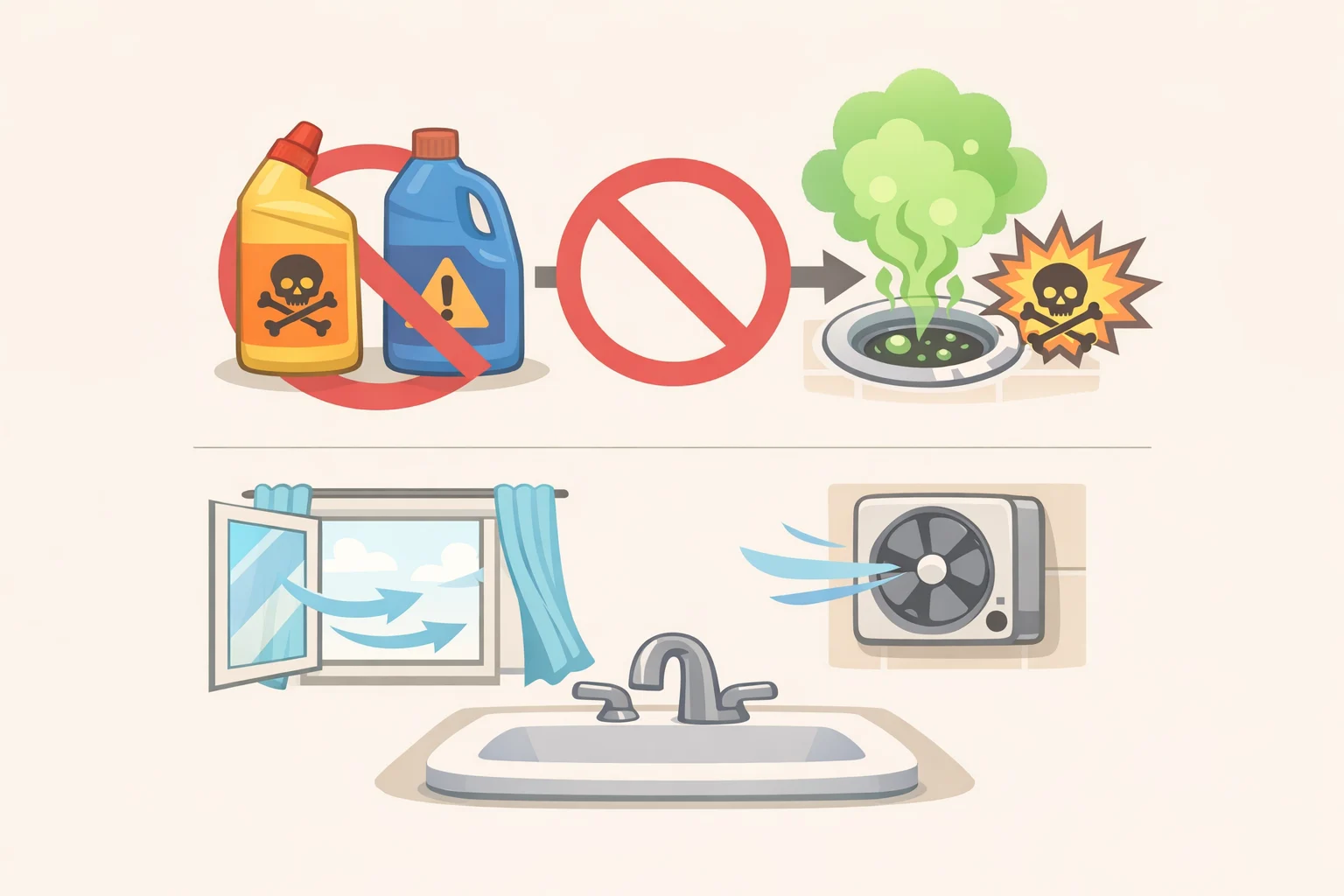
Never mix chemical drain cleaners with each other or with any other household product. Combining bleach with ammonia, vinegar, or a second drain product creates chlorine and chloramine gases that cause severe lung tissue damage when inhaled. Per HandymanCan, the CDC is explicit on this point. If you've already poured one chemical product and it failed, flush thoroughly with water and wait a full 24 hours before attempting anything else.
If you proceed with a chemical cleaner:
- Confirm your pipe material is compatible; when in doubt, don't.
- Put on rubber gloves and eye protection; open a window or run the exhaust fan.
- Follow the product label exactly, correct dose, correct wait time, correct flush.
- If the clog doesn't clear after one application: stop, do not add more, call a plumber.
For homes on septic systems, skip chemical cleaners entirely. They can disrupt the bacterial balance septic systems rely on; enzymatic treatments are the correct substitute, Drain Service confirms.
When to act: a quick-reference checklist
Use this to decide what to do next without rereading the whole guide.
- Slow bathroom drain - Remove the stopper, pull hair by hand, then plunge
- Slow kitchen drain - Run hot water for two minutes, then plunge
- Standing water in sink or tub - Plunge first; if that fails, snake it
- Odor from one drain, water flowing fine - Hot-water flush; clean the P-trap if it persists
- More than one fixture slow at the same time - Stop all DIY; call a plumber
- Chemical already used and failed - Flush with water, wait 24 hours, then call a plumber
- Toilet flush pushes water up into shower or tub - Stop all water use; call a plumber immediately
For homes over 30 years old with original plumbing, a professional camera inspection every one to two years is a reasonable precaution. It catches tree root intrusion, pipe corrosion, and structural issues before they become emergencies, Onsite Pro recommends.
Do a quick audit today. Confirm screens are in place at every fixture and note any drain that runs slower than it should. Most plumbing problems announce themselves early. The ones that get expensive are the ones that got ignored.



Comments
Be the first, drop a comment!