



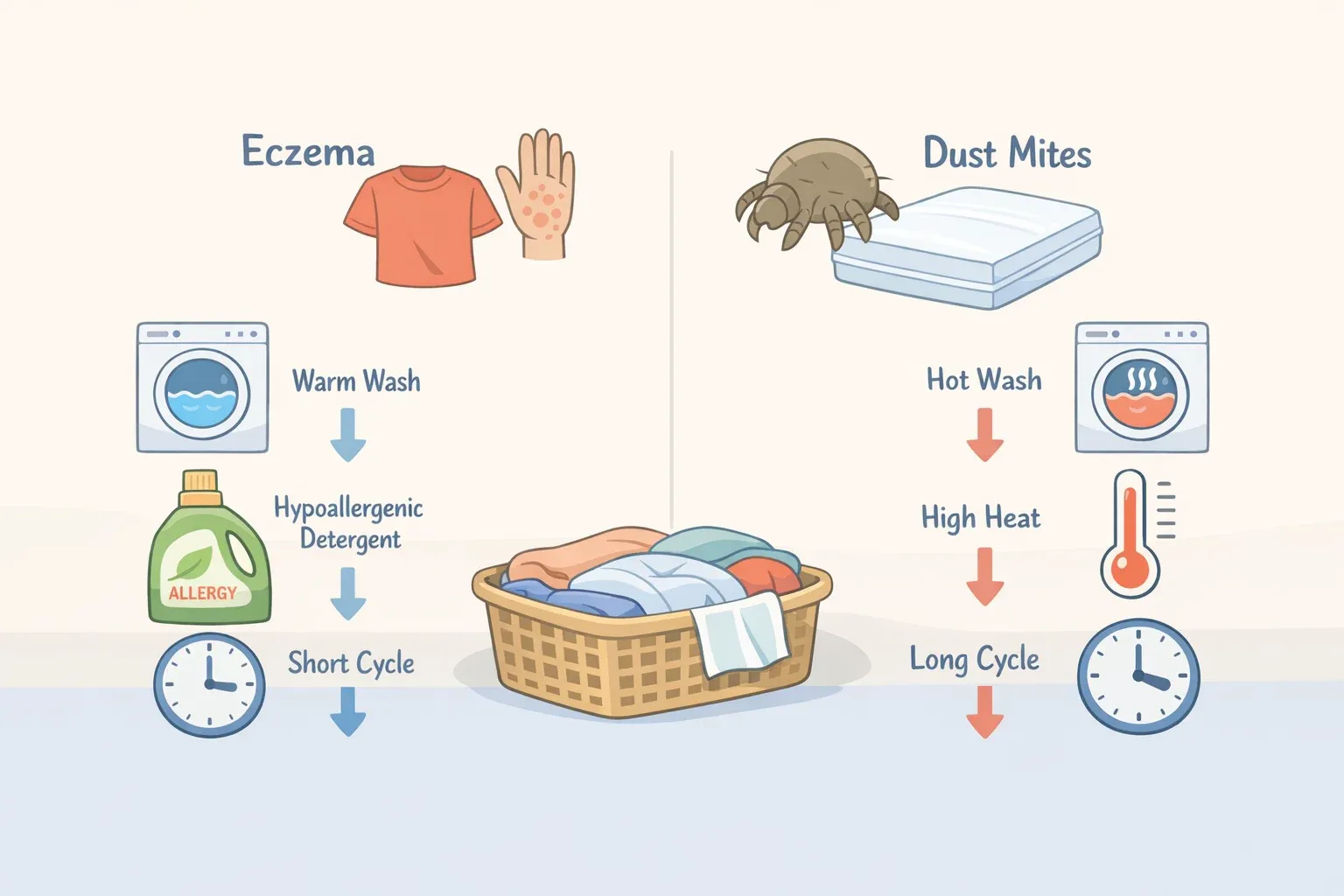
Most allergy-related laundry problems fall into two buckets: something in your laundry routine may be irritating your skin, or dust mites in your bedding may be triggering sneezing, congestion, coughing, or asthma symptoms at night.
These are not the same problem. If clothing leaves your skin itchy or red, start by simplifying what touches the fabric: detergent, fragrance, dye, fabric softener, dryer sheets, and scent boosters. If symptoms are worse in bed or first thing in the morning, focus on bedding, hot washing, mattress and pillow covers, and bedroom humidity.
This guide is for everyday laundry changes you can try at home. See a dermatologist or allergist if symptoms are severe, involve wheezing or trouble breathing, affect a child, or persist after you simplify your laundry routine and reduce dust mite exposure.
Step 1: Figure out what kind of allergy problem you have
Before changing detergents, changing wash temperatures, or buying new bedding, look at when your symptoms show up. The two problems can overlap, but the first fix should match the main symptom pattern.
Skin symptoms: Itching, redness, or eczema flares on areas that touch clothing — especially after wearing freshly washed items — point toward irritation from laundry products. Go to Step 2.
Breathing or allergy symptoms: Sneezing, congestion, coughing, or asthma symptoms that worsen at night or first thing in the morning may point toward dust mites in bedding. Go to Step 3.
If you are unsure, track timing. Daytime skin reactions that correlate with specific garments suggest contact irritation. Symptoms concentrated at night or early morning, regardless of clothing, suggest the bedroom environment is more likely to be the source.
If both apply: Change one thing at a time, then track symptoms for one to two weeks before adding another fix. If you change detergent, wash temperature, bedding covers, and humidity all at once, you will not know which step helped.
Step 2: If clothes irritate your skin, simplify your laundry routine
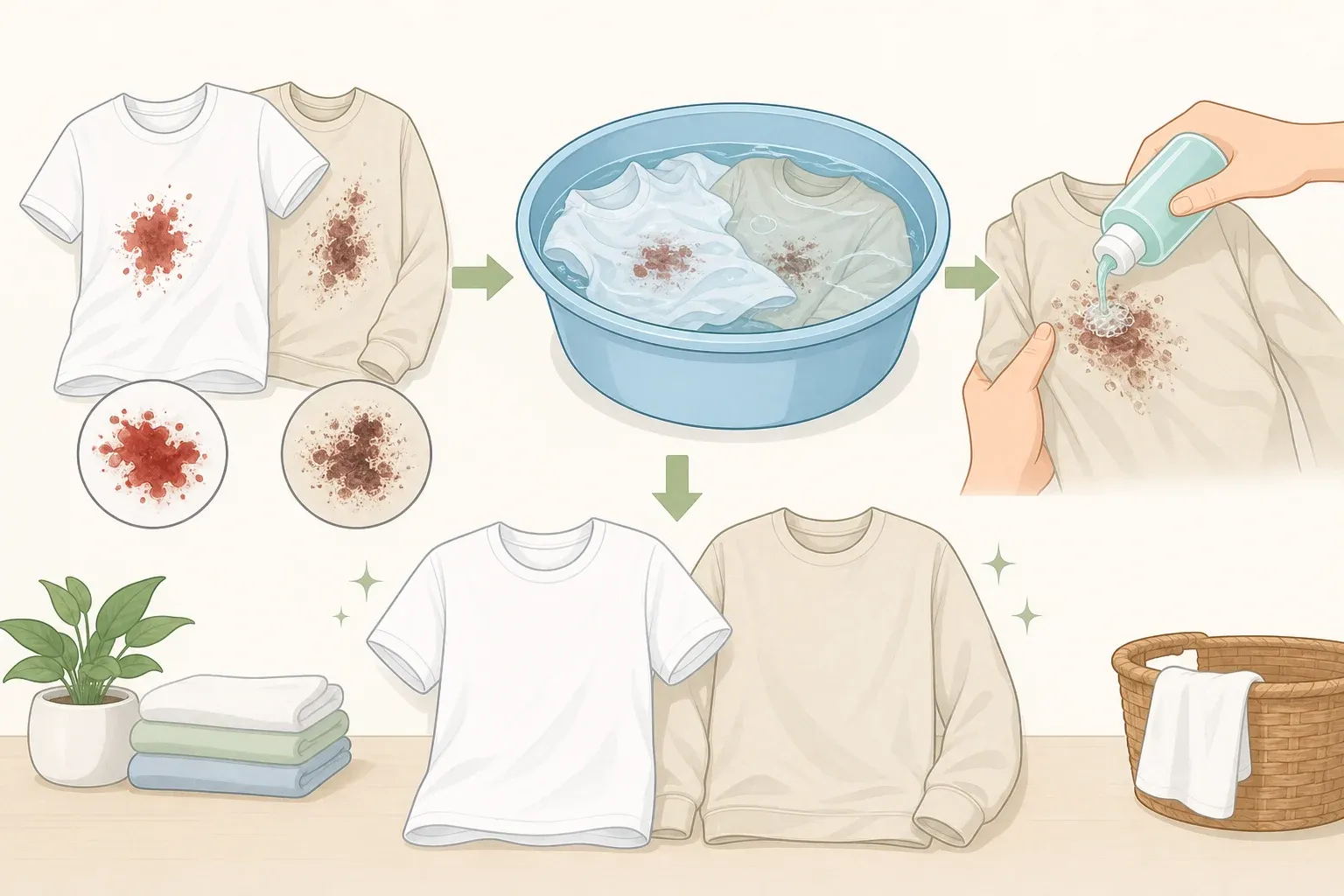
Start with a fragrance-free, dye-free detergent, and skip fabric softener, dryer sheets, scent beads, fragranced boosters, and routine laundry sanitizers. "Fragrance-free" is the safer label to look for; "unscented" can still mean a product uses masking fragrance.
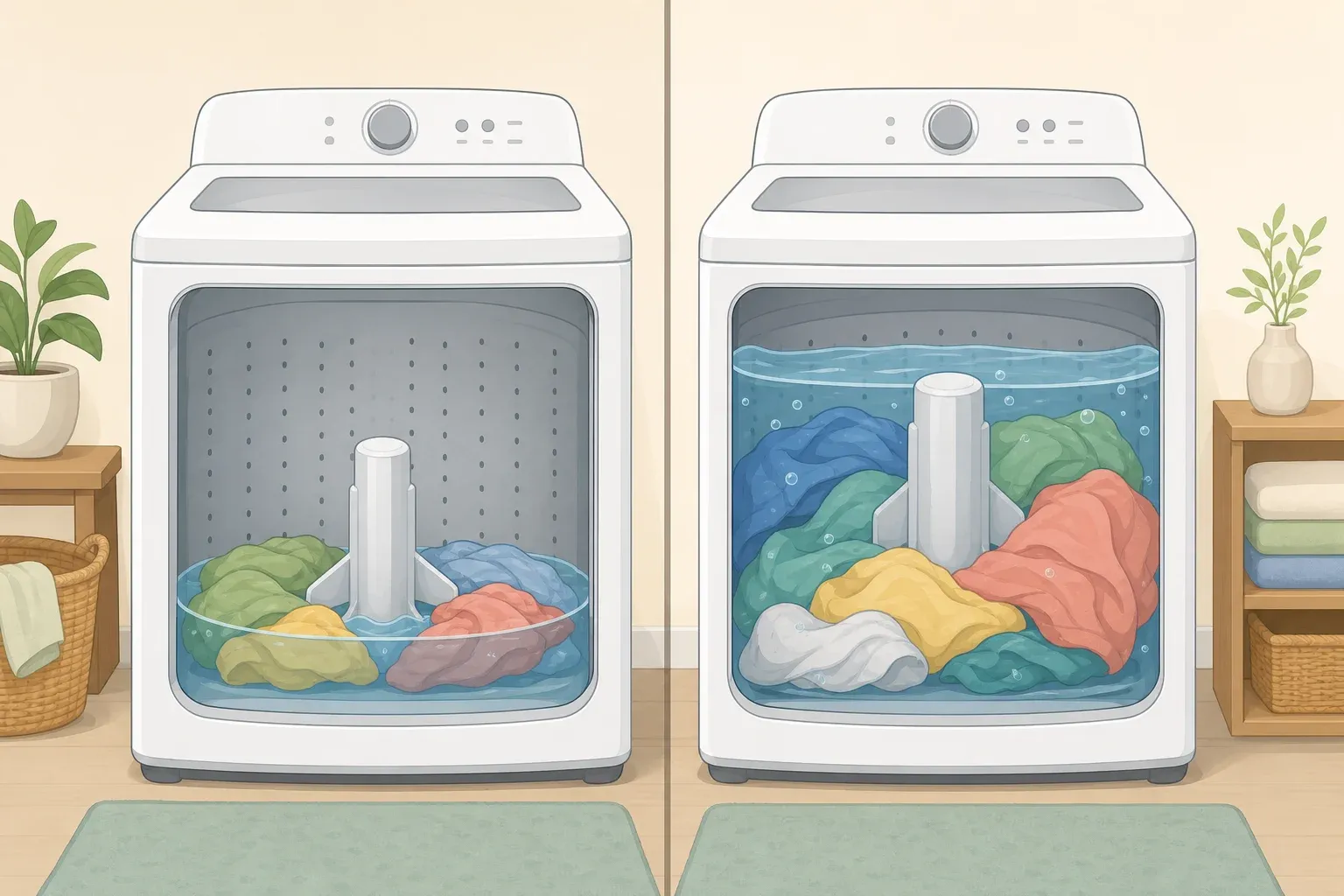
Use the amount of detergent listed on the label, not an extra splash. Too much detergent can leave residue behind, and residue can be part of the problem for sensitive skin. If clothes still feel slick, stiff, or itchy, try a smaller dose or an extra rinse cycle.
If your skin reacts after laundering, remove the extras first: fragrance, softener, dryer sheets, scent beads, and stain boosters. Then test one detergent change at a time. Switching several products at once makes it harder to identify the ingredient or habit that was causing the reaction.
Hot water is not required just because your skin is sensitive. For skin irritation, the bigger issue is what remains on the fabric. Wash according to the care label, avoid overloading the machine, and rinse well. Hot water matters more for dust mites.
Third-party product seals can be useful when you want an extra filter, especially if you have eczema-prone skin, but they should not replace the basics. A plain fragrance-free, dye-free detergent and a simpler wash routine are the best first steps for most people.
Step 3: If dust mites trigger symptoms, start with the bed
For dust mite allergy, the bed is the main laundry target. According to the American Academy of Allergy, Asthma & Immunology, dust mite allergens are common triggers of allergy and asthma symptoms, and reducing mite levels in the bedroom is especially important because people spend so much time there.
1. Wash bedding weekly in hot water when the care label allows. Mayo Clinic recommends that you wash bedding weekly, including sheets, blankets, pillowcases, and bedcovers, in water that is at least 130°F (54.4°C) to kill dust mites and remove allergens.
If bedding cannot be washed hot, put it in the dryer for at least 15 minutes above 130°F, then wash and dry it to remove allergens. Freezing items for 24 hours can kill dust mites if washing is not possible, but freezing will not remove the allergens they leave behind.
This hot-wash protocol is for bedding: sheets, pillowcases, blankets, duvet covers, and washable pillow protectors. Do not apply high heat to everyday clothing unless the care label allows it.
2. Encase your mattress and pillows. Use dustproof or allergen-blocking covers on mattresses and pillows, and cover the box spring if you use one. Wash the covers regularly. Weekly hot washing helps what is on the bed; encasements help block what is inside the mattress and pillows.
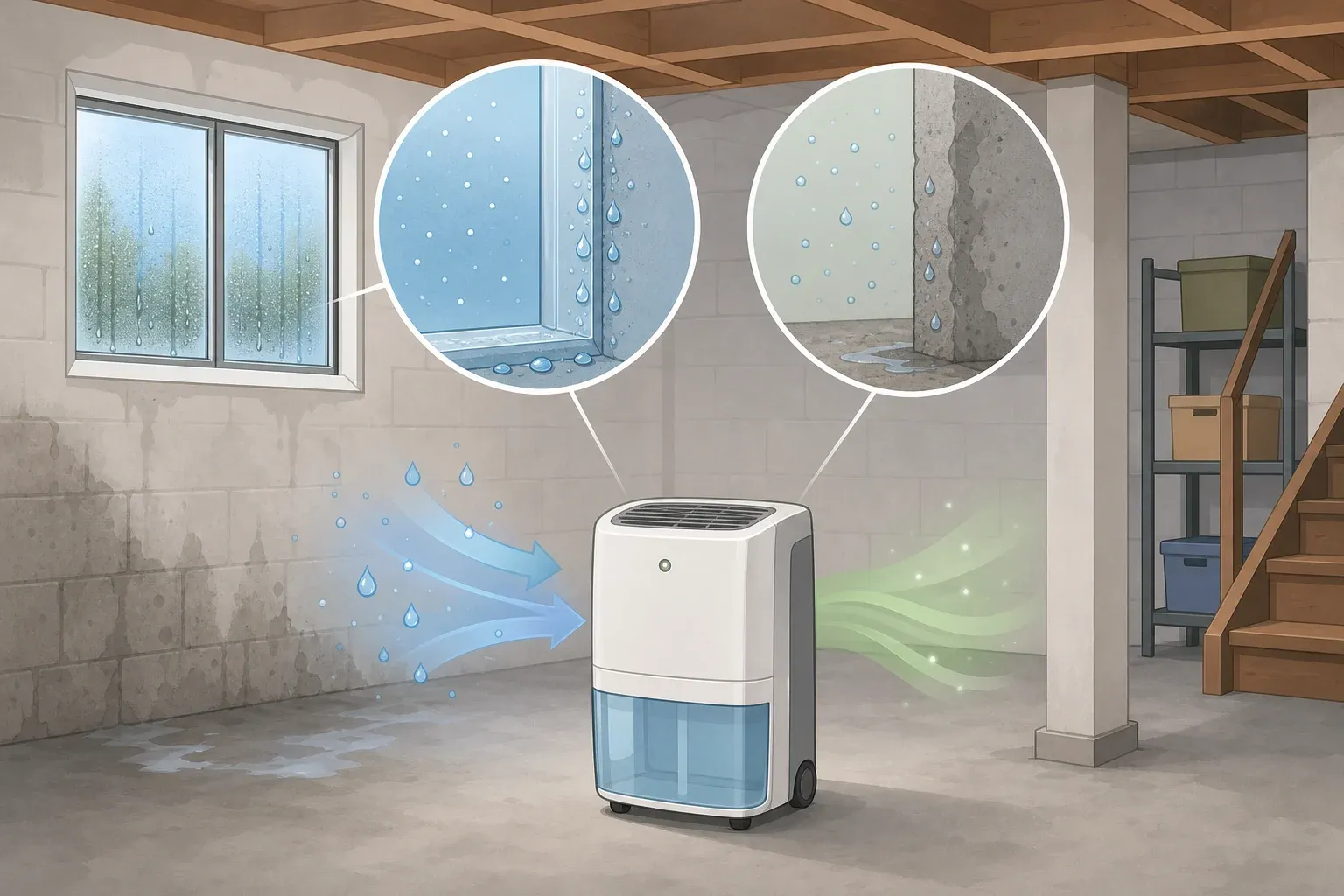
3. Keep bedroom humidity below 50%. Dust mites thrive in humid environments, so use air conditioning, a dehumidifier, or a hygrometer to keep relative humidity below 50% when possible.
Avoid shaking bedding before you wash it. Move sheets and pillowcases straight to the washer, and do not strip the bed right before sleep if dust triggers your symptoms.
Laundry sanitizers are for germs, not dust mite allergens. Use one only when you have a separate hygiene reason, such as illness in the household, and choose an unscented or fragrance-free option if your skin is sensitive.
What to try first — and when to stop switching detergents
If clothing seems to trigger your skin, simplify the wash routine first. Use a fragrance-free, dye-free detergent, skip softeners and scent products, measure detergent carefully, and try an extra rinse if residue seems to be part of the problem.
If nighttime or morning symptoms are the problem, focus on the bed. Wash bedding weekly at 130°F or hotter when care labels allow, use allergen-blocking covers on pillows and mattresses, and keep bedroom humidity below 50%.
For either problem, skip routine laundry sanitizers unless someone in the household is sick or you have another hygiene reason to use one. They are not a substitute for fragrance-free detergent, hot bedding washes, or allergen-blocking covers.
Track symptoms for one to two weeks after each change. If nothing improves, stop rotating detergents and talk with a dermatologist or allergist. A specific dye, preservative, fabric, pet allergen, pollen, mold, or another bedroom trigger may be part of the problem.


Comments
Be the first, drop a comment!