



The junk drawer fills back up within a week of being cleared out. The mail pile returns before Friday. That cycle, not the mess itself, is what these September home organization tips are built to break. Organizer Rachel Rosenthal's core rule is that decluttering should function as an ongoing lifestyle, not a one-time event.
Rosenthal has seen what happens when people try to fix everything in one push. People who spend a whole afternoon or weekend decluttering often end up exhausted and discouraged by the end, which can make it harder to keep the habit going. Pam Holland, writing on NAPO's official blog, adds that trying to organize an entire room at once frequently triggers overwhelm and shutdown, and recommends working on one tiny category, surface, or pile at a time instead.
This guide breaks 11 habits into four moves: scoping today's reset, editing before storing, building systems that take fewer steps, and controlling what comes in. None of it requires special tools, just a timer and containers most households already own. The idea is 10 to 15 minutes a day and a willingness to stop at a defined finish line instead of chasing a perfect result, aimed at making mornings, paper intake, and everyday searching easier to manage.
Before you start: why piles form and what to gather
Doom piles, the deferred stacks of mail, clothes, or papers that camp out on counters and chairs, form for four predictable reasons. Holland identifies them: the item has no defined home, putting it away takes too many steps, the item feels like it needs to stay visible as a reminder, or the sheer number of micro-decisions causes overwhelm and perfectionism-driven avoidance.
Holland stresses that doom piles are signs of overwhelm, decision fatigue, or executive-function strain, not laziness, and that criticism doesn't build systems that last. Use the cause of the pile to choose the fix, rather than assuming the pile means something is wrong with the person making it.
Before today's session, gather:
A timer
A recycling or trash bag
A donation bag
A "belongs in another room" basket
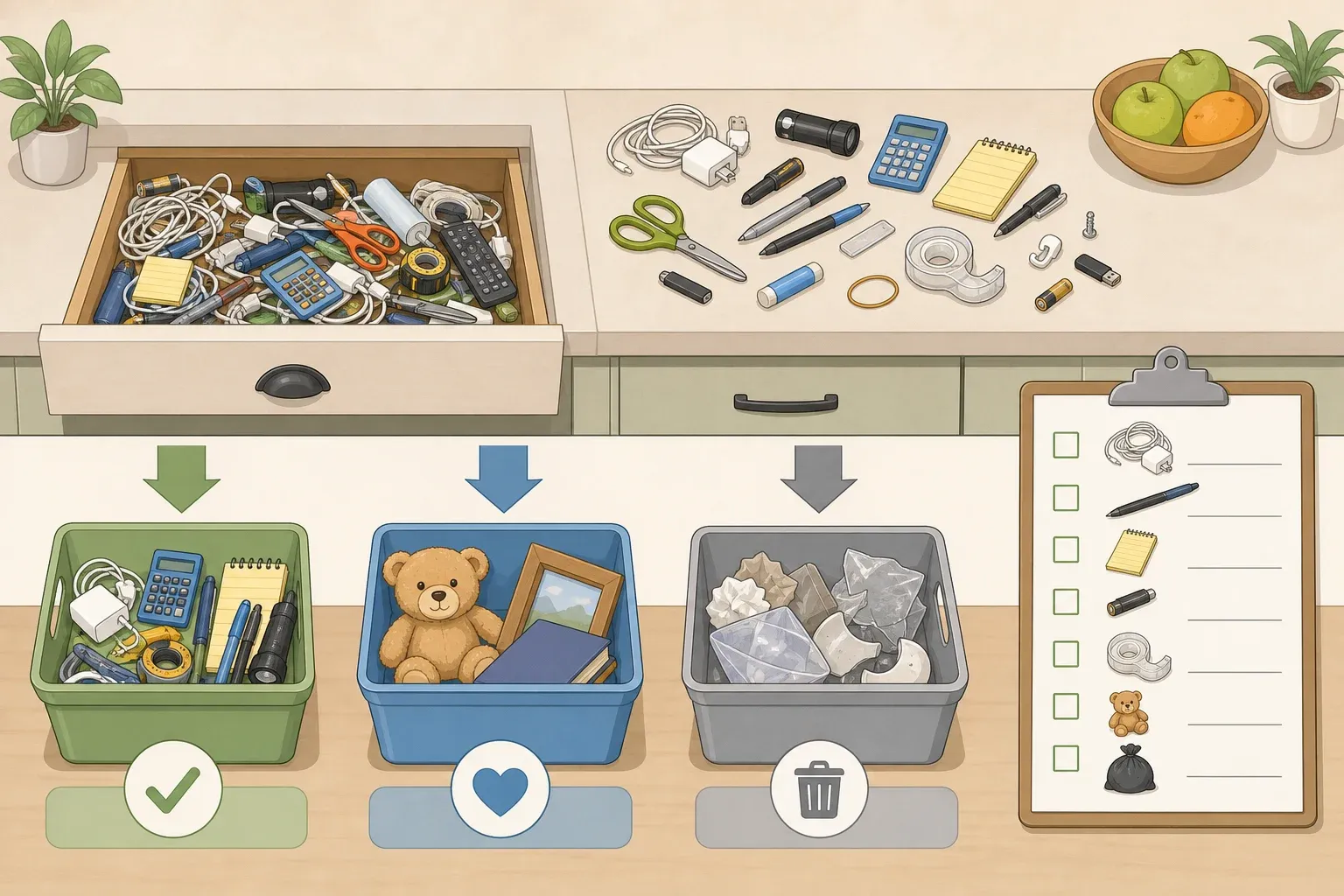
One clear zone with a visible boundary: a single drawer, one shelf, one basket, or one chair, not a whole room or scattered category
Set one rule up front: choose a zone that can realistically be finished in 10 to 15 minutes. That single decision is the direct fix for the exhaustion Rosenthal describes in weekend-long purges. This whole approach is beginner-friendly.
September home organization tips: start with one small zone (habits 1-3)
Habit 1: Pick one small, contained zone for today.
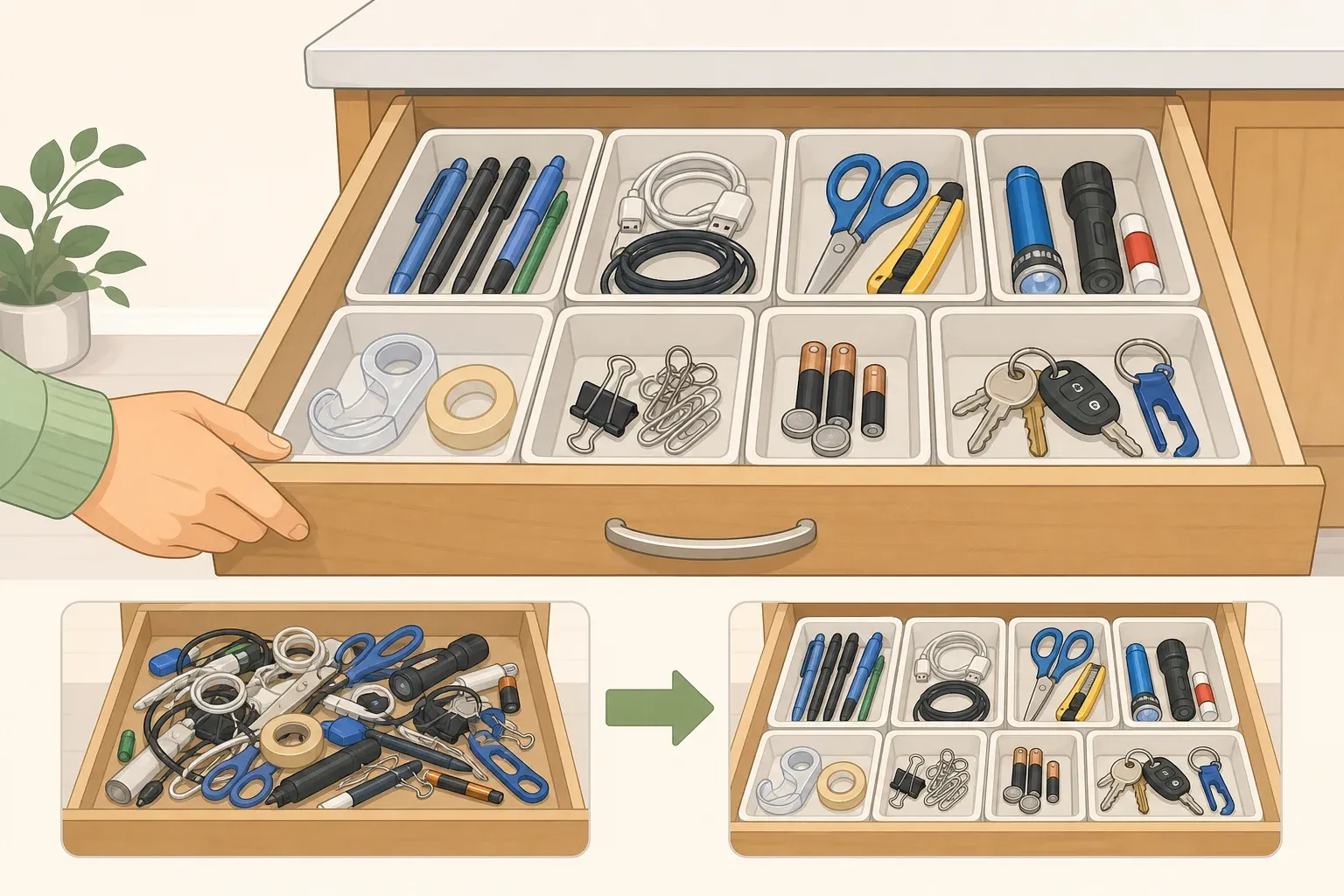
That means a single drawer, shelf, or basket with a visible edge, something that has a clear "done" point. Holland's guidance is to focus on one tiny category, surface, or pile at a time because small wins create momentum. Rosenthal recommends the same small-space-by-small-space approach with breaks, rather than tackling everything at once. Today's zone is the junk drawer, not "all the kitchen gadgets in the house."
Habit 2: Set a timer for 10 to 15 minutes and pick a zone sized to fit it
Holland notes that short daily resets of even 10 to 15 minutes are often more effective than occasional large-scale sessions and can prevent piles from becoming emotionally overwhelming. Rosenthal warns that going in without a clear plan leads to frustration and burnout, especially for procrastinators. If the timer rings before the zone is finished, put everything back into that zone, not onto another surface, and choose a smaller zone tomorrow.
Habit 3: Only expand into a duplicate hunt across other rooms if there's leftover time to finish it today.
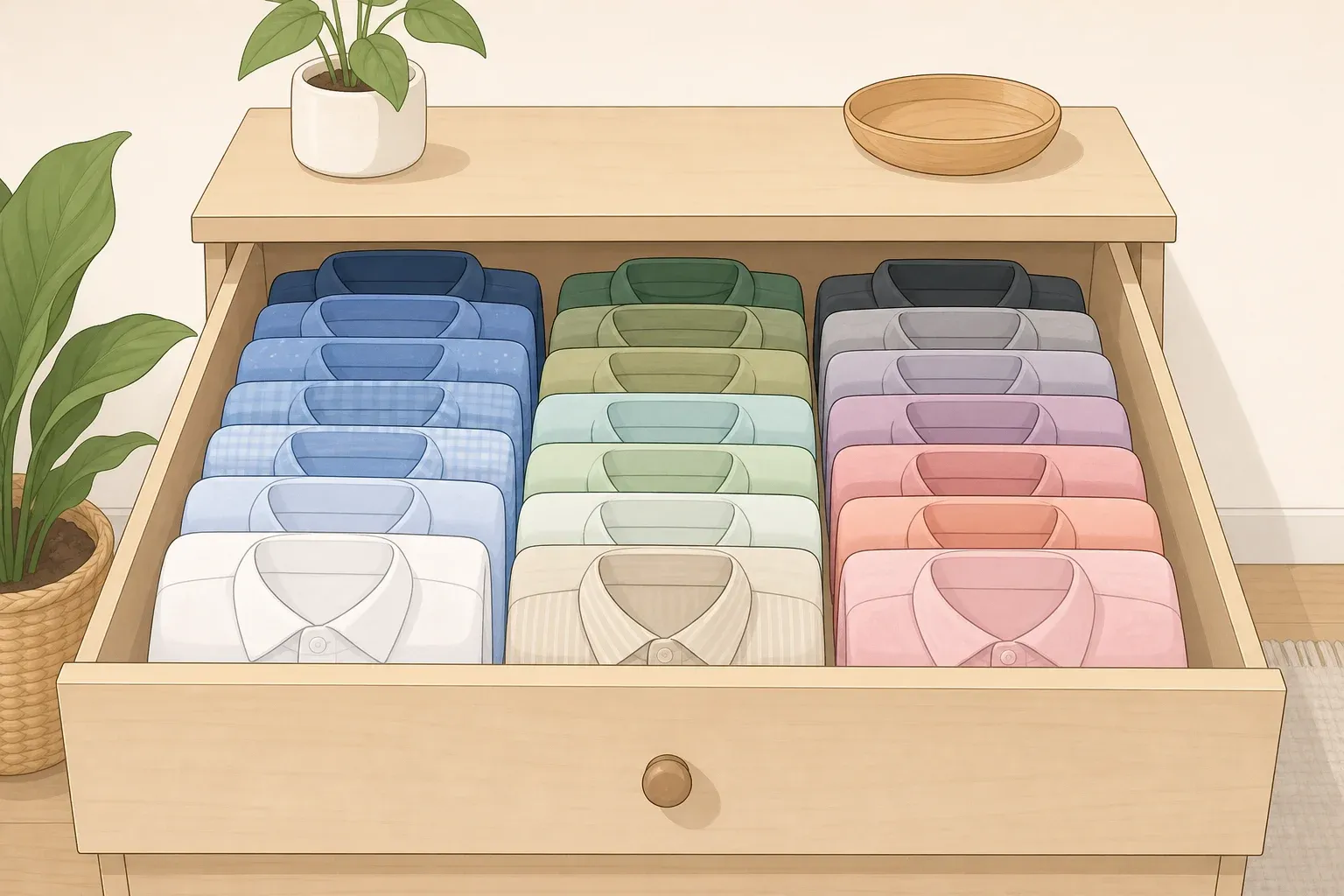
Rosenthal's advice to sort like with like, citing clients who discover 30 pairs of jeans this way, is genuinely useful. But spreading that same sort across every closet in the house in one sitting risks recreating the overwhelm Holland describes. Bound it: today, only pull duplicates already sitting inside the zone chosen for the session.
Success check: the session isn't done because the timer buzzed; it's done when the zone is fully restored. Nothing should be left half-sorted on the floor or shifted to another counter to deal with later.
Edit before you store (habits 4-6)
Habit 4: Apply a one-year use test inside today's zone only.
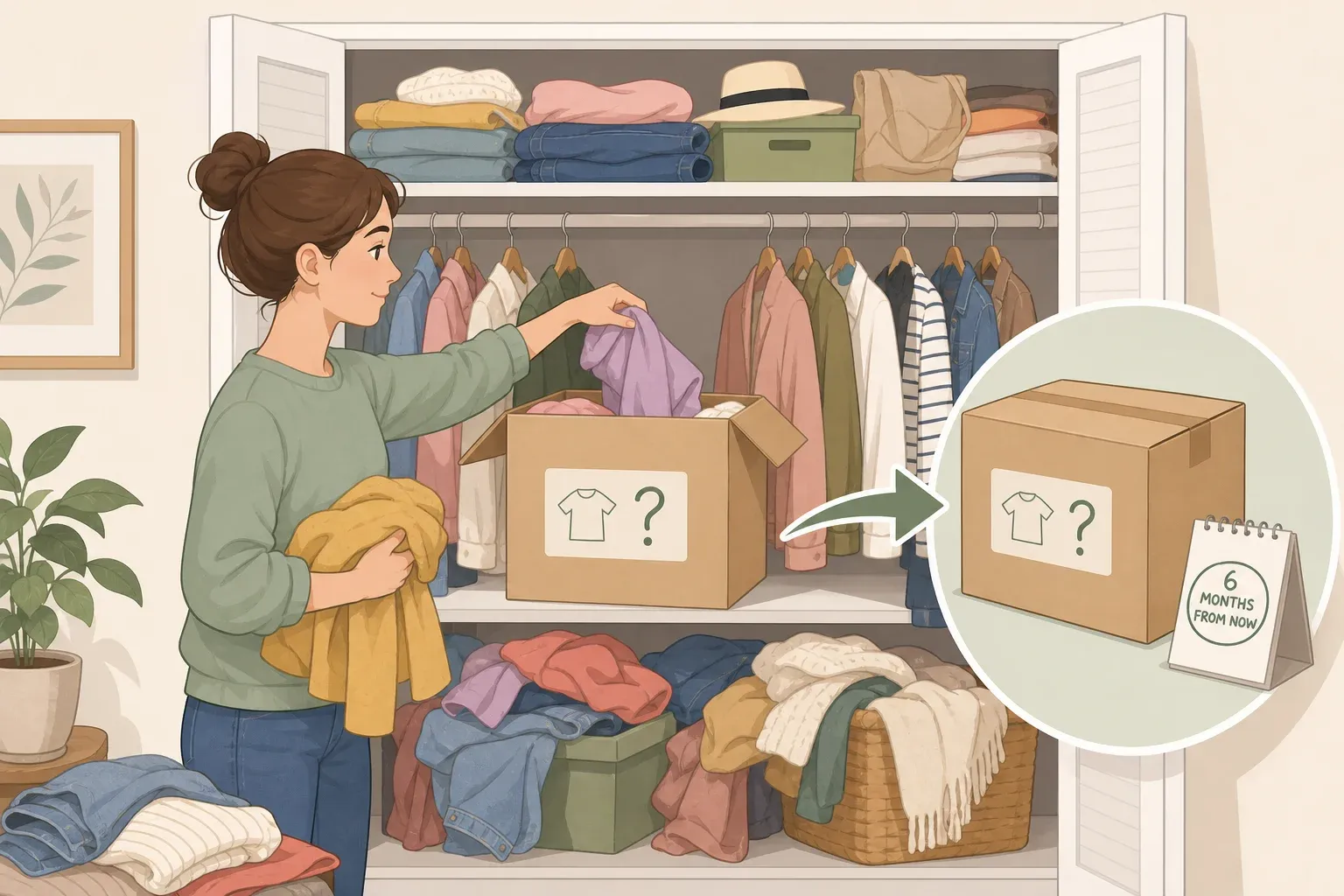
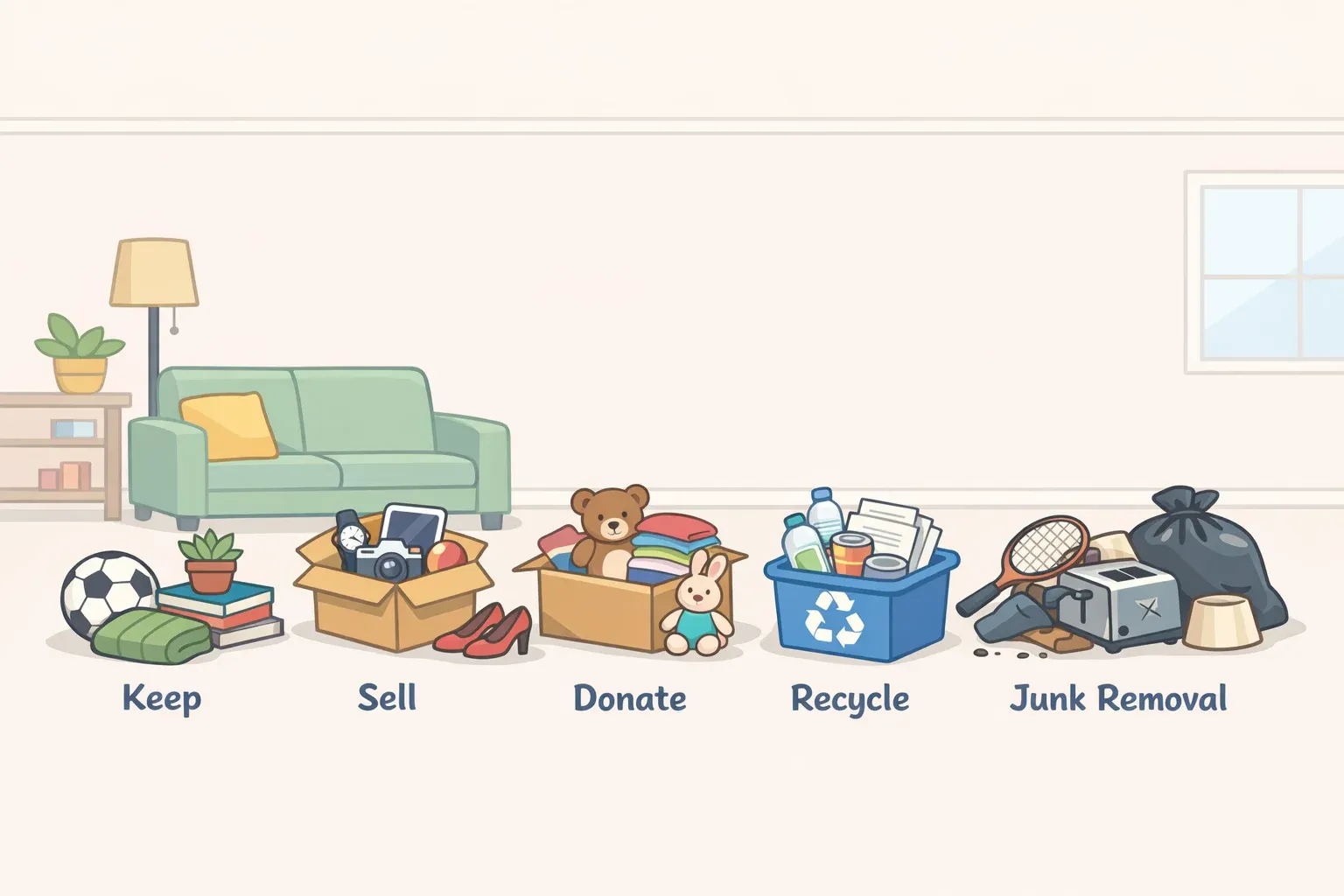
Rosenthal's rule is straightforward: if an item hasn't been used in a year and doesn't fit current life, let it go. Unworn shirts sitting in the drawer being sorted go into the donate bin, not back into a "just in case" pile.
Habit 5: Name the "just in case" items out loud before keeping them.
Rosenthal points to hotel toiletries, an expensive unworn dress, or dusty kitchen gadgets as the classic items people justify keeping, which quietly add up into clutter. Ask whether the item would be bought again today. If not, it goes, with some exceptions worth thinking through rather than reflexively tossing: seasonal gear that only gets used a few months a year, important papers, emergency supplies, and anything expensive enough to warrant a deliberate sell-or-donate decision instead of a quick call.
Habit 6: Finish editing before buying any bins or baskets for this zone.
Holland notes that editing down belongings often makes maintaining organization dramatically easier, and that too many visible items can overstimulate the brain. Rosenthal adds that without addressing the root cause, clutter returns no matter how many bins get bought.
Success check: everything that failed the one-year test or the "buy again" question should be physically out of the room in the donate or trash bag before moving on. If it's still sitting in the zone, it hasn't actually been edited yet; it's just been looked at.
Build systems that take fewer steps (habits 7-9)
Habit 7: Give what's left in the zone one specific home based on how it's actually used, not how it looks.
Rosenthal frames a decluttered home as one organized around real habits, with every piece assigned a spot. That lines up with Holland's diagnosis that piles form specifically when an item lacks a defined home.
Habit 8: Cut the number of steps required to put the item away.
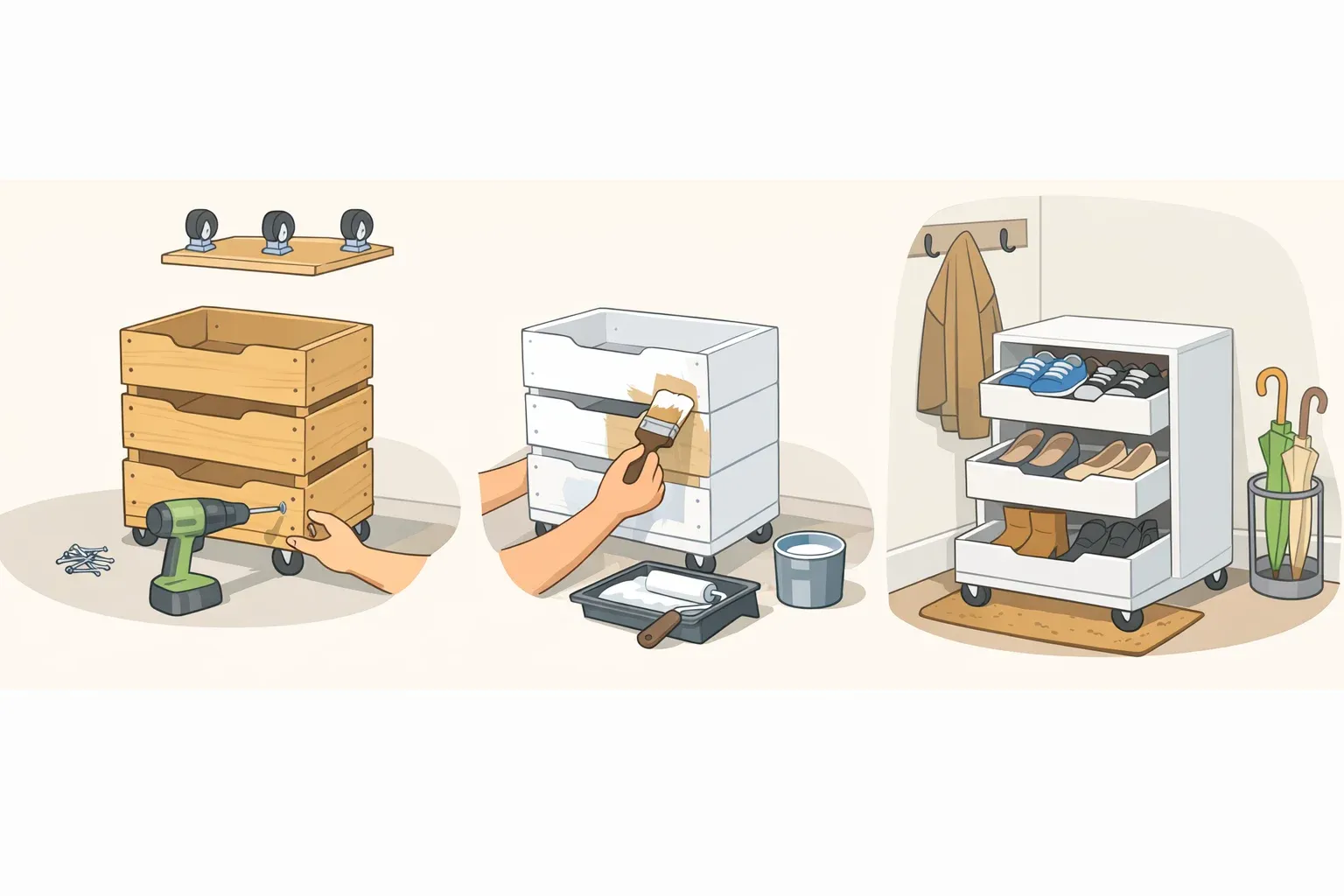
Holland states plainly that the fewer steps a system requires, the more likely it is to succeed long-term. She recommends swaps like hooks instead of hangers, open bins instead of lidded ones, visible laundry baskets, and trash cans placed exactly where clutter naturally piles up.
Habit 9: Check the new setup against how it actually feels to use, not how it looks.
Ask whether the spot is visible, simple, accessible, intuitive, low-maintenance, and easy to reset. If putting the item away still feels annoying, or the pile keeps coming back within a few days, simplify the setup rather than assuming the problem is discipline. The goal isn't a magazine-perfect drawer; it's a spot that holds up on a normal Tuesday.
Success check: every item left in the zone should have exactly one spot it returns to. If someone else in the house couldn't find where something goes without asking, the home for that item isn't defined clearly enough yet.
Control what comes in with a real intake workflow (habits 10-11)
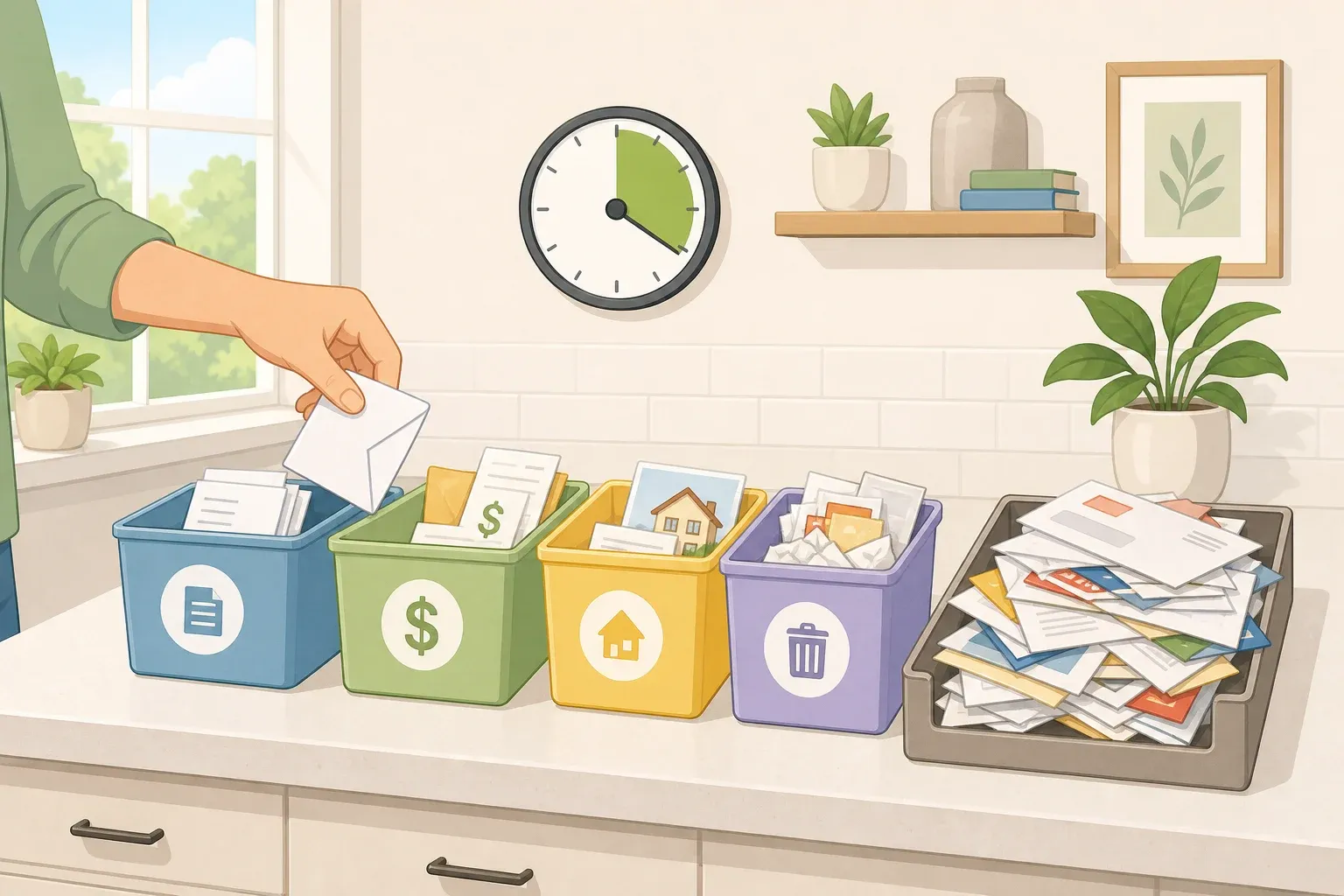
Habit 10: Set up one bounded landing zone with a physical size limit for mail, school papers, and bags.
Holland notes that designated drop zones with clear boundaries can prevent clutter from spreading throughout the home. This kind of landing zone is one of the more useful back-to-school home organization tips available in September, since flyers, permission slips, and shifting schedules show up daily this time of year. A single tray or basket by the door holds only today's incoming mail and papers, nothing else.
For school papers specifically, three destinations cover most of it: an action folder for anything needing a signature or response, a reference folder for schedules or contact sheets worth keeping, and the recycling bin for everything else. Sorting into those three the moment papers land avoids a fourth "figure it out later" pile.
Habit 11: Define a specific clearing routine, not a vague intention.
Build a three-part workflow. Items needing immediate action, like a permission slip due tomorrow, get handled the same day. Items that can wait get filed into one folder or tray. Everything else gets recycled or trashed during a nightly five-minute pass before bed. Rosenthal ties recurring clutter to not being mindful of what's coming in, which points to a routine and a container working together, not one replacing the other.
Success check: the landing tray should be empty, or back to its size limit, by the next morning, and reset at the same time each day. If it's overflowing more mornings than not, the routine needs a set time and a specific person assigned to it, not more willpower thrown at the same broken step.
What success looks like and when to adjust
Holland is explicit that the goal of organizing isn't a flawless system but one that reduces stress and supports daily functioning. If a system stops holding up, recheck it against habit 9's list: visible, simple, accessible, intuitive, low-maintenance, easy to reset. Whichever one is failing is the one to simplify, not the routine as a whole.
Don't overthink the exact bins, baskets, or zone layout. Rosenthal reminds readers that what works for one person may not work for another, so there's no single correct system; adjust to match actual household habits rather than a template.
Treat these 11 habits as a rolling September decluttering checklist: one zone, one session at a time, and repeat the same short sessions through fall as one of the simplest fall home organization ideas available, instead of waiting for the next big buildup to force another weekend purge.




Comments
Be the first, drop a comment!