




Sorting laundry gets complicated the moment the goal becomes memorizing which fabric goes where. There's a simpler way to think about it: the care label sets the maximum labeled wash temperature a garment can handle, and how dirty it is, how new its dye is, or how much hygiene matters helps decide whether to choose a cooler setting or the warmest one the label allows. This guide covers what clothes should be washed in cold water, the one rule that governs every load, and a four-step method for sorting a mixed hamper into piles of clothes to wash in cold water versus everything else.
Most everyday clothes belong in cold water by default. Modern detergents are designed to work just as well in cold water as in hot water, so this isn't a compromise on cleanliness for the average load. Fresh protein stains are the exception: blood, egg, and sweat need a cold rinse and pretreatment step of their own before they ever touch a wash cycle. That's setup work, not a full-wash choice, and it's covered further down.
Start by checking the label, then sort by soil, color, and fabric before a single item hits the water.
The one rule that decides every load
Every wash decision comes down to one thing: the care label sets the maximum labeled wash temperature, and soil level or hygiene need decides whether to reach it. Cold is the safe default any time there's uncertainty.
The label carries a dot-based code inside the wash-basin symbol, and that code overrides any general guideline in this guide. One dot means about 30°C (86°F), climbing to five dots at roughly 95°C (203°F). A hand symbol means hand-wash only, and an X through the basin means skip the machine entirely and follow whatever alternate instruction the tag gives.
Cold isn't a cleaning compromise for most loads, and that's one of the real benefits of washing clothes in cold water: it works with how detergent is built. The enzymes that break down everyday stains, protease, lipase, and amylase, are most active between 20 and 40°C (68-104°F) and lose effectiveness at high heat, which is part of why cold-water washing outperforms older hot-water habits on many stain types. It's also the cheaper option to run: heating water accounts for roughly 90% of a washing machine's total energy use per load.
Before you start: what to gather and how to handle fresh stains
Gather these before sorting begins:
Every item's care label, checked and legible
Your regular laundry detergent
A stain treatment product for anything with a fresh spot
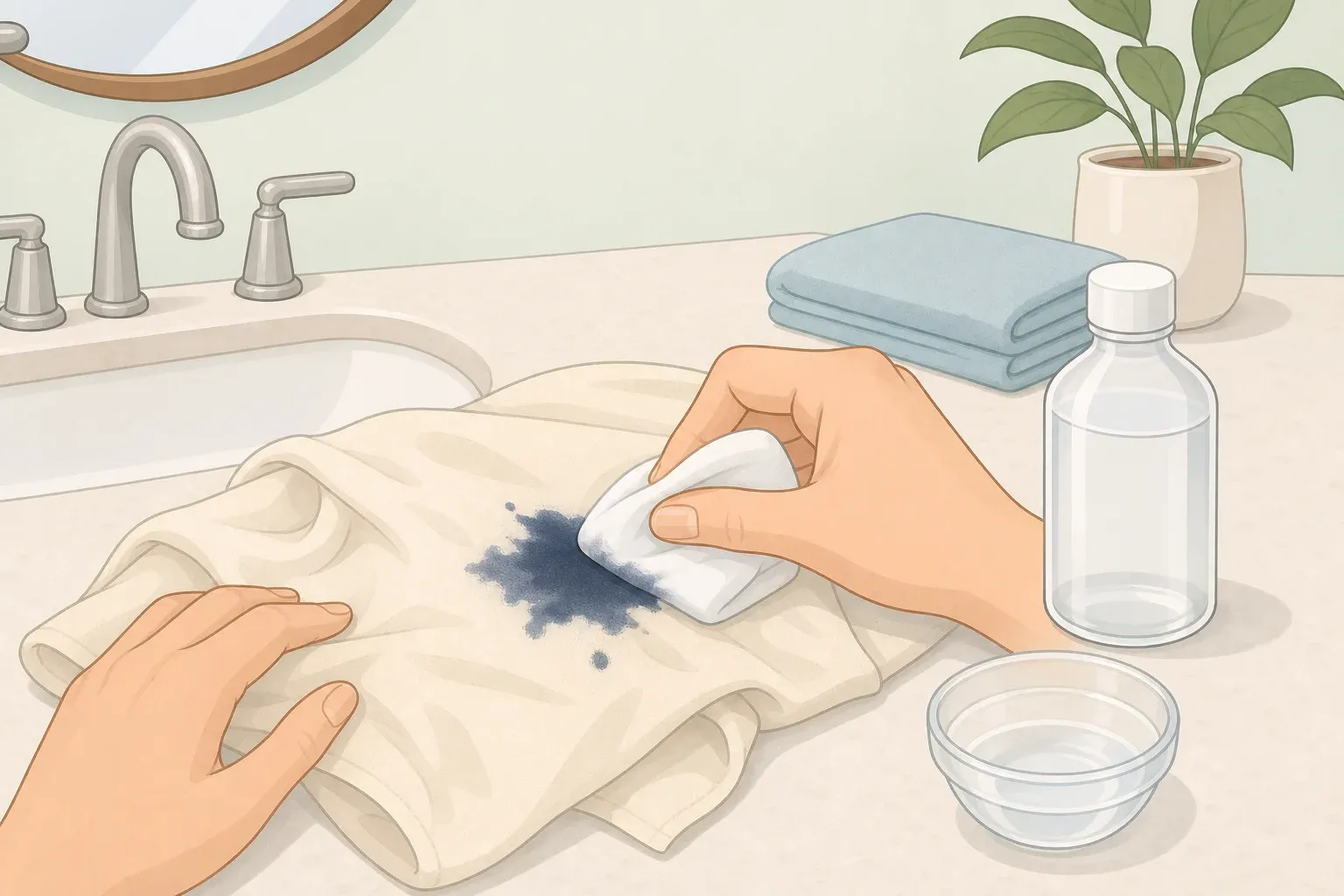
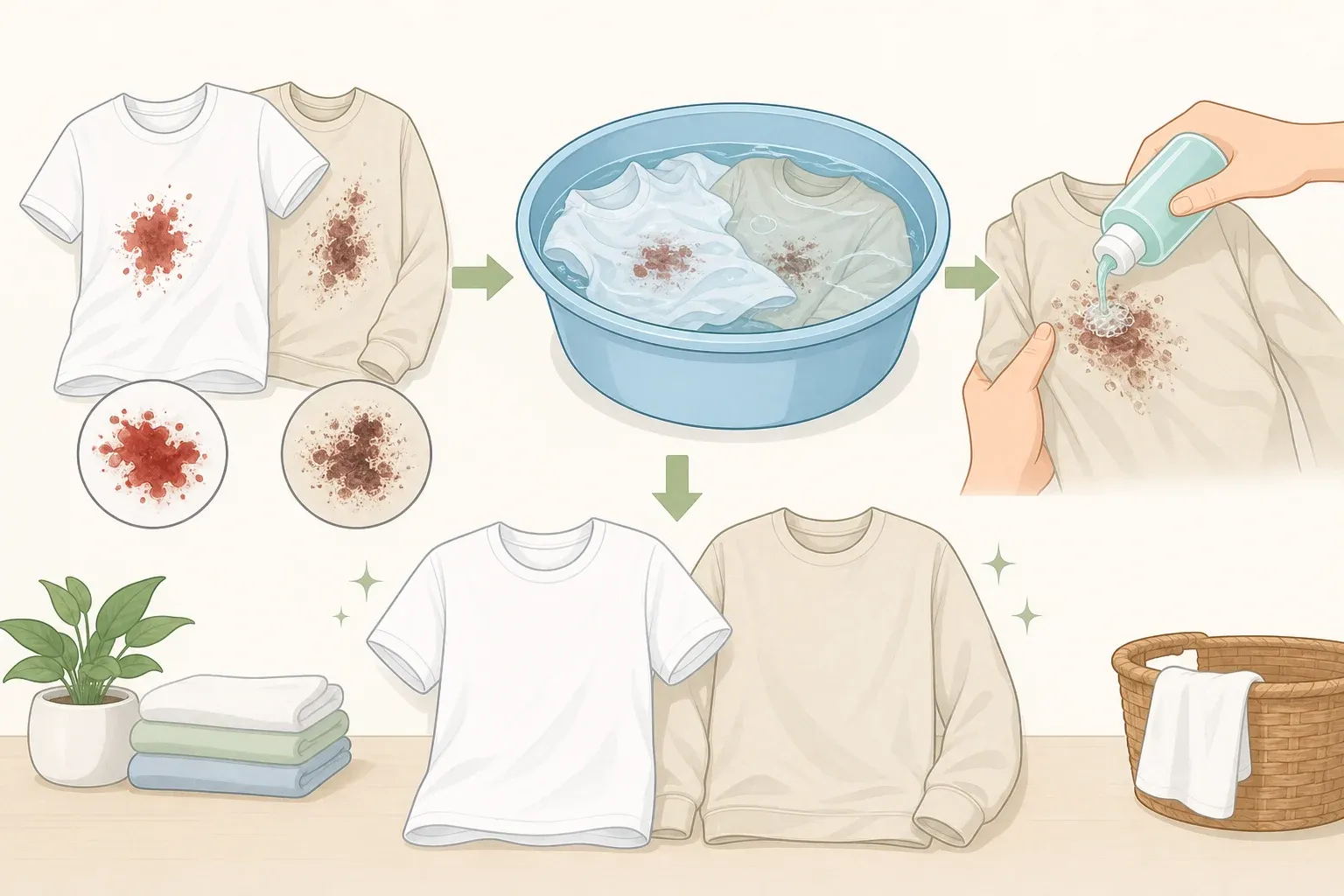
Fresh protein stains need to be pulled aside before anything touches the washer. Heat can permanently set fresh protein stains, so the entire pretreatment phase happens cold. Rinse the stain under cold water, apply a stain treatment according to the product's directions, and let it sit for about 15 minutes, then check whether the protein has broken down before moving on.
If the stain is still visible, repeat the pretreatment rather than reaching for warmer water. Once it's gone and the protein has fully broken down, warm water in the wash is usually fine. Keep it out of the dryer until the stain is confirmed gone, too, since dryer heat is still heat, and the same rule that keeps a fresh stain out of a hot wash keeps it out of a hot dryer.
How to sort a mixed load in four steps
This sequence works for any hamper, not just the situations covered next.
Check every label first. Glance at the wash-basin symbol before an item goes into a pile. Anything with a hand symbol or a crossed-out basin gets pulled for hand-washing or another process entirely, not the machine.
Separate by color. Darks and brights, think black, navy, red, deep purple, go in one pile; whites and light pastels go in another. It's a simple habit that avoids the guesswork of figuring out afterward why a white shirt turned pink.
Pull out delicates and stretch fabrics. Silk, wool, spandex, and other stretch-heavy pieces need gentler handling than sturdy cotton or synthetics get. Follow whatever temperature and cycle the label specifies here, since some allow cool or warm rather than requiring cold or hand-washing.
Isolate anything with a fresh stain. Stained items get pulled for the pretreatment process covered above, before they ever touch a cycle running warm or hot.
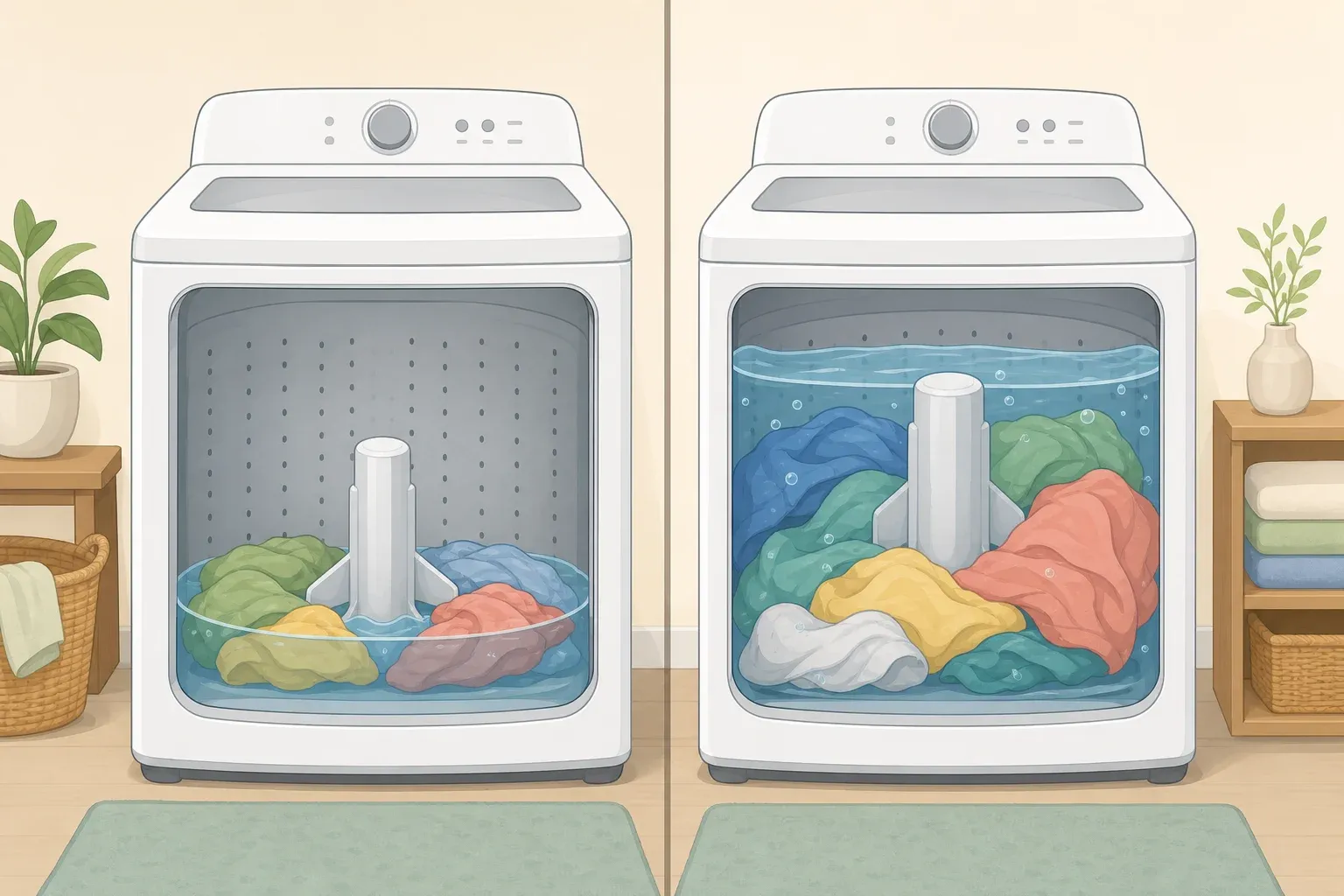
Once the piles exist, deciding which items actually run together takes one more pass. Pull hand-wash and dry-clean-only pieces out first, then set aside anything still needing stain pretreatment. Among what's left, group by color, then confirm that everyone in that pile shares the same cycle and the same maximum label temperature. If they don't share all three, split the pile into two loads instead of picking one setting and hoping for the best.
That last check is where color-sorting alone falls short. A cold-safe cotton tee and a hand-wash-only silk blouse might both land in the dark pile by color, but they don't belong in the same wash. Black jeans and a plain cotton T-shirt can run together on cold, but only if both labels allow a cold machine wash, both call for the same cycle, and neither is heavily soiled or a brand-new dark item still prone to bleeding. A wool sweater from that same pile comes out on its own, following its label's specific temperature dot.
What clothes should be washed in cold water?
Six situations call for cold as the safer default, though the care label still has final say. None of these are strict fabric rules covering what fabrics should be washed in cold water in every case; they're the spots where turning down the heat measurably helps.
Color protection
1. Dark and bright-colored clothes, including new red, black, or navy garments. Hot water opens fabric fibers and releases dye, so dark and bright colors fade noticeably faster in hot water than in cold. New, saturated-color garments should stay on cold for their first several washes.
Fiber protection
2. Silk and rayon. These do best in cool water, and many pieces require hand-washing rather than a machine cycle. Wash delicate clothes in cool or cold water when the label allows a machine cycle, and hand-wash when it doesn't.
3. Wool. Wool holds up better in cool or warm water than hot, since heat is what causes shrinkage. Skip the instinct to default to plain cold here; check the label's specific temperature dot, since a warm setting may be what the garment actually wants.
4. Spandex and stretch-heavy activewear. Wash cold and line-dry to protect the stretch. Line-drying is the source-supported way to help maintain that stretch when the care tag allows it.
5. Polyester, nylon, and other shape-sensitive synthetics. Cold water helps prevent the warping or distortion that heat exposure can cause in these fibers.
6. Cotton and linen where fit matters. Natural fibers shrink under hot water and heat, so cold is the safer default, especially for anything meant to keep fitting exactly as it does now. The label still has the final say, since not every cotton or linen piece behaves the same way.
Quick reference: what setting to try
Everyday darks/brights
Setting to try: Cold
Limitation: New or unwashed dark items may still bleed onto lighter pieces.
Silk, wool, or other delicates
Setting to try: Cool, or follow the care label
Limitation: A hand-wash symbol overrides machine-cold guidance.
Spandex/stretch activewear
Setting to try: Cold, then line-dry
Limitation: Dryer heat can undo the stretch protection.
Polyester, nylon, or other synthetics
Setting to try: Cold
Limitation: Heat can warp or distort the fibers.
Cotton and linen, especially fit-sensitive items
Setting to try: Cold
Limitation: Preshrunk or treated pieces may safely handle more heat; check the label.
Fresh protein stains
Setting to try: Cold rinse and pretreat for about 15 minutes
Limitation: Use warm water only after the stain is fully gone.
When cold water is not enough
A hand-wash symbol or a crossed-out basin overrides everything below. The care label sets the ceiling; hygiene need is what pushes a load toward the warmest setting that label allows.
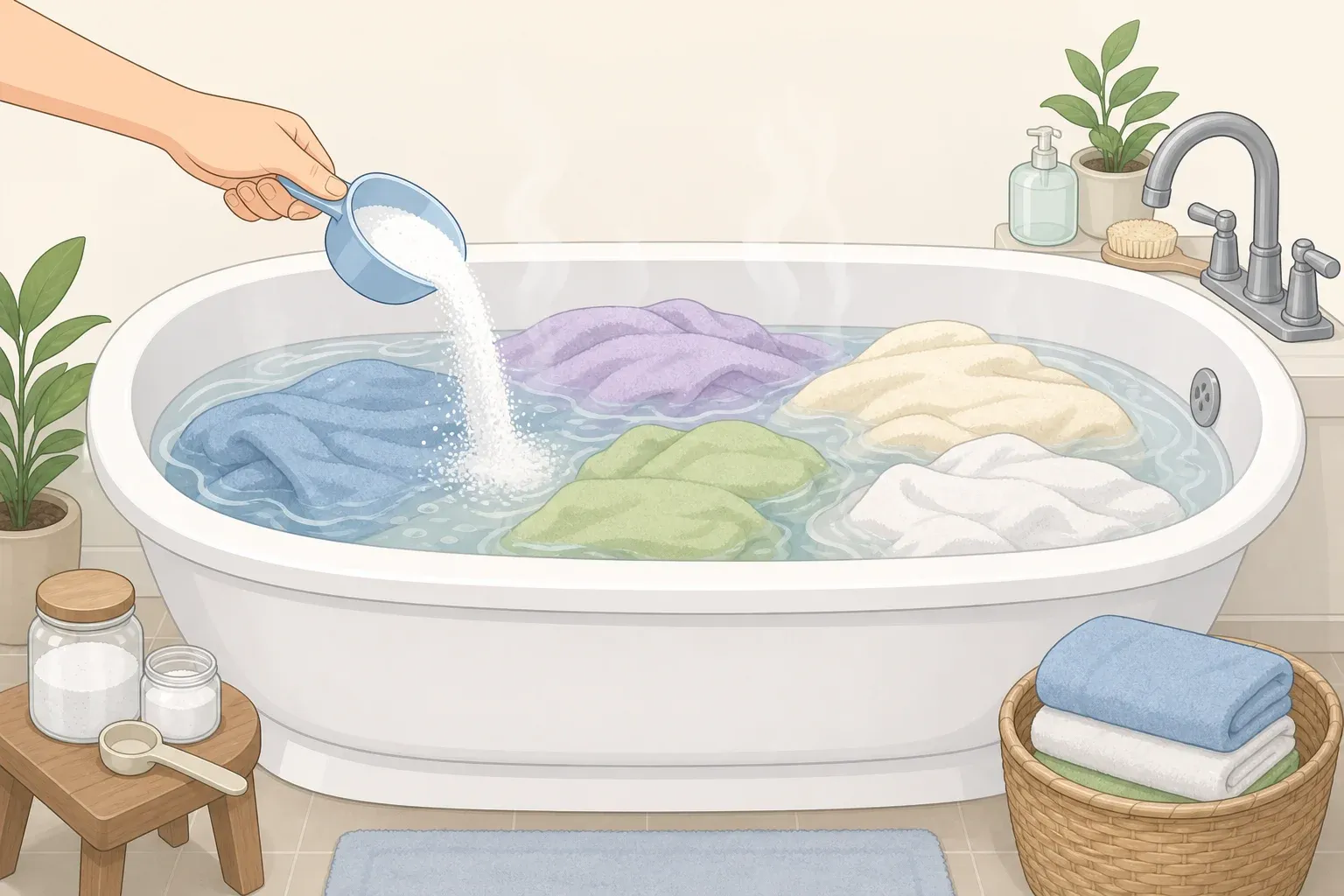
White cottons and towels holding onto light soil do fine in cold, but warm water, roughly 40-60°C, improves detergent and oxygen-bleach performance and helps whites stay brighter over many washes than cold does over time. Heavily soiled work clothes, cloth diapers, or anything with significant food contamination clean better in warm or hot water than in cold.
Dust mites, illness, and heavily soiled kitchen linens are a different category of problem than ordinary dirt, and the guidance here is laundry-care advice, not a substitute for medical guidance. Cold water doesn't kill dust mites. It rinses them away temporarily, and they can return during drying.
Laundry with Olivia's guidance notes that bedding and pillow covers for a household member with dust-mite allergies or asthma may need 60°C (140°F) or above to reliably eliminate mite populations when the care label allows that temperature. Illness laundry, especially after gastroenteritis, the flu, or a bacterial infection, gets the same heat-first approach, using the hottest temperature the fabric allows. Cold water removes most pathogens mechanically rather than killing them; genuine disinfection generally calls for water at 60°C or above, a disinfectant additive, or both.
For items that can't tolerate that kind of heat, use a laundry product specifically labeled as a disinfectant additive and follow its directions exactly. Don't assume any additive disinfects any fabric or every pathogen; check the product label, and check with a healthcare provider if illness in the household raises a hygiene concern beyond routine washing.
Kitchen cloths and cleaning rags fall into the same bucket because they can carry a high bacterial load. If the care label allows it, wash them at 60°C (140°F) or above. For cloths that can't take that heat, follow a suitable disinfectant product's directions instead. Laundry with Olivia's guidance recommends warm to hot water, roughly 40-60°C, for regular-use towels, while lightly used towels can go cold without much of a hygiene tradeoff.
Finish line: Sort first, then pick the temperature
Success looks like colors staying sharp wash after wash, delicates keeping their shape, and no fresh stain making it anywhere near a dryer before it's fully gone. If a cold-washed item still smells or shows a mark afterward, rewash it according to the detergent and garment-label directions, or pretreat the stain again, rather than jumping straight to hot water.
Split any load whose items don't share a color, cycle, and maximum label temperature; that's the real payoff of sorting before washing instead of after. Save the label's warmest safe setting for the situations that actually call for it, dust mites, illness laundry, kitchen rags, and heavily soiled workwear, not as a default for everyday loads. Most routine, lightly soiled clothes can be washed cold when their labels allow it, so don't overthink those loads.










Comments
Be the first, drop a comment!