



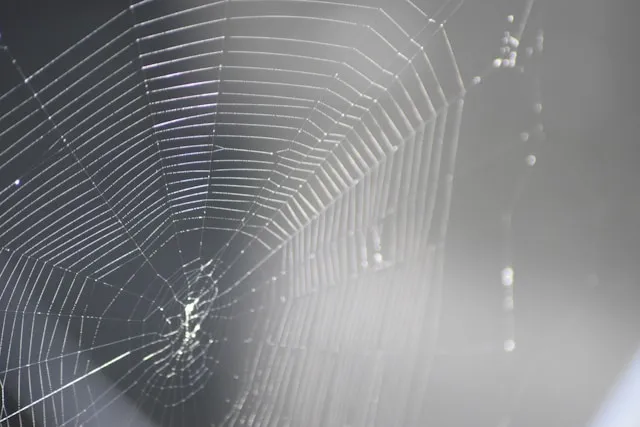
A spider darting across the kitchen floor at night is probably just passing through. But a spider that keeps turning up in the same spot, with a web, an egg sac, or a pattern of repeated sightings, may be using that area regularly, and it's almost always one of three kinds of spots: moisture-heavy rooms, dark undisturbed corners, or the clutter behind furniture. Knowing where spiders hide in your home is the difference between chasing individual spiders and actually clearing them out.
Cooler fall temperatures push some spiders toward buildings once outdoor shelter gets harder to find, according to guidance from CSU Extension. A second, less obvious driver shows up during the same stretch of weeks: mature male spiders, especially funnel weavers, wander indoors in late summer and early fall largely because they're searching for mates, not warmth, per the same research.
Pale sac spiders, meanwhile, are typically the most common spiders found wandering through homes in fall, particularly at night, and a nighttime wanderer like this may not be nesting anywhere nearby at all.
Below is a three-zone method for finding common spider hiding places in the house, what to clean or fix in each one, what a cleared zone looks like, and where the line sits between a homeowner task and a call to a professional.
Where spiders go in the fall, and why one sighting isn't an infestation
The species named throughout this guide — funnel weavers, western widows, cellar spiders — come primarily from Colorado-focused extension research, and prevalence shifts by region. Brown recluses are rare in Colorado's cold, dry climate but common across the Midwest and south-central states, including eastern Kansas, Missouri, Arkansas, Louisiana, Oklahoma, and parts of Texas, according to CSU Extension's brown recluse guidance. The western widow, by contrast, is common throughout Colorado itself.
Black widows are a good example of genuine seasonal movement rather than a chance encounter. They may move into structures in fall for winter protection, and once inside, they can develop and survive year-round, per CSU Extension.
A fast-moving spider crossing the kitchen floor might just be a temporary visitor, while a web tucked into a corner signals a resident. The inspection ahead focuses on finding webs, egg sacs, and repeat activity, the clear evidence of a hiding spot, instead of reacting to every single sighting.
Before you inspect: what you need and where the safety line is
What you'll need: a flashlight, disposable or work gloves, a vacuum with a hose attachment, a lidded jar or container for capturing occasional spiders, and caulk or weatherstripping for sealing gaps found along the way.
Time and difficulty: Plan on roughly 20 to 30 minutes for a full three-zone walkthrough in an average home. That's a rough estimate rather than a fixed rule; a cluttered basement will take longer than a small apartment. This is beginner-friendly, though basement and crawl-space checks call for a flashlight and gloves rather than bare hands.
Set the safety rule before touching anything dark. Don't reach into gaps, stacked boxes, or stored shoes with a bare hand. CSU Extension recommends removing occasional spiders by hand only while wearing gloves, or by trapping them in a container or vacuuming them instead.
Gloves matter specifically in undisturbed corners because that's exactly where the more concerning species tend to be. Indoors, widow spiders favor dark, low-to-the-ground, undisturbed sites such as behind furniture, under desks, and in basement or crawl space areas, the same spots this inspection targets.
If you spot a spider you suspect might be a widow or recluse, don't try to identify it by markings alone. Both are frequently confused with harmless lookalikes, and positive identification of a recluse actually depends on counting eye pairs, not a glance at coloring, according to CSU Extension's brown recluse guidance. Leave it alone. Photograph it from a safe distance if you can, keep kids and pets clear of the area, and contact a local extension office or pest-control professional for identification or removal instead of handling it yourself.
Where spiders hide in your home: check these 3 zones
Finding where spiders actually go in the fall comes down to three zones you can check with a flashlight in under half an hour: moisture-prone rooms, dark undisturbed corners, and the low-traffic clutter behind furniture. These cover the common spider hiding places in the house that CSU Extension research points to again and again. Each zone follows the same four-part check: inspect, clean, fix, confirm success.
Zone 1: Moisture areas under sinks, around drains and tubs
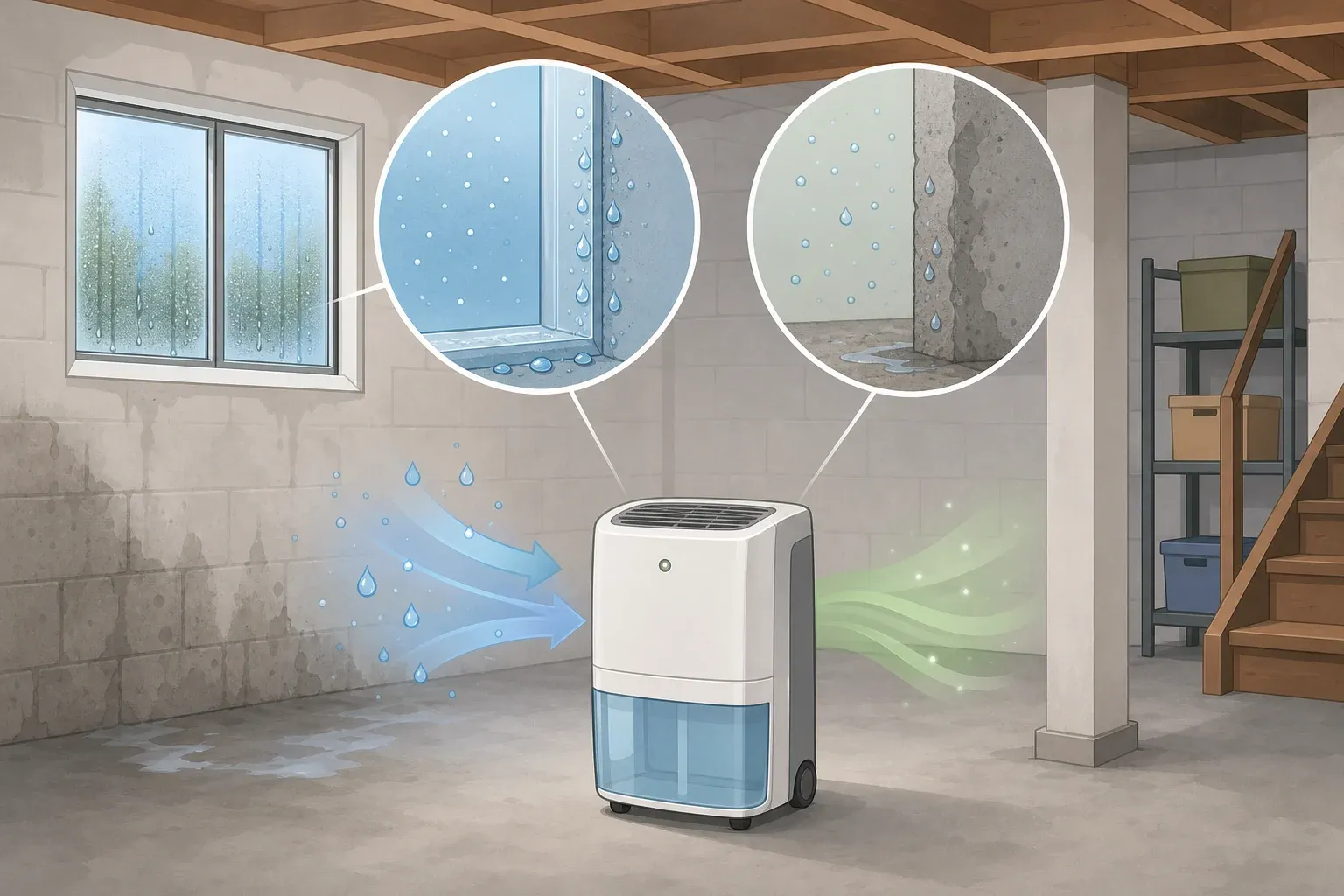
CSU Extension identifies kitchens, bathrooms, and basements as the locations spiders are most often found indoors, specifically because they're seeking a moisture source.
Shine a flashlight into cabinet interiors, behind pipes, and the corners near tub or sink basins.
Look for active webbing, egg sacs tucked behind pipes or cabinet corners, and any moisture pooling or condensation buildup.
Vacuum any webbing found along baseboards or pipe joints with the hose attachment.
Wipe down damp corners and fix any slow leaks or condensation sources you find.
A cleared zone shows no active webbing, no visible moisture pooling, and no egg sacs tucked behind pipes or cabinet corners.
Zone 2: Dark, undisturbed corners in basements, crawl spaces, garages, and closets
Cellar spiders are commonly found in dark corners of cellars, crawl spaces, and garages, according to CSU Extension, while brown recluses, where they're established elsewhere in the country, tend to hide in dark crevices and hollows during the day and turn up most often in basements, per CSU Extension's brown recluse guidance.
Shake out stored shoes and boxes before reaching into them, then check closet corners and shelving with a flashlight.
Look for webbing in ceiling corners, along shelving, and near stored items that haven't moved in a while.
Vacuum webs and corners rather than just sweeping them; regular vacuuming or brushing down webs is one of CSU Extension's core recommendations.
Add light to these spaces. Increasing lighting in darkened corners can discourage spiders from settling there.
A cleared zone shows no bouncing webs when disturbed, a behavior cellar spiders display when their web is touched. Check the same corner again over the next several days. No clustered egg sacs and no rebuilt webbing means the spot is actually cleared rather than just tidied once.
Zone 3: behind furniture and low-traffic clutter
Indoors, widow spiders occur in dark, undisturbed sites such as behind furniture or under desks.
Pull furniture away from walls periodically and check underneath and behind it with a flashlight.
Check under desks, behind bookshelves, and around any boxes or bins that have sat undisturbed for a while.
Vacuum the area thoroughly and reduce stored clutter that creates undisturbed pockets.
Reposition furniture with a small gap from the wall so light reaches the space; added lighting is one of the deterrents CSU Extension notes for discouraging spiders from resettling.
Success here is a slower kind of confirmation. Check the space again over the next several days: no webbing rebuilds, and the area stays visibly clear, a sign the shelter conditions have actually been removed rather than just disturbed once.
Check entry points before you seal anything
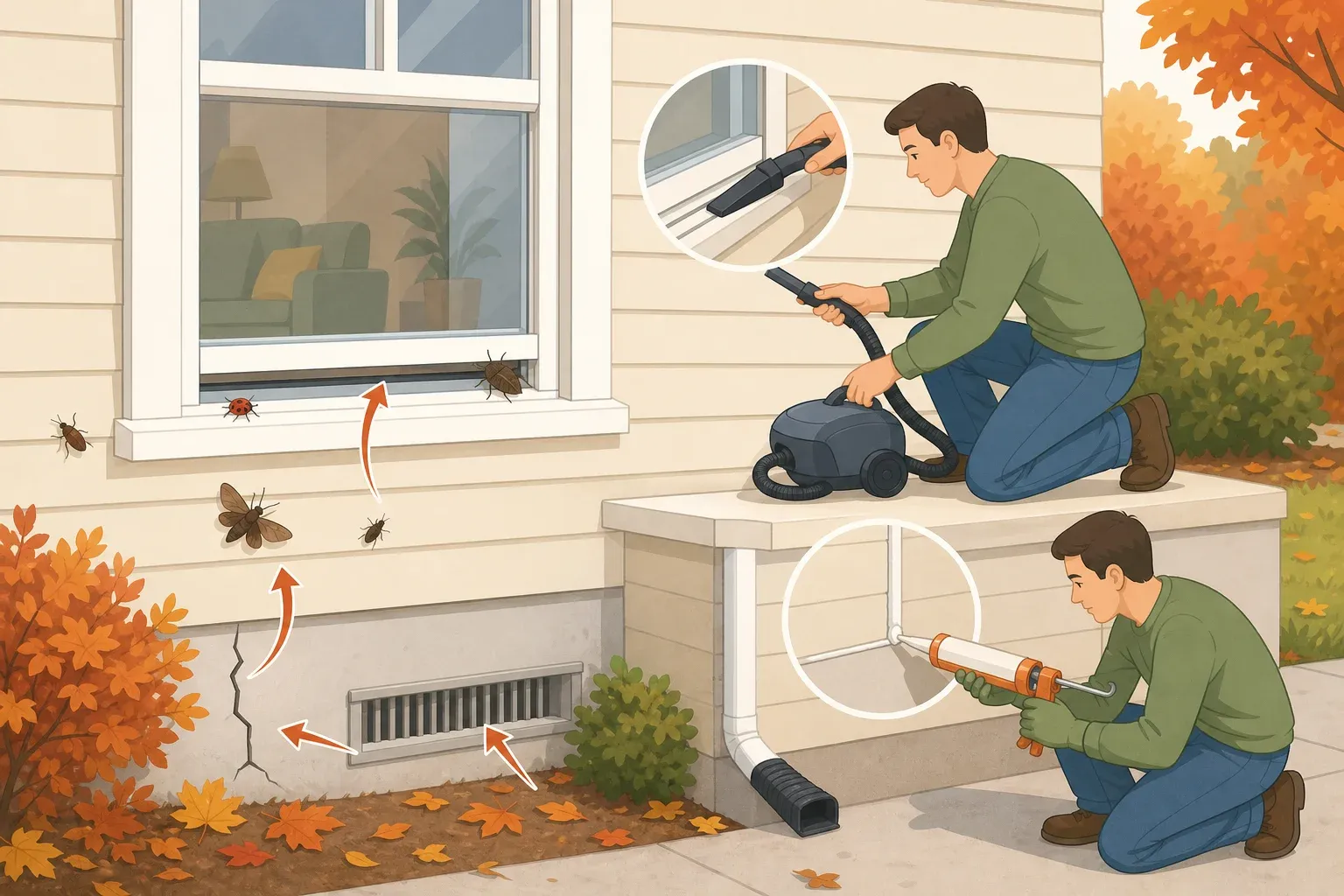
Walk the exterior of the house and look at door sweeps, torn screens, window frames, and any gaps where utility lines enter the building. Sealing screens and doors tightly is one of the two primary control measures CSU Extension lists for keeping spider numbers down long-term, alongside cutting off the insect prey they feed on.
Caulk or add weatherstripping to any gaps you find, working from the outside in with the materials from your kit. Skip any spot where a gas line, electrical panel, or other sealed utility equipment is exposed. That work belongs to a licensed technician, not a caulk gun.
Whole-home prevention that works, and when to call a professional
CSU Extension notes that a combination of sanitation and pesticides can be effective against spiders, but pesticides alone, without removing or modifying the habitat that draws them in, won't do much. Do the three-zone cleanup and entry-point sealing above first, and treat with a pesticide as a follow-up step if activity continues rather than the first move.
Skip total release foggers containing pyrethrins. They're unlikely to have much effect on spiders, making them a poor substitute for sealing and cleaning. Two more shortcuts worth ruling out: chemical repellents like garlic or mock orange, along with ultrasonic devices, have no demonstrated effect because spiders don't perceive or respond to them. CSU Extension notes that marketing such products as pest control is considered fraudulent under Colorado law.
There's a point where DIY should stop. One occasional wandering spider can simply be captured and released outside. Consider contacting a local extension office or licensed pest-control professional if webbing keeps rebuilding in the same undisturbed spot after cleaning, if several spiders cluster in one area, or if you suspect a widow or recluse rather than an ordinary funnel weaver or sac spider.
Most spiders aren't aggressive and bite only when trapped against skin. If a bite does happen, treat the site with an antiseptic to prevent infection and apply ice to reduce pain and swelling. Seek prompt medical care for difficulty breathing, spreading or severe pain, or other widespread symptoms, and for any bite you suspect came from a widow or recluse. Don't try to self-diagnose the spider from memory: spider bites are frequently over-diagnosed and can resemble other skin conditions.
After the walkthrough
Empty the vacuum outdoors or into an exterior trash bag right away, so anything collected doesn't end up back inside. Wipe down whatever surfaces you disturbed and make a mental note of which zone needed the most cleanup. That's the spot to check first next time.
If a spider looks unfamiliar, keeps reappearing in the same spot after cleaning, or a bite seems serious, don't try to identify or treat it from memory. Capture it safely if you can and let a local extension office or a physician make the call.








Comments
Be the first, drop a comment!