



Why Do My Clothes Smell Bad After Washing: The Real Cause
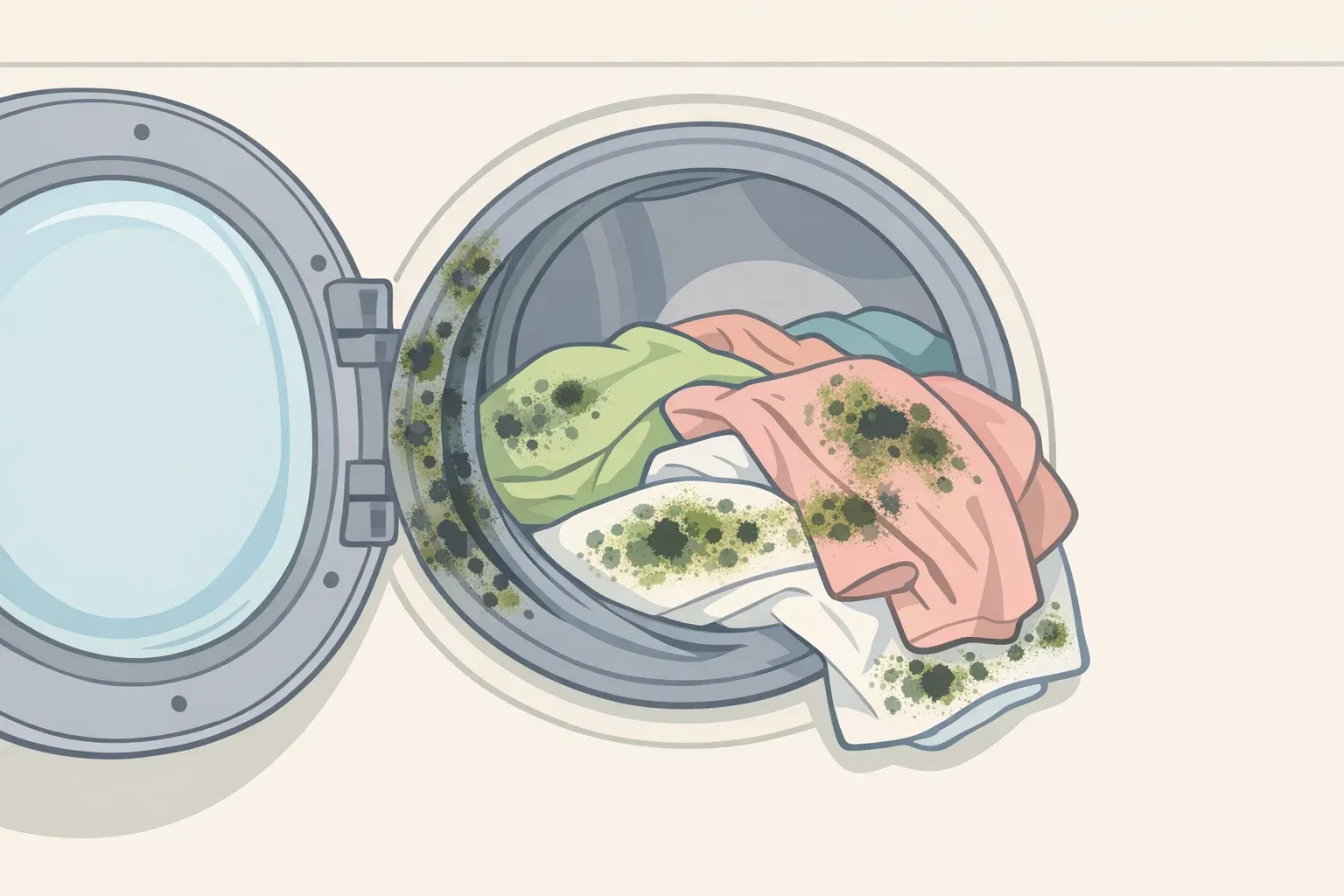
Your clothes went in dirty. They came out smelling worse. If you're wondering why your clothes smell bad after washing, the answer is almost never the detergent. It's usually the rubber seal around the door, which most people never touch, combined with a machine that stays damp between cycles and quietly grows a microbial colony in the folds.
This guide walks through which parts of your front-load washing machine are most likely making your laundry smell musty after washing, how to clean them in under 30 minutes, and how to tell when a wipe-down won't be enough. There's also a maintenance schedule at the end that prevents the problem from coming back.
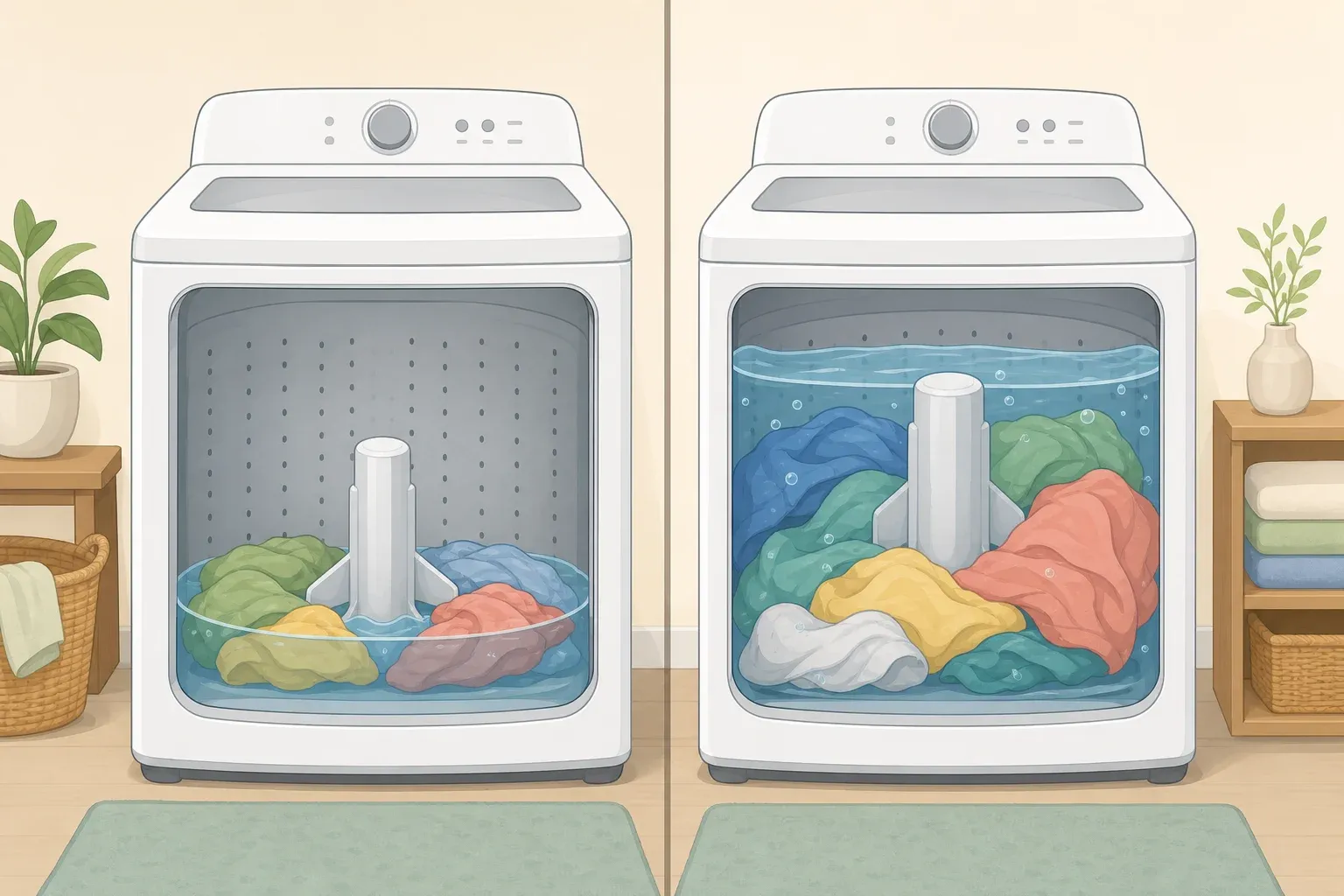
One note on machine type: this guide is written for front-loaders, which are generally more prone to odor problems because their tighter seals trap more moisture. If you have a top-loader, the detergent drawer is still worth cleaning monthly, but the door gasket is not your primary suspect.
Which? reports that grime and bacterial buildup inside a washing machine doesn't stay there; it transfers directly to clothes during the wash cycle and can also degrade internal components, shortening the machine's working life. A peer-reviewed study in Frontiers in Microbiology swabbed ten household machines and found front-loaders carried higher bacterial loads than top-loaders, with average counts of 6.50 log10 CFU/swab versus 3.79, and door seals and detergent drawers recording the highest readings. The sample is small and geographically limited to New Jersey and New York, but the finding aligns with what repair professionals and consumer testing consistently report.
The gasket is the most common culprit. The detergent drawer is a close second. If cleaning both doesn't hold, something deeper is feeding the problem. This guide covers all three stages in order: the main fix, escalation, and a maintenance schedule that prevents recurrence.
Why front-load washers smell: moisture, residue, and bacteria
The reason matters, because the fix only works if you stop recreating the same conditions.
Hard Water Home summarizes the core formula: moisture plus residue plus time. A 2024 PubMed-indexed review provides the microbiology: bacteria attach to the machine's rubber, metal, and polymer surfaces and form biofilms, structured colonies that produce the volatile compounds responsible for odor on both machine surfaces and the clothes being washed. Those biofilms can contribute to the malodour transferred to laundry.
Front-loaders are more vulnerable by design. The airtight door seal that makes these machines water- and energy-efficient also traps humidity inside after each cycle. iFixit notes that front-loaders are more internally complex than top-loaders, with more crevices and folds where dampness can linger. ABC Home & Commercial adds that newer, higher-efficiency machines are especially susceptible for exactly this reason: tighter seals give moisture nowhere to escape.
Fabric softeners make things worse in a way most people don't consider. They work by depositing electrically charged chemical compounds onto fabric, per iFixit, and that same residue accumulates on interior machine surfaces. ABC Home & Commercial is direct: unrinsed detergent and softener residue becomes food for bacteria and mildew. Excess detergent has the same effect.
Running everything at low temperatures accelerates the buildup. Cool washes don't break down residue effectively, and without the occasional hot cycle, that accumulation compounds over time, per Hard Water Home. A machine that looks clean from the outside can still be steadily contaminating every load.
The smell gives you a useful clue about where to look:
- Musty or mildewy: Door gasket and detergent drawer, the most common pattern. Start with the steps below.
- Returns within days of cleaning: Possible limescale trapping residue deeper inside the machine. See the escalation section.
- Sewage or rotten egg: A drainage issue, not residue in the drum. Different fix, possibly professional.
How to clean a smelly washing machine: the two main hotspots
What you need: A microfibre cloth, warm water, washing-up liquid or white vinegar, a soft brush, and access to the detergent drawer (most pull straight out via a press-and-release tab or small button). No special tools required.
Step 1: Inspect and clean the rubber door seal
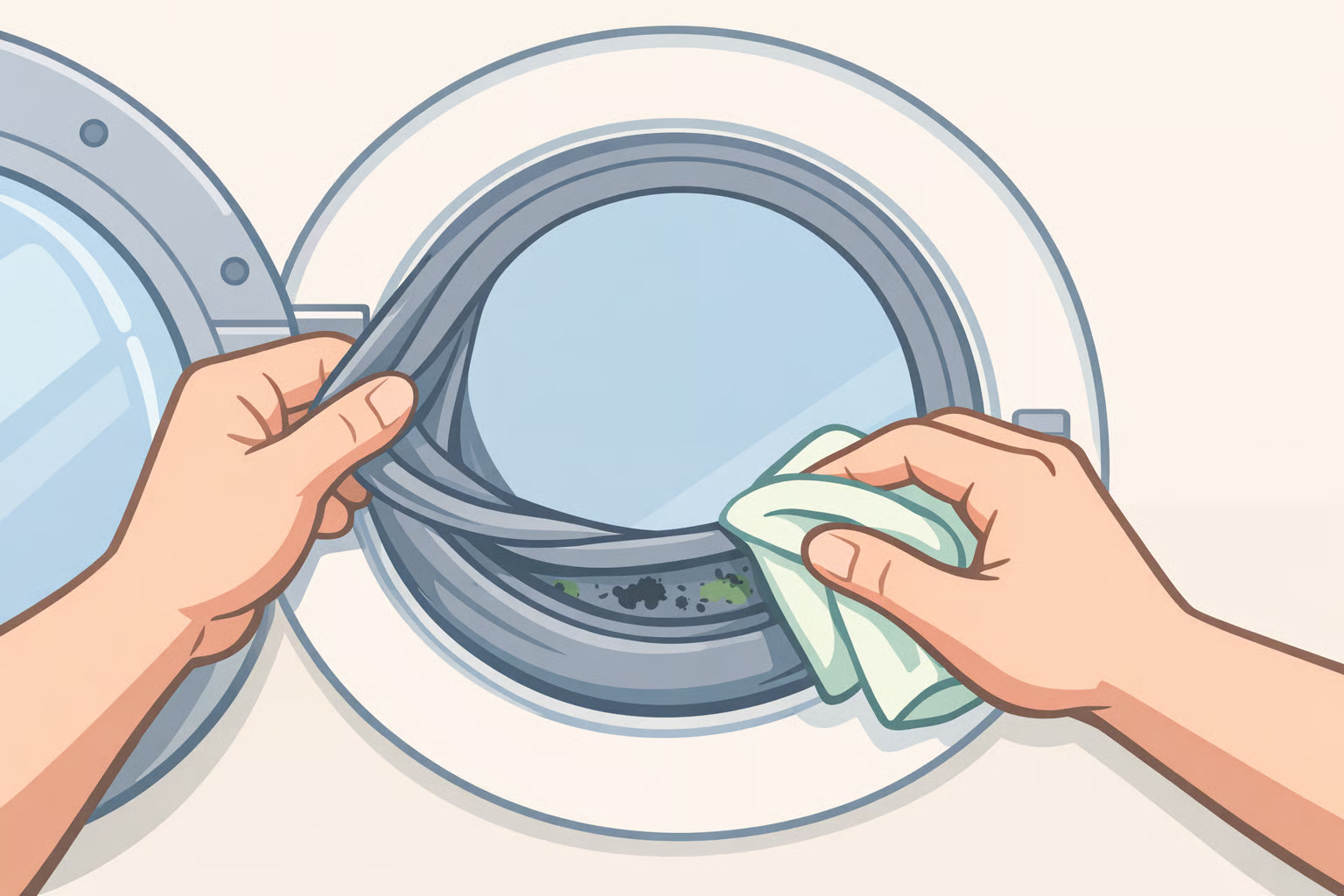
Pull the gasket folds back all the way around the door opening. The mildew lives in the folds, not on the visible front edge. Wipe the entire inner lip with a microfibre cloth dampened with warm water and washing-up liquid. Look for dark spots, slime, or discoloration. Any of those confirm the gasket was contributing to the smell.
Hard Water Home identifies the rubber door seal as the biggest hotspot for trapped moisture and residue. Appliance repair expert Goertz, cited by ABC Home & Commercial, names the door gasket as the most frequent root cause of front-load odor. Which? recommends cleaning it monthly as standard maintenance.
If mildew is deeply embedded: Wiping won't always shift it. Some repair guides suggest applying a diluted bleach solution to the gasket, but check your manufacturer guidance first before trying this. If black mold remains after repeated cleaning, replacement may be necessary. As Goertz notes via ABC Home & Commercial, gaskets with embedded mildew are routinely swapped out by repair professionals. It's a straightforward repair, not a reason to replace the machine.
Step 2: Remove and clean the detergent drawer
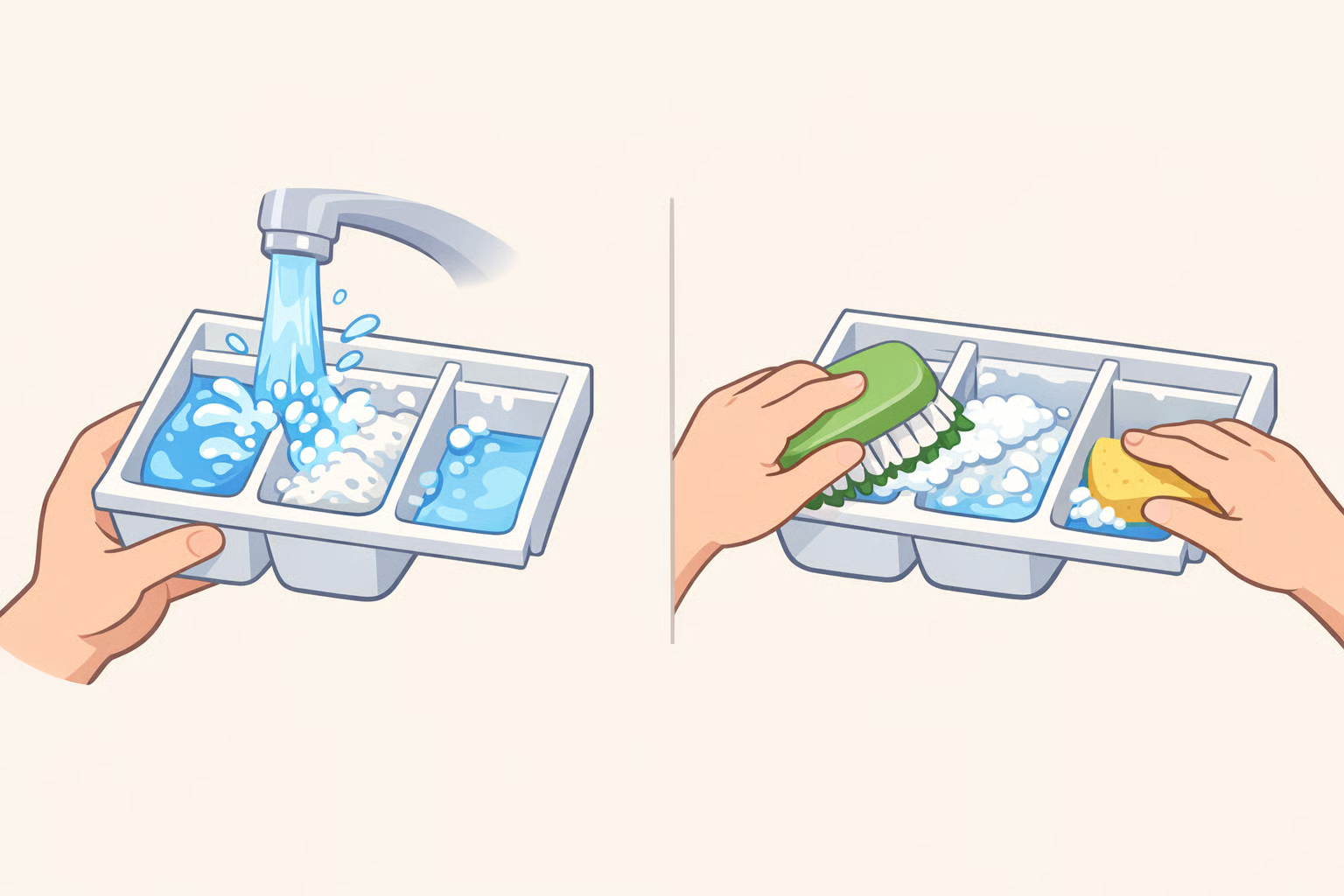
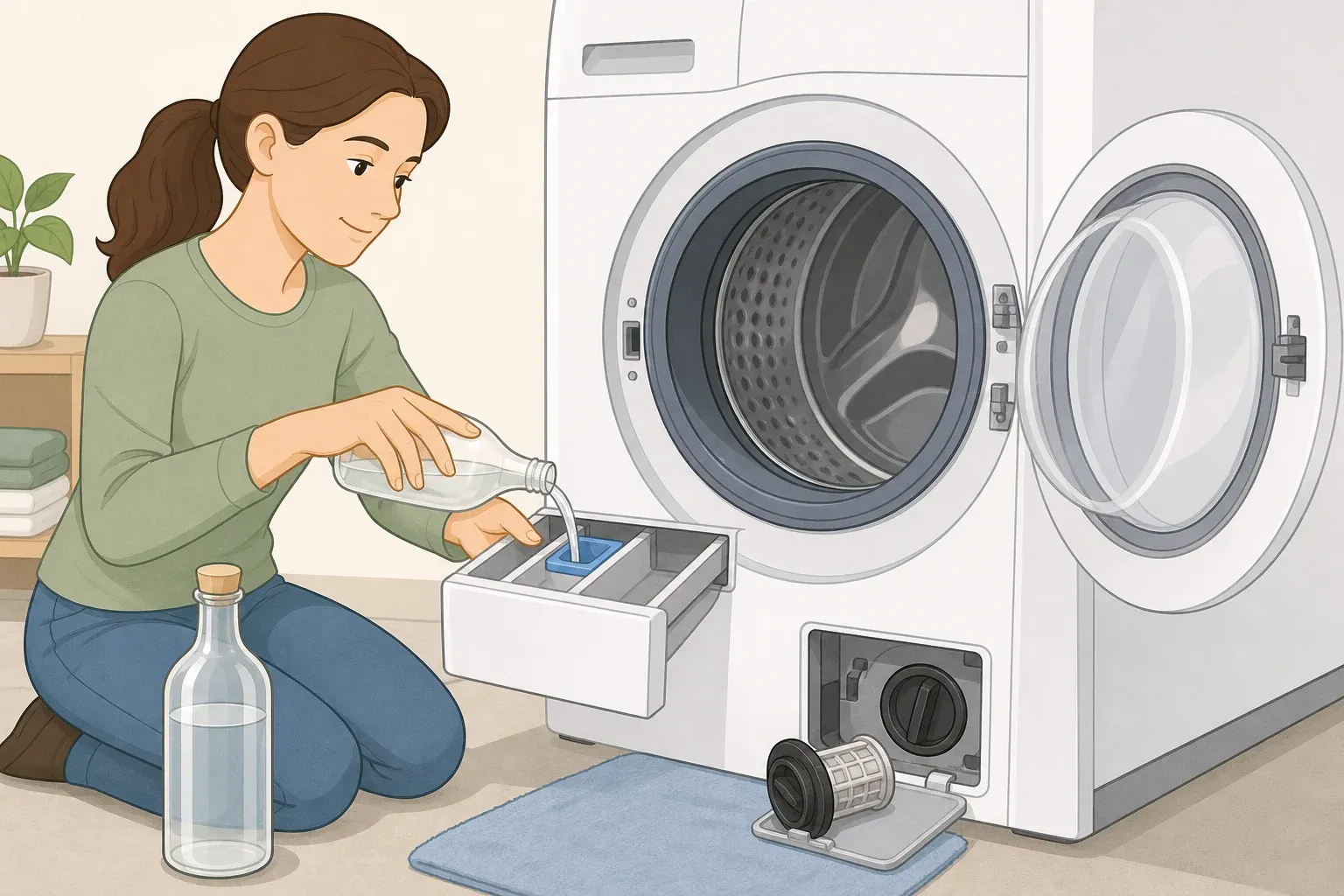
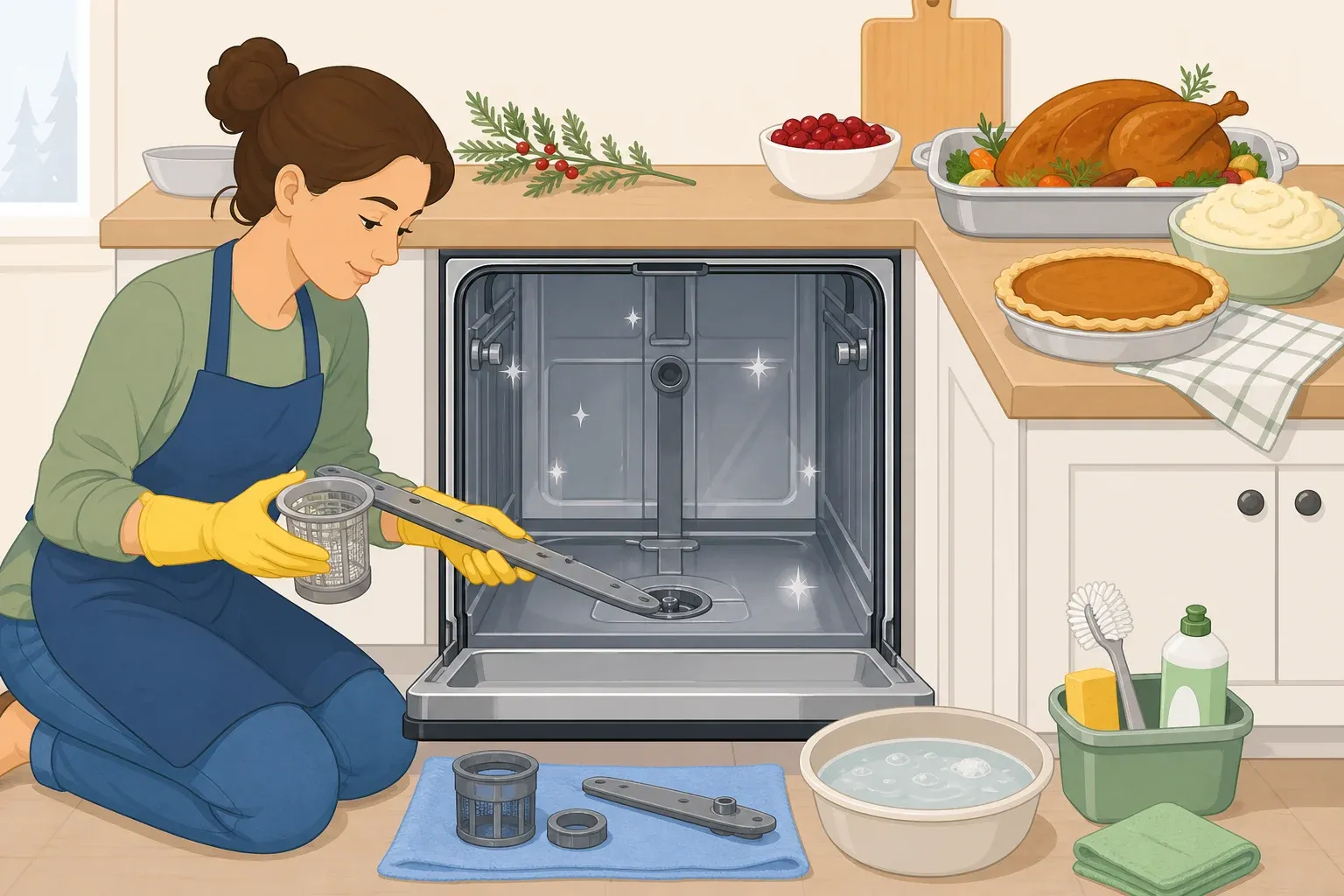
Pull the drawer fully out. Rinse it under warm running water and scrub each compartment, detergent, fabric softener, pre-wash, with a soft brush to clear hardened residue. Which? advises letting the drawer dry completely before reinserting it. While the drawer is out, wipe inside the cavity. The ceiling and walls of that recess collect residue and mold that are easy to overlook.
Step 3: Run a hot service wash
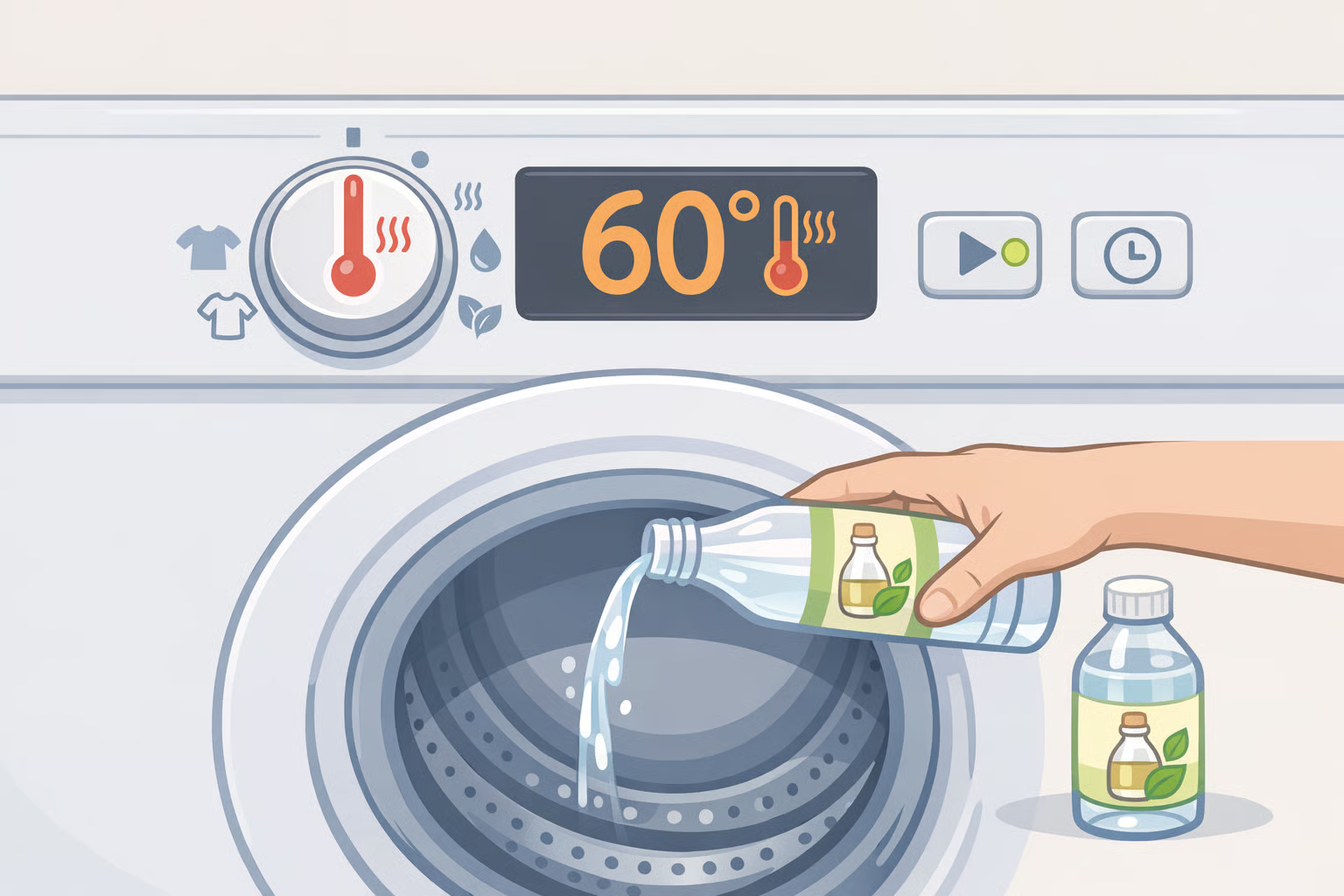
With the drum empty, run a cycle at 60°C or higher. Which? sets 60°C as the minimum for effective bacteria elimination; Hard Water Home recommends 60–90°C. Add a cup of white vinegar directly to the drum, or use a commercial washing machine cleaner in the drawer.
ABC Home & Commercial suggests following a vinegar hot cycle with a second cycle using baking soda to neutralize any remaining odor.
Do not combine vinegar and bleach. Use one cleaning method per cycle. Mixing them creates chlorine gas, and ABC Home & Commercial flags this explicitly.
Step 4: Leave the door and drawer open afterward
Once the cycle ends, prop the door ajar and pull the detergent drawer out slightly. This lets moisture escape rather than sit in the sealed drum. Hard Water Home, Which?, and ABC Home & Commercial all list this as the single most consistently recommended preventive habit.
Do it after every wash, not just after cleaning the machine.
If the smell comes back: a simple decision tree
Cleaned both hotspots and the odor is back within days? The issue isn't how you're cleaning. Something underneath hasn't been addressed.
If it smells musty and returns quickly, check for limescale
Limescale builds up on internal surfaces in hard-water areas, creating a rough, chalky layer that traps residue and bacteria even after surface cleaning. Hard Water Home identifies four telling signs: white chalky deposits visible inside the drum or drawer; laundry that feels stiff or scratchy; clothes that smell dull rather than fresh; and odor that returns within a few days of cleaning.
If those signs match, descale. Add 3–4 tablespoons of citric acid directly to the empty drum and run a hot cycle at 60–90°C, per Hard Water Home. A commercial descaler also works. Worth noting: the limescale explanation comes primarily from a hard-water-focused source and isn't strongly corroborated by independent peer-reviewed literature. That said, the fix is low-cost and low-risk regardless.
If it smells stale and musty despite cleaning, check the drain filter
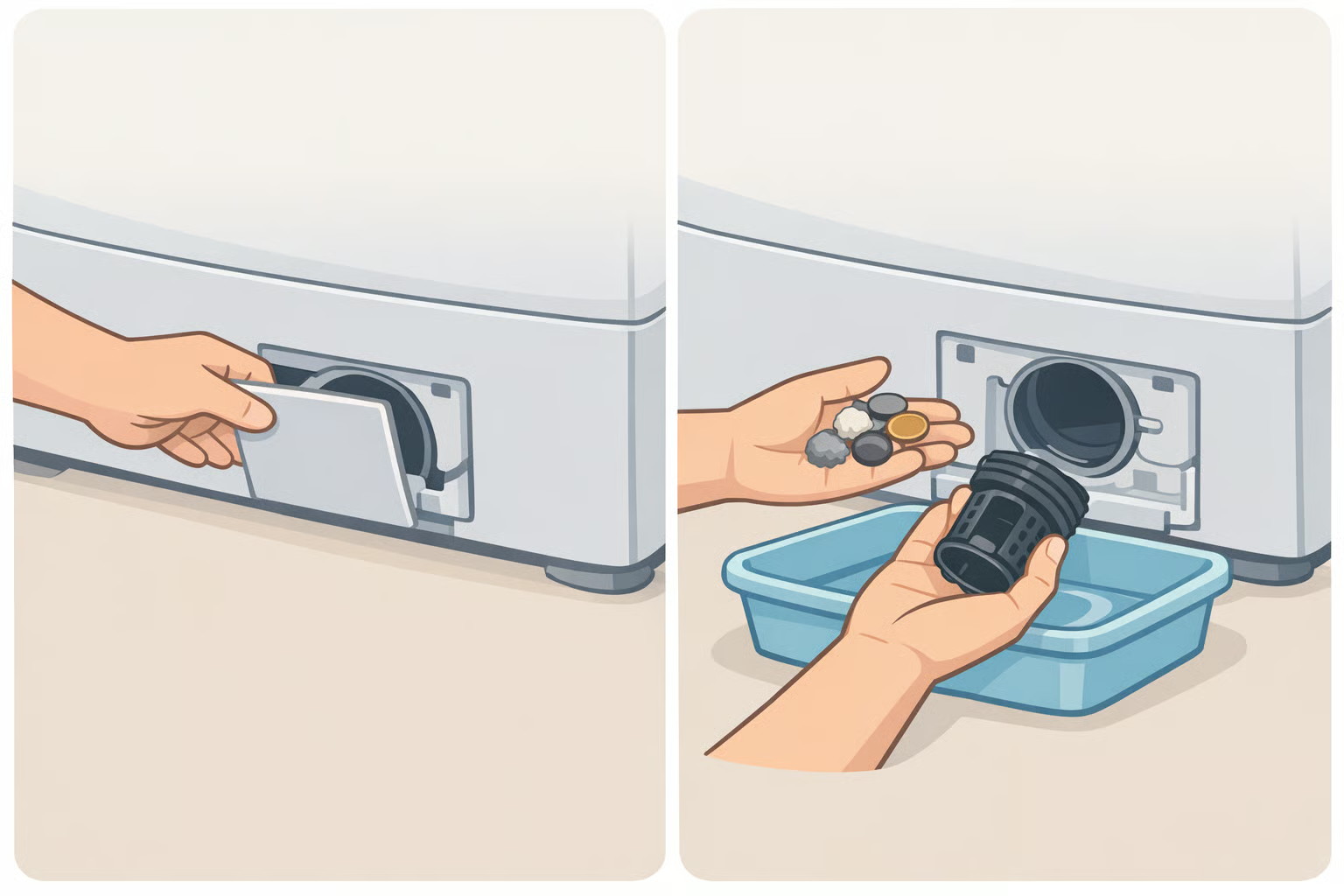
The drain filter catches lint, hair, and debris. A blocked filter traps standing water and generates its own persistent odor. ABC Home & Commercial lists it among the five main causes of washer smell. On most front-loaders it sits behind a small access panel at the bottom front. Have a shallow bowl and towel ready before opening; water will come out. Unscrew the cap slowly to control the flow, clear the debris, rinse the filter, and replace it.
If it smells like sewage or rotten eggs, stop cleaning the gasket
This pattern points to a drainage issue, a blocked waste pipe or a dry P-trap, not residue inside the drum. Both Hard Water Home and ABC Home & Commercial flag this as a distinct category requiring a different approach. Which? suggests trying a drain unblocker first. If the smell holds, this is a plumbing problem.
When to call a professional
Stop DIY troubleshooting and call an appliance repair engineer or plumber if the smell is sewage-strength and persistent, water is backing up into the drum, the machine is making unusual noises or leaking, or odor returns rapidly even after cleaning the gasket, drawer, and filter and running a descaling cycle. ABC Home & Commercial notes that unaddressed washer odors can escalate to water damage, appliance failure, and air quality problems.
The maintenance schedule that stops it returning
One clean fixes the problem now. This is what keeps it from coming back.
After every wash
- Leave the door ajar and pull the detergent drawer out slightly
- Remove laundry promptly. Wet clothes left in a sealed drum accelerate mildew growth, per ABC Home & Commercial
- Measure your detergent. Excess product that doesn't rinse away feeds bacteria directly, per iFixit. If fabric softener is a regular part of your routine, iFixit recommends wool dryer balls as an alternative that delivers softness without the residue problem
Every one to two weeks
- Run a 60°C wash. Bedding and towels are a practical reason to hit this temperature without an empty cycle. Hard Water Home recommends this cadence specifically because lower temperatures don't reliably clear residue accumulation
Monthly
- Pull back the gasket folds and wipe the seal
- Remove and scrub the detergent drawer
- Run a hot service wash on an empty drum
Both Which? and ABC Home & Commercial set this monthly cadence as the baseline.
Every one to three months (hard-water areas only)
- Run a descaling cycle using citric acid or a commercial descaler, per Hard Water Home
Conclusion
Here's a useful frame for diagnosing where you actually stand: if the smell disappears after you clean the seal and drawer, you had a maintenance problem. If it comes back fast, you're troubleshooting the machine, not your laundry.
The microbiology supports that distinction. A 2025 Frontiers in Microbiology study, small-scale and geographically limited but methodologically sound, found that standard washing and drying did not significantly reduce microbial loads in the sampled machines. The machine needs periodic attention regardless of how clean it looks from the outside.
Work through Steps 1–4. If the smell returns, use the decision tree to identify whether limescale, a blocked filter, or a drainage issue is the actual source. If embedded mildew in the gasket persists after repeated cleaning, replacing the seal is a straightforward repair, and far cheaper than a new machine.






Comments
Be the first, drop a comment!