



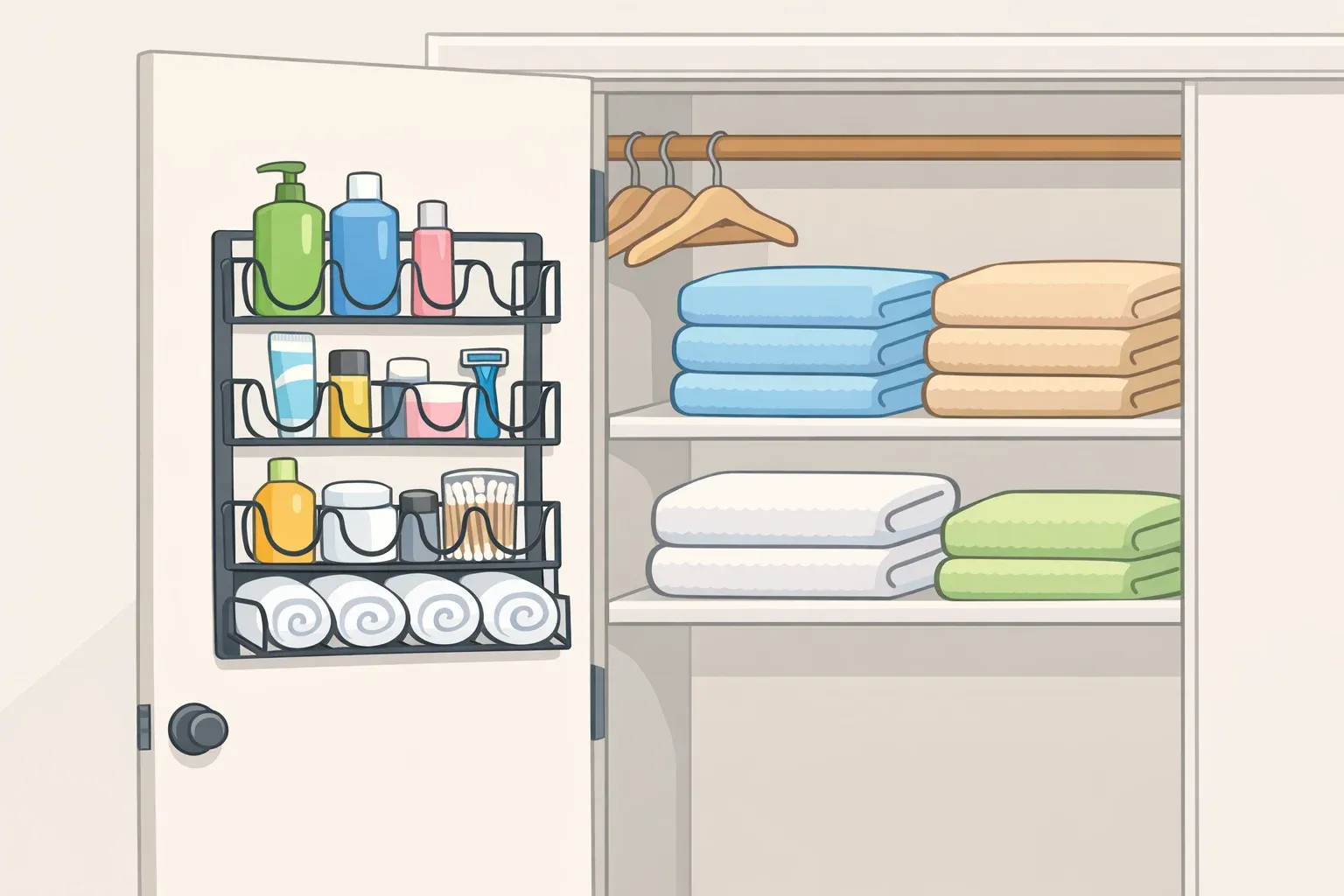
Wine rack closet storage hack: a practical decision guide
A wine rack that has never held a bottle of wine pulled in 1.9 million views for organizing a bathroom, and that kind of traction raises a natural question for anyone staring down a cluttered closet: does a wine rack closet storage hack work anywhere near as well outside the bathroom? The answer is more complicated than the viral video suggests, though the underlying logic behind it holds up to scrutiny.
Content creator Entela Hoxha built her original setup with two IKEA products: the SNÖSPIRA four-bottle wine rack, which retails for $9.99, paired with a two-pack of TAVELÅN trays priced at $12.99, Apartment Therapy reported in 2023. Instead of wine, she filled the rack's bottle slots with rolled towels, added a succulent to one tray and a diffuser and soap dispenser to the other, then pushed the whole thing against her bathroom vanity wall. The video drew more than 41,300 likes, and one commenter independently suggested using the rack as a spare toilet-paper holder, a sign viewers immediately read the design as flexible beyond its intended job, per Apartment Therapy.
Worth saying plainly before going further: the reporting documents a bathroom use, not a closet use. What follows is an adaptation, not a replication. It borrows the bathroom hack's underlying principle, that slots built to hold bottles can hold other rolled cylinders, and turns it into a closet-specific framework, flagging every point where the source stops and a reader's own testing needs to start.
Can you use a wine rack for closet storage? A decision framework
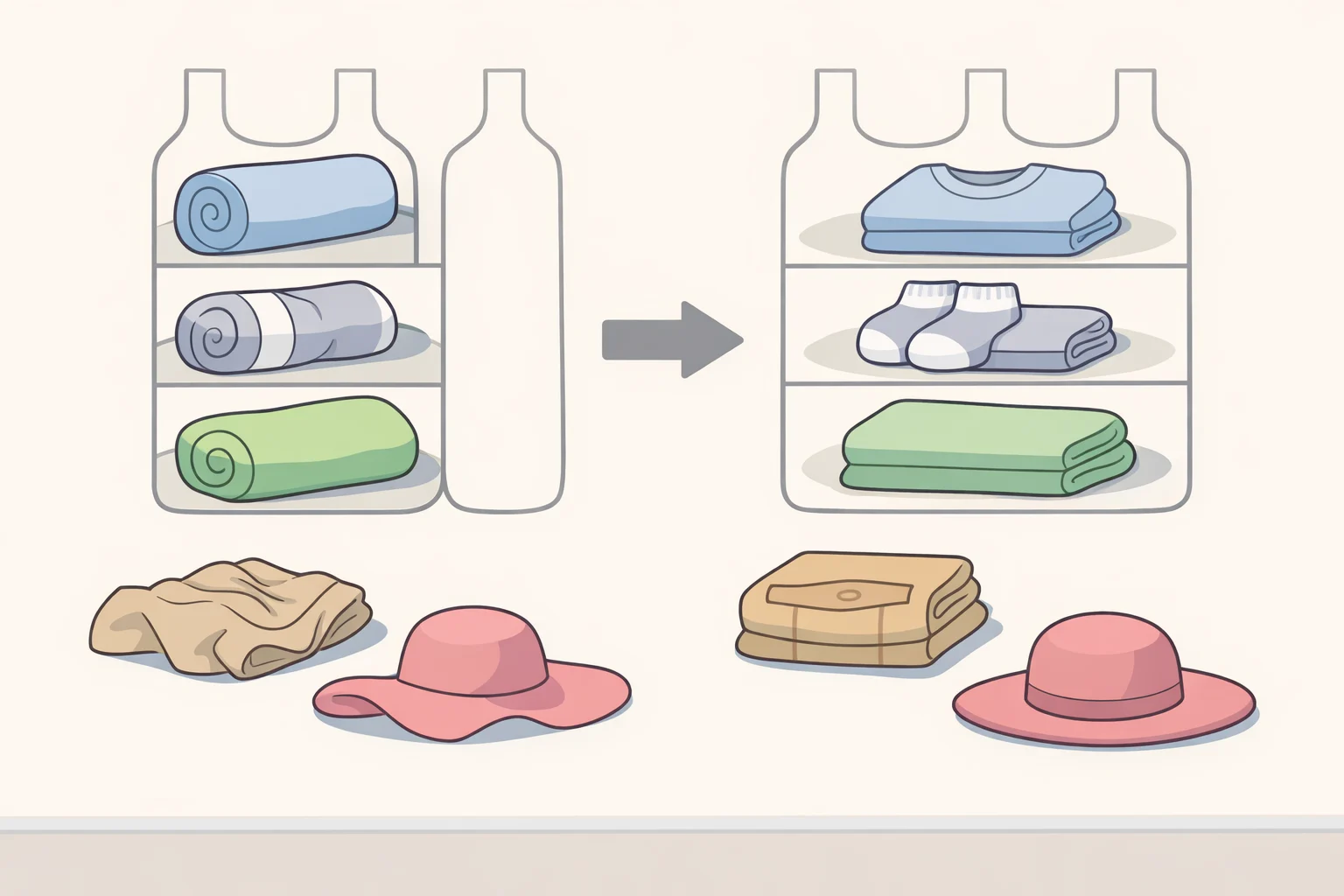
The ground rule comes from what Hoxha actually did: her rack held slots sized for wine bottles, and the only item she's documented placing in them was rolled towels, a soft, compressible cylinder, as Apartment Therapy documented. That's the shape test any closet item should pass before it earns a spot on the list: can it roll or coil into a firm, bottle-shaped tube without unraveling?
Shape matters more than category here. A rolled scarf or a tightly coiled belt can plausibly sit the way a rolled towel does. A folded sweater or a pair of sneakers can't, since the slots are built to hold bottles, not flat or irregular objects, and nothing in the available reporting suggests otherwise.
Access is a real tradeoff, too. Wine racks store vertically, which means an item at the bottom of a stack, or wedged behind another, often has to come out before whatever's underneath is reachable. A shallow bin or drawer divider gives flat, side-by-side access instead. That difference is worth weighing before handing over shelf space to a rack that only holds four to six things at once.
There's a capacity ceiling to reckon with as well. If a closet has more than four or five items in the rollable category, or if the point is seeing and grabbing everything at a glance, a rack with four or six slots turns into a bottleneck rather than a fix. This hack suits a small, specific set of items. It was never built for general closet overflow.
Measure and test before buying
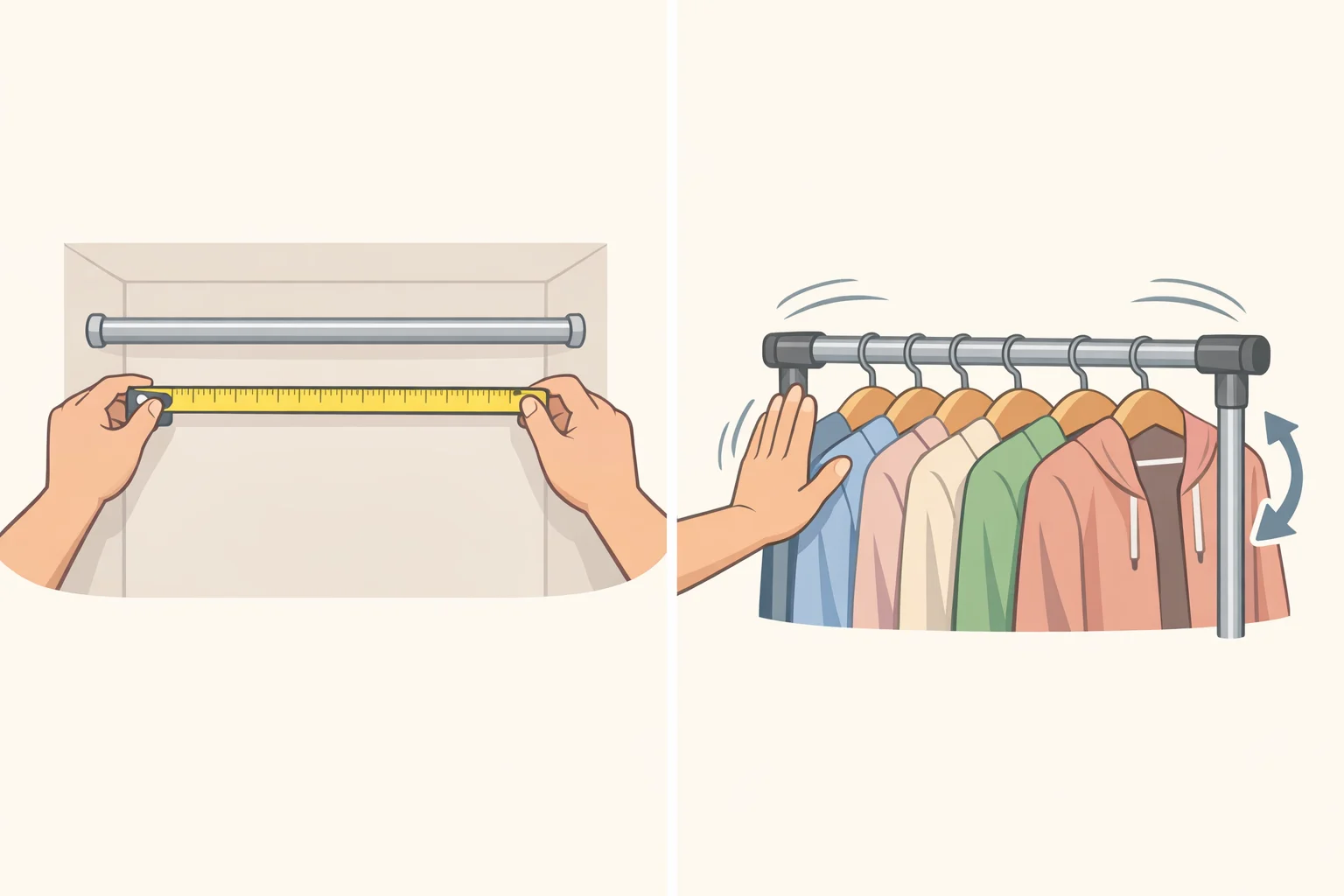
None of the available reporting lists this rack's footprint, height, slot diameter, or maximum load. That gap means every dimension needs to be verified at the point of purchase, not assumed from a bathroom video that never mentions specs in the first place.
A few checks worth running before money changes hands:
- Measure the rolled item at its thickest point and compare it against the slot dimensions listed on the current product page. A rolled scarf that's too thick will sit loose and slide; one too thin might not stay upright at all.
- Measure the closet shelf's depth and the clearance above it. Wine racks built for four bottles tend to stand taller than a shoebox, and a shelf that's technically deep enough can still be too short to clear the rack's height.
- Load a single item and gently nudge the rack before committing to the rest of the load. If it rocks with one item in place, it needs a more stable surface, not more items.
- Add up the weight of everything planned for the rack. If the manufacturer publishes a load limit, check against it; if not, treat the single-item wobble test as the closest available proxy.
Setting up the rack in a closet
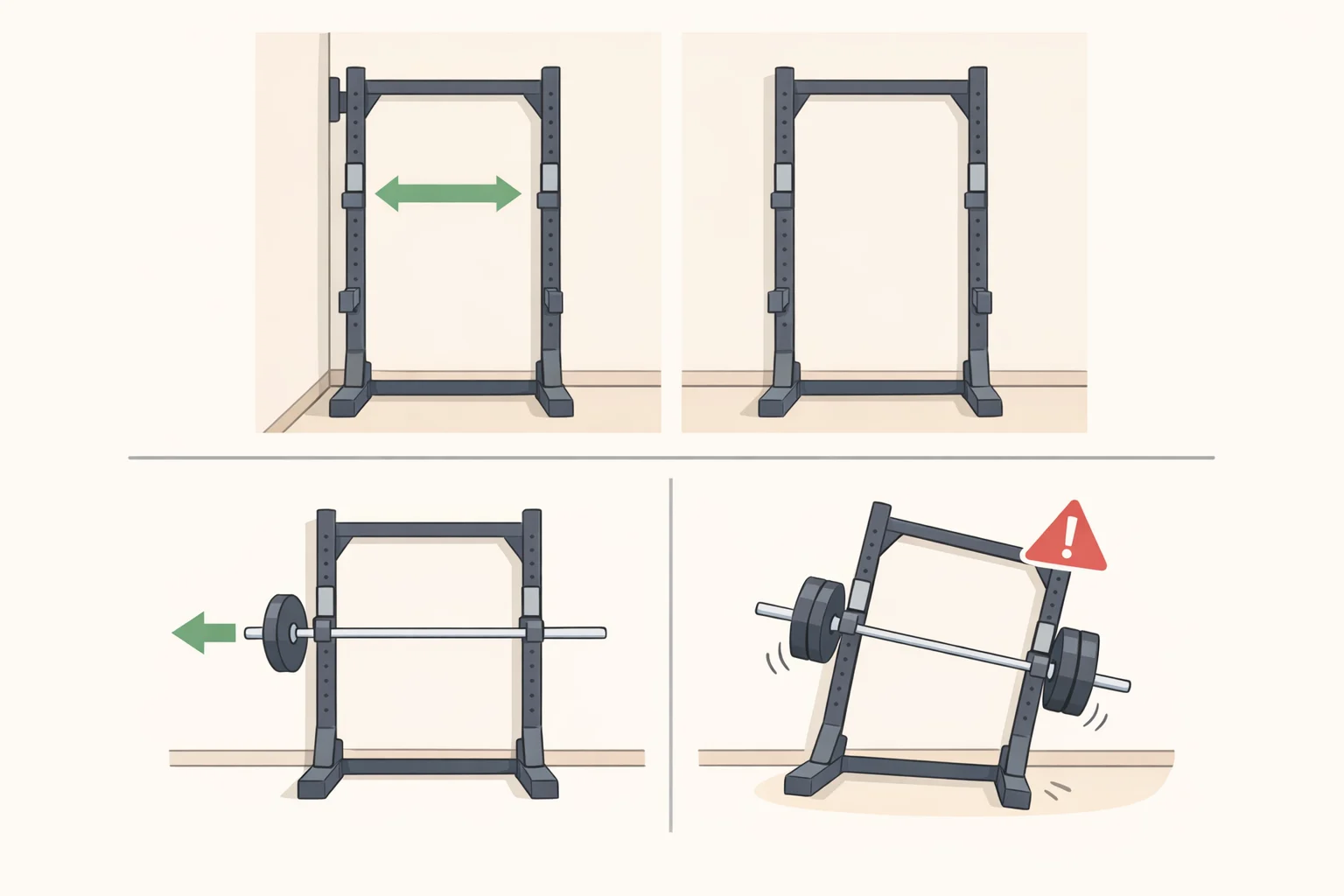
Prerequisites: a compact wine rack, a measured closet shelf or wall-adjacent floor space, and the items already rolled or coiled before shopping starts. Buying the rack first and figuring out contents later skips the one test that actually matters.
-
Roll the items into a cylinder shape and test the fit before buying anything. Hoxha filled her slots with rolled towels rather than folded ones, as reported, but the source doesn't say how tightly she rolled them or whether a looser roll would hold its shape. Test a scarf or belt rolled the way it will actually be stored, and watch whether it stays coiled once it's sitting in a slot.
-
Position the rack against a wall, then re-test for stability. Hoxha's setup sat flush against her bathroom vanity wall, Apartment Therapy noted, though the source doesn't say whether that placement was load-bearing or simply where the vanity happened to be. Either way, a closet floor or open shelf with nothing behind the rack is an untested arrangement, so check for wobble in that exact spot before trusting it.
-
Load one slot first, then add the rest gradually. If a single rolled item makes the rack tilt or shift, that's a sign the surface underneath needs to change, whether that's a recessed shelf against a closet wall or a lower, more stable spot entirely.
-
Decide on trays based on actual loose items, not the source's styling choice. In Hoxha's version, trays held a succulent, a diffuser, and a soap dispenser, essentially décor rather than the storage mechanism itself, per Apartment Therapy. A tray only earns space in a closet if there are small loose items, like jewelry or hair ties, that need a landing spot next to the rack.
Three closet use cases: scarves, belts, and rolled accessories
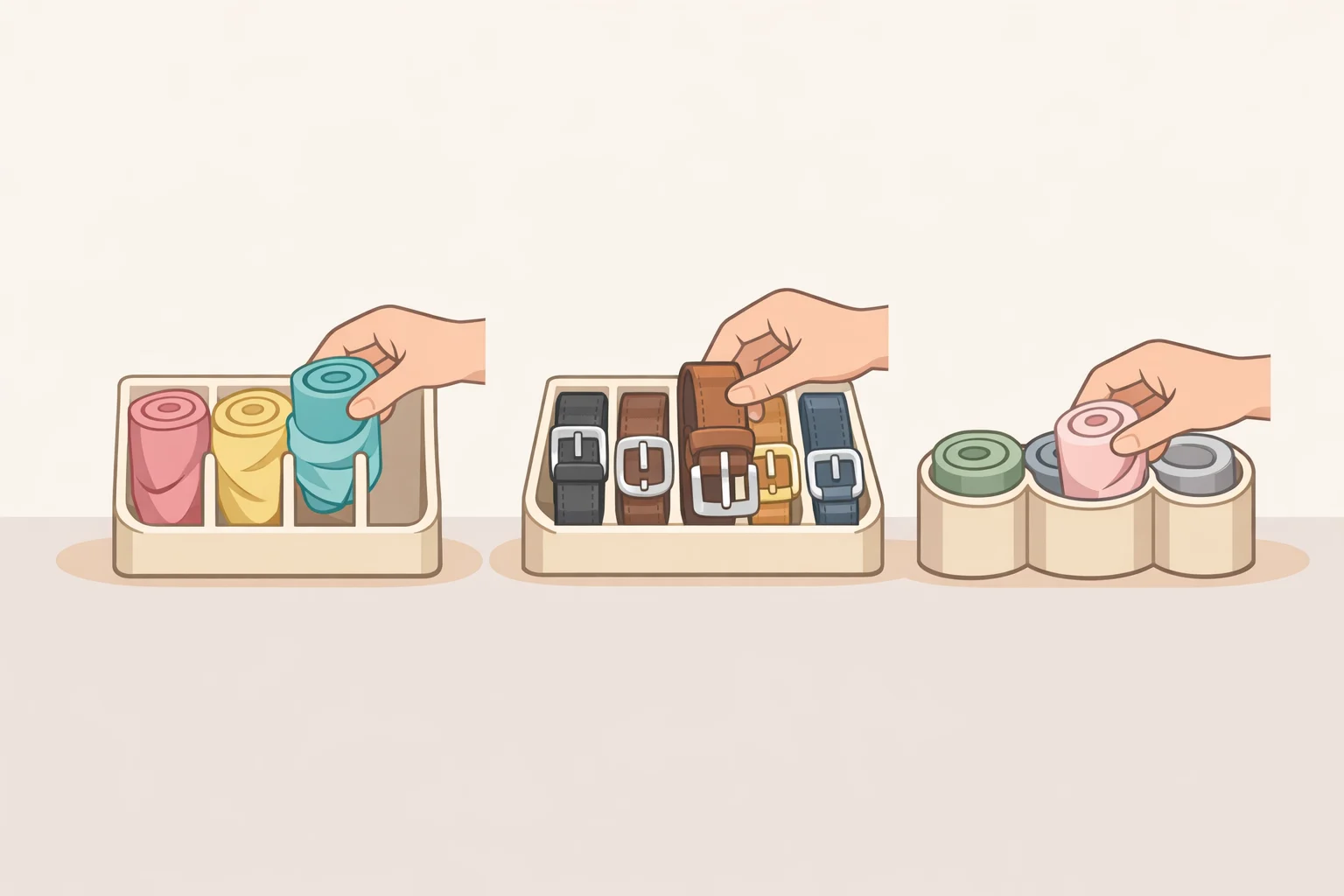
Anyone weighing wine rack storage ideas for bedroom closets is usually thinking about one of three categories. Each deserves its own fit test and its own honest limitation.
Scarves. A silk or lightweight cotton scarf rolled into a loose tube can sit in a slot the way Hoxha's towels did. The limitation: thicker knit scarves or ones with bulky texture may not compress evenly, and an uneven roll is more likely to loosen and slump sideways over time.
Belts. A coiled belt holds a fairly rigid circular shape already, which makes it a reasonable candidate. The limitation: belts with large buckles won't sit flush in a slot built for a smooth bottle neck, and a heavy buckle hanging off one side can unbalance the whole coil.
Rolled accessories. Items like rolled pajama sets, tights, or a hand towel used for gym or travel bags behave similarly to Hoxha's original towels. The limitation is the same one that applies across the board: anything that isn't already cylindrical when rolled, or that unrolls easily under its own weight, is fighting the slot's shape rather than working with it.
When a divider, bin, or hook wins instead
This is the point where it's worth being honest about the hack's ceiling. If the goal is genuinely to repurpose a wine rack for storage rather than force a fit, a wine rack organizer only makes sense for a narrow band of items: soft, rollable, roughly bottle-shaped, and few enough that vertical single-file access isn't a daily annoyance.
Everything else has a better home. Flat items like folded shirts or stacked jeans belong in a drawer divider, which gives full visibility without unrolling anything. Shoes and structured bags need shelf space or bins, not a slot built for a cylinder. Anything reached for daily, where digging past other items to get to it would be genuinely annoying, is better suited to hooks or a hanging organizer that keeps every item independently accessible.
Use this if, skip this if
Use this if there's a small, defined set of rollable accessories on hand, think three to six scarves or a handful of coiled belts, and the goal is keeping them visible and separated rather than tangled in a drawer. The same slot logic that held Hoxha's towels applies here: soft cylinders that hold their shape stay put, as the original hack showed.
Skip this if the real problem is general closet overcrowding, or the items in question are flat or rigid, like folded clothes, shoes, or structured handbags. Skip it too if grabbing one item without disturbing the others matters day to day, since the vertical, single-file access that works fine for four bottles turns into a hassle once the count climbs past that.
Run a one-week trial before fully committing. Load only the rolled items, leave the rack in place for seven days, and check three things: do the items stay rolled and in place, can any single item be reached without pulling others out first, and does the setup take up less shelf space than whatever method it replaced. If any one of those three fails, the rack hasn't earned its spot.
Weigh cost against the alternatives, too. The original two-product bathroom version ran just over $20 at the pricing Apartment Therapy reported in 2023, though current pricing should be checked before buying since IKEA product lines shift. A basic drawer divider or bin often costs less and handles a wider range of shapes. The wine rack only wins when the point is specifically that visible, upright display look, not tidiness alone.
Conclusion
The core idea survives the jump from bathroom to bedroom: a rack built for bottles can reasonably organize other rolled cylinders, provided the items actually behave like bottles once rolled. Whether that holds up in any given closet comes down to the tests above, not the original video.
Keep the rack only if the one-week trial shows real improvement: items staying rolled, easy access without disturbing neighbors, and less shelf space used than before. If it fails on any of those counts, that's not wasted money, it's useful information. Pair the rack with a drawer divider or slim bin for anything that doesn't roll into a cylinder, and save the wine slots for the narrow set of items they're actually built to hold.










Comments
Be the first, drop a comment!