




Mixing laundry detergents is almost always an act of good faith. You're running low on one brand, or trying to blend a scented formula with a fragrance-free version for a family member with sensitive skin, or operating on the reasonable assumption that two decent detergents must add up to something better. The intuition makes sense. The chemistry doesn't cooperate.
So: can you mix laundry detergents? No, not as a routine practice. The reason has less to do with dramatic chemical reactions than with a simpler, more predictable problem. Combining two detergents functions almost identically to overdosing on one. In any given cycle, the washer has limited water and rinse capacity. When the total detergent load exceeds what the machine can clear, the excess doesn't disappear. Instead, it stays in your fabric and your drum.
A standard detergent already contains between 30 and 70 individual compounds, calibrated to work at a specific concentration, according to research published in Allergy in fall 2023. There's no published evidence that combining two brand-name detergents cleans better than using one correctly dosed detergent. No studies have directly placed two brand-name detergents in one load and measured results against a single-detergent control, but the evidence establishes the mechanism behind the problems.
A single accidental mix is almost never a safety emergency. It's a performance issue, and a correctable one.
What actually happens when you mix laundry detergents
Three scenarios drive most real-world questions about mixing: topping off a nearly empty bottle with a different brand, dropping a pod in and adding a splash of liquid for good measure, and combining a scented formula with a free-and-clear version for a sensitive-skin household member. All three produce the same underlying condition.
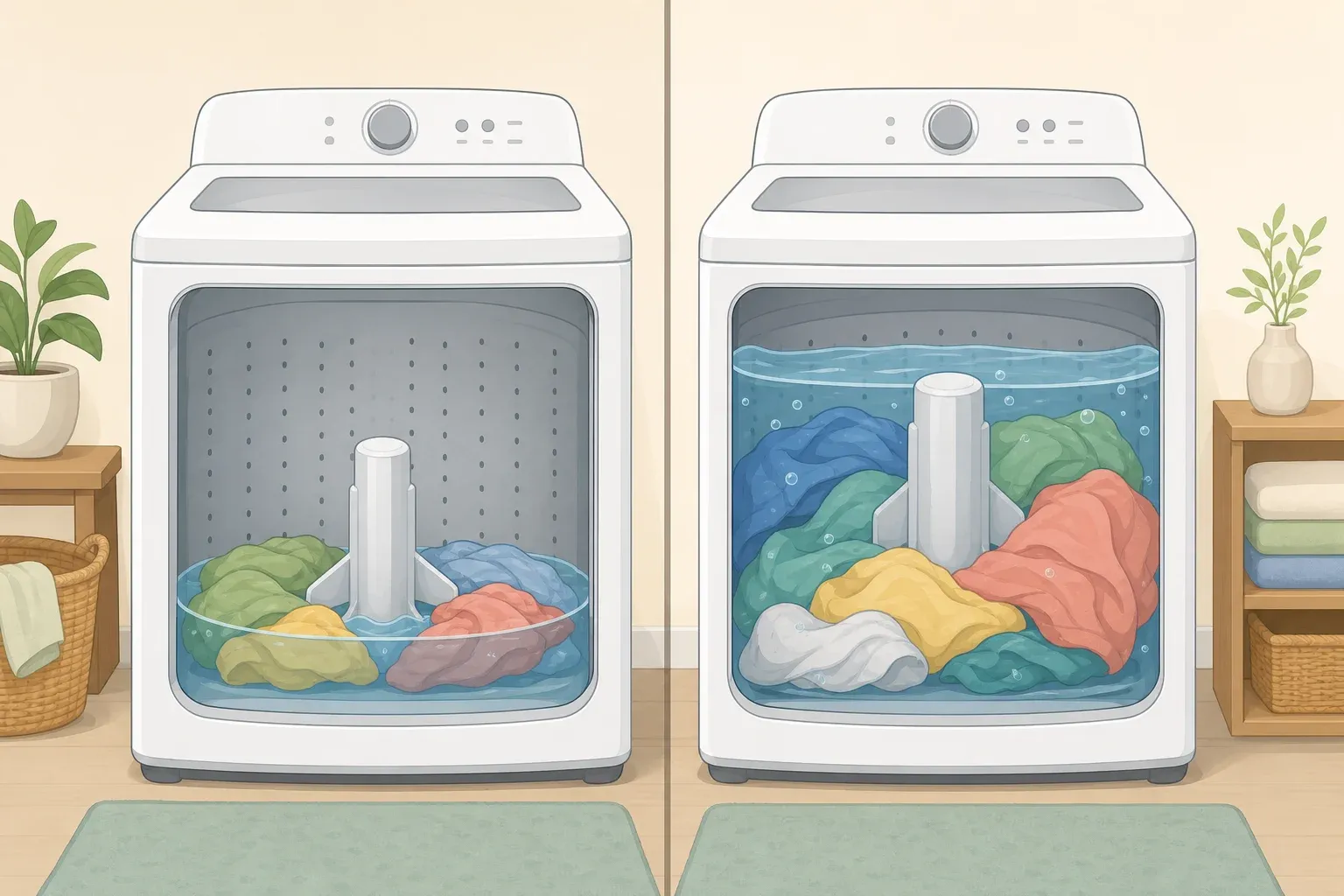
Think of it like overfilling a coffee filter. You don't get stronger coffee; you get overflow and grounds in the cup. A washer has a fixed volume of water and a set number of rinse passes per cycle. When the total detergent load exceeds the machine's rinsing capacity, the remainder stays behind. The result: suds that don't fully clear, a chemical film deposited into fabric, and drum conditions that favor mold growth.
Appliance specialist Radtke described mixing multiple cleaners as producing the same condition as adding too much detergent, with suds the machine cannot clear, leaving foam residue in garments. Consumer Reports also warns that mixing products in the wash can trigger unexpected chemical interactions, with over-sudsing causing washer damage and depositing residue into fabric.
The downstream effects compound. Residue left in fabric after over-sudsing doesn't just create a stiff feel; it actively attracts more dirt over time and contributes to odor. Inside the machine, it creates the warm, damp environment hospitable to mold, according to Rich Handel, who has led Consumer Reports' laundry testing lab for eight years and recommends never exceeding the minimum dose for most medium loads.
The case against mixing rests on mechanism and expert guidance, not a controlled head-to-head trial. The practical conclusion holds, but the certainty is bounded.
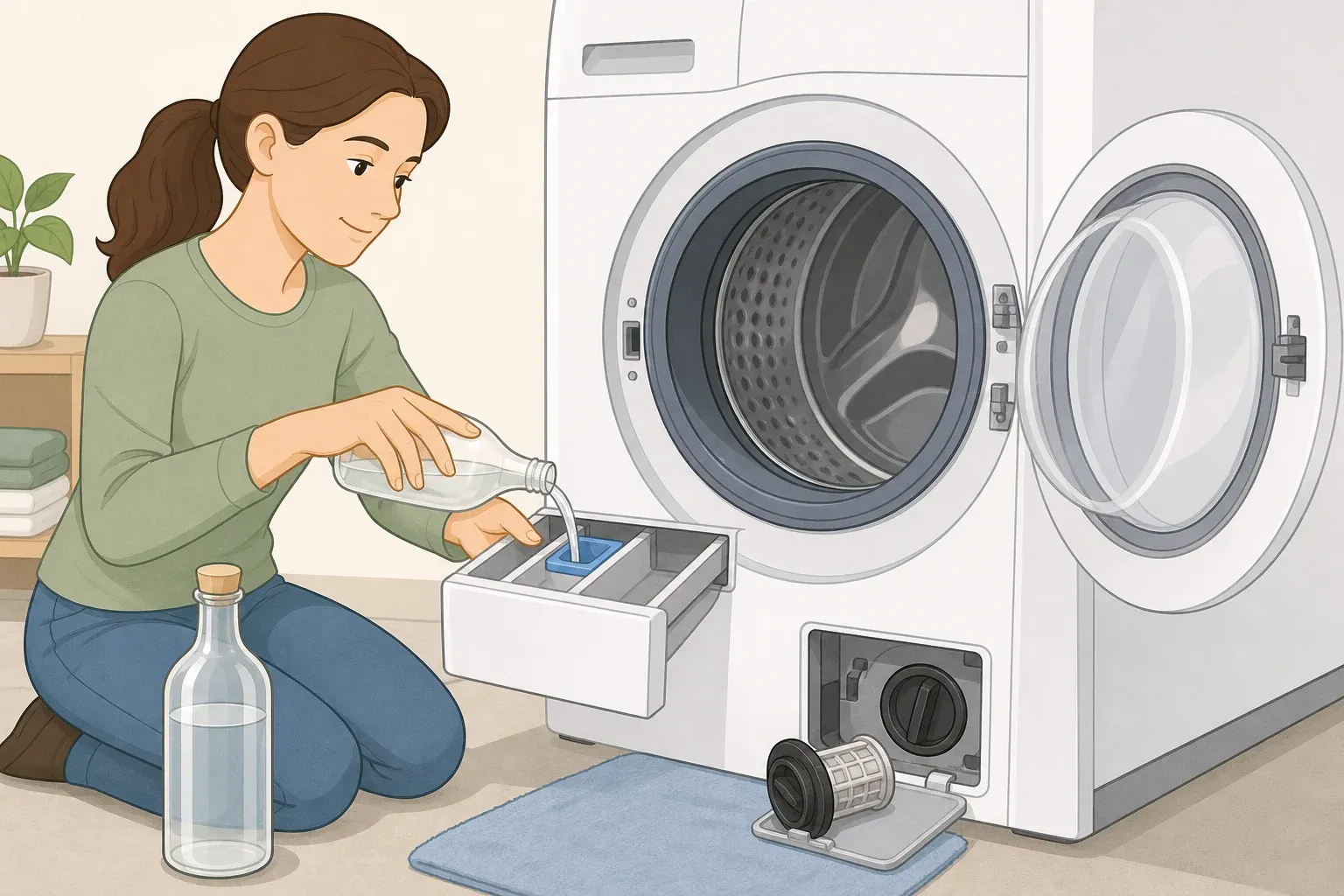
If you've already mixed products, run an extra rinse cycle immediately. Use little or no detergent on the following load. Visible residue on fabric? Rewash with plain water. Over-sudsing in the machine? Wipe down the drum and leave the door open between loads. No crisis, just a correction.
Is it safe to mix laundry detergent brands? What common add-ins show us
The same logic extends to the broader category of laundry add-ins. Every one of these products was formulated for a specific use at a specific concentration. Combining them with detergent adds complexity and, in several cases, measurable risk, without improving outcomes.
Some carry distinct failure modes:
Dish soap produces excessive suds because it's formulated for hand use, not drum cycling. It also lacks the fabric-protective compounds built into laundry detergent, and its surfactant chemistry can irritate skin. Three separate failure modes from one substitution.
White vinegar is widely promoted online as a natural softener alternative. Consumer Reports advises against using it in washing machines because it can damage rubber parts in some models. A hardware risk with no demonstrated cleaning payoff.
DIY detergent recipes, typically grated soap bars combined with baking soda, borax, sea salt, and Epsom salt, have no established effective dosage. Commenters on social media videos have reported clogged front-loading machines, and their cleaning effectiveness is unverified.
Others are simply redundant:
Borax is marketed as a booster. Handel's judgment: unnecessary with a top-rated detergent and potentially marginal with a poor-performing one. It also requires careful handling, since contact with skin and eyes can cause irritation.
Fabric softener and dryer sheets both deposit a wax-based coating that reduces towel absorbency and builds up on the drum over time. Dryer sheets carry an additional problem: they coat the moisture sensors inside the dryer, which impairs the machine's ability to detect when clothes are actually dry. The result is either over-dried fabric and wasted electricity, or a load that comes out still damp.
More product does not mean more cleaning. That principle holds whether you're combining two detergents or layering in a booster.
What to do instead: one detergent, used correctly
The default is simpler than most people assume: one quality detergent, minimum recommended dose, cold water, normal cycle. Consumer Reports tests top-rated detergents in cool water and finds they clean as effectively as warm for everyday loads, while cold water also preserves fabric and cuts energy use. The normal cycle handles most situations. For illness in the household, the sanitize cycle handles germ control without any additional product.
Before adding anything new to your machine, check the owner's manual. Certain add-ins and off-label cleaners can conflict with manufacturer guidance and void the appliance warranty, as Consumer Reports notes. Two minutes. Most skipped step.
For the specific scenarios most people actually encounter:
Default load: One detergent, three tablespoons of concentrated liquid for a medium load, cold water, normal cycle. Handel's guidance is explicit: concentrated formulas need roughly a shot glass worth to clean effectively. Extra detergent doesn't improve the result.
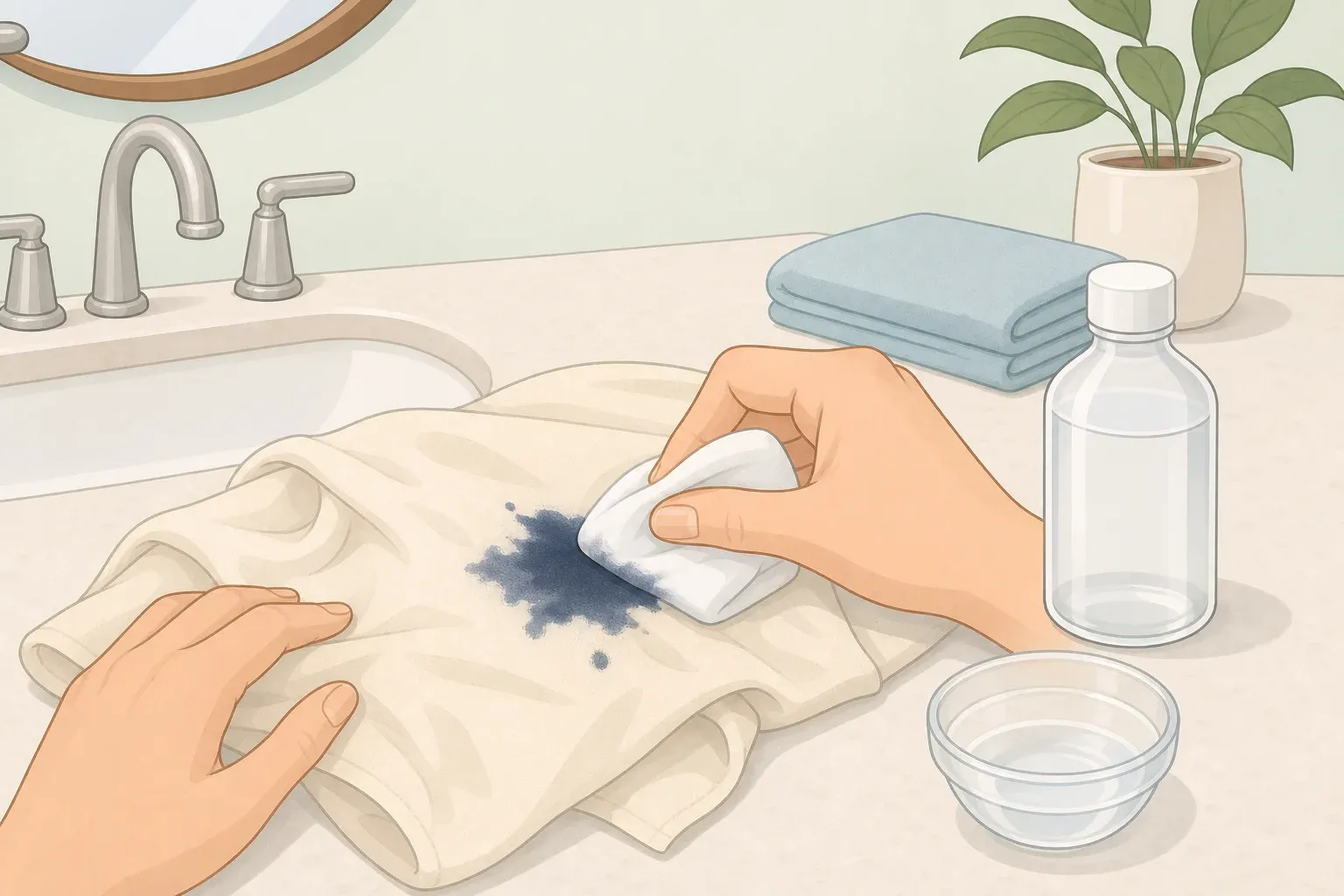
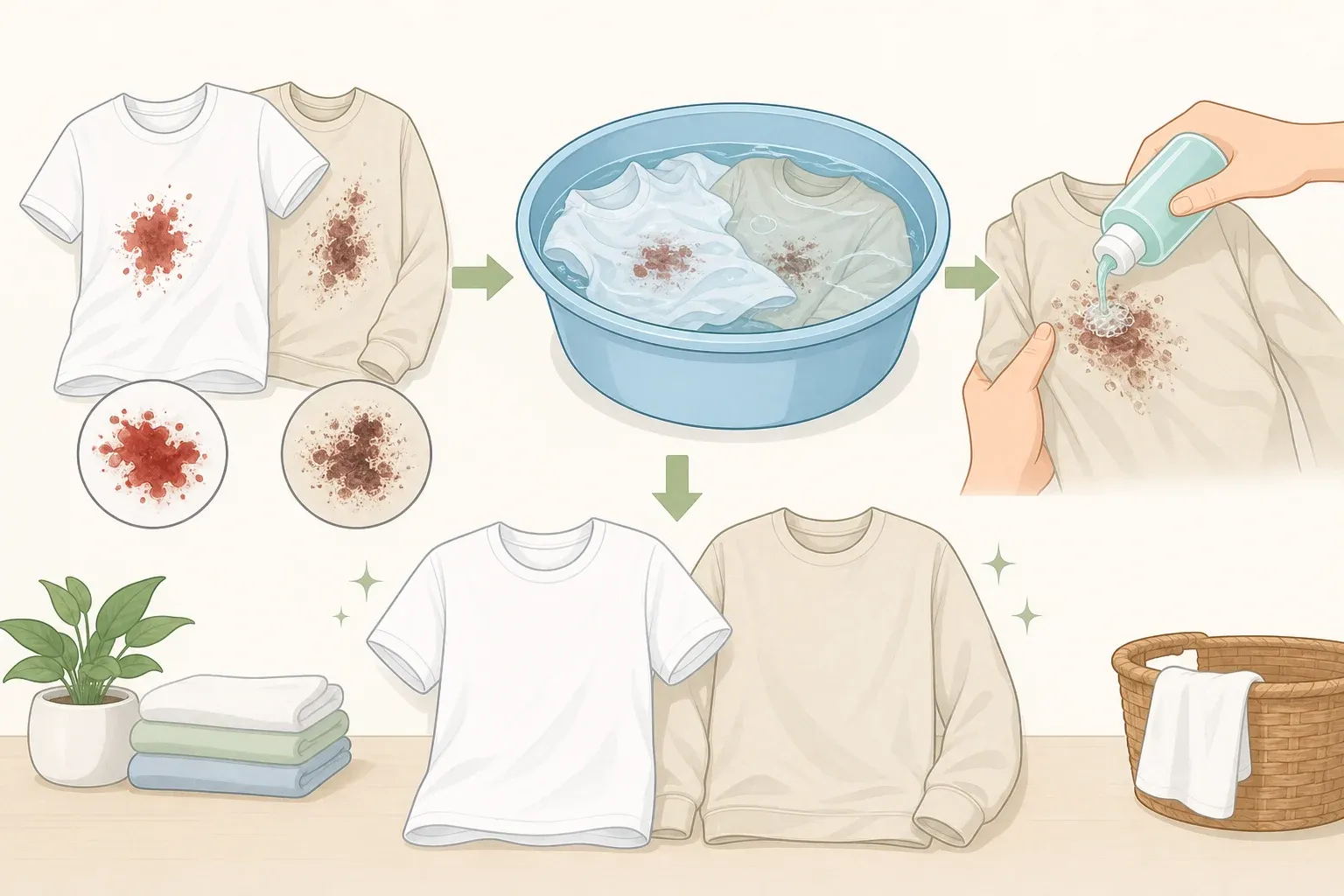
Stubborn stain: Apply the same liquid detergent directly to the spot before washing. Work it in with a soft-bristle brush. Air-dry after washing to confirm the stain is gone before the dryer can heat-set it permanently. Consumer Reports testing found top-rated liquids work as well as dedicated pre-treatment products for this purpose.
Already mixed products and got residue or over-sudsing: Run an extra rinse cycle. Use less detergent on the next load. Wipe the drum and leave the door open if suds are visible.
Hard water specifically: Baking soda may help as a mild water softener. This is a narrow fix for a defined condition, not a general booster. Its effectiveness for odor control has not been independently tested, per Consumer Reports. If you don't have hard water, skip it.
Sensitive skin: Switch to a simpler formula rather than adding a second product. People asking whether you mix laundry detergents for sensitive skin are usually trying to solve a problem that mixing makes worse. Combining two detergents compounds the fragrance and preservative load, which directly undermines a sensitive-skin routine. A 2023 review in Cutis found that while roughly 11 percent of patch-tested patients suspected their detergent of causing a rash, confirmed allergic contact dermatitis attributable to detergent was documented in fewer than 1 percent of cases. The same research found that machine washing reduces preservative residue, including isothiazolinones, a common sensitizer, to negligible levels in finished fabric, with the highest concentrations found only in hand-washed garments. If you suspect a reaction, simplify. Don't stack.
The direct answer
Don't mix different laundry detergents as a routine practice. There's no evidence the combination cleans better, and the mechanism behind the documented problems, total detergent load exceeding the machine's rinsing capacity, applies whether you're combining two brands or layering in a booster.
One detergent, minimum dose, cold water, normal cycle. That's what the testing supports, and it's also the most forgiving version of the routine for your machine, your fabric, and your skin.














Comments
Be the first, drop a comment!