



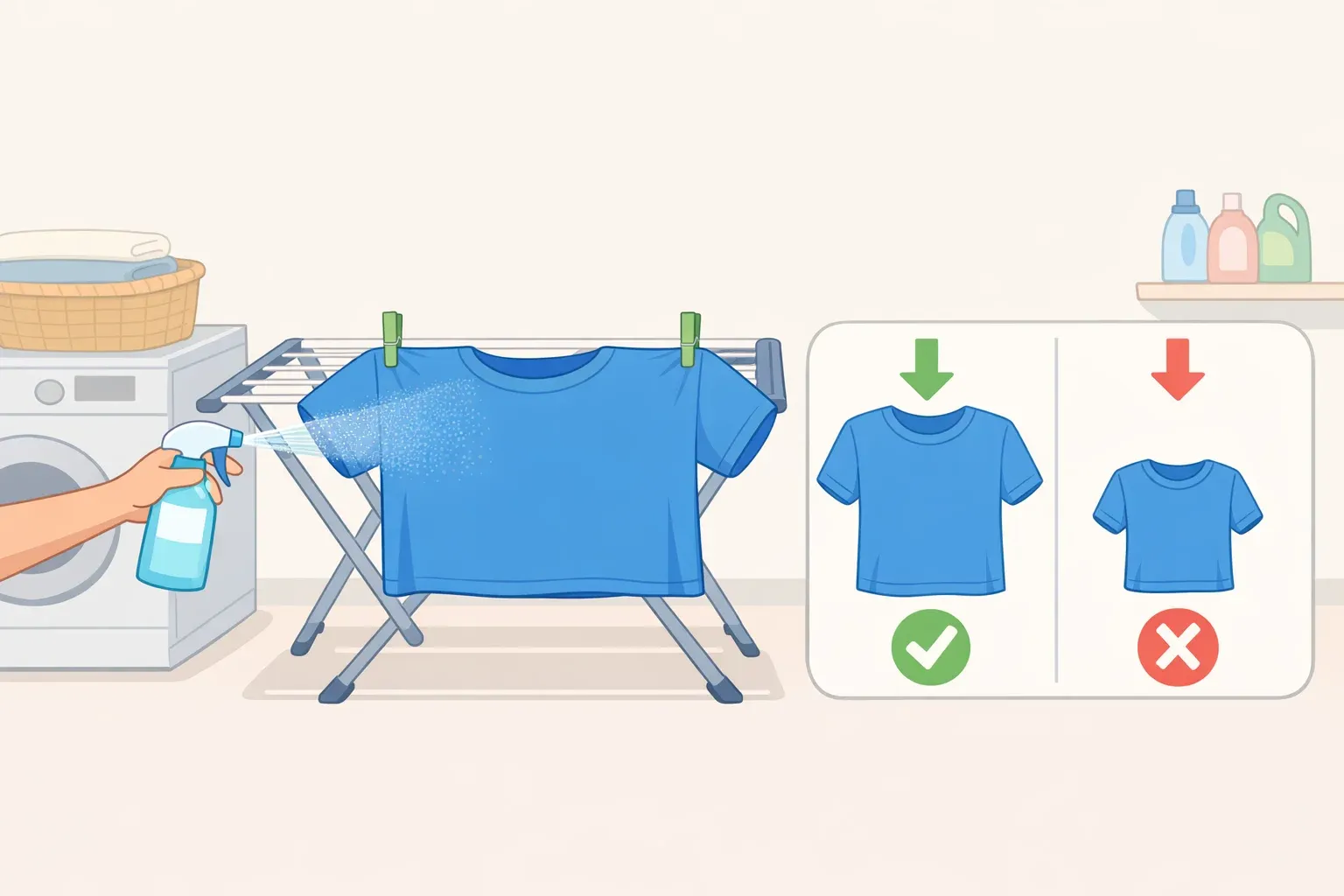
Can you unshrink clothes after they come out of the washer two sizes too small? Usually not completely. The conditioner-soak hack that circulates endlessly on social media is not a true reversal of shrinkage. At best, it temporarily lubricates fibers enough to allow modest reshaping of the difference between "unwearable" and "acceptable," not between "shrunken" and "original." Any improvement may disappear the next time the garment gets wet.
Natural-fiber garments, such as cotton, wool, linen, cashmere, and silk, are particularly vulnerable, which is why this question keeps coming up. A textile scientist writing for Phys.org last August noted that the conditioner method can help recover some lost size but cannot completely reverse significant shrinkage. That distinction, wearable again versus truly restored, is the one the viral version of this hack almost never makes.
The Good Housekeeping Institute's Textiles Lab tested a product marketed specifically for unshrinking; it appeared to work the first time, then the garment shrank again after the next wash. Laundry professionals say the most dependable defense against shrinkage is prevention, not recovery after the fact. What follows is an honest account of why shrinkage happens, what the hack can realistically do and on which fabrics, and the prevention habits that actually hold up.
Why clothes shrink in the dryer and washer
Shrinkage is not damage in the way a stain or a tear is. It is a fiber reverting to the shape it held before manufacturers stretched and aligned it during production. That distinction matters because it explains why reversal is so difficult.
Cotton and linen are plant-based fibers built from long cellulose chains that naturally exist in crinkled, coiled forms. During manufacturing, those chains are mechanically pulled, stretched, and twisted into smooth, aligned threads. Weaving or knitting them into fabric locks in that tension. But the fibers have good memory, as Phys.org explains: whenever they encounter heat, moisture, or the mechanical agitation of a wash cycle, they relax back toward their original coiled state. The garment is not being ruined; the fibers are returning to where they started.
Hot water accelerates this by increasing fiber energy, which disrupts the hydrogen bonds holding the stretched chains in place. Cold water is gentler, but not safe by default. Cold water still penetrates fibers and causes them to swell, and tumbling in any wash cycle adds mechanical agitation regardless of temperature, per Phys.org. Misjudging dryer time or using the wrong heat setting compounds the problem further, Good Housekeeping notes.
Wool is a different case entirely. It shrinks through a process called felting, which has nothing to do with fiber relaxation. Wool's surface is covered in tiny overlapping cuticle scales that open during washing and lock together with neighboring fibers, making the fabric denser and physically smaller. This is structural entanglement, and it is considerably harder to undo than a cellulose fiber simply coiling back up, according to Phys.org.
Synthetic fibers like polyester and nylon are more resistant. They are engineered from petroleum-based polymers with a more crystalline internal structure and an internal skeleton, essentially preventing the kind of fiber reversion natural materials are prone to, Phys.org explains. Blends are not immune, though. Because the natural-fiber portion of a blend can still contract under heat and agitation, even a cotton-polyester mix may shrink, and research shows more than 2-3% shrinkage is enough to cause real fit problems.
How to unshrink clothes: what the conditioner hack actually does
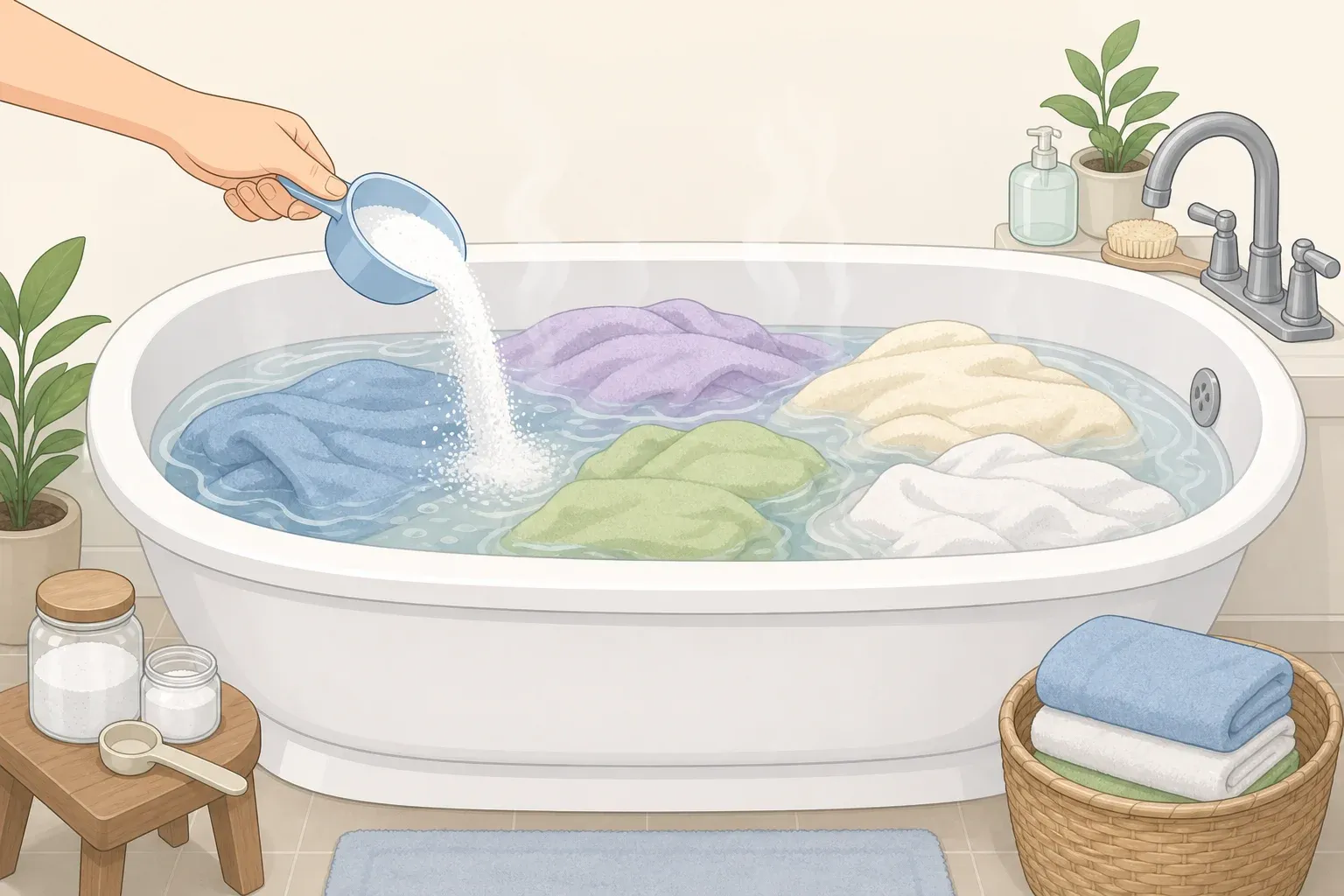
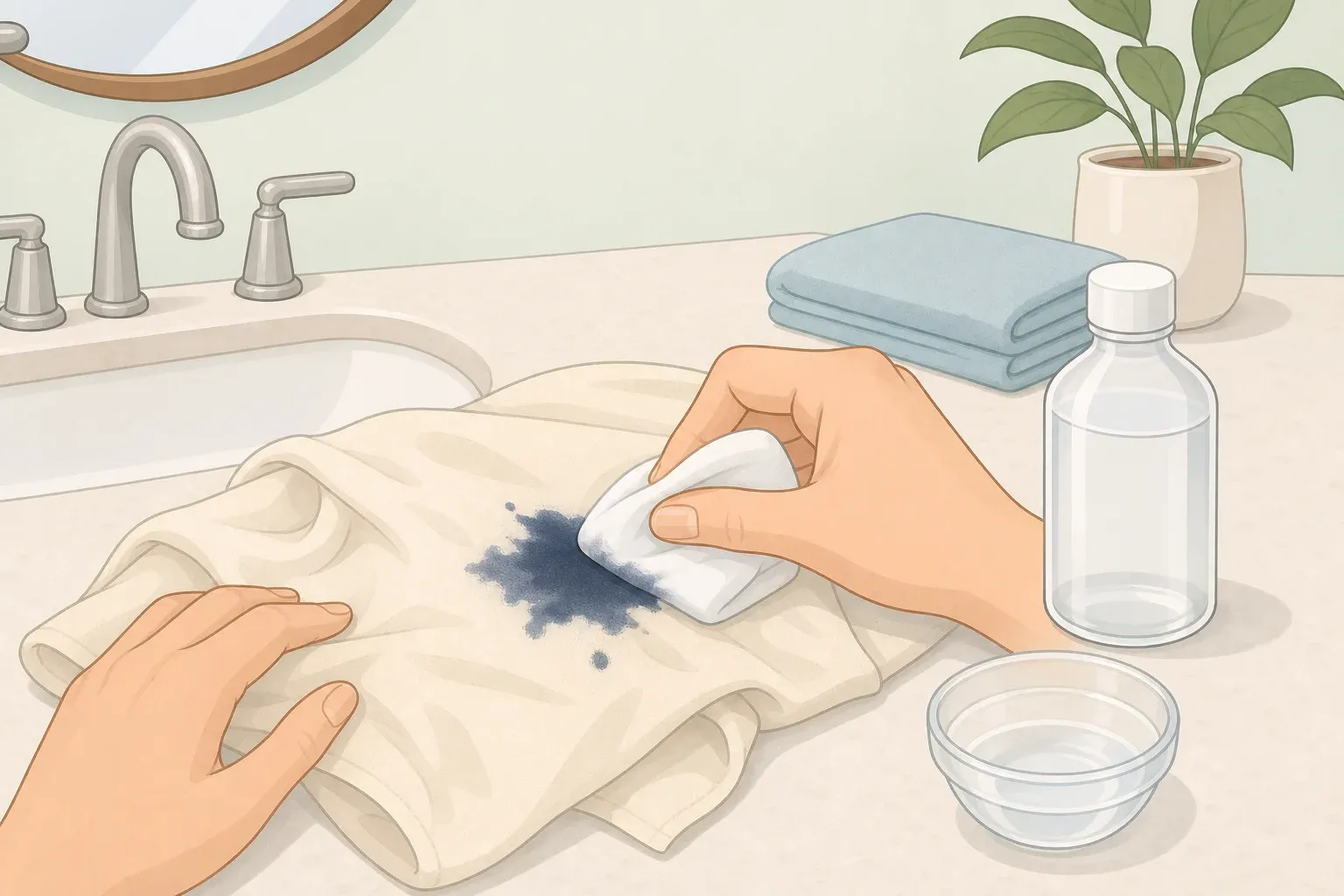
The most widely circulated method calls for soaking the shrunken garment in lukewarm water mixed with hair conditioner or baby shampoo, letting it sit for roughly 30 minutes, then gently stretching it back toward its original dimensions and laying it flat to air-dry. The ratio Phys.org gives is approximately one tablespoon per liter, which lines up with what laundry professional Stacee Parker told HuffPost: a tablespoon in a tub of cool water, same general approach.
For wool and other protein-based fibers, specialized conditioners containing lanolin, such as Eucalan, may work better. Poplin founder Mort Fertel told HuffPost that the lanolin lubricates and relaxes wool fibers, loosening the fiber bonds enough to allow gentle reshaping.
The reason any of this works comes down to chemistry. Conditioners contain cationic surfactant compounds that temporarily coat and lubricate individual fibers, making them more pliable, per Phys.org. That flexibility is what allows careful stretching to have any effect. Think of it less like unwringing a wet cloth and more like briefly softening a stiff hinge so you can nudge it open without fixing the hinge itself. The conditioner is not restoring the fiber to its manufactured state. It briefly reduces friction so you can coax the fabric into a larger shape.
The central limitation is one that the hack's viral versions skip over. The Phys.org textile scientist is clear that this process cannot completely reverse extreme shrinkage and may only recover some of the lost size. "Wearable again" is not the same as "back to original." And even modest improvements may be temporary. The Good Housekeeping Institute found this directly: a dedicated unshrinking product worked the first time, then the garment shrank again after rewashing, Good Housekeeping reported. The lubrication is temporary. The fiber memory is not. As Good Housekeeping's textile expert put it: "We have never found any of the recommended methods to be successful."
That is a lab-tested position, not casual skepticism.
Worth attempting: A cotton T-shirt or linen shirt that shrank slightly after an accidental hot wash is a reasonable candidate. The conditioner soak is low-risk, requires no special equipment, and some recovery beats none. Parker advises going slow. The goal is to work the fibers back, not force them, she told HuffPost. Set realistic expectations: a garment that fits a little better than it did is the likely outcome, not original dimensions restored.
Poor odds: A wool sweater that felted in a hot wash is structurally compromised in a way that conditioner cannot fully address. Lubricating the cuticle scales is not the same as separating them. Some improvement is possible, but the felting is a physical entanglement, and significant restoration is unlikely.
Not worth the effort: Parker is direct on this point. A heavily felted wool garment that has been in that state for years is almost certainly beyond recovery, she told HuffPost. Cutting losses is the honest advice at that point.
How to prevent clothes from shrinking
Every credible source on this topic reaches the same conclusion: prevention is the only strategy that reliably works, according to Good Housekeeping, HuffPost, and Phys.org. Not a consolation prize, the conclusion the evidence actually supports.
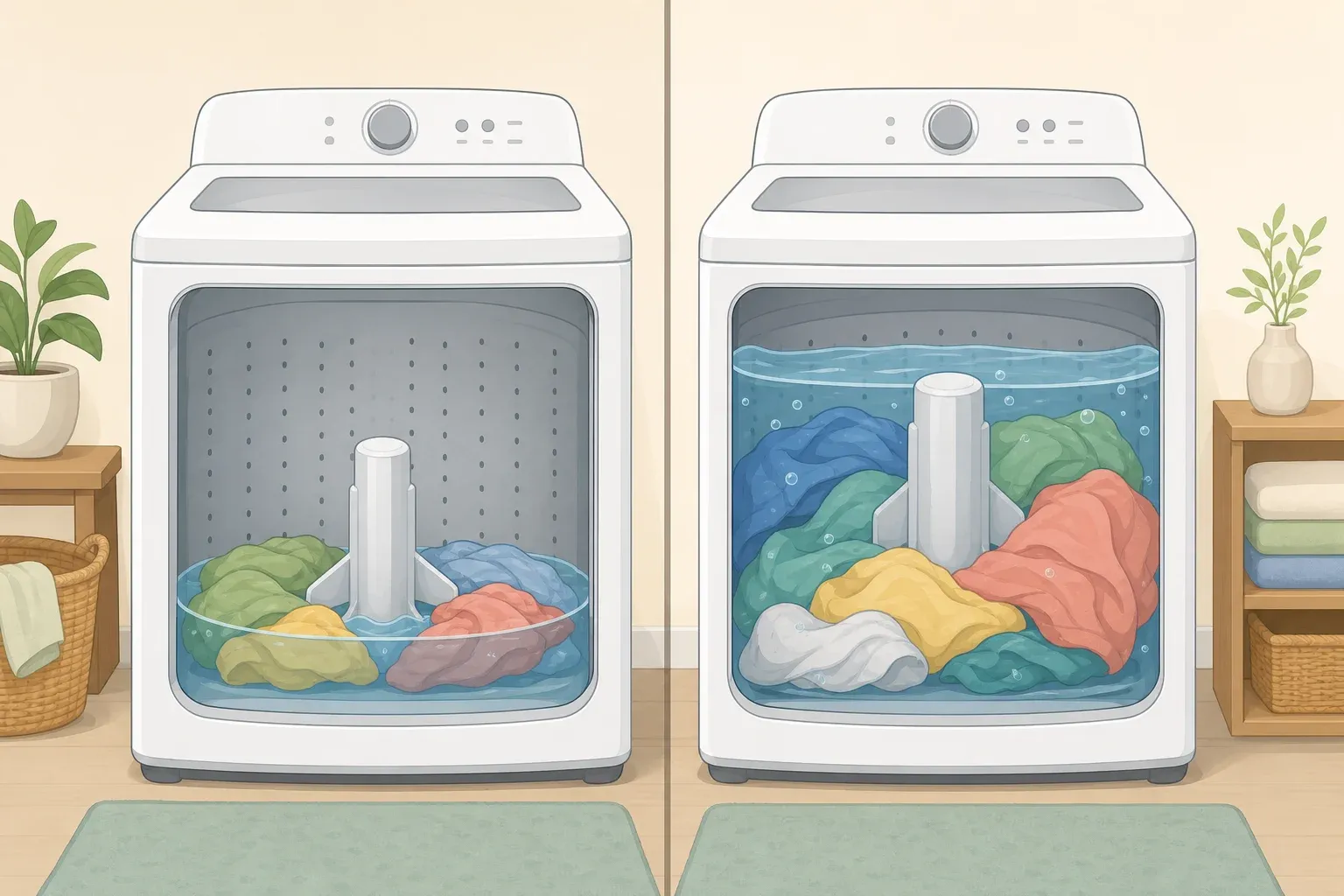
Cold water is gentler on fibers than hot, helping preserve the hydrogen bonds that keep stretched cellulose chains in their extended position. Pair that with the lowest available spin speed and the gentlest cycle, and the mechanical agitation that contributes to shrinkage independently of temperature is reduced further, Phys.org notes. When in doubt, use the delicate setting.
The dryer is the most controllable risk factor for natural fibers, and one of the most avoidable. Using the wrong heat setting or misjudging the cycle length is a common and unnecessary cause of shrinkage, Good Housekeeping notes. For natural fibers, air-drying is the safest option. Sweaters and knits do best when laid flat while damp, which also lets you reshape them before they set. Woven shirts can generally be hung. If a dryer is unavoidable, low heat is substantially safer than high.
The care label is not a suggestion. It communicates what the manufacturer knows about how that specific fiber and construction behave under laundering. Ignoring it to save time is how most preventable shrinkage happens, according to HuffPost. Natural fibers, cotton, wool, linen, cashmere, and silk warrant a different laundry routine than a polyester athletic shirt. Treating them the same is the most common mistake.
What to realistically expect
Calling the conditioner-soak hack a myth is a slight overstatement. Calling it a solution is a larger one.
For mild, recent shrinkage in cotton or linen caught early, the hack is worth a try. The risk is low, the cost is nothing, and some improvement beats throwing the garment out. For felted wool or anything that has been significantly shrunken through repeated washing, the structural change is not reversible through fiber lubrication alone.
Treat the hack as a salvage attempt, one that might rescue a garment from the discard pile into occasional use, rather than a reset button. Go in expecting a garment that fits a little better than it did, not one that fits the way it did before. That framing is what the research supports, and it is more useful than the version of this story that keeps circulating on social media.
Prevention is boring. Cold water, gentle cycles, low spin, and air-drying require almost no effort once they become default. That is probably why people keep searching for the fix instead. But the fix mostly does not work, and the boring habits mostly do, per HuffPost and Good Housekeeping.



Comments
Be the first, drop a comment!