



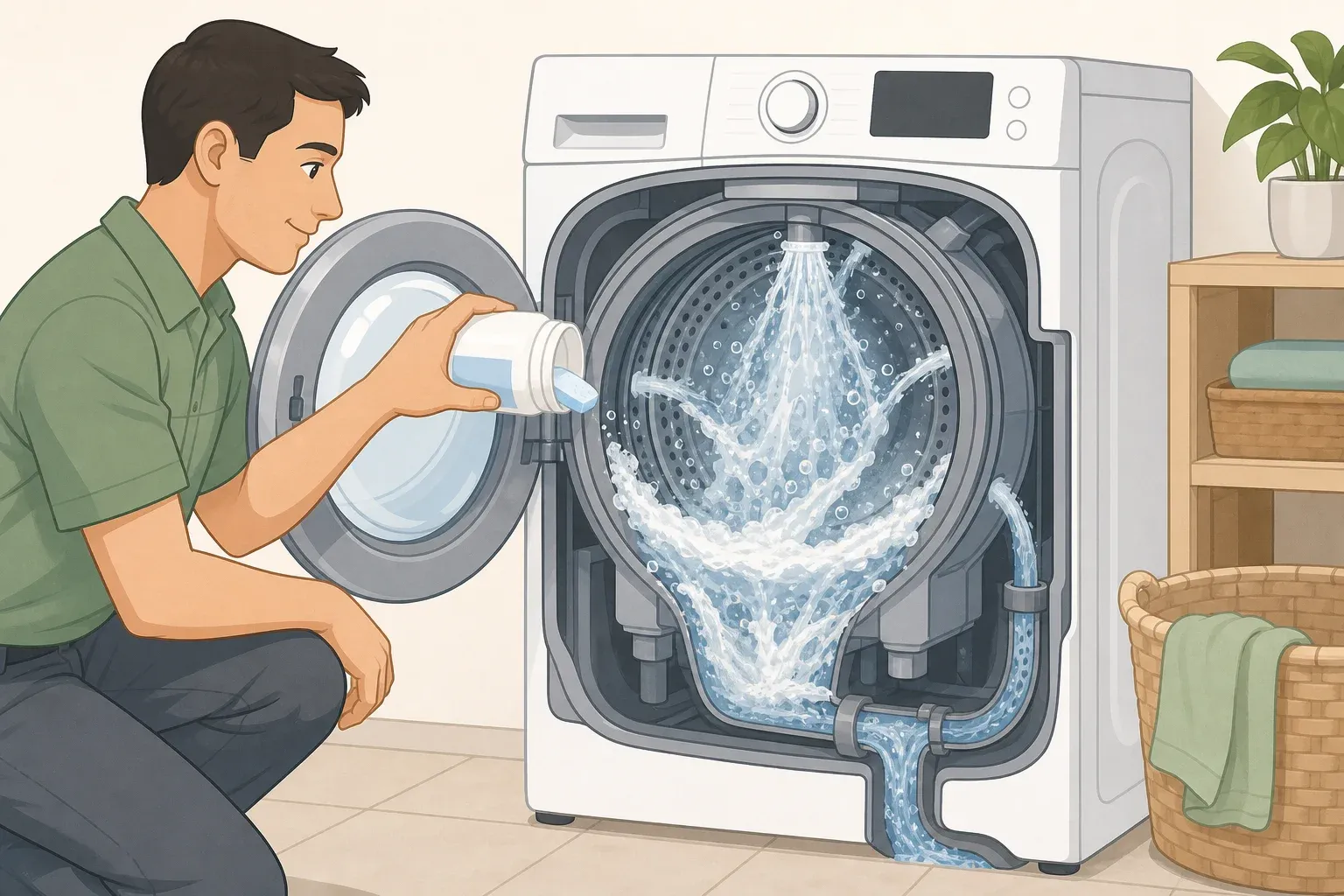
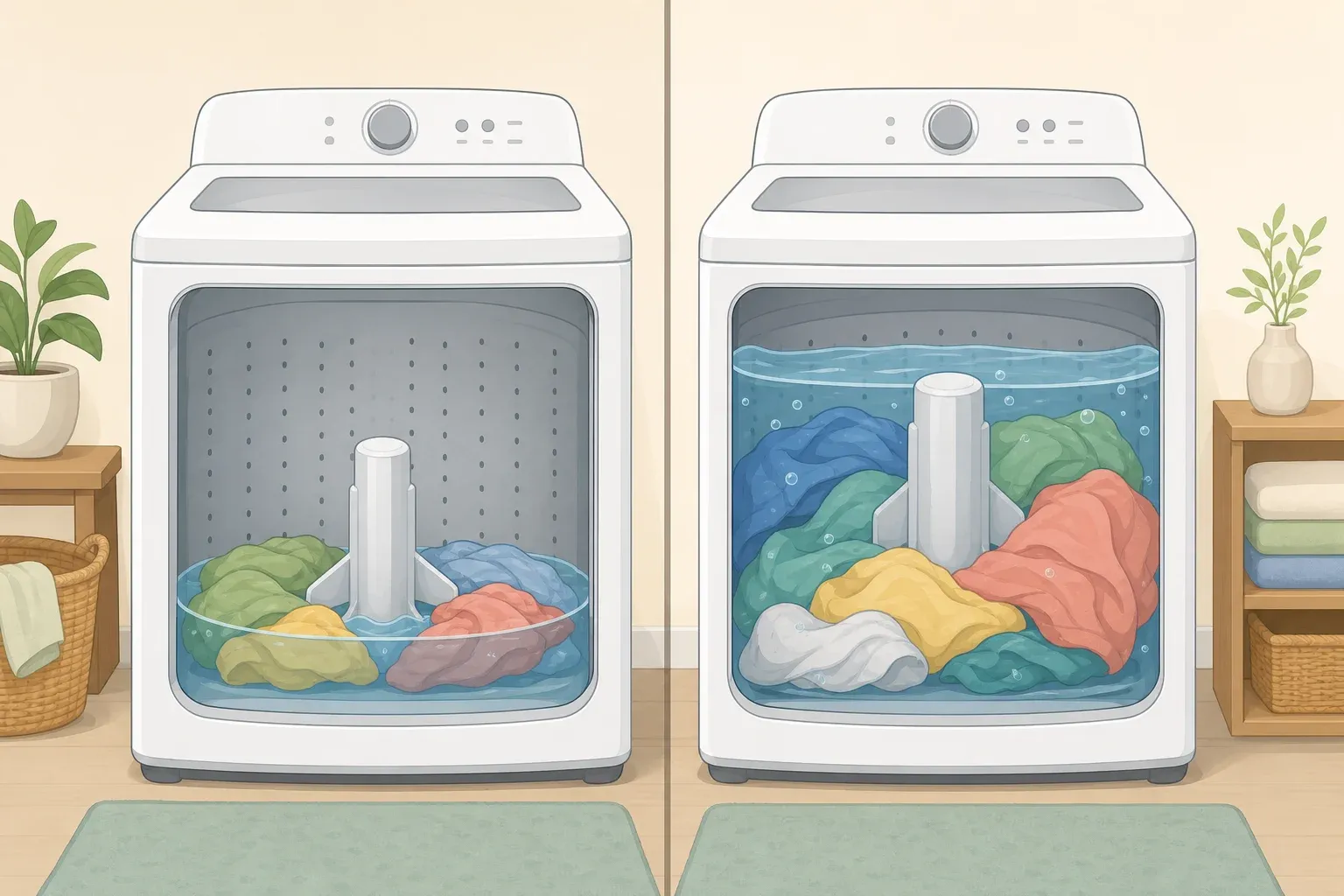
That "Self Clean" or "Clean Washer" button on the control panel doesn't run itself. So how does a washing machine self-cleaning feature work in practice? On most machines, it's a separate wash cycle you start on purpose, on an empty tub, using a larger volume of water and a cleaning product, to flush out the detergent film and soil residue that regular laundry loads leave behind.
Whirlpool's Clean Washer cycle uses higher water volumes together with either an affresh® tablet or liquid chlorine bleach to clean the machine's interior. Samsung's version, labeled Self Clean, Self Clean+, or Pure Cycle depending on the model, runs about one hour on top-loaders and up to four hours on front-loaders.
This guide walks through what the cycle actually does inside the machine, how to run it on your model without damaging anything, and how often to repeat it, plus what to check when odor sticks around after a clean cycle has finished.
How a washer self-cleaning cycle actually works
It's a dedicated cycle you select from the control panel like any other setting, not something the machine runs in the background. Names and exact mechanics vary by brand, so what happens inside a Whirlpool differs somewhat from what happens inside a Samsung.
On Whirlpool and Maytag models, the Clean Washer cycle combines a higher water volume with either an affresh® tablet or liquid chlorine bleach to clean the tub interior. Whirlpool's own material on affresh® says the tablets are formulated to reach the tub, racks, pump, valves, drain, and recirculation hoses, a claim specific to that cleaner rather than a general statement about how every washer's cycle behaves.
If a machine doesn't have a dedicated cleaning cycle, Whirlpool recommends running the cycle with the highest water level and hottest temperature setting available as a substitute, per that same affresh page. That detail matters: it means the cleaning effect comes largely from water volume, heat, and time rather than any scrubbing action, which is closer to how an oven's self-clean setting works than to anything automatic. You still have to load it correctly and press start; the machine just does the work with hot water instead of a sponge.
What you'll need and before you start
Running a clean washer cycle is beginner-friendly and doesn't require tools. Gather these before starting:
An empty washer. Samsung warns that running a Self Clean cycle with laundry inside can damage both the washer and the clothes, so double-check the tub before closing the lid or door.
The correct cleaning product for the model. Whirlpool and Maytag machines typically call for an affresh® tablet or one cup of liquid chlorine bleach. Samsung machines usually don't need bleach for routine maintenance at all.
Time. Samsung's Self Clean cycle runs roughly one hour on top-loaders and up to four hours on front-loaders. Other brands don't publish a fixed duration, so budget extra time if unsure.
Before adding anything to the tub, check the owner's manual for the exact product and placement your model expects. Never combine cleaning products, and never add regular detergent or fabric softener during a clean cycle. Whirlpool and Maytag both instruct against adding detergent or other chemicals during this procedure.
How to use the clean washer cycle
Empty the tub. Remove all clothing and items from the basket.
Add the cleaning product for your machine. On Whirlpool and Maytag models, place an affresh® tablet at the bottom of the basket, never in the detergent dispenser, or add one cup of liquid chlorine bleach to the designated compartment. Whirlpool notes that using more bleach than recommended can damage the washer over time. On Samsung models, skip bleach for a routine cycle; reserve it only for visible mold or a mildew smell, and pour it into the detergent compartment rather than the bleach compartment right before starting the cycle.
Close the lid or door.
Select the cycle. Choose Clean Washer, Self Clean, Self Clean+, or Pure Cycle depending on the brand, then start it. On Whirlpool and Maytag control panels, that means touching and holding Start/Pause for three seconds.
Let it run without stopping. Whirlpool and Maytag both warn that interrupting the cycle may leave cleaner residue behind, in which case a follow-up Rinse & Spin cycle is needed to clear it out.
Wipe down the tub once it finishes. Samsung recommends wiping any visible residue from the tub with a paper towel or cloth.
Leave the machine open to dry. Whirlpool and Maytag recommend leaving the lid or door open afterward for ventilation. Samsung adds that the detergent drawer should be left open too, since it traps moisture just as easily as the tub does.
To confirm the cycle actually worked, run an empty cycle with no additives afterward. If suds appear, leftover detergent residue is still in the machine; Samsung's guidance is to keep running empty cycles until the suds stop showing up.
What builds up inside a washer between cleanings
Dirt, grime, and detergent residue accumulate inside a washer over time, leading to odor and reduced efficiency. Using more detergent than a load calls for speeds up how fast that buildup forms.
Samsung's troubleshooting material gets more specific about the mechanism: excess detergent creates soap scum in the outer tub that eventually causes odor, and using regular detergent instead of high-efficiency detergent in an HE machine makes that buildup worse. Trapped moisture is a separate problem the cycle doesn't fully solve on its own.
Samsung flags the detergent drawer, the tub, and especially the rubber door seal on front-loaders as spots that hold onto water long after a load finishes. Wiping those three areas dry with a cloth after washing, and leaving the door open between loads, keeps that moisture from turning into odor in the first place.
How often to run a washer clean cycle
Whirlpool and Maytag recommend running the Clean Washer cycle at least once a month or every 30 wash loads, whichever comes first. Samsung gives a similar window for its own machines, about once a month or every 30 to 40 loads, and notes that many Samsung models flash a reminder indicator once that threshold is reached.
Hard water or heavy machine use can push that timeline shorter. Practical signs a cycle is overdue include a foul odor coming from the machine, laundry that doesn't smell fresh after washing, or visible mildew inside the tub, all criteria Whirlpool lists directly.
When the clean cycle alone won't fix the smell
Sometimes odor persists after a properly run cleaning cycle, and Samsung's troubleshooting guide points to maintenance issues separate from the cycle itself. A neglected pump filter, usually located behind a panel near the bottom front of the washer, can cause odor if it isn't cleaned regularly. A sewage-like smell often means the drain hose is pushed too far into the standpipe, letting wastewater siphon back into the machine; Samsung's fix is to pull the hose out, clean the end, and reinsert it no more than about eight inches, secured so it can't slip deeper. An unlevel washer can also keep water and additives from draining properly, leaving residue behind over time.
Pump filter access and drain hose placement differ by model, so check the owner's manual before opening any panel or repositioning a hose. If a burning smell shows up on a new washer, Samsung says that's often just the motor's insulating coating burning off during the first couple of cycles and should clear up on its own. If a burning smell continues past the first two loads, that's a signal to stop running cleaning cycles and contact service instead.
Finishing up
A clean washer cycle is done right when the tub wipes clean with no slick residue and a follow-up empty cycle runs without producing suds. Run it on the schedule your brand recommends, roughly monthly or every 30 to 40 loads, and use the product your specific manual calls for rather than assuming bleach or affresh® work the same way across brands.
If odor lingers after a properly run cycle, work through the pump filter, drain hose depth, and leveling checks before assuming the washer itself is broken. Reserve a service call for a burning smell that outlasts the first two loads on a new machine, or for mold and odor that won't clear after repeated cleaning cycles and the maintenance checks above.



Comments
Be the first, drop a comment!