



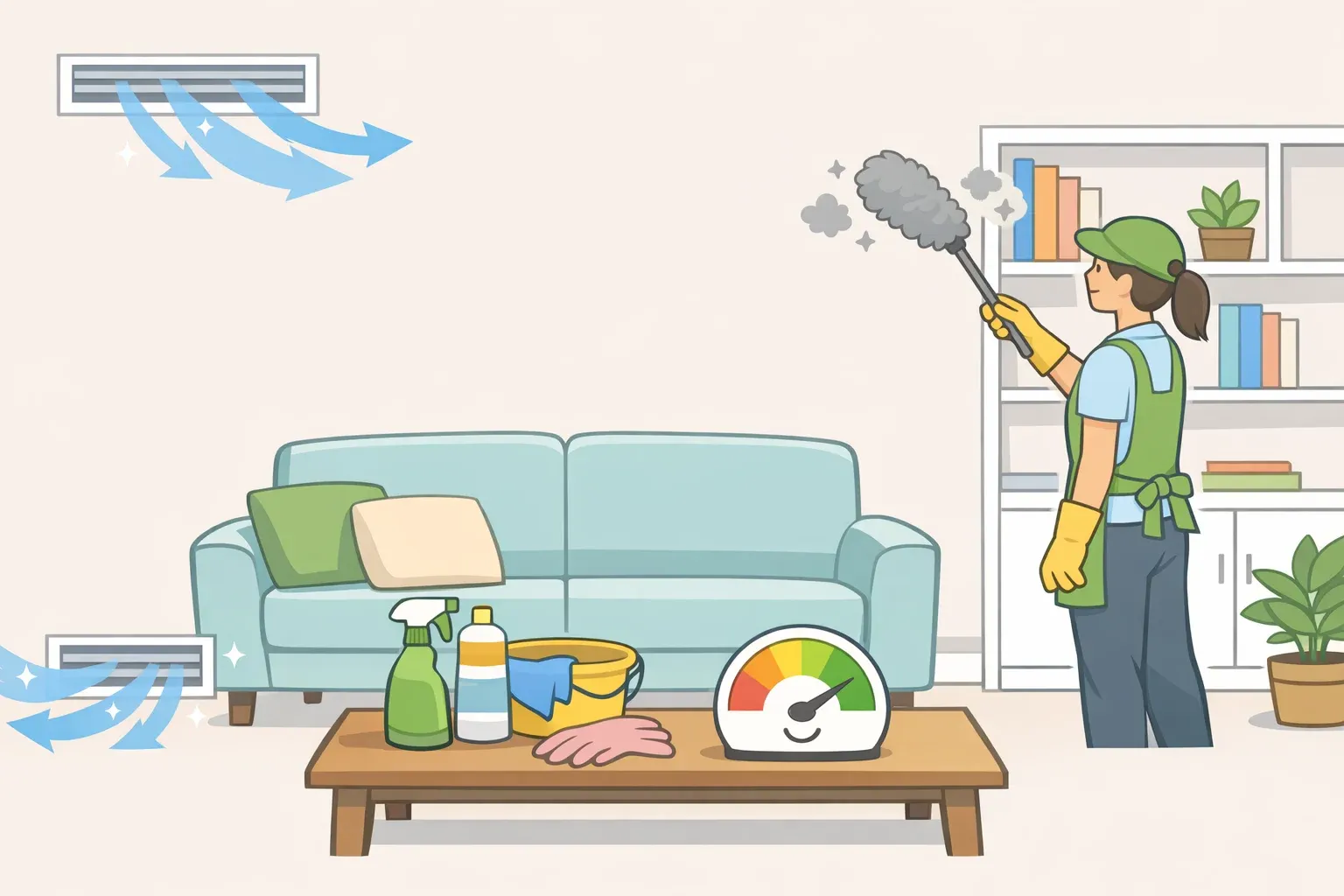
Indoor air quality is not only about adding an air purifier or upgrading an HVAC filter. It also depends on reducing pollutants at their source.
The US Environmental Protection Agency identifies source control as one of the most effective strategies for improving indoor air quality. Thorough house cleaning can support that strategy by removing accumulated dust, pollen, pet allergens, cooking residue, and other particles before they are stirred back into the air. It cannot, however, correct every indoor-air problem.
That distinction is especially relevant during hot Rowlett summers, when homes may remain closed for long periods while air conditioning runs. Limited outdoor-air exchange can allow pollutants generated indoors to accumulate. Opening windows is not always the right solution, though, particularly when outdoor humidity, pollen, smoke, or air pollution is high.
A professional cleaning service can help when it uses effective methods consistently and reaches areas that routine upkeep misses. Any air-quality benefit comes from what the service removes and how it performs the work—not simply from how clean or fragrant the house smells afterward.
Where thorough cleaning can make a difference
Dust and allergens do not remain suspended in the air indefinitely. They settle on floors, shelves, ceiling fans, blinds, upholstery, carpets, bedding, and other surfaces. Walking, vacuuming, moving furniture, or running fans can send some of those particles into the air again.
EPA guidance lists regular cleaning among the ways to manage biological contaminants in the home. It also recommends controlling moisture, reducing tracked-in dirt, and using kitchen and bathroom exhaust fans that vent outdoors when appropriate.
Professional cleaning does not automatically produce better air than careful do-it-yourself cleaning. Its practical advantage is consistency. A thorough service may clean high shelves, fan blades, baseboards, window coverings, furniture edges, and areas beneath accessible furniture that receive less attention during routine maintenance.
Method matters as much as frequency. Damp microfiber cloths capture settled dust rather than simply pushing it from one surface to another. Cleaning from high surfaces downward also allows fallen debris to be removed during the final floor cleaning.
Reduce particles from cooking
Cooking can raise indoor particulate levels, especially when food, oil, or accumulated crumbs burn or smoke. Regularly cleaning stovetops, burners, ovens, microwave interiors, toaster trays, and cookware reduces the chance that old residue will be reheated or burned.
EPA guidance on sources of indoor particulate matter recommends using a range hood whenever cooking, venting it outdoors when possible, and leaving it on for 10 to 20 minutes after cooking ends. Using the back burners can also help the hood capture more cooking emissions.
Clean or replace the range hood's grease filter according to the manufacturer's instructions. Heavy grease buildup can restrict airflow and create a fire hazard.
Ask a cleaning company exactly what its kitchen service includes. Many standard packages cover counters, sinks, stovetops, and appliance exteriors but charge extra for oven interiors, removable trays, range-hood filters, or areas behind appliances.
Remove allergens from carpets and soft surfaces
Carpets, rugs, upholstered furniture, curtains, mattresses, and fabric headboards can collect dust, pollen, pet allergens, and other particles. Some of that buildup may become airborne when the material is walked on, handled, or vacuumed.
A poorly maintained vacuum may release captured dust through its exhaust or while its bag or bin is being emptied. A well-maintained machine with effective filtration and intact seals can reduce the amount of collected material that escapes back into the room.
Ask a cleaning company what vacuum equipment it uses and how it maintains the filters, bags, bins, brushes, and seals. A vacuum containing a HEPA-labelled filter is not necessarily a fully sealed HEPA vacuum, so the filter label alone does not establish how well the entire machine contains dust.
Bedrooms deserve particular attention because bedding, rugs, mattresses, and upholstered furnishings collect particles close to where occupants sleep. Wash bedding regularly according to its care instructions and consider allergen-resistant mattress and pillow covers when dust mites are a concern.
Do not assume these tasks are part of a standard cleaning package. Mattress vacuuming, upholstery cleaning, carpet extraction, curtain cleaning, and laundering bedding may require separate services.
Vacuuming and dusting can temporarily stir up particles. People with asthma, allergies, or other respiratory sensitivities may prefer to leave the room during cleaning and return after the work is complete and disturbed dust has had time to settle or be filtered.
How to clean without spreading more dust
Start with ceiling fans, shelves, blinds, cabinet tops, and other elevated surfaces. Work downward so that falling debris is removed when the floors are cleaned last.
Use a damp microfiber cloth instead of a dry feather duster. Fold or replace the cloth as it becomes dirty rather than continuing to wipe with a dust-loaded surface.
Vacuum slowly rather than making rapid passes. Check that the bag or bin is not overfilled, inspect the filter, and empty the machine outdoors when practical. Change cleaning cloths and mop heads between bathrooms, kitchens, and living spaces to avoid carrying dirt from one area to another.
Before opening windows, check outdoor air quality, pollen, temperature, and humidity. When outdoor conditions are unfavorable, use outdoor-venting exhaust fans or appropriate mechanical ventilation instead.
Never mix bleach with ammonia or other household cleaners. The CDC warns that combining bleach with other products can release dangerous vapors. Follow the product label, provide appropriate ventilation, and keep chemicals in their original containers.
When cleaning products worsen indoor air
Cleaning products can solve one indoor-air problem while creating another. Some release volatile organic compounds, or VOCs, during use and storage.
VOCs include many different chemicals, and their effects depend on the specific substance, concentration, and length of exposure. According to EPA guidance on VOCs and indoor air quality, some cleaning, disinfecting, degreasing, and household products release organic compounds while they are being used and while they are stored.
Strongly scented or solvent-based products may be uncomfortable for people with asthma, migraines, allergies, or chemical sensitivities. Fragrance is not proof that a product is unsafe, but a cleaning company should be willing to identify its products and offer fragrance-free alternatives when available.
Routine household cleaning also does not require disinfecting every surface. The Centers for Disease Control and Prevention says cleaning with soap and water is sufficient in most situations. Broader disinfection is generally appropriate when someone is sick, has recently been sick, or is at greater risk of illness.
The EPA Safer Choice label can provide one useful benchmark when comparing products. Products must meet the program's ingredient, performance, packaging, and disclosure requirements to earn the label. The certification does not prove that a cleaning visit will improve indoor air quality, but it can help consumers evaluate the products being used.
Six questions to ask before hiring
A cleaning company should be able to explain its methods without relying on vague claims about "purifying" or "detoxifying" a home.
Ask these questions before booking:
What is included in the quoted price? Confirm whether the service covers blinds, ceiling fans, baseboards, upholstery, inside appliances, range-hood filters, and areas beneath furniture.
What vacuum equipment do you use? Ask about filtration, seals, filter replacement, bag or bin maintenance, and how the equipment is emptied.
Which products will you use? Request the product names in advance and ask whether fragrance-free or lower-emission alternatives are available.
When do you use disinfectants? A company should not automatically disinfect every wall, floor, and low-contact surface.
Which soft surfaces are included? Ask specifically about rugs, upholstery, mattress areas, fabric headboards, and carpet extraction.
How do you control fumes and airborne dust? Depending on outdoor conditions, the answer may involve exhaust fans, mechanical ventilation, portable filtration, or keeping sensitive occupants outside the work area.
Be cautious of any company that promises to cure allergies, eliminate asthma triggers completely, remove all mold, or permanently "sanitize the air." Cleaning may reduce certain pollutant reservoirs, but it cannot guarantee a medical or air-quality outcome.
Know when cleaning is not enough
Cleaning removes material that has already accumulated. It does not repair the source that produced it.
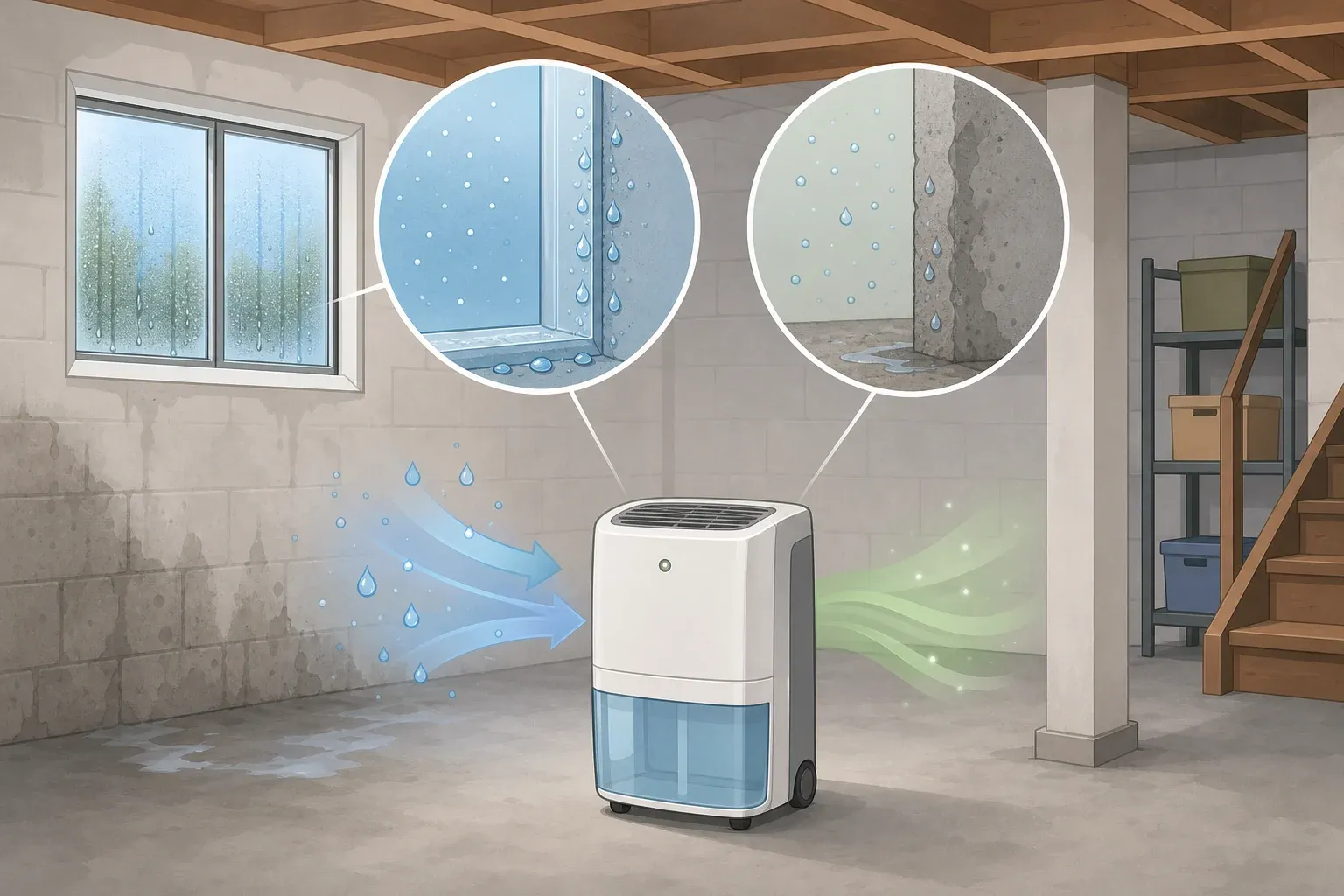
A persistent musty smell, recurring dampness, or returning mold points to a moisture problem that needs correction. Small isolated areas may sometimes be handled safely, but widespread growth, extensive water damage, recurring mold, or suspected contamination inside an HVAC system may require professional assessment.
CDC mold-cleanup guidance says people with asthma, chronic obstructive pulmonary disease, mold allergies, weakened immune systems, or underlying lung disease should not participate in mold cleanup.
A carbon-monoxide alarm, suspected gas leak, combustion odor, or malfunctioning fuel-burning appliance requires immediate safety action—not another cleaning visit. Follow the alarm manufacturer's instructions, leave the property when directed, and contact emergency services, the utility company, the fire department, or a qualified technician as appropriate.
Persistent headaches, coughing, wheezing, or other symptoms require medical guidance. Odor and symptoms alone cannot identify which pollutant is present.
Support cleaning with filtration and humidity control
Filtration can help remove particles that remain airborne, but it does not replace source control, ventilation, moisture management, or repairs.
Portable air cleaners are generally designed for a particular room or area. Central HVAC filters treat air throughout the area served by the system, but only while air is moving through it. EPA's guide to home air cleaners and filters recommends matching portable units to the intended room and using the highest-efficiency HVAC filter the system can safely accommodate.
Consult the HVAC manual or a qualified technician before installing a higher-resistance filter. Replace or clean filters according to the manufacturer's directions rather than relying on a universal 60- or 90-day schedule.
Humidity also needs separate attention. An inexpensive hygrometer can show whether indoor relative humidity remains consistently high. EPA recommends keeping it below 60%, ideally between 30% and 50%, because persistent dampness can support mold and dust-mite growth.
Avoid devices marketed as ozone-generating air cleaners. EPA warns that ozone generators can harm the lungs and that no federal agency has approved them for use in occupied spaces. At concentrations that meet public-health standards, ozone is also generally ineffective at removing indoor contaminants.
Professional cleaning can reduce accumulated dust, allergens, and cooking residue, but the results depend on the methods, equipment, products, and scope of work. Choose a service that explains what it will clean, discloses the products it uses, and recognizes when moisture, HVAC, combustion, or mold concerns require a different professional.
Comments
Be the first, drop a comment!