



Should you make your bed in the morning? Evidence explained
Making the bed the instant you're out of it has long doubled as a mark of discipline, proof the day started off right. A respiratory and sleep-medicine specialist argues that instinct might work against the sleeper: smoothing the sheets too fast can seal in the heat, sweat, and moisture the body released overnight, rather than letting it evaporate (Indian Express, earlier this year). So should you make your bed in the morning, or does the case for waiting actually hold up?
The concern isn't cleanliness in the everyday sense. It's about moisture, and whether covering it up right away changes anything at all.
One number keeps surfacing in this debate: the average person sweats roughly 500 milliliters overnight, about two cups. That figure comes from Martin Seeley, CEO of the mattress company MattressNextDay, and it's worth flagging as a commercial estimate rather than a clinical measurement (Real Simple, last year). The Washington Post takes a more cautious line, reporting last year that bed-making timing probably has only "a small effect" on dust mite populations and that mites turn up in bedding regardless of when the covers go up.
The advice itself traces back to a British study from the mid-2000s that survives only in secondary write-ups, none of which name the researchers, the sample size, or the methods used. That gap matters enough to shape how much weight the specific figures below deserve, so it gets its own section rather than a passing mention.
Why you should not make your bed right away, according to sleep specialists
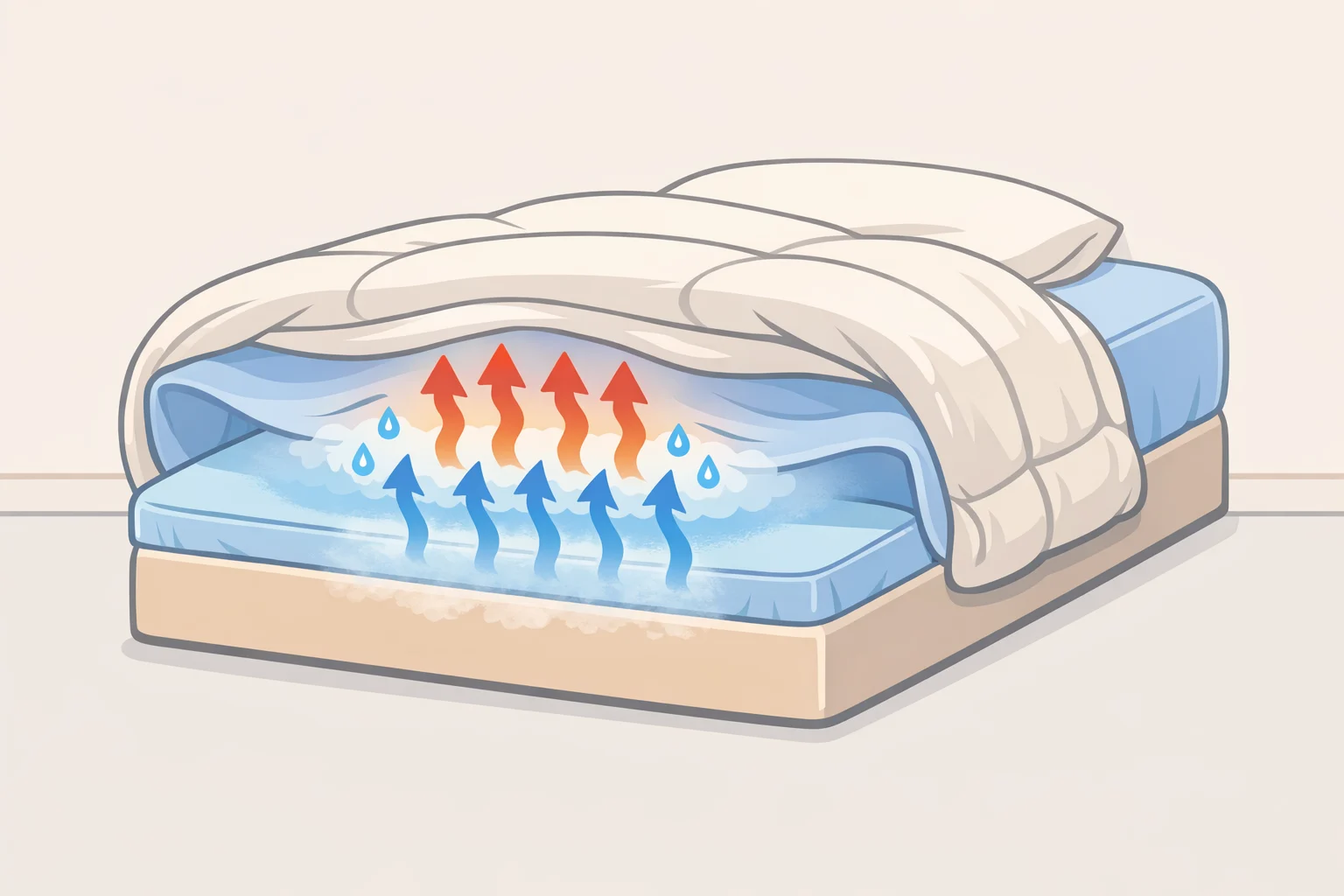
The mechanism is straightforward. Sleep releases heat and sweat into the sheets and mattress overnight, and pulling the covers up right away can trap that moisture instead of letting it dissipate, according to Dr. Akshay Budhraja, a respiratory and sleep-medicine specialist at Aakash Healthcare. He describes an instantly made bed as locking in "the very conditions" dust mites need to multiply (Indian Express, earlier this year).
Dust mites are microscopic organisms that feed on shed skin cells, and their growth depends heavily on warmth and moisture, Dr. Budhraja explains (Indian Express, earlier this year). That's his basis for saying a bed made up tight right after sleeping offers better conditions for mites than one left open to air. He adds that people who already deal with allergies or sensitivities may see symptoms like sneezing, congestion, or skin irritation worsen, a point worth treating as clinical judgment rather than an independently verified finding.
There's a distinction worth pulling out here: mites themselves aren't what triggers allergy symptoms. The American Lung Association attributes the runny nose, watery eyes, and sneezing linked to dust mite exposure to their waste particles, which linger in fabric and get inhaled, not to the mites' physical presence (Real Simple, last year, citing ALA). That reframes the real question: not how many mites live in the bed, but how much waste has built up and gets stirred into the air.
The Washington Post offers a useful check on the whole framing. Its reporting states plainly that dust mites "are going to be there" whether the bed is made or not, and it points to allergen-proof covers as a more dependable way to control them than adjusting when the bed gets made (Washington Post, last year).
Making your bed and dust mites: what secondary coverage says
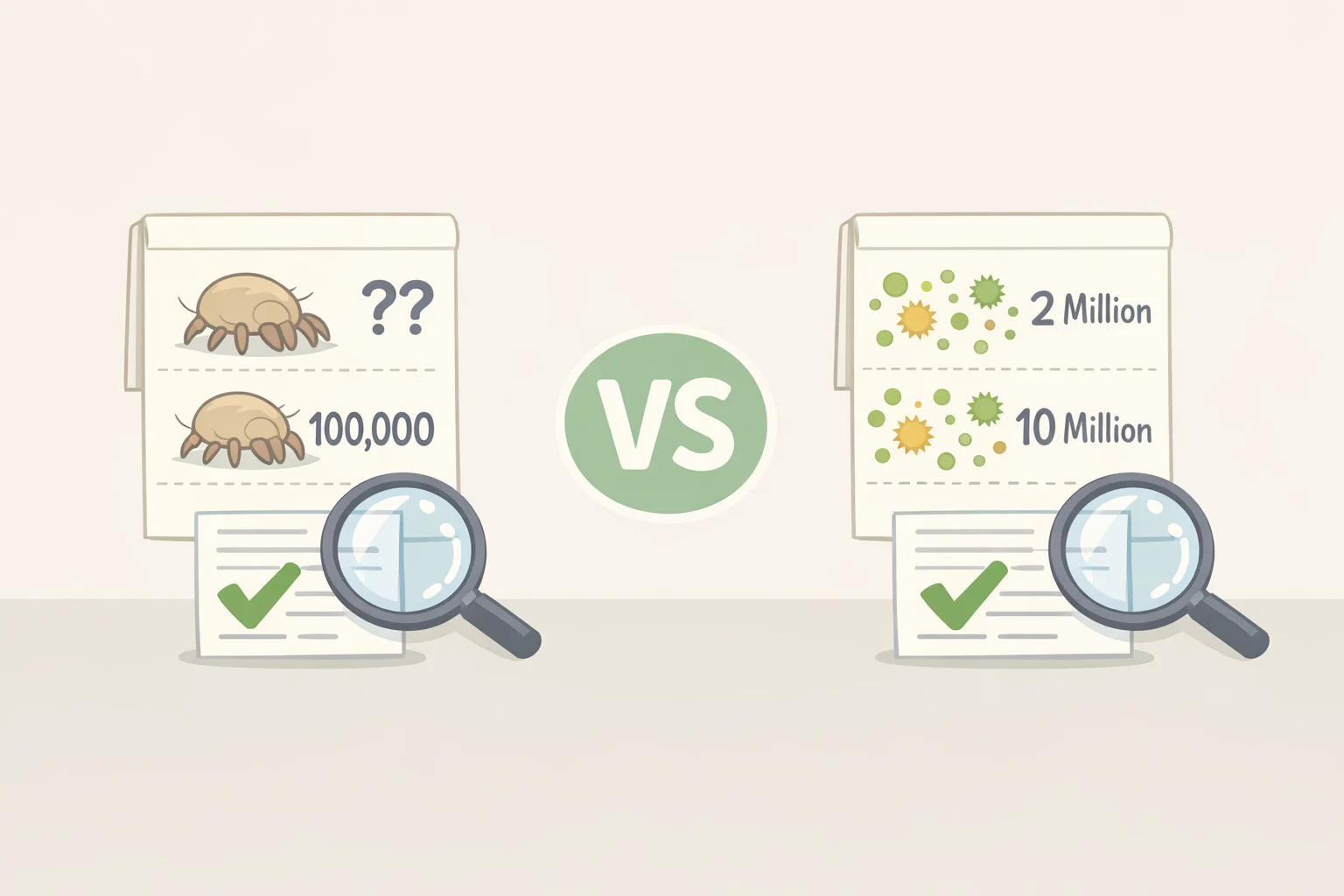
The wait-before-making-your-bed advice gets attributed, over and over, to a British study that no source in this reporting names, dates precisely, or describes methodologically. Real Simple dates it to 2006; a piece from Art of Manliness, published in 2022, dates the same research to 2005 (Real Simple, last year; Art of Manliness, in 2022). Neither names the researchers, the institution, the sample size, or what was actually measured.
What survives in the retelling are a handful of specific numbers. Art of Manliness reports that more than a million dust mites live in an average bed, and that a single mite can excrete hundreds of allergy-triggering fecal particles in a week (Art of Manliness, in 2022). The same piece states that leaving a bed unmade during the day removes moisture from the sheets and mattress, dehydrating the mites until they eventually die (Art of Manliness, in 2022). Real Simple, drawing on the same lineage of research, frames the finding more cautiously, noting only that the 2006 study "does suggest" airing out a bed could help combat mites (Real Simple, last year).
Those two framings don't quite match. One treats dehydration and die-off as settled fact; the other calls it a suggestion. Without details on what was measured, over what period, and with what before-and-after mite counts, neither this article nor any of the coverage it draws on can verify the study's design, sample, or actual outcomes. That doesn't make the claims false. It means they're currently unverified rather than established, a distinction that matters more than most lifestyle write-ups let on.
Should you air out your bed after sleeping and let it breathe
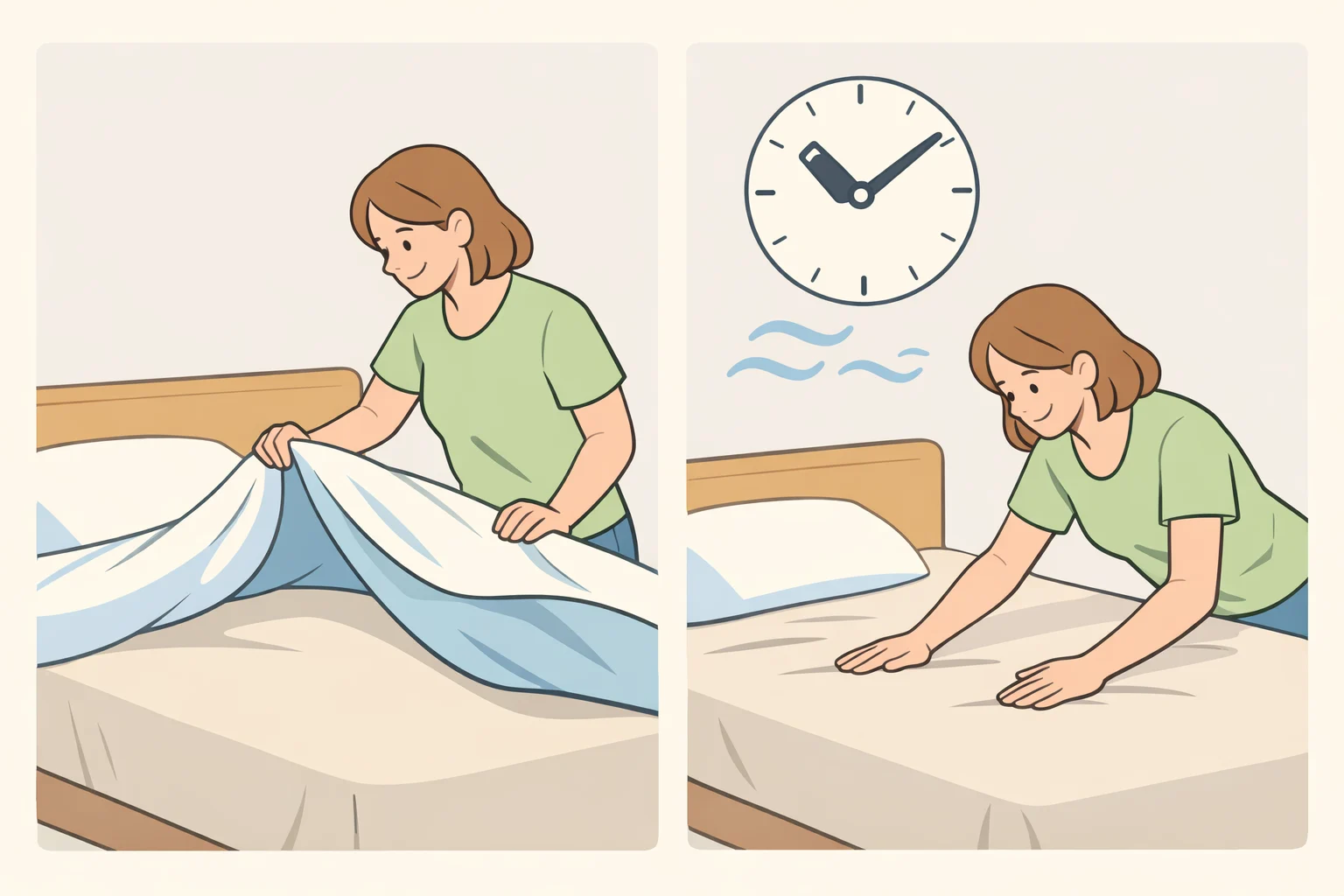
If the mechanism is worth acting on regardless of how thin the underlying study is, the routine itself requires nothing more than a delay. Dr. Budhraja's version: pull back the covers to expose the mattress and sheets to air, open a window or curtains to let in light, and wait 20 to 30 minutes before smoothing everything down (Indian Express, earlier this year). Real Simple's version stretches the window further, recommending 30 minutes to an hour, and adds that opening a window or running a fan on top of pulling back the sheets may increase airflow (Real Simple, last year).
Neither source points to a controlled trial behind the exact number of minutes, which is probably why the two disagree, 20 versus 30, 30 versus 60. It's a plausible habit worth testing, not a proven fix. Waiting half an hour is easy to try because it requires no equipment and doesn't stop anyone from making the bed later.
What actually helps with dust-mite allergens
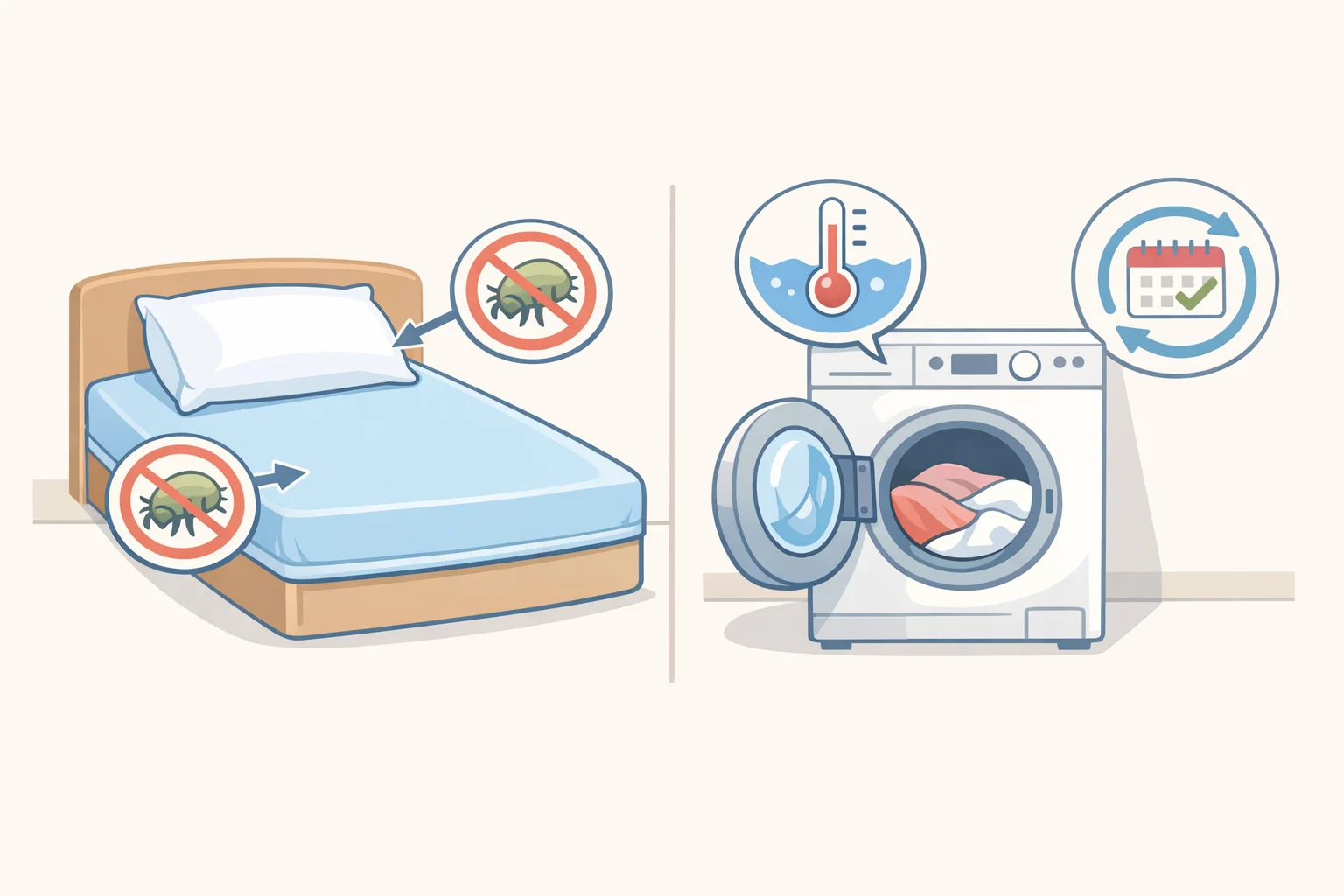
Covers, washing, and vacuuming come up across the sources consulted here, and the reporting is fairly consistent about where the strongest single recommendation sits: allergen-proof covers. The Washington Post explicitly favors dust-mite covers over changes in bed-making timing, and Real Simple recommends mattress protectors as a standard way to prevent allergen buildup (Washington Post, last year; Real Simple, last year). Neither source claims covers eliminate mites; both position them as a steadier way to limit exposure than adjusting when the bed gets made.
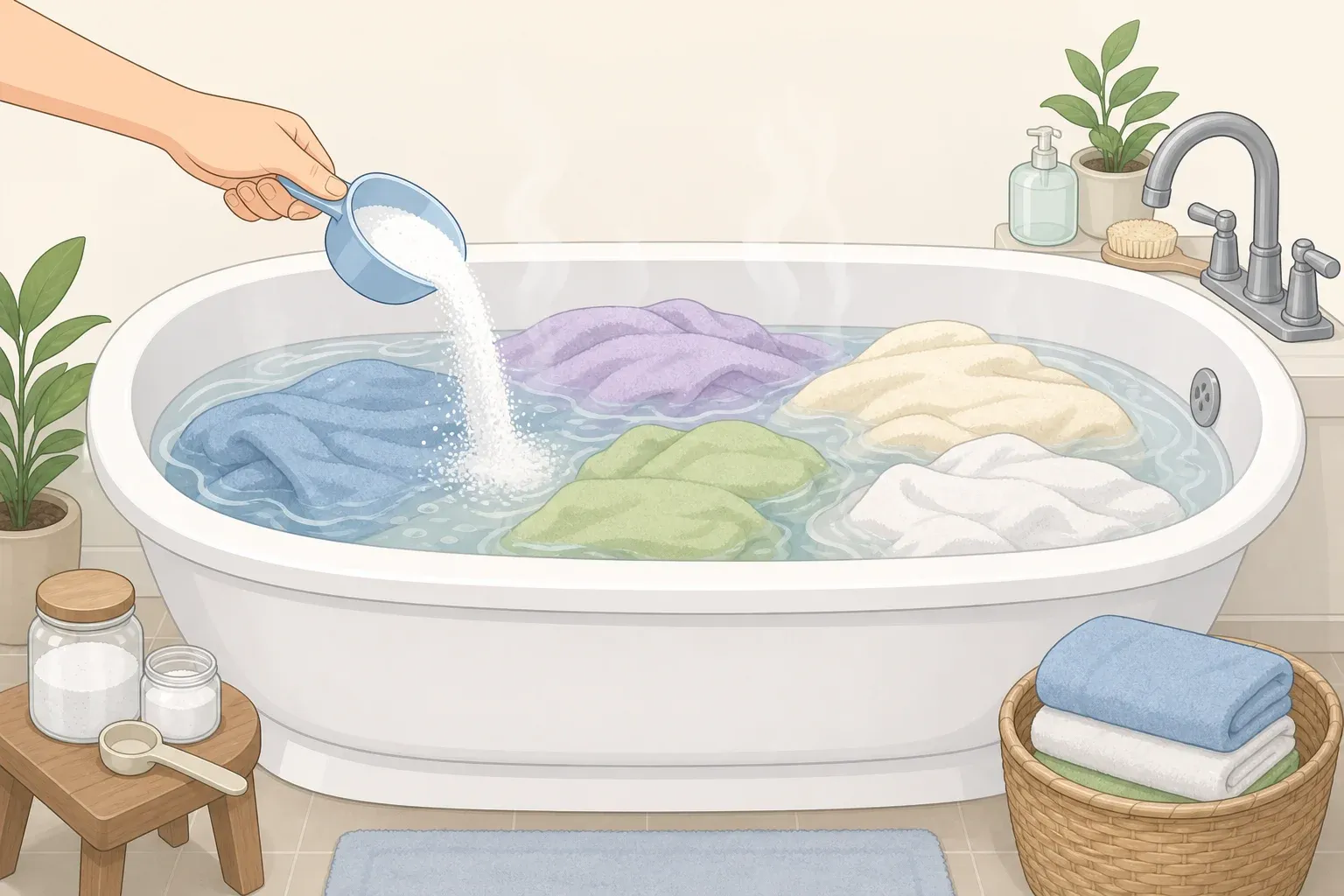
Washing gets separate treatment from separate sources. Dr. Budhraja recommends washing sheets weekly as a basic hygiene practice, without specifying water temperature (Indian Express, earlier this year). Real Simple specifies that the water needs to be hot, since a cool wash cycle won't kill allergens the same way (Real Simple, last year). Both sources land on weekly washing; neither directly compares its effectiveness against airing the bed out.
Real Simple also lists several lower-cost measures without ranking them against each other: vacuuming the mattress regularly with a HEPA-filter vacuum, keeping bedroom humidity low, skipping heavy bedspreads that retain moisture, and replacing pillows every one to two years (Real Simple, last year). These come with more specific detail, in minutes or years, than the underlying mechanism they're meant to address. Specificity in a tip isn't the same as evidence of its effectiveness. Think of it as a longer menu of low-cost things to try alongside covers and hot-water washing, not a ranking backed by comparative data.
So, should you make your bed in the morning?
If making the bed immediately brings satisfaction and there's no history of allergy or asthma symptoms tied to the bedroom, nothing in this reporting suggests changing that habit (Washington Post, last year). If allergy or asthma symptoms are already part of the picture, airing the bed out for a short stretch is a reasonable addition worth pairing with allergen-proof covers and weekly hot-water washing, not swapping in for them (Real Simple, last year; Indian Express, earlier this year). Dr. Budhraja's own guidance is to check with a health practitioner before starting any new routine, sound advice for anyone managing a diagnosed respiratory condition (Indian Express, earlier this year).
What's missing from this picture isn't a decision rule. It's the original data. Years of lifestyle coverage have repeated the same British study's headline finding without anyone tracking down the study itself, its sample, or its measured outcomes. Until that primary research surfaces, the honest label for this whole practice is plausible mechanism, thin evidence, worth a half-hour delay if it costs nothing to try.


Comments
Be the first, drop a comment!