



Most decluttering methods ask one question: does this fit your life? Swedish death cleaning, known in Swedish as döstädning, asks a second one: what does owning this cost the people you leave behind?
Döstädning translates literally as "death cleaning," and that directness puts some people off. But the concept is less about mortality than responsibility: taking stock of what you own while you still can, rather than leaving the job to relatives who won't know what any of it meant.
Margareta Magnusson, the Swedish artist who popularized the practice in her 2017 book The Gentle Art of Swedish Death Cleaning, lived the method herself. Her daughter confirmed that by the time Magnusson died in early 2026, her apartment was nearly empty.
She had started with large attic items and worked her way down to letters and photographs over the years. The book sold in over 30 countries, and a 2023 Peacock series produced by Amy Poehler then introduced the concept to a significantly younger audience than she had originally targeted.
What Swedish death cleaning actually means
Standard decluttering asks: does this fit my space, my style, my current life? The Swedish death cleaning method adds a second lens: if you were gone tomorrow, what would this cost the people sorting through it? That shift from personal utility to collective impact is what separates döstädning from a KonMari session or a spring-cleaning weekend.
The method involves removing items that serve no real purpose in daily life so that surviving relatives won't face the emotionally and logistically draining work of sorting through a crowded estate. It's framed as care, not pessimism, as Good Housekeeping detailed. Lynn Åkesson, a professor emerita of ethnology at Lund University, puts it plainly: in a world of abundant consumer goods, sparing relatives an overwhelming estate has become "an act of love and care."
A Certified Professional Organizer with 22 years of experience living in Sweden describes the approach to NAPO as "a steady, intentional way of deciding what you want to keep and what you're ready to let go of," a deliberate ongoing process rather than a one-time purge.
The morbid label earns its skepticism. Magnusson herself said the process should be joyful and interesting. Her daughter described how Magnusson reread decades of accumulated letters before shredding them, one by one, revisiting her own life rather than racing to reduce her item count, and finding it genuinely comforting.
Picture the alternative: the rushed estate cleanout, boxes of unidentified objects, grief layered on top of logistics. Swedish death cleaning is decisions made by the person best positioned to make them, over time, without urgency. Every object sorted now is one your family won't have to puzzle over later.
Why the benefits of Swedish death cleaning apply at any age
The habit of sorting belongings before death isn't new. What changed is scale. Swedish estate inventories from the early 18th century catalogued a handful of purchased objects alongside things made by hand; the problem of too much was simply not yet a problem. Åkesson notes the concept wouldn't have needed a name in the 1950s, when ordinary homes didn't hold enough to make it necessary. Consumer culture created the conditions that made döstädning feel urgent and exportable.
Magnusson originally aimed her book at readers 65 and older. Professional organizers and health practitioners now argue that no major life transition, no move, no downsizing, no age threshold, is required to start. The 2023 Peacock series also helped shift that perception by featuring participants across different life stages.
The point lands harder when you consider Magnusson's own daughter. Jane Magnusson, 57 at the time of the interview, said she thinks about death cleaning every day. She and her husband hadn't yet gotten started, noting bluntly that "you never know when you're going to kick the bucket." The daughter of the woman who literally wrote the book on this hadn't started. It's a reminder that the method has no urgency built into it unless you create it yourself.
Someone in their 40s with inherited furniture in storage, an overloaded spare room, and no organized record of their possessions is already a candidate. The question is the same at any age: are you living with things you've chosen, or things you've simply never gotten around to dealing with?
Åkesson acknowledges that many people genuinely struggle to part with possessions, and the method as an ideal isn't equally accessible to everyone. The goal isn't a minimalist home. It's a more intentional one.
What you gain before anyone has to sort through your closets
The legacy benefit is real but abstract enough to feel distant. The more immediate case is what Swedish death cleaning does for the person doing it, right now.
When life transitions arrive, a move, a health change, or a downsizing, having already sorted through possessions makes the shift substantially easier. People who plan ahead can approach those moments on their own terms rather than scrambling under pressure. If you've watched someone manage a household move while also managing a health crisis, that's not a small thing.
Giving meaningful items to people who want them, rather than leaving distribution to a will, means witnessing that exchange while you're alive. It's one of the method's more underrated pleasures: the moment of giving is experienced, not posthumously assumed.
The sorting itself, done slowly, functions as something closer to structured reflection than obligation. Magnusson's daughter described her mother going through old letters and photographs as a chance to relive her own life, not as a melancholy task but as something she found genuinely comforting.
How to do Swedish death cleaning: a practical sequence
There's no checklist, no official finishing line, no fixed timeline. The process can unfold over months or years; that's by design. One principle guides it throughout: start with what costs the least emotionally, and work toward what costs the most.
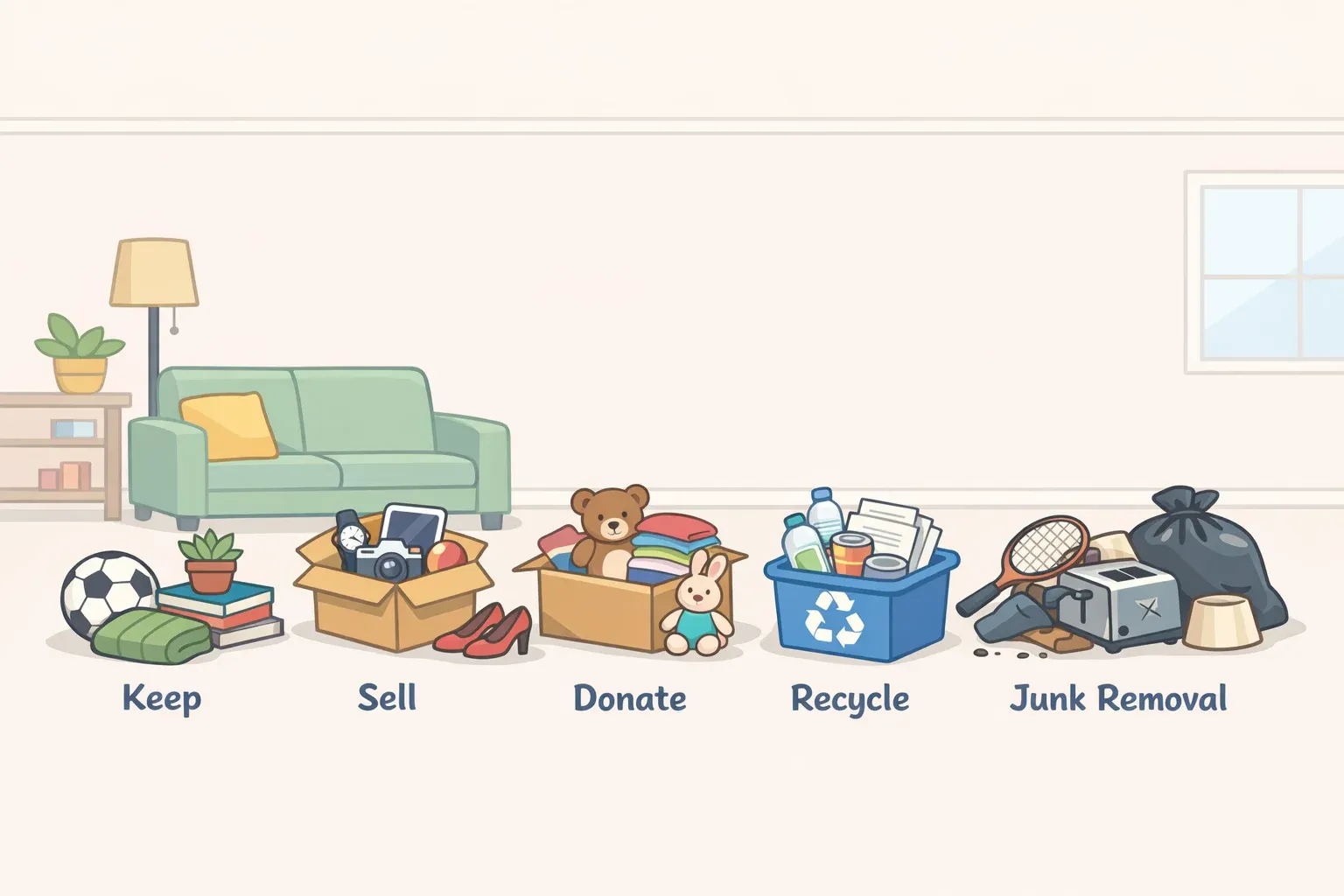
Start large and unsentimental. Magnusson's own process began in her attic, with furniture unused for years, a chair, a table, before scaling down to letters and photographs. Large items produce immediate visual relief and typically carry less sentimental weight. Good starting candidates include stored furniture, unused exercise equipment, boxes of décor you no longer like, and kitchen gadgets untouched for years. Start with whichever low-sentiment category feels most approachable. The sequencing principle matters more than the specific category.
Use one practical test for uncertain items. NAPO recommends asking: If I were moving tomorrow, would I pay to transport this? It cuts through the obligation-based attachment that keeps most clutter in place.
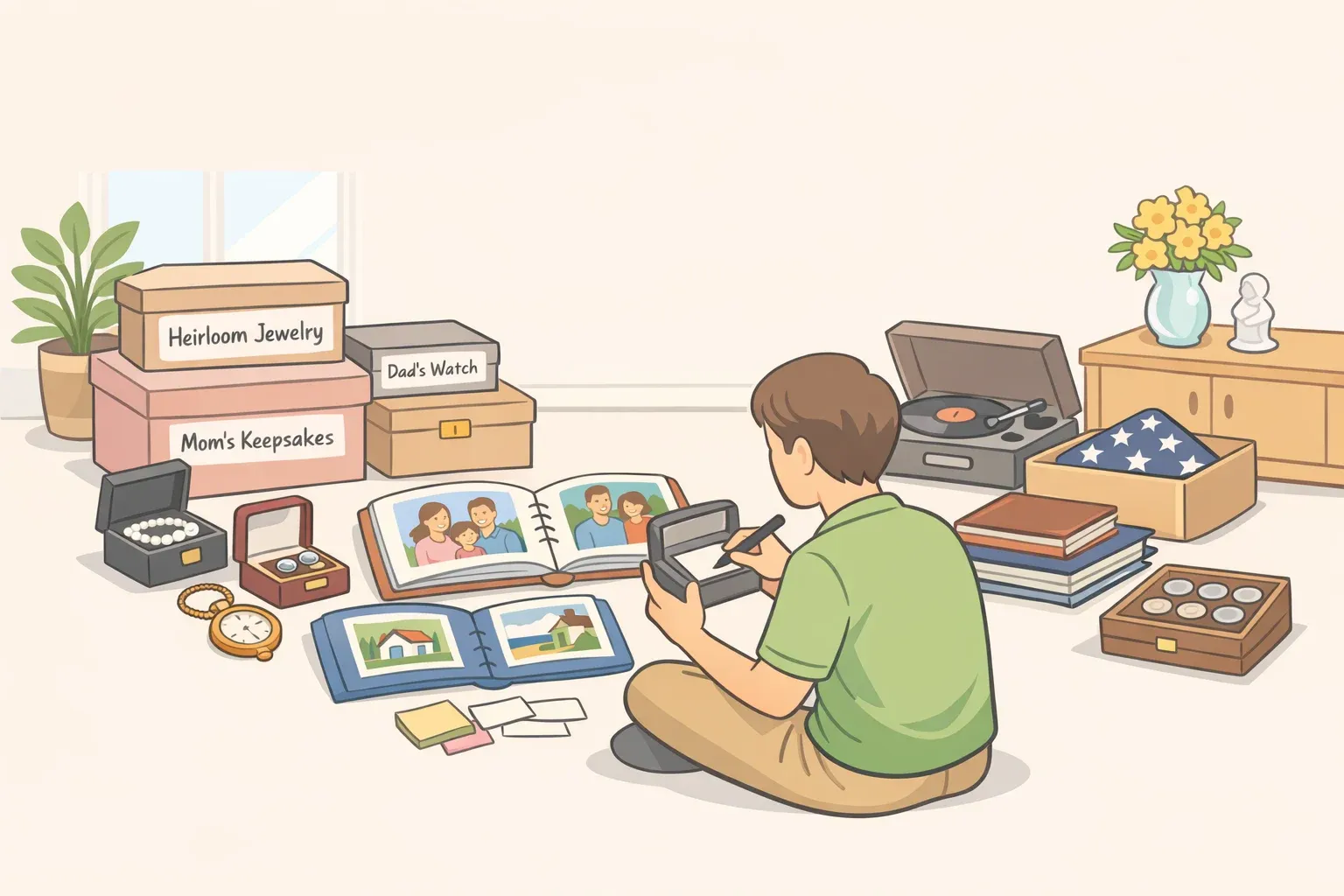
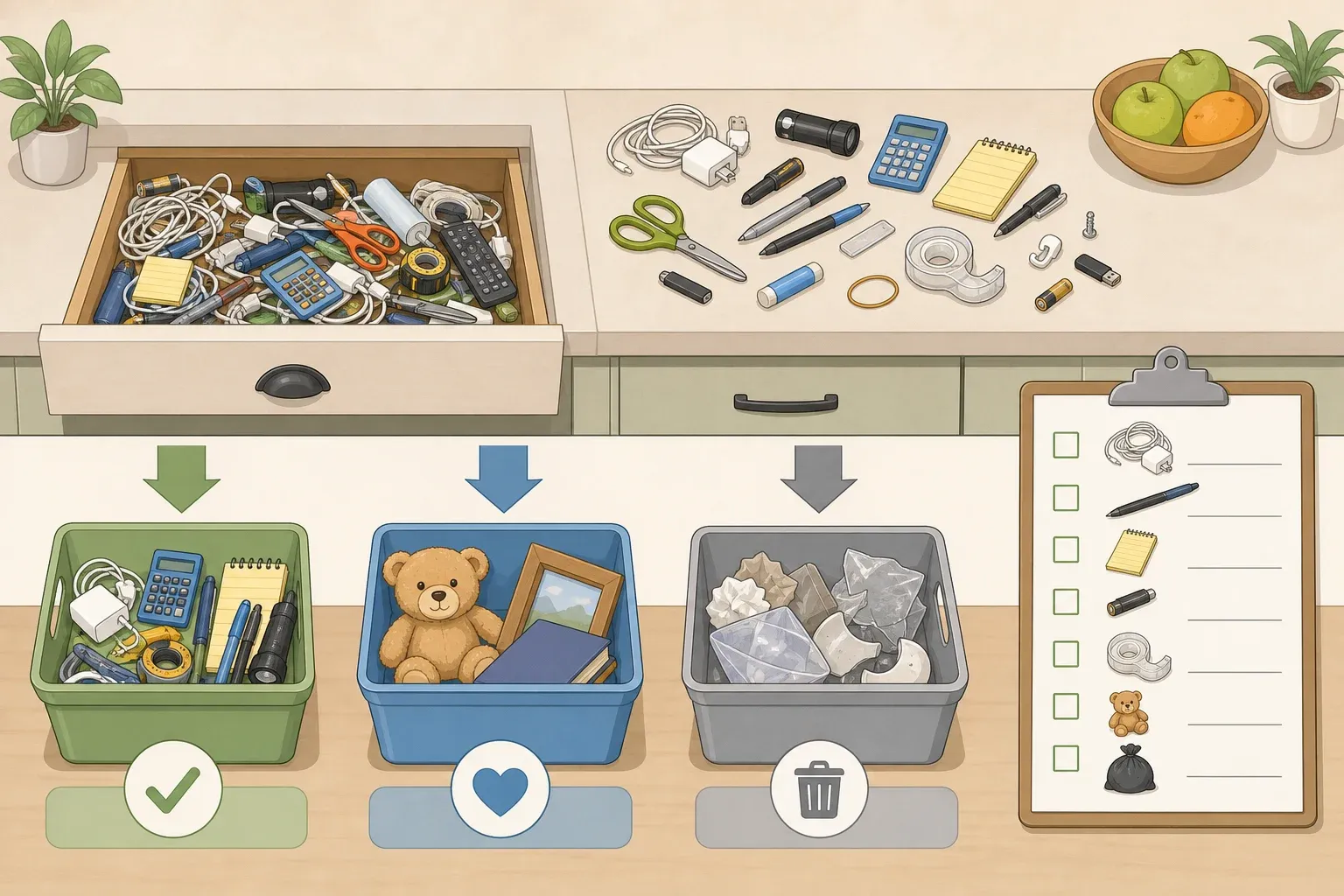
Save sentimental items for last. Photo albums, letters, scrapbooks, heirlooms, these deserve time, not a rushed Saturday afternoon. Magnusson recommended saving them for the final stages, once the decision-making muscle has been developed on easier categories. For items too meaningful to discard but not necessary to keep, NAPO suggests photographing the object and attaching a brief note, a sticky note, or an index card explaining why it mattered. This preserves the story without requiring the object to take up space indefinitely.
Talk to family while you can. Rather than leaving loved ones to guess which items they might want, Magnusson's approach involved asking directly, not as an obligation but as a genuine conversation. A loving offer is not a demand, NAPO notes. If they say no, the item leaves your home another way. If they say yes, you get to witness that exchange rather than leaving it to a will.
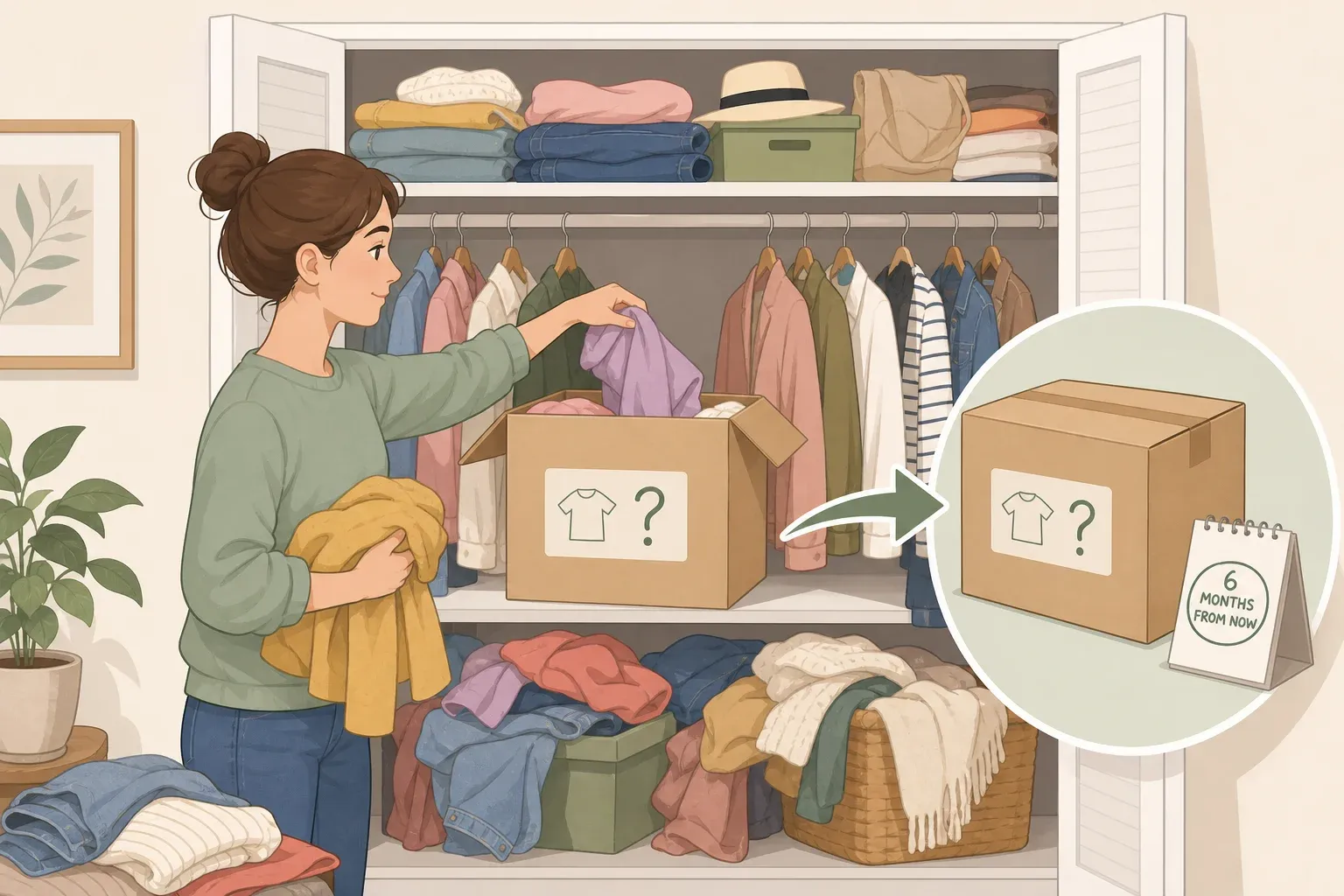
Create a designated private box. For deeply personal items, old concert stubs, private correspondence, photographs you're not ready to discard but don't want examined, most recommend a clearly labeled box for discreet disposal after death. Label it plainly and let a trusted person know it exists. It frees the family from guessing and removes the guilt from the decision.
Don't overlook papers and digital accounts. Swedish death cleaning isn't limited to physical objects. Important documents, financial records, and passwords, much of which now lives in email or cloud storage, matter as much as any physical possession. A family member locked out of digital accounts faces a different kind of estate problem than a cluttered attic, but it's a problem all the same. Experts recommend maintaining a current inventory of belongings and keeping key documents accessible, in a safe deposit box if appropriate.
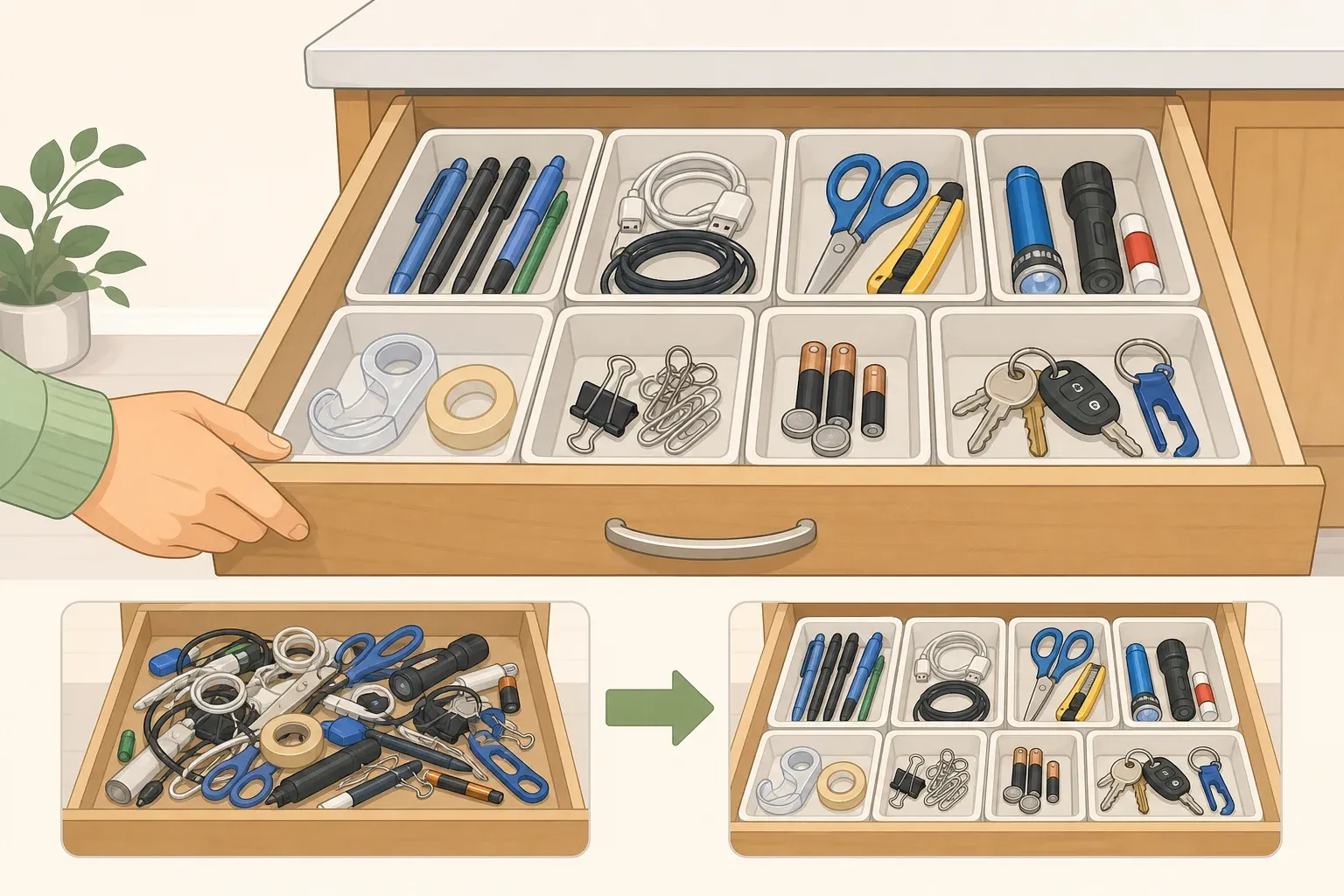
Treat it as a practice, not a project. Progress looks like a drawer that's easier to open, or a category of stored items that finally gets resolved. One shelf at a time, seasonally, counts.
Where to go from here
Swedish death cleaning is a form of clarity about what you own, what it means, and what it costs others if you don't deal with it. Consumer societies keep generating more possessions than previous generations managed, and the burden of sorting those possessions falls on surviving family members unless someone makes decisions in advance. That structural pressure, which Åkesson identifies as the reason the concept found its international audience, hasn't eased, RTÉ Brainstorm reported.
The entry point is consistent across all sources: pick one low-sentiment category, apply the moving-day test, talk to family about anything meaningful, and set up a private box for what you're not ready to release. That's enough for a first session, per Good Housekeeping and NAPO.
Readers who want the original framework should go directly to Magnusson's book. For those interested in extending the philosophy beyond decluttering, her follow-up, The Swedish Art of Aging Exuberantly, covers what it means to live intentionally in later years, not just how to leave gracefully.


Comments
Be the first, drop a comment!