



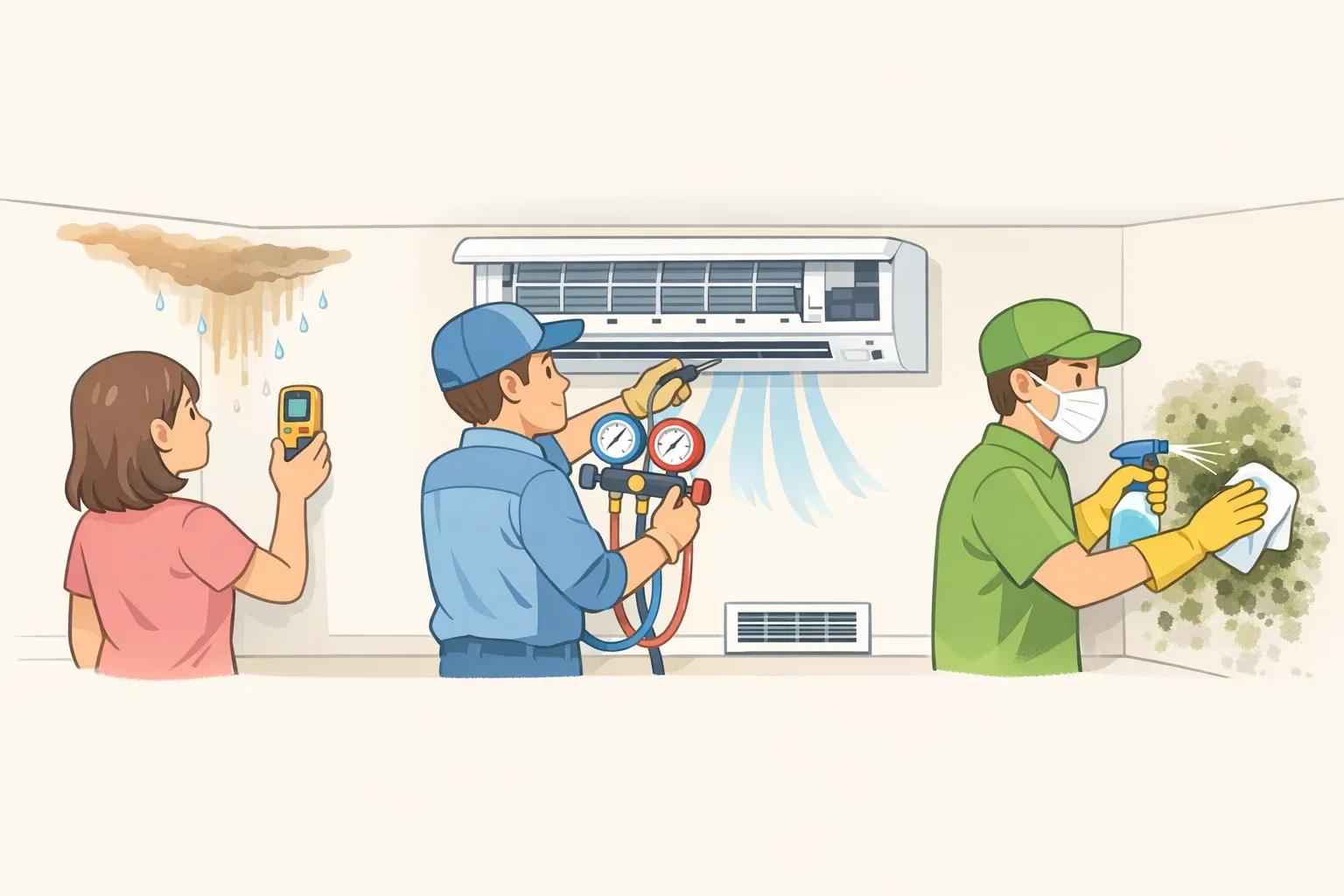
Most summer cleaning guides tell you to open the windows, scrub the surfaces, and call it done. For Plano homeowners, that advice ranges from incomplete to actively counterproductive. This summer deep cleaning guide for Plano, TX homes walks through the maintenance tasks that actually prevent what North Texas summers create: mold, HVAC failure, and indoor humidity that undermines everything else you do.
By the end, you'll know how to locate moisture before it becomes a problem, get your AC doing its full job, and recognize the specific days when standard cleaning instincts make indoor conditions measurably worse.
The priority order matters: fix active water leaks first, then service your HVAC and verify it's controlling humidity, then clean mold-prone surfaces, then know which days to pause entirely. Generic summer cleaning checklists skip steps one through three.
Plano's climate earns a different maintenance approach because North Texas AC systems run six to eight months continuously, compared to three to four months for systems in northern states. That extended runtime makes the HVAC the home's primary moisture management tool, not just its cooling system. The US EPA sets the indoor humidity threshold for mold prevention at 60% relative humidity, with an ideal range of 30–50%, and keeping a Plano home inside that range requires a correctly configured system, not a window fan.
What you'll need before starting:
Digital hygrometer ($15–$25)
Mild detergent and microfiber cloths
Flashlight
Replacement HVAC filter (check your system's documentation for compatible MERV rating before buying)
If you find visible mold: N-95 respirator, disposable gloves, and eye protection before getting closer
A portable air cleaner, or a box fan with a high-efficiency furnace filter taped to the intake, for Step 3
No functioning AC? Address that before continuing. Once indoor temperatures approach the mid-90s, fans cannot prevent heat illness; they move hot air rather than cool it. This guide assumes a working central air system.
Step 1: Find and fix moisture sources before you clean anything
Cleaning a surface that's still being fed by moisture accomplishes nothing lasting. The diagnostic pass comes first.
Walk the house with a flashlight before picking up a sponge. Check under sinks, around toilet bases, behind the washing machine, along window frames, and near exterior walls that take afternoon sun. Press gently on drywall near plumbing; softness or staining means moisture has been sitting there. A musty smell is a reason to keep looking for a moisture source. The US EPA is direct: preventing mold requires finding and fixing the water source. Surface cleaning alone accomplishes nothing permanent.
The 48-hour window is the threshold you're working against. Wet materials dried within 24 to 48 hours are unlikely to develop mold; beyond that, you're managing an established problem rather than preventing one. If you find a damp area, run a dehumidifier and use fans to accelerate drying. Whether to open windows depends on current outdoor conditions; check Step 3 before defaulting to ventilation.
Practical inspection areas worth prioritizing: bathrooms without exhaust fans, laundry rooms during and after drying cycles, areas adjacent to unconditioned garages, and any room with floor-level supply vents where cold air meets warm flooring.
Confirm your humidity number with a hygrometer; don't estimate it. Target 30–50% RH. Place the device in the room that feels most humid. That reading matters more than the thermostat.
Escalation rules:
Drip you can tighten yourself: fix it now.
Soft drywall or staining near plumbing: schedule a plumber before continuing.
Humidity consistently above 60% after addressing visible leaks: the HVAC system's dehumidification configuration likely needs professional attention. That's Step 2.
Step 2: Service your HVAC to control humidity, then clean what remains
Your AC doesn't just cool the air; it removes moisture from it. In a Plano summer, those two functions are inseparable. Mold cleanup done before the system is working correctly is temporary.
Get the system serviced and ask the right question. The US EPA recommends having AC units cleaned and professionally serviced before peak heat arrives, not during it. Most homeowners stop at "cleaned and serviced." The more useful request: ask the technician to verify airflow and dehumidification control settings are optimized for hot-humid operation. A federally funded study conducted in Houston test homes found that indoor humidity stayed below 60% RH for 96% of the monitored cooling season when HVAC systems were properly configured; the configuration did the work, not just the hardware. A system running constantly but misconfigured still isn't doing its full job.
Timing matters here. In North Texas, summer service typically comes with two- to seven-day wait times and emergency pricing 50–100% higher than a scheduled tune-up, according to Jupitair HVAC. If service hasn't happened yet this season, schedule it now and handle the DIY tasks below in the meantime.
What homeowners can handle themselves:
Replace the air filter. Confirm the MERV rating is compatible with your system before buying. Jupitair HVAC recommends MERV 8–11 for Texas systems, where humid conditions make airflow restrictions particularly costly during a long cooling season. Check the filter monthly and replace it when it turns dark brown or black.
Clear debris and vegetation from a two-foot radius around the outdoor condenser unit. Rinse condenser coils gently with a garden hose; no pressure washer, no coil cleaner chemicals unless the technician recommends it.
Wipe supply and return vents with a damp cloth. Clean ceiling fan blades before first use; they'll redistribute a full season of accumulated dust the moment the fan runs.
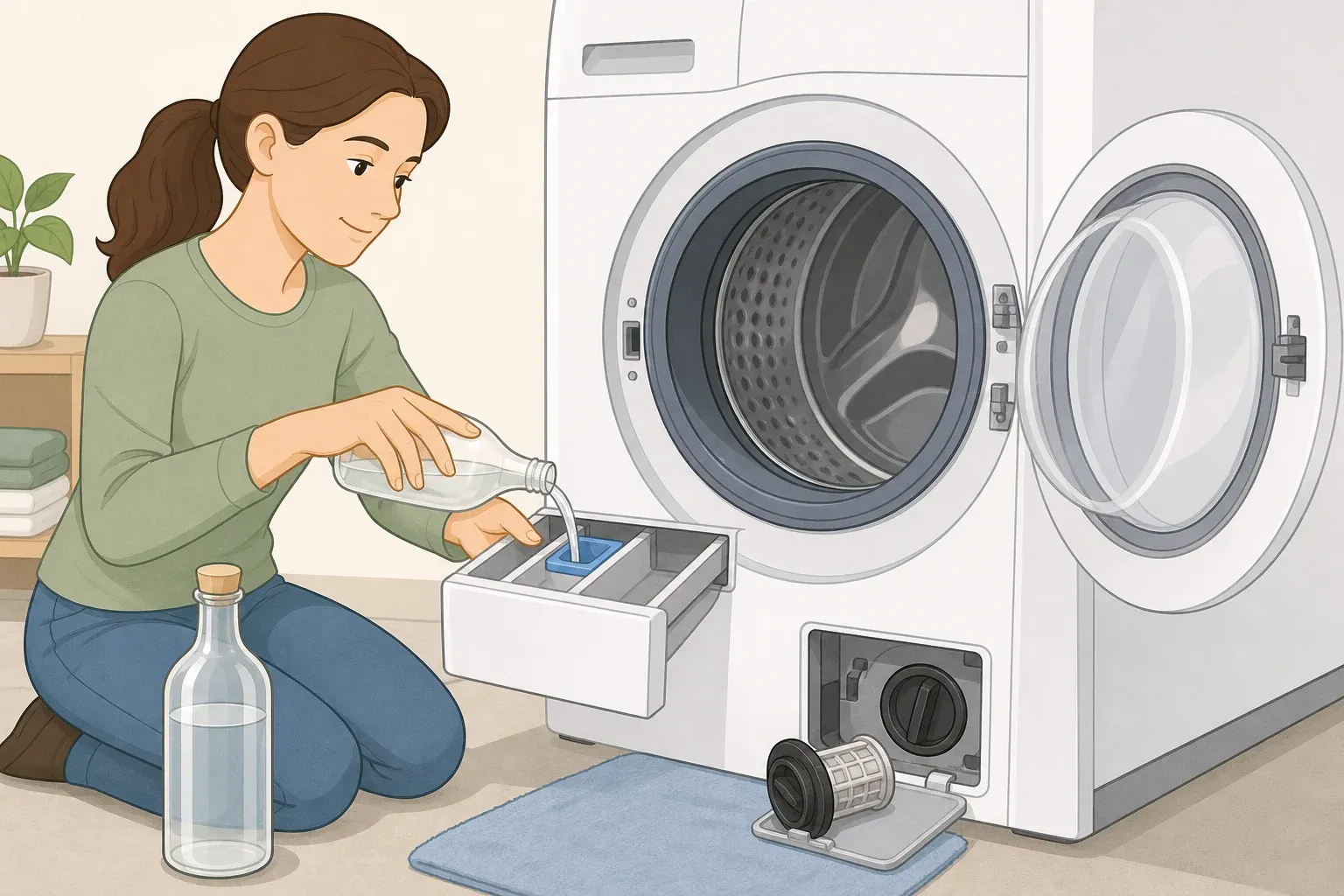
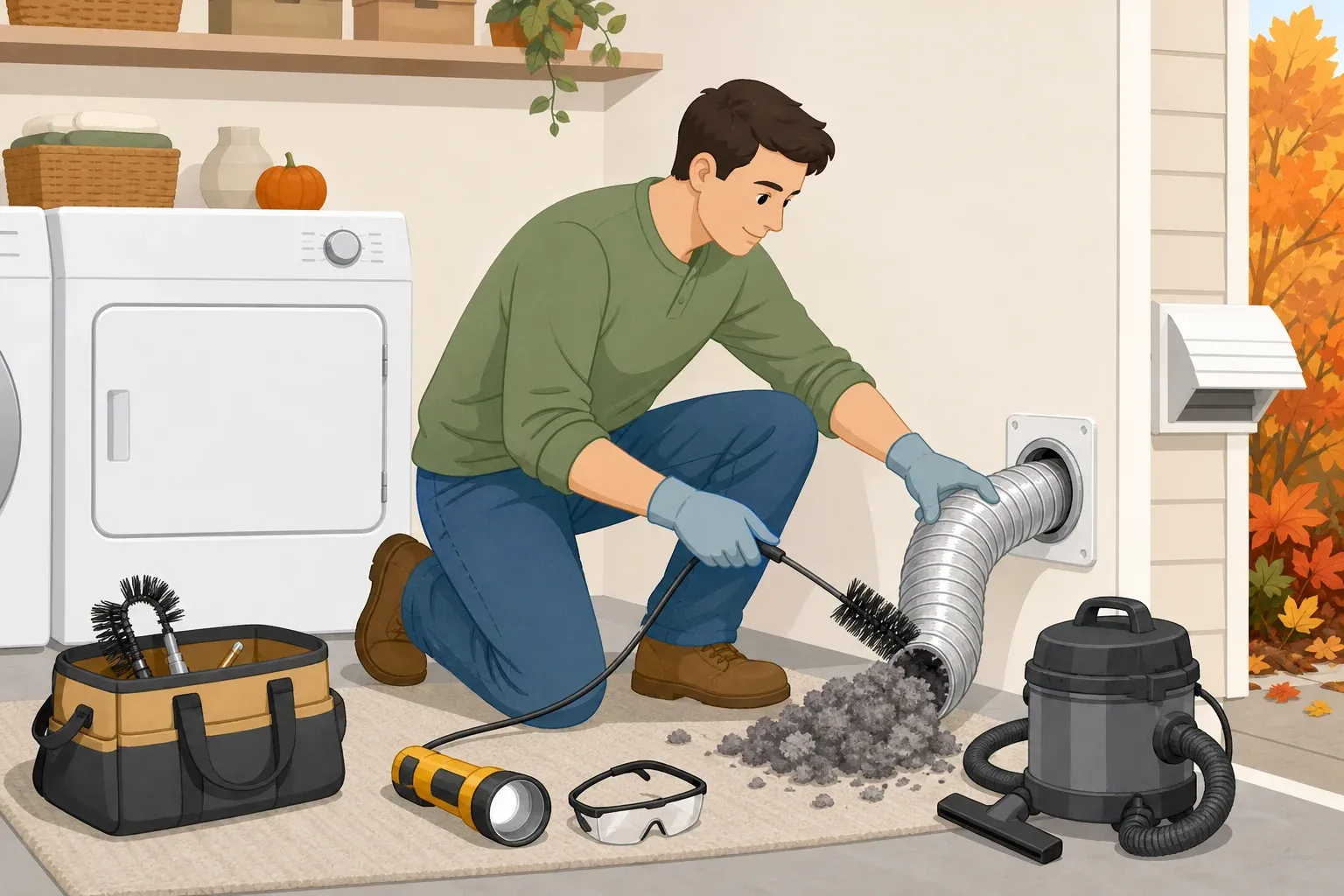
Clear the condensate drain line. Locate the PVC access port near your indoor air handler, pour one cup of white vinegar down the line, wait 30 minutes, then flush with water. It should drain freely from the outdoor exit point. Texas humidity means the system pulls five to twenty gallons of condensate daily, and algae and biofilm grow in the line during the off-season, causing backups or automatic shutdowns. If the line drains slowly after flushing, call a technician; don't force it.
Refrigerant checks, electrical component testing, and evaporator coil cleaning require specialized tools and EPA certification. Those stay off the DIY list entirely.
Resolve the filter rating question before smoke season arrives. Running a MERV 13 or higher filter continuously can reduce indoor fine particle concentrations by roughly 50% compared to no filter; even a standard filter running continuously cuts particle levels by about 24%, per US EPA. Confirm your system can handle the rating first. An incompatible high-MERV filter starves the system of airflow and creates the efficiency problem you're trying to avoid.
Now clean mold-prone surfaces. With the moisture source addressed and the system working, visible mold on hard, non-porous surfaces can usually be cleaned successfully and stay clean.
On tile, painted walls, sealed grout, and other hard non-porous surfaces: mild detergent and water, scrub, rinse, and dry completely. The US EPA advises against bleach and biocides for mold removal; they don't address the moisture source and add an indoor air quality problem on top of the one you're solving.
On porous materials, including carpet, ceiling tiles, drywall, and upholstered furniture: surface cleaning is not sufficient if mold has penetrated. Materials that can't be thoroughly cleaned and dried should be discarded. A ceiling tile with growth on the underside almost certainly has growth on the top too.
Wear an N-95 respirator, disposable gloves, and eye protection for any area with visible mold. Spores become airborne during cleaning.
Escalation rules:
Mold smaller than 10 square feet on a hard surface: clean it yourself with detergent and dry completely.
Porous material with mold penetration: discard and replace; don't scrub.
Mold larger than 10 square feet, roughly a 3×3-foot area: professional remediation, not household cleaning.
Mold smell without a visible source, or any household member with respiratory sensitivities: call a professional before attempting DIY work.
System 15 years old or older, or still running R-22 refrigerant: treat the service visit as a diagnostic and request a replacement estimate before summer peaks.
Step 3: Adjust your approach when outdoor conditions work against you
Steps 1 and 2 assume manageable outdoor conditions. On certain days in a Plano summer, standard cleaning instincts, such as opening windows while you work, running fans to circulate air make indoor conditions measurably worse. Check local air quality and heat advisories before starting work on any given day. The principle applies to both scenarios below: outdoor conditions determine whether standard cleaning advice applies.
On extreme heat days: keep the house closed and work early. Close windows and window coverings before midday. Open windows during peak afternoon heat introduce hot, humid air your AC then has to process, increasing both energy load and mold risk. For natural ventilation, open windows briefly at night when temperatures drop to exhaust accumulated heat, then close them again before outdoor air warms back up. At indoor temperatures in the mid-90s or above, fans cannot prevent heat illness. They circulate hot air, nothing more.
On smoke days: stay indoors and filter the air. Keeping doors and windows closed during wildfire smoke events reduces indoor fine particle concentrations to roughly 55–60% of outdoor levels without any additional filtration. Postpone vacuuming and high-heat cooking; both add particles to indoor air during a period when you're trying to reduce them.
To actively reduce indoor particles from smoke, switch the HVAC fan from "Auto" to "On" so air cycles continuously through the filter. Set up a portable air cleaner or a DIY box fan with a high-efficiency furnace filter taped to the intake in the room where you're spending the most time. Choose an interior room with few windows and no fireplace, and run the cleaner on its highest setting. An indoor air quality sensor placed in this room can help you make decisions about whether your filtration is keeping up; the same logic that applies to a hygrometer for humidity applies here for particles.
When smoke clears, open windows or activate the fresh air intake on your HVAC before closing back up. Accumulated indoor particles don't leave on their own once outdoor air improves.
Summer house cleaning checklist for Plano, TX homes: what to do, schedule, and leave to professionals
Do today:
Humidity reading confirmed at 30–50% RH with a hygrometer
HVAC filter replaced; MERV rating confirmed compatible with your system
Condensate drain line flushed with vinegar and draining freely
Condenser unit cleared of debris; coils rinsed with a garden hose
Supply and return vents wiped clean; ceiling fan blades cleaned
Hard-surface mold patches under 10 square feet are scrubbed with detergent and dried completely
Schedule this week:
Professional HVAC service. Ask the technician to verify airflow and dehumidification control settings, not just clean and test. In North Texas, summer service typically comes with extended wait times and higher emergency pricing, according to Jupitair HVAC; the US EPA recommends servicing before peak heat, not during it.
Any plumbing repair for active leaks found in Step 1
Replacement of porous materials where mold has penetrated
Don't attempt yourself:
Mold covering more than 10 square feet, or mold you can smell but can't locate: professional remediation
Refrigerant checks, electrical component testing, evaporator coil cleaning
A condensate drain that won't clear after a vinegar flush
Leave and reassess if:
The AC is out, and indoor temperatures are climbing toward the mid-90s. Libraries, malls, and community centers are a practical answer when home conditions become unsafe; the US EPA identifies those kinds of public spaces as cleaner-air options during both heat and smoke events.
Smoke is heavy, and the home can't maintain meaningfully cleaner air than outdoors even with windows closed and filtration running.
The house is summer-ready when three things are true: humidity is consistently holding between 30–50% RH, the HVAC system has been serviced and confirmed to be managing dehumidification, and visible mold on hard surfaces has been cleaned with the underlying moisture source fixed. If any one of those is unresolved, the rest of the cleaning work is provisional. That's the bar, and it's specific enough to be useful.








Comments
Be the first, drop a comment!