



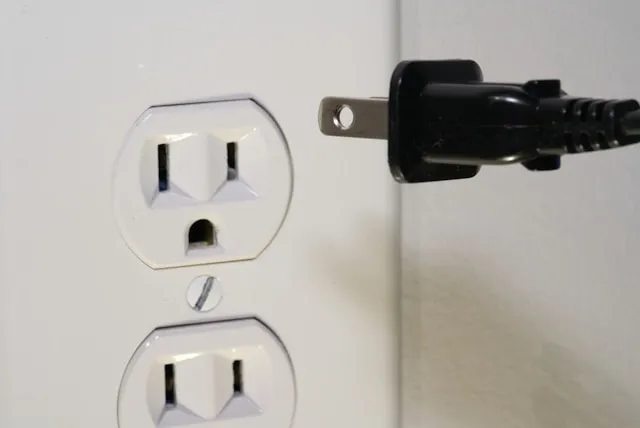
Before anyone in the house falls asleep, a handful of devices need attention, and the list of things to unplug before bed is shorter and more specific than most people think. The Consumer Product Safety Commission's 2023 warning on portable heaters, including electric space heaters, points to an average of 1,700 fires, 70 deaths, and 160 injuries a year between 2017 and 2019, and its instruction has no exceptions: never leave a portable heater running while you sleep.
Fire agencies are just as blunt about lithium-ion charging. Philadelphia's Fire Department put it in three words last year: "No overnight charging!" for lithium-ion devices, and in 2024 the CPSC told e-bike and scooter owners never to charge them while they're asleep.
This guide walks through what to unplug at night: five specific bedtime actions, not a blanket order to unplug everything. Each one targets a device fire-safety agencies have flagged for overnight risk, and each explains when a cord or charger needs to come out of rotation entirely rather than just get unplugged for the night. Skip any step for equipment you don't own; a household with an e-bike, power tools, and a few phones has more to check than one with just a space heater.
Before you start: use the right charger
One rule applies to every device covered below: use only the charger that came with it, or one the manufacturer has specifically approved. Don't swap chargers between devices without confirming they're compatible first.
That rule exists because "universal" doesn't mean safe. Between January 2023 and May 2024, the CPSC logged 156 reports of fires and thermal incidents tied to universal chargers used with micromobility products, including reports of serious injuries and property damage. A charger marketed as "universal" or "suitable for e-bikes" can physically plug into a device while still being electrically mismatched to it, and that mismatch can cause the battery to ignite.
Things to unplug before bed: the 5-step check
These are the appliances to unplug before bed if you own them, roughly in order of how much damage they can do overnight.
Step 1: Turn off and unplug portable space heaters
Plug electric space heaters directly into a wall outlet, never into an extension cord or power strip, which can overload and start a fire. Keep the heater at least three feet from bedding, curtains, or furniture whenever it's running. CPSC doesn't carve out an exception for a heater running on its lowest setting: turn it off before you leave the room, not down.
Do: turn the heater off, unplug it at the wall, and leave the space around it clear. Done when: the plug is out of the outlet, and the heater isn't running, not just dialed down.
Step 2: Stop the charge cycle on e-bikes and scooters
For micromobility products, including e-bikes, e-scooters, hoverboards, and e-unicycles, the CPSC's rule is to always be present while charging and never charge overnight. Massachusetts' State Fire Marshal warned last year that a fire involving a large device like an e-bike can trap residents if it's charging near a doorway, stairwell, or window, and recommended storing these devices outdoors when possible.
If outdoor charging is an option, use a flat, dry surface away from direct sunlight, water, kids, and tripping hazards, and secure the device so it can't tip over while it charges.
Do: unplug the charger once the device is charged, and move it away from doorways, stairwells, or windows overnight. Done when: the charger is out of the wall, and the bike or scooter isn't blocking an exit.
Step 3: Unplug power-tool batteries instead of leaving them charging overnight
Philadelphia's fire department groups power tools with e-bikes and scooters as "big" lithium-ion items best charged outside on a flat, dry surface. The same unattended-charging rule applies to a drill or saw battery as it does to an e-bike: it's equipment nobody's meant to leave running when there's no one around to notice a problem.
Do: pull the battery off the charger, or unplug the charger from the wall, before bed. Done when: nothing power-tool related is still drawing current in the garage or shed overnight.
Step 4: Move phones, laptops, tablets, and headphones off soft surfaces and unplug once charged
Charge these on a hard surface, never a bed, couch, or under a pillow. Don't overcharge; unplug the device or remove the battery once it's fully charged.
If a device has manufacturer-specific charging instructions, follow those instead. None of the fire-safety sources cited here address device-level battery-management features, so that detail is between you and the manufacturer's manual, not something to guess at.
Do: move the device onto a nightstand, desk, or other hard surface, and unplug it once it hits full charge. Done when: nothing is charging under a pillow, in the sheets, or wedged in couch cushions.
Step 5: Check cords for damage and pull anything questionable from service
Look at every cord in tonight's rotation before plugging it in. If a cord already works only when it's held or bent a certain way, replace it rather than keep using it that way. Damaged or improperly used lithium-ion batteries can overheat, catch fire, or explode.
When a cord needs replacing, use the one that came with the device or a manufacturer-approved replacement, not a same-shape cord borrowed from another gadget. If the device is under an active recall, the CPSC's instruction is different from a nightly unplug: stop using it immediately and contact the recalling company for a refund, repair, or replacement, rather than continuing to unplug it each night and use it again later.
Do: set aside anything with a cord that only "works" when bent a certain way, and pull recalled items out of use entirely. Done when: everything left charging overnight has an intact cord and isn't tied to an active recall.
If you have a working fireplace or wood stove
Fireplaces and chimneys carry their own numbers. The CPSC ties them to an average of about 15,800 fires a year and roughly 20 deaths annually between 2017 and 2019.
The agency's confirmed guidance here is a yearly maintenance step, not a nightly ritual: have a professional inspect fireplaces, wood stoves, chimneys, flues, and vents once a year. Beyond that annual check, follow the manufacturer's or installer's instructions for operating and closing down your specific unit overnight. Damping and shutdown procedures vary enough by appliance model that there isn't one documented nightly step that fits every fireplace or wood stove.
Beyond tonight: alarms, recalls, and battery disposal
Some of the most important fire-safety work happens on a schedule longer than one night. Install smoke alarms on every level of the home and inside each bedroom, and carbon monoxide alarms on every level and outside sleeping areas. Interconnected alarms are preferable so one sounding triggers all of them; alarms should be battery-operated or have battery backup, tested monthly, with batteries replaced at least once a year, or swapped for sealed 10-year alarms.
Check heaters, e-bikes, scooters, and chargers against active recalls at cpsc.gov/recalls, and stop using anything recalled immediately rather than working around it. When a lithium-ion battery reaches the end of its life, don't put it in the trash or curbside recycling. Physical damage during collection at a compactor truck or transfer station is a common cause of lithium-ion battery fires, so take worn-out batteries to a dedicated recycling location instead; search call2recycle.org to find one nearby.
What to do if you find damage
If Step 5 turns up a damaged cord or a device under recall, that item doesn't go back into tonight's rotation, and it doesn't get a pass tomorrow either. Set it aside, and don't plug it in again until it's replaced or the recall remedy is complete. Everything else, the ordinary, undamaged gear, goes right back into the normal charging routine the next morning.
Keep the alarm testing, recall checks, and battery recycling from the previous section on their own calendar reminder instead of squeezing them into tonight's walk-through. That's what keeps the nightly check itself short enough to actually stick to.




Comments
Be the first, drop a comment!