



What happens when you use too much laundry detergent
Stiff towels, a musty smell that survives a full cycle, and clothes that never quite feel clean point to one specific laundry mistake: using too much detergent, not too little. Nine.com.au's home experts note that with any cleaning product, it's easy to assume more equals better results, but the opposite is usually true, and laundry detergent is one of the clearest examples of that (Nine.com.au). What happens when you use too much laundry detergent comes down to a simple problem: once a wash has enough detergent to lift dirt and oil, the leftover doesn't rinse away completely. It stays behind on the fabric and inside the machine.
The instinct to add extra isn't random. Ryan Hijazi, owner of EZY Appliance Repairs, told Nine.com.au that when he asks customers why they use so much detergent, they almost always say they want their clothes to smell "fresh," even though overusing detergent tends to do the opposite. This guide covers the quick fix for your next load, the signs your machine and clothes are already showing the damage, how to dial in the right amount for your detergent and washer, and how to clear out whatever has already built up.
Start with the label, not the cap
Fixing this starts with knowing what's in your hand: detergent type (liquid, powder, or a single-dose pod) and washer type (standard or high-efficiency, often labeled HE). Pods and pacs are pre-measured, so the only real risk with them is tossing in an extra one instead of trusting the dose already built in. Liquids and powders require actual measuring against the label, according to Consumer Reports.
Susan Toft, founder of The Laundry Lady, put the general rule simply when Nine.com.au asked her how much detergent to use: whatever the manufacturer recommends on the packaging, adjusted for load size and how soiled the clothes are. Treat that printed number as your starting point rather than something to round up from.
Don't rely on the fill line inside a washer's built-in dispenser to tell you how much to use. That line marks the maximum amount the machine can handle, not what your laundry actually needs, and filling to it routinely overdoses a load, according to Consumer Reports. Use the product's own load guidance instead of splitting the difference between the two numbers.
Signs you're using too much laundry detergent
A few symptoms show up consistently once detergent stops rinsing out completely. Clothes and towels start feeling crunchy or stiff, and towels stop soaking up water the way they should, Nine.com.au reported. If laundry comes out of the machine smelling powerfully of fragrance rather than neutral, that's often a sign of detergent trapped in the fabric instead of a deeper clean. Wash should come out clean and neutral-smelling, not heavily scented, Hijazi told Nine.com.au.
Overdosing is also a common reason clothes, sheets, and towels end up with stains or lingering odor instead of the clean result you were aiming for, the same outlet noted.
Two other culprits produce nearly identical symptoms, so it's worth ruling them out before blaming dose alone. Hard water minerals react with detergent to form a curd that can show up on clothes as a white powder, make fabric feel stiff, and cling to the inside of the washing machine. Forming that curd uses up some of the detergent's cleaning power, so even a normal dose needs a boost in hard water, according to the American Cleaning Institute. Fabric softener carries its own residue problem too, leaving a coating that makes towels less absorbent, Nine.com.au reported.
Why extra detergent backfires on your clothes
Excess detergent doesn't rinse out fully, so it leaves residue sitting on the fabric, Toft told Nine.com.au. That residue is what makes clothes feel stiff instead of soft, and ironically it goes on to attract more dirt over time rather than repel it, she said.
That's what people mean by too much laundry detergent residue on clothes: the stiffness, the dullness, the fragrance that won't fade, all traced back to product that never made it down the drain. None of it means the detergent failed to clean. It means there was more of it in the wash than the water could carry away.
What too much detergent does to your washing machine
Using too much detergent in a washing machine doesn't just risk one bad load; it changes conditions inside the drum for every wash that follows. Leftover detergent creates conditions that encourage mold and lingering odor, and appliance technicians report that customers who overdose to chase a "deeper clean" often end up with stiffer clothes, smellier laundry, and a machine that needs more maintenance as a result, Hijazi told Nine.com.au.
Rich Handel, who leads detergent testing at Consumer Reports, put it more bluntly: leftover residue attracts dirt and odor and can turn a washer into what he calls a "mold farm," according to Consumer Reports. That's the mechanism behind excess detergent causing a smelly washing machine: residue that never fully rinses out just sits there feeding odor and mold, and it wastes money in the process, per the same report.
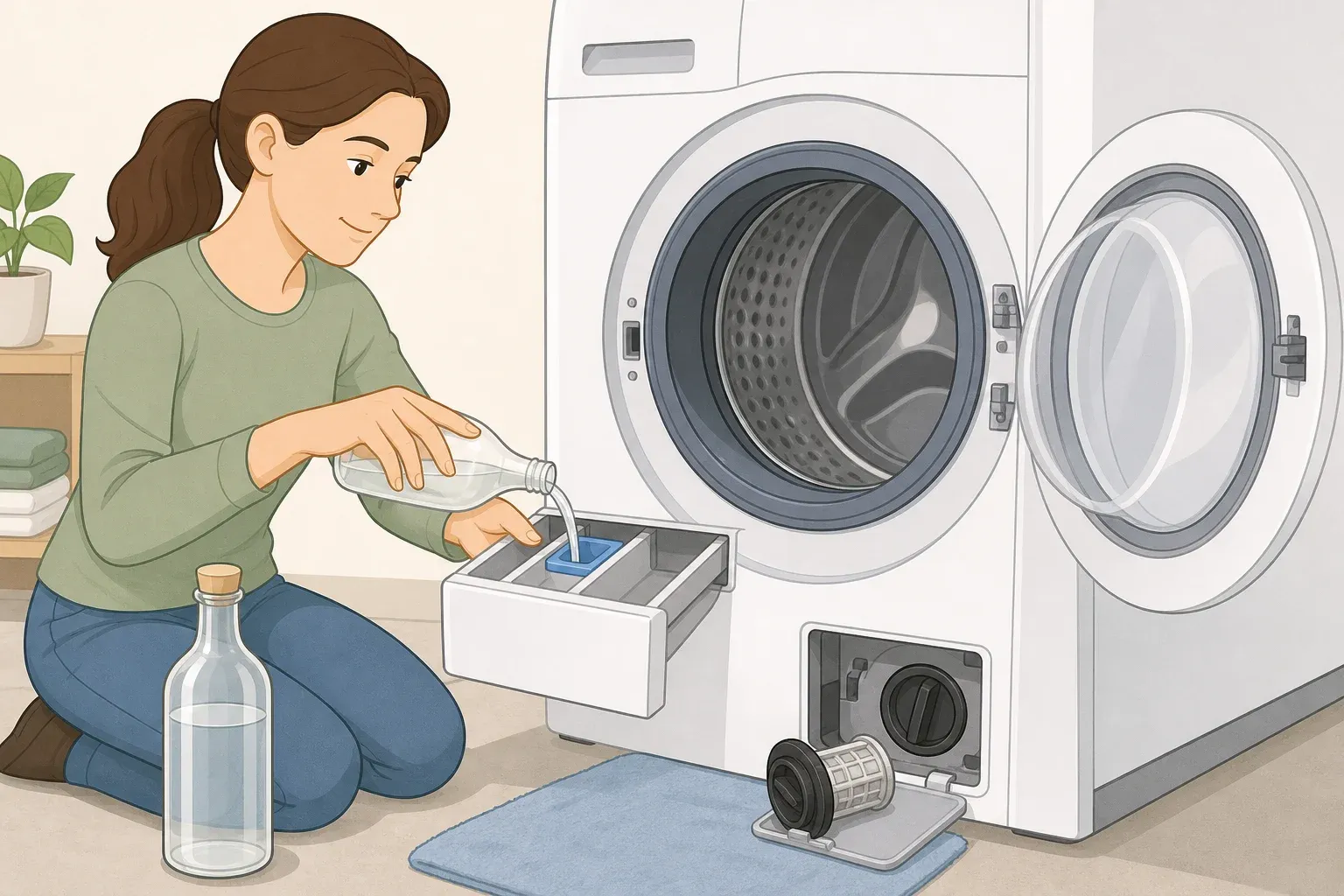
Many washers have a built-in cleaning cycle, and Tide recommends running it, along with rinsing out the detergent dispenser drawer, on a monthly basis to keep residue from accumulating. Check the owner's manual first, since the exact cycle and schedule vary by model, according to Tide.
Using the correct amount also stretches a bottle further. Hijazi told Nine.com.au that a bottle lasting around 30 loads at an overdosed rate can often stretch to 45 or 60 loads once the amount is dialed back. The consumer group Choice ran the math on an even bigger shift, comparing a full dose of a big-name detergent every wash against a third of a scoop of a cheaper detergent every other day, and put the second habit's annual cost at under $10, more than $500 less than the first over a year, Nine.com.au reported.
How much laundry detergent to use for your load
The detergent label and washer manual are the controlling instructions. Everything below is a reference point for when neither is handy, not a competing standard, and actual amounts vary by product concentration and washer model.
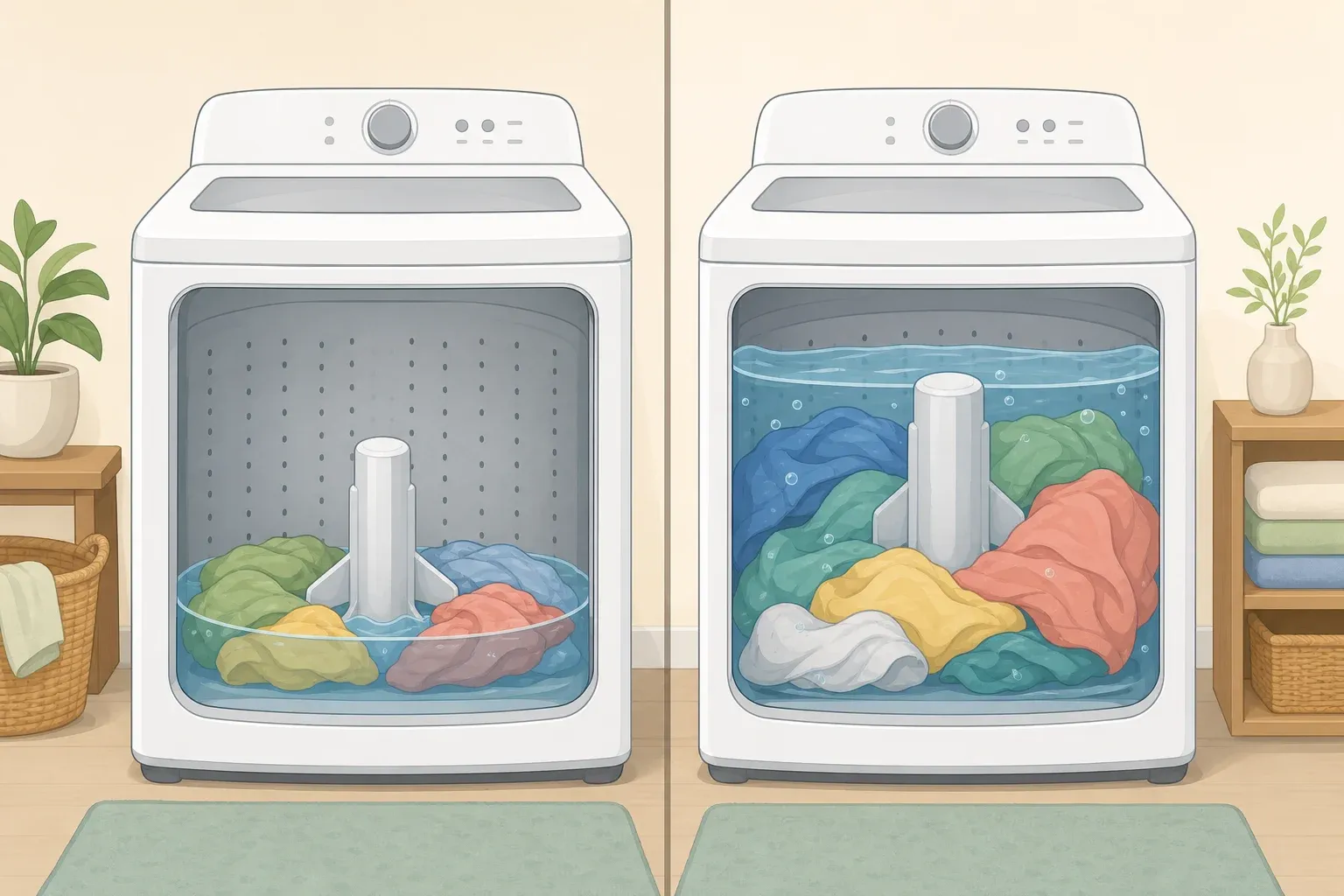
Now that most formulas are concentrated, Consumer Reports puts a normal load at about a shot glass' worth of liquid detergent, roughly 1.5 ounces or 3 tablespoons, doubled for a very large or heavily soiled load (Consumer Reports). Hijazi works from a different, simpler benchmark with his repair clients: skip the packaging altogether and use about half a cup for a large load, a quarter cup for a smaller one, he told Nine.com.au. The two figures land in different places because they come from different products and testing methods, which is exactly why the label on your own bottle should settle the question whenever it's available.
Hard water is one situation where adding slightly more detergent than the label suggests actually helps, since minerals in the water use up some of the detergent's cleaning power before it reaches the laundry, according to the American Cleaning Institute. If the water at home runs hard, check the label for its own hard-water guidance before adding extra by guesswork.
For heavily soiled clothing, pretreat stains or soak items before the wash cycle instead of adding extra detergent to the load, Toft told Nine.com.au, a point the American Cleaning Institute backs by recommending stains get treated immediately rather than compensated for with more soap. Don't swing too far the other way either: too little detergent can leave laundry just as poorly cleaned as too much, so the goal is the labeled amount adjusted for load size, soil level, and water hardness, not the smallest amount possible, per the American Cleaning Institute.
Clear out existing buildup and reset your routine
Measuring correctly on the next load won't undo buildup that's already there. A filmy, slippery coating on the drum or door seal points to detergent residue. A white, chalky residue on clothes points to hard water minerals instead. Either way, clearing out what's accumulated and switching to the right dose going forward is the actual fix, not a one-load correction.
- Clean the dispenser drawer. It's an often-overlooked spot where residue collects. Pull it out and rinse it under running water until no film remains, according to Tide.
- Run the washer's cleaning cycle if it has one. Check the owner's manual first, since cleaning instructions and cycle names vary by model, Tide advises.
- Wash the next several loads at your newly measured, label-based dose, adjusted for load size, soil level, and water hardness as covered above.
Follow the washer's manual exactly for the cleaning cycle, and skip adding vinegar, bleach, or another cleaning product to it unless both the manual and that product's own instructions confirm they're safe together. That's a basic precaution worth following any time cleaning products get combined, regardless of what caused the buildup in the first place.
Success looks like a drum and door seal that no longer feel filmy or slimy, laundry that smells neutral instead of heavily perfumed, and towels that gradually regain their absorbency over the next several washes. Don't chase exact tablespoon precision; staying inside the label's range and adjusting only for documented factors like hard water or unusually heavy soil matters more than hitting a specific number. If odor, drainage trouble, or residue persist after a full cleaning cycle and several correctly dosed loads, that calls for model-specific troubleshooting from the manual or a call to an appliance technician, not more detergent or more cleaning products.











Comments
Be the first, drop a comment!