



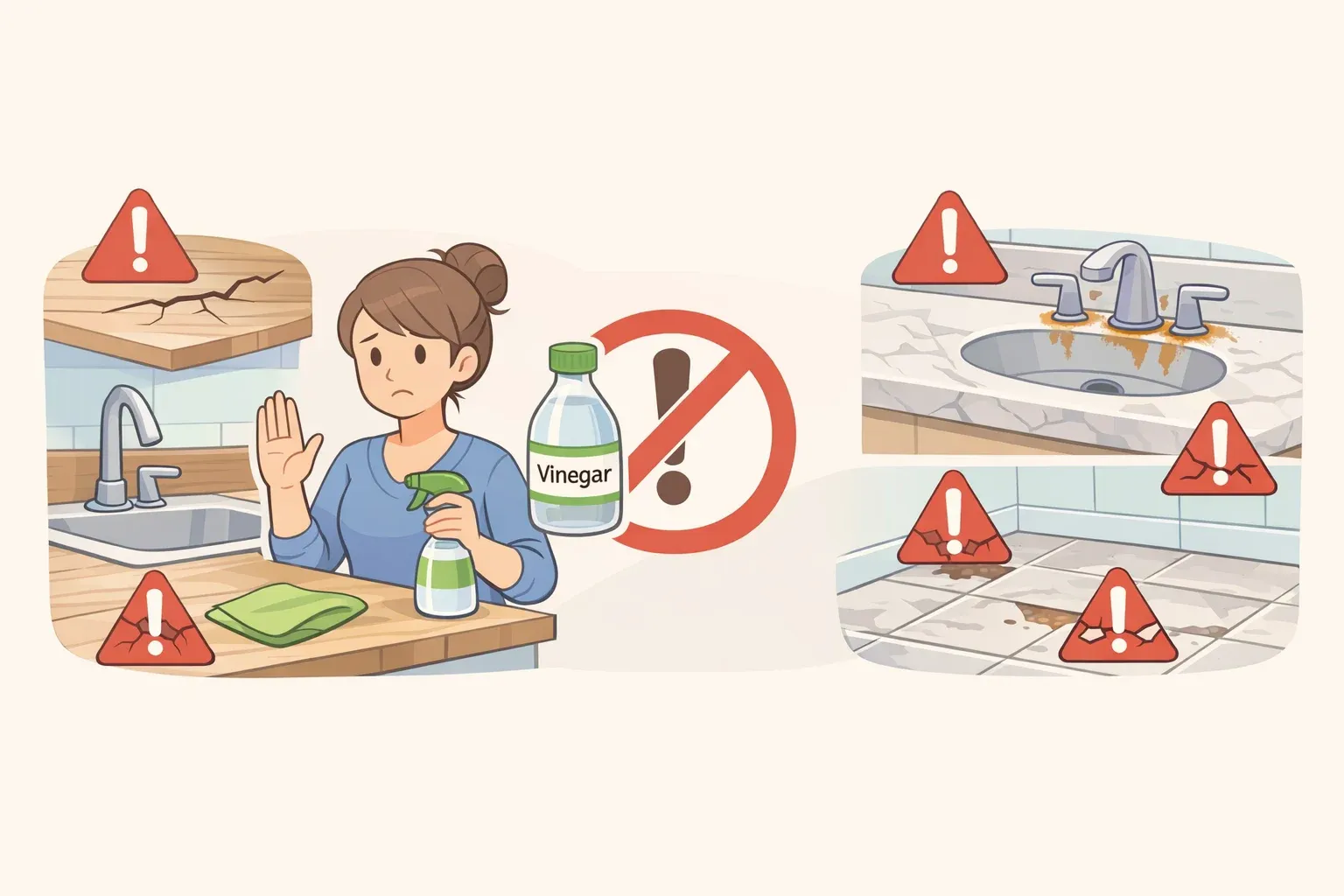
What not to clean with vinegar: surfaces it can damage
Never mix vinegar with bleach. That warning belongs first because it's the only one here with lethal potential: the combination releases chlorine gas, which can be deadly if inhaled, according to Good Housekeeping's Home Care & Cleaning Lab. Keep them separate, full stop.
Knowing what not to clean with vinegar matters as much as knowing where it works. Gabriel Odame, a research and development chemist at Harris, told The Spruce earlier this year that vinegar cuts grease, mineral deposits, and everyday grime on glass, faucets, sinks, mirrors, shower doors, and bathroom fixtures without harsh fumes or chemical residue. That's a real and useful range. The problem is that its reputation has grown past it. People reach for vinegar on hardwood floors, stone countertops, grout, and phone screens, none of which it should touch.
The pattern behind the damage is consistent: vinegar is a dilute acid. Acids degrade finishes, etch porous mineral surfaces, strip protective coatings, and break down rubber over time. Once you see that thread, the guidance below stops feeling like a long list and starts feeling like one rule applied across different materials.
The rule: Use vinegar on glass, chrome, faucets, soap scum, and mineral deposits. Skip it on natural stone, finished or unsealed wood, coated screens, grout, cast iron, and appliances with rubber seals. And when disinfection is the actual goal, vinegar won't get you there regardless of surface.
What not to clean with vinegar
Finished and unsealed wood
Even diluted, vinegar harms the finish on hardwood floors, kitchen cabinets, furniture, and dining tables. Good Housekeeping reported this month that the acid breaks down wax finishes over time, stripping the shine and leaving surfaces dull. On bare or unsealed wood, moisture absorption causes swelling. A scientist cited by Simply Recipes a year ago is direct: use a cleaner formulated for hardwood.
There's no dilution ratio that changes this. The acid is still acid, just slower.
Use instead: A hardwood-specific cleaner. That's not a compromise; it's the product designed for the material.
Natural stone: marble, granite, limestone
Acid etches stone. Not a smudge, not a film. Physical surface damage. Vinegar-based cleaners can burn and pit marble, granite, and limestone countertops, Good Housekeeping noted this month. A cleaning expert cited by Simply Recipes adds discoloration to the list of outcomes.
The damage tends to be subtle at first. A slight loss of luster, a faint rough patch. That's exactly what makes it easy to miss until the countertop is permanently marked.
Use instead: A quarter teaspoon of mild dish soap mixed with one cup of water handles everyday cleaning without touching the stone's surface, per Good Housekeeping. Stone-specific cleaners work for heavier buildup.
Electronic screens: phones, TVs, laptops
Modern screens carry anti-glare and anti-reflective coatings. Repeated contact with vinegar degrades them. Good Housekeeping notes the acidity can damage those coatings and reduce touchscreen responsiveness, a symptom that often gets misread as a hardware fault rather than a cleaning one. A scientist cited by Simply Recipes flags streaking and discoloration as common outcomes once the coating is compromised.
The coating doesn't fail all at once. It degrades gradually with each wipe, which is why the connection to cleaning habits is easy to miss.
Use instead: A dry or lightly dampened microfiber cloth for most dust and fingerprints. A screen-safe cleaner for anything heavier.
Cast iron cookware
Vinegar strips the seasoning, the polymerized oil layer that gives cast iron its non-stick properties and protects the bare metal from rust. A scientist cited by Simply Recipes last year is straightforward: acid damages both the function and the longevity of cast iron. Once the seasoning is gone, the pan is exposed metal, and rust follows quickly.
Use instead: Mild soap and warm water, followed by thorough drying. A light coat of oil if the surface looks dry after washing.
Where not to use vinegar for cleaning: the surfaces that look like exceptions
A few materials get treated as borderline cases in most vinegar guides. The practical guidance on each is less ambiguous than that framing suggests.
Grout
Vinegar cleans grout visibly in the short term. That's what makes it tempting, and what makes the long-term outcome easy to miss. Acid erodes grout over time, particularly where it's unsealed or already showing wear, opening pathways for moisture. A scientist cited by Simply Recipes links that degradation directly to mold growth, which is considerably harder to address than discolored grout. Good Housekeeping recommends diluted bleach and a stiff brush. Baking soda mixed with water handles lighter buildup with less fume exposure.
Stainless steel appliances
Diluted vinegar can technically be used on stainless steel, but Good Housekeeping explicitly doesn't recommend it. The finishes on stainless steel appliances are sensitive to acid. A scientist cited by Simply Recipes notes that discoloration is a real risk if vinegar sits on the surface too long or goes on at full strength. Mild dish soap or a stainless-specific cleaner achieves the same result without that risk.
The distinction worth keeping in mind: chrome fixtures can tolerate brief acid exposure without lasting effect. Stainless steel appliance finishes are sensitive enough that even careful use creates risk. They're not the same category.
Washing machines, dishwashers, and irons
These aren't genuinely borderline; the framing just makes them seem that way.
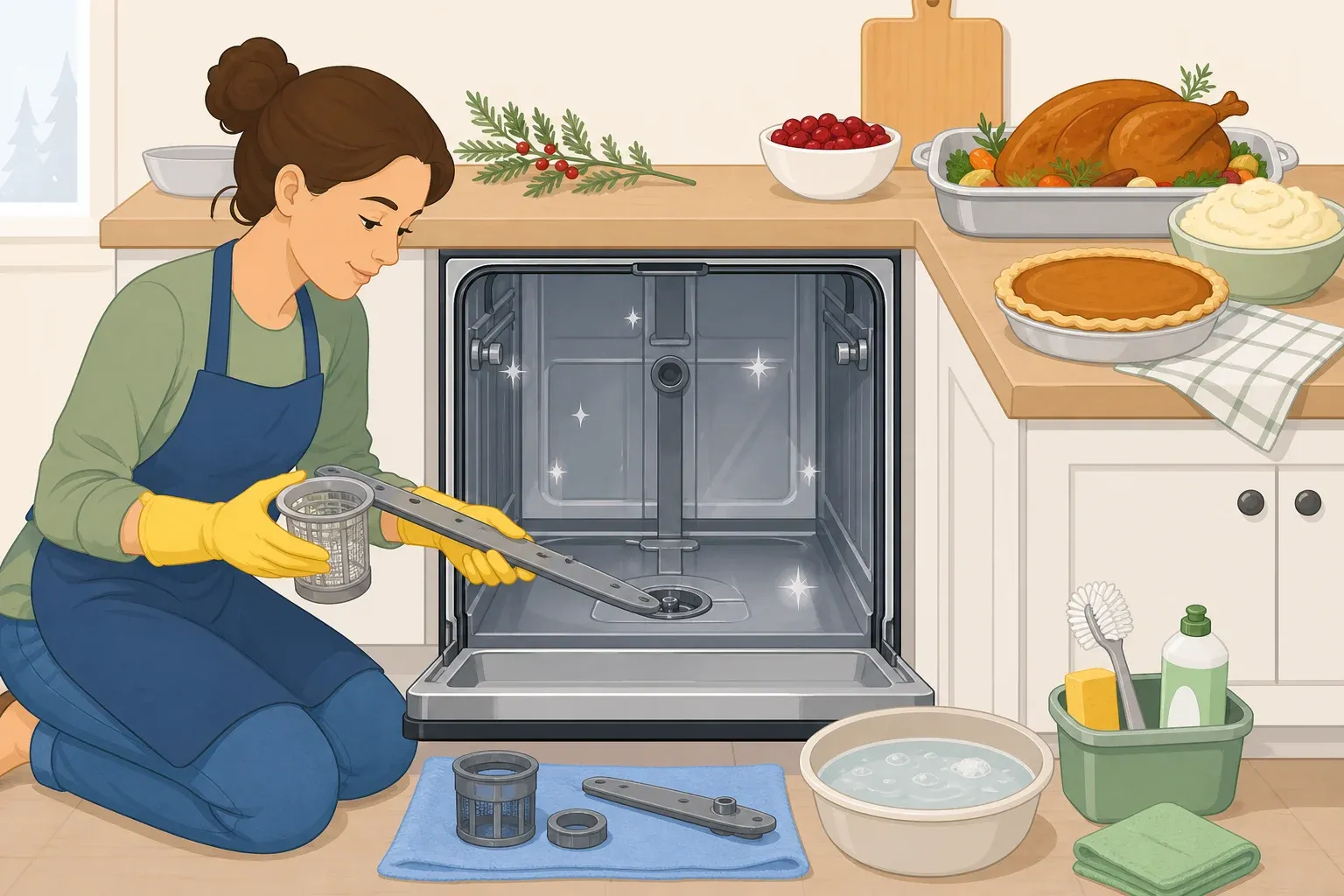
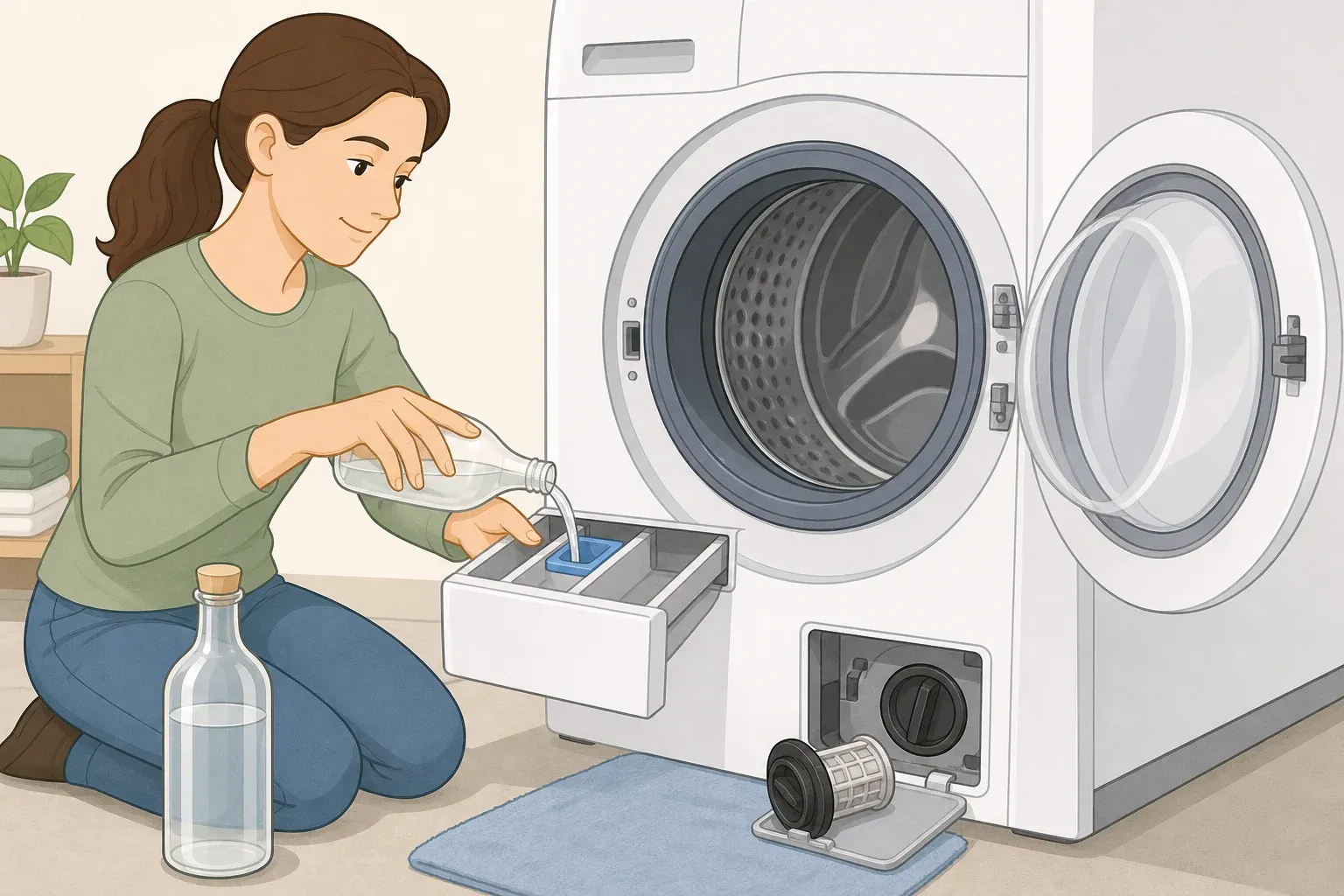
For washing machines, Carolyn Forté, former executive director of the Good Housekeeping Home Care & Cleaning Lab, draws a clear line: an occasional vinegar rinse in the cycle probably won't cause harm, but regular use isn't recommended (Good Housekeeping). For dishwashers, a cleaning expert cited by Simply Recipes takes a harder position: acid can prematurely break down the rubber gaskets and hoses. Those are components that give no warning before they fail.
For irons and garment steamers, Forté's guidance is unambiguous. Plain water only. Fill the chamber, set the iron to the highest temperature and steam setting, and run it to flush out mineral buildup. Vinegar may clean the interior, but Good Housekeeping notes it damages the internal components in the process.
The non-obvious one: egg spills
This runs counter to instinct. Vinegar's acidity causes egg proteins to coagulate on contact, the same mechanism that sets egg whites when poaching, which makes a spill harder to remove, not easier. Good Housekeeping flags this specifically. Cold water and dish soap are the right tools.
What vinegar cannot do, even where it's safe to use
Vinegar has antimicrobial properties. It is not an EPA-registered disinfectant. Tim Conn, president and co-founder of Image One, told The Spruce last August that vinegar doesn't meet the EPA's standard for eliminating nearly all harmful pathogens, and it doesn't reliably kill the bacteria and viruses behind colds, flu, and similar illnesses. It cleans surfaces; it doesn't disinfect them.
That distinction matters most on food-prep surfaces and in spaces where someone has been sick. A visually clean surface isn't a safe one if the cleaning agent can't handle the pathogens present.
When actual disinfection is the goal, hydrogen peroxide or alcohol-based products labeled as EPA-registered disinfectants are what cleaning professionals cited by The Spruce recommend. Available at any grocery store, and no more expensive than a bottle of cleaning vinegar.
One other point worth knowing: cleaning vinegar is a distinct product from white vinegar. A cleaning expert cited by The Spruce notes it's roughly 20% more acidic than the standard kitchen variety, which makes it more effective on surfaces where vinegar already works well. On every surface it shouldn't touch, that higher acidity just means faster damage. The same material rules apply, with less margin for error.
Where that leaves vinegar
Glass, mirrors, chrome fixtures, shower doors, faucets, sinks, bathroom tile, and soap scum are all legitimate uses. Vinegar earns its place in most cleaning kits for exactly those jobs.
The surfaces where it causes damage, hardwood, natural stone, grout, cast iron, and the rubber components inside washers, dishwashers, and irons, tend to be the ones that are expensive or time-consuming to repair. The alternatives are simple: a hardwood cleaner, dish soap and water for stone, a microfiber cloth for screens, and an EPA-registered product when eliminating pathogens is the actual goal.
The useful way to think about it isn't surface by surface. It's finish versus no finish. Vinegar is fine on hard, non-porous, uncoated surfaces where acid can do its work and be wiped away cleanly. It's the wrong tool anywhere a protective layer sits between the cleaner and the material underneath, whether that's a wax finish, a stone surface, a screen coating, or a rubber seal. Acid doesn't know what it's supposed to be cleaning.
One final note: vinegar and bleach produce chlorine gas. Not a skin irritant. A gas that can be deadly if inhaled, per Good Housekeeping. Using both products in the same space, even in sequence on the same surface, carries real risk. Keep them separate.





Comments
Be the first, drop a comment!